2027 Best Online Undergraduate Degrees for Students With Low GPA

Co-Founder and Chief Data Scientist
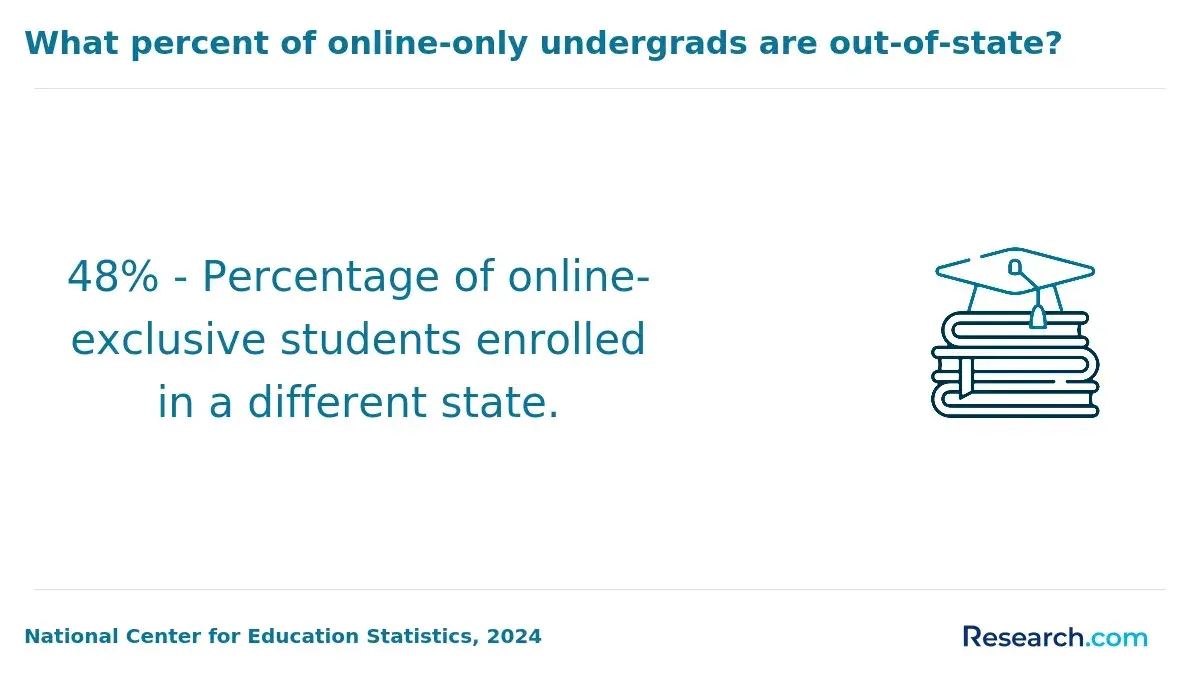
A low GPA can narrow college options, but it does not have to end your path to a bachelor's degree. Many online undergraduate programs use holistic, test-optional, transfer-friendly, or open-admission policies to evaluate applicants beyond grades. This matters because the National Center for Education Statistics reported that online learning remains a major part of U. S. higher education, with millions of undergraduates taking at least one distance course.
This guide helps students with weaker academic records compare practical degree choices, admissions fit, costs, timelines, accreditation, and career outcomes before applying.
Key Things You Should Know
- Students with GPAs below 2.5 often have the best odds at online programs with open admission, conditional admission, community college transfer pathways, or adult-learner policies.
- Business, information technology, criminal justice, psychology, and general education pathways are often more flexible than nursing, engineering, and some computer science programs with prerequisites or licensure rules.
- BLS May 2024 wage data shows wide outcome differences by field, so students should compare admissions flexibility with realistic career value rather than choosing only the easiest program to enter.
Top 10 Best Online Undergraduate Degrees for Students With Low GPA
Business Degrees
Business is one of the strongest online undergraduate choices for students with low GPA because many programs admit adult learners, transfer students, and applicants with mixed academic records. Common majors include business administration, management, marketing, accounting, and human resources. This path fits students who want broad career options instead of a highly regulated profession.
Look for ACBSP, AACSB, or IACBE accreditation when available, especially for accounting. Students who dislike presentations, spreadsheets, group projects, or workplace problem-solving may prefer a more specialized degree.
Healthcare Degrees
Online healthcare degrees can work well for students who want patient-adjacent, administrative, or public health roles without entering a clinical licensure track. Common options include healthcare administration, health sciences, public health, medical billing, and health information management.
Admissions are often more flexible than nursing, but programs may require anatomy, statistics, or medical terminology. Students should check whether the degree leads to certification eligibility, internships, or health information credentials.
It's important to avoid assuming every healthcare degree qualifies you for clinical jobs; most do not.
Information Technology Degrees
Information technology is often more accessible than theoretical computer science because it focuses on systems, networks, cloud tools, databases, and user support. Many online IT programs accept students conditionally and allow certifications or prior experience to support the application. This degree fits practical learners who enjoy troubleshooting and applied technology.
Employers may value CompTIA, Cisco, AWS, Microsoft, or Google credentials alongside the degree. Students who struggle with independent problem-solving or dislike constant technology changes should compare IT with business information systems.
Computer Science Degrees
Computer science can lead to strong technology careers, but it is not always the easiest option for students with low GPA. Programs may require college algebra, calculus, discrete math, programming sequences, and minimum grades in major courses. It fits students who are ready to rebuild academic habits and practice coding consistently.
If admissions are difficult, consider starting with an associate degree, IT degree, or software development certificate and transferring later. Check whether the curriculum includes portfolio projects, algorithms, databases, and software engineering.
Cybersecurity Degrees
Cybersecurity degrees are popular because employers need workers who understand networks, risk, compliance, incident response, and secure systems. Admissions can be more flexible than computer science, but technical courses still require discipline. This degree fits students interested in protecting systems, investigating threats, and following detailed procedures.
Look for programs aligned with NSA Centers of Academic Excellence, industry certifications, labs, and virtual cyber ranges. Students should avoid programs that promise quick high-paying security jobs without hands-on practice or entry-level IT preparation.
Psychology Degrees
Psychology is a flexible online undergraduate option for students with low GPA because many programs emphasize writing, research literacy, human behavior, and statistics rather than strict technical prerequisites. It can support roles in human services, case management, sales, HR, market research support, and graduate study.
However, becoming a licensed counselor, psychologist, or therapist requires graduate education and state licensure. Students should choose psychology if they value people-centered work and can handle reading-heavy courses. It is less ideal for those seeking immediate clinical credentials.
Nursing Degrees
Nursing is usually less forgiving for students with low GPA because programs often have competitive admission, science prerequisites, background checks, clinical placements, and state board requirements. Online options are strongest for licensed practical nurses, registered nurses completing a BSN, or students taking nonclinical prerequisites online.
Pre-licensure nursing programs may be hybrid rather than fully online. Students with low GPA should retake anatomy, physiology, microbiology, or chemistry if required. Always confirm state approval and NCLEX eligibility before enrolling.
Education Degrees
Online education degrees can be accessible, especially for students pursuing early childhood education, educational studies, instructional design, or paraprofessional advancement.
Teacher licensure programs are more restrictive because states set rules for clinical practice, exams, background checks, and student teaching. This path fits patient communicators who want school, training, childcare, or learning-support roles. Students should verify whether the program leads to licensure in their state. If your GPA is low, ask whether conditional admission, transfer credits, or prerequisite retakes can strengthen eligibility.
Criminal Justice Degrees
Criminal justice is often one of the more accessible online undergraduate degrees for students with low GPA. Programs commonly cover courts, corrections, policing, criminology, ethics, homeland security, and legal procedure. It can support careers in law enforcement support, corrections, probation assistance, security management, and public administration.
Some sworn law enforcement jobs may require academy training, physical standards, background checks, or civil service exams beyond the degree. Students should choose accredited programs with realistic career guidance rather than promises of federal agency jobs.
Engineering Degrees
Engineering is usually the hardest online undergraduate category for students with low GPA because ABET-accredited programs require advanced math, lab work, physics, and design projects. Fully online options are limited, and many are completion programs for students who already have technical credits.
Engineering technology may be more accessible than traditional engineering and can lead to applied technical roles. Students should check ABET accreditation, lab requirements, transfer policies, and calculus readiness. If your GPA is low, community college preparation may be the smarter first step.
What GPA do online colleges accept?
Online colleges vary widely in GPA expectations. Some admit nearly all applicants with a high school diploma or GED, while selective online bachelor's programs may expect a 2.5, 3.0, or higher GPA. Many schools also use conditional admission, probationary enrollment, placement testing, personal statements, work history, military training, or transfer credits to evaluate students who do not meet the standard GPA threshold.
The table below summarizes common GPA situations and what they usually mean for applicants. Use it as a planning tool, not as a guarantee, because every school sets its own policy.
| GPA situation | Common admissions outcome | Best next move |
| Below 2.0 | May require open admission, community college, or academic renewal | Start with transferable general education courses and earn strong grades |
| 2.0 to 2.49 | Often eligible for conditional or less selective online programs | Ask about probationary admission and transfer-credit limits |
| 2.5 to 2.99 | Competitive for many online bachelor's programs | Apply broadly and explain improvement, work experience, or life circumstances |
| 3.0 and above | Meets many standard bachelor's admission thresholds | Compare cost, accreditation, graduation support, and career fit |
Which online degrees have the easiest admissions?
The online degrees with the easiest admissions are usually broad, non-licensure programs that do not require intensive prerequisites before entry. These often include general studies, liberal arts, business administration, criminal justice, psychology, communications, and some IT-related programs. "Easy admission" does not mean easy graduation; writing, math, time management, and major coursework still matter.
Students comparing the easiest bachelor's degree to get should focus on academic fit, not just acceptance odds. A degree is only easier if its assignments, pace, and career direction match how you learn.
Before choosing a flexible program, compare these factors carefully:
- Prerequisites: Programs with fewer math, lab science, or portfolio requirements are often easier to enter.
- Licensure rules: Degrees that do not lead to state licensure usually have fewer external requirements.
- Transfer policy: Generous transfer credit can reduce both time and academic risk.
- Course format: Asynchronous courses may help working adults, while live online classes may help students who need structure.
- Support services: Tutoring, writing help, advising, and early alerts can matter more than the major name.
How do online admissions compare with campus admissions?
Online and campus admissions can be very similar at the same institution, especially when the online degree is offered by the university's regular academic department. The main difference is that online programs often serve more adult learners, transfer students, military students, and working professionals, so admissions teams may weigh prior college credits, work experience, and readiness differently.
This comparison shows where online admissions may help students with a low GPA and where requirements are usually the same. The most important point is that "online" does not automatically mean lower quality or lower standards.
| Admissions factor | Online undergraduate programs | Campus undergraduate programs |
| GPA review | May allow conditional admission or adult-learner review | Often tied to freshman or transfer admission policies |
| Test scores | Frequently test-optional, especially for adult learners | Often test-optional, but policies vary by institution |
| Transfer credits | Usually central to degree-completion programs | Accepted, but campus residency rules may be stricter |
| Student profile | Often working adults, returning students, and transfers | Often more traditional-age first-time students |
| Academic standards | Accredited programs should apply comparable learning outcomes | Usually follows the same department or college standards |
Which accredited schools offer these degrees?
Accreditation is the first filter students with low GPA should use because it affects credit transfer, federal financial aid, employer recognition, and graduate school eligibility. In the U.S., students should prioritize institutions accredited by agencies recognized by the U.S. Department of Education or the Council for Higher Education Accreditation. Programmatic accreditation also matters in fields such as nursing, engineering, business, education, and health information.
The following school categories commonly offer online undergraduate options with varying admissions flexibility. Instead of relying only on brand names, compare the exact program, accreditation, state authorization, and support model.
| School type | Why it may fit students with low GPA | What to verify |
| Public universities with online divisions | Often offer lower in-state tuition and recognized regional accreditation | Residency rules, transfer limits, and online course availability |
| Community colleges with bachelor's pathways | Useful for rebuilding GPA before transfer | Articulation agreements and whether credits apply to the major |
| Private nonprofit online programs | May offer adult-learner admissions and flexible schedules | Total cost, student support, and degree-completion rules |
| Competency-based institutions | Can help self-directed learners move faster through familiar material | Employer acceptance, pacing expectations, and financial aid structure |
| State university completion programs | Designed for students with prior credits | Minimum transfer GPA and required lower-division courses |
Red flags include unclear accreditation language, pressure to enroll immediately, vague job-placement claims, unusually high fees, and programs that cannot explain whether credits will transfer.
What classes are required for each degree?
Most online bachelor's degrees require about 120 semester credits, although transfer credits can reduce what you still need to complete. Students with low GPA should look closely at the first-year curriculum because gateway courses in math, writing, science, or programming often determine whether they can progress smoothly.
This table summarizes common course patterns by degree area. It helps you identify which majors are writing-heavy, math-heavy, science-heavy, or certification-oriented before you apply.
| Degree area | Common required classes | Academic challenge to plan for |
| Business | Accounting, economics, management, marketing, business law, statistics | Quantitative assignments and team projects |
| Healthcare | Medical terminology, healthcare systems, ethics, public health, informatics | Technical vocabulary and compliance-focused writing |
| Information technology | Networking, databases, operating systems, cloud computing, scripting | Hands-on troubleshooting and continuous skill updates |
| Computer science | Programming, algorithms, discrete math, data structures, software engineering | Math readiness and sustained coding practice |
| Cybersecurity | Network security, risk management, digital forensics, incident response | Labs, technical documentation, and ethical judgment |
| Psychology | Developmental psychology, abnormal psychology, research methods, statistics | Reading load and research writing |
| Nursing | Anatomy, physiology, pharmacology, health assessment, clinical practice | Science prerequisites and clinical performance standards |
| Education | Child development, curriculum design, assessment, classroom management | Fieldwork, state standards, and licensure exams |
| Criminal justice | Criminology, policing, corrections, courts, ethics, criminal law | Legal analysis and policy writing |
| Engineering | Calculus, physics, circuits, mechanics, design, labs | Sequential math and lab-based requirements |
If your GPA is low because of one subject area, choose a program that gives you time to strengthen that skill before the hardest major courses begin.
How long do online degrees take to finish?
Most online bachelor's degrees take four years for first-time full-time students, but many low-GPA applicants enter as transfer students and may finish faster if prior credits apply. Part-time students often need longer, especially if they work full time or take breaks. The smartest timeline is not always the fastest one; students rebuilding academic confidence may benefit from starting with two courses instead of four.
Students considering an accelerated bachelor's degree online should ask whether the shorter calendar increases weekly workload. Accelerated terms can be efficient, but they leave less room to recover from missed assignments.
Use this practical sequence to estimate your timeline before enrolling:
- Request official transfer evaluations from more than one accredited school.
- Ask how many credits apply to general education, electives, and the major, not just the total accepted.
- Confirm whether failed or repeated courses affect admission, prerequisite clearance, or financial aid progress.
- Compare standard, part-time, and accelerated term lengths based on your work and family schedule.
- Build in time for internships, clinicals, student teaching, labs, or capstone projects if the major requires them.
How much do online degrees cost?
.Online degree costs vary by institution, residency status, transfer credits, fees, books, technology requirements, and time to completion. Tuition is only one part of the price. Students with low GPA should also consider the cost of retaking prerequisites, extending enrollment, or losing financial aid eligibility because of unsatisfactory academic progress.
For cost-conscious students asking what are the cheapest online colleges, the better question is which accredited school offers the lowest total cost for the credits you actually need. A low per-credit rate may not save money if the school rejects many transfer credits.
The table below highlights major cost drivers and why they matter. Use it when comparing financial aid letters and tuition pages.
| Cost factor | Why it matters | Question to ask |
| Tuition per credit | Determines the base academic cost | Is the rate different for online, out-of-state, or upper-division courses? |
| Transfer credit acceptance | Can reduce the number of credits you pay for | How many credits apply directly to my degree plan? |
| Fees | Technology, distance learning, graduation, and lab fees can add up | What is the full program cost after mandatory fees? |
| Books and materials | Some majors require software, kits, exams, or subscriptions | Are open educational resources used in required courses? |
| Time to completion | Extra terms can increase tuition and living costs | What is the realistic completion timeline for part-time students? |
According to College Board's 2024 Trends in College Pricing, published tuition and fees at public four-year institutions remain substantially lower for in-state students than for out-of-state students. That means residency rules and public online options can materially affect affordability.
What jobs can these degrees lead to?
These degrees can lead to different entry-level paths, and the best choice depends on whether you want broad business roles, regulated professional work, technical jobs, public service, or graduate study. A low GPA may affect admission to selective graduate programs, but a strong undergraduate comeback, internships, certifications, and work experience can improve your profile over time.
Some students eventually pursue graduate education after rebuilding their academic record. If that is part of your long-term plan, compare bachelor's programs that prepare you for later options, including affordable online PhD programs, professional master's degrees, or licensure pathways.
This table connects undergraduate fields with common job directions. Job titles and requirements vary by employer, state, and experience level.
| Degree area | Possible entry-level or early-career paths | Best fit |
| Business | Sales coordinator, operations assistant, HR assistant, management trainee | Students wanting broad private-sector options |
| Healthcare | Healthcare administrator assistant, patient services coordinator, health records roles | Students interested in healthcare systems, not bedside care |
| Information technology | Help desk analyst, systems support specialist, junior network technician | Hands-on troubleshooters |
| Computer science | Junior developer, QA tester, data support analyst | Students who can build coding portfolios |
| Cybersecurity | Security operations support, IT risk analyst, compliance assistant | Detail-oriented technical learners |
| Psychology | Case management aide, behavioral health technician, HR support, research assistant | People-focused students considering graduate school |
| Nursing | Registered nurse roles if the program meets licensure requirements | Students prepared for clinical standards |
| Education | Teacher, paraprofessional, training assistant, childcare administrator | Students who meet state or employer requirements |
| Criminal justice | Corrections officer, probation support, security supervisor, legal assistant support | Students interested in public safety and justice systems |
| Engineering | Engineering technician, technologist, junior design support roles | Students strong in math, labs, and applied design |
What salaries and job outlooks do graduates have?
Salary and job outlook depend on occupation, location, experience, industry, and whether the role requires licensure or technical certifications. BLS May 2024 wage data is useful because it describes occupations, not guaranteed outcomes for individual graduates. Use salary data to compare directionally, then check local job postings before choosing a major.
The table below summarizes selected U.S. occupational examples connected to common online undergraduate degrees. It is not a promise of employment or pay, but it helps compare career ceilings and labor-market demand.
| Career area | Related BLS occupation example | May 2024 median pay | Decision insight |
| Business | Market research analysts | $76,950 | Business degrees can improve flexibility when paired with analytics, sales, or operations skills. |
| Healthcare administration | Medical and health services managers | $117,960 | Management roles often require experience, so entry-level administrative work may come first. |
| Information technology | Computer support specialists | $61,550 | Certifications and hands-on labs can help graduates compete for first IT roles. |
| Computer science | Software developers | $133,080 | Portfolio quality and technical interviews can matter as much as the degree name. |
| Cybersecurity | Information security analysts | $124,740 | Many security roles prefer prior IT experience, so plan for a step-by-step path. |
| Psychology | Social and human service assistants | $43,550 | Higher counseling or clinical roles usually require graduate education and licensure. |
| Nursing | Registered nurses | $93,600 | Only approved nursing pathways qualify graduates for licensure exams. |
| Education | Kindergarten and elementary school teachers | $64,450 | State licensure rules strongly shape job eligibility. |
| Criminal justice | Correctional officers and jailers | $53,300 | Background checks, academy training, and agency hiring rules may matter more than GPA. |
| Engineering | Electrical and electronic engineering technologists and technicians | $75,420 | ABET status and lab experience can affect technical job options. |
AI and automation are also changing expectations. Business students may need data literacy, IT students need cloud skills, cybersecurity students need threat-analysis tools, and education students increasingly use learning technology. Choosing a program that updates courses regularly can matter as much as choosing a familiar major.
Other Things You Should Know About
Yes, some accredited online bachelor's programs accept students with a 2.0 GPA, especially transfer-friendly or conditional-admission programs. More selective majors may require higher grades in prerequisite courses.
No. Be honest and use the application to show improvement, work experience, military training, caregiving responsibilities, or stronger recent coursework. Schools often care about readiness, not only past grades.
Not necessarily. Accredited online degrees should meet comparable academic standards. Online learning can be more flexible, but it requires self-discipline, time management, reliable technology, and regular participation.
Consider taking transferable community college or online general education courses first. Earning strong recent grades can improve transfer options, rebuild confidence, and reduce the risk of paying for a program that is not a good fit.
References
- 2025 Most Affordable Online Bachelor's Degrees https://www.onlineu.com/most-affordable-colleges/bachelors-degrees
- Scholarships - Finaid https://finaid.org/scholarships/
- Getting Into Online Master's Programs With a Low GPA https://www.onlinemastersdegrees.org/student-resources/grad-school-low-gpa/
- Colleges That Accept Low GPA Scores | Find Options https://www.educationconnection.com/resources/colleges-that-accept-low-gpa/
- Scholarships for College Students https://accessscholarships.com/blog/50-scholarships-for-college-students/
- Universities Accepting International Students with Low https://www.universityswitch.com/blog/best-universities-for-international-students-with-low-gpa/
- How Do Colleges View Online High Schools? | Summit Learning https://summitlearningcharter.org/resources/blog/how-do-colleges-view-online-high-schools/
- Online vs. in-person courses. Which ones are better? - Mapping Ignorance https://mappingignorance.org/2017/09/18/online-vs-person-courses-ones-better/
- How Can Institutions Best Support Their Online Learners? https://www.higheredtoday.org/2025/04/21/how-can-institutions-best-support-their-online-learners/
- Strategies to Help Struggling Students Succeed https://utsa.screenstepslive.com/a/1988569-strategies-to-help-struggling-students-succeed