2027 Best Undergraduate Degrees With Conditional Admission

Co-Founder and Chief Data Scientist
Conditional admission can keep college within reach when your GPA, test scores, English proficiency, prerequisites, or application file do not yet meet full-entry standards. That matters because the National Center for Education Statistics reported in its latest published data that average undergraduate tuition, fees, room, and board at four-year institutions exceeded $28,000 per year, making a poor-fit enrollment costly. This guide is for first-time, transfer, adult, and online students comparing degree options. You will learn which majors commonly offer conditional pathways, what to verify, and how to choose a program that supports your academic and career goals.
Key Things You Should Know
- Conditional admission is usually a provisional offer: students may need to complete bridge courses, maintain a minimum first-term GPA, submit missing documents, or meet English or math benchmarks before full admission.
- The strongest conditional pathways are tied to accredited institutions, clear progression rules, transferable credits, and support services such as advising, tutoring, writing help, and early academic alerts.
- Career value depends heavily on the major: BLS May 2024 wage data shows wide differences across fields, from higher median pay in computer, engineering, and management roles to more licensure-dependent pathways in nursing and education.
Top 10 Best Undergraduate Degrees With Conditional Admission
Business Degrees
Business degrees are among the most flexible conditional admission options because many programs begin with broad general education, accounting, economics, communication, and management courses. They fit students who want multiple career directions before specializing in finance, marketing, human resources, analytics, or entrepreneurship. BLS May 2024 data places the median annual wage for management occupations at $122,090, but entry-level outcomes vary by role and experience. Choose programs with strong transfer policies, internship access, and quantitative support if math placement is part of the condition.
Healthcare Degrees
Healthcare degrees with conditional admission often start students in pre-health, health sciences, public health, or allied health tracks before selective clinical placement. These programs fit students interested in patient care, administration, community health, or diagnostic support. Conditions may include anatomy, biology, chemistry, background checks, immunizations, or a minimum science GPA. BLS May 2024 data shows healthcare practitioners and technical occupations had a median annual wage above the overall U.S. median, but clinical programs can be capacity-limited. Verify whether conditional admission applies to the university only or also to the competitive clinical major.
Information Technology Degrees
Information technology degrees are practical choices for students who want applied computing careers without the heavier theory load of some computer science programs. Conditional admission may require college algebra, introductory programming, or digital literacy benchmarks. Common study areas include networking, cloud systems, databases, help desk operations, and systems administration. BLS May 2024 data lists a $105,990 median annual wage for computer and information technology occupations, but entry-level IT roles often start below that. Look for programs that include labs, certifications, portfolio projects, and employer-aligned technical support.
Computer Science Degrees
Computer science degrees suit students who want deeper preparation in programming, algorithms, software engineering, data structures, AI, or systems design. Conditional admission often focuses on math readiness, prior computing experience, or first-year performance in programming and calculus. This path can be rewarding but demanding; students who dislike abstract problem-solving may prefer IT, analytics, or information systems. Because AI tools are changing software workflows, compare programs for project-based learning, ethics, cybersecurity basics, and modern development practices rather than relying only on course titles.
Cybersecurity Degrees
Cybersecurity degrees often accept conditionally admitted students into a general computing track before they progress into security-specific coursework. Students study networks, operating systems, risk management, incident response, digital forensics, and governance. The field rewards discipline and ethical judgment, and some employers may require background checks or security clearance eligibility. Choose programs with hands-on labs, virtual ranges, certification preparation, and faculty with current security experience. If your conditional requirement involves math or programming, confirm whether tutoring is embedded early enough to prevent falling behind.
Psychology Degrees
Psychology degrees with conditional admission can be a good fit for students interested in behavior, mental health, research, human services, or organizational work. Undergraduate psychology alone does not qualify graduates to practice as licensed psychologists, so students should understand graduate school expectations early. Conditional requirements may include college writing, statistics, or introductory psychology benchmarks. This major is strongest when paired with research experience, internships, data skills, or a minor in business, education, criminal justice, or health. Ask whether the program offers advising for counseling, social work, or graduate pathways.
Nursing Degrees
Education Degrees
Education degrees with conditional admission may begin with general education and introductory teaching courses before formal admission to a teacher preparation program. Conditions can include GPA thresholds, basic skills tests, field observation hours, background checks, or state-specific requirements. This path fits students who want classroom, early childhood, special education, or instructional support careers. Licensure rules vary by state, so online students should confirm that the program meets requirements where they plan to teach. Strong programs provide supervised fieldwork, classroom management preparation, and advising before the student-teaching stage.
Criminal Justice Degrees
Criminal justice degrees are common conditional admission options for students interested in law enforcement, corrections, courts, victim advocacy, homeland security, or policy. Coursework usually covers criminology, ethics, constitutional law, procedure, and research methods. Students with records should ask early about internship restrictions, agency hiring standards, and licensure or certification barriers; resources on the best degrees for felons can help compare realistic alternatives. A criminal justice degree is most useful when paired with writing skills, technology literacy, and field experience.
Engineering Degrees
Engineering degrees with conditional admission are usually math- and science-intensive. Students may enter pre-engineering until they complete calculus, physics, chemistry, or introductory engineering courses with required grades. BLS May 2024 data places architecture and engineering occupations well above the overall median wage, but the academic ramp is steep. Prioritize ABET-accredited programs when relevant, especially for civil, mechanical, electrical, chemical, or computer engineering. If your condition involves math placement, ask whether the pathway adds time to graduation and whether credits still count toward the degree.
What does conditional admission mean for undergraduate students and how does it work?
Conditional admission means the college is giving you a path into an undergraduate program before you satisfy every standard requirement for regular admission. It is not the same as being denied, waitlisted, or fully admitted. Instead, the offer usually comes with written terms that must be met by a deadline.
The most important point is scope. A university may conditionally admit you to the institution, but not necessarily to a selective major such as nursing, engineering, education, or cybersecurity. Always ask whether the offer guarantees access to your intended major after benchmarks are met or only gives you permission to begin as a pre-major student.
Which types of undergraduate degrees most commonly offer conditional admission pathways?
Conditional admission is most common in undergraduate fields where schools can use first-term performance to predict whether a student is ready for the major. It is especially useful when the first year includes general education, prerequisite, or foundation courses that can be monitored before full progression.
The table below compares common degree areas by typical conditional pathway, academic pressure points, and the decision factor students should verify before enrolling.
| Degree area | Common conditional pathway | Main pressure point | What to verify |
| Business | General business or pre-business entry | Quantitative courses and GPA | Access to concentrations, internships, and transfer credits |
| Healthcare | Pre-health or health sciences entry | Science prerequisites and clinical capacity | Whether admission includes the clinical major |
| Information technology | Foundational computing pathway | Labs, math, and technical readiness | Certification preparation and hands-on support |
| Computer science | Pre-computer science or exploratory computing | Programming and calculus | Progression rules for the major |
| Nursing | Pre-nursing or conditional direct entry | Prerequisites, exams, and clinical placement | State approval, NCLEX outcomes, and seat limits |
| Education | Pre-education or teacher preparation track | GPA, testing, and fieldwork clearance | Licensure alignment in your state |
Students should be cautious with any program that describes a pathway as "guaranteed" but does not put the benchmarks, deadlines, appeal process, and major-entry rules in writing. Conditional admission is most valuable when the path is transparent and the credits apply directly to the intended degree.
How do admission requirements differ between conditional and regular undergraduate acceptance?
Regular admission usually means the student meets the school's entry standards at the time of acceptance. Conditional admission means the school is willing to enroll the student while requiring additional proof of readiness. The difference is not always academic ability; it may involve missing documents, late transcripts, English proficiency, transfer-credit evaluation, or specific prerequisite gaps.
This comparison shows how the two admission types usually differ and where students should read the fine print.
| Category | Regular undergraduate admission | Conditional undergraduate admission |
| Academic status | Fully admitted to the institution or program stated in the offer | Provisionally admitted until stated conditions are met |
| GPA or course requirements | Already meets published standards | May need a minimum first-term GPA or prerequisite grades |
| Placement | May begin degree courses immediately if prerequisites are complete | May start with bridge, developmental, or foundation courses |
| Financial aid impact | Generally follows standard eligibility rules | May be affected if courses are noncredit or enrollment status changes |
| Risk to student | Lower progression uncertainty | Higher risk if benchmarks are unclear or support is weak |
Students should not assume conditional admission is inferior. For many applicants, it is a structured second chance. The risk comes from unclear rules, added time, or programs where conditional students pay for credits that do not move them efficiently toward graduation.
What should students compare when choosing between online and campus conditional admission programs?
Online and campus conditional admission programs can both work well, but they support different types of students. Online pathways may be better for working adults, parents, military-affiliated students, and transfer students who need flexibility, while campus programs may provide more immediate access to labs, tutoring, peer study groups, and clinical or field placements.
The table below highlights the practical trade-offs that matter most when a student is admitted conditionally.
| Factor | Online conditional pathway | Campus conditional pathway |
| Schedule | Best for students balancing work, caregiving, or commuting limits | Best for students who benefit from fixed class times |
| Support access | Depends on virtual tutoring, advisor responsiveness, and learning platforms | Often easier to access in-person tutoring and offices |
| Labs and clinicals | May require local placements, intensives, or hybrid sessions | May have built-in facilities or regional partnerships |
| Accountability | Requires strong self-management and communication | Provides more face-to-face structure |
| Fit risk | Higher if the student struggles with independent learning | Higher if attendance, transportation, or relocation is difficult |
Students comparing flexible programs should look beyond convenience. For example, readers evaluating the best online degrees for stay at home moms should still check whether conditional benchmarks, advising hours, proctored exams, and required placements match their weekly schedule.
How can students verify accreditation and institutional quality for conditional admission degrees?
Accreditation is one of the most important quality checks for any conditional admission degree. Institutional accreditation affects credit transfer, federal financial aid eligibility, graduate school recognition, and employer confidence. Programmatic accreditation can also matter in fields such as nursing, engineering, education, business, and allied health.
Use a step-by-step check before accepting an offer, especially if the program is online, accelerated, unusually inexpensive, or marketed heavily to students who were denied elsewhere.
- Confirm that the college has recognized institutional accreditation through the U.S. Department of Education or the Council for Higher Education Accreditation databases.
- Check whether your specific program needs programmatic accreditation, state approval, or licensure alignment for your intended career.
- Ask whether conditional students are admitted to the major, a pre-major, or only the institution.
- Review graduation rates, retention rates, transfer policies, student complaint history, and published outcomes.
- Request the conditional admission agreement in writing before paying deposits or registering for courses.
Red flags include vague accreditation language, pressure to enroll immediately, refusal to disclose total cost, credits that do not transfer, or promises about jobs and salaries. A legitimate pathway should be clear enough for a student, advisor, and financial aid office to interpret the same way.
What coursework, support services, and benchmarks are typical in conditional admission pathways?
Conditional admission pathways are designed to help students prove readiness early, not simply delay rejection. The best programs combine clear benchmarks with proactive academic support. Weak programs place the burden entirely on the student and provide little warning before dismissal or loss of major eligibility.
Most pathways include a mix of coursework, advising, and performance milestones. Students should understand each item before registration because missing one benchmark can affect progression.
- Foundation courses: writing, college algebra, statistics, biology, chemistry, introductory computing, or academic success seminars.
- Performance benchmarks: minimum term GPA, minimum grade in prerequisite courses, credit-completion pace, attendance, or placement test improvement.
- Support services: tutoring, writing centers, supplemental instruction, disability accommodations, mental health services, career coaching, and early alert systems.
- Administrative requirements: final transcripts, immunization records, English proficiency scores, background checks, or financial aid documentation.
- Progression review: advisor approval, department review, appeal options, and confirmation of full admission after conditions are met.
A good question to ask is, "What happens if I meet the university condition but not the major condition?" The answer can reveal whether the school has alternate majors, repeat options, or transfer-friendly exit paths.
How much do conditional admission undergraduate programs cost and what financial aid is available?
Costs vary widely because conditional admission can add credits, fees, placement courses, tutoring requirements, or an extra term. NCES data published in its latest Digest shows that the total annual cost of attendance at four-year institutions can exceed tuition alone by a large margin once housing, food, books, transportation, and personal expenses are included. For conditional students, the most important cost question is whether every required course counts toward the degree.
The table below summarizes major cost categories students should compare before accepting a conditional offer.
| Cost category | Why it matters for conditional admission | Question to ask |
| Tuition and mandatory fees | These are the visible costs, but not always the full cost | Is tuition charged per credit, per term, or by flat rate? |
| Bridge or developmental courses | Some may not count toward degree completion | Do these credits apply to graduation requirements? |
| Books, software, and equipment | Technology, lab kits, uniforms, or exam tools can add costs | What program-specific supplies are required in the first year? |
| Clinical, field, or lab fees | Healthcare, nursing, education, and engineering can have extra fees | Are placement, background check, or lab fees included? |
| Time to degree | An added term can increase tuition and living expenses | Will the conditional pathway extend my graduation timeline? |
Federal aid, state grants, institutional scholarships, employer tuition benefits, military benefits, and payment plans may be available if the institution and enrollment status meet eligibility rules. Students should complete the FAFSA, ask whether conditional status affects aid, and compare net price rather than advertised tuition. If a school cannot explain aid eligibility in writing, treat that as a major warning sign.
What career outcomes, salaries, and job prospects can conditional admission graduates expect?
Conditional admission does not appear on most résumés; the degree, institution, experience, skills, licensure, and portfolio matter more after graduation. Career outcomes depend on the major and whether the program leads to a recognized credential, internship, clinical placement, certification, or licensure pathway.
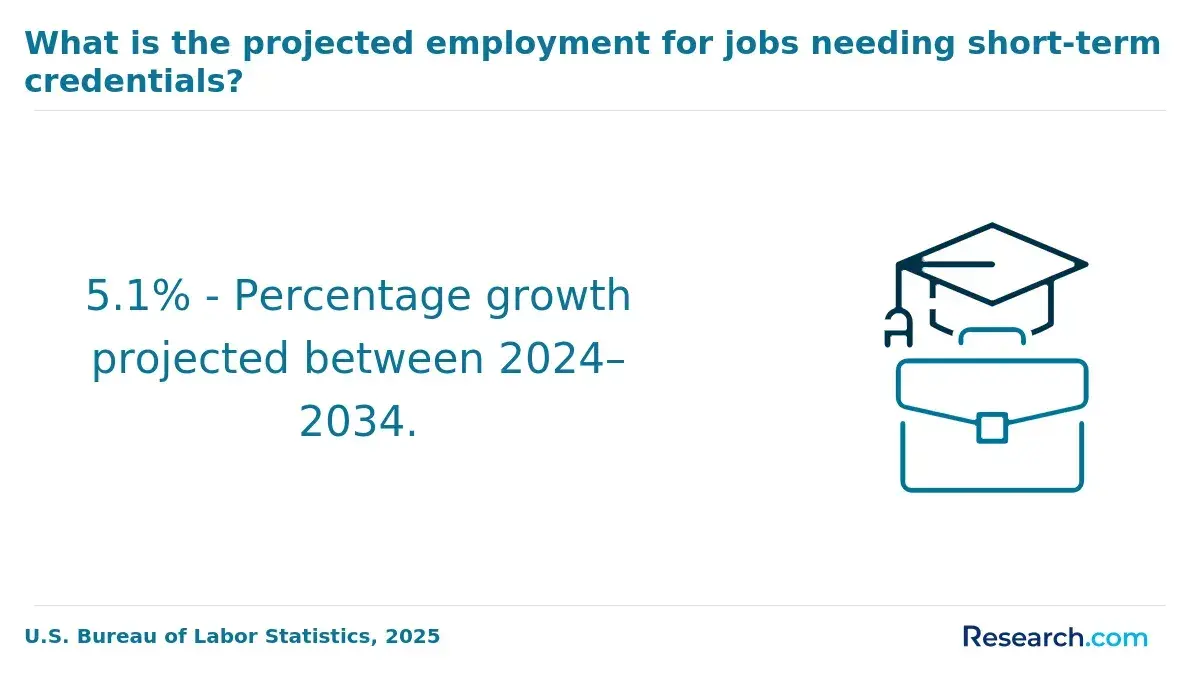
BLS 2024-2034 projections show stronger demand in several technology and healthcare fields than in the overall labor market, but students should avoid choosing a major based only on broad growth rates. Local hiring, state licensure rules, employer preferences, and experience requirements can change the value of a degree.
This table summarizes common undergraduate degree outcomes without implying guaranteed salaries or jobs.
| Degree area | Common early career directions | Outcome factor to evaluate |
| Business | Sales, operations, marketing, finance support, human resources | Internships, analytics skills, and industry experience |
| Healthcare | Health services support, public health, allied health, clinical preparation | Clinical eligibility and state or employer requirements |
| Information technology | Help desk, systems support, network support, cloud support | Hands-on labs, certifications, and portfolio evidence |
| Computer science | Software development, QA, data support, systems analysis | Projects, internships, and technical interview preparation |
| Nursing | Registered nursing after approved program completion and licensure | NCLEX eligibility, pass rates, and clinical placements |
| Education | Teaching, instructional support, youth programs, education services | State licensure alignment and supervised fieldwork |
Students planning advanced academic careers should remember that graduate study is a separate decision from conditional undergraduate admission. A bachelor's degree may later support master's or doctoral study, but comparing a PhD online pathway only makes sense after clarifying long-term research, teaching, or professional goals.
How can students evaluate if a conditional admission offer is a good long-term fit?
A conditional admission offer is a good long-term fit when it gives you a realistic, affordable, and well-supported route to the degree you actually want. It is a poor fit when it creates uncertainty about major access, adds nontransferable credits, weakens financial aid eligibility, or delays graduation without a clear payoff.
Before saying yes, students should compare the offer against a practical decision checklist. These steps help separate a supportive pathway from a risky enrollment decision.
- Read the full conditional admission agreement and identify every benchmark, deadline, required grade, and documentation rule.
- Confirm whether the pathway leads to your intended major or only to general university admission.
- Ask which courses count toward the degree and which may add cost without advancing graduation.
- Compare net price, aid eligibility, transfer options, and likely time to completion.
- Verify accreditation, licensure alignment, clinical or field placement access, and employer relevance.
- Ask what happens if you miss a benchmark, including appeal rights, repeat options, alternate majors, and transfer support.
The biggest mistake is treating conditional admission as a simple yes-or-no opportunity. A better approach is to compare it with regular admission elsewhere, community college transfer options, part-time enrollment, gap-term preparation, or a less selective but accredited program that may offer a cleaner route to the same goal.
Other Things You Should Know About
It is a form of acceptance, but it is provisional. You can usually enroll, but you must meet stated conditions before becoming fully admitted or progressing into the intended major.
It can, depending on the school, enrollment status, and whether required courses count toward an eligible degree program. Always ask the financial aid office to confirm eligibility in writing.
They can be, if the institution is properly accredited and the program fits the career goal. Employers usually care more about accreditation, skills, experience, licensure, and program reputation than delivery format alone.
Policies vary. You may lose full-admission eligibility, be moved to another major, repeat courses, appeal, or be dismissed from the pathway. Review the written policy before enrolling.
References
- Conditional Admission in Germany: How to Handle It https://tracker.razalabs.cloud/guides/conditional-admission-germany
- Understanding Conditional Admission: A Comprehensive Legal Overview https://legal-resources.uslegalforms.com/c/conditional-admission
- As competition heats up, more colleges offer conditional admissions https://www.highereddive.com/news/as-competition-heats-up-more-colleges-offer-conditional-admissions/530872/
- What is Conditional Admission? https://info.reach.edu/support/what-is-conditional-admission
- Navigating Conditional Admission When the Required Score Isn’t Met - oneiroeducation.com https://oneiroeducation.com/navigating-conditional-admission-when-the-required-score-isnt-met/
- What Is Conditional Admission and How Does It Work? https://collegecommit.com/what-is-conditional-admission/