2027 Best Online Bachelor's Degree Programs With Credit for Life Experience

Co-Founder and Chief Data Scientist
Adult learners often face a practical question: how do you finish a bachelor's degree without paying to relearn skills you already use at work? The stakes are real: BLS 2024 data show workers with a bachelor's degree had median weekly earnings of $1,543, compared with $930 for high school graduates.
This guide explains how online bachelor's programs award credit for life experience, which majors fit best, what accreditation to check, and how to compare cost, speed, flexibility, and career value before enrolling.
Key Things You Should Know
- Most bachelor's degrees require about 120 semester credits, but accredited schools vary widely in how many prior learning assessment, transfer, exam, military, or workplace-training credits they will accept.
- College Board 2024-25 data list average published tuition and fees at $11,610 for in-state public four-year students and $43,350 at private nonprofit four-year institutions, so every accepted credit can affect total cost.
- Life experience credit usually works best in applied fields such as business, IT, cybersecurity, criminal justice, healthcare administration, and RN-to-BSN nursing, while licensure-heavy fields may restrict how credits apply.
Top 10 Best Online Bachelor's Degree Programs With Credit for Life Experience
Business Degrees
Business is one of the strongest fits for life experience credit because management, sales, accounting support, human resources, entrepreneurship, logistics, and military leadership can often be documented through portfolios, professional training, or exams. Look for programs with regional accreditation and, when available, business accreditation such as AACSB, ACBSP, or IACBE. These degrees can support roles in operations, project coordination, management analysis, marketing, and finance, but students aiming for CPA eligibility should verify state accounting-credit rules before choosing electives.
Healthcare Degrees
Healthcare administration, health information management, public health, and allied health completion programs may award credit for certifications, clinical training, supervisory experience, or military medical training. These options suit medical assistants, coders, respiratory therapists, paramedics, and office managers seeking advancement without starting over. Students should confirm whether credits apply to the major, electives, or general education. For regulated roles, programmatic accreditation and state requirements matter more than speed, especially if the degree supports licensure, certification, or graduate study.
Information Technology Degrees
Online IT degrees often recognize industry certifications, vendor training, help desk experience, networking coursework, and military technical training. Programs may map credentials from CompTIA, Cisco, Microsoft, AWS, or similar providers to lower-division credits. This major fits adults already troubleshooting systems, supporting users, administering networks, or managing cloud services. Compare whether the curriculum emphasizes applied administration, project work, cybersecurity, data, or software support, because IT degrees are broader and more operations-focused than computer science degrees.
Computer Science Degrees
Computer science programs may accept prior credits for general education, programming fundamentals, discrete math, or approved exams, but they often protect core requirements because algorithms, data structures, calculus, and systems design build sequentially. This path is best for learners pursuing software engineering, data engineering, AI-related development, or graduate technical study. Experience credit can shorten the degree, but students should avoid programs that waive too much core computing theory if they want competitive technical roles.
Cybersecurity Degrees
Cybersecurity programs are highly compatible with prior learning because certifications, military experience, incident response work, and network administration can demonstrate measurable competencies. Strong programs cover risk management, secure systems, digital forensics, governance, cloud security, and hands-on labs. Look for regional accreditation and consider whether the school participates in recognized cybersecurity education initiatives. Students should also check whether certification preparation is built into coursework or simply listed as a possible outcome.
Psychology Degrees
Psychology bachelor's programs may accept life experience credits for electives or general education, but they usually require students to complete core courses such as statistics, research methods, developmental psychology, and abnormal psychology. This degree can lead to roles in case support, human services, market research, HR, and behavioral health administration. Students who want to become licensed counselors, psychologists, or therapists should expect graduate school, supervised practice, and state licensure beyond the bachelor's degree.
Nursing Degrees
RN-to-BSN programs are the most common nursing pathway for experience credit because licensed registered nurses may receive block credit for prior nursing coursework and clinical preparation. These programs often focus on leadership, community health, evidence-based practice, informatics, and care coordination. Pre-licensure nursing programs are more restrictive because clinical hours and board requirements cannot usually be replaced by general life experience. Always verify CCNE or ACEN accreditation and state board alignment.
Education Degrees
Education degrees may award credit for paraprofessional work, child development credentials, training, or prior college coursework, but teacher licensure requirements vary by state. Students seeking classroom certification should verify student-teaching placements, field hours, testing requirements, and whether the online program is approved for their intended state. Non-licensure education degrees can fit corporate training, childcare administration, instructional support, or youth program leadership, but they may not qualify graduates for public school teaching jobs.
Criminal Justice Degrees
Criminal justice programs commonly recognize police academy training, corrections experience, military service, emergency management training, or professional certifications. These degrees can help working officers, dispatchers, corrections staff, probation employees, and security professionals qualify for promotion or administrative roles. Course topics often include ethics, law, criminology, investigations, homeland security, and public administration. Students should confirm whether academy credit applies directly to the major or only to electives.
Engineering Degrees
Engineering degrees are the least flexible for broad life experience credit because math, lab science, design, and ABET-aligned coursework are tightly sequenced. Some engineering technology or technical management programs may accept prior credits, military technical training, or workplace learning more readily than traditional engineering programs. Students seeking professional engineer licensure should prioritize ABET accreditation and state board requirements over acceleration. Experience credit may still help with general education or elective requirements.
What does "credit for life experience" mean in online bachelor's degree programs?
"Credit for life experience" means a college evaluates college-level learning gained outside a traditional classroom and, when appropriate, converts it into academic credit. It does not mean a school grants credit simply for being older, holding a job, or writing about personal experiences. Reputable programs require evidence that your prior learning matches specific course outcomes.
The table below summarizes the most common ways online bachelor's programs evaluate prior learning. Use it to understand what evidence you may need before speaking with an admissions or prior learning advisor.
| Credit pathway | What it evaluates | Common evidence | Best fit |
| Portfolio assessment | College-level learning from work, service, entrepreneurship, or independent study | Work samples, supervisor letters, licenses, training records, reflective essays | Adults with substantial professional experience |
| Credit by exam | Subject knowledge equivalent to an introductory college course | CLEP, DSST, UExcel, or school-approved exams | Students who can test out of general education or lower-division courses |
| Military credit | Training and occupational learning evaluated for college credit | Joint Services Transcript, Community College of the Air Force record, military course documentation | Veterans, active-duty service members, and reservists |
| Professional training review | Workplace, union, academy, or corporate training with documented learning outcomes | ACE or NCCRS recommendations, certificates, course outlines | IT, public safety, healthcare, management, and technical workers |
| Industry certification credit | Skills validated by recognized certification exams | Active certification records and exam verification | IT, cybersecurity, healthcare support, project management, and business fields |
Before relying on these credits, ask whether they count toward the major, electives, general education, residency requirements, or only total credits. A program that accepts many credits on paper may still require you to complete most upper-division major courses through that institution.
How can adult learners qualify for life experience or prior learning credits?
Adult learners usually qualify by proving that their prior learning is college-level, documented, and relevant to a course or degree requirement. The strongest applications connect experience to measurable outcomes rather than job titles alone.
- Request official transcripts from every college, technical school, military program, or training provider you previously attended.
- Ask the school for its written prior learning assessment policy, including fees, credit caps, portfolio rules, and appeal options.
- Map your work history, certifications, licenses, military training, and professional development to courses in the degree plan.
- Collect evidence such as job descriptions, performance reviews, training syllabi, work products, licenses, exam scores, and supervisor attestations.
- Submit materials early, because credits are usually evaluated before or during the first term, not after graduation is near.
If you have strong skills but weak documentation, consider adding verified credentials before enrolling. Some adults use online certification programs to document competencies that can support employment goals and, in some schools, strengthen a prior learning review.
Common mistakes include assuming all work experience converts to credit, waiting until the final semester to ask for evaluation, or choosing a school before seeing a degree audit. A reputable college should be able to explain exactly how each accepted credit applies to your program.
What accreditation should online bachelor's programs with life experience credit have?
Accreditation is the main quality safeguard for online bachelor's programs with life experience credit. At minimum, choose an institution accredited by an agency recognized by the U.S. Department of Education or the Council for Higher Education Accreditation, because accreditation affects federal financial aid, transferability, employer recognition, and graduate school eligibility.
The table below shows which accreditation signals matter for different decisions. It helps separate legitimate flexibility from shortcuts that may not serve your career goals.
| Accreditation or approval type | Why it matters | Programs where it is especially important |
| Institutional accreditation | Confirms the college meets broad academic, financial, and student-support standards | All online bachelor's programs |
| Business accreditation | Signals external review of business curriculum and faculty quality | Business administration, accounting, management, finance |
| CCNE or ACEN accreditation | Supports nursing quality expectations and may affect graduate study or employer preference | RN-to-BSN and nursing completion programs |
| ABET accreditation | Can be essential for engineering licensure and technical credibility | Engineering and some engineering technology programs |
| State approval | Determines whether a program satisfies licensure or certification rules in a specific state | Education, nursing, counseling-related paths, public safety programs |
Be cautious if a school promises an entire bachelor's degree based mainly on life experience, avoids naming its accreditor, pressures you to enroll immediately, or refuses to provide a written credit evaluation. Legitimate prior learning credit is assessed course by course, not sold as a flat shortcut.
How do online bachelor's programs compare to campus programs for working adults?
For working adults, online bachelor's programs can be more practical than campus programs because they reduce commuting, support asynchronous study, and often centralize transcript evaluation. Campus programs may still be better for students who need lab access, face-to-face mentoring, local internships, or structured schedules.
The comparison below highlights the trade-offs that matter most for adults using prior learning credit. The better choice depends on your schedule, major, learning style, and career requirements.
| Factor | Online bachelor's program | Campus bachelor's program |
| Schedule flexibility | Often designed for evening, asynchronous, part-time, or accelerated study | More likely to follow fixed meeting times and term schedules |
| Prior learning process | Frequently built into adult degree completion models | May be available but less central to the program design |
| Networking | Depends on virtual cohorts, discussion boards, employer partnerships, and career services | Often stronger for local internships, student organizations, and in-person faculty contact |
| Hands-on requirements | Works well for business, IT, administration, and completion degrees | May be preferable for lab-heavy, studio, clinical, or equipment-intensive programs |
| Best fit | Adults balancing work, family, military service, or relocation constraints | Students who want a traditional college environment or intensive local support |
Online does not automatically mean easier, cheaper, or faster. The best online programs are academically comparable to campus programs, but they give experienced adults more control over pacing and location.
What are typical admission requirements for online bachelor's programs granting experience credit?
Admission requirements vary by school, but online bachelor's programs granting experience credit typically serve transfer students, degree completers, military-affiliated learners, and adults returning after a gap. Some accept first-time college students, while others require a minimum number of previous credits.
Prepare these items before requesting an admissions decision or prior learning review. Having them ready helps you compare programs based on actual remaining requirements rather than marketing estimates.
- Official high school transcript, GED record, or proof of prior college completion, depending on your academic history.
- Official transcripts from every college or university attended, even if credits are old or grades were low.
- Military records, certification records, licensure documents, academy transcripts, or employer training documentation if you want experience credit.
- Resume or work history showing responsibilities, promotions, technical skills, leadership, and dates of employment.
- Placement information or prerequisite evidence for math, writing, science, or major-specific courses.
- Financial aid documents, including FAFSA information if you plan to use federal aid.
Ask whether the school charges portfolio assessment fees, exam fees, technology fees, graduation fees, or per-credit tuition for credits awarded through prior learning. A low advertised tuition rate can become less attractive if the program applies few credits to the degree plan.
How much time and money can students save using life experience credits?
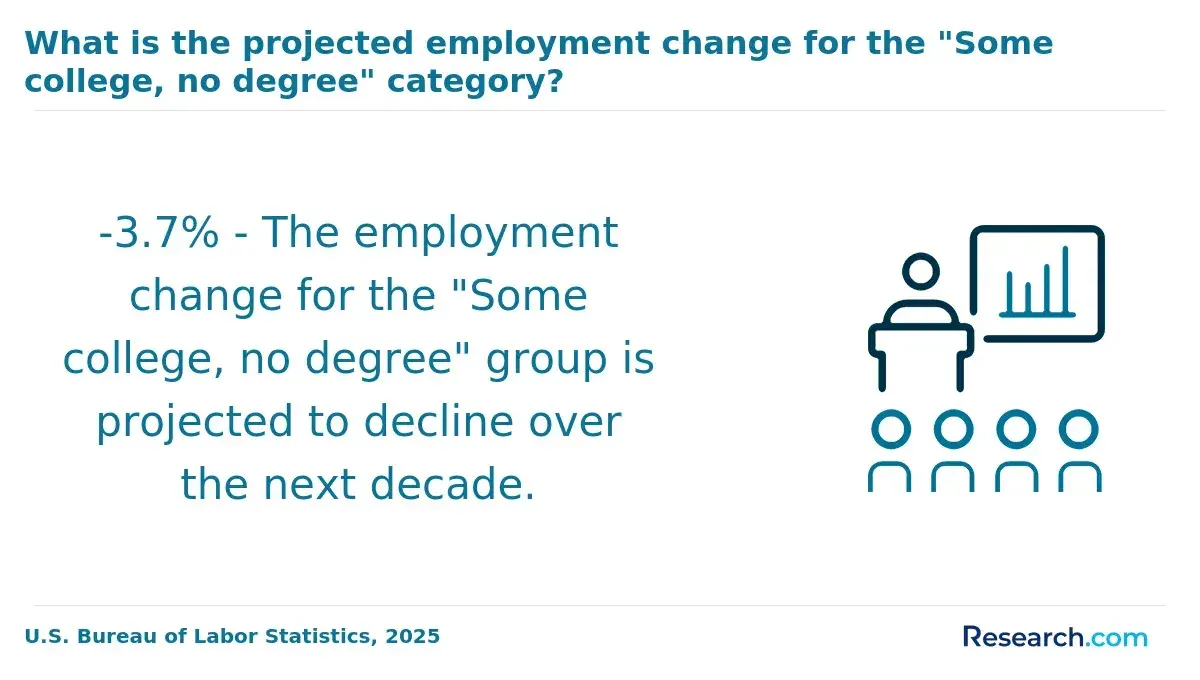
The amount of time and money you can save depends on three variables: how many credits the school accepts, where those credits apply, and how much the remaining coursework costs. The biggest savings usually come when credits satisfy required courses instead of only filling free electives.
For cost context, College Board 2024-25 published tuition and fee averages show why credit evaluation matters:
- $11,610 for in-state students at public four-year institutions.
- $30,780 for out-of-state students at public four-year institutions.
- $43,350 for students at private nonprofit four-year institutions.
These are published averages, not your final bill, and they exclude some living costs, aid, employer tuition assistance, and school-specific discounts. Still, they show why a student who receives meaningful prior learning or transfer credit may reduce both tuition exposure and opportunity cost.
A practical savings estimate is simple: multiply the number of credits you do not need to take by the program's per-credit tuition, then subtract portfolio, transcript, or exam fees. If the remaining degree still takes years, compare it with targeted short certificate programs that pay well for your immediate career goal.
Do not choose the fastest option unless it supports your next step. A slightly longer accredited program with better transfer acceptance, stronger advising, and employer-recognized curriculum may produce better value than a quick degree with weak recognition.
What majors and career paths work best with life experience credit options?
Life experience credit works best when your past learning closely matches the degree's applied coursework. It is less useful when a major depends on tightly sequenced labs, clinical hours, studio work, or state licensure rules that require specific supervised experiences.
The table below compares common majors by how well they typically align with experience credit. Use it as a starting point, then request a school-specific degree audit.
| Major area | Experience credit fit | Good candidates | Watch-outs |
| Business | High | Managers, entrepreneurs, supervisors, military leaders, sales professionals | Accounting and CPA pathways may require specific credits |
| Information technology | High | Help desk staff, network technicians, cloud administrators, systems support workers | Certifications may expire or apply only to electives |
| Cybersecurity | High | Security analysts, veterans, network administrators, incident response staff | Hands-on labs and current tools still matter |
| Healthcare administration | Moderate to high | Allied health workers, billing managers, clinic supervisors, military medical personnel | Clinical licensure rules may not be replaced by PLA |
| Nursing | Moderate | Licensed RNs entering RN-to-BSN programs | Pre-licensure clinical requirements are restrictive |
| Education | Moderate | Paraprofessionals, childcare workers, trainers, youth program staff | Teacher licensure varies by state |
| Engineering | Low to moderate | Engineering technicians and military technical specialists | ABET and math-lab sequences limit flexibility |
If you are comparing majors mainly by long-term earning potential, review the best bachelor degrees to get alongside each school's prior learning policy. The best choice balances career fit, accepted credits, accreditation, and realistic completion time.
What careers, salaries, and job outlook can graduates expect from these programs?
Career outcomes depend on the major, location, experience level, industry, and whether the role requires licensure or graduate education. Life experience credit may help you finish faster, but it does not replace employer expectations for current technical skills, internships, certifications, leadership results, or state credentials.
The table below uses BLS May 2024 national median wage data for broad occupational groups related to common online bachelor's completion majors. These figures describe labor-market context, not guaranteed earnings for any individual graduate.
| Career area | Related bachelor's pathway | Common roles | May 2024 median annual wage context |
| Business and finance | Business administration, accounting, finance, management | Business analyst, accountant, operations specialist, financial analyst | Business and financial operations occupations: $80,920 |
| Management | Business, healthcare administration, public administration | Operations manager, project manager, department supervisor | Management occupations: $122,090 |
| Computer and IT | IT, computer science, cybersecurity, data analytics | Software developer, systems analyst, network administrator, security analyst | Computer and mathematical occupations: $105,990 |
| Healthcare | Nursing, healthcare administration, health information management | Registered nurse, clinical coordinator, health services manager | Healthcare practitioners and technical occupations: $95,480 |
| Education | Elementary education, special education, educational studies | Teacher, instructional assistant lead, training coordinator | Educational instruction and library occupations: $59,940 |
| Protective service | Criminal justice, homeland security, emergency management | Police officer, corrections supervisor, security manager, probation officer | Protective service occupations: $53,080 |
Job outlook is strongest where bachelor's study aligns with durable demand: healthcare management, registered nursing, cybersecurity, software development, data, and operations improvement. Students aiming for leadership, clinical advancement, or specialized technical work may later compare most in demand master's degrees, but a bachelor's degree is often the immediate credential needed to unlock that next step.
AI and automation are changing hiring expectations rather than eliminating the value of a degree. Employers increasingly look for graduates who can use digital tools, analyze data, communicate clearly, manage projects, and keep learning as software, compliance rules, and workflows change.
How can students evaluate and choose a reputable online program offering experience credit?
The best online bachelor's program with life experience credit is not simply the one that accepts the most credits. It is the one that applies your credits efficiently, keeps you eligible for your target career, maintains recognized accreditation, and provides enough support to help you finish.
Use this sequence before enrolling. It turns a vague "How fast can I finish?" conversation into a clear comparison of cost, time, and career fit.
- Choose the career goal first, then identify the degree and accreditation needed for that goal.
- Request a written transfer and prior learning evaluation before committing to the program.
- Ask which accepted credits satisfy major requirements, general education, electives, upper-division credits, and residency rules.
- Calculate total remaining cost, including tuition, books, technology fees, portfolio fees, exam fees, and graduation fees.
- Confirm whether the program meets state licensure or certification requirements if your field is regulated.
- Compare student support, including online tutoring, advising, library access, disability services, career coaching, and internship help.
- Review course format, term length, weekly workload, proctoring requirements, and whether classes are asynchronous or live.
- Check graduation, retention, loan default, and job-placement information when the school makes reliable data available.
The table below highlights red flags that deserve extra scrutiny. None automatically prove a program is bad, but they should prompt more questions before you spend money.
| Red flag | Why it matters | Better alternative |
| The school promises a degree almost entirely for life experience | Legitimate colleges evaluate documented learning against course outcomes | Choose a school with a transparent prior learning assessment process |
| Accreditation is unclear or unfamiliar | Unrecognized accreditation can affect aid, transfer, and employer acceptance | Verify institutional accreditation through recognized federal or CHEA-listed sources |
| No written credit audit is provided | You may discover late that credits do not apply to required courses | Request a degree plan showing remaining courses and total cost |
| The program ignores state licensure rules | Education, nursing, counseling-related, and engineering paths can be state-specific | Confirm requirements with the state board before enrolling |
| Admissions pressure is high | Rushed decisions increase the risk of poor fit and unexpected costs | Compare at least three programs using the same criteria |
A strong final shortlist usually includes one affordable public option, one adult-focused private nonprofit or public online option, and one employer-partner or military-friendly program if applicable. Compare them by remaining credits, total price, support quality, accreditation, and career alignment rather than tuition alone.
Other Things You Should Know About
At reputable accredited colleges, usually no. Prior learning credit can reduce the number of courses you need, but schools normally require a minimum number of credits completed through their institution and specific upper-division major coursework.
No. Transfer credit comes from prior college coursework. Life experience credit is awarded after a school evaluates documented learning from work, military training, exams, certifications, portfolios, or approved professional training.
Employers generally focus on whether the institution is accredited, whether the degree matches the role, and whether you can demonstrate relevant skills. Your transcript may show transfer or assessment credits, but the credibility of the school and program matters most.
Typically, you can earn up to 30 credits through life experience in 2027 online bachelor's degree programs. Each program has specific criteria, such as work experience documentation or portfolio assessments, that must be met to claim these credits. Verification methods may vary by institution.
References
- Top Online Schools That Accept Transfer Credits https://www.edvisorly.com/student-guides/online-schools-that-accept-transfer-credits
- Finish the degree you started (without starting over) https://news.newmanu.edu/finish-the-degree-you-started-without-starting-over/
- The Most Popular Accredited Online Colleges https://www.onlineu.com/online-schools/most-popular
- The Best Online Colleges And Universities | Learn How To Become https://www.learnhowtobecome.org/online-universities-and-colleges/best/
- Top 50 Online and Distance Learning Universities 2026 | EUCDL Distance Accreditation Council https://www.eucdl.com/ranking-2026
- Glossary of Terminology in Prior Learning Recognition https://academyone.com/glossary
- Which Colleges Give Credit for Work Experience- Athens State https://www.athens.edu/online-degree-completion-programs-working-adults/what-colleges-give-credit-for-work-experience/
- Best Online Colleges for Working Adults [2026] https://www.straighterline.com/blog/degree-completion-best-online-colleges-for-working-adults