2027 Best Online Bachelor's Degrees With Multiple Start Dates

Co-Founder and Chief Data Scientist
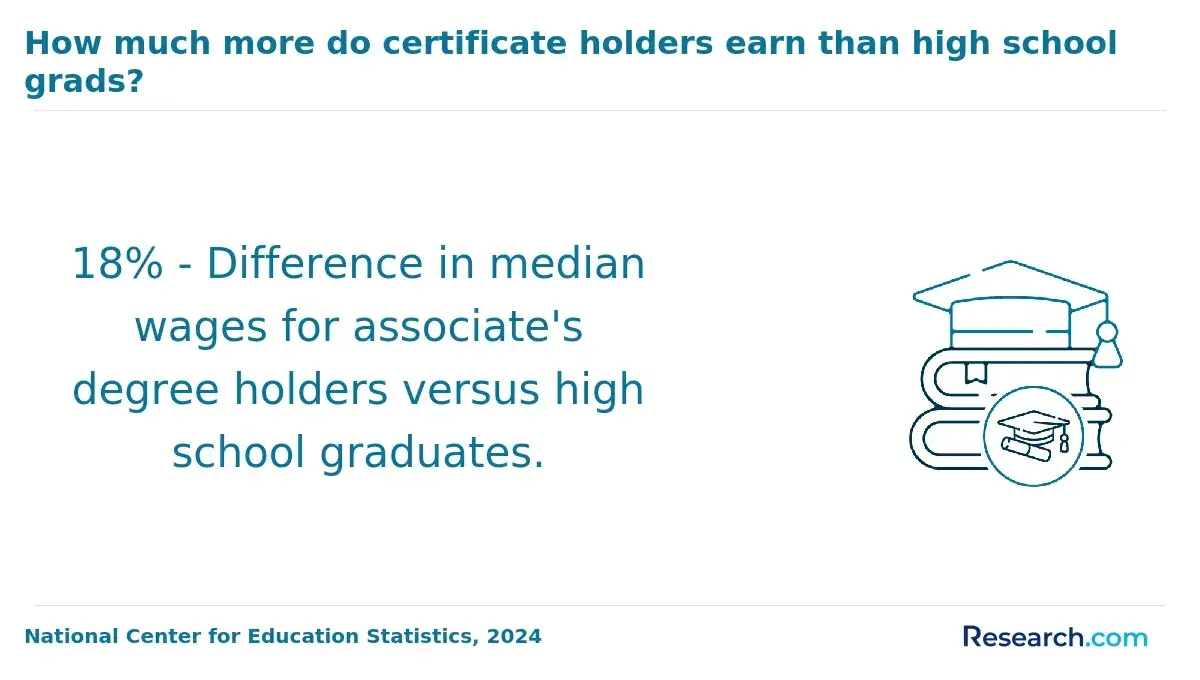
Choosing an online bachelor's degree is harder when schools advertise monthly, rolling, or accelerated starts but explain them differently. The format matters because it affects transfer timing, financial aid, course load, and graduation speed. BLS annual data show bachelor's degree holders had median weekly earnings of $1,543 in 2024, compared with $930 for workers with only a high school diploma, but outcomes depend on field and program quality. This guide helps working adults, transfer students, parents, and career changers compare flexible-start degrees and choose a practical path.
Key Things You Should Know
- Multiple-start online bachelor's programs usually use 5-, 6-, 7-, 8-, or 10-week terms, letting students begin sooner than traditional fall or spring calendars.
- Cost varies widely: College Board reported average 2024-25 published tuition and fees of $11,610 for in-state public four-year institutions and $43,350 for private nonprofit four-year institutions.
- Flexible starts are most valuable when paired with regional accreditation, strong transfer-credit policies, clear total-cost estimates, and career-aligned majors.
Top 10 Best Online Bachelor's Degrees With Multiple Start Dates
Business Degrees
Online business bachelor's degrees with frequent starts fit students seeking broad career mobility in management, accounting, marketing, human resources, supply chain, or entrepreneurship. Look for programs that include analytics, finance, business communication, and applied projects, not just general survey courses. Business is often transfer-friendly because many lower-division requirements overlap with associate degrees. Students targeting CPA eligibility should check state accounting-credit rules before enrolling, since a bachelor's alone may not meet the 150-hour requirement.
Healthcare Degrees
Healthcare administration, health sciences, public health, and healthcare management degrees work well online because many roles focus on operations, compliance, quality improvement, and data rather than direct clinical licensure. These programs can suit medical assistants, billing specialists, military medics, and allied health workers seeking advancement. Students should verify whether internships, practicums, or background checks are required. For licensed clinical paths, confirm that the program meets your state's rules before assuming an online format is enough.
Information Technology Degrees
Computer Science Degrees
Computer science degrees emphasize programming, algorithms, software engineering, data structures, operating systems, and sometimes artificial intelligence. Flexible start dates help students move through prerequisite sequences more quickly, but CS still requires time for math and coding practice. This path is best for students aiming at software development, data engineering, machine learning support, or technical graduate study. Ask whether courses use current languages, portfolio projects, version control, and collaborative development tools.
Cybersecurity Degrees
Psychology Degrees
An online psychology bachelor's degree can support careers in human services, case management, market research, HR, behavioral health support, and graduate study. It does not qualify graduates to become licensed psychologists by itself. Frequent start dates make psychology appealing for transfer students because general education and social science credits often apply. Students interested in counseling, clinical psychology, or school psychology should map the bachelor's program to future master's or doctoral admissions requirements.
Nursing Degrees
Online nursing bachelor's options are usually RN-to-BSN programs for licensed registered nurses, not entry-level pre-licensure BSN programs. Multiple start dates help working nurses fit courses around shifts, but clinical, practicum, or community health components may still be required. Verify CCNE or ACEN accreditation, state authorization, and employer tuition reimbursement options. Students without an RN license should look for approved pre-licensure programs and confirm local clinical placement availability.
Education Degrees
Online education bachelor's degrees can lead to teaching, instructional support, childcare leadership, or non-licensure education roles, depending on the program. Multiple start dates help adult learners begin general education or theory courses sooner, but teacher licensure programs usually require field experience and student teaching. Always check whether the degree leads to certification in your state. Non-licensure education degrees may be useful for training, tutoring, youth programs, and education administration support.
Criminal Justice Degrees
Criminal justice bachelor's programs cover policing, courts, corrections, homeland security, criminology, ethics, and public policy. Flexible starts can help working public safety personnel or military students convert prior credits into a degree. The degree may support advancement in law enforcement, probation, security management, or federal service, but hiring rules vary by agency. Students should compare physical, citizenship, background, academy, and experience requirements before assuming the degree alone opens every role.
Engineering Degrees
Fully online engineering bachelor's degrees with frequent starts are less common than technology or engineering management programs because ABET-accredited engineering curricula often require intensive labs. Options may include electrical engineering, software engineering, industrial engineering, or engineering technology. Students seeking professional engineering licensure should prioritize ABET accreditation and state board requirements. If hands-on lab access is limited, ask how the school delivers experiments, design projects, and proctored assessments.
What are online bachelor's degrees with multiple start dates and how do they work?
Online bachelor's degrees with multiple start dates are undergraduate programs that let students begin more than once or twice per year. Instead of relying only on traditional fall and spring semesters, these programs may offer monthly starts, six starts per year, or rolling admission tied to short academic terms.
The model works best when courses are modular. A student might take one or two 8-week courses, finish them, then begin the next pair in the following term. This structure can be easier for working adults than carrying five full-semester courses at once. However, "multiple start dates" does not always mean "self-paced." Some courses still have weekly deadlines, group work, live sessions, proctored exams, or fixed discussion-board schedules.
For most students, the key question is not simply how soon they can start. It is whether the program's calendar, course availability, credit-transfer rules, and aid disbursement schedule support a realistic path to completion.
How do multiple start dates affect program length, flexibility, and graduation timelines?
Multiple start dates can shorten the wait to enroll, but they do not automatically shorten the degree. A bachelor's degree typically requires about 120 credits, and the real timeline depends on transfer credits, course load, term length, prerequisite sequencing, and whether the student studies year-round.
Flexible calendars generally create three practical pacing options. Each works for a different type of student:
- Full-time year-round study: Best for students who can handle a heavier workload and want the fastest path, especially if they already have transfer credits.
- Part-time steady study: Best for working adults, caregivers, and military students who need predictable weekly commitments without pausing for long semesters.
- Stop-and-restart enrollment: Useful during job changes or family emergencies, but students should confirm leave policies, course rotation, and satisfactory academic progress rules for aid.
Students balancing school with parenting may also want to compare program calendars, childcare demands, and support services against broader guidance on the best degrees for single moms. The best flexible-start program is usually the one a student can sustain, not simply the one with the earliest next start date.
How can students compare online programs with multiple start dates across different universities?
Comparing online bachelor's programs with multiple starts requires more than scanning tuition and start dates. Two schools may both advertise "flexible" enrollment while offering very different credit-transfer limits, student support, and course pacing.
The table below summarizes the comparison factors that most directly affect cost, completion time, and career value.
| Comparison factor | Why it matters | What to verify |
| Accreditation | It affects credit transfer, graduate school eligibility, employer acceptance, and federal aid access. | Confirm institutional accreditation through the school and recognized accreditor databases. |
| Start frequency | Frequent starts reduce waiting time but may compress coursework. | Ask how many start dates apply to your major, not just the university overall. |
| Transfer policy | Accepted credits can reduce both cost and time to degree. | Request a written transfer evaluation before committing. |
| Course format | Asynchronous, synchronous, and self-paced formats require different schedules. | Ask about live attendance, weekly deadlines, exams, and group projects. |
| Total cost | Fees, books, technology charges, and repeated courses can change affordability. | Request program-level cost estimates after transfer credits are reviewed. |
| Career alignment | A flexible calendar has limited value if the major does not match the target role. | Review curriculum, internships, employer partnerships, and outcome disclosures. |
A common mistake is choosing the school with the soonest start date before reviewing the degree plan. A better approach is to compare the first available start with the full sequence of required courses, especially in majors with prerequisites such as nursing, engineering, computer science, and teacher education.
What admission requirements and timelines apply to online bachelor's programs with rolling starts?
Admission requirements vary by university, but online bachelor's programs with rolling or frequent starts commonly ask for an application, official transcripts, proof of high school completion or prior college credit, and sometimes a minimum GPA. Test scores are often optional for adult and transfer applicants, but selective majors may require prerequisites.
Rolling starts can make admissions feel faster, yet students still need to plan around transcript processing and financial aid deadlines. A practical application sequence looks like this:
- Choose a target start date and ask when all documents must be received.
- Send every prior college transcript, including failed or withdrawn coursework, so the school can complete an accurate review.
- Request a preliminary degree audit that shows accepted transfer credits and remaining requirements.
- Complete the FAFSA and any employer, military, or state aid paperwork early enough for billing deadlines.
- Confirm whether orientation, advising, placement tests, or technology checks are required before classes begin.
Students who are not ready for a four-year program may save money by starting with community college or an associate pathway; comparing the easiest 2 year degree to get can help identify transfer-friendly entry points, though "easy" should never replace career fit.
How do accreditation and state authorization impact online bachelor's degrees with flexible start dates?
Accreditation and state authorization are two of the most important safeguards for online students. Accreditation evaluates institutional quality and can affect federal financial aid, transfer credit, graduate school admission, and employer recognition. State authorization determines whether an institution may enroll online students in a particular state.
Programmatic accreditation matters in fields where licensure, certification, or employer standards are strict. Nursing students should look for CCNE or ACEN accreditation when appropriate. Engineering students may need ABET-accredited programs. Business students may value AACSB, ACBSP, or IACBE accreditation, although regional institutional accreditation is still the baseline for legitimacy.
The red flag to avoid is assuming that "online," "accelerated," or "multiple start dates" means the program is automatically accepted everywhere. Before enrolling, ask the school to confirm in writing whether the degree meets educational requirements in your state for any licensed occupation you plan to pursue.
What curriculum and course formats are common in online programs offering frequent start dates?
Online bachelor's programs with frequent starts commonly use asynchronous courses, synchronous evening sessions, hybrid requirements, competency-based modules, or accelerated 8-week terms. The best format depends on how much structure you need and how predictable your schedule is.
Students often confuse "online" with "self-paced," but many online courses still require weekly participation. If you need maximum control over when you study, compare accredited self-paced online colleges with term-based programs before applying.
Common course elements include recorded lectures, learning management systems, discussion boards, digital textbooks, virtual labs, proctored exams, capstone projects, simulations, and group assignments. In career-aligned majors, applied projects are especially important because they give students work samples for interviews. Students should ask whether the program provides tutoring, library access, writing support, disability accommodations, technical help, and career services during evenings or weekends.
How much do online bachelor's degrees with multiple start dates cost, and what aid is available?
The cost of an online bachelor's degree with multiple start dates depends on tuition, transfer credits, residency rules, fees, course load, books, technology, and whether the student attends a public, private nonprofit, or private for-profit institution. College Board reported average published tuition and fees of $11,610 for in-state public four-year institutions and $43,350 for private nonprofit four-year institutions in 2024-25, which shows why total price can vary dramatically by school type and aid package.
The table below breaks down cost factors that can change the real amount students pay.
| Cost factor | How it affects affordability | Question to ask |
| Per-credit tuition | Short terms may still charge by credit, so the annual cost depends on course load. | What is the total tuition for remaining credits after transfer review? |
| Mandatory fees | Online, technology, graduation, proctoring, and course fees can add to tuition. | Which fees apply every term and which apply only once? |
| Transfer credits | Accepted credits reduce repeated coursework and total time enrolled. | How many credits will apply directly to the major and general education requirements? |
| Books and materials | Inclusive-access materials may be convenient but still add costs. | Are textbooks, lab kits, software, or subscriptions included? |
| Financial aid timing | Nontraditional terms can affect disbursement timing and enrollment status. | How does aid apply across 5-, 6-, 8-, or 10-week terms? |
Federal aid may include Pell Grants, Direct Loans, work-study, and institutional grants for eligible students. The maximum Pell Grant remained $7,395 for the 2024-25 award year, according to Federal Student Aid, but eligibility depends on financial need, enrollment intensity, and program participation rules. Students should also compare employer tuition assistance, military benefits, state grants, scholarships, and payment plans.
What careers and industries align best with online bachelor's degrees offering flexible start options?
Online bachelor's degrees with flexible starts align best with careers where employers value accredited degrees, practical skills, and documented experience more than campus attendance. Strong fits include business operations, accounting support, IT, cybersecurity, healthcare administration, public safety, human resources, education support, and software-related roles.
Career fit depends on both the major and the student's existing background. A working medical assistant may gain more from healthcare administration than from a general business degree. A help desk technician may benefit more from IT or cybersecurity than from a broad liberal studies program. A student aiming for therapy, teaching licensure, engineering licensure, or registered nursing should choose programs based on state and programmatic requirements, not just convenience.
Some students use a flexible-start bachelor's degree as a stepping stone to graduate education. Those already planning beyond the bachelor's level can later compare online PhD programs for working professionals, but it is usually smarter to first choose an undergraduate major that builds the prerequisites, research exposure, or professional experience expected in the next credential.
How do salary expectations and job outlook compare for graduates of these online programs?
Salary expectations vary by occupation, region, employer, experience, and industry. A bachelor's degree can improve access to many professional roles, but it does not guarantee a specific income. BLS data for 2024 show that workers with bachelor's degrees had higher median weekly earnings than workers with only a high school diploma, which supports the long-term value of degree completion when the major matches labor-market demand.
The table below uses BLS May 2024 median wage data and BLS occupational projections where available to show how common online bachelor's degree fields connect to career outcomes. Use these figures as labor-market context, not as promises of graduate earnings.
| Field | Example roles | 2024 median pay context | Outlook context |
| Business | Accountant, market research analyst, operations specialist | Accountants and auditors had median pay of $81,680. | Demand is strongest for analytical, compliance, and finance-related skills. |
| Healthcare administration | Medical and health services manager, quality coordinator | Medical and health services managers had median pay of $117,960. | BLS projects much faster-than-average growth for this occupation from 2024 to 2034. |
| Information technology | Network administrator, systems analyst, IT support lead | Computer systems analysts had median pay of $103,790. | Cloud, security, and data skills improve competitiveness. |
| Computer science | Software developer, QA analyst, data-focused developer | Software developers had median pay of $133,080. | AI adoption is changing tasks, increasing the value of problem-solving and software design skills. |
| Cybersecurity | Information security analyst, SOC analyst, risk analyst | Information security analysts had median pay of $124,910. | BLS projects much faster-than-average growth for this occupation from 2024 to 2034. |
| Nursing | Registered nurse, nurse manager pathway, BSN-prepared RN | Registered nurses had median pay of $93,600. | Licensure, clinical experience, and local healthcare demand shape outcomes. |
AI and automation are changing expectations across nearly every field. Business students need data literacy, IT students need cloud and automation skills, cybersecurity students need threat-analysis practice, and healthcare administration students need comfort with electronic health records and compliance systems. The strongest ROI usually comes from combining an accredited degree with internships, projects, certifications, and work experience.
Other Things You Should Know About
They can be, especially when the school is properly accredited and the degree matches the role. Employers usually care more about accreditation, skills, experience, and field relevance than the number of annual start dates.
Possibly, but only if courses are available in sequence, you can handle the workload, and your transfer credits apply efficiently. Multiple starts reduce waiting time; they do not remove credit requirements.
Many do if the institution participates in federal aid programs and the student meets eligibility rules. Ask the financial aid office how aid is packaged across short terms before enrolling.
The biggest mistake is choosing speed over fit. Verify accreditation, state authorization, transfer credits, total cost, course format, and career alignment before committing to a start date.
References
- 5 Reasons Why You Should Earn Your Bachelor’s Degree Online https://www.pointloma.edu/resources/accelerated-undergraduate/5-reasons-why-you-should-earn-your-bachelors-degree-online
- Best Accredited Online Universities in 2025 https://www.study.eu/article/best-accredited-online-universities
- Online Degree vs. Traditional: Choosing the Right Path https://beal.edu/online-degree-vs-traditional/
- 2025 List of Accredited Online Degree Programs https://www.onlineu.com/degrees
- Best Online Degrees for Working Adults in 2026 https://www.straighterline.com/blog/degreecompletion-best-online-degrees-for-working-adults-in-2026
- Average Cost of College [2025]: Yearly Tuition + Expenses https://educationdata.org/average-cost-of-college
- Online Degree vs. Traditional | University of Arkansas Grantham https://www.uagrantham.edu/blog/pros-cons-online-degree-vs-traditional-university/
- KIT - INTL - Incoming Students - Degree-Seeking - Prior to Studies - Application - Application for Bachelor Studies https://www.intl.kit.edu/istudies/3167.php
- University Admissions Timelines 2026–27: Key Deadlines in the US, UK, Canada and Australia - ManageBac+ https://www.managebac.com/blog/university-admissions-timelines-202627-key-deadlines-in-the-us-uk-canada-and-australia
- Online Undergraduate Degrees & Certificates | Columbia College https://www.columbiasc.edu/academics/online-undergraduate-degrees-certificates