2027 Most Affordable Bachelor's Degrees for Non-Clinical Healthcare Careers

Co-Founder and Chief Data Scientist
Choosing an affordable bachelor's degree for a healthcare career does not have to mean becoming a clinician. The U.S. Bureau of Labor Statistics projects healthcare occupations to generate about 1.9 million openings annually from 2024 to 2034, and many of those roles depend on managers, analysts, educators, compliance staff, and technology professionals.
This guide is for students, transfer learners, working adults, and career changers who want a healthcare-adjacent path with strong practical value. You will learn which majors fit non-clinical roles, how to compare costs, and how to choose a reputable program.
Key Things You Should Know
- Affordable non-clinical healthcare bachelor's options are often found in health administration, health information management, information technology, business, public health, psychology, and related applied majors.
- NCES data for 2023-24 shows in-state public four-year tuition and fees were roughly far lower than private nonprofit tuition, making residency, transfer credits, and online public programs major cost levers.
- BLS May 2024 wage data shows healthcare management, health IT, cybersecurity, analytics, and compliance-oriented roles can offer stronger salary upside than many entry-level administrative roles, but outcomes vary by experience, location, and credentials.
Top 10 Most Affordable Bachelor's Degrees for Non-Clinical Healthcare Careers
Business Degrees
A bachelor's in business can lead to non-clinical healthcare roles in operations, finance, human resources, supply chain, and practice management. It fits students who want broad career flexibility beyond hospitals and clinics. For healthcare value, prioritize programs offering healthcare management electives, accounting, data analysis, project management, and internship options with health systems, insurers, or medical groups. This path is less ideal if you want deep health informatics, public health, or coding expertise without adding certificates or experience.
Healthcare Degrees
Healthcare administration, health services management, public health, and health information management degrees are the most direct options for non-clinical healthcare careers. They usually cover healthcare systems, reimbursement, quality improvement, law, ethics, population health, and leadership. These majors fit students who already know they want to work in hospitals, insurers, long-term care, community health, or healthcare consulting. For affordability, compare public universities, degree-completion programs, and schools that accept associate-degree transfer credits.
Information Technology Degrees
Information technology degrees prepare students for healthcare IT support, systems administration, electronic health record implementation, database coordination, and vendor management. This path is valuable because healthcare organizations rely on secure, interoperable digital systems. Students should look for coursework in networking, cloud platforms, databases, project management, and healthcare privacy. Affordable programs with industry certification alignment can be especially useful, but students should confirm whether certification exam fees, equipment, or lab costs are included in tuition.
Computer Science Degrees
Computer science is a strong choice for students interested in healthcare software, data engineering, artificial intelligence tools, clinical decision-support systems, or health technology startups. It is usually more technical than IT and may require stronger math preparation. The payoff can be broad career mobility, but it may not include much healthcare-specific content unless students choose electives, internships, or projects tied to health data. Affordable public programs and transfer pathways can reduce the cost of this rigorous major.
Cybersecurity Degrees
Cybersecurity degrees support non-clinical healthcare careers in security operations, risk management, privacy, compliance, and incident response. Healthcare is a high-value target for cyberattacks because organizations store sensitive medical, financial, and identity data. Students should look for programs covering network security, cloud security, risk assessment, governance, and health privacy rules. A cybersecurity degree can be affordable when paired with transfer credits and certification preparation, but students should avoid programs that lack hands-on labs or current security tools.
Psychology Degrees
A psychology bachelor's degree can support non-clinical roles in behavioral health administration, patient experience, community programs, human services coordination, research assistance, and healthcare human resources. It does not qualify graduates to become licensed psychologists, and clinical counseling usually requires graduate education and licensure. For healthcare career value, students should add statistics, research methods, health psychology, case management, data literacy, or public health electives. This major fits students who want people-centered work without direct clinical practice.
Nursing Degrees
Nursing degrees are clinical by design, but licensed nurses can move into non-clinical roles such as case management, quality improvement, utilization review, informatics, care coordination, education, and administration. This route makes the most sense for students who are willing to complete clinical training first. It is not usually the cheapest path for someone who never wants patient-care responsibilities. RN-to-BSN programs may be affordable for current nurses because they often accept prior nursing credits and offer flexible online formats.
Education Degrees
Education degrees can lead to healthcare training, patient education, community outreach, health literacy, staff development, and instructional design roles. This path fits students who enjoy teaching, curriculum design, and communication. To improve healthcare relevance, students should seek electives or minors in public health, health promotion, adult learning, or digital learning tools. It may be less direct than healthcare administration or public health, so internships and portfolio projects are important for showing employers how education skills apply in healthcare settings.
Criminal Justice Degrees
Criminal justice degrees can connect to healthcare through compliance, fraud investigation, emergency management, patient safety, security administration, and regulatory work. This path is strongest when paired with healthcare law, ethics, data analysis, privacy, or risk management coursework. It may appeal to students interested in protecting patients, organizations, and public funds rather than providing care. Before enrolling, students should confirm that the program offers transferable business, analytics, and policy skills rather than focusing only on policing or corrections.
Engineering Degrees
Engineering degrees can support non-clinical healthcare careers in biomedical device operations, healthcare facilities, process improvement, quality systems, safety, logistics, and health technology. Industrial engineering is especially relevant for workflow, efficiency, and systems optimization. Biomedical engineering may be more product- and device-focused. These programs can be demanding and may cost more because of labs, equipment, and longer course sequences, so affordability depends heavily on public tuition, scholarships, transfer planning, and whether the student is ready for advanced math and science.
What are non-clinical healthcare careers and how do bachelor's degrees prepare you for them?
Non-clinical healthcare careers are jobs that support patient care, health systems, insurance, public health, and medical technology without making diagnosis or treatment the worker's primary responsibility. These roles can include healthcare administrator, health information specialist, data analyst, compliance coordinator, quality improvement associate, revenue cycle analyst, patient advocate, community health program coordinator, cybersecurity analyst, and EHR implementation specialist.
A bachelor's degree prepares students by combining general education with applied skills in healthcare systems, communication, analytics, law, ethics, leadership, and technology. The right major depends on the type of work you want to do. For example, a student who wants to manage clinic operations may benefit from healthcare administration or business, while a student who wants to protect patient data may be better served by IT or cybersecurity.
The main advantage of non-clinical healthcare is career access to a growing sector without the same clinical licensure demands as nursing, medicine, radiology, or therapy. The trade-off is that many roles still require experience, internships, technical skills, or industry knowledge. A bachelor's degree can open doors, but students should build a portfolio of relevant projects, software skills, and workplace experience before graduation.
Which non-clinical healthcare bachelor's majors offer the best mix of affordability and career value?
The best mix of affordability and career value usually comes from majors that are broad enough to transfer across employers but specific enough to signal healthcare readiness. Students should compare not just tuition, but also transfer-credit acceptance, internship access, software training, and whether the curriculum maps to real job postings.
The table below compares common bachelor's majors for non-clinical healthcare careers. Use it to match your interests with the kind of healthcare work each degree typically supports.
| Major | Best fit | Common non-clinical healthcare roles | Affordability notes |
| Healthcare administration | Students who want management or operations roles | Clinic coordinator, operations associate, healthcare manager trainee | Often available through public universities and online degree-completion programs |
| Health information management | Students interested in records, coding, privacy, and data quality | Health information specialist, coding manager, privacy coordinator | Can be cost-effective if the program aligns with recognized HIM competencies |
| Information technology | Students who like systems, support, and infrastructure | Healthcare IT analyst, EHR support specialist, systems coordinator | Look for included labs and certification preparation to avoid added costs |
| Cybersecurity | Students focused on privacy, risk, and security | Security analyst, compliance analyst, risk associate | Public online programs may lower costs, but hands-on labs matter |
| Business administration | Students who want flexibility across healthcare and other industries | Revenue cycle analyst, HR specialist, supply chain coordinator | Often affordable because it is widely offered and transfer-friendly |
| Public health | Students drawn to prevention, outreach, and population health | Health educator, program coordinator, community health specialist | Check whether internships are built into tuition or require separate fees |
A practical shortlist often includes healthcare administration, health information management, IT, cybersecurity, business, and public health. Students who are still comparing flexible online options can also review guides to the best degrees to get online to see how healthcare-adjacent majors compare with other career-focused pathways.
Choose healthcare administration if you want to manage people, budgets, schedules, or patient-service processes. Choose health information management if you prefer records, compliance, coding, privacy, and data integrity. Choose IT or cybersecurity if you want a technical role with healthcare employers. Choose business if you want the most cross-industry flexibility. Choose public health if you want prevention, community programs, and population-level impact.
How much do affordable non-clinical healthcare bachelor's programs cost and how can students reduce expenses?
Affordable non-clinical healthcare bachelor's programs can range from low-cost public degree-completion options to expensive private programs. NCES data for the 2023-24 academic year shows that tuition and fees at public four-year institutions were substantially lower for in-state students than at private nonprofit institutions, which means residency status and school type can have a major effect on total cost.
The table below summarizes the major cost categories students should compare before enrolling. This matters because the cheapest advertised tuition may not be the lowest total price after fees, books, technology, and lost transfer credits are included.
| Cost factor | Why it matters | How to evaluate it |
| Tuition rate | Usually the largest direct education cost | Compare per-credit tuition, not only annual estimates |
| Residency status | Public universities may charge different in-state and out-of-state rates | Ask whether online students qualify for a flat or reduced distance-learning rate |
| Transfer credits | Accepted credits can shorten time to graduation | Request a written transfer evaluation before committing |
| Program fees | Technology, lab, assessment, and graduation fees can add up | Ask for the full cost of attendance by term |
| Books and software | Healthcare coding, analytics, and IT courses may require paid platforms | Ask which materials are included and which are out of pocket |
| Internship requirements | Fieldwork may require travel, background checks, or unpaid hours | Confirm placement support and any additional compliance costs |
Students can reduce expenses most effectively by planning before enrollment. The following steps help lower total cost without choosing a weak program:
- Complete general education credits at a regionally accredited community college when transfer agreements are clear.
- Choose a public university or nonprofit program with transparent per-credit pricing and strong transfer policies.
- Submit the FAFSA and compare grants before loans; the maximum Federal Pell Grant for 2024-25 is $7,395 for eligible students.
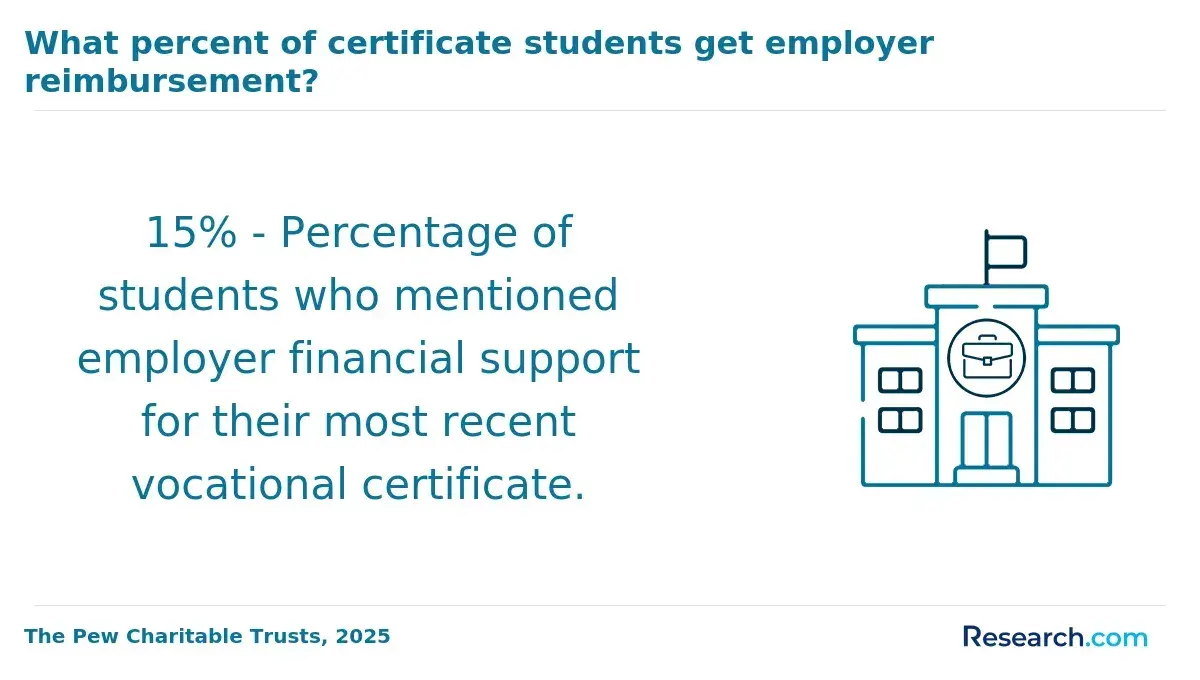
- Ask employers about tuition assistance if you already work for a hospital, insurer, clinic, or healthcare vendor.
- Avoid retaking courses by requesting a degree audit before paying an enrollment deposit.
- Compare part-time and full-time schedules to see which minimizes tuition, fees, childcare, commuting, and lost work income.
Do not judge affordability only by annual tuition. A slightly higher per-credit program that accepts more transfer credits and includes certification preparation may cost less overall than a cheaper-looking program that adds fees or extends your timeline.
What admission requirements and prerequisites do non-clinical healthcare bachelor's programs typically have?
Most non-clinical healthcare bachelor's programs require a high school diploma or equivalent for first-year admission, while degree-completion programs usually require prior college credits or an associate degree. Common application materials include transcripts, an online application, placement information, and sometimes a personal statement. Test scores are less commonly required than they once were, but policies vary by institution.
Prerequisites depend on the major. Healthcare administration programs may expect college algebra, composition, and introductory business or health courses. Health information management may require anatomy, medical terminology, statistics, and computer applications. IT, cybersecurity, computer science, and engineering programs may require stronger math readiness. Public health and psychology programs usually emphasize writing, statistics, research methods, and social science foundations.
Career changers should pay special attention to transfer policy and pacing. Students who already have college credit, military training, professional certifications, or healthcare work experience may be able to shorten the timeline, and some may benefit from accelerated programs for career changers if the format is reputable and manageable.
Before applying, students should complete a simple readiness check. These steps can prevent delays after admission:
- Ask whether prior credits apply to general education, major requirements, or only electives.
- Confirm minimum GPA requirements for admission to the university and the major.
- Check whether background checks, immunizations, drug screening, or field-placement documentation are required for internships.
- Ask whether math, statistics, or science prerequisites must be completed before upper-division courses.
- Review whether the program requires synchronous classes, local placements, or on-campus intensives.
A common mistake is assuming admission to the university equals admission to a selective major. Some health information, business, engineering, computer science, or cybersecurity programs may have separate progression standards, so students should verify both levels of admission before enrolling.
How do online non-clinical healthcare bachelor's programs compare with campus-based options for cost and quality?
Online non-clinical healthcare bachelor's programs can be as rigorous as campus-based programs when they are properly accredited, faculty-supported, and transparent about outcomes. They often reduce commuting and housing costs, which is why they can be attractive to working adults, parents, rural students, military-connected learners, and students who already work in healthcare.
The table below compares online and campus-based formats on the issues that most affect cost and quality. Use it to decide which format fits your schedule, learning style, and career goals.
| Factor | Online program | Campus-based program |
| Direct costs | May offer flat online tuition, but technology fees can apply | May have higher commuting, parking, housing, or meal costs |
| Flexibility | Often better for working adults and caregivers | Often better for students who want a fixed weekly routine |
| Networking | Depends on virtual events, internships, and faculty engagement | Can offer easier access to clubs, local employers, and in-person events |
| Hands-on learning | Strong when simulations, labs, projects, and local placements are well designed | Strong when labs, employer partnerships, and campus resources are accessible |
| Student support | Quality varies; advising and tutoring should be available remotely | Support may be easier to access in person, but not always outside business hours |
Online programs make sense when you are self-directed, need scheduling flexibility, and can verify that advising, tutoring, library access, career services, and faculty interaction are available remotely. Campus programs may be better if you need structure, want in-person networking, or are pursuing a lab-heavy major such as engineering.
Military-connected students should also review whether schools offer flexible terms, deployment policies, tuition assistance knowledge, and portable support services. A focused guide to online degrees for military spouses can help those learners compare programs with mobility and family logistics in mind.
Quality is not determined by format alone. A low-quality online program and a low-quality campus program share similar red flags: unclear accreditation, weak advising, poor transfer transparency, limited career support, outdated course content, and pressure-heavy admissions tactics.
What accreditation should non-clinical healthcare bachelor's programs have and why does it matter?
Accreditation is one of the most important checks for any affordable bachelor's degree. At minimum, students should choose an institution that holds recognized institutional accreditation from an agency accepted by the U.S. Department of Education or the Council for Higher Education Accreditation. This affects federal financial aid eligibility, transfer credit, graduate school admission, and employer confidence.
Some non-clinical healthcare programs may also have programmatic accreditation or specialized recognition. For example, health information management programs may seek accreditation through the Commission on Accreditation for Health Informatics and Information Management Education. Business programs may hold accreditation from organizations such as AACSB, ACBSP, or IACBE. Public health programs may align with CEPH standards, especially at the graduate level or in standalone public health units.
Students should not assume every healthcare-related bachelor's needs specialized accreditation, but they should understand when it matters. Programmatic accreditation is especially important when it affects certification eligibility, graduate admission, employer screening, or professional credibility. If a school claims that graduates are prepared for a certification, ask for the exact certification name and eligibility requirements.
Use the following checks before enrolling. They are especially important for online, accelerated, and low-cost programs:
- Search the institution in the official U.S. Department of Education accreditation database.
- Confirm the accreditor listed on the school website matches the official database.
- Ask whether the specific major has programmatic accreditation, specialized approval, or recognized curriculum alignment.
- Verify that credits are transferable to public universities or graduate programs you may consider later.
- Be cautious of schools that advertise unrealistic timelines, vague accreditation language, or guaranteed job outcomes.
The most common accreditation mistake is focusing only on price. A very cheap program can become expensive if credits do not transfer, employers question the credential, or students cannot access federal financial aid.
What core courses and specializations are common in non-clinical healthcare bachelor's degree curricula?
Non-clinical healthcare bachelor's curricula usually combine general education, major courses, applied projects, and sometimes internships or capstones. The best programs help students understand how healthcare organizations operate while building transferable skills in communication, analytics, technology, ethics, and problem-solving.
The table below shows common course areas and how they connect to workplace skills. This can help students evaluate whether a curriculum is practical rather than just healthcare-themed.
| Course area | What students learn | Career relevance |
| Healthcare systems | How hospitals, insurers, clinics, public agencies, and vendors interact | Useful for administration, consulting, and operations roles |
| Healthcare law and ethics | Privacy, compliance, consent, risk, and organizational responsibility | Important for compliance, quality, and health information roles |
| Finance and reimbursement | Budgets, billing, insurance, revenue cycle, and payment models | Relevant to finance, practice management, and revenue cycle jobs |
| Data analytics and statistics | How to interpret data, measure outcomes, and support decisions | Valuable for quality improvement, informatics, and analyst roles |
| Information systems | Electronic health records, databases, workflows, and security basics | Supports health IT, EHR, and operations technology positions |
| Leadership and project management | Team coordination, process improvement, planning, and communication | Useful for supervisory and advancement tracks |
Specializations can make a general bachelor's degree more marketable. Common options include health informatics, long-term care administration, healthcare finance, healthcare quality, public health, emergency management, cybersecurity, data analytics, human resources, and community health education.
Students should look for applied assignments that resemble real healthcare work. Strong examples include workflow maps, compliance memos, dashboard projects, budget analyses, EHR case studies, community health plans, security risk assessments, and capstone projects with employer input.
A red flag is a curriculum that uses healthcare terminology but lacks measurable skills. If a program does not include analytics, writing, technology, law, ethics, finance, or project-based work, graduates may need extra certificates or experience to compete for non-clinical roles.
What jobs, salaries, and advancement opportunities can non-clinical healthcare bachelor's graduates expect?
Non-clinical healthcare bachelor's graduates can pursue entry-level, specialist, analyst, coordinator, and management-track roles. Salaries vary widely by occupation, region, employer, prior experience, certifications, and whether the role is technical or supervisory. BLS May 2024 data shows that medical and health services managers had a median annual wage of $117,960, but many graduates reach management only after building experience in operations, finance, health information, or a related function.
The table below summarizes common non-clinical healthcare career paths. The salary figures are national BLS medians for related occupations where available, so they should be used as benchmarks rather than promises.
| Career path | Typical responsibilities | Relevant bachelor's majors | Salary context |
| Medical and health services management | Coordinate departments, budgets, staffing, quality, and operations | Healthcare administration, business, public health | BLS May 2024 median annual wage: $117,960 |
| Health information and medical records | Manage records, coding, privacy, data quality, and documentation workflows | Health information management, healthcare administration, IT | BLS May 2024 median for medical records specialists: about $50,000 |
| Information security | Protect systems, monitor threats, assess risk, and support incident response | Cybersecurity, IT, computer science | BLS May 2024 median annual wage for information security analysts: $124,910 |
| Health education and community programs | Plan outreach, teach health topics, evaluate programs, and connect communities to resources | Public health, education, psychology | BLS May 2024 median annual wage for health education specialists: about $63,000 |
| Human resources and training | Recruit, onboard, train, and support healthcare staff | Business, psychology, education | Pay varies by role, industry, and supervisory responsibility |
| Compliance and risk | Monitor policies, audits, privacy practices, investigations, and regulatory obligations | Healthcare administration, criminal justice, business, cybersecurity | Often improves with healthcare experience and specialized credentials |
Advancement usually depends on combining education with experience. A graduate may start as a coordinator, assistant, analyst, or specialist, then move into supervisor, manager, director, consultant, or project lead roles. Technical fields such as cybersecurity, analytics, and health IT may reward certifications and demonstrated skills, while administration roles often reward leadership experience and knowledge of finance, quality, and regulations.
Students comparing salary potential across majors should remember that healthcare is only one labor market. A broader guide to what career makes the most money can help put healthcare-adjacent degrees in context, especially for students deciding between management, technology, engineering, and analytics paths.
AI and automation are changing these jobs, but not eliminating the need for human judgment. Healthcare employers increasingly need workers who can interpret dashboards, manage digital workflows, protect data, communicate with stakeholders, and apply regulations. Students can improve their prospects by learning spreadsheet modeling, databases, basic statistics, privacy rules, project management, and clear professional writing.
How can students choose a reputable, affordable non-clinical healthcare bachelor's program aligned with their goals?
Choosing a reputable, affordable non-clinical healthcare bachelor's program starts with a clear career target. A student who wants healthcare operations should not evaluate programs the same way as a student who wants cybersecurity or health data work. The best choice is the least expensive accredited program that teaches the right skills, accepts the most useful credits, fits your schedule, and has credible career support.
The table below lists questions students should ask schools before enrolling. These questions reveal whether a program is affordable in practice, not just in advertised tuition.
| Question to ask | Why it matters | Strong answer from a school |
| How many of my credits will apply to the major? | Transfer loss can increase cost and delay graduation | The school provides a written degree audit before enrollment |
| What is the total program cost after fees? | Per-credit tuition may not include all expenses | The school gives a term-by-term cost estimate |
| What jobs do graduates typically pursue? | Career alignment affects return on investment | The school names realistic roles and explains career support |
| Are internships, practicums, or capstones required? | Applied experience can improve readiness but may add logistics | The school explains placement support, timing, and costs |
| Which software, tools, or certifications are built in? | Employers often expect practical technical skills | The curriculum includes current tools, projects, or certification preparation |
| What student support is available online or after hours? | Working adults often need flexible advising and tutoring | Support is available remotely and at times students can use |
A smart selection process is more reliable than relying on rankings alone. Follow these steps to build a strong shortlist:
- Pick a target role family, such as administration, health information, analytics, IT, cybersecurity, public health, compliance, or training.
- Identify the majors that most directly support that role family.
- Filter for recognized institutional accreditation and any programmatic accreditation that affects your goal.
- Request written transfer evaluations from at least three schools.
- Compare total cost, not just tuition, including fees, books, software, commuting, and time to completion.
- Review curriculum for job-ready skills such as analytics, healthcare law, finance, project management, privacy, and communication.
- Ask career services how students find internships, entry-level roles, and employer connections.
Avoid programs that make guaranteed salary claims, hide fees, pressure you to enroll immediately, refuse to explain accreditation, or cannot describe realistic career outcomes. Also be cautious of choosing the shortest program without checking workload; accelerated study can be valuable, but only if you can keep up without sacrificing learning or grades.
The right program should leave you with a credential, a skill set, and a career story employers can understand. If two schools are similar in quality, the more affordable choice is usually the one that accepts more credits, offers stronger advising, and connects coursework to real healthcare projects.
Other Things You Should Know About
The cheapest option is often a public in-state or online degree-completion program in healthcare administration, business, public health, IT, or health information management. The lowest total cost usually comes from combining community college transfer credits, grants, employer tuition assistance, and a program with transparent fees.
Yes. Healthcare employers hire non-clinical workers in administration, billing, health information, data analysis, IT, cybersecurity, human resources, compliance, public health, training, and operations. Some roles require experience or certifications, but many do not require a clinical license.
An online degree can be respected if the institution is properly accredited and the program includes rigorous coursework, faculty support, applied projects, and career services. Employers usually care more about accreditation, skills, experience, and job fit than whether courses were completed online.
Salary potential is often strongest in healthcare management, cybersecurity, information technology, analytics, and certain finance or operations roles. However, higher-paying roles usually require experience, technical skills, leadership ability, certifications, or graduate education in addition to the bachelor's degree.
References
- Comparing Outcomes Across Credentials | HESA https://higheredstrategy.com/comparing-outcomes-across-credentials/
- 20 Highest Paid Non-Physician Jobs in Healthcare | Medical Field Jobs https://www.healthcare-management-degree.net/highest-paid-non-physician-jobs-in-healthcare/
- College Scholarship Opportunities - Health Career Collaborative https://healthcareercollaborative.com/college-scholarship-opportunities/
- Health Information Management Degree: The Complete Guide (2026) https://healthinformationmanagementprograms.com/programs/health-information-management-degree/
- What do you learn in a bachelor's in healthcare administration? | edX https://www.edx.org/resources/what-do-you-learn-in-a-bachelors-in-healthcare-administration
- Grants and Work-study https://waportal.org/health-initiatives/washington-wic-careers/financial-resources/grants-and-work-study
- 12 Top Scholarships for Medical School Students in 2026 | ELFI https://www.elfi.com/8-scholarships-for-pre-med-students/
- Highest Paying Non-Medical Jobs (2026) | 3B Healthcare https://3bhealthcare.us/highest-paying-non-medical-jobs/
- How Can I Become a Health Information Manager? - Healthcare Administration Degree Programs https://www.healthcare-administration-degree.net/faq/how-can-i-become-a-health-information-manager/
- Bachelor's Healthcare Programs | ACE https://ace.edu/degree-programs/bachelors-degrees/bachelors-healthcare/