2027 Best Online Bachelor's Degrees With Fast Admissions Decisions

Co-Founder and Chief Data Scientist
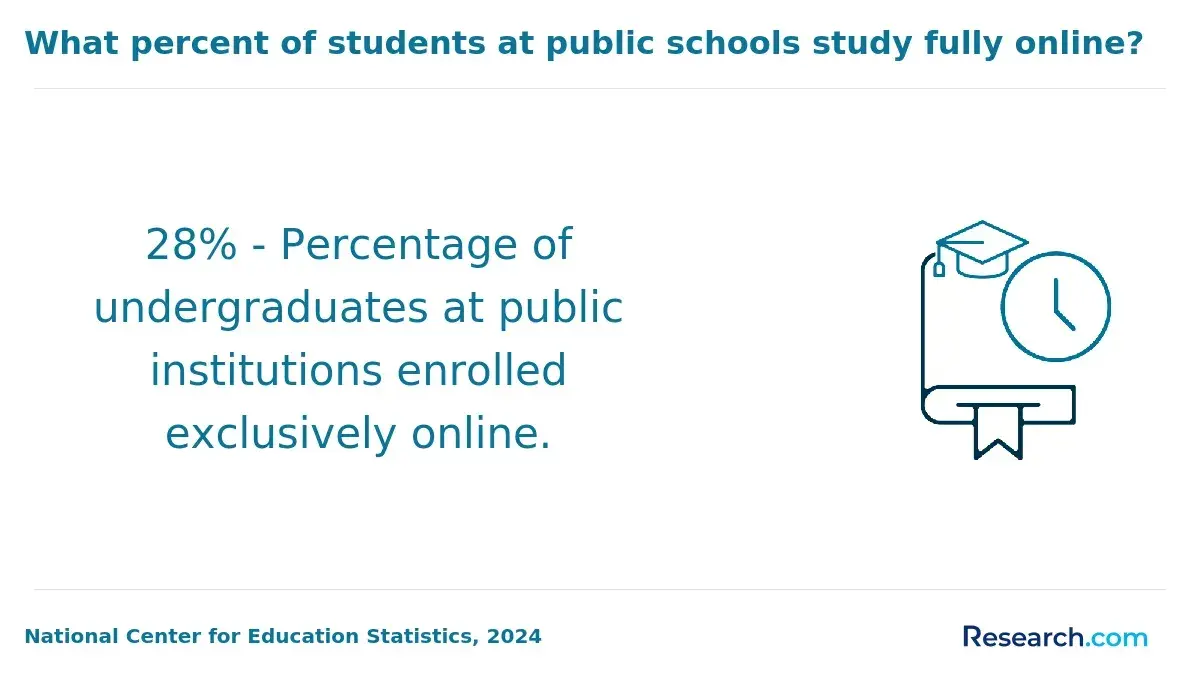
Waiting months for an admissions decision can derail a promotion plan, transfer strategy, or career change. Fast-decision online bachelor's programs solve that problem by using rolling review, simplified document checks, and frequent start dates. NCES data released in 2024 show that more than half of U. S. undergraduates took at least one distance education course, making online options mainstream rather than niche. This guide helps working adults, transfer students, and career changers compare degree types, timelines, accreditation, costs, and outcomes so they can apply with confidence.
Key Things You Should Know
- Fast-admission online bachelor's programs usually make decisions after the application, transcripts, and identity documents are complete; many use rolling admissions rather than one annual deadline.
- College Board's 2024-25 tuition data show published tuition and fees averaging $11,610 at public four-year in-state institutions, $30,780 for public out-of-state students, and $43,350 at private nonprofit four-year institutions, so transfer credit and residency rules can strongly affect total cost.
- Choose institutions recognized by the U.S. Department of Education or CHEA, and verify state licensure alignment for nursing, education, counseling-related psychology paths, and some engineering programs.
Top 10 Best Online Bachelor's Degrees With Fast Admissions Decisions
Business Degrees
Online business bachelor's degrees are among the most common fast-decision options because coursework adapts well to asynchronous delivery. Students usually study accounting, management, marketing, finance, analytics, and business law. This path fits applicants seeking broad career flexibility, internal promotion, or preparation for an MBA.
It is less ideal for someone who needs a highly technical credential without taking quantitative courses. Look for programs that accept transfer credits, offer concentrations, and include projects using spreadsheets, dashboards, and business communication tools employers expect.
Healthcare Degrees
Healthcare bachelor's programs with quick admissions often focus on health administration, public health, healthcare management, or health information management rather than direct clinical preparation. They suit medical assistants, billing specialists, military medics, and associate-degree graduates who want supervisory or administrative roles.
Applicants should check whether the curriculum includes compliance, finance, quality improvement, and data privacy. Clinical licensure is not automatic, so students pursuing patient-care roles should confirm whether additional certification, state approval, or supervised training is required.
Information Technology Degrees
Online IT degrees are practical for students who want applied technology roles without the heavier theory of computer science. Coursework commonly covers networking, systems administration, cloud computing, databases, scripting, project management, and user support.
Fast admissions are common because many programs accept prior college, military training, or industry certifications for credit.
This degree fits career changers and support professionals moving toward analyst or administrator roles. Choose programs with virtual labs and alignment to certifications such as CompTIA, Cisco, Microsoft, or AWS.
Computer Science Degrees
Computer science bachelor's degrees are more technical than general IT programs and typically require programming, data structures, algorithms, discrete math, databases, operating systems, and software engineering. Fast-decision online options can work well for disciplined students who can manage math-heavy coursework remotely.
This degree is a strong fit for software development, data, AI, or systems careers, but it may be frustrating for students who want minimal coding. Compare tutoring access, coding assessments, project portfolios, and whether courses use current languages and development tools.
Cybersecurity Degrees
Cybersecurity bachelor's programs appeal to students interested in protecting networks, systems, data, and organizations from digital threats. Common topics include ethical hacking, incident response, digital forensics, risk management, cloud security, and security law.
Fast admissions are especially useful for IT workers trying to move into security roles quickly. However, a degree alone is rarely enough; employers often value labs, certifications, clearances for some government roles, and hands-on experience. Prioritize programs with simulated environments and mapped certification preparation.
Psychology Degrees
Online psychology bachelor's degrees usually cover human behavior, research methods, statistics, lifespan development, abnormal psychology, and social psychology. Fast admissions help students start quickly, but applicants should understand that a bachelor's alone does not qualify them to become licensed psychologists or therapists.
It can support careers in human services, case management, HR, research assistance, sales, or graduate study. Choose this major if you enjoy reading, writing, research, and people-focused work. Verify internship options if you want applied experience before graduation.
Nursing Degrees
Fast-decision online nursing bachelor's programs are most often RN-to-BSN tracks for licensed registered nurses, not entry-level prelicensure programs. They usually emphasize evidence-based practice, leadership, community health, informatics, and quality improvement. Applicants generally need an active RN license and prior nursing coursework.
Students seeking their first nursing license should be cautious: prelicensure programs require approved clinical experiences and state board alignment. Always confirm state authorization, clinical placement expectations, and whether the program satisfies your board of nursing's requirements.
Education Degrees
Online education bachelor's programs may focus on elementary education, special education, early childhood education, or non-licensure educational studies. Fast admissions can help paraprofessionals and childcare workers move toward advancement, but licensure rules vary by state.
Programs leading to teacher certification typically require field placements, student teaching, background checks, and state-approved assessments. Non-licensure programs may be useful for tutoring, training, childcare administration, or graduate study, but they may not qualify you to teach in public schools. Confirm your state's requirements before enrolling.
Criminal Justice Degrees
Criminal justice bachelor's programs commonly study policing, courts, corrections, criminology, ethics, homeland security, and research methods. Fast-decision online formats fit military students, law enforcement personnel, dispatchers, corrections officers, and career changers who need flexibility.
The degree can support roles in public safety, investigations, compliance, victim advocacy, and federal or state agencies. However, many sworn roles also require academy training, physical standards, background checks, and local hiring processes. Compare programs that include writing-heavy assignments, policy analysis, and internship options.
Engineering Degrees
Online engineering bachelor's degrees with fast decisions are less common than business or IT programs because labs, math sequences, and accreditation standards are more complex. Available options may include engineering technology, electrical engineering, industrial engineering, or completion pathways for transfer students.
ABET accreditation can matter for licensure, graduate study, and some employers. This path fits students with strong math preparation and access to required lab components. Before applying, ask how labs work, whether campus visits are required, and how transfer engineering credits are evaluated.
How do fast-decision online bachelor's programs work and who are they best for?
Fast-decision online bachelor's programs are designed to reduce the time between application and enrollment, not to lower academic standards. The "fast" part usually refers to admissions review, rolling deadlines, transcript evaluation, and frequent start dates. Some programs also accelerate completion through shorter terms, generous transfer policies, credit for prior learning, or competency-based formats.
They are best for students who already know their intended major, can request transcripts quickly, and need a clear enrollment answer for work, financial aid, military benefits, or family planning. They are also useful for adults returning with prior credits because the admissions decision may come quickly while the credit evaluation determines how long the degree will actually take.
They may not be the best fit for students who need extensive advising before choosing a major, are applying to highly selective programs, or need a clinical or licensure pathway with strict state placement rules. A quick acceptance is helpful only if the program is accredited, affordable, transferable, and aligned with your career goal.
What are typical admission requirements and timelines for fast online bachelor's programs?
Fast online bachelor's admissions usually depend on how quickly you submit a complete file. Schools can often review an application quickly, but missing transcripts, name mismatches, residency documents, or financial aid issues can delay enrollment.
The table below summarizes common admissions items and how they affect the timeline, so you can identify what to prepare before you apply.
| Requirement | What schools usually check | Why it affects timing |
| Application form | Identity, contact information, intended major, prior schools | Incomplete or inconsistent information can pause review |
| Official transcripts | High school completion, GED, prior college credits, GPA | Most delays happen when transcripts are missing or sent to the wrong office |
| Transfer evaluation | Course equivalencies, grades, credit limits, residency requirements | This can determine whether you enter as a freshman, transfer, or degree-completion student |
| Program-specific items | Licenses, prerequisites, background checks, essays, resumes, test scores if required | Nursing, education, and engineering pathways may take longer than open-access majors |
| Financial aid documents | FAFSA information, verification, employer tuition benefits, military benefits | A student may be admitted before aid is finalized, but enrollment decisions often depend on cost clarity |
To improve your odds of a smooth decision, complete the admissions file before asking how fast the decision will be. Admissions offices can estimate timelines more accurately when they can see every required document.
- Request official transcripts from every college you attended, even if you withdrew or earned only a few credits.
- Check whether the program has minimum GPA, prerequisite, license, or state residency requirements before paying an application fee.
- Ask whether admission and transfer-credit evaluation are separate steps, because a quick acceptance does not always mean all credits have been applied.
- Confirm the next available start date, add/drop deadline, and when tuition becomes nonrefundable.
How can you verify accreditation and avoid diploma mills in accelerated online degrees?
Accreditation is the most important quality filter for any fast-admission online bachelor's degree. Institutional accreditation affects credit transfer, federal financial aid eligibility, graduate school recognition, and employer trust. Programmatic accreditation may also matter in fields such as nursing, education, business, computer science, engineering, and health information management.
A fast decision should never pressure you into skipping verification. If affordability is a priority, compare accredited options carefully rather than choosing the first school that admits you; a guide to cheapest online colleges can help you start that cost review without ignoring federal aid eligibility.
Use these checks before submitting a deposit or signing an enrollment agreement.
- Search the institution in the U.S. Department of Education's accredited postsecondary institution database or CHEA-recognized directories.
- Confirm the exact campus or online division is covered, not just a similarly named institution.
- For licensure programs, check the relevant state board rather than relying only on admissions or marketing language.
- Ask whether credits are commonly accepted by public universities, graduate schools, or professional programs in your field.
- Review complaint history, graduation disclosures, student support services, and refund policies before enrolling.
Red flags include guaranteed admission to every applicant, unclear tuition totals, pressure to enroll immediately, claims that accreditation is "pending," and promises of unusually high salaries. A legitimate accelerated or fast-decision program can still be selective, transparent, and academically demanding.
Which majors are most common in fast-admission online bachelor's programs and why?
The most common fast-admission online bachelor's majors tend to be fields with scalable online coursework, steady employer demand, and flexible career applications. Programs that require extensive labs, clinical placements, or state approval often move more slowly because more compliance checks are involved.
The table below compares common majors and the main reason they often appear in quick-decision online formats.
| Major area | Why it is common online | Best-fit student |
| Business | Courses use case studies, projects, presentations, and analytics tools that translate well online | Students seeking broad management, operations, finance, sales, or entrepreneurship options |
| Information technology | Virtual labs and certification-aligned modules support remote skill development | Career changers, help desk workers, and technical staff seeking advancement |
| Healthcare administration | Administrative coursework does not usually require direct patient-care clinicals | Healthcare workers moving into supervision, compliance, or operations |
| Psychology | Reading, writing, statistics, and research courses can be delivered asynchronously | Students considering human services, HR, research support, or graduate school |
| Criminal justice | Policy, law, ethics, and criminology content fits discussion-based online learning | Public safety workers, military students, and students interested in justice systems |
AI and automation are also shaping major choice. Business, IT, cybersecurity, and computer science programs increasingly include analytics, automation tools, cloud systems, or responsible technology topics because employers expect graduates to work with digital platforms rather than avoid them.
How do online bachelor's programs with quick decisions compare to campus options?
Online bachelor's programs with quick decisions can be academically comparable to campus programs when they are properly accredited and taught by qualified faculty. The bigger differences are scheduling, student services, networking, labs, and how much structure students receive each week.
This comparison can help you decide whether a fast online format or a campus-based option better matches your learning style and life situation.
| Factor | Fast-decision online bachelor's program | Campus bachelor's program |
| Admissions timing | Often rolling, with multiple start dates and faster file review | May follow semester deadlines, cohort limits, or selective cycles |
| Schedule | Usually more flexible, especially in asynchronous courses | More fixed class times and location-based commitments |
| Student support | Depends heavily on online advising, tutoring, library access, and tech support | More face-to-face access to faculty, clubs, labs, and campus offices |
| Networking | Requires more intentional participation in discussions, projects, and virtual events | More informal networking through campus activities and local employers |
| Hands-on requirements | May use simulations, local placements, mailed lab kits, or limited residencies | Often easier for lab, studio, clinical, or field-based majors |
Choose online if flexibility, speed, transfer credit, and continued employment matter most. Choose campus if you need structured daily routines, specialized facilities, athletics, housing, or an immersive peer network.
What do you study in these programs and how is the online coursework structured?
Coursework in fast-admission online bachelor's programs is usually not easier than campus coursework; it is organized differently. Most programs use a learning management system where students access modules, recorded lectures, readings, quizzes, discussion boards, assignments, and instructor feedback.
Online coursework often combines several formats, and knowing them in advance helps you judge whether the program fits your habits.
- Asynchronous courses let students complete weekly work on their own schedule, but they still have deadlines.
- Synchronous sessions require live attendance for lectures, labs, presentations, advising, or group activities.
- Accelerated terms compress coursework into shorter sessions, which can speed completion but increase weekly workload.
- Competency-based courses allow students to move faster through material they already know, usually by passing assessments or projects.
- Capstones, portfolios, practicums, or internships may be required to demonstrate applied learning before graduation.
Students should expect substantial reading, writing, collaboration, and technology use. Strong programs make expectations clear through sample syllabi, weekly workload estimates, instructor availability, and transparent grading rubrics.
How long do fast-admission online bachelor's degrees take and what do they cost?
How long an online bachelor's degree takes depends less on the admissions decision and more on transfer credits, course load, term length, prerequisites, and whether the program offers year-round enrollment. A first-time student usually needs about four years of full-time study, while a transfer student with an associate degree may need closer to two years if credits apply cleanly.
Costs vary widely, so compare total program cost rather than only cost per credit. College Board's 2024-25 published tuition and fee averages provide a useful national benchmark, but online students should also check technology fees, books, proctoring fees, residency rules, and tuition guarantees.
| Cost or time factor | What to compare | Why it matters |
| Transfer credits | Maximum accepted credits, course equivalencies, age limits, grade requirements | Accepted credits can reduce both time and tuition |
| Tuition model | Per-credit tuition, flat-rate terms, subscription terms, in-state rates, online-only rates | The cheapest option depends on how many courses you can complete per term |
| Fees | Technology, graduation, online course, lab, clinical, placement, and proctoring fees | Fees can make two programs with similar tuition cost very different amounts |
| Calendar | Eight-week terms, semester terms, monthly starts, year-round courses | More starts may reduce waiting time but can increase pace pressure |
| Financial aid | FAFSA eligibility, employer tuition assistance, military benefits, scholarships, payment plans | Net price matters more than advertised tuition |
If a bachelor's degree is part of a longer graduate-school plan, compare completion speed carefully; some students later explore a fastest masters degree, but graduate acceleration only makes sense after confirming accreditation, prerequisites, and workload.
What careers, salaries, and advancement paths can these online bachelor's degrees lead to?
Fast-admission online bachelor's degrees can support career entry, advancement, or career change, but outcomes depend on major, experience, location, employer expectations, internships, certifications, and licensing rules. The degree is often most valuable when it fills a clear requirement for promotion or opens access to roles that screen for a bachelor's credential.
The table below uses BLS May 2024 wage data and 2023-33 outlook categories to show how selected bachelor's-linked roles differ. Use these numbers as labor-market context, not as a promise of individual earnings.
| Career path | Relevant online bachelor's major | Median annual wage or outlook context |
| Accountant or auditor | Accounting or business | BLS reported a May 2024 median annual wage of $81,680; CPA paths require additional state-specific rules |
| Medical and health services manager | Healthcare administration or business | BLS reported a May 2024 median annual wage of $117,960 and much-faster-than-average projected growth |
| Software developer | Computer science or software development | BLS reported a May 2024 median annual wage of $133,080, with strong demand tied to software, cloud, and AI-enabled systems |
| Information security analyst | Cybersecurity or information technology | BLS reported a May 2024 median annual wage of $124,910 and one of the fastest projected growth rates among bachelor's-level roles |
| Registered nurse | RN-to-BSN nursing | BLS reported a May 2024 median annual wage of $93,600; state licensure and clinical background remain essential |
For a broader comparison of degree-to-career earnings, review bachelor's degrees job outlook resources alongside school-specific outcomes and local employer requirements.
Advancement often comes from combining the degree with experience, certifications, leadership responsibility, and measurable projects. For example, an IT student may add cloud certifications, a business student may build analytics projects, and a healthcare administration student may document quality-improvement results.
How can working adults choose the best-fit fast-decision online bachelor's program?
The best fast-decision program is not simply the one that accepts you first. It is the one that minimizes wasted credits, fits your schedule, passes accreditation checks, supports your career goal, and leaves you with a manageable net cost.
Use the following steps to compare programs before committing.
- Define the job or promotion you want, then list the degree majors employers commonly request for that path.
- Verify institutional accreditation and, when relevant, programmatic accreditation or state approval.
- Send unofficial transcripts for a preliminary review, then ask how many credits are likely to apply to your degree plan.
- Compare total net cost after grants, employer benefits, transfer credits, fees, and time to completion.
- Ask for a sample course schedule so you can judge weekly workload against your job and family responsibilities.
- Review student support, including tutoring, career services, disability accommodations, library access, and technical help hours.
- Check whether the program includes projects, internships, labs, certifications, portfolios, or licensure preparation relevant to your field.
Working adults should also think about location flexibility. If your goal is a remote-friendly career, compare majors against degrees for work from home jobs and make sure the curriculum develops digital collaboration, writing, analytics, and self-management skills.
Common mistakes include choosing based only on speed, ignoring refund deadlines, assuming every credit will transfer, enrolling before financial aid is clear, and picking a licensure program without checking state rules. A good admissions team will answer detailed questions without rushing you.
Other Things You Should Know About
They can be respected when the institution is properly accredited and the degree matches the role. Employers usually care more about accreditation, skills, experience, portfolio quality, and relevant certifications than the speed of the admissions decision.
Yes, some schools admit students first and complete the transfer-credit evaluation later. Do not enroll based only on acceptance; ask for a written degree plan showing how many credits apply and how many courses remain.
They may qualify if the school is eligible for federal student aid and you meet FAFSA requirements. Always confirm aid eligibility, estimated net price, verification status, and payment deadlines before registering for classes.
Several universities, such as Southern New Hampshire University and Western Governors University, offer online bachelor's programs that provide admissions decisions in less than a week, ensuring students can quickly start their educational journey without long waiting periods.
References
- Best Accredited Online Universities in 2025 https://www.study.eu/article/best-accredited-online-universities
- Fast Online Degrees: How to Find the Perfect Program · PrepScholar https://blog.prepscholar.com/fast-online-degrees-accelerated-bachelors
- How Credible Are Online Degrees? And are they worth it? https://potomac.edu/are-online-degrees-taken-seriously-by-employers/
- The Hidden Factors Influencing College Admissions Decisions https://wordinblack.com/2024/09/hidden-factors-influencing-college-admissions/
- Online Degree vs. Traditional: Choosing the Right Path https://beal.edu/online-degree-vs-traditional/
- Factors in the Admission Decision - National Association for College Admission Counseling (NACAC) https://www.nacacnet.org/factors-in-the-admission-decision/
- The Problem With Exclusively Online Degree Programs https://tcf.org/content/commentary/the-problem-with-exclusively-online-degree-programs/
- Speed to Offer: The Strategic Advantage Universities Can’t Ignore https://blog.crimson.co.uk/speed-to-offer-the-strategic-advantage-universities-cant-ignore
- Ten Factors that Influenced the Decision to Apply in 2023 — Academica Forum https://forum.academica.ca/forum/ucas2024-10-factors-influencing-choice
- The 10 Fastest Online Bachelor's Degree Programs https://gradlime.com/fast-online-bachelors-degree/