2027 Best Bachelor's Completion Programs for Low Student Debt

Co-Founder and Chief Data Scientist
Finishing a bachelor's degree can raise career options, but borrowing too much can erase much of the benefit. Federal Student Aid reported that the federal student loan portfolio remained above $1.6 trillion in 2024, making debt control a central part of choosing a completion program. This guide is for adults with prior college credit, associate degree holders, military learners, and working students who want a practical route to a bachelor's degree. You'll learn which degree areas often balance affordability with career value, what to verify before enrolling, and how to compare programs before committing.
Key Things You Should Know
- Bachelor's completion programs are usually most debt-friendly when they accept 60 to 90 transfer credits, charge lower upper-division tuition, and let students keep working while enrolled.
- Public in-state and well-priced online programs can reduce borrowing pressure; College Board's 2024-25 data lists average published in-state tuition and fees at public four-year colleges at $11,610, compared with $43,350 at private nonprofit four-year colleges.
- ROI varies sharply by major: BLS 2024 wage data shows stronger median pay in computer, engineering, business, and some healthcare occupations than in many education, social service, or public service roles.
Top 10 Best Bachelor's Completion Programs for Low Student Debt
Business Degrees
Business completion programs are often strong low-debt choices because they are widely available online, accept broad transfer credits, and apply to many industries. Common options include business administration, accounting, finance, management, marketing, and supply chain management. Choose business if you want flexibility rather than a narrow technical track. To control debt, compare per-credit upper-division tuition, internship access, and whether the program has specialized business accreditation such as AACSB, ACBSP, or IACBE. Accounting and finance may offer stronger salary upside, while general management can fit students already advancing in the workplace.
Healthcare Degrees
Healthcare completion programs can be affordable when designed for allied health professionals who already hold clinical credentials. Popular choices include health sciences, healthcare administration, public health, health information management, and medical laboratory science. These programs fit students who want advancement without starting over clinically. Debt risk rises if a program does not match licensure, certification, or employer requirements. Before enrolling, ask whether clinical placements are required, whether prior professional certifications earn credit, and whether graduates commonly move into supervisory, compliance, informatics, or community health roles.
Information Technology Degrees
Information technology completion programs can offer a practical debt-to-career balance because many are online, competency-based, or certification-friendly. IT degrees usually focus on networks, systems administration, cloud platforms, databases, and technical support leadership. They suit students who want applied technology work without the heavier theory of computer science. Students seeking flexible work should compare IT options with other online degrees for remote jobs. Look for programs that accept industry certifications for credit and include hands-on labs, portfolio projects, or employer-recognized platforms.
Computer Science Degrees
Computer science completion programs can provide strong ROI, but they require careful preparation. Core coursework usually includes programming, algorithms, databases, software engineering, operating systems, and discrete math. This path fits students who enjoy problem-solving and can commit time to technical practice outside class. It may not be the cheapest route if you need many prerequisites before upper-division admission. To limit debt, prioritize programs that evaluate prior coding, math, military, or associate-level coursework generously and provide career services tied to software development, data, or systems roles.
Cybersecurity Degrees
Cybersecurity completion programs are attractive for students with IT, networking, military, or law enforcement backgrounds. Coursework often covers risk management, ethical hacking, digital forensics, incident response, cloud security, and security policy. These programs can be debt-efficient when they stack with certifications such as Security+, Network+, CySA+, or CISSP preparation. Avoid programs that are mostly theoretical if your target job requires technical skills. Ask whether labs use current tools, whether certifications are embedded, and whether the curriculum maps to recognized frameworks such as NICE or NSA-designated cybersecurity education standards.
Psychology Degrees
Psychology completion programs are popular and transfer-friendly, but students should be realistic about career outcomes. A bachelor's degree can support roles in human services, case coordination, market research assistance, human resources, and behavioral health support. It is not usually enough for licensed therapist, psychologist, or counselor roles, which typically require graduate education and state licensure. To keep debt low, choose psychology if it clearly supports your next step, such as graduate school preparation, HR, user research, or social services. Check whether research methods and statistics are included.
Nursing Degrees
RN-to-BSN completion programs are among the clearest bachelor's completion pathways because they are built for licensed registered nurses. They often accept associate nursing credits and focus on leadership, evidence-based practice, community health, informatics, and quality improvement. The best low-debt options are flexible, regionally accredited, and approved by employers or tuition-assistance programs. Students should confirm that the program holds nursing accreditation from CCNE or ACEN. A BSN may support advancement, but state scope-of-practice rules and employer policies determine how it affects specific roles.
Education Degrees
Education completion programs can be affordable, especially for paraprofessionals, substitute teachers, childcare workers, or associate degree holders moving toward licensure. The debt question depends heavily on state requirements. Teacher-preparation programs may require field experiences, student teaching, background checks, and licensure exams. Non-licensure education degrees may fit training, childcare administration, or education support roles, but they may not qualify graduates for classroom teaching. Before enrolling, verify state approval, placement support, exam pass-rate information, and whether online coursework can be completed alongside local classroom requirements.
Criminal Justice Degrees
Criminal justice completion programs can be debt-conscious because many accept police academy, military, corrections, or prior public safety training as credit. Common courses include criminology, law enforcement administration, courts, corrections, ethics, and homeland security. This degree fits students seeking advancement in public safety, compliance, investigations, or emergency management. However, salaries vary widely by agency and location, and some roles prioritize experience, exams, or physical standards over the degree itself. Ask whether the program offers credit for prior training and whether it supports your specific agency's promotion criteria.
Engineering Degrees
Engineering completion programs can produce strong returns, but they are less common and often less flexible than business or IT programs. Options may include engineering technology, electrical engineering, mechanical engineering, or industrial technology. Engineering technology completion degrees may be more accessible for associate degree holders, while traditional engineering programs may require extensive calculus, physics, and lab coursework. Students should check ABET accreditation when it matters for licensure or employer screening. Debt risk increases if missing prerequisites add extra semesters, so request a detailed transfer evaluation before enrolling.
What Makes a Bachelor's Completion Program Affordable?
A bachelor's completion program is affordable when it lowers the number of credits you must pay for, not just when the advertised tuition looks low. The best programs combine generous transfer policies, transparent fees, flexible pacing, and career outcomes that justify the remaining cost.
Use the following cost factors to compare programs before you apply:
- Transfer-credit acceptance: A program that accepts 75 credits instead of 45 can remove a full year of tuition from your bill.
- Per-credit tuition and fees: Compare technology, online, course, lab, graduation, and transcript fees, not just base tuition.
- Residency requirements: Some schools require a minimum number of credits taken in-house, which can limit savings.
- Employer tuition assistance: Working adults may reduce borrowing if courses are paced around annual employer reimbursement limits.
- Financial aid eligibility: Degree programs should participate in federal aid if you plan to use Pell Grants, federal loans, or work-study.
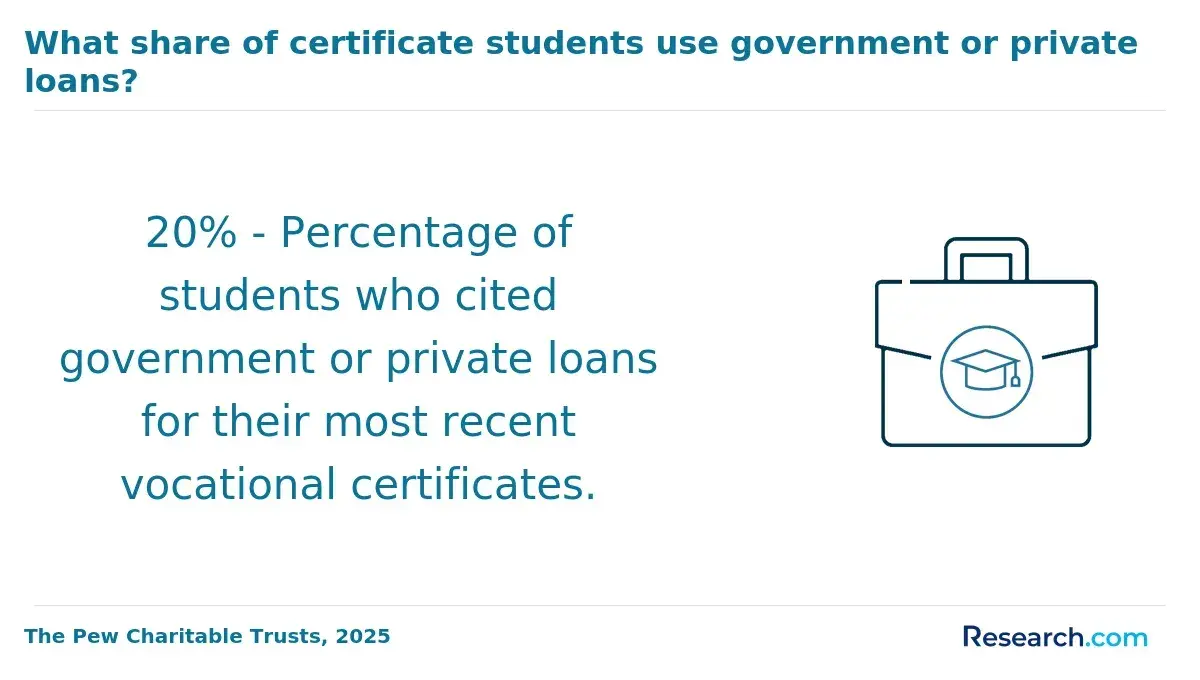
Certificate pathways can also reduce costs when a full bachelor's degree is not required for your immediate goal. Students comparing short credentials should review FAFSA-approved online certificate programs if they need aid-eligible options before or instead of a completion degree.
This comparison shows how affordability decisions usually play out for adult learners. The goal is to identify the cost driver most likely to affect your final borrowing amount.
| Affordability factor | Why it matters | Debt-friendly signal |
| Transfer credits | Fewer remaining credits usually means lower total tuition | Clear pre-enrollment transfer evaluation |
| Program length | Extra semesters increase tuition, fees, and opportunity cost | Degree plan showing exact remaining courses |
| Delivery format | Online study can reduce commuting and relocation costs | Asynchronous or evening courses for working adults |
| Accreditation | Employers, licensure boards, and graduate schools may require it | Regional institutional accreditation plus relevant program accreditation when needed |
| Career alignment | Low tuition is less valuable if the degree does not support your target role | Documented connection to advancement, licensure, or hiring requirements |
Which Completion Programs Offer the Best Return on Investment?
The best ROI completion programs usually have three traits: they accept substantial prior credit, lead to occupations with stable demand, and build skills employers can evaluate. ROI is not just salary; it also includes time to finish, debt required, risk of changing majors, and whether the credential is necessary for your goal.
BLS 2024 occupational wage data shows that computer and mathematical occupations had median annual pay above many other broad fields, which helps explain why technology-related completion programs often rank well for ROI. Still, students should compare salaries against the exact roles they are targeting, not the broad category alone.
The table below compares common completion fields by typical ROI logic. It is not a guarantee of earnings, but it can help you sort degrees by debt sensitivity and career fit.
| Degree area | ROI strength | Best fit | Main caution |
| Computer science | High when technical skills are strong | Students targeting software, data, or systems roles | Prerequisites can add time and cost |
| Information technology | High for applied tech careers | Students with IT experience or certifications | Hands-on labs matter more than course titles |
| Nursing | Strong for licensed RNs seeking advancement | ADN-prepared nurses moving into BSN roles | Requires active RN licensure |
| Business | Moderate to high depending on concentration | Working adults seeking management or functional roles | General degrees need clear experience or specialization |
| Education | Mission-driven with state-dependent ROI | Future licensed teachers or school professionals | Licensure rules and pay scales vary by state |
| Psychology | Variable at bachelor's level | Students planning HR, services, research support, or graduate school | Clinical licensure usually requires graduate study |
If income potential is a major decision factor, compare your target major with broader lists of highest paid degrees, then adjust the estimate based on your transfer credits, local job market, and willingness to pursue certifications or graduate school.
How Do Online and Campus Completion Programs Compare?
Online completion programs are often the best fit for low student debt because they let students keep earning income, avoid relocation, and study around work. Campus programs can be better when the degree requires labs, clinical placements, student teaching, or access to local employer networks.
The best choice depends on how you learn and what the program requires. The table below summarizes the practical differences that most affect adult learners and transfer students.
| Format | Debt advantage | Best for | Watch out for |
| Fully online | Lower commuting and relocation costs | Working adults, caregivers, military learners, remote students | Limited in-person networking or lab access |
| Hybrid | Balances flexibility with hands-on requirements | Nursing, education, healthcare, engineering technology | Travel days can affect work schedules |
| Campus-based | May offer stronger local recruiting and facilities | Students near a public university or needing labs | Commuting, parking, housing, and schedule limits can increase total cost |
Do not assume online automatically means cheaper. Some online programs charge premium tuition or mandatory technology fees. Ask for a full cost sheet showing tuition, fees, required software, books, residency sessions, testing costs, and graduation fees.
What Accreditation Should You Look For?
Accreditation is one of the most important safeguards in a low-debt bachelor's completion program. It affects federal financial aid eligibility, transfer-credit acceptance, graduate school options, employer recognition, and licensure pathways.
Start with institutional accreditation from an agency recognized by the U.S. Department of Education. Then check whether your field requires specialized accreditation. This is especially important in nursing, education, engineering, business, social work, and some healthcare fields.
Before enrolling, verify accreditation directly rather than relying only on marketing language. Use this checklist when speaking with admissions or an academic advisor:
- Ask for the school's institutional accreditor and confirm that it is currently recognized.
- Ask whether the specific degree or major has programmatic accreditation when the field commonly expects it.
- Confirm whether the program meets licensure or certification requirements in your state.
- Request written documentation if credits, certifications, or prior learning will be applied to the degree.
- Check whether graduate schools or employers in your target field commonly accept the credential.
A common mistake is choosing the cheapest program without confirming accreditation and licensure alignment. That can create a costly problem if the degree is not accepted for employment, certification, or graduate study.
What Are the Admission Requirements for Completion Programs?
Bachelor's completion programs are designed for students who already have college credit, but admission requirements vary. Some require an associate degree, while others admit students with a minimum number of transferable credits.
Typical requirements include prior college transcripts, a minimum GPA, completed general education courses, and good academic standing at previous institutions. Nursing, education, engineering, and healthcare programs may also require licenses, prerequisites, background checks, or field-placement approval.
Students who do not yet have enough credits may save money by completing lower-division coursework first through an online associate degree, especially if credits transfer cleanly into the intended bachelor's program.
Before applying, gather the materials schools commonly use to decide transfer standing and degree completion time:
- Official transcripts from every college attended
- Military transcripts, industry certifications, or professional training records
- Course syllabi for classes that may need individual review
- Proof of licensure for RN-to-BSN, education, or allied health pathways
- A written transfer-credit estimate showing remaining courses
How Long Do Bachelor's Completion Programs Take?
Most bachelor's completion programs take one to three years, depending on how many credits transfer, whether you study full time, and whether courses are offered every term. A student entering with 60 accepted credits usually has about two years of full-time study remaining, but accelerated calendars or competency-based formats can shorten the timeline.
Speed can reduce total cost, but only if it does not cause course withdrawals, repeated classes, or burnout. Working adults should compare acceleration with workload, employer reimbursement cycles, family responsibilities, and financial aid rules.
Use these steps to estimate your real completion timeline:
- Request a transcript evaluation before committing to the program.
- Ask how many credits must be completed at the school.
- Confirm whether required courses are offered every term or only once per year.
- Calculate whether full-time, part-time, or accelerated pacing fits your work schedule.
- Ask what happens if you pause enrollment for one term.
A common red flag is a program advertising "finish fast" without showing how your specific transfer credits apply. A personalized degree plan is more reliable than a general completion promise.
What Careers Can You Pursue After Completing the Degree?
Career options after a bachelor's completion degree depend on your major, prior work experience, certifications, location, and whether the field requires licensure. For many adults, the degree is most valuable when it unlocks advancement, qualifies them for roles previously requiring a bachelor's degree, or strengthens a career change.
The table below connects common completion majors with realistic career directions. Use it to identify whether the degree fits your intended next step.
| Completion degree | Possible career directions | Useful skills to build |
| Business | Operations coordinator, manager, analyst, sales operations, HR specialist | Data analysis, budgeting, communication, project management |
| Healthcare administration | Clinic supervisor, quality coordinator, health services manager track | Compliance, healthcare finance, workflow improvement |
| Information technology | Systems analyst, network administrator, cloud support, IT manager track | Scripting, cybersecurity basics, cloud platforms, troubleshooting |
| Computer science | Software developer, QA analyst, data analyst, systems developer | Programming, databases, algorithms, portfolio development |
| Cybersecurity | Security analyst, incident response, risk analyst, digital forensics support | Network security, threat analysis, documentation, tools practice |
| Education | Teacher, instructional aide advancement, training specialist, curriculum support | Lesson design, classroom management, assessment, state standards |
| Criminal justice | Law enforcement advancement, corrections supervisor, compliance, emergency management | Report writing, ethics, investigation, policy analysis |
Students should also consider whether a degree alone is enough. In technical fields, portfolios and certifications may matter. In regulated fields, licensure may matter. In management fields, prior experience may carry as much weight as the credential.
What Salaries and Job Outlook Can Graduates Expect?
Salary and job outlook should be used as decision inputs, not promises. Earnings vary by state, employer, experience, industry, and whether the bachelor's degree is paired with licensure or specialized skills.
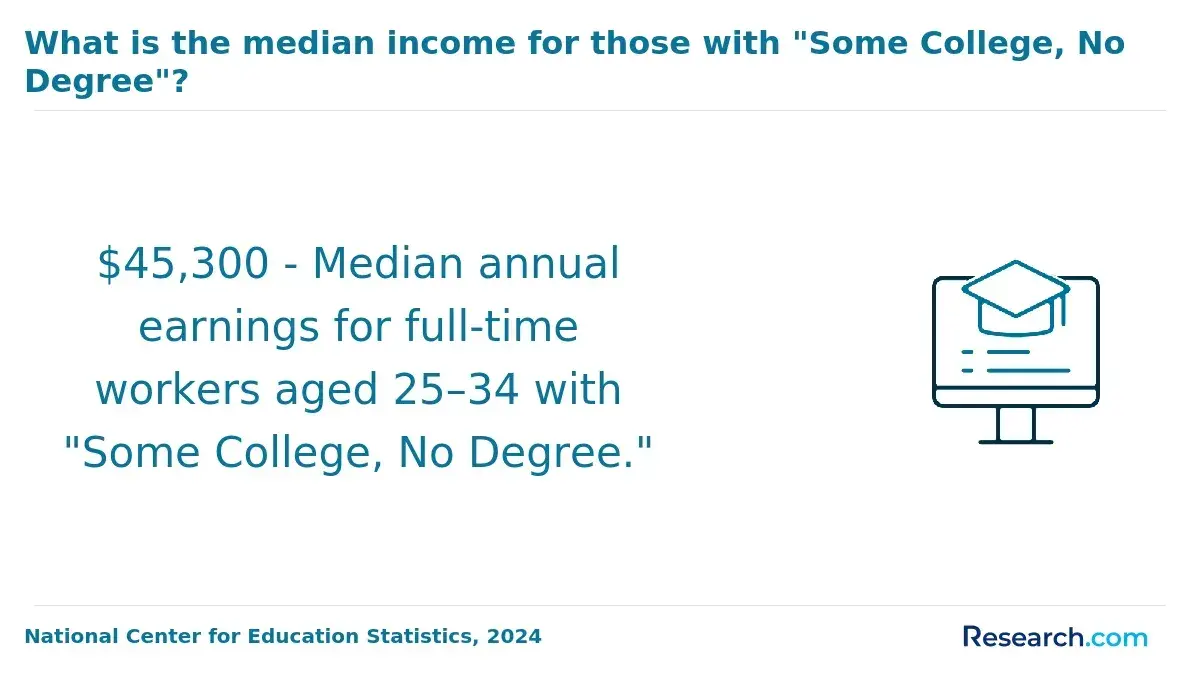
BLS 2024 data shows bachelor's degree holders had median usual weekly earnings of $1,543, compared with $1,099 for associate degree holders. For completion students, that gap suggests a bachelor's degree can be economically meaningful, but the actual payoff depends on borrowing less than the career benefit is likely to justify.
The table below summarizes broad U.S. salary context by occupational area. These figures are useful for comparing fields, but you should still research local roles before enrolling.
| Career area | Salary context | Debt decision signal |
| Computer and IT | BLS 2024 median pay for computer and mathematical occupations was over six figures | Can justify higher effort if technical skills and portfolio are strong |
| Business and finance | Median pay is generally above the all-occupation median | Best ROI often comes from accounting, analytics, finance, or operations focus |
| Healthcare | Pay varies widely between clinical, administrative, and support roles | Strongest when the degree builds on an existing license or credential |
| Education | Pay is often tied to state and district salary schedules | Debt should be kept conservative unless licensure and local pay are clear |
| Public safety and criminal justice | Pay depends heavily on agency, rank, overtime, and location | Best when the degree supports promotion or specialized assignment |
AI and automation are also changing employer expectations. Technical literacy, data use, cybersecurity awareness, and process-improvement skills are becoming useful across business, healthcare, education, and public-sector roles. Programs that include applied projects may offer a clearer employment signal than lecture-only coursework.
Which Certifications or Licenses May Be Required?
Some bachelor's completion programs lead directly to fields where certifications or licenses matter. Others do not require a license but may become more valuable when paired with a recognized credential.
Review these common credential considerations before choosing a program:
- Nursing: RN-to-BSN programs require an active RN license, and advanced practice roles require graduate education and additional licensure.
- Education: Public school teaching generally requires a state-approved teacher preparation program, exams, student teaching, and licensure.
- Engineering: Some engineering careers may require ABET-accredited education and steps toward Engineer in Training or Professional Engineer licensure.
- Cybersecurity and IT: Certifications such as Security+, Network+, AWS, Azure, Cisco, or CISSP can strengthen employability depending on role level.
- Accounting: CPA eligibility varies by state and often requires more than a bachelor's degree, including specific accounting credits.
- Healthcare administration: Some roles may value certifications in coding, compliance, health information, project management, or quality improvement.
The key is to verify requirements before paying tuition. Ask the school which certifications are embedded, which are optional, which require outside exam fees, and whether the degree meets your state's licensure rules.
Other Things You Should Know About
A bachelor's completion program is a degree pathway for students who already have college credits, an associate degree, military training, professional credentials, or prior learning. The goal is to apply those credits toward the upper-division requirements of a bachelor's degree.
They can be, especially when the school is properly accredited and the program matches the role. Employers usually care more about accreditation, relevant skills, experience, licensure, and the reputation of the institution than whether coursework was online or on campus.
Start by maximizing transfer credits, choosing an accredited program with transparent tuition, using employer tuition assistance if available, applying for federal and state aid, and avoiding programs that add unnecessary prerequisites or fees.
The best option is usually the one that accepts the most of your prior credits and aligns with a realistic career goal. Business, IT, nursing, cybersecurity, and healthcare administration often work well for adult learners, but the right choice depends on your background and target role.
References
- College is still worth it, even with student debt, but we can do better | Brookings https://www.brookings.edu/articles/college-is-still-worth-it-even-with-student-debt-but-we-can-do-better/
- Online Degree vs. Traditional: Choosing the Right Path https://beal.edu/online-degree-vs-traditional/
- Student Loan Debt Statistics [2026]: Average + Total Debt https://educationdata.org/student-loan-debt-statistics
- Schools Ranked by Graduation Rate | OEDB https://www.oedb.org/rankings/graduation-rate/
- Best Accredited Online Universities in 2025 https://www.study.eu/article/best-accredited-online-universities
- What is the typical debt load for graduates of four-year public universities - APLU https://www.aplu.org/our-work/4-policy-and-advocacy/publicuvalues/student-debt/
- 2025 Most Affordable Online Bachelor's Degrees https://www.onlineu.com/most-affordable-colleges/bachelors-degrees
- The Cost of an Online College Degree | CollegiateParent https://collegiateparent.com/finances/cost-of-online-college-degree/
- Free Study Abroad: Complete List of Countries with No Tuition Fees for International Students - Spain Internship https://spain-internship.com/blog/list-country-free-study-abroad/
- The top grants to pay off student loans https://www.salliemae.com/resources/blog/grants-to-pay-off-student-loan/