2027 Best Online Undergraduate Degrees for Career Advancement

Co-Founder and Chief Data Scientist
Choosing an online undergraduate degree is a career investment, not just an academic decision. BLS data published for 2024 show workers with a bachelor's degree had median weekly earnings of $1,543, compared with $930 for high school graduates, making degree choice especially important for long-term mobility. This guide is for working adults, transfer students, and first-time undergraduates comparing flexible programs. You'll learn which online bachelor's paths align with growing industries, what they cost, how to verify quality, and how to choose a program that supports advancement without overpaying.
Key Things You Should Know
- Online bachelor's degrees are most valuable when the major aligns with clear labor-market demand, employer-recognized skills, and verifiable accreditation.
- BLS May 2024 wage data show computer and IT roles had a median annual wage above $100,000, while healthcare, business, and engineering also offer strong advancement paths.
- College Board 2024-25 pricing shows published tuition and fees vary widely, from about $11,610 for in-state public four-year colleges to $43,350 at private nonprofit colleges, before aid.
Top 10 Best Online Undergraduate Degrees for Career Advancement
Business Degrees
An online bachelor's in business fits students who want broad advancement options in management, finance, marketing, operations, human resources, or entrepreneurship. The best programs include accounting, business analytics, economics, leadership, and applied projects. BLS May 2024 data place the median wage for business and financial operations occupations at $81,680, but outcomes vary by role, industry, and experience. Choose business if you want flexibility; consider a more specialized major if you already know you need accounting, supply chain, finance, or analytics depth.
Healthcare Degrees
Information Technology Degrees
Computer Science Degrees
An online computer science degree is best for students aiming at software development, data engineering, artificial intelligence support, systems design, or technical graduate study. It is more theory-heavy than IT and usually includes programming, algorithms, discrete math, operating systems, databases, and software engineering. BLS May 2024 data list software developers at a median annual wage of $133,080. This path can pay off, but it requires sustained practice; students who dislike coding or math may prefer information technology, data analytics, or business systems programs.
Cybersecurity Degrees
An online cybersecurity degree prepares students for roles in security operations, risk analysis, incident response, identity management, and compliance. The strongest programs include networking, Linux, cloud security, cryptography, governance, and hands-on labs. BLS projects information security analyst employment to grow far faster than average from 2024 to 2034, reflecting ongoing demand for digital defense. Students should look for programs that align with recognized frameworks and allow preparation for industry certifications, since employers often value both a degree and proof of practical security skills.
Psychology Degrees
An online psychology bachelor's degree fits students interested in human behavior, research, counseling-adjacent work, user experience, case management, human services, or graduate study. It typically does not qualify graduates to become licensed psychologists or counselors without additional graduate education. Good programs teach research methods, statistics, developmental psychology, abnormal psychology, social psychology, and ethics. Choose this major if you value people-focused analytical work; consider social work, nursing, or business if your goal requires direct licensure, clinical practice, or faster entry into a regulated profession.
Nursing Degrees
Online nursing degrees are usually designed as RN-to-BSN completion programs for licensed registered nurses, although some hybrid pre-licensure options exist. BLS May 2024 data place the median annual wage for registered nurses at $93,600. A BSN can support advancement into leadership, public health, case management, or graduate nursing pathways. Students must verify state approval, clinical requirements, and whether the program matches their current license status. If you are not already an RN, ask whether the program includes required in-person clinical placements.
Education Degrees
Online undergraduate education degrees prepare students for teaching, instructional support, childcare leadership, special education assistance, or non-licensure education roles. Programs that lead to teacher certification usually require fieldwork, student teaching, background checks, and state-specific approval. This degree is a strong fit for students committed to working with learners and meeting licensure steps. It is not ideal for students seeking a fully online path with no in-person placements. Always confirm that the program meets requirements in the state where you plan to teach.
Criminal Justice Degrees
An online criminal justice degree is relevant for students pursuing law enforcement, corrections, court administration, probation, homeland security, corporate security, or victim services. Coursework usually includes criminology, constitutional law, ethics, policing, corrections, juvenile justice, and research methods. It can support promotion for current public safety workers, but many sworn roles also require academy training, background checks, fitness standards, and local hiring processes. Students seeking federal law enforcement or analyst roles should add writing, data analysis, foreign language, or cybersecurity skills when possible.
Engineering Degrees
Online engineering bachelor's programs are less common than other majors because labs and design work can require specialized equipment. Still, some schools offer online or hybrid options in electrical, industrial, systems, or engineering technology fields. BLS May 2024 data show architecture and engineering occupations had a median annual wage of $97,310. Students should check ABET accreditation when it matters for licensure, employer screening, or graduate study. Engineering is best for mathematically strong students who can handle rigorous sequential coursework and occasional in-person requirements.
What makes an online undergraduate degree valuable for long-term career advancement?
An online undergraduate degree is valuable for long-term career advancement when it combines recognized academic quality, labor-market relevance, affordable net cost, and skills that transfer across employers. "Online" describes the delivery format, not the academic level; a bachelor's degree from an accredited institution should represent the same credential level whether courses are online, hybrid, or campus-based.
The biggest career value usually comes from the match between your degree and your target role. A flexible major can help if you want broad advancement, while a specialized major can be better when employers expect defined technical or licensure preparation.
This comparison shows how common online undergraduate paths tend to differ for advancement-focused students. Use it to narrow your options before reviewing individual programs.
| Degree area | Best fit | Career advancement value | Main caution |
| Business | Students seeking leadership, operations, finance, marketing, or HR roles | Broad applicability across industries | May need specialization or experience to stand out |
| Healthcare administration | Healthcare workers moving into coordination or management | Strong fit for aging-population and systems-management demand | Clinical careers may require separate licensure |
| Information technology | Students who want applied technical roles | Direct alignment with employer skills needs | May require certifications and portfolio work |
| Computer science | Students aiming for software, data, AI, or systems roles | High ceiling in technical labor markets | Requires strong coding and math persistence |
| Nursing | Licensed RNs seeking BSN completion | Supports leadership and graduate nursing options | State approval and clinical rules matter |
The best long-term choice is not always the highest-paying major on paper. It is the program you can finish, afford, and connect to a realistic next role.
How do online undergraduate programs compare with campus programs for quality and outcomes?
Online undergraduate programs can match campus programs in quality when they share the same accreditation, faculty standards, curriculum requirements, learning outcomes, and transcript credential. Employers generally focus on the institution, degree level, major, experience, and skills rather than the classroom format, although some hands-on fields still require in-person labs, clinicals, practicums, or supervised fieldwork.
Online education is now mainstream rather than unusual. NCES distance education data published in 2024 show that a large share of U.S. undergraduates take at least one online course, which means employers and colleges are increasingly familiar with blended and fully online learning.
The table below highlights the practical differences that matter most when deciding between online and campus study.
| Factor | Online undergraduate program | Campus undergraduate program | Decision point |
| Flexibility | Often asynchronous or evening-friendly | Fixed class and commuting schedule | Online is usually better for working adults |
| Networking | Requires intentional participation in virtual events and projects | More spontaneous peer and faculty interaction | Campus may help students who need daily structure |
| Hands-on learning | Virtual labs, local placements, or short residencies may be used | On-site labs and facilities are easier to access | Check requirements in nursing, education, engineering, and science |
| Cost | May reduce commuting, housing, and relocation costs | May include higher living and campus fees | Compare total net cost, not only tuition |
| Student support | Varies widely by school | Often easier to access in person | Ask about advising, tutoring, career services, and response times |
Online can be the better format if you are self-directed, employed, or geographically limited. Campus can be better if you need close supervision, residential networking, or daily in-person academic structure.
How can students verify accreditation and avoid diploma mills when choosing online degrees?
Accreditation is the first quality checkpoint for any online undergraduate degree. In the U.S., institutional accreditation indicates that a college has been reviewed by a recognized accreditor, while programmatic accreditation applies to specific fields such as nursing, engineering, business, education, or health information management.
Students should verify accreditation before applying, especially when a degree connects to licensure, graduate admission, employer reimbursement, or federal financial aid. A helpful starting point is reviewing lists of accredited online colleges, then confirming details directly with official accreditor and school records.
Use this process before submitting an application or paying a deposit.
- Confirm the institution's accreditor is recognized by the U.S. Department of Education or the Council for Higher Education Accreditation.
- Check whether your specific program needs programmatic accreditation for licensure, certification, or employer screening.
- Look for clear information on faculty, curriculum, transfer credit, graduation requirements, and student services.
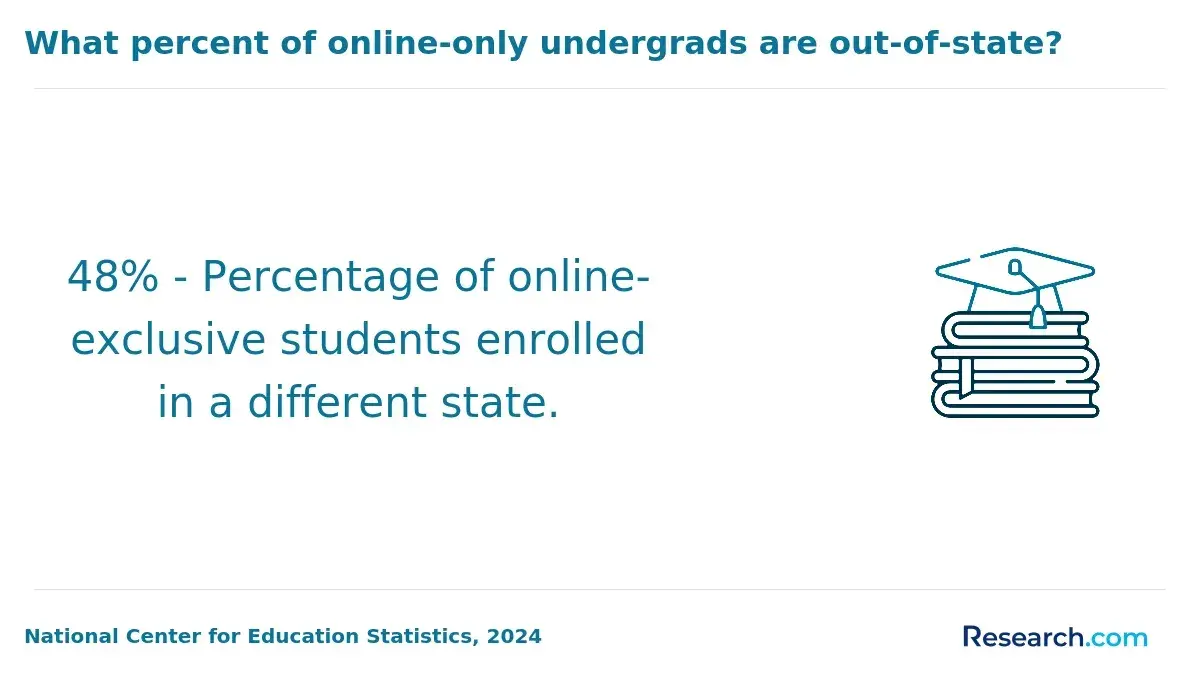
- Search for state authorization information if you live outside the school's home state.
- Avoid schools that promise unusually fast degrees, guaranteed jobs, or credit for life experience without academic review.
Diploma mills often rely on pressure tactics, vague accreditation claims, and unrealistic timelines. If a school avoids direct answers about accreditation, licensure outcomes, or total cost, treat that as a serious red flag.
Which online bachelor's majors lead to the strongest salary and job growth potential?
The strongest salary and job growth potential tends to appear in majors tied to technology, healthcare, engineering, analytics, finance, and management. That does not mean every student should choose the same major; salary outcomes depend on location, industry, experience, internships, portfolio quality, certifications, and whether the role requires graduate education.
BLS May 2024 wage data show particularly strong median wages in computer and IT, architecture and engineering, management, registered nursing, and many business and financial roles. Students comparing high paying degrees should still weigh completion likelihood, total cost, and personal fit.
This table summarizes degree areas that often provide strong advancement potential and the reason each path can be valuable.
| Major area | Common bachelor's-level roles | Why it can support advancement | Best added advantage |
| Computer science | Software developer, data analyst, systems analyst | Technical skills apply across industries | Portfolio, internships, coding projects |
| Information technology | Network administrator, cloud support specialist, IT analyst | Employers need infrastructure and support talent | Cloud, networking, and security certifications |
| Cybersecurity | Security analyst, risk analyst, SOC analyst | Digital risk keeps demand high | Hands-on labs and recognized certifications |
| Nursing | Registered nurse, charge nurse, case manager | BSN completion can support leadership pathways | State licensure and clinical experience |
| Business analytics or finance | Financial analyst, operations analyst, business analyst | Combines business judgment with data use | Excel, SQL, visualization, internship experience |
| Healthcare administration | Clinic coordinator, health services manager, compliance associate | Healthcare systems need operational leaders | Healthcare experience and regulatory knowledge |
A major with moderate average pay can still be worthwhile if it leads to a stable licensed field, employer tuition support, or a clear promotion. A high-paying major can disappoint if the student cannot finish it or lacks the practical experience employers expect.
What admission requirements and prior experience do online undergraduate programs typically expect?
Online undergraduate admission requirements vary by school and applicant type. First-time students typically submit a high school transcript or GED, while transfer students provide college transcripts. Many online bachelor's programs are test-optional, but selective programs may still review GPA, prerequisite courses, essays, recommendations, or professional experience.
Adult learners often have an advantage when programs award credit for prior college coursework, military training, industry credentials, standardized exams, or evaluated workplace learning. However, credit policies differ widely, so students should request a formal transfer evaluation before enrolling.
Most applicants should be ready to provide the following materials and background information.
- Official high school, GED, or college transcripts from every institution attended.
- Proof of prerequisite coursework for majors such as nursing, engineering, education, or computer science.
- A resume or work history if the program is designed for adult learners or degree-completion students.
- Licensure documentation for programs such as RN-to-BSN pathways.
- Technology access that supports video meetings, proctored exams, learning platforms, and specialized software.
If you are not ready for a full degree, targeted online certifications can help you test a field, build job-ready skills, or strengthen an application before committing to a bachelor's program.
How long do online bachelor's degrees take and what do they typically cost?
A standard bachelor's degree usually requires about 120 credits. Full-time students commonly finish in four years, while transfer and degree-completion students may finish faster if prior credits apply. Part-time working adults often take longer, but the slower pace can reduce burnout and make it easier to keep earning income.
Cost depends on tuition, fees, transfer credits, textbooks, technology, residency rules, and financial aid. College Board 2024-25 figures show published tuition and fees averaged $11,610 for in-state students at public four-year colleges and $43,350 at private nonprofit four-year colleges, before grants and scholarships.
The table below explains the main cost drivers students should compare before choosing an online program.
| Cost factor | Why it matters | What to ask |
| Tuition model | Schools may charge per credit, per term, or flat-rate tuition | What is the total estimated cost to complete my remaining credits? |
| Transfer credits | Accepted credits can shorten time and lower cost | How many credits will apply to my major, not just electives? |
| Fees | Online, technology, graduation, lab, and proctoring fees can add up | Which fees are mandatory each term? |
| Books and software | Technical programs may require subscriptions or equipment | Are digital materials included in tuition? |
| Financial aid | Net price can be much lower than published tuition | What grants, scholarships, employer benefits, and payment plans are available? |
| Pace | Accelerated terms can reduce calendar time but increase workload | What is the realistic weekly time commitment per course? |
Accelerated programs make sense if you have transfer credits, a predictable schedule, and strong study habits. A part-time path is often better if you work full time, have caregiving responsibilities, or need to protect your GPA for graduate school.
What core courses and skills should top online undergraduate programs include?
Top online undergraduate programs should teach both field-specific knowledge and durable skills that remain useful as technology and employer expectations change. AI tools are reshaping many roles, so strong programs increasingly emphasize data literacy, ethical judgment, communication, problem-solving, and applied projects rather than memorization alone.
The most useful curriculum combines core requirements, major courses, experiential learning, and career preparation. Students should look beyond course titles and ask how learning is assessed.
Use the following skill categories to evaluate whether a program is current and career-aligned.
- Technical and digital skills, such as data analysis, software tools, cybersecurity awareness, research methods, or industry platforms relevant to the major.
- Communication skills, including professional writing, presentations, documentation, collaboration, and audience-specific messaging.
- Analytical skills, including statistics, evidence evaluation, financial reasoning, systems thinking, and problem-solving.
- Ethics and compliance knowledge, especially in healthcare, education, criminal justice, business, technology, and data-focused programs.
- Applied learning, such as capstones, simulations, practicums, portfolios, labs, case studies, or employer-connected projects.
- Career readiness support, including resume reviews, interview preparation, internship access, alumni networking, and job-search coaching.
A strong online program should also be transparent about weekly workload, exam proctoring, faculty access, group projects, and how students receive feedback. Weak programs often provide flexibility but little structure, which can leave students underprepared for competitive roles.
Which careers and industries most benefit from completing an online bachelor's degree?
Industries that most benefit from online bachelor's completion are those where a degree is commonly used for promotion, professional screening, licensure advancement, or entry into analyst and management roles. These include technology, healthcare, business services, finance, education, public administration, logistics, and public safety.
Online degrees can be especially useful for workers who already have experience but lack the credential required for advancement. They also fit people preparing for hybrid or remote roles; students exploring flexible career paths can compare degrees for work from home jobs when remote work is a priority.
This table connects degree areas with industries and advancement opportunities.
| Industry | Useful online degree areas | Potential advancement path |
| Technology | Computer science, IT, cybersecurity, data analytics | Support specialist to analyst, engineer, developer, or security role |
| Healthcare | Nursing, healthcare administration, health information management | Clinical or support role to coordinator, manager, or BSN-prepared role |
| Business services | Business, finance, accounting, human resources, analytics | Administrative role to analyst, supervisor, specialist, or manager |
| Education | Elementary education, special education, early childhood education | Paraprofessional or support role to certified teacher or program lead |
| Public safety | Criminal justice, emergency management, cybersecurity | Officer, dispatcher, or security worker to investigator, supervisor, or analyst |
| Manufacturing and logistics | Operations, supply chain, industrial technology, engineering technology | Technician or coordinator to operations supervisor or process analyst |
A degree is most powerful when paired with experience, measurable projects, and a clear job target. Students should start building role-specific evidence before graduation, not after.
How can working adults choose the best-fit online undergraduate program for their goals?
Working adults should choose an online undergraduate program by starting with the job outcome, then working backward to the degree, accreditation, schedule, and total cost. The best-fit program is not simply the cheapest, fastest, or highest-ranked option; it is the one that you can complete successfully and use for a realistic next step.
Before enrolling, compare programs using a practical decision process that includes career fit, academic quality, financial risk, and support services.
- Define your target role and identify whether it requires a bachelor's degree, a specific major, licensure, certification, or experience.
- Verify institutional accreditation and any programmatic accreditation required for your field.
- Request a transfer-credit evaluation before committing, especially if you have previous college, military, or professional training.
- Calculate total net cost after grants, scholarships, employer tuition assistance, fees, books, and lost work time.
- Ask how online students access tutoring, advising, career services, internships, faculty office hours, and technical support.
- Review course format, including asynchronous work, live sessions, proctored exams, group projects, and weekly workload.
- Compare graduation, retention, licensure, and job-placement disclosures when available, but avoid treating any single metric as a guarantee.
Common mistakes include choosing a school without checking accreditation, assuming online means easier, ignoring licensure rules, borrowing based only on advertised salaries, and enrolling before confirming transfer credits. A good admissions advisor should answer specific questions clearly; vague or high-pressure responses are a reason to pause.
Other Things You Should Know About
Yes, when the degree comes from an accredited institution and the program builds relevant skills. Employers usually care most about the school, major, experience, portfolio, certifications, and ability to do the work.
There is no single best degree for every student. Computer science, IT, cybersecurity, nursing, healthcare administration, business analytics, finance, and engineering-related majors often offer strong advancement potential, but the best choice depends on your target role and background.
Often, yes. Many online programs accept prior college credits, military training, exams, or evaluated professional learning, but only the school can confirm how many credits apply to your specific degree plan.
It can be worth it if the program is accredited, affordable after aid, aligned with a real career goal, and likely to help you qualify for better roles. It is riskier if the total debt is high, the career path is unclear, or licensure requirements are not met.
References
- 2025 Most Affordable Online Colleges & Degrees https://www.onlineu.com/most-affordable-colleges
- The Power of Online Learning for Career Advancement https://www.theopencollege.com/blog/power-online-learning-career-advancement/
- What Global Employers Really Think About Online Degrees https://edutech.global/global-employer-view-on-online-degrees/
- Employers' Perceptions of Online University Degrees and ... https://journals.um.si/index.php/oe/article/view/2425/2054
- Best Accredited Online Universities in 2025 https://www.study.eu/article/best-accredited-online-universities
- Important Ways a Bachelor's Degree Can Help You Achieve Your Goals https://mariacollege.edu/blog/important-ways-a-bachelors-degree-can-help-you-achieve-your-goals
- How Much Does an Associates Degree Increase Your Salary https://imagine-america.org/blog/how-much-does-an-associates-degree-increase-your-salary
- Top 20 Online Universities in the USA https://www.euroamerican.eu/top-20-online-universities-in-the-usa
- Top 50 Online and Distance Learning Universities 2026 | EUCDL Distance Accreditation Council https://www.eucdl.com/ranking-2026
- How Do Certifications Influence Salary Increases? https://certiprof.com/blogs/news/how-do-certifications-influence-salary-increases