2027 Best Bachelor's Completion Programs for Job Security

Co-Founder and Chief Data Scientist
Finishing a bachelor's degree can change how resilient your career is during layoffs, automation, and industry shifts. BLS 2024 labor force data show workers with a bachelor's degree had a 2.5% unemployment rate, compared with 4.2% for workers whose highest credential was a high school diploma.
This guide is for adults with prior college credit who want a practical path to steadier work. You will learn which bachelor's completion majors tend to offer stronger job security, how to compare programs, and how to estimate whether the time and cost make sense.
Key Things You Should Know
- The strongest bachelor's completion choices for job security usually align with licensed, regulated, or technology-driven fields, including nursing, cybersecurity, IT, healthcare administration, computer science, education, engineering, and accounting.
- Recent BLS projections for 2024 to 2034 point to especially strong demand in information security analyst roles at 29%, medical and health services managers at 23%, and software developers at 17%, though outcomes still depend on experience and location.
- Transfer credit policy, institutional accreditation, programmatic accreditation for licensed fields, and total net cost matter more than school branding alone when evaluating a bachelor's completion program.
Top 10 Best Bachelor's Completion Programs for Job Security
Business Degrees
Business completion programs are a versatile choice for adults already working in administration, retail, banking, sales, logistics, or operations. The most job-secure concentrations are accounting, supply chain management, finance, business analytics, and human resources because they connect to recurring employer needs.
BLS May 2024 data place the median wage for accountants and auditors at $81,680, making accounting a practical option for students who want a clear credential-to-career connection. Choose this path if you want broad mobility; avoid it if the curriculum lacks analytics, Excel, accounting systems, or internship options.
Healthcare Degrees
Healthcare bachelor's completion programs fit working adults in clinics, hospitals, insurance, billing, public health, or allied health roles who want supervisory or administrative mobility. Healthcare administration, health information management, public health, and respiratory care completion tracks can support stable roles because healthcare demand is less cyclical than many industries.
BLS projects medical and health services manager employment to grow 23% from 2024 to 2034. Check whether the program includes compliance, healthcare finance, data privacy, and quality improvement, because employers often value practical systems knowledge over general healthcare theory.
Information Technology Degrees
IT completion degrees are strong for adults with help desk, networking, systems support, or technical associate-level training. These programs usually emphasize networks, cloud administration, databases, scripting, systems analysis, and project management. They offer job-security value because nearly every industry needs reliable technology infrastructure.
Look for hands-on labs, vendor-aligned coursework, and credit for certifications such as CompTIA, Cisco, Microsoft, or AWS. This path is often better than computer science for students who prefer implementation, troubleshooting, and business-facing technology work rather than advanced programming or theory.
Computer Science Degrees
Computer science completion programs suit students who want software, data, AI, or systems-development careers and are comfortable with math and coding. BLS May 2024 data show software developers had a median wage of $133,080, but entry-level competition can be intense, especially for remote roles.
Strong programs include algorithms, data structures, software engineering, databases, cloud development, cybersecurity basics, and a portfolio-based capstone. Choose computer science if you can build projects while studying; consider IT or cybersecurity if you prefer operations, compliance, or infrastructure work.
Cybersecurity Degrees
Cybersecurity completion degrees are among the strongest options for job stability because cyber risk affects finance, healthcare, government, utilities, education, and retail. BLS projects information security analyst employment to grow 29% from 2024 to 2034, much faster than most occupations.
Good programs teach networking, incident response, risk management, digital forensics, cloud security, secure scripting, and governance. Be cautious with programs that promise quick high-paying jobs without labs or experience-building. Many cybersecurity roles prefer prior IT experience, internships, military experience, or certifications alongside the degree.
Psychology Degrees
Psychology completion programs can improve job security for adults in social services, case management, HR, behavioral health support, research assistance, and customer experience roles. The bachelor's degree alone usually does not qualify graduates to become licensed psychologists or therapists, so students should be realistic about outcomes.
For stronger employment value, choose programs with statistics, research methods, applied behavior, organizational psychology, crisis response, and internship options. This degree fits students planning graduate school or people-focused roles; it is less ideal for those needing a direct licensed clinical pathway immediately after graduation.
Nursing Degrees
RN-to-BSN completion programs are among the clearest job-security options because they build on an existing nursing license. BLS May 2024 data place the median wage for registered nurses at $93,600, and many hospitals prefer or require a BSN for advancement, specialty units, leadership, public health, or magnet-status environments.
Students should confirm state authorization, clinical or practicum requirements, CCNE or ACEN accreditation, and whether the program fits shift work. This path is best for licensed RNs; non-nurses usually need a prelicensure nursing route instead.
Education Degrees
Education completion programs can support stable work for paraprofessionals, substitute teachers, childcare workers, and career changers who want teacher licensure or education-related roles. Job security depends heavily on state licensure rules, district shortages, subject area, and grade level.
Special education, STEM education, bilingual education, and early childhood tracks may offer stronger demand in many regions. Before enrolling, verify that the program leads to the license you need in your state, includes supervised student teaching, and is approved by the state education agency.
Criminal Justice Degrees
Criminal justice completion programs fit adults in law enforcement, corrections, court services, emergency management, homeland security, probation, compliance, or victim advocacy. A bachelor's degree may help with promotion, federal applications, investigative roles, and administrative positions, but sworn roles often depend on academy training, physical requirements, background checks, and civil service rules.
The strongest programs include constitutional law, ethics, criminology, evidence, data analysis, emergency planning, and community policing. Choose this path for public service advancement, not because a degree alone guarantees law enforcement employment.
Engineering Degrees
Engineering completion programs can be valuable for engineering technicians, CAD professionals, manufacturing workers, military technical specialists, and adults with associate-level engineering technology credits. The most job-secure options often connect to civil, electrical, mechanical, industrial, or software-related systems. If your goal is professional engineer licensure, check ABET accreditation and state board rules before applying.
Engineering technology degrees may support strong applied careers, but they are not always treated the same as engineering degrees for licensure. Expect heavier math, lab, design, and project requirements than most completion programs.
What is a bachelor's completion program and who is it best suited for?
A bachelor's completion program is designed for students who already have college credit and want to finish the remaining upper-division coursework for a bachelor's degree. It is often best for adults who stopped out, transferred from community college, earned technical credits, served in the military, or completed one of many associate degrees and now need a four-year credential for promotion, licensure, or career change.
The ideal student is not simply someone who wants the fastest degree. The best fit is someone whose prior credits match the new major, whose work schedule requires flexibility, and whose career goal clearly benefits from a bachelor's credential. A completion program may not be the best choice if you need extensive prerequisites, a new licensed pathway with clinical hours, or a major unrelated to your previous credits.
This comparison shows who usually benefits most from bachelor's completion programs and who may need a different route.
| Student situation | Completion program fit | Why it matters for job security |
| Adult with 60 or more transferable credits | Strong fit | Fewer remaining credits can reduce time away from full-time work. |
| Licensed RN seeking advancement | Strong fit | A BSN may support leadership, specialty, and employer-preferred roles. |
| Career changer with unrelated credits | Moderate fit | May need prerequisites before entering the major sequence. |
| Student needing teacher or nursing licensure | Conditional fit | Program approval, fieldwork, and state rules are essential. |
| Student with few or no credits | Weak fit | A standard bachelor's or transfer pathway may be more realistic. |
How do bachelor's completion programs compare to traditional four-year degrees for job security?
Bachelor's completion programs and traditional four-year degrees can lead to the same credential when the institution is accredited and the degree title is equivalent. The main difference is structure: completion programs assume prior learning, compress the remaining degree requirements, and often serve working adults through online, hybrid, evening, or accelerated formats.
For job security, the degree format usually matters less than the major, accreditation, skills, internships, licensure alignment, and employer recognition. A completion program can be a smarter route when it preserves transfer credits and lets you keep working, but a traditional program may be better if you need a full campus experience, extensive labs, or a highly sequenced major.
The table below compares the practical differences that affect working adults most.
| Factor | Bachelor's completion program | Traditional four-year degree |
| Typical student | Adult with prior credits or an associate degree | First-time or full-time undergraduate student |
| Time to finish | Often shorter if credits transfer well | Usually designed around four academic years |
| Work compatibility | Often built for employed students | May require daytime attendance |
| Career value | Comparable when accredited and skill-aligned | Comparable when accredited and skill-aligned |
| Main risk | Losing credits during transfer | Paying for credits you may not need |
The common mistake is assuming "completion" means easier or lower quality. In reputable programs, the upper-division coursework should still be rigorous enough to build employer-valued skills.
Which majors in bachelor's completion programs offer the strongest job stability and demand?
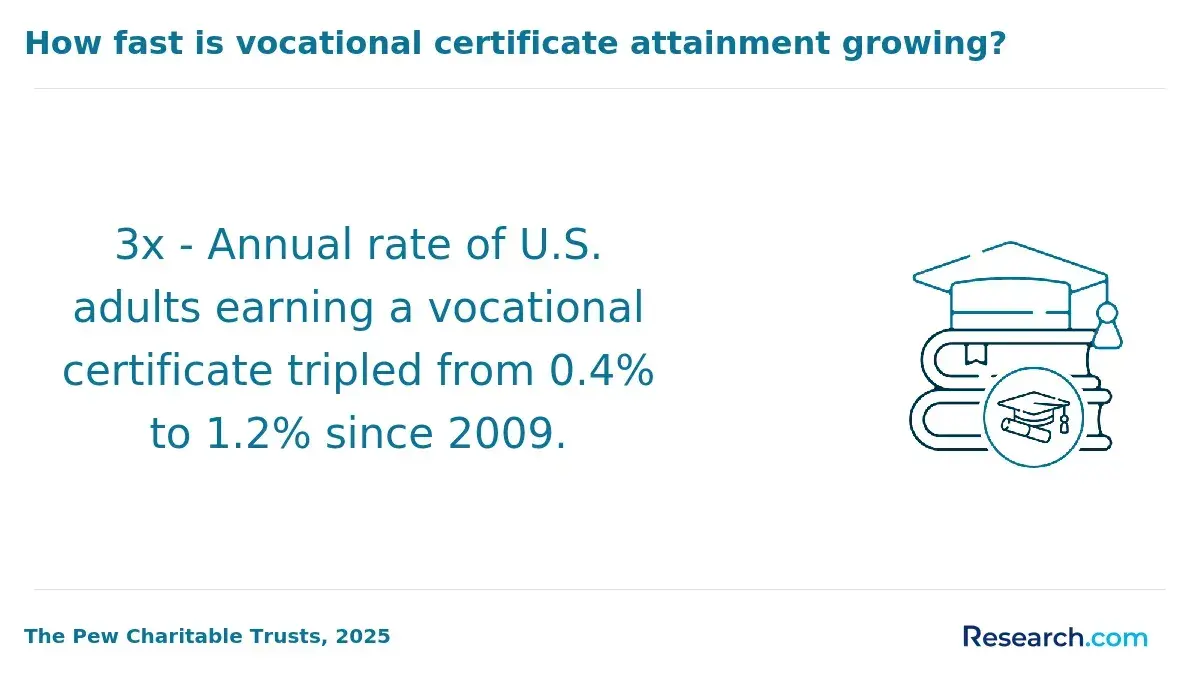
The majors with the strongest job stability usually share three traits: they map to essential services, they build technical or regulated skills, and they offer advancement beyond entry-level work. Students who are not ready for a degree-length commitment can also compare short certificate programs, but certificates usually work best as add-ons rather than replacements for bachelor's-level advancement.
This table summarizes high-demand bachelor's completion majors and the kind of stability they may support.
| Major | Best fit | Job-security advantage |
| Nursing | Licensed RNs seeking BSN completion | Connects to healthcare staffing needs and clinical advancement. |
| Cybersecurity | IT workers moving into security roles | Aligns with persistent cyber risk across industries. |
| Information technology | Technical support and systems workers | Supports infrastructure, cloud, and operations roles. |
| Computer science | Students building software portfolios | Connects to software, AI, data, and automation needs. |
| Healthcare administration | Healthcare workers seeking management | Matches demand for compliance, operations, and care coordination. |
| Accounting | Detail-oriented business students | Supports recurring employer needs in reporting, audit, and tax. |
| Education | Paraprofessionals and licensure seekers | Can address local teacher shortages when state-approved. |
| Engineering or engineering technology | Technical workers with strong math skills | Supports infrastructure, manufacturing, energy, and systems roles. |
Use demand data as a filter, not a promise. A high-growth field can still be competitive if your program lacks projects, supervised practice, internships, or employer connections.
How can you evaluate whether a bachelor's completion program is properly accredited and reputable?
Accreditation is one of the most important job-security checks because it affects credit transfer, financial aid eligibility, graduate school admission, licensure, and employer trust. In the United States, students should look for institutional accreditation recognized by the U.S. Department of Education or the Council for Higher Education Accreditation, plus programmatic accreditation when the field requires it.
Use the following steps before submitting an application or paying a deposit.
- Confirm the school's institutional accreditation through official federal or accreditor directories, not only the school's marketing page.
- Check whether your major needs programmatic accreditation, such as CCNE or ACEN for nursing, CAEP for teacher preparation, ABET for engineering, or specialized business accreditation when relevant.
- Ask whether the program is authorized to enroll students in your state, especially for online programs with clinical, practicum, student-teaching, or licensure requirements.
- Request a written transfer evaluation showing exactly which credits apply to the degree and which requirements remain.
- Review graduation rates, student support, career services, employer partnerships, and complaint history before deciding.
Red flags include vague accreditation language, pressure to enroll immediately, refusal to provide a degree audit, unclear licensure disclosures, and unusually large promises about salaries or job placement.
What admission requirements and prior credits do you need for a bachelor's completion program?
Admission requirements vary, but bachelor's completion programs usually expect prior college credits, a minimum GPA, official transcripts, and completion of general education or lower-division prerequisites. Some programs require an associate degree, while others admit students with a specific number of transferable credits.
The table below explains common requirements and why each one matters before you apply.
| Requirement | What it usually means | Why it matters |
| Prior credits | Often 45 to 90 transferable credits | Determines whether the program can actually shorten your path. |
| Minimum GPA | Commonly required for admission to the school or major | May affect eligibility for competitive tracks such as nursing or education. |
| Prerequisites | Courses such as statistics, anatomy, programming, or accounting | Missing prerequisites can extend the timeline. |
| Professional license | Required for RN-to-BSN and some allied health programs | Confirms you are eligible for upper-division professional coursework. |
| Background check | Common in healthcare, education, and criminal justice | Can affect field placement eligibility. |
Before applying, gather transcripts from every college you attended, ask about credit for military or professional training, and compare how many credits each school will actually accept toward the major rather than only toward electives.
How do online, hybrid, and campus bachelor's completion formats differ for working adults?
Online, hybrid, and campus formats can all be reputable, but they serve different adult learners. The best format depends on your schedule, major, learning style, commute, and need for labs, clinicals, student teaching, or employer networking.
This comparison can help you decide which delivery model is realistic while you continue working.
| Format | Best for | Trade-off |
| Fully online | Working adults, caregivers, military students, and students far from campus | Requires strong self-management and may still include in-person fieldwork. |
| Hybrid | Students who want flexibility plus some face-to-face support | Commute days can conflict with work schedules. |
| Campus-based | Students needing labs, studio work, close faculty access, or local networking | Less flexible for full-time workers. |
| Accelerated online | Students with strong time management and fewer outside obligations | Short terms can feel intense and leave less recovery time. |
A common mistake is choosing the fastest calendar without calculating weekly workload. An eight-week course may cover the same outcomes as a full-semester course, so taking multiple accelerated classes while working full time can become difficult quickly.
What courses and skill-building should you expect in high-demand bachelor's completion programs?
High-demand bachelor's completion programs should do more than award credits. They should help you build job-ready evidence: projects, supervised practice, case studies, labs, writing samples, technical portfolios, clinical competencies, or management experience that employers can evaluate.
The most valuable coursework depends on the field, but several skill categories matter across job-secure majors.
- Data and analytical skills, including statistics, spreadsheets, databases, dashboards, financial analysis, or research methods.
- Technology fluency, including cloud tools, cybersecurity awareness, automation, AI-assisted workflows, electronic records, or industry software.
- Communication and leadership skills, including professional writing, presentations, supervision, conflict resolution, and cross-functional teamwork.
- Compliance and ethics, especially in healthcare, education, accounting, cybersecurity, criminal justice, and engineering environments.
- Applied experience, such as capstones, practicums, simulations, labs, internships, clinical rotations, or employer-sponsored projects.
Certificates can supplement a bachelor's completion degree when they fill a specific skills gap. For example, students comparing 6 week certification programs online should look for options that align with the degree major rather than stacking unrelated credentials.
AI and automation are also changing what employers expect. Business, IT, healthcare, and education graduates increasingly need to show they can use digital tools responsibly, interpret data, and adapt workflows instead of relying only on routine task knowledge.
What careers, salaries, and promotion pathways can bachelor's completion graduates realistically expect?
Bachelor's completion graduates can realistically expect outcomes that depend on their prior experience, major, local labor market, internships, licensure, and willingness to pursue entry-level stepping-stone roles. The degree often helps most when it removes a promotion barrier or qualifies a worker for roles that previously required a bachelor's credential.
The table below uses BLS May 2024 median wage data for selected U.S. occupations related to common bachelor's completion majors. These figures describe occupations, not guaranteed graduate earnings.
| Related path | Example roles | Median wage context |
| Nursing | Registered nurse, nurse supervisor, public health nurse | Registered nurses: $93,600 |
| Cybersecurity | Security analyst, SOC analyst, risk analyst | Information security analysts: $124,910 |
| Computer science | Software developer, QA analyst, application developer | Software developers: $133,080 |
| Healthcare administration | Clinic manager, department coordinator, health services manager | Medical and health services managers: $117,960 |
| Business or accounting | Accountant, auditor, analyst, operations specialist | Accountants and auditors: $81,680 |
| Education | Teacher, instructional coordinator, education program specialist | Elementary school teachers: about mid-$60,000 range nationally |
| Psychology | Case manager, HR specialist, research assistant, behavioral support worker | Social and community service managers: $78,240 |
Promotion pathways often move from technical or frontline work into coordination, supervision, compliance, analytics, training, or management. If you later want university teaching, executive leadership, or advanced research roles, graduate study may become relevant; some readers exploring long-term options also compare the easiest doctorate to get, though doctoral programs should be chosen for fit and rigor rather than speed alone.
The safest career strategy is to pair the bachelor's completion degree with evidence of skill: projects, certifications, field experience, licensure, references, and measurable work accomplishments.
How can you estimate the total cost, financial aid, and return on investment of a bachelor's completion program?
To estimate return on investment, look beyond tuition per credit. The real cost includes remaining credits, fees, books, technology, commuting, childcare, lost overtime, exam fees, background checks, clinical costs, and the time it takes to finish. College Board's 2024-25 published tuition and fee averages show wide variation, with public four-year in-state tuition far below private nonprofit averages, but net price after grants can change the comparison.
Use this cost framework to compare programs on the same basis.
| Cost factor | What to ask | Why it affects ROI |
| Accepted transfer credits | How many credits apply to the major, not just electives? | Lost credits can add semesters and increase debt. |
| Tuition model | Is tuition charged per credit, per term, or as a flat rate? | Flat-rate and competency-based pricing may help only if you can move quickly. |
| Fees | Are online, technology, lab, clinical, graduation, or assessment fees required? | Fees can make a low tuition rate less affordable. |
| Financial aid | Can you use Pell Grants, federal loans, employer tuition assistance, scholarships, or military benefits? | A lower net price reduces break-even pressure. |
| Career alignment | Does the major connect to a target role or promotion path? | A cheap degree with weak career fit may have poor value. |
Follow these steps before enrolling.
- Get written degree audits from at least three accredited programs.
- Calculate total remaining credits and total estimated net cost after grants and employer aid.
- Compare the program's curriculum to job postings for your target role.
- Ask whether graduates complete internships, practicums, capstones, portfolios, or licensure preparation.
- Estimate a realistic salary range using local job postings and BLS occupational data, not only national medians.
- Avoid borrowing more than you can reasonably manage if your target field has modest starting pay.
The highest-ROI option is not always the cheapest or fastest. It is the program that accepts the most relevant credits, prepares you for a stable occupation, fits your schedule, and keeps debt manageable.
Other Things You Should Know About
Yes, when the degree comes from an accredited institution and the program builds relevant skills. Employers usually care more about the completed bachelor's credential, major, experience, and competencies than whether the student entered as a first-year student or transfer student.
Many students finish in one to three years, depending on transfer credits, prerequisites, course load, and program structure. The fastest option is not always best if it overloads your schedule or weakens your performance.
There is no single best major for everyone. Nursing, cybersecurity, IT, computer science, healthcare administration, accounting, education, and engineering-related programs often offer stronger stability because they connect to essential services, regulated work, or technical demand.
Yes, many completion programs are fully online for classroom coursework. However, nursing, education, healthcare, counseling-related, and some technical programs may still require local clinicals, practicums, labs, student teaching, or supervised field experiences.
References
- The Labor Market for Recent College Graduates https://www.newyorkfed.org/research/college-labor-market
- Federal occupations by college major https://help.usajobs.gov/working-in-government/unique-hiring-paths/students/federal-occupations-by-college-major
- Top 10 Jobs with High Job Security in 2026 https://www.onlineu.com/resources/college-planning/top-ten-jobs-with-high-job-security
- Top Degrees in Demand for the Future: 2026 & Beyond https://skillifysolutions.com/blogs/career-growth/top-degrees-in-demand-for-the-future/
- Four Career Benefits to Completing Your Degree | Elmhurst University "Elmhurst University" Blog https://www.elmhurst.edu/blog/four-career-benefits-to-completing-your-degree/
- College Graduate Skills Study - Workplace Intelligence https://workplaceintelligence.com/college-graduate-skills-study/
- The Benefits of Online Graduate Education for Working Professionals and Recent Graduates https://www.lincolnu.edu/news/2024/10/benefits-online-graduate-education.html
- Does College Pay Off? A Comprehensive Return On Investment Analysis - FREOPP https://freopp.org/whitepapers/does-college-pay-off-a-comprehensive-return-on-investment-analysis/
- How does a college degree improve graduates’ employment and earnings potential? - APLU https://www.aplu.org/our-work/4-policy-and-advocacy/publicuvalues/employment-earnings/
- CourseCareers https://coursecareers.com/blog-posts/college-vs-online-career-training