2027 Best Online Bachelor's Degrees With 2.0 GPA Admission

Co-Founder and Chief Data Scientist
If your GPA is near 2.0, a bachelor's degree is still possible-especially online. Many accredited colleges use minimum GPA rules, transfer-credit review, probationary admission, or adult-student policies instead of rejecting applicants automatically. This matters because the U.S. Bureau of Labor Statistics reported that bachelor's degree holders had median weekly earnings of $1,493 in 2024, higher than workers with some college but no degree. This guide helps transfer students, returning adults, and career changers compare realistic online majors, admissions requirements, costs, and outcomes before applying.
Key Things You Should Know
- A 2.0 GPA is commonly the minimum for regular transfer admission, but schools may require higher GPAs for selective majors such as nursing, engineering, education licensure, or cybersecurity tracks.
- According to the National Center for Education Statistics, average undergraduate tuition and required fees at public four-year institutions were far lower for in-state students than private nonprofit colleges in the 2023-24 academic year, so residency and transfer credits strongly affect total cost.
- BLS 2024 wage data shows wide outcome differences by field: computer and mathematical occupations had a median annual wage above $100,000, while many education and social-service roles paid less but may offer clearer mission fit.
Top 10 Best Online Bachelor's Degrees With 2.0 GPA Admission
Business Degrees
Online business bachelor's programs are among the most accessible options for students with a 2.0 GPA because they often accept broad transfer credits and offer concentrations in management, accounting, marketing, finance, or human resources. They fit students who want flexible career paths rather than a single licensed profession. A general business degree can lead to entry-level roles in operations, sales, administration, or analyst support. If your GPA is low, look for programs with strong academic advising, embedded tutoring, and clear transfer evaluations before you enroll.
Healthcare Degrees
Healthcare administration, health sciences, public health, and health information management programs may accept students with a 2.0 GPA, though clinical programs are usually stricter. These degrees fit students who want to work in hospitals, insurance, community health, or medical office leadership without necessarily becoming clinicians. Check whether the program is career-focused or designed for graduate school. A low-GPA applicant should ask whether science prerequisites, background checks, or professional certifications require separate admission beyond general university acceptance.
Information Technology Degrees
Information technology degrees are practical for students who want applied computing roles without the heavier math sequence often found in computer science. Online IT programs may accept a 2.0 GPA and emphasize networking, systems administration, cloud platforms, databases, and technical support. They are a strong fit for students who can build a portfolio and earn industry certifications while studying. Ask whether the curriculum prepares for credentials such as CompTIA, Cisco, AWS, or Microsoft, because employers often value verifiable technical skills.
Computer Science Degrees
Computer science programs can be more selective than IT programs, but some online schools admit students with a 2.0 GPA, especially transfer or adult learners. Expect programming, algorithms, data structures, software engineering, discrete math, and databases. This path fits students who enjoy problem-solving and can handle self-paced technical practice. If your earlier grades were weak in math or programming, consider taking one or two lower-cost prerequisite courses first to test readiness before committing to a full program.
Cybersecurity Degrees
Cybersecurity bachelor's programs may accept a 2.0 GPA, but competitive programs can require stronger grades in technical prerequisites. Coursework usually covers networks, risk management, ethical hacking, digital forensics, cloud security, and security policy. This degree fits detail-oriented students who enjoy constant learning and high-stakes problem solving. Because employers often screen for hands-on ability, prioritize programs with labs, virtual cyber ranges, internships, certification alignment, or portfolio projects rather than choosing only by admissions flexibility.
Psychology Degrees
An online psychology bachelor's degree is often accessible with a 2.0 GPA and can be useful for human services, case management support, HR, market research, or graduate preparation. It does not qualify you to become a licensed psychologist by itself. Students should choose this major if they are interested in behavior, research, counseling-adjacent work, or people-focused careers. If graduate school is your goal, ask how the program supports research methods, statistics, faculty references, and GPA repair.
Nursing Degrees
Nursing is different from most 2.0 GPA online bachelor's options. RN-to-BSN programs may accept licensed registered nurses with lower prior GPAs, but pre-licensure BSN programs are typically competitive and include clinical placement requirements. If you are not already an RN, verify state board approval, clinical arrangements, NCLEX preparation, and separate nursing-school admission rules. A 2.0 GPA may meet university admission but still fall short for the nursing major itself.
Education Degrees
Online education bachelor's programs may accept students with a 2.0 GPA for general admission, but teacher licensure tracks usually require field experiences, background checks, state testing, and minimum grades in professional coursework. These degrees fit students who want classroom, childcare, training, or instructional support roles. Before enrolling, confirm whether the program leads to licensure in your state. Non-licensure education degrees can be useful, but they may not qualify you for public school teaching positions.
Criminal Justice Degrees
Criminal justice programs are commonly accessible to students with a 2.0 GPA and often accept transfer credits from community colleges, military training, or public safety academies. Coursework typically covers law enforcement, courts, corrections, criminology, ethics, and investigation. This degree fits students interested in public safety, security, victim advocacy, or justice administration. Hiring standards may include physical fitness, background checks, psychological screening, or academy training, so degree admission is only one part of career eligibility.
Engineering Degrees
Engineering bachelor's programs are the least flexible category for 2.0 GPA applicants because calculus, physics, labs, and ABET expectations create stricter progression rules. Some online options exist in engineering technology, industrial technology, or completion programs for students with technical credits. If your GPA is low, engineering technology may be more realistic than traditional engineering. Verify accreditation carefully, especially if you want Professional Engineer licensure later, because program type can affect eligibility.
What types of online bachelor's degrees can you get with a 2.0 GPA?
You can get many types of online bachelor's degrees with a 2.0 GPA, but availability depends on whether you are applying as a first-time student, transfer student, returning adult, military learner, or associate-degree graduate. The most realistic options are usually broad-access majors with flexible electives and fewer clinical, lab, or licensure barriers.
The table below compares common degree categories by admissions flexibility and career direction. Use it to narrow your list before contacting schools.
| Degree type | Typical 2.0 GPA accessibility | Best fit | Watch out for |
| Business | High | Students seeking flexible office, management, sales, or operations roles | Some accounting or finance tracks may require minimum course grades |
| Healthcare administration | Moderate to high | Students interested in nonclinical healthcare careers | Clinical programs may have separate selective admission |
| Information technology | Moderate to high | Students who want applied technical roles and certification pathways | Hands-on labs and portfolio work matter for employment |
| Computer science | Moderate | Students prepared for programming and math-intensive work | Prerequisites may be difficult if prior math grades were weak |
| Psychology | High | Students interested in human behavior, services, HR, or graduate study | Licensure requires graduate education |
| Nursing | Low to moderate | Licensed RNs pursuing BSN completion | Pre-licensure BSN admission is often competitive |
If you want a broad major with less intensive math or clinical screening, you may also compare easiest online degrees, but "easy" should mean well-matched to your strengths-not low quality or low effort.
How do admission requirements work for online bachelor's programs that accept a 2.0 GPA?
For online bachelor's programs, a 2.0 GPA usually means you meet the minimum academic threshold, not that admission is automatic. Colleges may calculate GPA differently, review only transferable courses, require a minimum number of completed credits, or place admitted students into conditional standing until they earn satisfactory grades.
Admission rules often differ by applicant type. This table summarizes common pathways so you can ask the right questions before spending money on applications.
| Applicant type | How GPA is often reviewed | What schools may request | Decision factor to verify |
| First-time freshman | High school GPA and curriculum strength | Transcript, application, sometimes test scores or essay | Whether 2.0 meets regular or conditional admission |
| Transfer student | College GPA, transferable credits, and course grades | All college transcripts and transfer evaluation | How many credits apply to the major |
| Returning adult | Prior college work plus time away from school | Transcripts, resume, personal statement, advisor review | Whether academic renewal or fresh-start policies exist |
| Associate-degree graduate | Completed degree and cumulative college GPA | Official transcript and articulation review | Whether general education is waived or block-transferred |
| Major-change applicant | Overall GPA plus prerequisite performance | Program-specific application or department approval | Whether the major has a higher GPA requirement than the university |
Before applying, complete a quick admissions checklist. These steps can prevent a disappointing acceptance where you enter the university but not the major you actually want.
- Ask whether the 2.0 GPA minimum applies to the university, the online program, or the specific major.
- Request an unofficial transfer-credit evaluation before committing to enrollment.
- Confirm whether conditional admission limits course load, financial aid eligibility, or major declaration.
- Ask whether repeated courses, withdrawals, or academic renewal can improve your admission standing.
- Check whether prerequisites require grades higher than C, especially in nursing, education, engineering, accounting, or computing.
Are online bachelor's degrees for 2.0 GPA students accredited and respected by employers?
Online bachelor's degrees for students with a 2.0 GPA can be accredited and respected, but the key is institutional and programmatic quality-not the GPA threshold. Employers generally care that the degree comes from a legitimate accredited institution, that your skills match the role, and that any licensure or certification requirements are satisfied.
Accreditation is the first filter. Institutional accreditation confirms that a college meets recognized academic and administrative standards. Programmatic accreditation matters in fields where professional standards are tied to licensure, certification, or employer expectations.
The table below shows which accreditation checks are especially important by field. Use it before enrolling, not after credits have been earned.
| Field | Accreditation or approval to check | Why it matters |
| Business | Institutional accreditation; optional business accreditation such as AACSB, ACBSP, or IACBE | Can signal program quality, especially for competitive employers or graduate school |
| Nursing | State board approval and nursing accreditation such as CCNE or ACEN | Can affect licensure eligibility, RN-to-BSN recognition, and graduate nursing admission |
| Education | State educator preparation approval | Determines whether the program can lead to teacher licensure in a specific state |
| Engineering | ABET for many engineering and engineering technology programs | Can affect licensure pathways and employer recognition in technical fields |
| Cybersecurity | Institutional accreditation; NSA Center of Academic Excellence designation may be a plus | Signals alignment with security education standards but does not replace skills or experience |
Red flags include vague accreditation language, pressure to enroll immediately, refusal to provide transfer-credit details, unclear tuition and fees, or promises of guaranteed jobs. A reputable school should be able to explain graduation requirements, academic support, total cost, and career services in writing.
Which majors and career paths are most realistic with a 2.0 GPA admission?
The most realistic majors for 2.0 GPA admission are usually those with broad access, flexible transfer policies, and career paths that reward practical skills alongside the degree. Business, IT, healthcare administration, criminal justice, psychology, and interdisciplinary studies often provide more flexibility than highly sequenced clinical or engineering programs.
The best choice depends on your reason for finishing the degree. A student seeking fast career mobility may choose business or IT. A student already working in healthcare may benefit from healthcare administration. A student planning graduate study should focus on raising GPA, building faculty relationships, and choosing research-heavy coursework.
Use this comparison to match majors with realistic early-career directions. These are common pathways, not guaranteed outcomes.
| Major | Common entry-level direction | Good fit if you | Consider another path if you |
| Business administration | Coordinator, sales, operations, management trainee, HR assistant | Want broad options and transferable workplace skills | Need a highly technical or licensed career immediately |
| Information technology | Help desk, systems support, junior network support, cloud support | Like troubleshooting and can build certifications | Dislike constant technical learning |
| Healthcare administration | Medical office administration, patient services, health operations support | Want healthcare work without direct clinical practice | Want to become a nurse, therapist, or physician through this degree alone |
| Psychology | Human services support, case aide, HR, behavioral health technician | Plan to work with people or pursue graduate study | Expect independent counseling licensure from a bachelor's alone |
| Criminal justice | Security, corrections, public safety support, victim services | Understand background and agency requirements | Have disqualifying background issues for your target role |
If you hope to pursue graduate school later, your bachelor's GPA still matters. Students who eventually look at online PhD programs for working professionals should treat the bachelor's degree as an opportunity to rebuild academic evidence through stronger grades, research projects, and recommendations.
How do online bachelor's programs for lower GPAs compare to campus-based options?
Online programs that accept 2.0 GPA applicants can be more flexible than campus-based options, especially for adults balancing work, caregiving, or military obligations. The trade-off is that online learning requires strong time management, comfort with digital platforms, and the discipline to ask for help early.
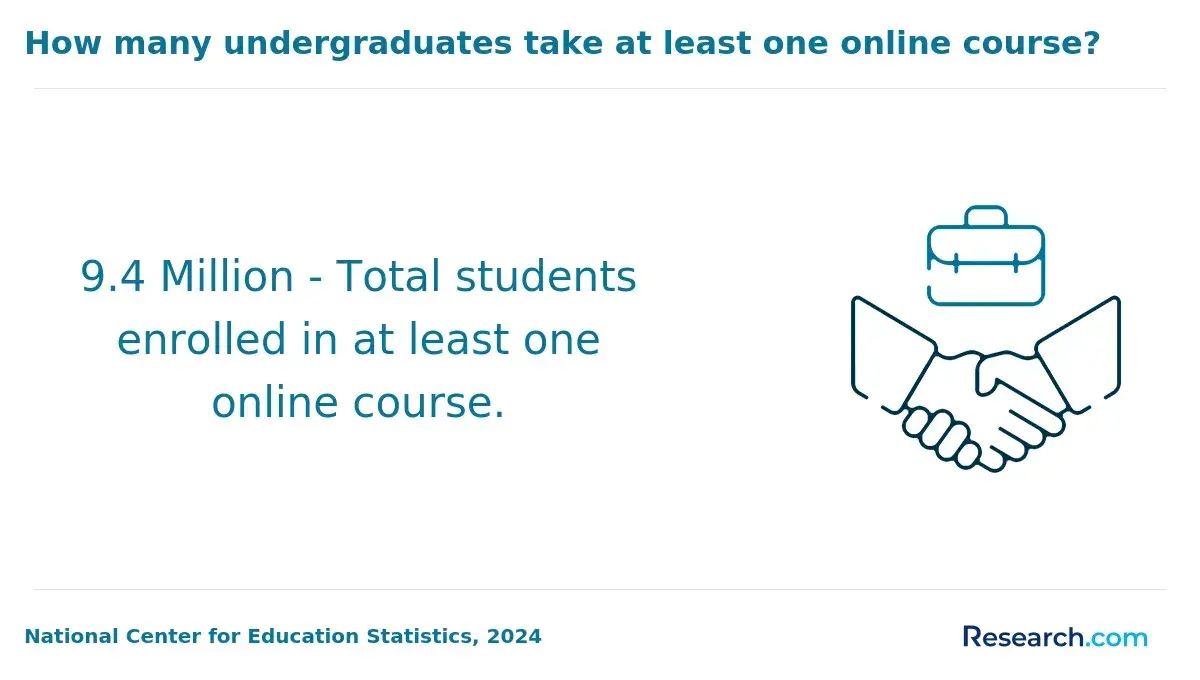
The National Center for Education Statistics reported that distance education remained a major part of U.S. higher education after the pandemic, with millions of undergraduates taking at least one online course. For a student with a lower GPA, that means more choices-but also more variation in quality, support, and pacing.
This comparison can help you decide whether an online or campus format fits your situation.
| Factor | Online bachelor's program | Campus-based bachelor's program |
| Schedule | Often asynchronous or evening-friendly | Usually fixed class times and location-based |
| Support access | Virtual tutoring, advising, library, writing center, and career services | In-person advising, labs, tutoring, and campus offices |
| Networking | Requires intentional participation in discussions, projects, and virtual events | More informal interaction before and after class |
| Hands-on requirements | May use simulations, local placements, or limited residencies | More direct access to labs, studios, and campus facilities |
| Best for | Working adults, transfer students, caregivers, military learners | Students who need structure, campus resources, or in-person labs |
Choose online if flexibility is essential and the school offers proactive support. Choose campus or hybrid study if you need face-to-face accountability, specialized labs, or a local professional network tied to your field.
What coursework, support services, and learning formats can you expect in these programs?
In these programs, you can expect general education courses, major requirements, electives, and a capstone or final project. The difference is that schools admitting 2.0 GPA students may place more emphasis on advising, early alerts, academic recovery, and structured degree maps.
Online formats vary. Some courses are asynchronous, meaning you complete weekly work on your own schedule. Others include live sessions, group projects, exams with proctoring, or field experiences in your local area. Accelerated sessions can help motivated students move faster, and some colleges offer 5 week college courses online, but shorter terms can be risky if you are rebuilding study habits.
Look for support services that match your academic weak points. The most valuable services are usually the ones you will actually use consistently.
- Transfer advising that shows which credits apply to the degree and which do not
- Academic coaching for time management, study routines, and probation requirements
- Writing, math, statistics, and technology tutoring available outside standard business hours
- Career services that include resume review, internship search, employer events, and interview practice
- Accessibility services for documented disabilities, including accommodations for exams or course materials
- Early-alert systems that contact students before a course failure becomes unavoidable
A common mistake is choosing the fastest calendar without checking weekly workload. If a course is compressed into five, six, or eight weeks, the total work does not disappear; it is concentrated into fewer days.
How long do these online bachelor's degrees take, and what do they cost?
Most online bachelor's degrees require about 120 credits. A first-time student usually needs around four years of full-time study, while a transfer student with an associate degree may finish in about two years if most credits apply. Part-time students often take longer but may reduce work-school stress.
Cost depends on tuition, fees, transfer credits, books, technology, residency rules, and whether the school charges online students the same rate as campus students. Federal financial aid, employer tuition assistance, military benefits, scholarships, and payment plans can change out-of-pocket cost substantially.
The table below summarizes the cost variables that matter most. Compare total program cost, not just per-credit tuition.
| Cost factor | Why it matters | Question to ask |
| Transfer credits | Accepted credits can reduce both time and tuition | How many credits apply directly to my major? |
| Per-credit tuition | Online rates may differ for in-state, out-of-state, and military students | Is the published rate the same for all online learners? |
| Mandatory fees | Technology, course, graduation, and proctoring fees add to total cost | What fees are required for online students? |
| Course materials | Some programs use open educational resources while others require costly materials | Are textbooks or software included? |
| Pace | Accelerated pacing may shorten time but increase weekly workload | Can I switch between full-time and part-time enrollment? |
Students with strong work experience may also consider a competency based degree, where progress may depend on demonstrating mastery rather than sitting through a traditional semester. This can be cost-effective for self-directed learners, but it is not ideal for students who need frequent instructor structure.
Before enrolling, request these cost details in writing so you can compare schools fairly.
- Total estimated cost to graduation based on your completed credits
- All required fees for online courses, exams, labs, software, and graduation
- Financial aid eligibility if you attend part time or enter conditionally
- Refund deadlines for accelerated terms
- Whether tuition changes during the program are capped or predictable
What entry-level jobs, salaries, and growth outlook are common after graduation?
Career outcomes vary by major, location, experience, internships, certifications, and the strength of your portfolio. A bachelor's degree can improve access to roles that screen for four-year credentials, but it does not erase the need for relevant skills or work experience.
BLS 2024 wage data shows why major selection matters. Computer and mathematical occupations had a median annual wage above $100,000, while many community, education, and administrative roles had lower median wages but may offer stable pathways and strong mission alignment.
The table below connects common online bachelor's majors with realistic entry-level directions and broader labor-market context. Use it as a starting point, then check your local job postings.
| Degree area | Common entry-level roles | Salary and outlook context | Skills employers often expect |
| Business | Operations coordinator, sales representative, HR assistant, management trainee | Business and financial occupations generally pay more than many administrative roles, but outcomes vary by specialization | Excel, communication, reporting, customer analysis, project coordination |
| Information technology | Help desk analyst, junior systems administrator, network support technician | Computer-related fields show stronger wage potential, especially with certifications and experience | Troubleshooting, networking, cloud tools, ticketing systems, documentation |
| Cybersecurity | Security operations center analyst, IT security assistant, compliance analyst | BLS lists information security analysts among faster-growing occupations, but many roles require experience | Networking, Linux, risk management, scripting basics, security tools |
| Healthcare administration | Medical office coordinator, patient services supervisor, health records support | Healthcare demand supports administrative pathways, though leadership roles often require experience | Healthcare systems, billing basics, privacy rules, scheduling, service quality |
| Psychology | Behavioral health technician, case management aide, HR assistant, research assistant | Bachelor's-level roles are often support positions; licensed clinical roles require graduate training | Writing, interviewing, ethics, statistics basics, empathy, documentation |
| Criminal justice | Corrections officer, security manager trainee, victim services assistant, public safety support | Pay and hiring standards vary widely by agency, region, and background requirements | Report writing, ethics, conflict management, law and procedure basics |
AI and automation are changing entry-level work. Routine reporting, scheduling, coding assistance, and document review are increasingly supported by software, so students should build durable skills: judgment, communication, data interpretation, cybersecurity awareness, and the ability to use AI tools responsibly.
How can you choose a reputable, affordable online bachelor's program with a 2.0 GPA?
Choosing a reputable, affordable online bachelor's program with a 2.0 GPA requires more than finding the school with the lowest admissions bar. The best program is one that accepts your academic history, applies your credits efficiently, supports your weak areas, and connects to a realistic career goal.
Use a step-by-step process before applying. This reduces the risk of wasted credits, unexpected costs, or enrolling in a program that does not match your career path.
- Confirm institutional accreditation through recognized accreditation sources and avoid schools that use vague or misleading claims.
- Check whether your intended major has higher GPA, prerequisite, licensure, clinical, or field-placement requirements than general admission.
- Request an unofficial degree plan showing remaining courses, estimated completion date, and total cost.
- Compare transfer policies, including maximum transfer credits, age limits on technical courses, and credit for military or professional learning.
- Ask how academic probation, conditional admission, and satisfactory academic progress affect financial aid.
- Review student support hours to make sure tutoring, advising, and technical help are available when you study.
- Look at career services, internship access, employer partnerships, and alumni outcomes in your target field.
- Read the withdrawal and refund policy carefully, especially for accelerated online terms.
Watch for red flags. A school that pressures you to enroll before evaluating transcripts, refuses to explain total cost, or promises a specific job or salary is not acting in your best interest. Also avoid choosing a major only because it admits students with a 2.0 GPA; the degree still needs to fit your abilities and career plan.
If you are comparing affordability, remember that the cheapest per-credit rate is not always the cheapest degree. A slightly higher tuition program that accepts more transfer credits, offers stronger support, or helps you finish sooner may cost less overall.
Other Things You Should Know About
Yes, some accredited online bachelor's programs accept applicants with a 2.0 GPA, especially transfer students and adult learners. However, selective majors may require higher GPAs or prerequisite grades.
Usually no. Employers typically see the degree, school, major, experience, and skills-not your admission GPA. Some employers may ask for transcripts, especially for internships, government roles, or early-career technical jobs.
Not necessarily. Conditional admission can be a useful second chance, but you must understand the rules. Ask what GPA you need to maintain, whether course load is limited, and how financial aid is affected.
The safest major is one that matches your strengths and has flexible admissions, clear career options, and strong support. Business, IT, healthcare administration, criminal justice, psychology, and general studies are often more accessible than nursing, engineering, or highly selective clinical programs.
References
- The Best Online Colleges And Universities | Learn How To Become https://www.learnhowtobecome.org/online-universities-and-colleges/best/
- Best Accredited Online Universities in 2025 https://www.study.eu/article/best-accredited-online-universities
- The Problem With Exclusively Online Degree Programs https://tcf.org/content/commentary/the-problem-with-exclusively-online-degree-programs/
- How does a college degree improve graduates’ employment and earnings potential? - APLU https://www.aplu.org/our-work/4-policy-and-advocacy/publicuvalues/employment-earnings/
- Can You Get Into Online College With a Low GPA? 2026 Guide https://www.collegetransitions.com/blog/can-you-get-into-online-college-with-a-low-gpa/
- Guide To Low GPA Transfer Strategies For College | Learning At College Strategy Blog https://www.learning.collegestrategyblog.com/low-gpa-transfer-strategies-for-college/
- 15 Online College Resources to Inform Your Decision https://www.baypath.edu/news/bay-path-university-blogs/post/15-online-college-resources-to-inform-your-decision/
- Online Degree vs. Traditional: Choosing the Right Path https://beal.edu/online-degree-vs-traditional/
- Top Online Schools That Accept Transfer Credits https://www.edvisorly.com/student-guides/online-schools-that-accept-transfer-credits
- College Graduation Rates and How ACE Compares | ACE Blog https://ace.edu/blog/college-graduation-rates-and-how-ace-compares/