2027 Best Bachelor's Completion Programs With Flexible Deadlines

Co-Founder and Chief Data Scientist
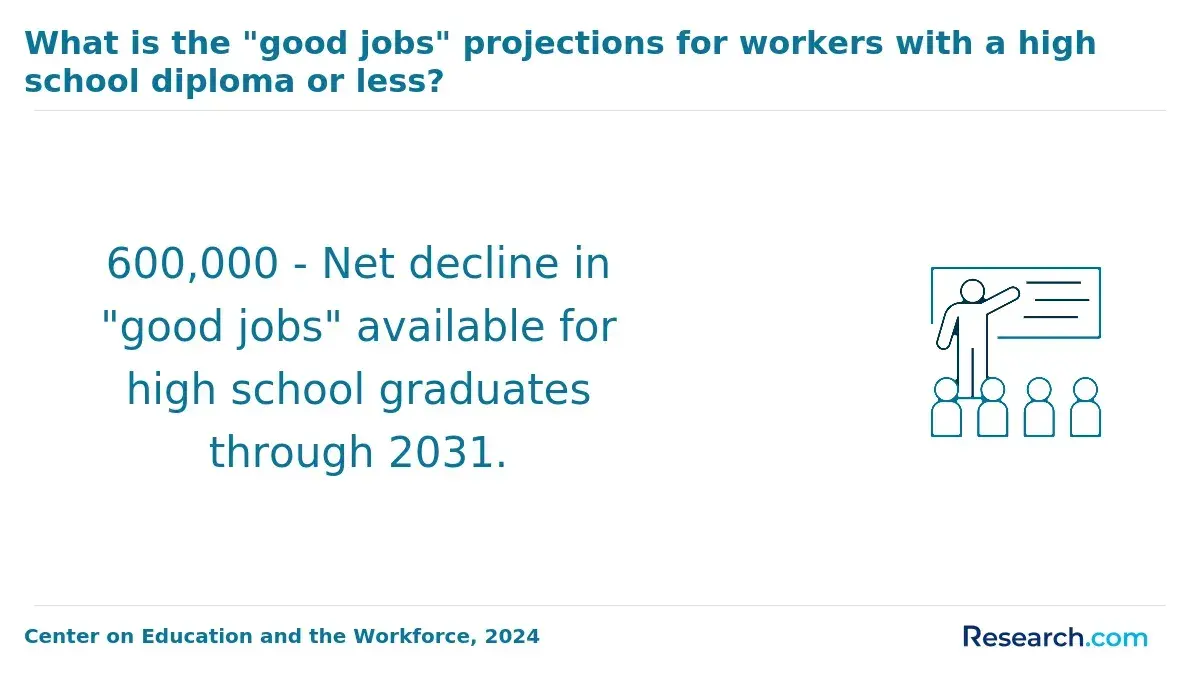
Finishing a bachelor's degree can change both career mobility and earnings, but returning students often need deadlines that fit work, family, and military schedules. BLS data published in 2025 shows workers with a bachelor's degree had median weekly earnings of $1,543 in 2024, compared with $930 for high school graduates.
This guide helps adults with prior college credit compare flexible bachelor's completion options, understand transfer and accreditation rules, estimate time and cost, and choose a program that supports a realistic career goal.
Key Things You Should Know
- The best flexible bachelor's completion programs usually accept substantial transfer credit, offer online or hybrid delivery, and use 5-week, 8-week, self-paced, or competency-based formats to help adults finish faster.
- Cost varies widely: College Board's 2024-2025 figures list average published tuition and fees at $11,610 for in-state public four-year institutions and $43,350 for private nonprofit four-year institutions, before aid.
- Before enrolling, verify institutional accreditation, major-specific accreditation or licensure alignment, credit expiration rules, and whether the program's deadlines are truly flexible or simply shorter.
Top 10 Best Bachelor's Completion Programs With Flexible Deadlines
Business Degrees
Business completion programs are among the most versatile choices for adults with mixed transfer credits because many accept prior coursework in accounting, management, economics, and communication. Flexible formats often work well for supervisors, sales professionals, administrative staff, and military learners seeking advancement.
Choose concentrations carefully: accounting may require specific coursework for CPA eligibility, while management, marketing, supply chain, and HR tracks usually fit broader corporate roles. BLS May 2024 data places the median wage for business and financial operations occupations at $80,920, making outcomes stronger when the curriculum includes analytics, budgeting, and project management.
Healthcare Degrees
Healthcare bachelor's completion programs suit working adults already in patient care, medical administration, allied health, or public health support roles. Common options include health sciences, healthcare administration, public health, and health information management. These degrees can support supervisory, compliance, operations, and care coordination roles, but students should not assume they lead to clinical licensure.
Before enrolling, confirm whether the program requires in-person labs, clinical placements, background checks, or state-specific approvals. A flexible healthcare degree is strongest when it builds leadership, data privacy, reimbursement, quality improvement, and healthcare law skills.
Information Technology Degrees
Information technology completion programs are practical for adults with help desk, networking, systems support, or technical certificate experience. They usually focus on applied skills such as cloud administration, databases, scripting, systems analysis, and IT project management.
Flexible deadlines can be especially useful for learners already working rotating technical support schedules. BLS May 2024 data reports a $105,990 median wage for computer and information technology occupations, but entry-level outcomes depend heavily on experience, certifications, portfolios, and local demand. Look for programs that include labs, industry tools, and preparation for recognized IT credentials.
Computer Science Degrees
Computer science completion programs are best for students who want deeper technical preparation in programming, algorithms, software engineering, data structures, and computing theory. They can be more demanding than applied IT programs, especially for adults who need calculus, discrete math, or advanced coding prerequisites. Flexible deadlines help, but self-paced CS courses still require consistent practice.
This path fits students targeting software development, data engineering, quality assurance, or graduate study. Compare whether the program requires proctored exams, team projects, a capstone, or a portfolio that can demonstrate job-ready coding ability.
Cybersecurity Degrees
Cybersecurity completion programs work well for adults with IT support, networking, military, law enforcement, or compliance backgrounds. Coursework typically covers risk management, ethical hacking, incident response, digital forensics, security architecture, and governance.
BLS projections published for the 2024-2034 period show information security analyst employment growing much faster than average, reflecting continued demand for security talent. Still, a degree alone is rarely enough; employers often value hands-on labs, security clearances, internships, and certifications. Confirm whether the curriculum maps to practical tools and frameworks rather than offering only policy-level content.
Psychology Degrees
Psychology completion programs are useful for adults interested in human behavior, workplace performance, social services, research support, or graduate study. They generally do not qualify graduates to practice as licensed psychologists or therapists without advanced education and supervised experience.
Flexible online formats are common, but students should check whether research methods, statistics, and capstone requirements are rigorous enough for graduate admissions. This degree can pair well with HR, case management, marketing research, user experience, or nonprofit work. Choose it when the curriculum supports a clear next step, not only personal interest.
Nursing Degrees
Nursing completion programs usually refer to RN-to-BSN pathways for licensed registered nurses, not entry-level nursing degrees. They are designed for working nurses and often include flexible online coursework in leadership, evidence-based practice, community health, informatics, and care quality.
Clinical requirements may be completed locally, but rules vary by school and state. BLS May 2024 data lists the median wage for registered nurses at $93,600, though pay depends on region, specialty, shift, and employer. Confirm that the program has appropriate nursing accreditation and supports your state's professional expectations.
Education Degrees
Education completion programs can help paraprofessionals, substitute teachers, childcare workers, and career changers move toward classroom or education-support roles. However, teacher licensure is state-specific, so flexibility should not be the only deciding factor.
Verify student-teaching requirements, field placements, background checks, testing rules, and whether the program is approved for certification in your state. Non-licensure education degrees may fit training, instructional design, youth services, or education administration support roles, but they may not qualify graduates to teach in public schools. Ask admissions staff to put licensure alignment in writing.
Criminal Justice Degrees
Criminal justice completion programs fit adults in law enforcement, corrections, security, emergency management, victim advocacy, or public administration. Flexible formats are common because many students work shifts. Coursework often covers criminology, policing, courts, corrections, ethics, homeland security, and research methods.
The degree may support promotion or administrative roles, but sworn law enforcement jobs can still require academy training, physical standards, background checks, and local hiring processes. Compare programs by internship options, writing intensity, public policy coursework, and whether credits from police academies or military training can transfer.
Engineering Degrees
Engineering completion programs are less common and usually less flexible than business or IT options because ABET-aligned engineering curricula often require sequenced math, science, labs, and design work. Some adults may find engineering technology, industrial technology, or operations-focused degrees more accessible if they already work in manufacturing, construction, utilities, or technical supervision.
These programs can support roles in quality, production, project coordination, and technical sales. If your goal is professional engineering licensure, verify ABET accreditation, state board requirements, lab expectations, and whether online delivery affects eligibility.
What is a bachelor's completion program with flexible deadlines and who is it best for?
A bachelor's completion program is a degree pathway built for students who already have college credits, an associate degree, military training, professional certifications, or documented work-based learning.
"Flexible deadlines" can mean asynchronous coursework, rolling starts, accelerated terms, competency-based assessment, extended assignment windows, or the ability to pause and resume without losing progress.
These programs are best for adults who know their target field and need a degree to qualify for promotion, switch careers, meet employer requirements, or prepare for graduate school. They are not always ideal for first-time students who need intensive advising, students pursuing highly sequenced lab-based majors, or learners who struggle without weekly structure.
The smartest choice depends on how much credit transfers, how the school measures progress, and whether the degree aligns with a specific career outcome. A flexible program should reduce friction, not reduce academic quality.
How do online bachelor's completion programs with flexible schedules compare to on-campus options?
Online bachelor's completion programs usually offer the most schedule control, while campus programs may provide stronger face-to-face support, local networking, labs, and structured routines. Hybrid programs sit in the middle: they can be flexible for lectures but still require scheduled campus sessions, clinicals, practicums, or proctored assessments.
The comparison below shows how the formats differ for working adults who are trying to finish efficiently without choosing a program that creates hidden scheduling problems:
| Format | Best fit | Main advantage | Common trade-off |
| Fully online asynchronous | Adults with unpredictable work or family schedules | Highest control over weekly study time | Requires strong self-management and written communication |
| Online synchronous | Students who want live interaction but cannot commute | More structure and instructor access | Class meetings may conflict with shifts or caregiving |
| Hybrid | Students near campus or in programs with practical requirements | Combines online convenience with in-person support | Travel and fixed meeting times can reduce flexibility |
| On-campus evening or weekend | Adults who learn better in person | Clear routine and local peer network | Fewer schedule options and possible commute costs |
If your goal is location-independent work, compare curriculum and job outcomes with guides to the best degree for remote work. Flexible deadlines help, but remote-friendly careers also depend on digital skills, portfolio evidence, and employer expectations.
How can you verify accreditation and credit transfer policies for flexible bachelor's completion programs?
Accreditation is the quality-control baseline for bachelor's completion programs. In the U.S., students should first confirm that the institution is accredited by an agency recognized by the U.S. Department of Education or the Council for Higher Education Accreditation. Then, they should check whether the specific major needs programmatic accreditation, such as nursing, business, education, engineering, or health information management.
Use a step-by-step verification process before you submit an application or pay a deposit. This reduces the risk of losing transfer credits, financial aid eligibility, graduate-school options, or licensure pathways:
- Look up the school in the U.S. Department of Education's accreditation database and confirm the institution name, location, and current status.
- Ask the registrar or transfer office for a written preliminary transfer evaluation, not just a verbal estimate from admissions.
- Check whether transfer credits expire, especially in fast-changing fields such as technology, nursing, accounting, and cybersecurity.
- For licensed fields, verify requirements with the state licensing board rather than relying only on marketing language.
- Ask whether prior learning assessment, military credit, employer training, or certifications can count toward the degree and whether fees apply.
Students comparing online options can use resources on accredited online degree programs as a starting point, but they should still verify the exact program, state eligibility, and transfer policy directly with the institution.
What are typical admission requirements for bachelor's completion programs designed for working adults?
Admission requirements vary, but bachelor's completion programs usually assume that applicants have already completed some college-level work. Many programs ask for official transcripts from every institution attended, a minimum GPA, proof of an associate degree or transferable credits, and sometimes a resume, personal statement, or prerequisites for the major.
Adults with fewer credits should not assume they are excluded. Some schools offer bridge pathways, general education blocks, or partnerships with community colleges and online associate degrees that can help students complete lower-division requirements before moving into upper-division coursework.
Common admission items include the following documents and checks, which matter because missing transcripts or unapproved prerequisites can delay enrollment by an entire term:
- Official transcripts from all prior colleges, including schools where credits were attempted but not completed.
- Minimum transferable credit requirement, often expressed as semester credits or completion of an associate degree.
- Major prerequisites such as statistics, anatomy, accounting, programming, composition, or college algebra.
- Proof of professional license or certification for programs such as RN-to-BSN, allied health, or technical completion pathways.
- Identity, residency, military, employer, or financial aid documents needed for tuition classification and aid processing.
How do flexible bachelor's completion programs structure coursework, pacing, and term formats?
Flexible bachelor's completion programs are not all flexible in the same way. Some simply use shorter terms, while others let students move faster after proving mastery. The distinction matters because a busy adult may need deadline flexibility more than speed, while another student may want an accelerated path with strict weekly milestones.
The table below compares common pacing models so students can match the academic calendar to their work style, motivation, and time availability:
| Model | How it works | Best for | Watch for |
| 8-week terms | Courses run in compressed sessions with regular due dates | Students who want momentum and predictable structure | Workload can feel intense if taking multiple courses |
| 5-week or 6-week terms | One course may be completed quickly before the next begins | Adults who prefer focusing on one subject at a time | Missing a week can be difficult to recover from |
| Competency-based | Students advance by demonstrating mastery | Experienced adults with strong prior knowledge | Requires independence and may not suit all financial aid models |
| Self-paced within a term | Assignments may be completed ahead of schedule or within broad windows | Students with uneven weekly availability | Procrastination can create end-of-term pressure |
| Traditional semester online | Courses follow a 15-week schedule with online delivery | Students who need more time with each subject | Calendar may be less flexible despite online access |
AI tools are also changing coursework expectations. Many programs now require stronger academic integrity checks, project-based assessment, oral defenses, or applied portfolios so students can demonstrate original work rather than simply completing online quizzes.
How long does it take to finish a bachelor's completion program when studying part-time or full-time?
Completion time depends mainly on transferred credits, course load, term length, and whether required courses are offered every term. A student entering with 60 transferable credits may need about 60 more credits to finish, but the calendar length can vary widely depending on pacing and life interruptions.
The timeline estimates below are general planning ranges, not guarantees. They help students understand how workload choices affect graduation timing:
| Enrollment pattern | Typical course load | Likely planning range | Best fit |
| Full-time accelerated | 12 or more credits per term, sometimes year-round | About 12 to 24 months with substantial transfer credit | Students with stable schedules and high urgency |
| Part-time steady | 6 to 9 credits per term | About 24 to 36 months for many transfer students | Working adults balancing employment and family duties |
| One course at a time | 3 credits per session or term | Often 36 months or more | Students with demanding jobs or caregiving responsibilities |
| Competency-based fast pace | Progress based on completed competencies | Can be shorter for students with strong prior knowledge | Experienced learners who can study independently |
To avoid delays, ask whether upper-division courses are offered every term, whether prerequisites can be taken concurrently, and whether capstone or internship courses have fixed start dates. A program advertised as flexible can still slow students down if key courses are available only once per year.
What do bachelor's completion programs with flexible deadlines typically cost, and how can students fund them?
Costs depend on institution type, residency, transfer credits, course load, fees, books, technology, and whether the program charges per credit, per term, or through a subscription model. College Board's 2024-2025 published tuition and fee averages provide a useful benchmark, but adult learners should focus on total remaining cost after transfer credit and aid.
Common published tuition benchmarks include the following, before grants, scholarships, employer benefits, or institutional aid:
- $11,610 for average in-state tuition and fees at public four-year institutions in 2024-2025.
- $30,780 for average out-of-state tuition and fees at public four-year institutions in 2024-2025.
- $43,350 for average tuition and fees at private nonprofit four-year institutions in 2024-2025.
Funding should start with the FAFSA, even for part-time students, because federal grants, loans, and work-study eligibility can vary by enrollment intensity and income.
Adult learners should also ask about employer tuition assistance, military and veteran benefits, state completion grants, community college transfer scholarships, and credit for prior learning.
Avoid the mistake of comparing only tuition per credit. A cheaper program may cost more overall if it rejects transfer credits, requires repeated prerequisites, adds high technology fees, or forces students to take extra electives to meet residency requirements.
What careers and industries commonly hire graduates of flexible bachelor's completion programs?
Graduates of flexible bachelor's completion programs are hired across business, healthcare, technology, education, government, public safety, nonprofit, and industrial sectors. The degree can be especially useful when the student already has work experience but lacks the bachelor's credential needed for promotion, management eligibility, or a career change.
The table below connects common completion degrees with industries and roles. It is not a guarantee of placement; it is a planning tool for matching degree choice to likely job families:
| Degree area | Common industries | Example roles | Career-fit note |
| Business | Corporate services, finance, retail, logistics, healthcare administration | Operations coordinator, analyst, supervisor, HR specialist | Best when paired with analytics, budgeting, or leadership experience |
| Healthcare | Hospitals, clinics, insurers, public health agencies | Care coordinator, health services supervisor, quality specialist | Check whether roles require clinical licensure or prior healthcare experience |
| IT and cybersecurity | Technology firms, government, finance, healthcare, managed services | Systems analyst, security analyst, cloud support specialist | Portfolios, labs, and certifications can matter as much as the degree |
| Education | Schools, childcare, training departments, nonprofits | Teacher candidate, instructional aide, training coordinator | Licensure-track and non-licensure degrees lead to different outcomes |
| Criminal justice | Law enforcement, courts, corrections, emergency management, security | Probation support, investigator assistant, security manager | Agency hiring standards may include exams, academies, and background checks |
Students still choosing a major can compare long-term labor-market resilience, automation exposure, and transferability by reviewing top degrees for the future. The best completion major is the one that connects prior credits, current experience, and realistic hiring demand.
How do salaries and job outlook compare for graduates of flexible bachelor's completion programs?
Salary and job outlook vary more by occupation, location, experience, and industry than by program format. Employers generally care that the degree is legitimate, relevant, and supported by skills; they do not usually reward a degree simply because it was flexible or online.
BLS May 2024 wage data shows why degree choice matters. The table below summarizes median wages for broad fields commonly connected to bachelor's completion programs, using occupational groups or representative roles where appropriate:
| Field | Relevant BLS wage measure | May 2024 median wage | How to interpret it |
| Business | Business and financial operations occupations | $80,920 | Stronger outcomes often require analytical, finance, compliance, or management skills |
| Computer and IT | Computer and information technology occupations | $105,990 | Experience, certifications, and technical portfolios heavily influence competitiveness |
| Nursing | Registered nurses | $93,600 | Applies to licensed RNs; BSN completion may support advancement but does not replace licensure |
| Education | Elementary school teachers, except special education | $63,670 | Public school roles usually depend on state certification and district pay scales |
| Criminal justice | Police and detectives | $77,270 | Agency type, overtime, location, and rank can create large differences |
| Engineering-related | Architecture and engineering occupations | $97,310 | Licensure and ABET alignment may matter for engineering roles |
Use salary data as a screening tool, not a promise. A flexible bachelor's completion program is most likely to pay off when it reduces time to degree, accepts meaningful transfer credit, aligns with hiring requirements, and helps you build evidence of skills through projects, clinical work, internships, or certifications.
Other Things You Should Know About
Yes, if the school is properly accredited and the degree is relevant to the role. Employers typically focus on accreditation, skills, experience, and whether the program meets licensure or industry expectations.
Many programs are fully online, especially in business, IT, psychology, criminal justice, and healthcare administration. Nursing, education, engineering, and some healthcare programs may require clinicals, fieldwork, labs, or student teaching.
Requirements vary by school. Some programs are designed for students with an associate degree or about two years of prior credit, while others admit students with fewer credits and build in remaining general education courses.
The biggest red flag is vague information about accreditation, transfer credit, total cost, or licensure eligibility. Ask for written answers before enrolling, especially if the degree is tied to certification, promotion, or state-regulated work.
References
- Most Useful Degrees https://www.collegeadvisor.com/resources/most-useful-degrees/
- Top Degrees in Demand for the Future: 2026 & Beyond https://skillifysolutions.com/blogs/career-growth/top-degrees-in-demand-for-the-future/
- Best Online Degrees for Working Adults in 2026 https://www.straighterline.com/blog/degreecompletion-best-online-degrees-for-working-adults-in-2026
- Overdue: Why Higher Education Needs Flexible Deadlines – a Conversation https://issotl.com/2022/07/27/overdue-why-higher-education-needs-flexible-deadlines/
- Options for Financing Your Education https://lesley.edu/costs-financial-aid/options-for-financing-your-education
- Step Three: Develop flexible models of delivery https://www.luminafoundation.org/local-talent-handbook/develop-flexible-models-of-delivery/
- Best Online Bachelor's Degree Completion Programs - The Top Online Colleges to Complete Your Bachelor's Degree https://www.collegeconsensus.com/rankings/best-online-bachelors-degree-completion-programs/
- Best Accredited Online Universities in 2025 https://www.study.eu/article/best-accredited-online-universities
- Bachelor's Degree Completion https://www.capital.edu/admission-aid/continuing-education-students/bachelors-degree-completion/
- Top 19 Bachelor Degree Programs for Working Adults | NEIT https://www.neit.edu/blog/degrees-for-working-adults