2027 Best Bachelor's Degrees With Monthly Start Dates

Co-Founder and Chief Data Scientist
Waiting a full semester to start college can delay a promotion, career switch, or transfer plan. Monthly start bachelor's degrees solve that timing problem by letting adults begin online coursework more frequently throughout the year. The stakes are practical: BLS data show workers with a bachelor's degree had median weekly earnings of $1,543 in 2024, compared with $930 for high school graduates.
This guide helps transfer students, working adults, military learners, and career changers compare flexible bachelor's options, understand costs and timelines, and choose a program that fits real career goals.
Key Things You Should Know
- Monthly start bachelor's programs are most common in online, accelerated, and adult-focused formats, especially in business, healthcare administration, IT, cybersecurity, psychology, criminal justice, and education-related fields.
- Career return depends more on the field, accreditation, transfer-credit policy, licensure alignment, and total cost than on the start-date format alone; BLS 2024 salary data show wide differences across bachelor's-level occupations.
- Use monthly starts strategically: they can reduce waiting time, but students should still verify institutional accreditation, programmatic accreditation when relevant, state authorization, tuition, fees, and whether credits transfer before enrolling.
Top 10 Best Bachelor's Degrees With Monthly Start Dates
Business Degrees
Business is one of the strongest fits for monthly starts because courses are often fully online and sequence well in short terms. Common majors include business administration, accounting, finance, marketing, human resources, and supply chain management. This path suits students who want flexible career options rather than one narrow credential. It may be less ideal for students seeking highly technical roles without adding analytics, accounting, or industry-specific experience.
BLS May 2024 data list accountants and auditors at a median annual wage of $81,680, making accounting a practical business concentration for students who like structured problem-solving.
Healthcare Degrees
Healthcare bachelor's programs with monthly starts usually focus on healthcare administration, health information management, public health, or health sciences rather than direct clinical licensure. They fit medical assistants, allied health workers, and administrative staff who want supervisory or operations roles. Students should check whether the degree is career-building or licensure-qualifying, because many clinical jobs require separate credentials.
BLS May 2024 data report a median annual wage of $117,960 for medical and health services managers, but management roles generally require experience in addition to the degree.
Information Technology Degrees
Information technology degrees focus on applied systems, networks, cloud platforms, databases, troubleshooting, and business technology support. Monthly starts work well because many IT courses are modular and skill-based. This degree is a good fit for help desk workers, career changers with certifications, or students who want technical roles without the heavier theory of computer science.
Look for programs that include labs, industry tools, and certification preparation. Employers often value a portfolio, internships, and verified technical skills alongside the bachelor's credential.
Computer Science Degrees
Computer science is more theory-heavy than IT and usually covers programming, algorithms, software engineering, operating systems, databases, and discrete math. Monthly starts can help motivated students begin sooner, but the workload can be demanding in accelerated terms. This degree fits students who want software development, data, AI-adjacent, or systems careers.
BLS May 2024 data list software developers at a median annual wage of $133,080. That figure reflects the occupation, not a guaranteed outcome, so students should compare curriculum depth, coding projects, internships, and graduate placement support.
Cybersecurity Degrees
Cybersecurity bachelor's degrees prepare students for security analyst, risk, compliance, incident response, and network defense roles. Monthly starts are common in online programs because labs and simulations can be delivered virtually. This path fits students who like detail, systems thinking, and continuous learning.
BLS May 2024 data show information security analysts had a median annual wage of $124,910. Students should favor programs with hands-on labs, secure cloud environments, recognized certification alignment, and clear coverage of governance, risk, and technical defense.
Psychology Degrees
Psychology bachelor's programs with monthly starts are popular because they apply to human services, business, research support, case management, and graduate study. The degree is not enough to become a licensed psychologist, counselor, or therapist; those paths usually require graduate education and state licensure.
It fits students interested in behavior, communication, social services, or organizational roles. To improve career value, choose electives in data analysis, human resources, addiction studies, or applied behavioral health, and confirm whether field experience is available.
Nursing Degrees
Nursing options with monthly starts are often RN-to-BSN programs rather than pre-licensure BSN programs. RN-to-BSN degrees serve licensed registered nurses who want leadership, public health, evidence-based practice, or graduate-school preparation. Pre-licensure nursing usually has fixed cohorts, clinical placements, and state board requirements, so monthly admission is less common.
BLS May 2024 data report a median annual wage of $93,600 for registered nurses. Students should verify accreditation, clinical expectations, state authorization, and whether the program supports their licensing location.
Education Degrees
Education bachelor's degrees with monthly starts may prepare students for early childhood, elementary, special education, instructional design, or non-licensure education roles. Licensure programs require careful review because student teaching, background checks, and state approval rules vary.
Monthly starts can be convenient for paraprofessionals and childcare workers, but not every online program leads to teacher certification. Before enrolling, students should ask whether the degree meets requirements in their state and whether supervised teaching placements are arranged locally.
Criminal Justice Degrees
Criminal justice bachelor's programs cover courts, policing, corrections, criminology, ethics, investigations, and public safety administration. Monthly starts work well for law enforcement, military, security, or corrections professionals who need flexible scheduling. The degree can support advancement, but many sworn roles also require academy training, fitness standards, background checks, and local hiring exams.
This path is strongest when paired with writing skills, data literacy, leadership training, and internships or agency experience. Students interested in federal roles should compare degree requirements by agency.
Engineering Degrees
Engineering bachelor's degrees with true monthly starts are less common because labs, calculus sequences, and ABET accreditation requirements can limit scheduling flexibility. More available options include engineering technology, industrial technology, construction management, or completion programs for transfer students.
This path fits students seeking applied technical or operations roles, but those who want professional engineer licensure should prioritize ABET-accredited engineering programs. BLS May 2024 data list mechanical engineers at a median annual wage of $102,320, but licensure and specialization can significantly affect career options.
Which bachelor's degrees offer the best career returns?
The best career returns usually come from bachelor's degrees that connect directly to growing occupations, measurable technical skills, licensure pathways, or management advancement. Monthly starts can improve convenience, but they do not automatically improve return on investment; the stronger question is whether the degree leads to a realistic role at a cost you can manage.
The table below compares degree areas by typical career-use case, not by a universal ranking. Use it to shortlist programs before reviewing more detailed lists of the best bachelor degrees to get based on salary potential and career fit.
| Degree area | Best fit | Career-return signal | Main caution |
| Computer science | Students targeting software, data, AI-support, or systems roles | Strong salary potential in software and technical occupations | Accelerated math and coding courses can be difficult without preparation |
| Cybersecurity | IT workers and detail-oriented career changers | Strong demand for risk, compliance, and security operations skills | Entry-level roles may still require labs, certifications, or IT experience |
| Nursing | Licensed RNs completing a BSN | Clear connection to healthcare advancement and graduate pathways | Pre-licensure programs may not offer true monthly starts |
| Business and accounting | Students seeking management, finance, operations, or accounting paths | Broad employer recognition and flexible career use | General business degrees need concentration, experience, or internships |
| Healthcare administration | Healthcare workers moving into operations or management | Useful for supervisory roles in a large healthcare labor market | Management roles usually require experience, not just the degree |
For most students, the highest-return choice is the one that connects to a specific job family, accepts prior credits, offers career-relevant projects, and keeps borrowing low. A lower-cost program in a high-demand field may be a better decision than a prestigious but expensive program that does not fit your schedule or career target.
What are the most popular online bachelor's degrees with monthly starts?
The most popular online bachelor's degrees with monthly starts tend to be programs that can be delivered asynchronously, do not require fixed lab cohorts, and serve working adults. They are often offered in five-week, six-week, seven-week, or eight-week terms, with a new start date opening soon after each term begins.
The table below shows common monthly-start bachelor's options and the students they usually serve. It can help you decide whether you need a broad degree, a technical degree, or a licensure-aware pathway.
| Program type | Why monthly starts are common | Typical student profile | Best next step |
| Business administration | Courses are modular and widely available online | Working adults seeking promotion or career flexibility | Choose a concentration such as accounting, analytics, HR, or supply chain |
| Information technology | Labs and applied assignments can be completed remotely | Help desk, support, military, or career-change students | Check certification alignment and cloud or networking lab access |
| Psychology | Lecture, reading, and research assignments fit online terms | Students interested in human services or graduate school | Confirm whether the program includes statistics, research methods, and applied electives |
| Criminal justice | Professional and policy courses adapt well to online delivery | Public safety, military, security, or corrections workers | Review agency-specific requirements before assuming the degree is enough |
| RN-to-BSN | Designed for licensed nurses with prior clinical education | Registered nurses seeking advancement or graduate preparation | Verify nursing accreditation, state authorization, and practicum expectations |
Popularity should not be your only filter. A common mistake is choosing the easiest-to-start program instead of the program that best matches the job you want. If two programs start next month, choose the one with stronger accreditation, clearer transfer-credit rules, and better evidence of career support.
Which accredited schools offer monthly start bachelor's programs?
Monthly start bachelor's programs are most often offered by accredited online universities, adult-serving private nonprofit institutions, public online campuses, and some competency-based or accelerated colleges. The school type matters less than whether the institution is properly accredited and whether the specific program meets your career or licensure needs.
When comparing good online colleges, start by checking institutional accreditation through a recognized accreditor, then confirm program-level approval where it matters. Nursing, education, engineering, accounting, counseling-related pathways, and health information programs may involve additional accreditation, state authorization, licensure, or certification considerations.
Use this checklist before you apply, because monthly-start admissions can move quickly:
- Confirm the school's institutional accreditation using official accreditation records, not only marketing language on the program page.
- Ask whether the bachelor's program is available in your state, especially if it includes clinicals, student teaching, internships, or professional licensure preparation.
- Request a written transfer-credit evaluation before committing, including how many credits apply to major, general education, and elective requirements.
- Check whether tuition is charged per credit, per term, or by subscription, and ask which fees are not included in advertised tuition.
- Review student support hours, tutoring, library access, career services, and technology support for online learners.
Red flags include pressure to enroll immediately, vague accreditation claims, unclear refund policies, very low credit acceptance despite prior college work, and promises of specific jobs or salaries. A reputable school should be able to explain costs, requirements, and outcomes without making guarantees.
How do monthly start bachelor's programs work?
Monthly start bachelor's programs usually divide the academic year into many short enrollment windows instead of one fall and one spring intake. Students may enter at the beginning of the next available term, complete one or two courses at a time, and continue through multiple terms per year.
The format can vary by school, so it is important to understand the delivery model before assuming "monthly start" means "self-paced." Some programs have fixed weekly deadlines, while others use subscription or mastery-based pacing. Students comparing competency based programs should pay close attention to assessment rules, faculty access, and how progress is measured.
Here is the typical sequence from inquiry to first course:
- Submit an application and transcripts from high school and all colleges previously attended.
- Complete transfer-credit review, placement steps, or program-specific screening if required.
- Review the degree plan, tuition estimate, financial aid package, and expected graduation timeline.
- Register for the next available term, usually beginning with one or two courses.
- Complete orientation, set up the learning platform, and confirm textbook or software requirements.
Monthly starts are helpful when you are ready to move, but they can also tempt students to rush. If you need financial aid, employer tuition assistance, military benefits, or transcript evaluations, build in time so your first month is not spent solving administrative problems.
What admission requirements do monthly start programs usually have?
Admission requirements for monthly start bachelor's programs are usually designed for speed, but they still vary by school and major. Most programs require proof of high school completion or an equivalent credential, official transcripts, and an application. Transfer students must usually submit transcripts from every college attended, even if the grades were poor or the credits seem unrelated.
Programs in nursing, education, engineering, and some health fields may add extra requirements because they connect to licensure, labs, clinical practice, or field placements. These requirements are not just paperwork; they affect whether you can legally complete the program in your state or qualify for the career you want.
Common requirements include the following:
- High school diploma, GED, or equivalent documentation.
- Official transcripts from all prior colleges and universities.
- Minimum GPA for transfer or major admission, when required by the school.
- Proof of English proficiency for applicants whose prior education requires it.
- Program-specific items such as an active RN license, background check, prerequisite courses, professional resume, or placement assessment.
A common mistake is applying only to the fastest-starting program without asking whether admission to the university is separate from admission to the major. This matters in nursing, education, engineering, and selective business concentrations where students may need prerequisites before entering upper-division courses.
How long do monthly start bachelor's degrees take?
Most bachelor's degrees require about 120 semester credits, but monthly start programs can feel faster or slower depending on transfer credits, term length, course load, and pacing rules. A student entering with no prior college credit may still need around four years of full-time study, even if the program begins every month.
Transfer credit is the biggest timeline variable. An adult learner with an associate degree, military training, professional certifications, or prior college coursework may finish much sooner if those credits apply directly to the degree plan. However, excess elective credits do not always reduce time to graduation if major requirements remain unfinished.
The table below summarizes common completion scenarios. These are planning ranges, not promises, because policies differ by school and by major.
| Starting point | Typical remaining credits | Possible timeline | Key factor |
| No prior college credit | About 120 credits | Roughly 4 years full time | Course load and year-round enrollment |
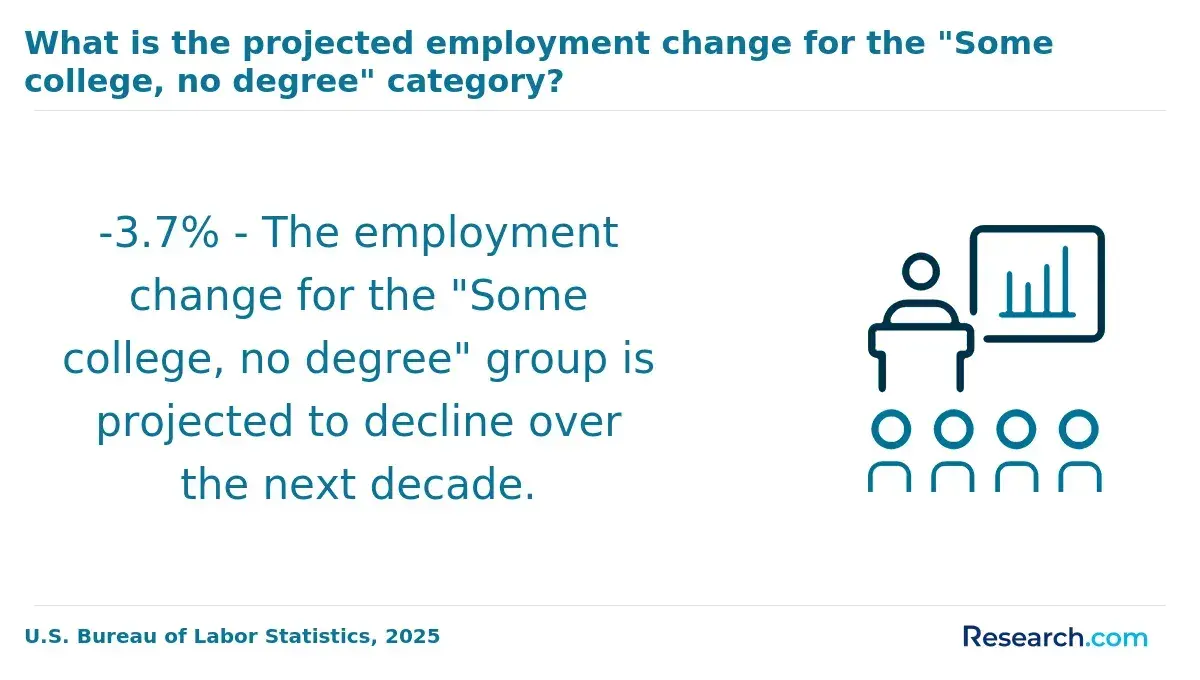
| Some college, no degree | Varies widely | Often 2 to 4 years | How many credits apply to the major |
| Associate degree transfer | Often about 60 credits | Often 18 months to 2.5 years | Transfer agreement and upper-division requirements |
| RN-to-BSN student | Varies by prior nursing credits | Often 12 to 24 months | License status, general education gaps, and practicum rules |
| Competency-based learner | Depends on mastered competencies | Highly variable | Prior knowledge, assessment pace, and subscription terms |
Students trying to finish quickly should ask for a written degree audit, not just an admissions estimate. A degree audit shows which requirements remain and whether taking more courses per term will actually shorten the timeline.
How much do monthly start bachelor's degrees cost?
Costs vary widely because monthly start bachelor's programs may be offered by public universities, private nonprofit institutions, private for-profit schools, and subscription-based online colleges. Published tuition is only one part of the total price; fees, books, technology, repeated courses, lost transfer credits, and time to completion can change the real cost.
For context, College Board's 2024-25 national averages list published tuition and fees at $11,610 for in-state public four-year colleges, $30,780 for out-of-state public four-year colleges, and $43,350 for private nonprofit four-year colleges. Online monthly-start programs may be lower or higher than these averages, so compare your actual net price after grants, scholarships, employer benefits, and transfer credits.
The table below highlights cost factors that affect affordability more than the start date itself. Use it to ask sharper questions when speaking with admissions or financial aid staff.
| Cost factor | Why it matters | What to ask |
| Tuition model | Per-credit, per-term, and subscription pricing reward different study speeds | What will I pay if I take one course versus two or more courses? |
| Transfer credits | Accepted credits can reduce both time and tuition | How many credits apply to required courses, not just electives? |
| Fees | Technology, graduation, course, assessment, and clinical fees can add up | Which fees are mandatory and which are course-specific? |
| Books and software | Some online programs use e-text subscriptions or specialized platforms | Are materials included in tuition or billed separately? |
| Financial aid pacing | Short terms may affect aid disbursement timing and satisfactory academic progress | How does my course load affect aid eligibility and refunds? |
To reduce cost, prioritize accredited programs with generous but transparent transfer policies, avoid withdrawing after refund deadlines, and compare net price rather than advertised tuition. If your goal is a narrow skill upgrade rather than a full degree, lower-cost certificates may be enough, but they should be chosen carefully.
What jobs and salaries follow these bachelor's degrees?
Jobs and salaries after a monthly start bachelor's degree depend on the major, location, experience, internships, licensure, and employer expectations. The degree format is usually less important than whether the program builds skills employers can evaluate. For example, technical portfolios, nursing licensure, accounting coursework, student teaching, or healthcare experience can matter as much as the diploma itself.
The table below uses BLS May 2024 median annual wage data for selected U.S. occupations commonly connected to bachelor's pathways. These figures describe occupations nationally and should not be read as starting salaries or guaranteed outcomes.
| Degree area | Related role | Median annual wage, May 2024 | What can improve employability |
| Computer science | Software developer | $133,080 | Code portfolio, internships, algorithms practice, cloud or data projects |
| Cybersecurity | Information security analyst | $124,910 | Security labs, networking foundation, certifications, incident response practice |
| Healthcare administration | Medical and health services manager | $117,960 | Healthcare experience, supervisory responsibility, compliance knowledge |
| Nursing | Registered nurse | $93,600 | Active license, clinical experience, BSN completion, specialty experience |
| Business accounting | Accountant or auditor | $81,680 | Accounting concentration, CPA eligibility planning, Excel and analytics skills |
| Education | Elementary school teacher | $63,670 | State licensure, student teaching, classroom management experience |
| Criminal justice | Police or detective role | $77,270 | Agency hiring requirements, academy training, writing and investigation skills |
AI and automation are also changing employer expectations. Business, IT, cybersecurity, healthcare, and education graduates increasingly benefit from data literacy, ethical technology use, communication skills, and the ability to work with digital systems. A practical program should help students produce evidence of skills, not just complete readings and exams.
How do you choose the best monthly start bachelor's program?
The best monthly start bachelor's program is the one that lets you begin soon without sacrificing accreditation, affordability, transfer value, or career alignment. Speed is useful only if the program still meets your academic and professional requirements.
Use the following steps to compare programs in a disciplined way before enrolling:
- Define the target role first, then choose the major that most directly supports it.
- Verify institutional accreditation and any required programmatic accreditation or state approval.
- Request a written transfer-credit evaluation and degree plan before accepting admission.
- Compare total net price, including fees, books, software, transfer loss, and time to completion.
- Ask how online courses work, including deadlines, exams, faculty access, tutoring, and group work.
- Check career support, internship options, portfolio requirements, licensure guidance, and employer partnerships.
- Review withdrawal, refund, satisfactory academic progress, and course-repeat policies before the first start date.
Monthly starts are a strong fit for students who are organized, ready to study consistently, and need flexibility around work or family responsibilities. They may not be ideal for students who need extensive academic preparation, prefer face-to-face labs, or are entering licensure-heavy fields with fixed clinical or teaching placements.
Finally, compare the degree against alternatives. If you need a quick skill boost for a current job, certificate programs online may be more efficient. If you need a credential for management, licensure, graduate school, or long-term career mobility, a bachelor's degree is usually the more complete investment.
Other Things You Should Know About
Yes, they can be legitimate if the institution is accredited by a recognized accreditor and the program meets any required state or professional standards. The start-date format alone does not determine quality.
Often, yes, if the school participates in federal student aid and you meet eligibility rules. Ask how short terms affect disbursement timing, course load, and satisfactory academic progress.
Not automatically. It may reduce waiting time before your first class, but graduation speed depends on transfer credits, course load, term length, and whether required courses are available when needed.
Business, IT, cybersecurity, healthcare administration, psychology, criminal justice, and RN-to-BSN programs are common choices. The best option depends on your prior credits, schedule, career goal, and whether the degree supports required credentials.
References
- Study in Europe in 2025: When to apply? - Deadlines https://www.study.eu/article/study-in-europe-when-to-apply-deadlines
- Block Schedule vs. Traditional in Higher Education - Roseman University https://www.roseman.edu/student-experience/news/the-differences-between-block-curriculum-and-traditional-curriculum-delivery/
- 2025 Most Affordable Online Colleges & Degrees https://www.onlineu.com/most-affordable-colleges
- Top Degrees That Help You Get a Job in Germany (2026 Guide) https://www.expatrio.com/about-germany/best-degrees-for-jobs-in-germany
- Online Degrees With Flexible Start Dates https://www.collegetransitions.com/blog/online-degrees-with-flexible-start-dates/
- Average Cost of College [2025]: Yearly Tuition + Expenses https://educationdata.org/average-cost-of-college
- How Universities Are Changing the Way Students Think About the Academic Calendar https://www.scholaro.com/db/News/universities-changing-academic-calendar-384
- Apply to a Bachelor’s Program at CEU https://www.ceu.edu/admissions/bachelor
- Semester versus yearlong courses https://blog.kes.ns.ca/semester-versus-yearlong-courses
- Top Degrees in Demand for the Future: 2026 & Beyond https://skillifysolutions.com/blogs/career-growth/top-degrees-in-demand-for-the-future/