2027 Best Undergraduate Degrees With Scholarship Options

Co-Founder and Chief Data Scientist
Choosing an undergraduate degree is now a financial decision as much as an academic one. College Board's 2024 data shows average published tuition and fees at public four-year colleges reached $11,610 for in-state students, before housing, books, and other costs.
This guide is for students, parents, transfer applicants, and working adults comparing majors with scholarship potential. You will learn which degree fields commonly align with strong aid options, how career demand affects value, and how to avoid programs that look affordable but weaken long-term outcomes.
Key Things You Should Know
- Scholarship-friendly undergraduate degrees are often found in fields tied to workforce shortages, public-service needs, STEM priorities, healthcare pipelines, teacher preparation, and employer-sponsored tuition programs.
- Cost comparisons should include net price, fees, housing, transfer-credit rules, and aid renewal requirements; the federal Pell Grant maximum for 2024-25 is $7,395, but many students need institutional, state, or private aid as well.
- High-demand majors can improve ROI, but salary is not guaranteed; BLS May 2024 wage data shows especially strong median pay in computer, IT, engineering, nursing, and business-related occupations.
Top 10 Best Undergraduate Degrees With Scholarship Options
Business Degrees
A bachelor's in business fits students who want broad career flexibility in management, accounting, finance, marketing, analytics, or entrepreneurship. Scholarships often come from business schools, accounting associations, banks, chambers of commerce, and employer tuition programs. BLS May 2024 data places the median annual wage for business and financial occupations at $82,610, making this a practical option when tuition is controlled. Choose programs with regional accreditation and, when possible, AACSB, ACBSP, or IACBE business accreditation. Students seeking licensed accounting roles should confirm CPA-credit requirements in their state before enrolling.
Healthcare Degrees
Healthcare undergraduate programs include health sciences, public health, healthcare administration, radiologic technology, respiratory therapy, and pre-professional tracks. These degrees often attract scholarships from hospitals, state workforce boards, community foundations, and professional associations. They work best for students who want patient-care, operations, public-health, or graduate-school pathways. BLS May 2024 data reports a $83,090 median annual wage for healthcare practitioners and technical occupations. Before choosing, verify clinical-placement availability, programmatic accreditation, licensure alignment, and whether scholarships require service commitments after graduation.
Information Technology Degrees
Information technology degrees focus on systems administration, cloud computing, networking, databases, user support, and enterprise technology. They are scholarship-friendly because governments, employers, and industry groups want more skilled technology workers. BLS May 2024 data lists the median annual wage for computer and IT occupations at $105,990. IT can be a strong fit for students who prefer applied problem-solving over advanced theory. Look for programs that include hands-on labs, internship support, cybersecurity fundamentals, and preparation for credentials such as CompTIA, Cisco, Microsoft, AWS, or Google Cloud certifications.
Computer Science Degrees
Computer science is best for students interested in software engineering, algorithms, AI, data systems, app development, or graduate research. Scholarships are common through STEM initiatives, technology companies, honors colleges, and diversity-in-tech programs. BLS May 2024 data reports a $133,080 median annual wage for software developers, though entry-level competition can be strong. Prioritize programs with project portfolios, internship pipelines, career coaching, and coursework in data structures, databases, cloud systems, and responsible AI. Students who dislike abstract math or intensive coding may prefer applied IT or information systems.
Cybersecurity Degrees
Cybersecurity degrees prepare students for security operations, digital forensics, incident response, risk analysis, and network defense. Scholarship options may include federal cyber-service programs, defense-related awards, state workforce grants, and employer tuition assistance. BLS May 2024 data places the median annual wage for information security analysts at $124,910, reflecting strong demand for security skills. Students should verify whether the curriculum includes secure networking, scripting, cloud security, legal issues, and hands-on labs. Programs designated as NSA Centers of Academic Excellence may offer added credibility, but designation alone should not replace accreditation checks.
Psychology Degrees
A psychology bachelor's degree develops skills in research, human behavior, communication, statistics, and social services. It can support careers in human resources, case management, market research, behavioral health support, and graduate study. Scholarships often come from honors programs, diversity initiatives, research labs, and community mental-health organizations. BLS May 2024 data reports a $94,310 median annual wage for psychologists, but that occupation usually requires graduate education and licensure. Students who want clinical practice should plan early for master's or doctoral study, supervised hours, and state licensing rules.
Nursing Degrees
Nursing remains one of the strongest scholarship-linked undergraduate paths because hospitals, states, and foundations often fund students who can help address workforce shortages. A BSN can lead to registered nurse licensure if the program is approved by the state nursing board and meets clinical requirements. BLS May 2024 data reports a $93,600 median annual wage for registered nurses. Before enrolling, compare NCLEX pass rates, clinical sites, simulation resources, program accreditation, and waitlist policies. Students should avoid programs that are inexpensive but lack reliable clinical placement or licensure eligibility.
Education Degrees
Education degrees suit students who want to become licensed teachers, instructional coordinators, early-childhood educators, or youth-program leaders. Scholarships are often available through state teacher-shortage programs, school districts, federal TEACH Grants, and subject-specific awards for math, science, bilingual, and special education. BLS May 2024 data lists the median annual wage for elementary school teachers, except special education, at $64,930. Confirm that the program meets your state's teacher licensure requirements, includes supervised student teaching, and offers test-preparation support. Licensure portability varies, so future relocation plans matter.
Criminal Justice Degrees
Criminal justice degrees cover law enforcement, courts, corrections, homeland security, policy, and victim services. Scholarship support may come from public-service organizations, police foundations, military benefits, and community groups. This degree fits students interested in public safety, investigations, compliance, or legal systems, but some roles require academy training, background checks, fitness standards, or additional credentials. BLS May 2024 data reports a $95,930 median annual wage for detectives and criminal investigators. Students should compare internship access, agency partnerships, ethics training, and whether the curriculum includes cybercrime or data analysis.
Engineering Degrees
Engineering degrees are academically demanding but often supported by strong STEM scholarships from universities, employers, government agencies, and professional societies. Majors include mechanical, electrical, civil, chemical, industrial, biomedical, and computer engineering. BLS May 2024 data places the median annual wage for architecture and engineering occupations at $97,310. Students should choose ABET-accredited programs when licensure or engineering credibility matters. Engineering works best for students comfortable with calculus, physics, design projects, and long lab hours. If the math sequence feels overwhelming, engineering technology may be a more applied alternative.
What are the most in-demand undergraduate degrees that also offer strong scholarship funding?
The most in-demand undergraduate degrees with strong scholarship funding usually combine three things: labor shortages, public funding priorities, and clear career pathways. Nursing, cybersecurity, computer science, engineering, education, healthcare, and business often meet those conditions, but the best choice depends on your academic strengths and career goal.
The table below compares popular degree areas by demand signal, common scholarship sources, and decision fit. Use it to narrow your list before researching individual colleges.
| Degree area | Demand signal | Common scholarship sources | Best fit |
| Nursing | Ongoing need for registered nurses and clinical staff | Hospitals, states, nursing foundations, service-based awards | Students ready for clinical training and licensure exams |
| Cybersecurity | High demand for security analysts and risk professionals | Federal cyber programs, defense employers, tech associations | Students interested in systems, threats, compliance, and labs |
| Computer science | Software, AI, data, and cloud hiring remain major employer priorities | STEM scholarships, tech-company awards, honors colleges | Students who enjoy coding, logic, and project portfolios |
| Engineering | Infrastructure, manufacturing, energy, and technology employers need technical talent | STEM foundations, professional societies, employer scholarships | Students strong in math, physics, and design problem-solving |
| Education | Teacher shortages persist in many states and subject areas | TEACH Grants, state programs, district partnerships | Students committed to licensure and classroom practice |
| Business | Broad employer demand across finance, operations, analytics, and management | Business schools, banks, accounting groups, employer aid | Students seeking flexible private-sector or nonprofit careers |
The strongest scholarship strategy is to pair a high-need field with a specific eligibility profile, such as first-generation status, high GPA, transfer status, military affiliation, rural background, or commitment to work in a shortage area.
How can students find accredited undergraduate programs with the best scholarship opportunities?
Students can find accredited undergraduate programs with strong scholarship opportunities by checking accreditation first, then comparing net cost and aid renewal rules. Accreditation matters because it affects federal financial aid eligibility, transfer credits, graduate admission, employer recognition, and licensure pathways.
Use this process before submitting applications or enrollment deposits:
- Confirm institutional accreditation through the school's official accreditation page and the accreditor's directory.
- Check programmatic accreditation when the major leads to licensure or professional recognition, such as nursing, engineering, business, education, or allied health.
- Review the school's net price calculator instead of relying only on advertised tuition.
- Ask whether scholarships are automatic, competitive, need-based, merit-based, renewable, or limited to the first year.
- Compare transfer-credit policies, because accepted credits can reduce cost more than a small one-time scholarship.
- Request career-outcomes data for the specific major, not just the whole university.
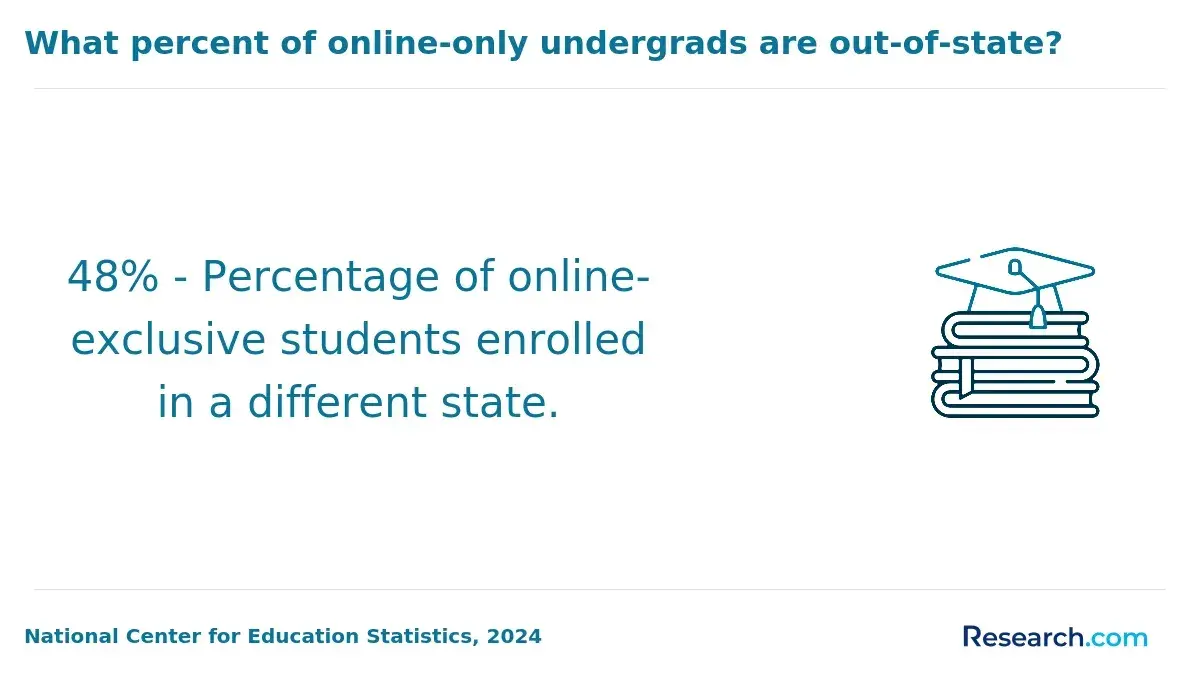
Students considering distance learning should start with online universities that are accredited and then verify whether the specific degree also meets any state licensure or internship requirements.
What types of scholarships are available for undergraduate degrees and who qualifies?
Undergraduate scholarships vary widely, and eligibility often depends on more than grades. Many awards are designed to influence workforce supply, widen access, reward service, or support students in fields with high training costs.
The table below summarizes major scholarship types and who typically qualifies. It can help students build a balanced aid search instead of applying only to the most competitive national awards.
| Scholarship type | Typical qualifying factors | Best used for | Watch for |
| Merit scholarships | GPA, test scores, class rank, leadership, talent, or portfolio | Reducing tuition at four-year colleges | Renewal GPA requirements |
| Need-based scholarships | FAFSA data, household income, financial need, family circumstances | Lowering net price for students with limited resources | Annual FAFSA deadlines |
| Major-specific scholarships | Declared major in STEM, nursing, education, business, public service, or another targeted field | Funding high-demand career programs | Major-change restrictions |
| Identity and access scholarships | First-generation status, underrepresented background, disability, military affiliation, rural location, or community membership | Improving college access and persistence | Documentation requirements |
| Service-based scholarships | Agreement to teach, practice healthcare, serve in government, or work in a shortage area | Students committed to a defined service path | Repayment obligations if service is not completed |
| Employer scholarships | Employment status, parent employment, internship participation, or workforce partnership | Working adults and students in career-aligned programs | Grade, tenure, or reimbursement conditions |
The safest approach is to combine institutional scholarships, state grants, federal aid, local awards, and departmental scholarships. Small renewable awards can matter more than a large one-time award if they reduce borrowing over several years.
How do tuition costs, financial aid, and scholarships compare across popular undergraduate majors?
Tuition, financial aid, and scholarships vary more by institution and residency than by major, but some majors create higher total costs through lab fees, clinical fees, equipment, certification exams, or longer course sequences. College Board's 2024 data lists average published tuition and fees at $11,610 for in-state students at public four-year colleges and $43,350 at private nonprofit four-year colleges, before grants and scholarships. That gap makes net price more important than sticker price.
The table below compares cost pressures across popular majors. Use it to ask better questions about the total cost of attendance.
| Major group | Typical cost pressure | Scholarship strength | Cost-control strategy |
| Business | Moderate; may include technology fees, case competitions, or professional exams | Strong at many universities | Use transfer credits and employer tuition programs |
| Healthcare | Moderate to high; clinical requirements, background checks, uniforms, and exam fees may apply | Strong in shortage fields | Confirm clinical placement before enrolling |
| IT and cybersecurity | Moderate; labs, software, and certification exams can add cost | Strong through STEM and workforce awards | Choose programs with certification preparation included |
| Computer science | Moderate; laptop, software, and project costs may apply | Strong but competitive | Prioritize internships and portfolio support |
| Nursing | High; clinical fees, testing, equipment, and licensing costs matter | Very strong in many regions | Compare NCLEX pass rates and scholarship service terms |
| Engineering | High; labs, materials, software, and extended sequences can raise costs | Strong for qualified STEM students | Enter math-ready to avoid extra semesters |
A common mistake is choosing the lowest tuition without checking fees, course availability, or time to completion. A program that costs slightly more per credit can be cheaper overall if it accepts more transfer credits and helps students graduate on time.
How do online undergraduate degrees with scholarships compare to on-campus programs?
Online undergraduate degrees with scholarships can be a strong option for working adults, parents, military students, rural students, and transfer applicants. They are not automatically easier or cheaper, however. The best online programs use the same accreditation standards, qualified faculty, learning outcomes, and financial-aid rules as comparable campus programs.
The table below compares online and on-campus formats using factors that affect cost, learning experience, and career preparation.
| Factor | Online degree | On-campus degree |
| Flexibility | Stronger for working or caregiving students | Better for students who want fixed schedules and in-person structure |
| Scholarships | May include online-student awards, adult learner grants, and employer tuition aid | May include residential, honors, athletic, departmental, and campus-based awards |
| Hands-on training | Works well for business, IT, psychology, and some education courses; clinical majors may require local placements | Often easier for labs, studios, clinics, and campus research |
| Networking | Depends heavily on virtual career services and cohort design | Usually stronger for clubs, labs, events, and local recruiting |
| Best fit | Self-directed students who need schedule control | Students who benefit from face-to-face support and campus resources |
Students comparing flexible programs can also review easiest online college options, but "easy" should never mean unaccredited, low-support, or disconnected from career goals.
Before choosing an online scholarship offer, ask whether online students pay different fees, qualify for the same institutional scholarships, receive career services, and have access to required internships or clinical placements in their state.
What are the typical admission requirements for scholarship-friendly undergraduate programs?
Admission requirements for scholarship-friendly undergraduate programs vary by school, selectivity, and major. Competitive awards often require stronger academic records than general admission, and some programs have separate admission processes after the first year.
Most applicants should prepare these materials early because scholarship deadlines can arrive before regular admission deadlines:
- High school transcript or college transcript for transfer students, including GPA and completed prerequisites.
- FAFSA submission and, when required, state aid or institutional financial-aid forms.
- Short essays explaining academic goals, career plans, leadership, service, financial need, or fit with the scholarship mission.
- Recommendation letters from teachers, counselors, employers, supervisors, or community leaders.
- Major-specific evidence such as portfolios, math readiness, science prerequisites, healthcare immunization records, background checks, or teaching-field requirements.
- Renewal plan showing how you will maintain the required GPA, credit load, major status, or service obligation.
For selective STEM, nursing, engineering, and honors scholarships, grades alone may not be enough. Admissions committees often look for evidence of persistence, preparation for rigorous coursework, and a realistic understanding of the career path.
Which undergraduate degrees lead to the highest-paying careers with strong scholarship support?
The highest-paying undergraduate degree paths with strong scholarship support tend to be technical, licensed, or quantitatively intensive. Computer science, cybersecurity, engineering, nursing, business analytics, finance, accounting, and certain healthcare fields often provide the clearest combination of aid availability and labor-market value.
The table below connects degree choices to common career directions and salary context. Treat wages as market benchmarks, not promises, because location, experience, industry, licensure, internships, and economic conditions all affect outcomes.
| Degree path | Common career direction | Recent salary context | Scholarship support pattern |
| Computer science | Software development, data systems, AI, cloud applications | BLS May 2024 median annual wage for software developers: $133,080 | Strong STEM, employer, and tech-diversity scholarships |
| Cybersecurity | Security analysis, incident response, risk and compliance | BLS May 2024 median annual wage for information security analysts: $124,910 | Strong federal, defense, and workforce-focused awards |
| Engineering | Civil, mechanical, electrical, industrial, computer, or biomedical engineering | BLS May 2024 median annual wage for architecture and engineering occupations: $97,310 | Strong STEM and professional-society scholarships |
| Nursing | Registered nursing, care coordination, public health nursing | BLS May 2024 median annual wage for registered nurses: $93,600 | Strong hospital, state, foundation, and service-linked support |
| Business | Finance, accounting, analytics, management, consulting, operations | BLS May 2024 median annual wage for business and financial occupations: $82,610 | Strong institutional, professional, and employer-based aid |
Students who need a faster or lower-cost route into the workforce before committing to a bachelor's degree may compare short certificate programs that pay well online, especially in technology, healthcare support, and skilled business roles.
How do job outlook and industry demand vary across top undergraduate degrees with scholarships?
Job outlook varies across undergraduate degrees because industries change at different speeds. AI, automation, healthcare demand, cyber risk, infrastructure investment, and public-sector hiring all influence how valuable a major may be after graduation.
The table below summarizes broad demand patterns. Use it as a planning tool, then confirm local employer demand in the state or metro area where you want to work.
| Degree field | Demand trend | What is driving demand | Student planning tip |
| Cybersecurity | Very strong | Ransomware, cloud migration, compliance, national security, and data protection | Build labs, certifications, and internship experience early |
| Computer science | Strong but competitive | Software, AI, automation, data infrastructure, and platform development | Graduate with a portfolio, not just coursework |
| Nursing and healthcare | Strong in many regions | Aging population, care access needs, hospital staffing, and outpatient care growth | Check licensure alignment and clinical capacity |
| Engineering | Steady to strong | Infrastructure, manufacturing, energy systems, robotics, and product design | Choose ABET-accredited programs when relevant |
| Education | Highly state-dependent | Teacher shortages in special education, STEM, bilingual education, and rural districts | Compare state licensure and service-scholarship obligations |
| Business | Broad and resilient | Finance, operations, analytics, compliance, and organizational change | Add analytics, internship, or certification experience |
AI is changing the skill mix in several fields, but it does not eliminate the need for judgment, ethics, communication, domain knowledge, and hands-on experience. Students should look for programs that teach how to use AI tools responsibly within the profession, not programs that ignore technology changes.
How can students evaluate and choose reputable scholarship-linked undergraduate programs safely?
Students can evaluate scholarship-linked undergraduate programs safely by separating marketing claims from verifiable facts. A reputable program should make accreditation, costs, aid terms, student outcomes, transfer rules, and licensure alignment easy to confirm.
Use this checklist before accepting an offer or signing enrollment documents:
- Verify institutional accreditation and any required programmatic accreditation directly with the accreditor or licensing board.
- Calculate net price for each year, not just first-year tuition after an introductory scholarship.
- Read scholarship renewal rules, including GPA, full-time enrollment, major restrictions, service obligations, and repayment triggers.
- Ask for written details on fees, books, equipment, clinical costs, exam costs, and graduation requirements.
- Confirm whether credits will transfer if you change schools or continue to graduate study.
- Review outcomes by major, including completion rates, licensure exam pass rates, internships, and job-placement support.
- Be cautious of pressure tactics, guaranteed salary claims, vague accreditation language, or scholarships that require immediate deposits.
Students planning far beyond the bachelor's degree should also be careful with schools that advertise unusually compressed graduate pathways; when researching advanced options, compare claims with reputable guides such as 1 year PhD programs online no dissertation and verify accreditation independently.
Other Things You Should Know About
There is no single winner, but nursing, engineering, computer science, cybersecurity, education, healthcare, and business often have strong scholarship ecosystems because they connect to workforce needs, STEM funding, public service, or employer demand.
No. Many scholarships consider financial need, major, community service, first-generation status, transfer status, military affiliation, employer partnerships, location, or commitment to a shortage field. Good grades help, but they are not the only path to aid.
Yes, if the school and program are eligible and the student meets scholarship rules. Online students should confirm whether awards apply to distance-learning tuition, whether full-time enrollment is required, and whether the program meets licensure requirements in their state.
The biggest mistake is focusing only on the scholarship amount instead of the full value of the program. Students should compare net price, accreditation, renewal rules, graduation timeline, transfer credits, licensure eligibility, career support, and realistic job outcomes.
References
- Top 300 Undergraduate Scholarships to Apply for in April 2026 https://bold.org/scholarships/by-year/undergraduate-scholarships/
- Scholarship Application: Definitions, Categories, Components and Writing Practices for Students https://www.unicaf.org/scholarship-application/
- Easy Degrees That Pay Well https://www.citizensbank.com/student/articles/easy-degrees-that-pay-well.aspx
- International Scholarships https://www.internationalscholarships.com/resources/undergraduate-scholarships
- Top 175 Scholarships for College Students https://www.mometrix.com/blog/scholarships-for-college/
- Top 20 Fully Funded Scholarships for International Students 2026 https://www.wemakescholars.com/blog/fully-funded-scholarships
- Tips for applying to a scholarship https://www.millenniumpoint.org.uk/tips-for-applying-to-a-scholarship/
- The 16 highest-paying college majors 5 years after graduation https://www.cnbc.com/2026/02/21/highest-paying-college-majors.html
- Scholarships Where Your Major Matters https://www.collegedata.com/resources/scholarship-central/scholarships-where-your-major-matters