2027 Best Online Bachelor's Degree Programs for Transfer Students

Co-Founder and Chief Data Scientist
Transfer students often face one big question: which online bachelor's program will accept the most credits and still lead to a respected degree? The stakes are practical. The U. S. Bureau of Labor Statistics reported that workers with a bachelor's degree had median weekly earnings of $1,543 in 2024, compared with $930 for workers with only a high school diploma.
This guide is for adults, community college students, military learners, and stop-outs comparing degree-completion options. You'll learn which majors transfer well, how credits are evaluated, what costs to expect, and how to choose a program with confidence.
Key Things You Should Know
- Transfer-friendly online bachelor's programs usually work best when you enter with 45 to 90 transferable credits, but the real value depends on how many credits apply to your major, not just how many are accepted.
- Cost varies widely: College Board's 2024 pricing report listed average published tuition and fees at $11,610 for in-state public four-year colleges and $43,350 for private nonprofit four-year colleges, before aid.
- High-ROI majors for transfer students often align with licensed, technical, or in-demand fields such as nursing, cybersecurity, information technology, accounting, engineering technology, and education, but accreditation and state requirements matter.
Top 10 Best Online Bachelor's Degree Programs for Transfer Students
Business Degrees
Online business degrees are among the most transfer-friendly options because many general education, accounting, economics, and management courses map cleanly into bachelor's requirements. They fit students aiming for supervision, operations, sales, HR, entrepreneurship, or accounting-related roles. Look for AACSB, ACBSP, or IACBE accreditation if you want stronger quality signals. Transfer students should ask whether prior associate-level business courses count toward the major or only electives, because that distinction can change both cost and graduation timeline.
Healthcare Degrees
Healthcare bachelor's programs suit transfer students with clinical, allied health, or administrative experience. Common online options include health sciences, healthcare administration, public health, and health information management. These degrees can support roles in hospitals, insurers, clinics, and public agencies. Check whether the program is career-oriented or pre-professional; for example, a health sciences degree may not qualify you for licensure by itself. Students with previous certificates or associate degrees should ask about credit for clinical training and professional credentials.
Information Technology Degrees
Information technology degrees are practical for transfer students who want applied tech roles without the heavier math sequence often found in computer science. Coursework typically covers networking, databases, cloud systems, systems administration, scripting, and project management. These programs may accept credits from community college IT programs and industry certifications. Because employers often value demonstrated skills, choose programs with labs, capstones, and certification alignment such as CompTIA, Cisco, AWS, or Microsoft credentials.
Computer Science Degrees
Computer science is a strong option for transfer students interested in software development, data systems, algorithms, AI, and computing theory. It is less flexible than some majors because calculus, discrete math, programming sequences, and upper-division prerequisites must align closely. Before enrolling, request a course-by-course transfer review. A program may accept your credits but still require you to repeat foundational programming or math courses if they do not match the school's sequence.
Cybersecurity Degrees
Cybersecurity degrees fit transfer students seeking roles in security operations, risk management, digital forensics, compliance, or network defense. Because the field changes quickly, prioritize programs with hands-on labs, current cloud security content, and preparation for certifications such as Security+, CySA+, CISSP, or SSCP. The U.S. Bureau of Labor Statistics listed information security analysts among the faster-growing occupations in its 2024-2034 projections, which makes program quality and practical experience especially important.
Psychology Degrees
Psychology transfers well because many introductory and social science credits fit general education or major requirements. It is a good match for students interested in human behavior, research, case management, HR, social services, or graduate study. However, most licensed counseling, clinical psychology, and school psychology careers require graduate education and supervised practice. Choose this major if it supports your long-term plan; avoid assuming a bachelor's degree alone leads directly to licensed therapy roles.
Nursing Degrees
Online nursing options are usually designed for licensed registered nurses completing an RN-to-BSN. These programs are highly practical for transfer students with an ADN or nursing diploma because they build on prior clinical training. Look for CCNE or ACEN accreditation and confirm state authorization if you live outside the school's home state. Students who are not already RNs generally need a prelicensure nursing pathway, which may include in-person labs, clinical placements, and competitive admission.
Education Degrees
Online education degrees can work well for transfer students pursuing teaching, instructional design, early childhood education, or education studies. Licensure-track programs require extra caution because student teaching, background checks, exams, and state approval rules vary. CAEP accreditation and state board approval are useful quality indicators. If you plan to teach in a public school, ask whether the online program leads to initial licensure in your state, not just whether the degree is accredited.
Criminal Justice Degrees
Criminal justice degrees are transfer-friendly for students with prior coursework in law enforcement, sociology, political science, or public administration. They fit careers in policing, corrections, courts, probation, homeland security, compliance, and public safety administration. Some law enforcement roles do not require a bachelor's degree, so compare the degree against your target agency's promotion rules. The best programs include policy analysis, ethics, data literacy, constitutional law, and community-based approaches rather than only enforcement topics.
Engineering Degrees
Fully online engineering bachelor's degrees are less common and less flexible than many transfer programs because labs, calculus, physics, and sequenced prerequisites are strict. ABET accreditation is especially important for students who may pursue engineering licensure. Transfer students should distinguish engineering from engineering technology; both can be valuable, but they may lead to different roles and licensure pathways. Ask for a detailed degree audit before enrolling, especially if your credits come from a two-year technical program.
What should transfer students look for when choosing an online bachelor's program?
The best online bachelor's program for a transfer student is usually not the one with the biggest brand name. It is the one that accepts the right credits, fits your career goal, has recognized accreditation, and offers enough advising support to help you finish without unnecessary repeat courses.
Use the comparison below to separate meaningful program quality signals from marketing claims. Each factor affects either your time to degree, your cost, or the usefulness of the credential after graduation.
| What to Compare | Why It Matters for Transfer Students | Strong Signal |
| Credit applicability | Accepted credits only save money if they count toward graduation requirements. | A written degree audit showing major, general education, and elective credit placement. |
| Accreditation | Institutional accreditation affects aid eligibility, credit recognition, and employer trust. | Accreditation by an agency recognized by the U.S. Department of Education or CHEA. |
| Programmatic approval | Some fields require specialized accreditation or state approval. | CCNE, ACEN, ABET, CAEP, AACSB, or other field-relevant recognition where applicable. |
| Online student support | Transfer students often need fast answers about registration, aid, and prerequisites. | Dedicated transfer advising, online tutoring, career services, and proactive degree planning. |
| Total cost | Tuition alone may omit fees, books, technology costs, and repeated credits. | A transparent net price estimate after transfer credit and financial aid. |
Before applying, build a short list of three to five schools and compare them against the same evidence. If affordability is your top constraint, reviewing affordable online bachelor degree programs can help you identify options worth a closer transfer-credit review.
How do online bachelor's programs evaluate and accept transfer credits?
Online bachelor's programs usually evaluate transfer credits through an official transcript review. The school checks whether your prior courses came from an accredited institution, whether the grades meet its minimum standard, and whether the content matches its own requirements.
The process typically follows a sequence, and understanding it can prevent surprises after admission.
- Submit official transcripts from every college you attended, even if you completed only one course.
- Ask whether the school provides an unofficial pre-evaluation before you commit or deposit.
- Review how credits are classified as general education, major requirements, prerequisites, or electives.
- Confirm the maximum number of transfer credits allowed toward the bachelor's degree.
- Request clarification for courses that transferred as electives but appear similar to required major courses.
Transfer policies vary, but many bachelor's programs require students to complete a minimum number of credits at the new institution, often called a residency requirement. Also watch for course age limits in fast-changing fields such as IT, cybersecurity, nursing, and accounting, where older credits may not satisfy current major requirements.
Are online bachelor's degrees for transfer students accredited and respected by employers?
Yes, online bachelor's degrees for transfer students can be accredited and respected by employers when they are offered by properly accredited institutions and meet the same academic standards as campus-based degrees. Employers typically care more about the school's legitimacy, the relevance of the major, the student's skills, and any required license or certification than whether the coursework was completed online.
Accreditation has two layers. Institutional accreditation applies to the college or university as a whole. Programmatic accreditation applies to certain majors, especially in nursing, engineering, education, business, counseling, and health-related fields. A transfer student should verify both when the major leads to licensure or a regulated career.
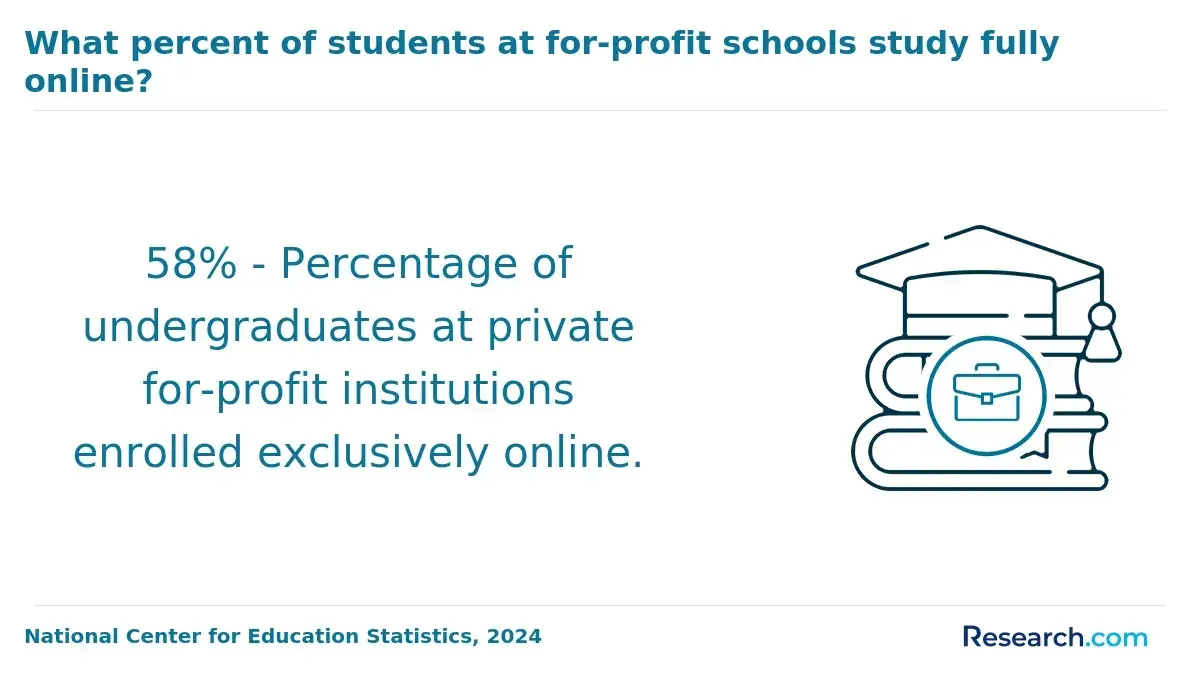
Institution type can matter, but it should not be oversimplified. Public, private nonprofit, and private for-profit colleges can differ in price, mission, and outcomes, yet category alone does not determine quality. Students who prefer mission-driven institutions can compare non profit online colleges, then still check accreditation, transfer policy, cost, and graduation outcomes.
Red flag: If a school cannot clearly identify its accreditor, avoids written transfer evaluations, or pressures you to enroll before reviewing your credits, pause before committing.
What are the typical admission requirements for online bachelor's completion programs?
Admission requirements for online bachelor's completion programs are usually more flexible than first-year freshman admission, but they still vary by school and major. Most programs require prior college coursework, official transcripts, and a minimum college GPA. Competitive majors may require prerequisites, licenses, background checks, or higher grades.
Common requirements include the items below. Use them as a checklist before you request a transfer evaluation.
- Official transcripts from all previously attended colleges and universities.
- A minimum number of transferable credits, often lower for general admission and higher for degree-completion tracks.
- A minimum cumulative GPA, with some majors setting higher thresholds than the university minimum.
- Proof of high school completion or equivalent if you have limited college credit.
- Major-specific prerequisites such as anatomy, statistics, calculus, programming, accounting, or education foundations.
- Professional license documentation for programs such as RN-to-BSN or allied health completion degrees.
Application fees are usually modest, but they can add up if you apply broadly. If you are comparing several schools, an online college no application fee option may reduce upfront costs while you wait for credit evaluations.
How long does it take transfer students to finish an online bachelor's degree?
Transfer students can often finish an online bachelor's degree faster than first-time students, but the timeline depends on applied credits, course sequencing, enrollment intensity, and whether the major has clinical, practicum, lab, or student-teaching requirements. A student entering with an associate degree may still need more than two years if many credits transfer only as electives.
The table below summarizes common completion scenarios. Use it as a planning estimate, not a promise, because every school's degree audit can produce a different result.
| Starting Point | Typical Remaining Credits | Common Completion Timeline | What Can Slow Progress |
| Associate degree aligned with the major | About 45 to 60 credits | 12 to 24 months with steady enrollment | Upper-division prerequisites or limited course availability. |
| Associate degree in a different field | About 60 to 75 credits | 18 to 30 months | Major requirements not covered by prior coursework. |
| Some college, no degree | About 75 to 90 credits | 24 to 36 months | Missing general education categories or low-credit accumulation. |
| Technical credits or military training | Varies widely | Depends on credit evaluation | Credits may apply as electives rather than major requirements. |
Accelerated terms can help motivated students finish faster, but they are not always the best choice for working adults. A slower part-time pace may protect your GPA, financial aid standing, and ability to balance work or caregiving responsibilities.
How much do online bachelor's programs cost for transfer students, and is financial aid available?
Costs for online bachelor's programs depend on tuition, fees, books, technology requirements, transfer credit acceptance, and how many courses you must repeat. College Board's 2024 report listed average published tuition and fees at $11,610 for in-state public four-year institutions and $43,350 for private nonprofit four-year institutions, but transfer students should focus on total remaining cost rather than sticker price.
The biggest cost drivers are usually the following. Reviewing each one can help you estimate the real price before enrolling.
- Tuition per credit or flat-rate term pricing.
- Online learning, technology, graduation, transcript, and course-specific fees.
- Credits accepted as electives instead of major requirements.
- Required textbooks, software, lab kits, exam proctoring, or certification exams.
- Residency requirements that force you to complete a minimum number of credits at the new school.
- Lost income if you reduce work hours to study full time.
Financial aid may be available if the institution is eligible for federal student aid and you meet enrollment and satisfactory academic progress requirements. Complete the FAFSA, ask about transfer scholarships, compare employer tuition assistance, and check whether the school's net price calculator reflects online learners accurately.
What majors and curricula are best suited to online bachelor's programs for transfer students?
The best online majors for transfer students tend to have clear career pathways, flexible course sequencing, and enough overlap with community college or prior college coursework. They also fit the online format without requiring extensive campus-based labs, unless the school has approved local placements or hybrid arrangements.
The comparison below shows which curricula often work well online and what to verify before committing.
| Major Area | Why It Can Work Online | What to Verify |
| Business and accounting | Many courses use case studies, projects, analytics, and writing rather than physical labs. | Accounting prerequisites, CPA education rules, and business accreditation. |
| IT and cybersecurity | Cloud labs, virtual networks, and simulations can support hands-on learning remotely. | Lab access, certification alignment, and current security tools. |
| RN-to-BSN nursing | Designed for licensed nurses who already completed core clinical preparation. | CCNE or ACEN accreditation, state authorization, and practicum requirements. |
| Education | Foundations and methods courses can be online, with fieldwork arranged locally. | State licensure approval and student-teaching placement support. |
| Psychology and social sciences | Research, writing, statistics, and theory courses adapt well to online learning. | Graduate school prerequisites if your target career requires advanced study. |
| Engineering technology | Applied technical coursework may be online if labs are simulated or locally arranged. | ABET status, lab expectations, and distinction from engineering licensure tracks. |
Be cautious with majors that require strict course sequences or supervised placements if you need maximum flexibility. The best online curriculum is not simply convenient; it should match the credential expectations of your target occupation.
What careers and salaries can transfer students expect with an online bachelor's degree?
Career outcomes vary by major, location, experience, internships, licenses, and employer expectations. A bachelor's degree can improve access to professional roles, but it should be evaluated against a specific career target rather than treated as a generic credential.
The table below uses U.S. Bureau of Labor Statistics 2024 median annual pay where available. These figures describe occupational medians, not guaranteed earnings for new graduates.
| Degree Area | Related Roles | 2024 Median Annual Pay for a Related Occupation | Important Limitation |
| Business | Operations manager, analyst, HR specialist, accountant | Accountants and auditors: $81,680 | CPA eligibility and accounting roles may require specific coursework. |
| Healthcare administration | Clinic manager, health services coordinator, compliance specialist | Medical and health services managers: $117,960 | Management roles often require experience in addition to the degree. |
| Information technology | Systems administrator, network specialist, IT support manager | Network and computer systems administrators: $95,360 | Certifications and hands-on experience can strongly affect hiring. |
| Computer science | Software developer, data engineer, QA engineer | Software developers: $133,080 | Portfolio quality and technical interviews matter heavily. |
| Cybersecurity | Security analyst, SOC analyst, risk analyst | Information security analysts: $124,910 | Entry-level security roles may require prior IT experience. |
| Nursing | Registered nurse, charge nurse, care coordinator | Registered nurses: $93,600 | Requires RN licensure; BSN completion alone is not initial licensure. |
| Education | Teacher, instructional coordinator, training specialist | Elementary school teachers: $64,270 | Public school teaching usually requires state licensure. |
| Engineering | Civil engineer, engineering technologist, project coordinator | Civil engineers: $99,590 | Licensure pathways may require ABET-accredited engineering degrees. |
Some fields, including psychology, counseling, higher education leadership, and advanced clinical practice, may require graduate study. If you already know that a master's or doctorate is part of your long-term plan, compare undergraduate cost carefully so you preserve borrowing capacity; later, a cheapest doctorate degree search may help you evaluate advanced options without overextending financially.
How can transfer students verify program quality, student support, and graduation outcomes online?
Transfer students should verify program quality before applying, not after enrollment. A polished website can hide weak advising, unclear costs, poor course availability, or credit policies that delay graduation.
Use these steps to evaluate an online bachelor's program in a practical order.
- Check institutional accreditation using the U.S. Department of Education or CHEA-recognized accreditation databases.
- Confirm programmatic accreditation or state approval if your major leads to licensure or regulated practice.
- Request a written transfer credit evaluation that shows exactly where each accepted course applies.
- Ask for a remaining-course plan by term, including prerequisites and courses offered only once per year.
- Compare total remaining cost after transfer credits, fees, financial aid, and required materials.
- Review student support services for online learners, including tutoring, library access, career coaching, disability services, and technical help.
- Ask about graduation, retention, licensure exam, and job placement outcomes, especially for your specific program.
The table below highlights common mistakes and better alternatives. These are especially important for students who have already lost time or credits during a previous college attempt.
| Common Mistake | Why It Hurts | Better Approach |
| Choosing based only on tuition per credit | A cheaper credit is not helpful if more credits are required. | Compare total cost to completion after the degree audit. |
| Assuming all accepted credits reduce graduation time | Elective credits may not satisfy major requirements. | Ask how credits apply to the degree map. |
| Ignoring licensure rules | The degree may not meet state requirements for teaching, nursing, counseling, or engineering pathways. | Verify approval with the relevant state board before enrolling. |
| Relying only on rankings | Rankings may not reflect transfer fit, support, or net cost. | Prioritize accreditation, credit transfer, outcomes, and advising quality. |
| Skipping career research | A degree may not align with the job you actually want. | Compare job postings, required skills, and credential expectations in your region. |
A strong program will answer specific questions in writing. If admissions staff avoid direct answers about credits, costs, accreditation, or licensure, treat that as a warning sign and keep comparing options.
Other Things You Should Know About
It can be worth it if the program accepts enough applicable credits, is properly accredited, fits your career goal, and keeps total remaining cost reasonable. The best value usually comes from finishing efficiently without repeating courses unnecessarily.
Many schools allow a large number of transfer credits, but limits vary. More important, credits must apply to general education, major, or elective requirements. Always request a written degree audit before enrolling.
Diplomas and transcripts often do not emphasize delivery format, and many accredited universities use the same curriculum for online and campus students. Employers typically focus on school legitimacy, major relevance, skills, and experience.
The fastest option is usually a degree-completion program closely aligned with your previous credits, such as business, general studies, applied science, RN-to-BSN, or IT. Speed depends on transfer evaluation, course availability, and your enrollment pace.
References
- Hidden Gem Colleges for Transfer Students - Top Tier Admissions https://toptieradmissions.com/hidden-gem-colleges-for-transfer-students/
- Community college transfer processes discourage degree completion https://journalistsresource.org/education/community-college-transfer-bachelors-degree-barriers-research/
- Exclusively online students are less likely to complete bachelor’s degrees, research finds https://www.highereddive.com/news/online-degree-students-completion-research/702591/
- Best Online Universities With Generous Transfer Credit Policies https://www.collegetransitions.com/blog/best-online-universities-with-generous-transfer-credit-policies/
- Best Online Schools for Transferring Credits [2026 Guide] https://www.straighterline.com/blog/transfer-best-online-schools-for-transferring-credits
- The Complexity of Calculating Transfer Students’ Graduation Rates - Data Science https://www.tamus.edu/data-science/2024/03/01/the-complexity-of-calculating-transfer-students-graduation-rates/
- Online Bachelor's Degree Completion Financial Aid https://www.hamline.edu/admission-aid/financial-aid/online-bachelors
- Academic Outcomes of Associate Degree Transfer Students ... https://scholarsarchive.library.albany.edu/cgi/viewcontent.cgi
- How to Choose the Best Online Transfer College for Your Needs https://www.athens.edu/degree-completion-transfer-students/how-to-choose-the-best-online-transfer-college-for-your-needs/
- Top Online Schools That Accept Transfer Credits https://www.edvisorly.com/student-guides/online-schools-that-accept-transfer-credits