2027 Best Online Bachelor's Degree Programs With Transfer-Friendly Policies

Co-Founder and Chief Data Scientist
Finishing a bachelor's degree after stopping out, changing schools, or earning community college credits can save time and money, but only if the program accepts the right credits. NCES reported in 2024 that more than half of undergraduates took at least one distance education course in fall 2022, showing how normal online study has become.
This guide is for adults, transfer students, military learners, and career changers comparing online bachelor's options. You'll learn how transfer policies work, which majors fit different goals, and how to judge cost, accreditation, timeline, and career value.
Key Things You Should Know
- Transfer-friendly online bachelor's programs commonly accept community college credits, prior university credits, military training, standardized exams, and sometimes portfolio-based prior learning, but each school sets its own residency and grade rules.
- College Board's 2024 pricing data lists average published tuition and fees at $11,610 for in-state public four-year colleges and $43,350 for private nonprofit four-year colleges, so transfer credit can materially reduce total degree cost.
- BLS data published for the 2023-2033 period shows strong demand in several bachelor's-level fields, including 33% projected growth for information security analysts and 29% for medical and health services managers.
Top 10 Best Online Bachelor's Degree Programs With Transfer-Friendly Policies
Business Degrees
Online business bachelor's programs are among the most transfer-friendly because lower-division courses such as accounting, economics, statistics, and management often match common community college pathways. Choose business if you want broad mobility into operations, finance, sales, human resources, analytics, or entrepreneurship. Look for ACBSP, AACSB, or IACBE accreditation when available, especially if you want a competitive management or graduate-school path. Avoid overly general programs if your goal requires technical preparation, such as accounting licensure, supply chain analytics, or financial analysis.
Healthcare Degrees
Healthcare bachelor's degrees work well for transfer students with allied health coursework, clinical certificates, or an associate degree. Common online options include healthcare administration, health sciences, public health, and health information management. These programs suit students who want non-bedside roles in clinics, hospitals, insurance, compliance, or community health. Before enrolling, confirm whether the program is designed for licensed professionals or beginners, because some tracks require current credentials, clinical hours, or state-specific preparation.
Information Technology Degrees
Information technology degrees usually emphasize systems administration, cloud computing, databases, networking, project support, and business technology operations. They are often more applied than computer science programs and may accept credits from technical colleges, military IT training, or industry certifications. This path fits students who want hands-on technology roles without focusing heavily on advanced mathematics or software theory. Ask whether certifications such as CompTIA, Cisco, AWS, or Microsoft credentials can count toward electives.
Computer Science Degrees
Computer science bachelor's programs prepare students for software development, algorithms, data structures, systems, artificial intelligence, and computing theory. They can be transfer-friendly, but major credits are often evaluated carefully because course sequencing matters. This degree makes sense if you want software engineering, data, AI, or graduate computer science options. It may be a poor fit if you dislike programming-heavy assignments or if your prior credits are mostly vocational IT credits that do not map to calculus, discrete math, or programming sequences.
Cybersecurity Degrees
Cybersecurity bachelor's programs focus on network defense, risk management, digital forensics, ethical hacking, cloud security, and security governance. Transfer-friendly programs may award credit for IT coursework, military cyber training, or approved certifications. This major is strongest for students who enjoy problem-solving, documentation, and continuous learning because tools and threats change quickly. Look for programs aligned with NICE workforce categories or recognized by the NSA as a Center of Academic Excellence when possible.
Psychology Degrees
Online psychology bachelor's programs typically accept many general education and social science transfer credits. The degree can support careers in human services, case management, market research support, human resources, or graduate study. It is not, by itself, a license to practice as a psychologist or therapist. Choose psychology if you are interested in behavior, research, communication, and helping professions, but verify graduate admission prerequisites if your long-term goal is counseling, social work, school psychology, or clinical psychology.
Nursing Degrees
Online nursing bachelor's programs are usually RN-to-BSN completion programs for licensed registered nurses who already hold an associate degree or nursing diploma. They often accept substantial transfer and block credit for prior nursing education. These programs focus on evidence-based practice, leadership, community health, informatics, and quality improvement. If you are not already an RN, check whether the program includes in-person clinical requirements and state approval; many fully online BSN options are not entry-level licensure programs.
Education Degrees
Education bachelor's programs can be transfer-friendly for students with general education and child development credits, but licensure tracks are highly state-specific. Online coursework may be available, while student teaching or field placements usually occur in person near the student's location. Confirm whether the program leads to initial teacher certification in your state. If you already work in schools, ask whether paraprofessional experience, substitute teaching, or prior early childhood coursework can support admission or placement decisions.
Criminal Justice Degrees
Criminal justice bachelor's programs often accept transfer credits from community colleges, police academies, military training, and prior public safety coursework. The degree covers courts, corrections, policing, criminology, ethics, homeland security, and policy. It can support advancement in law enforcement, corrections, probation, security management, or public administration. Check employer and state requirements carefully because hiring, promotion, academy completion, background standards, and sworn officer eligibility vary widely.
Engineering Degrees
Online engineering bachelor's programs are less common and less flexible than many other transfer-friendly majors because lab work, calculus sequences, physics, and ABET accreditation matter. Some schools offer engineering technology, industrial technology, or completion programs for students with technical associate degrees. Choose carefully: engineering technology may fit applied manufacturing or operations roles, while traditional engineering is usually better for professional engineering licensure pathways. Always verify ABET status when licensure or regulated engineering work is part of your goal.
How do transfer-friendly online bachelor's programs work for students with prior credits?
A transfer-friendly online bachelor's program is designed to apply previously earned learning toward a four-year degree instead of making students restart. Schools usually evaluate credits after admission or after a preliminary transcript review, then show how those credits apply to general education, major requirements, electives, and residency requirements.
Transfer credit is not just one thing. The table below explains the most common credit sources and how they usually affect an online bachelor's plan.
| Credit source | How it may apply | What to verify |
| Community college coursework | Often applies to general education, lower-division major courses, or electives | Minimum grade, course equivalency, and transfer agreement rules |
| Previous four-year college credits | May apply to major, minor, elective, or upper-division requirements | Whether credits are too old for technical or professional majors |
| Military training | May be evaluated through ACE recommendations or institutional review | Whether credits count as electives or meet specific requirements |
| Credit by exam | May satisfy introductory subjects or general education requirements | Accepted exams, score thresholds, and maximum exam-credit limits |
| Prior learning assessment | May award credit for documented professional learning | Portfolio process, fees, faculty review standards, and credit caps |
The most important distinction is accepted credit versus usable credit. A school may accept 90 credits but apply only 60 toward your chosen major if the remaining courses do not meet degree requirements. Before enrolling, ask for a degree audit that shows exactly what remains.
What should you look for in accreditation and credit transfer policies for online degrees?
Accreditation is the baseline quality check for any online bachelor's degree. In the U.S., institutional accreditation affects federal financial aid eligibility, graduate school recognition, employer acceptance, and transferability. Programmatic accreditation matters most in fields tied to licensure, professional standards, or specialized employer expectations, such as nursing, engineering, education, business, social work, and health information.
Credit transfer policies should be reviewed before you commit because they determine whether your prior learning actually shortens your path. The table below highlights the policy details that most often change a transfer student's cost and timeline.
| Policy area | Why it matters | Transfer-friendly sign |
| Institutional accreditation | Confirms the school meets recognized quality standards | The school is accredited by an agency recognized by the U.S. Department of Education or CHEA |
| Residency requirement | Sets the minimum number of credits you must complete at the new school | The requirement is clear and reasonable for completion students |
| Maximum transfer credits | Controls how much prior coursework can count | The program allows a large transfer block, often up to 90 credits for a 120-credit degree |
| Course age limits | Affects older credits, especially in technology, science, and healthcare | Policies distinguish between evergreen courses and time-sensitive technical courses |
| Programmatic accreditation | May affect licensure, certification, or employer recognition | The program clearly states whether it meets field-specific standards |
A common mistake is assuming that "online" and "accredited" are enough. For licensure fields, ask whether the program meets requirements in your state and whether out-of-state placements, exams, or background checks apply.
How do online and campus bachelor's programs compare for transfer students?
Online and campus bachelor's programs can lead to the same credential when offered by an accredited institution, but the student experience is different. Transfer students should compare flexibility, access to required courses, support services, and local requirements rather than assuming one format is automatically better.
The comparison below can help you decide which format fits your schedule, learning style, and remaining degree requirements.
| Factor | Online bachelor's program | Campus bachelor's program |
| Schedule | Often asynchronous or evening-friendly, which helps working adults | May require daytime attendance and commuting |
| Transfer fit | Often built for degree completion and adult learners | May have more rigid course sequences or limited upper-division availability |
| Hands-on requirements | May use local placements, simulations, labs, or short residencies | Labs, studios, and clinical placements may be easier to coordinate on site |
| Networking | Usually depends on virtual advising, online groups, and career services | May offer more spontaneous in-person faculty and peer interaction |
| Best fit | Students balancing work, family, military service, or location limits | Students who need campus labs, structured routines, or local internships |
Online programs are often the better choice when you have many completed credits and need predictable access to upper-division courses. Campus programs may be stronger when your major requires specialized equipment, supervised practice, or local recruiting pipelines.
What admission requirements do transfer-friendly online bachelor's programs typically have?
Admission requirements vary by school, but transfer-friendly online bachelor's programs usually focus on college readiness, completed credits, and fit with the major. Competitive programs may also review GPA trends, prerequisites, professional credentials, or licensure status.
Before applying, gather the items schools commonly request so the credit review can happen quickly and accurately.
- Official transcripts from every college or university previously attended, even if you withdrew or earned low grades.
- High school transcript or GED documentation if you have limited prior college credit.
- Minimum transfer GPA, commonly evaluated overall and sometimes within prerequisite courses.
- Program-specific prerequisites such as statistics, anatomy, programming, accounting, education foundations, or lab sciences.
- Proof of professional licensure or certification for completion programs such as RN-to-BSN or allied health tracks.
- Military transcripts, exam score reports, or prior learning documentation if you want nontraditional credit reviewed.
Do not rely on an informal admissions conversation alone. Ask for a written transfer evaluation, a remaining-course plan, and a projected graduation timeline before making a deposit.
How long does it take to finish an online bachelor's after transferring credits?
The time to finish depends on how many credits transfer, how those credits apply, how many courses you take each term, and whether required classes are offered frequently. A bachelor's degree usually requires about 120 credits, so a student who transfers an associate degree may have roughly half the program left, while a student transferring 90 usable credits may need only the final residency and major requirements.
Use this simple process to estimate your realistic timeline before enrolling.
- Request an official or preliminary degree audit that separates completed requirements from remaining requirements.
- Identify whether your remaining courses are offered every term, once per year, or only in a fixed sequence.
- Decide how many credits you can complete each term without risking poor grades or burnout.
- Check whether accelerated terms, summer courses, or rolling starts are available.
- Confirm whether capstones, practicums, clinicals, student teaching, or labs can delay graduation.
Students who need flexible entry points may want to compare the best online colleges with weekly start dates, but speed should not outweigh accreditation, course availability, or support quality.
How much do transfer-friendly online bachelor's programs cost and what aid is available?
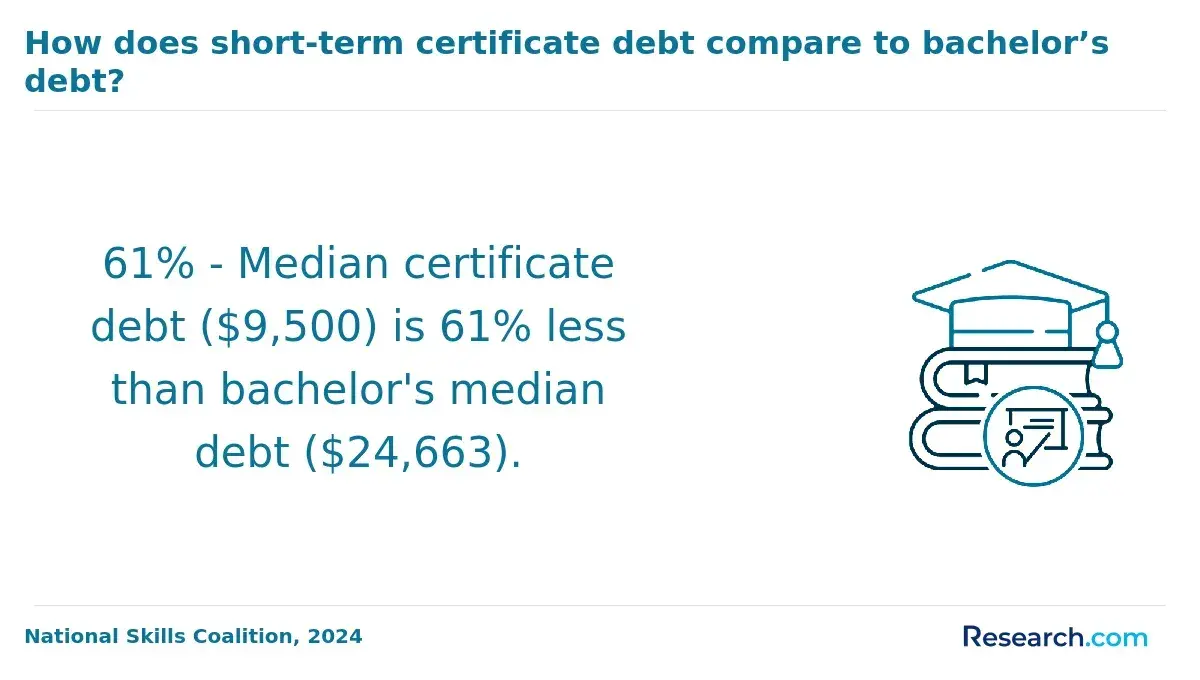
Cost depends on tuition, fees, transfer credit, textbooks, technology requirements, residency rules, and how long you stay enrolled. College Board's 2024 Trends in College Pricing lists average published tuition and fees for 2024-2025 at the following levels:
- $11,610 for in-state students at public four-year colleges.
- $30,780 for out-of-state students at public four-year colleges.
- $43,350 for students at private nonprofit four-year colleges.
Those are published prices, not necessarily what every student pays after grants, scholarships, employer tuition assistance, military benefits, or institutional discounts. The real transfer-student question is total remaining cost, not the per-credit price alone.
The table below shows cost factors that frequently change the final bill for online bachelor's students.
| Cost factor | Why it affects transfer students | What to ask |
| Usable transfer credits | More applicable credits usually reduce remaining tuition | How many credits apply to my exact degree plan? |
| Online fees | Some programs add technology, course, proctoring, or distance learning fees | What is the total cost per course after fees? |
| Residency requirement | You may need to complete a minimum number of credits at the school | What is the lowest number of credits I must take here? |
| Textbooks and materials | Digital platforms and lab kits can raise costs | Are open educational resources or flat-rate materials used? |
| Time to completion | Extra terms can add fees and delay earnings potential | Can I finish required courses in my planned sequence? |
Federal aid may include Pell Grants, Direct Loans, work-study, and tax benefits for eligible students; the maximum Pell Grant remains $7,395 for the 2025-2026 award year. If graduate school is part of your long-term plan, compare undergraduate debt carefully before looking at options such as the cheapest online masters.
What majors and course structures are most common in transfer-friendly online bachelor's programs?
Transfer-friendly online bachelor's programs are commonly built around majors with clear lower-division pathways, large elective areas, or professional completion structures. The best fit depends on your existing credits, career goal, and tolerance for prerequisites. If you are still comparing fields, reviewing the best degree to get can help you connect interests with labor-market value.
The table below summarizes common online majors and how their course structures tend to work for transfer students.
| Major area | Common structure | Best for |
| Business | General education, business core, concentration, electives, capstone | Students wanting broad private, public, or nonprofit management options |
| Healthcare administration | Health systems core, policy, finance, quality, leadership courses | Clinical or administrative workers seeking advancement |
| Information technology | Technical core, labs, certification-aligned electives, projects | Students with prior IT credits or technical experience |
| Psychology | Research methods, statistics, human development, applied electives | Students considering human services, HR, research support, or graduate study |
| Criminal justice | Courts, policing, corrections, ethics, policy, electives | Public safety, security, military, or justice-system professionals |
| RN-to-BSN nursing | Block transfer credit, leadership, informatics, community health, capstone | Licensed RNs completing a bachelor's credential |
Course delivery also matters. Some programs use eight-week terms, competency-based pacing, cohort models, or asynchronous weekly modules. The best structure is the one that matches your work schedule and gives reliable access to the courses you still need.
What careers, salaries, and job growth can online bachelor's graduates expect?
Career outcomes depend on the major, location, experience, internships, certifications, and the student's ability to translate prior work into a stronger resume. A bachelor's degree can improve access to professional roles, but it should be chosen with a target career path in mind, not just as a credential to finish.
The table below uses BLS Occupational Outlook Handbook data published for the 2023-2033 projection period to show examples of roles commonly connected to online bachelor's majors. These figures describe occupations, not guaranteed results for any specific graduate.
| Career path | Related bachelor's major | Median annual pay | Projected job growth |
| Medical and health services manager | Healthcare administration or health sciences | $110,680 | 29% |
| Information security analyst | Cybersecurity or information technology | $120,360 | 33% |
| Software developer | Computer science | $132,270 | 17% |
| Accountant or auditor | Accounting or business | $79,880 | 6% |
| Registered nurse | Nursing | $86,070 | 6% |
| Market research analyst | Business, psychology, or analytics | $74,680 | 8% |
Technology is changing many bachelor's-level jobs. Employers increasingly expect comfort with analytics tools, AI-assisted workflows, cybersecurity awareness, digital communication, and evidence-based decision-making. Short credentials can help fill skill gaps; for targeted upskilling, compare easy licenses and certifications to get online alongside your degree plan.
How can you evaluate and choose a reputable transfer-friendly online bachelor's program?
Choosing a reputable transfer-friendly online bachelor's program is a due diligence process. Rankings can be helpful, but they should not replace a detailed review of accreditation, transfer credit, cost, student support, course availability, and career alignment.
Use the following steps to compare programs before you apply or enroll.
- Confirm institutional accreditation through a recognized accreditor and check programmatic accreditation when your field requires it.
- Request a written transfer evaluation showing which credits apply to general education, the major, electives, and residency requirements.
- Compare total remaining cost, including tuition, online fees, textbooks, graduation fees, and any fees for prior learning assessment.
- Ask whether required upper-division courses are offered often enough for your intended timeline.
- Review student support, including online tutoring, career services, disability services, library access, advising, and technical support.
- Check whether the curriculum aligns with your target role, certification, licensure, graduate program, or promotion requirement.
- Speak with an advisor about what happens if your major changes after credits are evaluated.
Watch for red flags that can cost you time and money. Be cautious if a school will not provide a clear degree audit, pressures you to enroll before credit review, avoids accreditation questions, advertises unrealistic completion times, or claims that salary outcomes are guaranteed.
A good program should make your path easier to understand, not harder. The strongest choice is usually the accredited program that accepts the most usable credits, offers the courses you need on a workable schedule, and connects directly to your next career or education goal.
Other Things You Should Know About
Yes, many online bachelor's programs are designed for associate degree holders. The key question is whether the credits apply to your chosen major, not just whether the school accepts them generally.
Many bachelor's programs allow up to 90 transfer credits toward a 120-credit degree, but limits vary by school, major, accreditation rules, and residency requirements.
Employers generally focus on whether the institution is accredited, whether the degree matches the role, and whether you can demonstrate relevant skills. The diploma often does not distinguish online from campus study.
Not automatically. Compare total remaining cost, accreditation, course availability, graduation timeline, support services, and career fit. A low tuition rate can become expensive if credits do not apply or required courses are hard to schedule.
References
- General Principles of Transfer Credit https://catalog.trenholmstate.edu/general-principles-of-transfer-credit
- Choosing an Online School as a Transfer Student | OEDb.org https://www.oedb.org/advice/choosing-an-online-school-for-transfer-students/
- Best Online Colleges for Working Adults [2026] https://www.straighterline.com/blog/degree-completion-best-online-colleges-for-working-adults
- Community college transfer processes discourage degree completion https://journalistsresource.org/education/community-college-transfer-bachelors-degree-barriers-research/
- Funded Online Degree Pathways https://www.learndirect.com/category/funded-online-degree-faculty
- Transferology https://www.transferology.com/
- Top Online Schools That Accept Transfer Credits https://www.edvisorly.com/student-guides/online-schools-that-accept-transfer-credits
- Best Online Universities With Generous Transfer Credit Policies https://www.collegetransitions.com/blog/best-online-universities-with-generous-transfer-credit-policies/