2027 Best Bachelor's Completion Programs With No SAT or ACT Requirement

Co-Founder and Chief Data Scientist
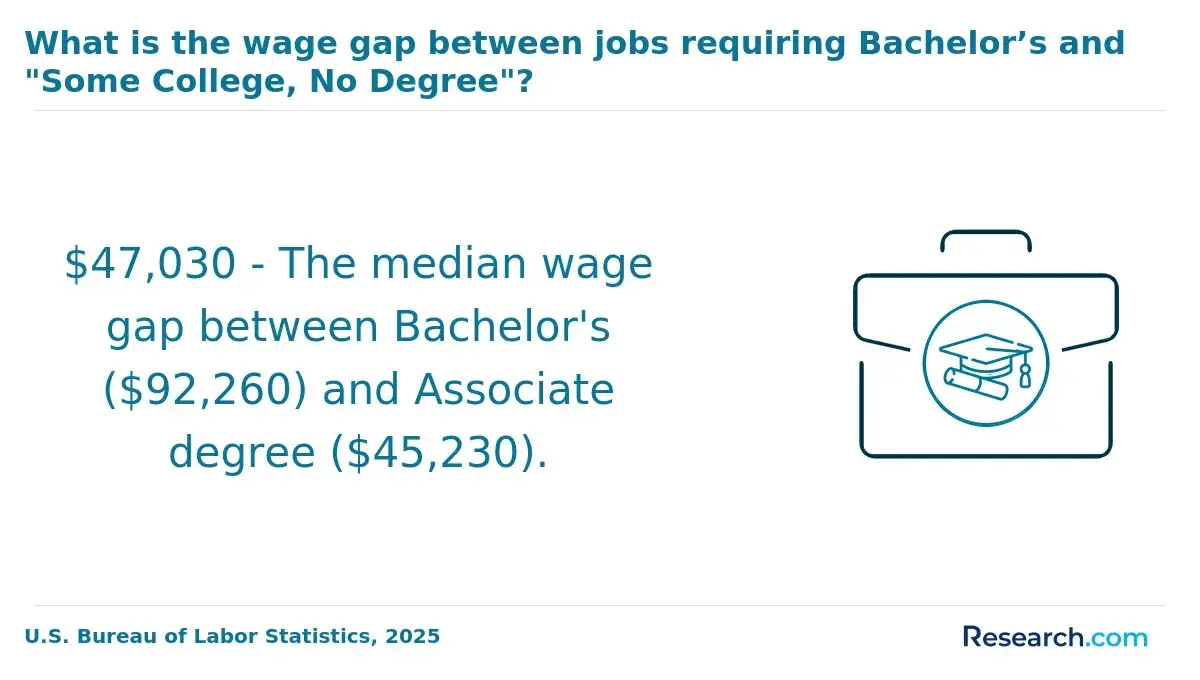
If you already have college credits but no bachelor's degree, a no-SAT, no-ACT completion program can remove a major barrier to returning. The need is practical: BLS 2024 data shows workers with a bachelor's degree had median weekly earnings of $1,543, compared with $930 for workers with only a high school diploma.
This guide is for transfer students, adults, military learners, and career changers. You'll learn which majors fit different goals, how admissions work without test scores, and how to compare quality, cost, speed, and outcomes before enrolling.
Key Things You Should Know
- No-test bachelor's completion programs usually evaluate transfer credits, college GPA, prerequisites, work experience, and personal statements instead of SAT or ACT scores.
- Cost varies widely, but College Board reported average published in-state tuition and fees at public four-year colleges of $11,610 for 2024-25, making transfer credit and tuition discounts important ROI factors.
- The strongest options are regionally accredited, transparent about transfer policies, aligned with licensure when relevant, and flexible enough for adult learners to finish in about one to three years depending on credits accepted.
Top 10 Best Bachelor's Completion Programs With No SAT or ACT Requirement
Business Degrees
Business completion programs suit students with prior credits in accounting, management, economics, or general education. Common majors include business administration, finance, marketing, human resources, and operations. No-test admissions often rely on a minimum transfer GPA and completed college English or math.
This path fits students seeking broad career mobility rather than a narrow technical role. BLS May 2024 data places median pay for management occupations above the national median for all occupations, but outcomes depend heavily on experience, industry, location, and internships.
Healthcare Degrees
Healthcare bachelor's completion degrees often serve working adults in allied health, health administration, public health, or health sciences. They can support roles in clinic operations, patient services, health data coordination, or community health.
Students should confirm whether the program is career-advancing or licensure-qualifying, because many clinical roles require separate state approval or certification. No SAT or ACT is common for transfer applicants, but schools may require prior science coursework, healthcare experience, immunization records, or background checks for field placements.
Information Technology Degrees
Information technology completion programs focus on applied systems: networks, databases, cloud platforms, help desk management, project support, and enterprise software. They are a strong fit for students with prior technical coursework, military IT training, or industry experience.
Admissions may replace test scores with transfer GPA, professional certifications, or a resume. Students should compare hands-on labs, vendor-aligned coursework, and internship options. IT is often more operations-focused than computer science, making it practical for learners who want to manage systems rather than design algorithms.
Computer Science Degrees
Computer science completion programs are best for students who want software engineering, data, AI, or systems development roles. No-test admissions do not mean the program is academically light; many require calculus, discrete math, programming, and data structures before upper-division coursework. BLS May 2024 data reports median pay for software developers above $130,000, but entry-level competition can be strong. Choose this path if you can build a portfolio, complete projects, and tolerate rigorous technical problem-solving.
Cybersecurity Degrees
Cybersecurity completion programs usually cover network defense, risk management, incident response, secure systems, digital forensics, and governance. They fit students with IT backgrounds, military experience, or prior credits in networking and systems administration. No-test programs may still require technical prerequisites.
Look for labs, cyber ranges, certification preparation, and faculty with industry experience. BLS May 2024 data places median pay for information security analysts above $120,000, but many roles expect hands-on skill plus credentials, not just a degree.
Psychology Degrees
Psychology completion programs serve students interested in behavior, research, counseling-related graduate study, human services, or workplace roles. A bachelor's in psychology alone usually does not qualify graduates to become licensed therapists or psychologists, so students should map the degree to either entry-level roles or graduate school. No-test admissions may emphasize prior social science coursework and writing ability. This major is strongest for learners who want transferable skills in research, communication, ethics, and human behavior.
Nursing Degrees
Nursing completion programs are often RN-to-BSN pathways for licensed registered nurses who already hold an associate degree or diploma in nursing. These programs commonly waive SAT and ACT scores because admission depends on an active RN license, prior nursing coursework, clinical standing, and transfer credits.
Coursework usually emphasizes leadership, evidence-based practice, community health, and care coordination. BLS May 2024 data reports median pay for registered nurses above $90,000, though salary varies by state, shift, setting, and experience.
Education Degrees
Education completion programs can prepare students for classroom support, teacher certification pathways, early childhood settings, or education-related roles. Requirements vary sharply by state, so no-test college admission does not automatically remove teacher licensure exams.
Students should confirm clinical practice, student teaching, background checks, and state approval before enrolling. This degree fits students committed to education careers and willing to complete field hours. It may not fit students who need a fully self-paced program with no daytime placement obligations.
Criminal Justice Degrees
Criminal justice completion programs cover courts, policing, corrections, homeland security, criminology, ethics, and public policy. They are popular among transfer students with prior law enforcement, military, or community college credits. No-test admissions may rely on college GPA and professional experience.
The degree can support advancement in public safety, compliance, probation support, or security management, but sworn law enforcement roles often require academy training, fitness standards, background checks, and local hiring processes beyond the bachelor's degree.
Engineering Degrees
Engineering completion programs are less common than business or IT because upper-division engineering requires sequenced math, science, and lab courses. The best options are usually designed for students who already completed an associate degree in engineering, engineering technology, or a closely related field.
ABET accreditation matters for many engineering goals, especially licensure-oriented paths. No-test admission may be available, but calculus, physics, chemistry, and major prerequisites often determine whether students can enter directly or need bridge coursework.
What is a bachelor's completion program and who are these no-test options designed for?
A bachelor's completion program is an undergraduate pathway built for students who already earned college credits but did not finish a four-year degree. Instead of starting from zero, students transfer eligible credits into a university and complete the remaining upper-division, major, general education, and residency requirements.
No-SAT and no-ACT options are designed mainly for applicants whose college record is more relevant than high school test performance. That usually includes community college transfers, returning adults, military-connected students, working professionals, and students who paused college for family, financial, health, or career reasons.
The "best" program is not the same for every student. A fast online program may be ideal for someone with 90 accepted credits, while a campus-based program with labs or clinical placements may be better for nursing, education, engineering, or science-heavy majors.
This comparison shows which type of no-test completion program tends to fit different student profiles. Use it to narrow your search before speaking with admissions or transfer-credit evaluators.
| Student profile | Best-fit completion format | Why it may work |
| Community college graduate | Transfer-friendly public or nonprofit university | Associate degrees often cover lower-division requirements and may transfer cleanly through articulation agreements. |
| Working adult with scattered credits | Online asynchronous program | Flexible coursework can reduce scheduling conflicts while the school evaluates credits from multiple prior institutions. |
| Licensed professional | Career-advancement completion program | Programs such as RN-to-BSN or health administration may award credit for prior professional preparation. |
| Military learner or veteran | Military-credit-friendly university | Some schools evaluate Joint Services Transcript credits and provide dedicated advising for benefits and transfer review. |
| Licensure-focused student | State-approved or professionally accredited program | Education, nursing, engineering, and clinical fields may require program approval beyond general institutional accreditation. |
How do no-SAT, no-ACT bachelor's completion programs work for transfer and adult students?
No-SAT, no-ACT bachelor's completion programs work by shifting the admissions focus from first-year readiness to college-level evidence. If you have already completed transferable college coursework, schools often view your transcript as a stronger predictor than standardized test scores.
Most programs start with a transfer-credit evaluation. The school reviews your previous courses, grades, credit hours, institution type, and how each course maps to its own degree requirements. This is where many adult students discover the real difference between "credits accepted by the university" and "credits applied to the major."
The table below explains common admissions models. It helps you identify whether a program is truly built for completion students or simply test-optional for all applicants.
| Admissions model | How it treats SAT or ACT scores | What matters more |
| Transfer admission | Usually waived after a minimum number of college credits | College GPA, transferable credits, good academic standing |
| Adult degree completion | Usually not required | Prior coursework, resume, goals, time away from school |
| RN-to-BSN or licensed-professional pathway | Usually not relevant | Active license, associate degree, clinical background |
| Open or flexible admission | Not required for eligible adults | High school completion, college history, placement needs |
| Selective major admission | May be waived by the university but replaced by prerequisites | Math, science, portfolio, GPA, or major-specific screening |
Before applying, request an unofficial credit review if the school offers one. This helps you avoid paying application fees to programs that accept your credits only as electives instead of applying them toward graduation.
What admission requirements replace SAT or ACT scores for bachelor's completion programs?
When SAT or ACT scores are not required, colleges usually ask for evidence that you can succeed in upper-division coursework. The exact requirements vary, but completion programs tend to evaluate maturity, credit history, academic fit, and readiness for the major.
These are the replacement requirements you are most likely to see. Review them before applying so you can estimate whether you are a direct admit, conditional admit, or someone who needs bridge coursework.
- Official college transcripts: Schools need transcripts from every college attended, even if you withdrew, earned poor grades, or completed only a few credits.
- Minimum transfer GPA: Many programs set a minimum GPA for general admission, while competitive majors may require a higher GPA in prerequisite courses.
- Completed prerequisites: Majors such as computer science, nursing, engineering, accounting, and education may require specific lower-division courses before upper-division entry.
- Statement of purpose: Adult-focused programs may ask why you are returning, what you want to study, and how the degree connects to your goals.
- Resume or work history: Professional experience can help explain gaps, show career direction, or support admission to applied majors.
- Licensure or background documents: Nursing, education, criminal justice, and healthcare programs may require licenses, background checks, immunization records, or field-placement clearance.
A common mistake is assuming "no test required" means "no screening." In reality, a strong no-test completion program often has clearer academic requirements than a traditional first-year pathway because it must determine exactly where you fit in the degree plan.
How can students verify accreditation and quality for bachelor's completion programs without test scores?
Accreditation is the first quality filter for any bachelor's completion program. At minimum, look for institutional accreditation recognized by the U.S. Department of Education or the Council for Higher Education Accreditation. This affects credit transfer, federal financial aid eligibility, employer acceptance, and graduate school options.
Programmatic accreditation or approval may also matter. Nursing students may need a program aligned with state board expectations; education students need state-approved educator preparation when seeking licensure; engineering students should understand whether ABET accreditation is needed for their career or professional engineer pathway.
Use this checklist before you enroll. It can help you spot red flags that are easy to miss when a program advertises speed, convenience, or no-test admission.
- Confirm the institution's accreditation status directly through recognized accreditation databases, not only through the school's marketing page.
- Ask whether the specific degree, campus, online division, or program modality is covered by the accreditation or approval you need.
- Request a written transfer-credit evaluation showing which credits apply to general education, the major, electives, and residency requirements.
- Check whether the program publishes graduation requirements, total estimated cost, academic calendar, course rotation, and student support services.
- For licensure fields, contact the relevant state board before enrolling if you plan to work in a different state from the school.
Be cautious if a school pressures you to enroll before completing a credit evaluation, refuses to clarify accreditation, promises guaranteed employment, or gives vague answers about licensure. No-test admission can be legitimate, but it should never replace transparency.
What are the main differences between online and on-campus bachelor's completion formats?
Online and on-campus bachelor's completion programs can lead to the same credential when they are offered by an accredited institution, but the learning experience can be very different. The better format depends on your work schedule, major, support needs, and access to required labs or field placements.
This table compares the main format differences. Use it to decide whether flexibility, structure, networking, or hands-on access matters most for your situation.
| Format | Best for | Trade-off to consider |
| Fully online asynchronous | Working adults, parents, military learners, students outside commuting range | Requires strong self-management and may offer less real-time interaction. |
| Online synchronous | Students who want remote access with scheduled class meetings | Less flexible if work shifts or caregiving responsibilities change. |
| Hybrid | Majors needing occasional labs, simulations, networking, or advising | Commute days can create scheduling and transportation costs. |
| On-campus evening or weekend | Local adults who prefer face-to-face learning and campus services | Program availability may be limited by location and course rotation. |
| Cohort-based completion | Students who want structured pacing and peer support | Less flexibility to pause, accelerate, or change course sequence. |
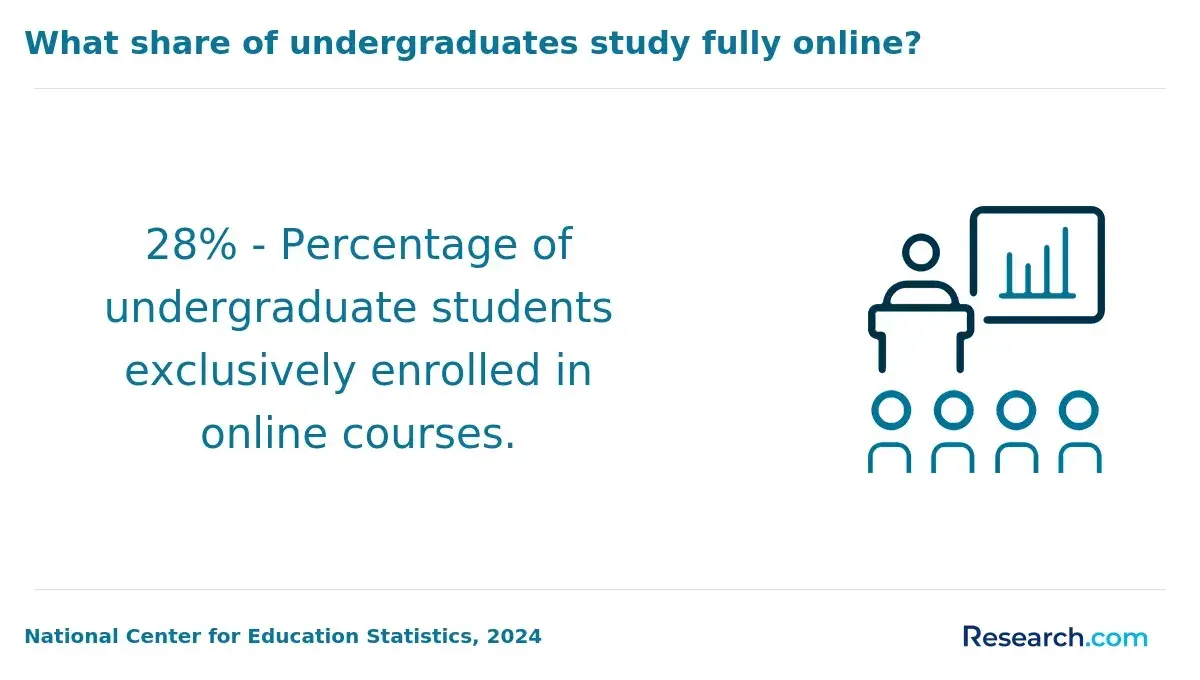
Online education is no longer a niche option, but quality still varies. Look for accessible faculty, tutoring, library access, career services, disability support, and technical help. If a program is online but requires in-person exams, labs, or placements, ask where those requirements can be completed before you commit.
How long does it take to finish a bachelor's completion program and how many credits transfer?
Completion time depends on how many credits transfer, how many apply to the degree, and how many courses you can realistically take each term. A bachelor's degree typically requires about 120 semester credits, but completion students may enter with anywhere from a few credits to an associate degree or more.
The table below gives a practical timeline based on common transfer-credit scenarios. It is an estimate, not a guarantee, because residency rules, prerequisite gaps, and course availability can extend the timeline.
| Credits accepted toward degree | Approximate remaining credits | Typical completion pace |
| 30 credits | About 90 credits | Three years full time or longer part time |
| 60 credits | About 60 credits | Two years full time or two to four years part time |
| 75 credits | About 45 credits | About 18 to 24 months for many full-time students |
| 90 credits | About 30 credits | About one year full time if required courses are available |
Students comparing speed should look at more than the advertised program length. Some 2-year accelerated bachelor degrees work well for learners with substantial transfer credit, but they can be demanding if you are also working full time.
To estimate your true timeline, ask the school for a degree audit, a course-by-course plan, and a list of courses offered only once per year. Those three documents reveal whether a program is genuinely fast or only fast for students with an ideal transfer profile.
What does the curriculum typically include in bachelor's completion programs across different majors?
Bachelor's completion curricula usually combine three layers: remaining general education, upper-division major coursework, and electives or concentration courses. Some programs also require a capstone, internship, practicum, portfolio, research project, or field placement.
The table below summarizes common curriculum patterns by major group. It helps you see why two programs with the same "completion" label can feel very different academically.
| Major area | Typical upper-division focus | Common applied requirement |
| Business | Management, finance, marketing, analytics, strategy | Capstone, case analysis, business plan, internship |
| Healthcare | Health systems, policy, quality improvement, ethics | Project, practicum, community health assignment |
| IT and cybersecurity | Networks, cloud, databases, security operations, risk | Labs, simulations, certification-aligned projects |
| Computer science | Algorithms, software engineering, data structures, systems | Coding portfolio, capstone, team project |
| Education | Learning theory, assessment, classroom practice, inclusion | Field hours, student teaching, state-required assessments |
| Psychology and social science | Research methods, statistics, development, behavior | Research paper, practicum, senior seminar |
If you need a fast career boost rather than a full degree, compare the curriculum with shorter credentials such as easy licenses and certifications to get. A certificate may help with a specific skill, while a bachelor's completion program is usually better for jobs requiring a four-year degree, graduate school eligibility, or long-term advancement.
Do not choose a major only because it accepts the most transfer credits. A program that saves one semester but does not match your career goal can be more expensive in the long run than a slightly longer degree with better alignment.
What careers can a bachelor's completion degree lead to and how do employers view no-test admissions?
A bachelor's completion degree can support career advancement, career change, graduate school admission, or eligibility for roles that list a bachelor's degree as a minimum requirement. Employers generally do not see SAT or ACT requirements on a transcript, so no-test admission is rarely the issue. Accreditation, major relevance, skills, experience, and performance matter more.
BLS May 2024 wage data shows why major choice matters: many bachelor's-level or bachelor's-preferred occupations in technology, management, nursing, engineering, and analytics have median wages above the national median, while some service, support, or nonprofit roles pay less but may offer mission fit or licensure pathways.
This table connects common completion majors with realistic career directions. It is not a salary promise; it is a way to compare how each degree may be used.
| Degree area | Possible career directions | What strengthens employability |
| Business | Operations coordinator, analyst, HR specialist, sales manager, project coordinator | Internships, analytics tools, leadership experience, industry knowledge |
| Healthcare | Health services coordinator, practice manager, quality assistant, public health support | Healthcare experience, compliance knowledge, data skills |
| IT | Systems administrator, network support, IT analyst, cloud support | Labs, certifications, troubleshooting experience, portfolio |
| Computer science | Software developer, QA engineer, data analyst, junior developer | Projects, Git portfolio, internships, technical interviews |
| Cybersecurity | Security analyst, risk analyst, SOC analyst, compliance analyst | Hands-on labs, networking foundation, security certifications |
| Nursing | BSN-prepared RN roles, leadership tracks, community health, care coordination | Active RN license, clinical experience, state requirements |
| Education | Teacher pathway, instructional support, early childhood, training roles | State approval, field experience, licensure exams where required |
| Criminal justice | Public safety, corrections, probation support, compliance, security management | Background clearance, academy training if sworn, writing skills |
Students who need employment gains sooner can pair a degree plan with quick certifications that pay well, especially in IT, project management, healthcare support, or data tools. The best approach is to use certificates for near-term skills and the bachelor's degree for long-term credential requirements.
How much do bachelor's completion programs cost and what funding options can students use?
The cost of a bachelor's completion program depends on tuition, fees, transfer credits, books, technology, commuting, childcare, lost work hours, and how long you remain enrolled. Published tuition can be misleading if one school accepts 90 credits and another accepts only 60.
College Board reported average published in-state tuition and fees at public four-year colleges of $11,610 for 2024-25. That figure is useful as a benchmark, but adult students should calculate total remaining cost after transfer credit, not the cost of a full four-year degree.
This table summarizes major cost factors. Use it to compare offers after each school completes a credit evaluation.
| Cost factor | Why it matters | What to compare |
| Tuition per credit | Completion students usually pay by remaining credit hours. | Resident, nonresident, online, military, employer-partner, and adult-learner rates |
| Transfer credit applied | Accepted credits lower cost only if they count toward requirements. | Major credits, electives, general education, residency minimums |
| Fees | Online, technology, graduation, lab, clinical, and placement fees can add up. | Total program estimate, not only tuition |
| Course availability | Delayed courses can create extra terms and extra costs. | Year-round schedule, eight-week terms, summer options, rotation |
| Financial aid eligibility | Accreditation and enrollment level affect federal aid access. | Pell Grant, federal loans, state grants, scholarships, employer tuition assistance |
Before borrowing, complete the FAFSA, ask about scholarships for transfer or adult students, check employer tuition assistance, and compare payment plans. Military-connected students should also review GI Bill, Tuition Assistance, and Yellow Ribbon participation where applicable.
If you expect to continue beyond the bachelor's degree, include future graduate costs in your plan. Some students later compare master's or doctoral options, including cheapest PhD programs online, but the immediate priority is finishing a bachelor's degree without overborrowing.
A practical affordability test is simple: choose the accredited program that applies the most useful credits, fits your schedule, supports your target career, and keeps required borrowing within a level you can reasonably manage based on your field's typical pay range.
Other Things You Should Know About
Many do not, especially for transfer students with completed college credits. Schools typically rely on college transcripts, GPA, prerequisites, and academic standing instead.
Usually, diplomas list the degree and institution, not the admission policy. Online notation varies by school, so ask the registrar if this matters to you.
Some programs accept students with limited credits, but many are designed for applicants with about 45 to 90 transferable credits or an associate degree.
Not always. Test scores may be waived, but competitive majors can still require a minimum GPA, prerequisites, licenses, portfolios, or background clearance.
References
- College Graduation Rates and How ACE Compares | ACE Blog https://ace.edu/blog/college-graduation-rates-and-how-ace-compares/
- Find Test-Optional Colleges — No SAT/ACT Requirement https://www.accreditedschoolsonline.org/online-colleges/no-sat-or-act/
- Trade School vs. College: A Straightforward Comparison https://www.ncstrades.edu/trade-school-vs-college/
- Schools Ranked by Graduation Rate | OEDB https://www.oedb.org/rankings/graduation-rate/
- Best Colleges for Student Support for Mental Health & Academics https://www.collegexpress.com/lists/list/the-best-colleges-and-universities-for-access-to-student-support-services/3124/
- ReUp Education https://reupeducation.com/resources/adult-learner-advising-best-practices/
- Academic Advising: an Indispensable Service for Adult Learners | Edcor https://www.edcor.com/blog/academic-advising-an-indispensable-service-for-adult-learners/
- Free Study Abroad: Complete List of Countries with No Tuition Fees for International Students - Spain Internship https://spain-internship.com/blog/list-country-free-study-abroad/
- Graduation Rates & Transfer-Out Rates | Atlantis University https://atlantisuniversity.edu/graduation-and-placement-rates/