2027 Most Affordable Online Bachelor's Degrees for Students Who Need Transfer Credit

Co-Founder and Chief Data Scientist
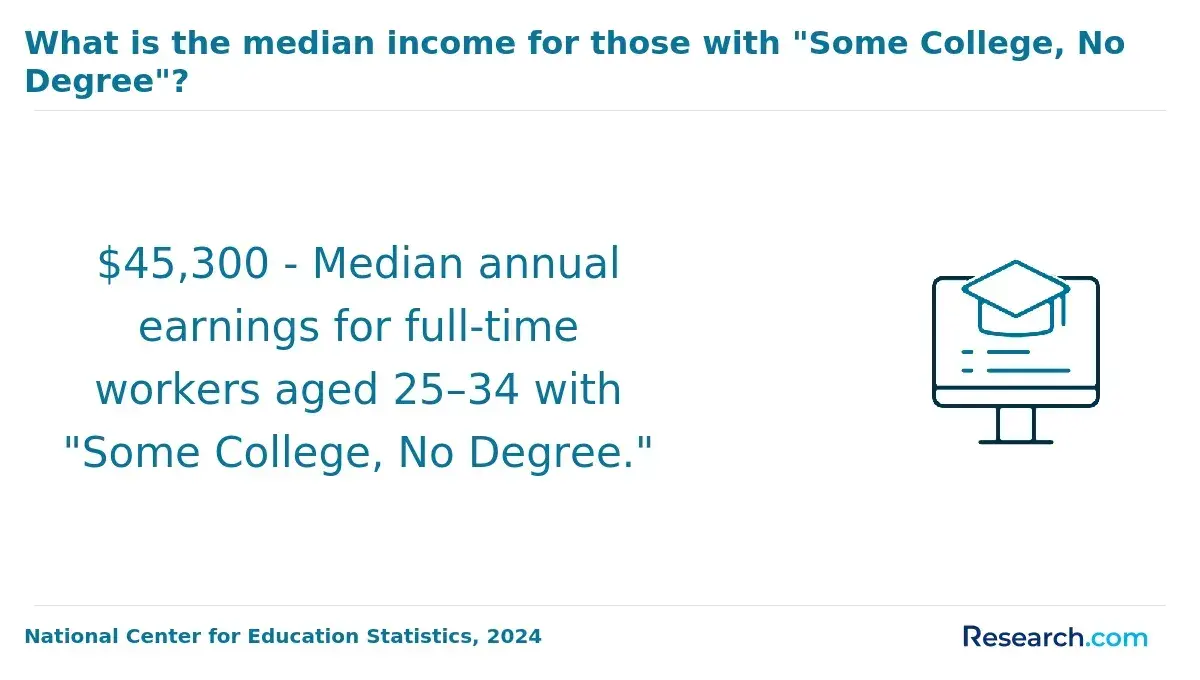
If you already have college credits, the cheapest online bachelor's degree is rarely the school with the lowest advertised tuition; it is the accredited program that accepts the most usable transfer credit. The stakes are high: according to the U. S. Bureau of Labor Statistics, workers with a bachelor's degree had median weekly earnings of $1,543 in 2024, compared with $992 for those with some college but no degree. This guide helps transfer students compare majors, costs, timelines, accreditation, aid, and credit policies before enrolling.
Key Things You Should Know
- The most affordable option is usually a regionally accredited public or nonprofit online program that accepts 60 to 90 prior credits and clearly states residency, upper-division, and major-course requirements.
- Federal aid can materially change net cost: the maximum Federal Pell Grant was $7,395 for the 2024-2025 award year, but students must choose FAFSA-eligible accredited institutions to access it.
- Transfer students should compare total remaining credits, not sticker tuition; a $300-per-credit program that accepts 90 credits may cost less than a $220-per-credit program that accepts only 45.
Top 10 Most Affordable Online Bachelor's Degrees for Students Who Need Transfer Credit
Business Degrees
Business administration, accounting, finance, marketing, and management are often transfer-friendly because many lower-division courses match community college curricula. They suit students seeking broad corporate, nonprofit, government, or entrepreneurial roles. BLS May 2024 data reports a $80,920 median annual wage for business and financial occupations, making cost control important but not the only ROI factor. Look for AACSB, ACBSP, or IACBE program accreditation when relevant, especially for accounting or finance-focused paths.
Healthcare Degrees
Online healthcare bachelor's programs commonly include healthcare administration, public health, health information management, and allied health completion tracks. They work best for students with previous clinical, associate degree, or healthcare workplace experience. Licensure-focused programs vary by state, so students should confirm that online coursework, clinical placements, and transfer credits meet employer or licensing expectations. Healthcare administration can be a strong option for students who want management roles without pursuing direct patient-care licensure.
Information Technology Degrees
Information technology degrees usually focus on systems administration, networking, cloud platforms, databases, technical support, and IT project work. They can be transfer-friendly when students bring community college IT credits, industry certifications, or military technology training. Because employers often value demonstrated skills, students should compare programs by labs, certification alignment, portfolio projects, and internship access. BLS May 2024 data places the median annual wage for computer and mathematical occupations at $105,990, but entry-level outcomes vary by role and experience.
Computer Science Degrees
Computer science is more theory-heavy than IT and usually requires calculus, programming sequence courses, algorithms, data structures, and discrete math. It may accept fewer technical transfer credits if prior coursework does not match the school's sequence. Choose this degree if you want software engineering, AI, data, or systems-development pathways and can handle math-intensive coursework. Students with many unrelated credits should request a course-by-course evaluation before assuming an accelerated timeline.
Cybersecurity Degrees
Cybersecurity degrees combine networking, risk management, ethical hacking, incident response, digital forensics, and compliance. They are a good fit for students with IT, military, law enforcement, or help desk experience. Programs that map to certifications such as Security+, CySA+, or CISSP domains may offer stronger workforce relevance, though certification exams are usually separate from tuition. BLS May 2024 data reports a $124,910 median annual wage for information security analysts, but many analyst roles require prior IT experience.
Psychology Degrees
Online psychology bachelor's degrees are transfer-friendly because general education and social science credits often apply well. This major fits students interested in human behavior, research, counseling preparation, HR, case management, or graduate school. It is not usually enough for independent counseling or clinical psychology licensure, which typically requires graduate education and supervised practice. Students choosing psychology for career change should compare internship options, research methods requirements, and pathways into master's programs.
Nursing Degrees
RN-to-BSN programs are among the most practical online bachelor's options for transfer students because licensed registered nurses often receive block credit for an associate degree or diploma program. These degrees are designed for working nurses and may include leadership, evidence-based practice, population health, and quality improvement. Students should verify state authorization, clinical or practicum expectations, and whether the program holds CCNE or ACEN accreditation. Pre-licensure online nursing programs are less common and usually require in-person clinical placements.
Education Degrees
Education degrees can be affordable for transfer students, but teacher licensure rules make careful planning essential. Elementary, special education, and secondary education programs may require field experiences, student teaching, background checks, and state-specific exams. Students who want classroom licensure should confirm that an online program is approved for their state before enrolling. Non-licensure education studies degrees may fit training, childcare administration, instructional design, or graduate preparation, but they may not qualify graduates to teach in public schools.
Criminal Justice Degrees
Criminal justice programs often accept credits from community colleges, police academies, military training, and public safety coursework when properly evaluated. They fit students pursuing law enforcement advancement, corrections, probation, homeland security, emergency management, or graduate study in criminology or public administration. Because hiring standards vary widely, students should check agency education requirements, physical standards, background rules, and civil service exams. A bachelor's degree can help with promotion, but it does not replace academy or agency-specific training.
Engineering Degrees
Online engineering bachelor's degrees are less common and less transfer-flexible because labs, math sequences, and ABET accreditation requirements can limit accepted credits. Engineering technology programs may be more available online and more applied, but they are not identical to traditional engineering degrees. Students seeking professional engineer licensure should prioritize ABET-accredited programs and confirm state board rules. Before enrolling, ask whether transferred calculus, physics, and lab courses satisfy the degree plan or only count as electives.
How can transfer students find the cheapest accredited online bachelor's programs?
Transfer students can find the cheapest accredited online bachelor's programs by comparing net remaining cost, not just tuition per credit. The best value usually comes from schools that combine recognized accreditation, generous transfer policies, transparent degree audits, and access to federal or state aid.
Use this sequence before applying so you do not waste application fees or lock into a program that accepts fewer credits than expected:
- Confirm institutional accreditation through the U.S. Department of Education or Council for Higher Education Accreditation databases.
- Ask for an unofficial transfer evaluation before committing, including how many credits apply to general education, major requirements, electives, and upper-division requirements.
- Calculate remaining credits multiplied by tuition and required fees, then subtract grants, scholarships, employer benefits, and military education benefits if applicable.
- Prioritize programs with published transfer pathways from your community college, statewide articulation agreements, or block-transfer options for completed associate degrees.
- Check whether the school participates in federal aid programs; a helpful starting point is this guide to cheapest online colleges that accept FAFSA.
A common mistake is choosing the lowest per-credit price while ignoring transfer loss. If one school rejects 30 credits, the lower tuition rate may disappear once you pay for repeated coursework.
What types of prior credits and experiences can be transferred into online bachelor's degrees?
Transfer credit means prior learning that a college accepts toward a new degree. It may reduce general education, elective, prerequisite, or major requirements, but schools decide how each credit applies; accepted credits do not always shorten the program if they only count as excess electives.
The table below summarizes common credit sources and what students should verify before assuming those credits will reduce cost or time to graduation.
| Credit source | How it may apply | What to verify |
| Community college courses | Often apply to general education, electives, and lower-division major courses | Minimum grade, course equivalency, transfer caps, and articulation agreements |
| Completed associate degree | May satisfy a general education block or junior-standing pathway | Whether the associate degree is transfer-oriented, technical, or applied |
| Military training | May apply through Joint Services Transcript or ACE recommendations | Whether credits count toward the major or only electives |
| Workplace training and certifications | May earn prior learning assessment or portfolio credit | Fees, documentation rules, credit limits, and faculty review standards |
| AP, IB, CLEP, or DSST exams | May replace introductory or general education courses | Required scores and whether exam credit counts toward residency limits |
Students who are still building transfer credit may also compare easy associate degrees that pay well before moving into a bachelor's completion program. A completed associate degree can sometimes make transfer evaluation simpler, especially where statewide agreements exist.
How do online bachelor's programs evaluate transfer credits from community colleges, military, and work training?
Online bachelor's programs usually evaluate transfer credits through a registrar, academic department, or transfer-credit office. The process starts with official transcripts, but technical, military, professional, or international learning may require additional documentation.
Most schools use several filters when deciding whether credits transfer and where they fit. Understanding these filters helps you predict whether a program is truly affordable for your situation:
- Accreditation of the original institution, especially whether prior college credits came from a recognized accreditor.
- Course level, content, and age, particularly for fast-changing fields such as cybersecurity, computer science, accounting, and healthcare.
- Minimum grades, often requiring a C or higher for transfer and sometimes higher grades for major prerequisites.
- Residency requirements, meaning the minimum number of credits that must be completed at the degree-granting school.
- Upper-division requirements, because many bachelor's programs require a set number of junior- and senior-level credits even if the student has many lower-division credits.
The biggest red flag is a school that gives only a vague estimate before enrollment. Ask for a written degree audit showing exactly which courses remain.
What are typical admission requirements for online bachelor's programs that welcome transfer students?
Transfer-friendly online bachelor's programs usually admit students who have completed some college coursework, although the minimum number of credits varies by institution. Some accept students with as few as one prior course, while degree-completion programs may require an associate degree or a larger credit block.
Admissions requirements are usually manageable, but students should gather documents early because transcript delays can postpone financial aid packaging and transfer evaluation. Most applicants should expect to provide the following:
- Official transcripts from every college previously attended, including colleges where credits were attempted but not completed.
- A high school transcript or GED record if the student has limited college credit.
- A minimum cumulative GPA, commonly set by the institution or major rather than by online status alone.
- Proof of professional license or certification for completion programs such as RN-to-BSN or allied health pathways.
- Program-specific prerequisites for majors such as education, engineering, nursing, computer science, or accounting.
Students with a low GPA should look for schools with conditional admission, academic renewal policies, or pathways that allow a strong recent transcript to offset older academic performance.
How much do affordable online bachelor's degrees cost after applying transfer credits and financial aid?
The cost of an affordable online bachelor's degree depends on remaining credits, tuition, mandatory fees, books, technology costs, transfer evaluation fees, and whether the student qualifies for grants, scholarships, employer tuition assistance, or military benefits. Transfer credit reduces cost only when it satisfies required courses in the degree plan.
Two federal aid figures are especially useful when estimating affordability because they set boundaries for common undergraduate aid planning:
- 2024-2025 maximum Federal Pell Grant: $7,395 for eligible students with sufficient financial need.
- Typical annual federal Direct Loan limit for dependent third- and fourth-year undergraduates: up to $7,500, subject to eligibility and aggregate loan limits.
The table below shows how to think about cost drivers. It is not a price quote; it is a checklist for comparing offers from different schools.
| Cost factor | Why it matters for transfer students | Question to ask |
| Remaining credits | Usually the largest driver of total tuition | How many credits remain after the official transfer evaluation? |
| Per-credit tuition | Determines the baseline academic cost | Is tuition different for online, out-of-state, or upper-division courses? |
| Mandatory fees | Can narrow the gap between low- and mid-priced programs | Are online, technology, graduation, clinical, lab, or proctoring fees required? |
| Books and materials | Some programs use open educational resources while others require paid platforms | Are materials included in tuition or billed separately? |
| Financial aid and benefits | Grants and employer benefits reduce net cost; loans defer cost | What is the estimated net price after grants and scholarships, not including loans? |
Avoid borrowing the maximum loan amount automatically. Use loans to cover a realistic gap after grants, scholarships, cash flow, and employer benefits are considered.
How long does it take transfer students to finish an online bachelor's degree?
Completion time depends on accepted credits, course load, term structure, prerequisites, and whether the student studies year-round. A student who transfers 90 applicable credits into a 120-credit bachelor's program may have about 30 credits left, but those credits can still take longer if courses are sequenced or offered only in certain terms.
The table below gives a practical way to interpret remaining credits. Actual timelines vary by school calendar, course availability, and student workload.
| Applicable transfer credits | Approximate remaining credits in a 120-credit degree | Planning implication |
| 30 | 90 | Plan for a longer bachelor's pathway unless accelerated or year-round study is realistic |
| 60 | 60 | Often aligns with junior-standing transfer if major prerequisites are satisfied |
| 75 | 45 | May be efficient if credits apply to the major and upper-division requirements |
| 90 | 30 | Can be a fast completion route, but residency and capstone requirements still matter |
Students prioritizing speed should compare term length, course overlap rules, and credit caps before choosing among fast track degrees. Faster is not always cheaper if the format forces students to reduce work hours or repeat prerequisites.
What majors and career paths work best for affordable online bachelor's degrees with transfer credit?
The best major is the one that uses your transfer credits efficiently and points toward a realistic career goal. A practical affordability test is to ask whether the degree accepts prior credits, builds marketable skills, and supports jobs that normally value a bachelor's degree.
The table below compares common online bachelor's majors with career directions and 2024 U.S. wage context from BLS occupational data. Wages describe occupations, not guaranteed outcomes for any graduate.
| Major area | Common career direction | 2024 wage context | Best fit |
| Business | Management, accounting support, operations, finance, marketing | Business and financial occupations had a $80,920 median annual wage | Students wanting broad transferability and flexible industry options |
| Information technology | Systems support, networking, cloud administration, IT operations | Computer and mathematical occupations had a $105,990 median annual wage | Students with technical credits, certifications, or hands-on IT experience |
| Nursing | RN advancement, leadership, public health, care coordination | Registered nurses had a $93,600 median annual wage | Licensed RNs seeking BSN completion and advancement readiness |
| Healthcare administration | Clinic operations, health services management, compliance | Medical and health services managers had a $117,960 median annual wage | Healthcare workers moving toward management rather than bedside care |
| Education | Teaching, training, instructional support, education administration preparation | Education, training, and library occupations had a $59,220 median annual wage | Students who verify state licensure alignment before enrolling |
Students unsure about a full bachelor's commitment can compare shorter options such as 6-month certificate programs that pay well. Certificates may be better for a quick skill upgrade, while a bachelor's degree is usually stronger for roles requiring a four-year credential or long-term advancement.
How do online and campus bachelor's programs compare for transfer-friendly policies and flexibility?
Online and campus bachelor's programs can both be reputable, but transfer students often choose online programs because they reduce relocation, commuting, and scheduling barriers. The trade-off is that online students must be more proactive about advising, technology, time management, and verifying local requirements such as student teaching or clinical placement rules.
The table below compares online and campus formats from a transfer student's perspective. Use it to decide which format better matches your credits, schedule, and support needs.
| Comparison point | Online bachelor's program | Campus bachelor's program |
| Flexibility | Often better for working adults, parents, military students, and students outside commuting range | Better for students who want fixed schedules and in-person routines |
| Transfer evaluation | May be designed around adult learners and degree completion | May have strong local articulation agreements with nearby community colleges |
| Hands-on requirements | Can be challenging for labs, clinicals, student teaching, or field placements | Often easier to coordinate through campus facilities and local partners |
| Networking | Requires intentional use of virtual events, faculty office hours, projects, and internships | May offer more spontaneous peer, faculty, club, and employer interactions |
| Cost control | Can reduce commuting and housing costs but may include technology or proctoring fees | May offer campus resources but can add transportation, parking, or housing costs |
Online learning is a strong choice when the program is accredited, transfer policies are clear, and the student can stay organized. Campus may be better when the major depends heavily on labs, equipment, licensure placements, or local professional networks.
How can students verify accreditation, quality, and outcomes of transfer-friendly online bachelor's programs?
Accreditation is the first quality screen for an online bachelor's program. Institutional accreditation affects federal aid eligibility, credit transfer, graduate school recognition, and employer confidence, while programmatic accreditation may matter in fields such as nursing, business, education, engineering, health information management, and social work.
Before enrolling, verify quality using multiple signals rather than relying on advertising or rankings alone. These steps help reduce the risk of choosing a program that is cheap but not useful:
- Confirm institutional accreditation in recognized federal or accreditor databases, not only on the school's marketing pages.
- Check programmatic accreditation or state approval when the major leads to licensure, certification, or regulated practice.
- Request a written transfer evaluation and degree plan before paying a deposit whenever possible.
- Review graduation rates, retention rates, student loan default information, and post-graduation outcomes where available.
- Ask whether online students receive the same advising, tutoring, library access, career services, disability services, and faculty support as campus students.
- Search for complaints, accreditation warnings, teach-out notices, or regulatory actions involving the institution.
Important red flags include pressure to enroll immediately, unclear tuition and fee disclosures, refusal to provide transfer details, guaranteed job or salary claims, and programs that say accreditation is "pending" for a licensure field. If a school cannot explain how your credits apply, keep comparing options.
Other Things You Should Know About
The cheapest path is usually to choose an accredited school that accepts the most credits toward actual degree requirements, not just electives. Start with an official transfer evaluation, compare remaining credits, and subtract grants or employer benefits before judging affordability.
Yes. Most schools require official transcripts from every college attended and evaluate each course separately. However, repeated courses, low grades, outdated technical courses, or credits from unrecognized institutions may not apply.
An online bachelor's degree from an accredited institution is generally evaluated like other degrees, especially when the transcript and diploma come from the same accredited university. Employer perception depends more on school reputation, major relevance, skills, experience, and licensure alignment than on delivery format alone.
Many programs allow substantial transfer credit, sometimes up to 90 credits toward a 120-credit degree, but limits vary. Schools may also require a minimum number of credits completed in residence and a certain number of upper-division credits in the major.
References
- Cost of College by Country [2025]: Average Tuition Fees https://educationdata.org/average-cost-of-college-by-country
- Online Bachelor’s Degree Completion Programs - OnlineEducation.com https://www.onlineeducation.com/faqs/bachelors-degree-completion-programs
- Top Online Schools That Accept Transfer Credits https://www.edvisorly.com/student-guides/online-schools-that-accept-transfer-credits
- 2025 Most Affordable Online Colleges & Degrees https://www.onlineu.com/most-affordable-colleges
- Best Online Colleges for Working Adults [2026] https://www.straighterline.com/blog/degree-completion-best-online-colleges-for-working-adults
- 10 Best Online Colleges that Accept Transfer Credits – Rankings https://www.collegeconsensus.com/rankings/best-online-colleges-accepting-transfer-credits/
- Compare Tuition Fees in Europe - StudyinEurope.eu https://www.studyineurope.eu/tuition-fees/
- Free Study Abroad: Complete List of Countries with No Tuition Fees for International Students - Spain Internship https://spain-internship.com/blog/list-country-free-study-abroad/