2027 Best Bachelor's Completion Programs With 8-Week Courses

Co-Founder and Chief Data Scientist
Finishing a bachelor's degree can be hard when work, family, and transfer credits all compete for time. A recent National Student Clearinghouse Research Center report identified more than 36 million U.S. adults with some college credit but no credential, making completion programs especially relevant for returning students.
This guide explains how 8-week bachelor's completion programs work, which majors are common, how to compare online and campus options, and what to check before enrolling so you can choose a program that fits your schedule, budget, and career goal.
Key Things You Should Know
- Most 8-week bachelor's completion programs are built for transfer students with prior college credit, and many working adults can finish in about 12 to 24 months depending on accepted credits, course load, and major requirements.
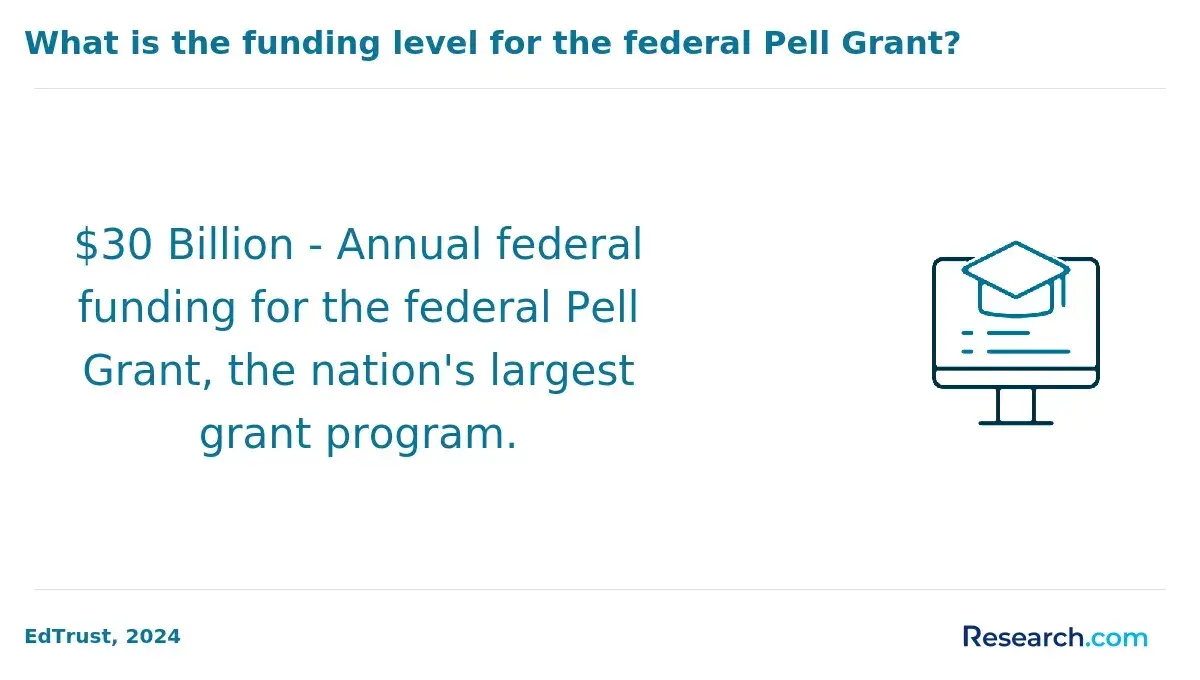
- Cost depends heavily on transfer policy, per-credit tuition, fees, and aid; for eligible students, the 2024-25 maximum Federal Pell Grant is $7,395, which can meaningfully reduce out-of-pocket cost.
- The best programs are institutionally accredited, transparent about total cost and transfer credit, and aligned with field-specific requirements such as nursing licensure, teacher certification, ABET engineering standards, or cybersecurity workforce expectations.
Top 10 Best Bachelor's Completion Programs With 8-Week Courses
Business Degrees
Business completion degrees are among the most flexible 8-week options because coursework often transfers well from community colleges. Common concentrations include management, accounting, marketing, human resources, finance, and supply chain management. This path fits adults seeking promotion, career change, or broader leadership skills. It may not be ideal if your goal requires a highly specialized license, such as CPA eligibility, without enough accounting credits. Look for programs with applied projects, spreadsheet and analytics training, and clear elective pathways tied to your target role.
Healthcare Degrees
Healthcare bachelor's completion programs often serve allied health workers, medical assistants, health information staff, and administrators who want supervisory or nonclinical roles. Majors may include healthcare administration, health sciences, public health, or health information management. Eight-week courses can work well for employees already familiar with healthcare settings. Before enrolling, confirm whether the degree supports your intended credential or role, because clinical licensure requirements vary by occupation and state. Strong programs include healthcare law, quality improvement, finance, data privacy, and population health.
Information Technology Degrees
Information technology completion degrees usually focus on applied systems, networking, cloud administration, databases, project management, and user support. They fit students who want practical technology roles without the heavier math sequence of some computer science programs. Eight-week IT courses can be intense because labs and troubleshooting assignments are frequent. Look for programs that map electives to industry certifications, include hands-on virtual labs, and teach current cloud and security tools. Students aiming for software engineering or research-heavy roles may prefer computer science.
Computer Science Degrees
Computer science completion programs emphasize programming, algorithms, data structures, software development, operating systems, and sometimes artificial intelligence or data science. They suit transfer students who have completed college algebra, precalculus, or introductory programming. Eight-week terms can accelerate progress, but coding assignments require consistent weekly time. Review prerequisite sequences carefully, because missing math or programming foundations can delay graduation. A strong program should include portfolio-ready projects, version control, software engineering practices, and career support for internships or entry-level developer roles.
Cybersecurity Degrees
Cybersecurity completion degrees prepare students for roles in risk management, security operations, digital forensics, network defense, and compliance. They are especially useful for IT workers who want to specialize. Eight-week formats work best when courses include labs, scenarios, and practice with security tools rather than only theory. Look for alignment with certifications such as Security+, CySA+, or CISSP experience domains, but remember that degree completion does not replace certification or work experience. Also check whether the curriculum covers cloud security and governance.
Psychology Degrees
Psychology completion programs are popular among students interested in human behavior, social services, human resources, research support, or graduate study. Coursework often includes developmental psychology, abnormal psychology, statistics, research methods, cognition, and social psychology. This degree can broaden career options, but most counseling, clinical, and school psychology roles require graduate education and licensure. An 8-week format is manageable if you can keep up with reading, writing, and research assignments. Choose programs that clearly explain graduate-school preparation and career paths outside licensure.
Nursing Degrees
Nursing completion programs usually refer to RN-to-BSN pathways for licensed registered nurses who already hold an associate degree or diploma. Eight-week courses often cover community health, leadership, evidence-based practice, nursing informatics, and health assessment. The format fits working nurses because clinical requirements are often community- or project-based rather than traditional hospital rotations. Confirm state authorization, nursing accreditation, practicum expectations, and employer tuition benefits before enrolling. Students who are not already licensed RNs should look for prelicensure BSN options instead.
Education Degrees
Education completion programs may lead to nonlicensure roles or teacher certification, depending on the state and program design. Common areas include elementary education, special education, early childhood education, instructional design, or educational studies. Eight-week courses can help paraprofessionals and childcare workers move faster toward advancement. However, licensure programs often require student teaching, background checks, exams, and state-specific coursework. Before applying, verify that the program is approved for the state where you plan to teach, not just where the university is located.
Criminal Justice Degrees
Criminal justice completion degrees cover policing, courts, corrections, criminology, ethics, homeland security, and public administration. They fit adults already working in law enforcement, security, corrections, or military roles, as well as students seeking public service careers. Eight-week courses often use case studies and writing-heavy assignments. This degree can support promotion, but some sworn roles require academy training, civil service exams, physical standards, or agency-specific hiring processes. Compare programs by transfer credit for academy, military, or professional training.
Engineering Degrees
Engineering completion degrees with 8-week courses are less common because labs, math sequences, and accreditation requirements can be difficult to compress. Options may include engineering technology, industrial technology, manufacturing, or electronics rather than traditional engineering. This path can fit technicians who want supervisory, quality, or operations roles. If you want to become a licensed professional engineer, check ABET accreditation and state board requirements carefully. Engineering technology can be practical and career-focused, but it is not always interchangeable with an engineering degree.
What is a bachelor's completion program with 8-week courses and who is it best for?
A bachelor's completion program is a degree pathway designed for students who already have college credits and want to finish the upper-division portion of a bachelor's degree. An 8-week course calendar splits the semester into shorter sessions, so students may take fewer classes at once while still earning credits throughout the year.
This format is best for adults who can study consistently each week, already know their major direction, and need predictable scheduling. It is less ideal for students who need extensive academic remediation, want a highly residential campus experience, or are entering majors with long prerequisite chains and fixed clinical or lab sequences.
The main trade-off is pace. Eight-week classes can feel focused and efficient, but assignments arrive quickly. Students who work full time should ask whether the school recommends one course per session, two courses per session, or a customized plan based on work schedule and prior academic performance.
How do online bachelor's completion programs with 8-week terms compare to campus options?
Online 8-week bachelor's completion programs usually offer the best scheduling flexibility, while campus programs may provide more face-to-face support, local networking, and access to labs or field placements. The right choice depends on your major, learning style, commute, and need for structure.
The comparison below shows how the two formats usually differ for returning students. Use it to identify which format matches your constraints before comparing individual schools.
| Factor | Online 8-week completion program | Campus or hybrid completion program |
| Schedule | Often asynchronous or evening-friendly, with weekly deadlines | May require set class times, commuting, or weekend meetings |
| Best fit | Working adults, caregivers, military students, and students outside commuting range | Students who prefer in-person instruction, local networking, or structured routines |
| Academic support | Virtual advising, online tutoring, digital library access, and learning platforms | In-person advising, campus tutoring, faculty office hours, and student services |
| Major limitations | May be harder for lab-heavy, clinical, or field-based majors unless placements are arranged locally | Can be stronger for labs, practicums, and local employer connections |
| Risk to check | State authorization, proctoring fees, technology requirements, and placement rules | Commute time, parking costs, work conflicts, and limited course rotation |
If you need even shorter academic calendars, compare them carefully with standard 8-week terms. Some schools advertise 5 week college courses online, but faster sessions can increase weekly workload and may not be available in every major.
How can you tell if an 8-week bachelor's completion program is properly accredited?
A properly accredited bachelor's completion program should be offered by an institution recognized by an accreditor approved by the U.S. Department of Education or the Council for Higher Education Accreditation. Accreditation matters because it affects federal financial aid, credit transfer, graduate school eligibility, employer recognition, and, in some fields, licensure.
The table below summarizes the accreditation layers that matter most. It is not enough for a school to sound legitimate; the type of accreditation should match your degree and career goal.
| Accreditation item | Why it matters | Examples of fields where it is especially important |
| Institutional accreditation | Confirms that the college or university meets broad academic and administrative standards | All bachelor's completion programs |
| Programmatic accreditation | Confirms that a specific degree meets standards for a profession or discipline | Nursing, education, engineering, business, health information |
| State approval or authorization | May be required for online enrollment, field placements, teacher preparation, or nursing practice | Education, nursing, counseling-related pathways, clinical healthcare |
| Transfer recognition | Helps determine whether credits will be accepted by graduate schools or future institutions | Students planning master's degrees, licensure, or later transfer |
Before you apply, take these practical steps to reduce risk:
- Search the school's accreditation status in official accreditor or federal databases rather than relying only on marketing pages.
- Ask whether the specific program, not just the university, holds any required professional accreditation.
- Confirm that the program is authorized for students in your state if you are studying online.
- For licensed fields, contact the relevant state board and ask whether the degree meets education requirements.
Common red flags include vague claims such as "internationally accredited," pressure to enroll immediately, refusal to provide a written transfer evaluation, or unclear information about licensure outcomes.
What admission requirements do most 8-week bachelor's completion programs expect from transfer students?
Most 8-week bachelor's completion programs expect applicants to bring prior college credit, but the exact threshold varies. Some programs accept students with an associate degree, while others require a minimum number of transferable credits or completion of general education courses.
The table below outlines common admissions requirements for transfer students. Use it as a checklist when speaking with admissions and registrar staff.
| Requirement | What schools commonly review | Why it affects your timeline |
| Official transcripts | All previous colleges, including community college, military credit, and prior universities | Determines how many credits transfer into the degree |
| Minimum GPA | Overall college GPA, major GPA, or most recent credits | May affect admission, probation status, or scholarship eligibility |
| General education completion | English composition, math, science, social science, humanities, and communication | Missing requirements can add extra courses before graduation |
| Prerequisites | Major-specific courses such as accounting, anatomy, statistics, programming, or algebra | Prerequisite gaps can delay upper-division coursework |
| Professional documents | Resume, RN license, teaching background, military training, or certifications | May support credit for prior learning or admission to specialized tracks |
To avoid delays, request a written degree audit before committing. A verbal estimate of transfer credit is helpful, but it should not be the basis for a financial decision unless the school confirms how each course applies to your degree plan.
How long does it take to finish a bachelor's completion degree with accelerated 8-week terms?
The time to finish depends on how many credits you transfer, how many courses you take per 8-week session, and whether your major has sequential prerequisites. A student entering with about two years of accepted college credit may finish faster than a student whose credits transfer only as electives.
The table below shows typical completion scenarios. These are planning categories, not promises, because schools differ in course rotation, credit acceptance, and residency requirements.
| Starting point | Typical remaining credits | Likely pace with 8-week terms | Key risk |
| Associate degree aligned with major | About 45 to 60 credits | Often about 12 to 24 months | Upper-division courses may not run every term |
| Some college, no associate degree | Often 60 or more credits | Often about 2 to 3 years | General education gaps can add time |
| Career or military credit evaluated | Varies by school policy | Can shorten timeline if credits apply to requirements | Credits may transfer as electives only |
| Major change after transfer | Varies widely | May add several terms | Prerequisites may need to be completed in order |
Working adults should build a schedule around weekly workload rather than only graduation speed. A practical planning sequence is:
- Ask for a preliminary transcript evaluation before applying if the school offers one.
- Compare how many credits apply to the major, general education, electives, and residency requirement.
- Map each remaining course to a term so you can see whether any classes are offered only once per year.
- Choose a course load you can sustain during busy work periods, family obligations, and financial aid minimum enrollment rules.
What majors and typical coursework are offered in 8-week bachelor's completion programs?
Eight-week bachelor's completion programs usually emphasize adult-friendly majors with strong transfer pathways. The most common options are business, healthcare administration, nursing completion, criminal justice, psychology, education, information technology, cybersecurity, and general studies or interdisciplinary studies.
The table below connects common majors with typical coursework and the kind of student each option tends to fit. This helps you avoid choosing a major based only on convenience.
| Major area | Typical upper-division coursework | Best fit |
| Business | Management, accounting, marketing, finance, analytics, operations | Students seeking broad advancement, supervision, or corporate roles |
| Healthcare administration | Healthcare law, quality improvement, finance, informatics, leadership | Clinical or administrative healthcare workers moving toward management |
| Information technology | Networking, cloud systems, databases, systems analysis, project management | Students who want applied technical roles and practical labs |
| Cybersecurity | Risk management, digital forensics, security operations, incident response | IT workers or transfer students interested in security-focused roles |
| Psychology | Research methods, statistics, abnormal psychology, development, cognition | Students considering human services, HR, research support, or graduate study |
| Education | Learning theory, classroom management, assessment, special education, pedagogy | Paraprofessionals, childcare workers, and future teachers |
| Criminal justice | Criminology, courts, corrections, ethics, policing, public policy | Public safety, corrections, security, or government-focused students |
AI and automation are changing coursework across many majors. Business students increasingly see analytics assignments, IT students work with cloud tools, healthcare students study informatics, and education students evaluate digital learning technologies. A strong completion program should show how its curriculum stays current rather than simply listing traditional course titles.
How much do 8-week bachelor's completion programs cost and what financial aid is available?
The cost of an 8-week bachelor's completion program depends on tuition, fees, transferred credits, books, technology requirements, prior learning credit, and whether you qualify for employer reimbursement or federal aid. The cheapest listed tuition is not always the cheapest path if the school accepts fewer transfer credits.
When comparing cost, focus on the total remaining price to graduate rather than the price per course. Key cost items commonly include:
- Tuition charged per credit, per course, per term, or through a subscription-style model
- Mandatory online, technology, graduation, lab, clinical, proctoring, or student service fees
- Books, courseware, software subscriptions, background checks, uniforms, or exam fees required by the major
- Lost transfer credits, which can increase total cost even when the advertised tuition rate looks affordable
- Opportunity costs such as reduced work hours, childcare, commuting, or unpaid field placement time
Federal aid can reduce the amount you pay out of pocket, but it should be used carefully. For the 2024-25 award year, the maximum Federal Pell Grant is $7,395 for eligible students, while federal student loan limits vary by dependency status and year in school.
The table below shows cost factors that often change the real price of a completion degree. Use it to compare schools beyond the headline tuition number.
| Cost factor | Why it matters | Question to ask |
| Transfer credit acceptance | More accepted credits can reduce both time and tuition | How many credits apply directly to my degree requirements? |
| Residency requirement | Some schools require a minimum number of credits taken through them | What is the minimum number of credits I must complete here? |
| Fee structure | Fees can make a low tuition rate less affordable | What is my total estimated cost through graduation? |
| Employer tuition assistance | Some employers reimburse approved programs or majors | Does this program meet my employer's reimbursement rules? |
| Prior learning assessment | Work, military, or certification credit may reduce required coursework | What documentation is required, and how much does evaluation cost? |
Students who want flexible pacing should also compare self-paced options against fixed 8-week terms. A guide to the cheapest self paced online college options can help you understand whether subscription or competency-based formats might lower costs if you can progress quickly.
What careers can you pursue after finishing a bachelor's completion program with 8-week courses?
Career outcomes depend on your major, experience, location, industry, and whether the role requires licensure or certification. A bachelor's completion degree can help remove a common advancement barrier, but it does not guarantee a job title or salary.
The table below connects common completion majors with career directions. Use it to evaluate whether a major points toward the work you actually want to do.
| Completion major | Common career directions | Important career note |
| Business | Operations coordinator, manager trainee, HR specialist, sales manager, analyst roles | Experience and measurable results often matter as much as the degree |
| Healthcare administration | Clinic supervisor, health services coordinator, quality improvement associate | Clinical background can strengthen advancement in healthcare settings |
| Information technology | Systems administrator, IT support lead, network specialist, cloud support roles | Certifications and hands-on labs can improve employability |
| Computer science | Software developer, QA analyst, data analyst, application support roles | A project portfolio is often critical for entry-level hiring |
| Cybersecurity | Security analyst, risk analyst, SOC analyst, compliance associate | Many employers prefer IT experience plus security knowledge |
| Psychology | Case management, HR, research assistant, behavioral health support | Licensed counseling or clinical practice usually requires graduate education |
| Nursing RN-to-BSN | Charge nurse, public health nurse, case management, leadership pathways | Active RN licensure remains central to nursing roles |
Labor market data can help you judge direction, not certainty. The Bureau of Labor Statistics' 2024 Occupational Outlook Handbook projects computer and information technology occupations to grow much faster than average from 2023 to 2033, which supports demand for IT, computer science, and cybersecurity pathways, but local hiring and experience requirements still matter.
If income potential is a major part of your decision, compare your intended major with broader data on the top paying degrees. Then balance salary potential against completion time, debt, licensing requirements, and your existing work experience.
How can working adults choose the best accelerated 8-week bachelor's completion program for their goals?
The best accelerated 8-week bachelor's completion program is the one that converts the most prior learning into useful degree progress, fits your weekly schedule, meets accreditation or licensure requirements, and supports your target career. Rankings can be a starting point, but your transcript and goal should drive the decision.
Use this step-by-step process before enrolling:
- Define the job, promotion, graduate program, or licensure path you want the degree to support.
- Request written transfer evaluations from at least two or three schools so you can compare remaining credits.
- Ask for a full degree plan showing course sequence, term length, prerequisites, and expected graduation date.
- Calculate total cost through graduation, including fees, books, lost credits, and available employer or federal aid.
- Check institutional accreditation, programmatic accreditation, state authorization, and licensure alignment where relevant.
- Review student support services, including advising, tutoring, career services, writing help, technical support, and disability accommodations.
- Test the workload by asking for sample syllabi or typical weekly expectations in an 8-week course.
Common mistakes include choosing the fastest advertised program without checking transfer loss, assuming all online degrees work for licensure, ignoring course rotation, and borrowing before knowing the total remaining cost. Another mistake is choosing a major only because it is convenient; a degree should connect to a realistic next step.
If graduate school is part of your long-term plan, confirm whether the bachelor's program includes the prerequisites and GPA expectations you may need later. Students comparing future options can also review guidance on the easiest masters degree to get, but ease should be weighed against career relevance and admissions requirements.
Other Things You Should Know About
They are not necessarily harder in content, but they move faster. You cover similar material in less time, so weekly reading, assignments, discussions, and exams can feel more concentrated.
Many students do, but course load matters. Working adults often start with one course per 8-week session, then increase only if grades, schedule, and stress level remain manageable.
Possibly. General education credits often transfer more easily than major courses, but policies vary by school, grade earned, accreditation of the prior institution, course age, and degree requirements.
Employers typically focus on whether the institution is accredited, whether the degree matches the role, and whether you have relevant skills or experience. The online format itself is usually less important than program quality and career fit.
References
- Average Cost of College [2025]: Yearly Tuition + Expenses https://educationdata.org/average-cost-of-college
- Affordable Accredited Online Colleges https://www.onlineu.com/online-schools/low-tuition
- Bryan University Tuition and Fee Schedule https://catalog.bryanuniversity.edu/bryan-university-tuition-and-fee-schedule
- How Long Does it Take to Earn a Bachelor's Degree? (How Many Years?) https://www.onlineeducation.com/faqs/how-many-years-to-earn-a-bachelors-degree
- Top Degrees in Demand for the Future: 2026 & Beyond https://skillifysolutions.com/blogs/career-growth/top-degrees-in-demand-for-the-future/
- How Many Credits Do You Need to Graduate College? (2026 Guide) https://www.straighterline.com/blog/self-paced-how-many-credits-do-you-need-to-graduate-college-2026-guide
- Jessup Playbooks: Transitioning to a 7-Week Course Schedule: Why 7-Week Courses? https://libguides.pvcc.edu/7-week-course-schedule/why-7-week-courses