2027 Best Bachelor's Degrees With 8-Week Courses

Co-Founder and Chief Data Scientist
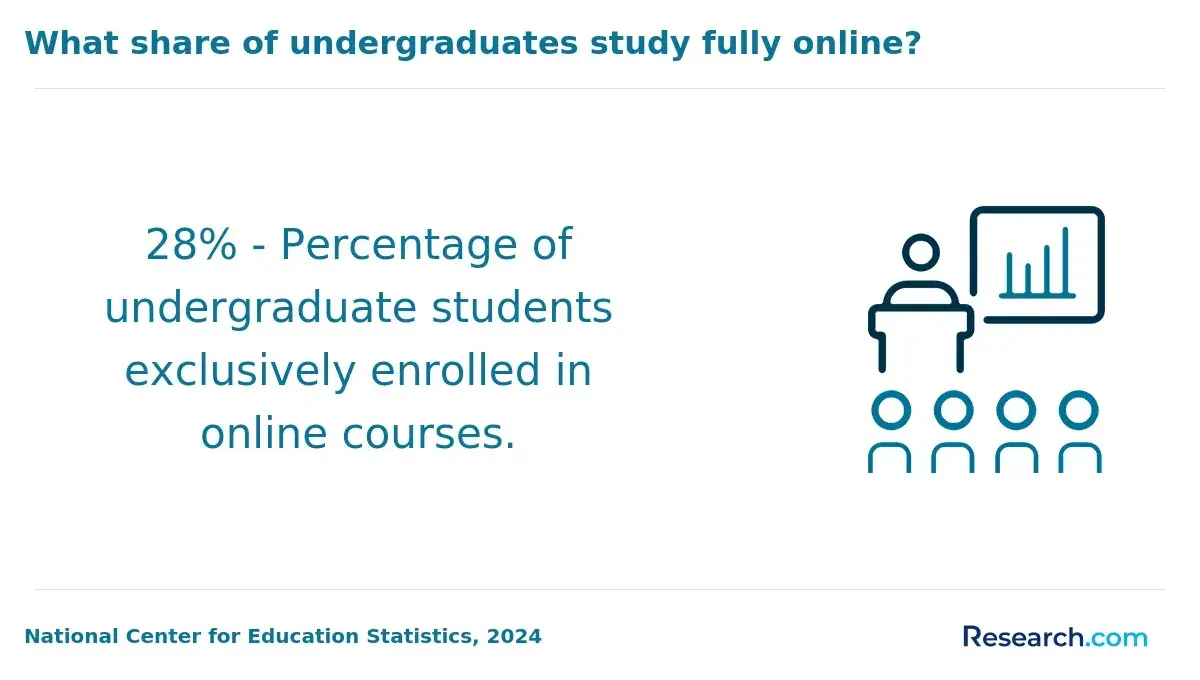
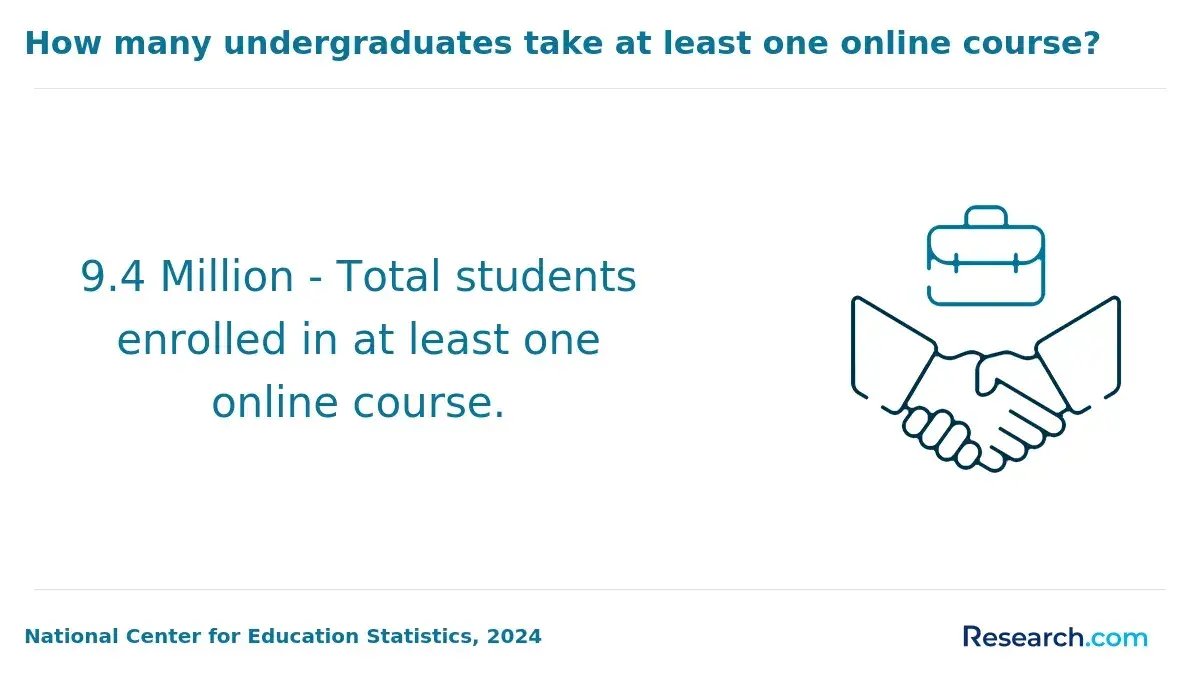
Choosing an accelerated bachelor's program is really a trade-off: you can move faster, but each course compresses more reading, assignments, and deadlines into half a traditional semester. NCES reported in 2024 that a majority of U.S. undergraduates took at least one distance education course in recent fall enrollment data, showing how normal flexible formats have become. This guide is for working adults, transfer students, military families, and career changers comparing 8-week bachelor's degrees. You'll learn which majors fit the format, how schedules work, what to check before enrolling, and how to judge value.
Key Things You Should Know
- Most 8-week bachelor's courses carry the same credit value as 15- or 16-week courses, so the main difference is pace, not academic level; students usually need 120 credits for a bachelor's degree.
- The strongest 8-week degree fits are majors with modular coursework, frequent start dates, and limited in-person lab or clinical requirements, such as business, IT, cybersecurity, psychology, criminal justice, and some education or healthcare administration tracks.
- Cost and credibility matter as much as speed: College Board's 2024-25 data lists average published tuition and fees at $11,610 for in-state public four-year colleges and $43,350 for private nonprofit four-year colleges, so transfer credit, aid, and accreditation can materially change ROI.
Top 10 Best Bachelor's Degrees With 8-Week Courses
Business Degrees
Business is one of the best fits for 8-week courses because topics such as accounting, management, marketing, finance, and business analytics can be divided into compact modules. It works especially well for students with work experience who can connect assignments to real workplace problems. A business degree can support paths in operations, sales, HR, entrepreneurship, or management. Students targeting CPA eligibility should check state accounting credit rules before choosing a general business program, because an accelerated format does not automatically satisfy licensure requirements.
Healthcare Degrees
Healthcare bachelor's degrees with 8-week courses are strongest in nonclinical fields such as healthcare administration, health sciences, public health, health information management, and long-term care leadership. They suit students who want healthcare careers without direct patient licensure. Programs may cover healthcare finance, ethics, policy, quality improvement, and informatics. Students seeking clinical roles should verify whether the degree includes required labs, practicums, state approvals, or professional accreditation, because administrative healthcare degrees and licensure-track clinical programs lead to different outcomes.
Information Technology Degrees
Information technology programs work well in 8-week formats because courses often focus on practical, discrete skills: networking, databases, cloud systems, systems administration, scripting, and IT project management. This degree is a good match for help desk workers, career changers, and students who want applied technology roles rather than theory-heavy computing. Look for programs that include hands-on labs, virtual environments, and preparation for recognized certifications. AI adoption is also changing IT work, so programs should include automation, security, and cloud operations.
Computer Science Degrees
Computer science can be completed through 8-week courses, but it is more demanding than many accelerated majors because programming, algorithms, discrete math, data structures, and software engineering require steady practice. It fits students who can study several times per week and tolerate abstract problem-solving. A strong program should include portfolio-building projects, version control, databases, and software design. Students who mainly want entry-level tech support may find IT more practical, while students targeting software development or graduate study may prefer computer science.
Cybersecurity Degrees
Cybersecurity is a strong accelerated option for students who like structured problem-solving, risk analysis, networks, and compliance. Courses often cover ethical hacking, incident response, digital forensics, governance, secure systems, and cloud security. The field changes quickly, so programs should update labs and tools regularly. Students should compare whether the curriculum aligns with certifications such as Security+, CySA+, or CISSP preparation, while remembering that certifications have their own experience requirements. Cybersecurity is especially suitable for IT professionals seeking advancement.
Psychology Degrees
Psychology degrees in 8-week terms suit students interested in human behavior, research, counseling foundations, HR, case management, user experience, or graduate school preparation. Coursework typically includes lifespan development, abnormal psychology, statistics, research methods, social psychology, and cognitive psychology. A bachelor's alone usually does not qualify graduates to become licensed counselors or psychologists, so students should treat it as a foundation for entry-level human services roles or graduate study. Strong programs include research literacy, writing, ethics, and applied projects.
Nursing Degrees
Nursing degrees with 8-week courses are most common in RN-to-BSN programs for licensed registered nurses. These programs often focus on leadership, community health, evidence-based practice, informatics, and population health rather than initial RN licensure. Pre-licensure nursing is harder to accelerate fully because clinical placements, simulation labs, and state board approval requirements shape the schedule. Students should confirm state authorization, clinical expectations, and programmatic accreditation before enrolling. For working RNs, the 8-week format can make upper-division BSN coursework more manageable.
Education Degrees
Education degrees can use 8-week academic courses, but teacher licensure programs still depend on field experiences, student teaching, state testing, and background checks. Accelerated coursework may cover classroom management, child development, assessment, literacy, special education, and instructional technology. This format fits paraprofessionals, substitute teachers, and career changers who can plan around school-based placements. Students should not assume an online or accelerated education degree leads to licensure in every state; they must verify state approval and reciprocity rules before enrolling.
Criminal Justice Degrees
Criminal justice is well suited to 8-week courses because subjects such as policing, courts, corrections, criminology, ethics, emergency management, and homeland security are commonly taught in modular formats. It fits law enforcement professionals, military-connected students, and those pursuing public safety, corrections, probation, or administrative roles. Students should remember that many sworn law enforcement jobs require academy training, physical standards, background checks, and local hiring processes in addition to a degree. Choose programs that emphasize writing, law, data, ethics, and community relations.
Engineering Degrees
Engineering is the most difficult category to compress into 8-week terms because calculus, physics, labs, design studios, and ABET-related requirements can be intensive. Some schools offer accelerated engineering technology, industrial technology, or engineering management options that are more flexible than traditional engineering degrees. Students seeking professional engineering licensure should be especially careful: an engineering technology or management degree may not meet the same expectations as an ABET-accredited engineering program. This path fits disciplined students with strong math preparation and realistic weekly study time.
What are 8-week bachelor's degree courses and how do accelerated terms work?
An 8-week bachelor's course is a compressed academic term in which students complete a standard college course in about half the time of a traditional semester. The course is not supposed to be "easier"; it usually carries the same 3-credit value, learning outcomes, assessments, and faculty expectations as a longer version.
The major difference is scheduling. Instead of taking four or five courses at once across a 15- or 16-week semester, students may take one or two courses per 8-week session. Many online colleges run multiple starts each year, which can help transfer students avoid waiting months to begin.
Here is a simple comparison of common term structures and what they mean for workload.
| Format | Typical course length | Common course load | Best fit |
| Traditional semester | 15 to 16 weeks | Four to five courses at once | Students who prefer more time between deadlines |
| 8-week accelerated term | About 8 weeks | One to two courses per session | Working adults who can focus on fewer subjects at a time |
| 6-week or shorter term | 6 weeks or less | Usually one course at a time | Highly disciplined students with open weekly schedules |
The key question is not whether 8-week courses are legitimate; accredited colleges use them widely. The key question is whether your schedule can support the intensity. A 3-credit accelerated course can require frequent logins, weekly writing, quizzes, discussion posts, projects, and exams with little room to recover from missed deadlines.
Which bachelor's majors are best suited for 8-week accelerated programs?
The best bachelor's majors for 8-week accelerated programs are those with courses that can be sequenced cleanly, assessed through projects or exams, and completed without extensive in-person labs. This does not mean hands-on fields are impossible, but they require more planning.
The table below summarizes how common majors typically fit the 8-week model so readers can match the format to their goals and study habits.
| Major area | Fit for 8-week terms | Why it may work | Main caution |
| Business | High | Courses are modular and career-applied | Accounting licensure rules may require specific credits |
| Information technology | High | Labs and projects can be delivered online | Students need consistent practice time |
| Cybersecurity | High | Skills align well with focused lab-based courses | Tools and curriculum must be current |
| Psychology | High | Reading, writing, and research courses fit online delivery | Licensure usually requires graduate education |
| Nursing RN-to-BSN | Moderate to high | Designed for licensed nurses completing BSN coursework | Pre-licensure nursing is much less flexible |
| Engineering | Lower to moderate | Some technology or management tracks fit | Labs, math sequence, and ABET expectations matter |
Students should choose an accelerated major when the course design matches the skill being learned. A writing-heavy psychology course may fit an 8-week calendar well; a calculus-based engineering sequence may be much harder if math is not already a strength.
How do online 8-week bachelor's programs compare to campus-based options?
Online 8-week bachelor's programs are often the most flexible option because students can complete weekly assignments around work, caregiving, or military schedules. Campus-based accelerated options may offer stronger face-to-face support, but they usually require commuting and fixed meeting times.
Students comparing formats should focus on learning support rather than assuming online is automatically easier. The best online programs provide accessible faculty, tutoring, library support, career services, proctored assessment options, and clear weekly calendars. Researching best online colleges can help students identify institutions that combine flexibility with recognized quality indicators.
The comparison below highlights the practical differences that matter most when choosing between online and campus-based 8-week options.
| Factor | Online 8-week program | Campus-based accelerated program |
| Schedule | Usually asynchronous or partly asynchronous | Often fixed class times |
| Commute | None for fully online courses | Required for class, labs, or meetings |
| Peer interaction | Discussion boards, group projects, video meetings | In-person discussion and campus activities |
| Hands-on requirements | May use virtual labs or local placements | May provide campus labs and supervised spaces |
| Best fit | Self-directed students needing flexibility | Students who learn better with in-person structure |
Online is usually better for adults who need control over study time. Campus may be better for students who rely on scheduled class meetings, immediate in-person feedback, or facilities that cannot be replicated virtually.
What accreditation and institutional quality standards should 8-week programs meet?
A reputable 8-week bachelor's program should meet the same accreditation expectations as any other bachelor's degree. Acceleration changes the calendar, not the need for recognized institutional quality, qualified faculty, appropriate credit hours, student support, and honest outcome information.
Start with institutional accreditation. In the U.S., students should verify that the college is accredited by an agency recognized by the U.S. Department of Education or the Council for Higher Education Accreditation. This matters for federal financial aid, transfer credit, employer recognition, and graduate school eligibility.
Some majors also need programmatic accreditation or state approval. Nursing, teacher education, engineering, social work, and certain healthcare fields can have specialized requirements. A student planning for licensure should confirm the program meets requirements in the state where they intend to work, not only where the school is located.
Before applying, students should check the following quality markers because they directly affect credibility and usability of the degree.
- Recognized institutional accreditation and clear public disclosure of accreditor status
- Programmatic accreditation or state approval when required for licensure or professional practice
- Transparent tuition, fees, refund policies, and financial aid information
- Published transfer credit policies, including limits on alternative credit and prior learning assessment
- Academic support designed for accelerated students, including tutoring, advising, and library access
- Faculty qualifications and curriculum that match the level of a bachelor's degree
How long does it take to finish a bachelor's with 8-week terms, and how is credit load structured?
A bachelor's degree typically requires about 120 credits. In an 8-week calendar, completion time depends less on the term length itself and more on how many credits you bring in, how many courses you take per session, and whether the school runs year-round starts.
The table below shows how credit load can affect a student's timeline. It is a planning example, not a promise, because transfer evaluations, prerequisite sequences, course availability, and personal schedule limits can change the result.
| Student profile | Credits remaining | Common 8-week load | General timeline pattern |
| First-time bachelor's student | About 120 credits | One to two courses per session | Often close to a traditional four-year path unless studying year-round |
| Associate degree transfer student | About 60 credits | One to two courses per session | May finish faster if credits apply cleanly to the major |
| Adult learner with mixed credits | Varies widely | Usually one course while working, sometimes two | Timeline depends heavily on transfer acceptance and pacing |
| Full-time accelerated student | Varies | Two courses per 8-week session | Can progress quickly but has a heavy weekly workload |
Many students underestimate the workload of taking two accelerated courses at once. A safer approach is to start with one 8-week course, assess weekly time demands, and then increase course load only if grades, work, and personal obligations remain manageable.
What do students study in 8-week bachelor's programs and how is coursework scheduled?
Students in 8-week bachelor's programs study the same broad categories found in standard bachelor's degrees: general education, major requirements, electives, and sometimes a capstone, practicum, internship, or field placement. The compressed calendar changes how quickly assignments arrive.
A typical 8-week online course may divide the subject into weekly modules. Each week can include readings, recorded lectures, discussions, quizzes, writing assignments, labs, case studies, or project milestones. Because deadlines are close together, students benefit from reviewing the full syllabus before the first week begins.
Use the following weekly rhythm to stay ahead in an accelerated course. The steps are simple, but they prevent the most common problem: discovering a major assignment too late.
- Read the syllabus and assignment calendar before the course opens or during the first day.
- Block recurring study times for reading, writing, quizzes, and discussion posts.
- Complete small assignments early in the week so larger projects do not crowd the weekend.
- Contact the instructor quickly if instructions, grading rubrics, or technology requirements are unclear.
- Save major papers, lab reports, or projects for a portfolio when they demonstrate career-relevant skills.
Accelerated courses reward consistency more than last-minute effort. Students who can study in shorter, frequent blocks often do better than those who try to complete a full week of work in one sitting.
What are typical admission requirements and transfer credit policies for 8-week bachelor's programs?
Admission requirements for 8-week bachelor's programs vary by school and student type. First-year applicants usually submit a high school transcript or GED documentation, while transfer students submit official college transcripts from every institution attended. Some online programs have test-optional policies, but selective or licensure-track programs may require additional materials.
Transfer credit can be the biggest time and cost factor. Students should ask for an unofficial or preliminary transfer review before committing, then compare how many credits apply to general education, electives, and the actual major. Credits that transfer only as electives may not shorten the path as much as expected.
Financial aid eligibility also depends on institutional participation, student eligibility, and enrollment status. Students comparing affordability should look beyond sticker price and review net price, fees, books, technology costs, and aid options; resources on cheapest online colleges that accept FAFSA near me can be useful for identifying lower-cost schools that may participate in federal aid programs.
Ask admissions advisors these questions before enrolling so you do not confuse "accepted credits" with "credits that actually accelerate graduation."
- How many of my prior credits apply directly to this bachelor's degree plan?
- Which credits apply to the major, and which apply only as electives?
- Is there a maximum number of transfer, community college, military, exam, or prior learning credits?
- Will changing majors after enrollment cause me to lose applied transfer credits?
- Are courses offered every 8-week session, or could prerequisites delay graduation?
- Will my enrollment load qualify for the financial aid amount I expect?
What careers and salaries can graduates of 8-week bachelor's degrees expect?
Career outcomes from an 8-week bachelor's degree depend on the major, prior experience, internships, location, licensure, employer expectations, and the student's ability to demonstrate skills. The accelerated format itself does not create a different occupation; the degree field and institution quality matter more.
The table below uses selected U.S. Bureau of Labor Statistics May 2024 wage data and 2024-34 projection categories for common roles connected to bachelor's-level pathways. These figures describe national occupational medians and outlooks, not guaranteed results for any graduate.
| Degree path | Related role | Typical responsibilities | National salary context |
| Business or accounting | Accountant or auditor | Prepare financial records, review compliance, analyze costs | Median annual pay was $81,680 in May 2024 |
| Healthcare administration | Medical and health services manager | Coordinate healthcare operations, budgets, teams, and quality initiatives | Median annual pay was $117,960 in May 2024 |
| Computer science | Software developer | Design, test, and improve software applications and systems | Median annual pay was $133,080 in May 2024 |
| Cybersecurity or IT | Information security analyst | Monitor systems, investigate threats, improve security controls | Median annual pay was $124,910 in May 2024 |
| Nursing RN-to-BSN | Registered nurse | Provide patient care, coordinate treatment, educate patients | Median annual pay was $93,600 in May 2024 |
Some bachelor's degrees are stepping stones to graduate or professional credentials. Psychology, education leadership, counseling, advanced nursing, public administration, and some business careers may require or reward further study. If graduate school is likely, compare affordable bachelor's options now and keep future borrowing in mind; students planning ahead can also review low cost masters degree online options before choosing an undergraduate path.
Students should evaluate ROI by comparing total cost, realistic job entry points, local employer demand, and whether the degree creates access to roles they could not reasonably pursue otherwise. A fast degree is only worthwhile if it is credible, affordable, and aligned with a specific career plan.
How can prospective students choose a reputable 8-week bachelor's program that fits their goals?
Choosing a reputable 8-week bachelor's program starts with fit. The right program should match your major, schedule, budget, transfer credits, licensure needs, and preferred learning style. The wrong program may still be accredited but poorly matched to your goals.
Use this practical sequence when comparing schools. It keeps the decision focused on evidence instead of advertising claims.
- Define the job or graduate program you want the degree to support.
- Confirm institutional accreditation through recognized accreditor listings.
- Check programmatic accreditation or state approval if your field involves licensure.
- Request a written transfer credit evaluation before enrolling.
- Calculate total cost after grants, scholarships, employer aid, military benefits, and fees.
- Review the course map to see whether required classes are offered often enough to support your timeline.
- Ask how online students access tutoring, advising, faculty, library resources, disability services, and career support.
- Take one accelerated course first if you are unsure about workload tolerance.
Military-connected students should also ask about deployment flexibility, residency rules, benefit processing, and support for dependents. Programs designed around mobile learners can be especially helpful, and resources on online degrees for military spouses can help families compare flexible options.
Common red flags include pressure to enroll immediately, unclear accreditation language, vague transfer promises, unusually limited faculty access, missing licensure disclosures, and degree plans that require courses offered only once per year. A trustworthy school should be able to explain costs, credits, timelines, and outcomes in writing.
Other Things You Should Know About
They are not necessarily harder in content, but they are faster. The same credit value is compressed into fewer weeks, so students need reliable weekly study time and strong deadline management.
Yes, especially if you transfer credits and study year-round. However, speed depends on credits accepted, course availability, prerequisites, financial aid enrollment rules, and how many courses you can handle at once.
Employers generally focus on the institution, accreditation, major, skills, experience, and job fit rather than term length. A degree from a properly accredited college is more important than whether courses were 8 weeks or 16 weeks.
Students who need long reading periods, have unpredictable schedules, struggle with self-directed learning, or are entering lab-heavy or licensure-heavy fields without flexibility should be cautious. Starting with one accelerated course can help test readiness.
References
- Jessup Playbooks: Transitioning to a 7-Week Course Schedule: Why 7-Week Courses? https://libguides.pvcc.edu/7-week-course-schedule/why-7-week-courses
- Increase Completion and Reduce Inequities https://www.amacad.org/publication/future-undergraduate-education/section/5
- 7 Reasons to Take DBUâs 8-Week Classes to Get a Degree https://www.dbu.edu/blog/7-reasons-to-take-dbus-8-week-classes-to-get-a-degree.html
- How does a college degree improve graduates’ employment and earnings potential? - APLU https://www.aplu.org/our-work/4-policy-and-advocacy/publicuvalues/employment-earnings/
- Best Online Colleges for Working Adults [2026] https://www.straighterline.com/blog/degree-completion-best-online-colleges-for-working-adults
- Average Cost of College [2025]: Yearly Tuition + Expenses https://educationdata.org/average-cost-of-college
- Easy Degrees That Pay Well https://www.citizensbank.com/student/articles/easy-degrees-that-pay-well.aspx
- Tuition & ROI | ACE https://ace.edu/tuition-and-admissions/tuition-details/
- The Most Popular College Majors https://www.onlineu.com/resources/college-planning/most-popular-college-majors
- Top Degrees in Demand for the Future: 2026 & Beyond https://skillifysolutions.com/blogs/career-growth/top-degrees-in-demand-for-the-future/