2027 Best Bachelor's Degree Programs for Career Growth

Co-Founder and Chief Data Scientist
Choosing a bachelor's degree is a career investment, not just an academic decision. The payoff depends on how well the program connects to hiring demand, licensure rules, skills, and advancement paths.
According to the U. S. Bureau of Labor Statistics, workers in occupations that typically require a bachelor's degree had a median weekly wage of $1,533 in 2024, higher than the median for associate-degree occupations. This guide helps first-time students, transfer students, and career changers compare degree options by salary potential, job outlook, flexibility, and practical fit.
Key Things You Should Know
- Technology, healthcare management, engineering, nursing, and business-related bachelor's degrees tend to offer the strongest combination of broad hiring demand, advancement pathways, and above-average wage potential.
- BLS 2024 data shows several bachelor's-level career paths with six-figure median wages, including computer and information systems managers, software developers, information security analysts, and medical and health services managers.
- The best program is not always the highest-ranked one; students should verify institutional accreditation, programmatic accreditation when required, transfer-credit rules, total cost, licensure alignment, and career placement support before enrolling.
Top 10 Best Bachelor's Degree Programs for Career Growth
Business Degrees
A bachelor's in business fits students who want flexible career options in management, finance, accounting, marketing, operations, or entrepreneurship. It is especially useful when paired with internships, analytics coursework, and industry software skills.
Business is less ideal for students who want a tightly defined technical role unless they choose a focused major such as accounting, supply chain management, or business analytics. BLS 2024 data lists accountants and auditors at a median annual wage of $81,680, making specialization important for stronger career growth.
Healthcare Degrees
Healthcare bachelor's degrees can lead to roles in health administration, public health, health informatics, laboratory science, or preparation for graduate clinical programs. They suit students who want mission-driven work but may not want bedside care.
Medical and health services managers had a BLS 2024 median annual wage of $117,960, but many leadership roles prefer healthcare experience. Before enrolling, confirm whether the program includes internships, compliance training, data systems, and any state-specific requirements tied to your target role.
Information Technology Degrees
Information technology degrees focus on applied systems: networks, databases, cloud platforms, help desk escalation, systems administration, and enterprise security. They are a strong fit for students who want practical technology careers without as much theory as computer science. IT programs are especially valuable when they include labs, certifications, and employer-aligned projects.
Career growth often depends on experience plus credentials, because employers commonly screen for hands-on ability with operating systems, cloud tools, ticketing platforms, and security frameworks.
Computer Science Degrees
A bachelor's in computer science is one of the strongest choices for students who enjoy programming, problem-solving, algorithms, software design, artificial intelligence, and data systems. Software developers had a BLS 2024 median annual wage of $133,080, reflecting strong demand for technical problem-solvers. The degree is rigorous, so students should expect math, coding projects, and continuous skill updates.
It is best for learners who can build portfolios, complete internships, and adapt as AI changes how software teams work.
Cybersecurity Degrees
Cybersecurity degrees prepare students for roles protecting networks, cloud systems, applications, and organizational data. They fit detail-oriented learners who can handle risk analysis, documentation, threat monitoring, and incident response.
Information security analysts had a BLS 2024 median annual wage of $124,910, and demand is supported by ransomware risk, cloud adoption, and regulatory pressure. Students should look for hands-on labs, security operations practice, and alignment with certifications such as Security+, CySA+, or CISSP experience pathways.
Psychology Degrees
A psychology bachelor's degree builds skills in human behavior, research methods, communication, and data interpretation. It can support entry-level work in human services, case management, HR, market research, behavioral health support, and user experience research.
Students should know that licensed psychologist roles usually require graduate education and supervised practice. This degree is a better career-growth choice when paired with statistics, internships, applied research, or a clear plan for counseling, social work, industrial-organizational psychology, or graduate study.
Nursing Degrees
A Bachelor of Science in Nursing prepares students for RN licensure and clinical practice, usually through classroom study, simulation labs, supervised clinical hours, and the NCLEX-RN exam.
Registered nurses had a BLS 2024 median annual wage of $93,600, with demand tied to healthcare access and an aging population. Nursing is a strong choice for students who want direct patient care and clear licensure-based employment pathways. It is not ideal for those who cannot meet clinical scheduling, background check, or state board requirements.
Education Degrees
Education bachelor's degrees prepare students for teaching, curriculum support, special education, early childhood roles, or education technology. The best program depends heavily on state licensure alignment, student-teaching placement quality, and endorsement options.
Teaching can provide stable public-service career paths, but salaries and demand vary by state, district, subject, and grade level. Students seeking stronger job flexibility may consider high-need areas such as special education, STEM teaching, bilingual education, or instructional design coursework.
Criminal Justice Degrees
A criminal justice bachelor's degree covers policing, courts, corrections, criminology, public policy, ethics, and investigations. It fits students interested in law enforcement, probation, homeland security, victim advocacy, compliance, or public administration.
Some roles require academy training, background checks, fitness standards, or federal hiring processes beyond the degree. Students should compare programs for internships, writing-intensive coursework, data analysis, and legal foundations, because advancement often depends on communication skills, leadership readiness, and agency-specific requirements.
Engineering Degrees
Engineering degrees are among the strongest options for students who like math, design, systems, and solving physical or technical problems. Common majors include mechanical, civil, electrical, industrial, chemical, and computer engineering.
Civil engineers had a BLS 2024 median annual wage of $99,590, but outcomes vary by discipline and licensure. Students should prioritize ABET-accredited programs, co-ops, labs, and preparation for the Fundamentals of Engineering exam if they want a professional engineering license later.
Which bachelor's degrees lead to the highest-paying careers?
The highest-paying bachelor's degree paths usually combine specialized technical knowledge, measurable business impact, and experience-based advancement. A bachelor's degree can open the door, but salary outcomes depend on location, employer, internships, certifications, graduate education, and the student's portfolio or clinical preparation.
The table below compares common bachelor's degree pathways with BLS 2024 median wage data for related roles. Use it as a directional ROI tool, not as a guarantee of what any individual graduate will earn.
| Degree pathway | Related career example | BLS 2024 median annual wage | Career-growth note |
| Computer science | Software developer | $133,080 | Strong for students who build coding portfolios and complete internships. |
| Cybersecurity or IT | Information security analyst | $124,910 | Often strengthened by certifications, labs, and security operations experience. |
| Healthcare administration | Medical and health services manager | $117,960 | Leadership roles often require healthcare experience in addition to the degree. |
| Engineering | Civil engineer | $99,590 | Licensure and ABET accreditation can matter for long-term advancement. |
| Nursing | Registered nurse | $93,600 | Requires state RN licensure and clinical training, with advancement possible through specialization. |
| Business or accounting | Accountant or auditor | $81,680 | CPA eligibility, analytics skills, and internships can improve competitiveness. |
The best-paying bachelor's degrees are usually not "easy" degrees. They often require quantitative coursework, clinical hours, coding practice, licensure exams, or demanding internships. If your goal is income growth, compare the curriculum against job postings in your target region before choosing a major.
Which bachelor's degrees have the strongest job outlook?
The strongest job outlook is concentrated in fields where employers face long-term demand: cybersecurity, healthcare management, software development, data analysis, and some clinical health roles. AI is changing tasks in many of these areas, but it is also increasing demand for workers who can manage systems, interpret data, secure information, and apply technology responsibly.
The table below summarizes selected BLS 2024-2034 employment projections for bachelor's-level or bachelor's-accessible career paths. These projections describe national labor-market direction, so students should still check state and regional hiring conditions.
| Career path | Common bachelor's degree | Projected job growth | Why demand is strong |
| Information security analyst | Cybersecurity, IT, computer science | 29% | Organizations need stronger protection against data breaches, ransomware, and cloud-security risks. |
| Medical and health services manager | Healthcare administration, health informatics, business | 23% | Healthcare systems need managers who can handle operations, compliance, staffing, and digital records. |
| Data scientist | Computer science, statistics, data analytics | 34% | Employers need workers who can turn large data sets into decisions and responsible AI workflows. |
| Software developer | Computer science, software engineering | 15% | Businesses continue to need custom software, automation, mobile tools, and cloud-based applications. |
| Registered nurse | Nursing | 5% | Demand is supported by patient-care needs, retirements, and healthcare access pressures. |
A strong outlook does not remove competition. Students can improve their odds by completing internships, choosing capstone projects that solve real problems, developing communication skills, and keeping proof of work such as code repositories, clinical competencies, case studies, or project portfolios.
Which bachelor's degrees are best for career changers?
The best bachelor's degrees for career changers are usually practical, transfer-friendly, and connected to clearly defined entry-level roles. Good options include information technology, cybersecurity, nursing, healthcare administration, business analytics, accounting, and education, depending on prior credits and work experience.
Career changers should compare programs differently from first-time students because time, cost, and opportunity cost matter more. Use the steps below to narrow your choices before applying.
- Start with target job titles, not majors, and review current job postings to see which degrees, tools, certifications, and experience employers request.
- Ask each school for an unofficial transfer-credit review before applying so you can estimate remaining credits, cost, and completion time.
- Prioritize programs with internship alternatives, portfolio projects, clinical placements, or employer partnerships if you cannot leave your current job.
- Compare total cost after grants, transfer credits, employer tuition assistance, fees, books, and lost work hours rather than tuition alone.
- Avoid programs that cannot explain graduate outcomes, licensure alignment, accreditation, or how online students access advising and career services.
Career changers who need a faster credential before committing to a four-year program may also compare easiest online degrees that pay well, especially if they want a lower-risk way to test a new field.
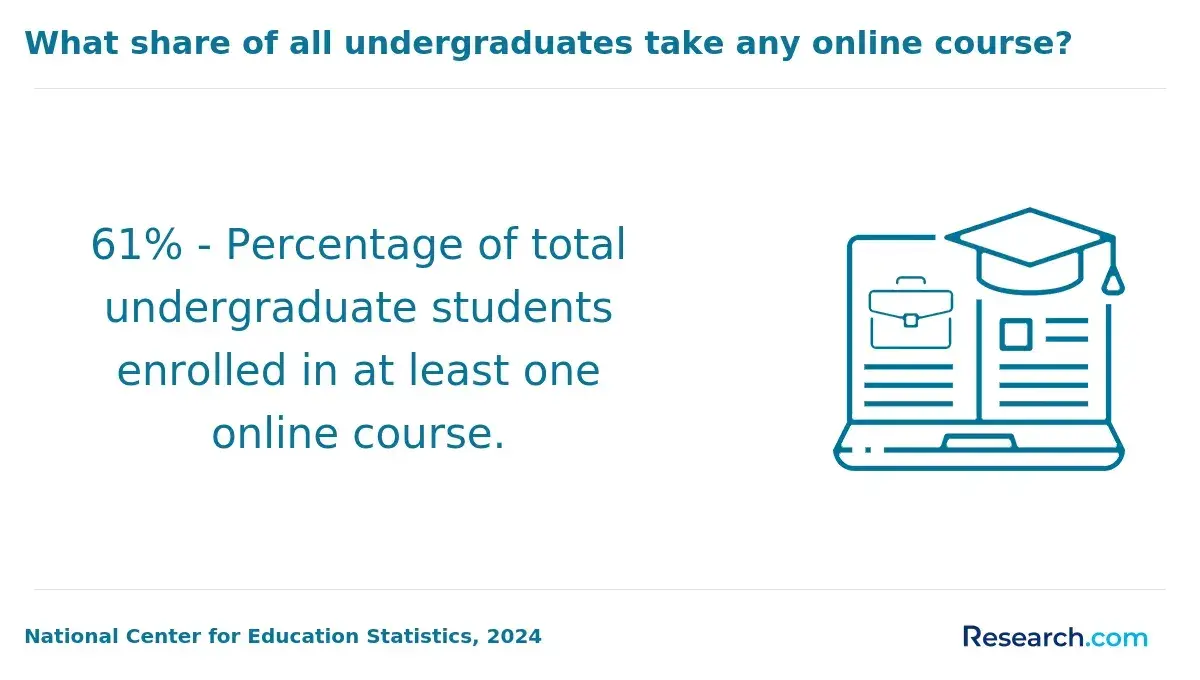
How do online and campus bachelor's programs compare?
Online and campus bachelor's programs can lead to the same credential when they are offered by accredited institutions, but the learning experience can be very different. The better format depends on your schedule, major, support needs, and whether your field requires labs, clinicals, student teaching, or supervised placements.
The table below compares practical differences that affect completion, cost, and career readiness. Use it to identify which format fits your life rather than assuming one is automatically better.
| Factor | Online bachelor's program | Campus bachelor's program |
| Best fit | Working adults, caregivers, military learners, and transfer students needing flexibility | Students who want face-to-face learning, campus activities, labs, and in-person networking |
| Schedule | Often asynchronous or evening-friendly, though deadlines still apply | Usually fixed class times with more structured weekly routines |
| Hands-on requirements | May require local clinicals, practicums, student teaching, labs, or short residencies | Often easier access to labs, campus facilities, and faculty-led projects |
| Cost considerations | May reduce commuting and housing costs, but technology and distance-learning fees can apply | May include housing, transportation, parking, meal plans, and campus fees |
| Career support | Quality varies; students should confirm virtual advising, internship help, and employer events | More likely to include in-person fairs, clubs, labs, and local employer connections |
Online programs work best for disciplined students who can manage deadlines without frequent in-person reminders. Campus programs may be better for students who need structured routines, peer accountability, or extensive hands-on facilities.
What accreditation should a bachelor's program have?
Accreditation is one of the most important checks before choosing a bachelor's program. At minimum, the college should hold institutional accreditation from an agency recognized by the U.S. Department of Education or the Council for Higher Education Accreditation. Without proper accreditation, credits may not transfer, graduate schools may reject the degree, and financial aid eligibility may be limited.
Some majors also need programmatic accreditation or approval because employers, licensing boards, or graduate programs rely on it. These are common examples to verify before enrolling.
- Engineering: ABET accreditation is important for many engineering disciplines and professional licensure pathways.
- Nursing: state board approval and nursing accreditation can affect eligibility for the NCLEX-RN and later graduate study.
- Education: state educator preparation approval is essential for teacher licensure in public schools.
- Business and accounting: AACSB, ACBSP, or IACBE accreditation can signal program quality, though CPA eligibility depends on state accounting-board rules.
- Public health, social work, and clinical fields: programmatic accreditation may matter for graduate study, licensure, or employer preference.
A common mistake is assuming that a school's general accreditation means every major meets licensure requirements. Always check the exact program, state, and credential you plan to pursue.
What admission requirements do bachelor's programs usually need?
Bachelor's admission requirements vary by school, selectivity, transfer status, and major. Open-access and adult-focused programs may emphasize transcripts and placement readiness, while selective universities may review GPA, course rigor, essays, recommendations, activities, and major prerequisites.
Most applicants should prepare the following materials early so they can compare schools without delaying financial aid or transfer evaluations.
- Official high school transcript, GED documentation, or college transcripts for transfer applicants.
- Minimum GPA or prerequisite coursework, especially for nursing, engineering, education, and computer science programs.
- Standardized test scores if required, although many colleges remain test-optional.
- Personal statement, resume, or short essays for selective or cohort-based programs.
- Letters of recommendation when required for competitive admissions, honors programs, or certain scholarships.
- FAFSA submission and any school-specific financial aid forms before priority deadlines.
Some majors have a second admission step after general university admission. Nursing, education, engineering, and business programs may require prerequisite grades, background checks, clinical documentation, portfolios, or separate departmental review.
How long do bachelor's degree programs take to complete?
A bachelor's degree usually requires about 120 semester credits, but completion time depends on enrollment intensity, transfer credits, course availability, and required fieldwork. Full-time students often plan for about four academic years, while adult learners may choose part-time or accelerated formats.
The table below shows common completion scenarios. It helps you estimate timeline realistically before comparing tuition and financial aid packages.
| Student situation | Typical timeline | What affects the timeline most |
| First-time full-time student | About 4 years | Credit load, major sequencing, advising quality, and course availability |
| Part-time working student | 5 to 6 years or more | Work schedule, number of courses per term, and year-round enrollment options |
| Transfer student with prior credits | 2 to 3 years in many cases | How many credits apply to the major, not just how many credits were earned |
| Accelerated online student | Less than 4 years when enough credits transfer | Short terms, competency-based pacing, transfer policies, and self-discipline |
| Clinical or licensure-track student | Often fixed by cohort schedules | Clinical placements, student teaching, labs, background checks, and state requirements |
If you are not ready for a full bachelor's program, starting with an associate degree online can sometimes reduce cost and create a transfer pathway, but only if credits are accepted by the bachelor's program you want.
What careers can you get with a bachelor's degree?
A bachelor's degree can lead to careers in business, technology, healthcare, education, public service, engineering, science, communications, and social services. The strongest outcomes usually come from matching the major to a target career path, gaining experience before graduation, and choosing electives that build in-demand skills.
The table below groups common bachelor's degree outcomes by career area. It is designed to help you connect majors with real entry points and advancement possibilities.
| Career area | Possible entry-level roles | Common advancement path |
| Business | Business analyst, account coordinator, junior accountant, operations assistant | Manager, finance analyst, controller, project manager, operations director |
| Technology | Help desk analyst, junior developer, systems support specialist, security analyst trainee | Software engineer, cloud administrator, security engineer, IT manager |
| Healthcare | RN, health services coordinator, public health associate, medical records analyst | Nurse manager, healthcare administrator, clinical specialist, informatics analyst |
| Education | Teacher, instructional aide with licensure track, curriculum assistant | Lead teacher, instructional coach, administrator, curriculum specialist |
| Criminal justice and public service | Probation assistant, caseworker, law enforcement trainee, compliance assistant | Investigator, supervisor, policy analyst, emergency management specialist |
| Psychology and social services | Case manager, behavioral health technician, HR assistant, research assistant | Counselor or psychologist with graduate education, HR manager, research coordinator |
Some career paths require graduate school for full professional practice. If your long-term goal includes management, counseling, advanced analytics, healthcare leadership, or education administration, compare future costs early; some students later use affordable online master's programs to advance without leaving the workforce.
Which certifications or licenses may your degree require?
Some bachelor's degrees lead directly to jobs, while others require a certification, license, exam, supervised experience, or graduate degree. Requirements vary by state, employer, and profession, so students should confirm rules with the relevant licensing board before choosing a program.
These examples show where a bachelor's degree may need to be paired with an additional credential or approval step.
- Nursing: RN licensure requires completing an approved nursing program and passing the NCLEX-RN.
- Teaching: public school teachers generally need completion of a state-approved educator preparation program, student teaching, and state licensure exams.
- Engineering: professional engineering licensure typically starts with an ABET-accredited degree and the Fundamentals of Engineering exam, followed by experience and the PE exam.
- Accounting: CPA eligibility usually requires specific accounting coursework and often 150 semester credits, depending on the state.
- Cybersecurity and IT: certifications such as CompTIA Security+, Network+, AWS, Azure, CISSP, or Cisco credentials may strengthen employability, though requirements vary by role.
- Psychology and counseling: independent clinical practice usually requires graduate education, supervised hours, and state licensure.
If you need a faster skills signal while working toward a degree, compare short certificate programs that pay well, but make sure the certificate is recognized by employers in your target field.
Other Things You Should Know About
There is no single best degree for every student. Computer science, cybersecurity, nursing, healthcare administration, engineering, and specialized business degrees often provide strong career growth because they connect to clear labor-market demand and advancement pathways.
It can be worth it when the program is accredited, reasonably priced, aligned with a target career, and supported by internships or practical experience. It may not be worth the cost if the program has weak career outcomes, poor transfer policies, or no connection to your goals.
An online bachelor's degree can be a good choice if you need flexibility and the school is properly accredited. Before enrolling, confirm how exams, labs, clinicals, advising, internships, and career services work for online students.
The fastest path is usually to transfer previous credits, enroll year-round, choose an accelerated or competency-based format, and avoid changing majors. However, licensure programs such as nursing, education, and engineering may have fixed sequences that limit acceleration.
References
- Career earnings by college major - The Hamilton Project https://www.hamiltonproject.org/data/career-earnings-by-college-major/
- Top Degrees in Demand for the Future: 2026 & Beyond https://skillifysolutions.com/blogs/career-growth/top-degrees-in-demand-for-the-future/
- Is College Worth It? - Public Policy Institute of California https://www.ppic.org/publication/is-college-worth-it/
- Soft Skills vs Hard Skills: What Matters Most to Employers https://www.ue-amsterdam.com/blog/soft-skills-vs-hard-skills-what-employers-look-for-in-students
- Alma Career – A better world of work for everyone https://www.almacareer.com/blog/how-does-a-university-degree-influence-pay
- How to Improve Your Soft Skills | University of Phoenix https://www.phoenix.edu/blog/how-to-improve-soft-skills.html
- Unemployment rate for college graduates: Key statistics [2025] https://www.wooclap.com/en/blog/unemployment-rate-for-college-graduates/
- How Changing College Majors Are Reshaping the Future Workforce — The Burning Glass Institute https://www.burningglassinstitute.org/bginsights/how-changing-college-majors-are-reshaping-the-future-workforce
- The Labor Market for Recent College Graduates https://www.newyorkfed.org/research/college-labor-market
- How does a college degree improve graduates’ employment and earnings potential? - APLU https://www.aplu.org/our-work/4-policy-and-advocacy/publicuvalues/employment-earnings/