2027 Best Online Undergraduate Degrees for Students With Some College Credit

Co-Founder and Chief Data Scientist
Finishing a bachelor's degree online can turn previously earned credits into a credential with stronger career value. National Student Clearinghouse Research Center reporting published in 2024 identified more than 36 million working-age adults with some college and no credential, making degree completion a major workforce and affordability issue.
This guide is for returning students comparing online undergraduate degrees, transfer policies, cost, timelines, accreditation, and career outcomes. You will learn which majors tend to work best with existing credits and how to choose a program without wasting time or money.
Key Things You Should Know
- Many online bachelor's completion programs accept about 60 to 90 transfer credits, but the credits that actually apply depend on grade minimums, age limits, course equivalency, residency rules, and the major you choose.
- Federal Student Aid listed the maximum Pell Grant at $7,395 for the 2024-25 award year, so returning students should compare net price after grants, employer tuition benefits, and transfer-credit savings rather than tuition alone.
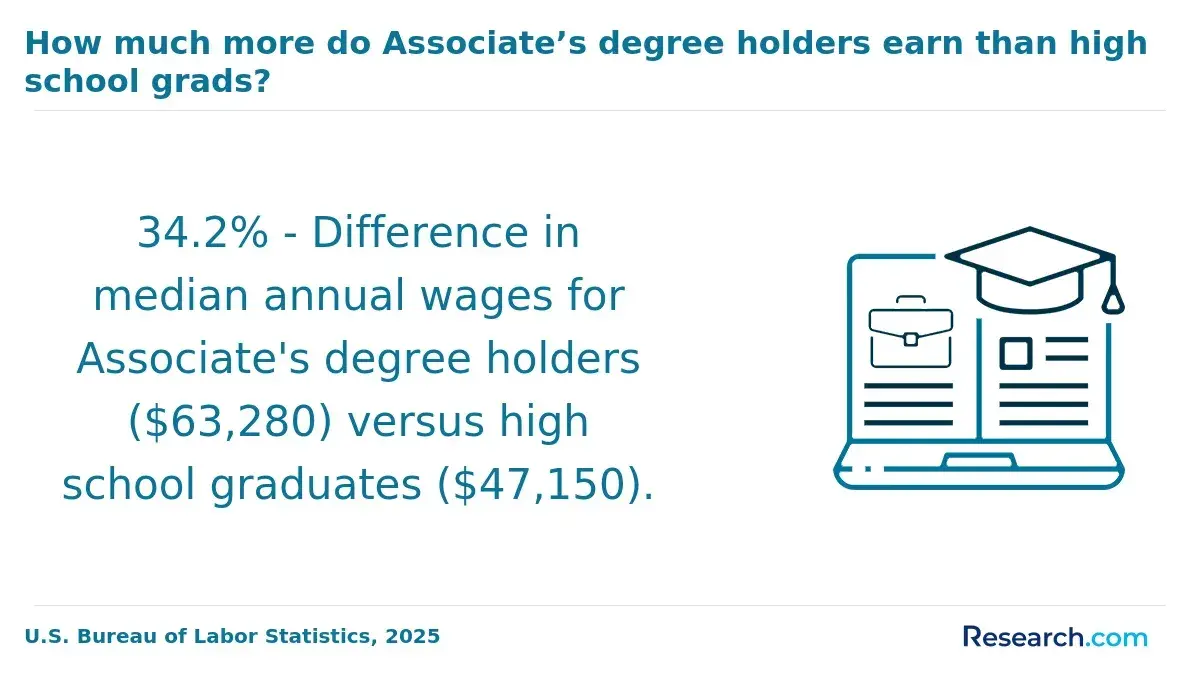
- BLS education-pay data published in 2024 showed bachelor's degree holders had median weekly earnings of $1,493 in 2023, compared with $899 for high school graduates, but salary outcomes still vary by major, occupation, location, and experience.
Top 10 2026 Best Online Undergraduate Degrees for Students With Some College Credit
Business Degrees
Business is often one of the best online bachelor's completion choices because general education, accounting, economics, communication, and management credits usually transfer well. It fits students targeting operations, sales, human resources, project coordination, banking, or entrepreneurship. Choose a concentration only if it supports your goal; accounting, finance, supply chain, and analytics can be more career-specific than general management. Avoid this path if you need a licensed profession unrelated to business or if the program lacks applied projects, internship options, or employer-recognized accreditation signals.
Healthcare Degrees
Online healthcare degrees work well for students with prior science, allied health, or administrative credits who want roles in healthcare management, public health, health informatics, or community health. They are usually not the same as clinical licensure programs, so read the career outcomes carefully. This path is strongest for medical assistants, coders, military medics, or administrative staff seeking advancement. It may be a poor fit if your goal is nursing, radiology, respiratory therapy, or another licensed role that requires specific clinical placements.
Information Technology Degrees
Information technology completion programs are practical for students who already have credits in networking, programming, databases, or computer applications. IT degrees usually emphasize systems administration, cloud platforms, technical support, project management, and business technology rather than deep software theory. They fit working adults who want flexible, job-aligned coursework and may already hold certifications such as CompTIA, Cisco, Microsoft, or AWS. Check whether the school grants credit for certifications, because that can shorten the path to graduation.
Computer Science Degrees
Computer science is a strong option for students aiming at software development, data engineering, AI-related work, or graduate study. It is usually more math- and theory-heavy than IT, with courses in algorithms, data structures, programming languages, discrete math, and systems. Transfer students should confirm whether older programming credits still count, because some schools limit outdated technical coursework. Choose CS if you enjoy problem-solving and coding; consider IT or information systems if you prefer implementation, support, or business technology roles.
Cybersecurity Degrees
Cybersecurity degrees are built for students interested in protecting networks, investigating incidents, managing risk, and supporting compliance. Prior IT, criminal justice, military, or networking credits may transfer well, but technical prerequisites matter. Look for hands-on labs, virtual cyber ranges, cloud security content, and preparation for certifications such as Security+, CySA+, or CISSP later in your career. This path is less ideal if you dislike continuous learning, because threats, tools, and employer expectations change quickly.
Psychology Degrees
Psychology is transfer-friendly because many social science, statistics, biology, and general education courses can apply. It suits students interested in human behavior, case management, human services, research support, market research, HR, or graduate school. Be realistic about licensure: becoming a psychologist, counselor, or therapist usually requires graduate education and supervised clinical hours. For students who want an immediate employment boost, psychology often works best when paired with internships, data skills, social services experience, or a minor in business or criminal justice.
Nursing Degrees
Online nursing completion programs are usually designed for licensed registered nurses pursuing an RN-to-BSN. They can be excellent for nurses who already completed clinical training through an associate degree or diploma program. Courses often cover leadership, community health, evidence-based practice, informatics, and quality improvement. Students without RN licensure should be cautious: fully online pre-licensure nursing options are limited because state-approved clinical hours are required. Always verify state board approval, clinical expectations, and whether the program matches your license status.
Education Degrees
Education degrees can help paraprofessionals, substitute teachers, childcare workers, and career changers move toward classroom, training, or child development roles. Licensure-focused programs must meet state requirements, including fieldwork or student teaching, so online does not mean entirely remote. Non-licensure education degrees may fit corporate training, tutoring, youth programming, or education support roles, but they may not qualify you to teach in public schools. Match the program to your state, grade level, and subject area before enrolling.
Criminal Justice Degrees
Criminal justice completion degrees are common among students with prior credits in law enforcement, corrections, sociology, psychology, military training, or public administration. They can support careers in policing, probation, courts, security management, victim advocacy, compliance, or federal service. The degree is most valuable when paired with communication skills, report writing, ethics, data analysis, and agency experience. Check whether academy training, military coursework, or professional certifications can be evaluated for credit, but do not assume every employer requires the degree for entry-level roles.
Engineering Degrees
Engineering completion programs are less common online because labs, sequencing, and accreditation requirements are more rigid. They can still work for students with strong math, physics, and lower-division engineering credits who can meet any in-person lab or proctored exam expectations. ABET accreditation is especially important for many engineering paths and future licensure. If your credits are mostly general education, engineering may take longer than business, IT, or liberal studies because prerequisites must be completed in a strict order.
What makes an online bachelor's completion program a good fit for returning students?
A good online bachelor's completion program is built around the reality that returning students already have credits, jobs, family responsibilities, and a limited budget. The best fit is not always the fastest program; it is the program that applies the most credits toward a credential that supports your actual career goal.
The table below summarizes the features that matter most when comparing completion programs. Use it to separate genuinely transfer-friendly programs from programs that only advertise flexibility.
| Feature | Why it matters | What to look for |
| Generous transfer policy | More accepted credits can reduce cost and time. | Clear maximum transfer credits, course equivalency tools, and written degree audits. |
| Adult-student scheduling | Working students often need predictable pacing. | Asynchronous classes, evening support, multiple start dates, and part-time options. |
| Career-aligned major | A fast degree is less useful if it does not support your goal. | Relevant concentrations, projects, internships, clinicals, or certification alignment. |
| Transparent total cost | Tuition is only one part of affordability. | Published fees, technology costs, transfer-credit savings, and financial aid estimates. |
| Strong student support | Returning students benefit from proactive advising. | Dedicated transfer advisors, tutoring, career services, and graduation planning. |
Common red flags include vague transfer answers, pressure to enroll before receiving a credit evaluation, unclear accreditation language, and programs that promise specific salaries. Ask for everything important in writing before committing.
How do online degree completion programs work for students with transfer or prior credits?
Online degree completion programs evaluate your prior college work and decide how it applies to the new degree. Credits may transfer as general education, electives, prerequisites, or major requirements. The same transcript can produce different results at different schools, so a written degree audit is more useful than a verbal estimate.
These are the usual steps for students entering with transfer or prior credits:
- Request official transcripts from every college previously attended, including schools where you completed only one course.
- Ask each prospective program for a preliminary transfer evaluation before enrolling whenever possible.
- Compare how many credits apply to graduation requirements, not just how many credits are accepted by the institution.
- Check residency rules, because many schools require a minimum number of credits to be completed through them.
- Confirm whether exams, military training, workplace learning, or industry certifications can be reviewed for additional credit.
The table below explains common credit categories. This matters because "accepted" credits do not always shorten your degree if they only count as excess electives.
| Credit type | How it may apply | Potential limitation |
| General education | English, math, humanities, science, and social science requirements. | Some programs require specific courses, not just broad categories. |
| Major coursework | Courses directly tied to your chosen field. | Older technical or science credits may expire or need review. |
| Free electives | Credits that count toward the total needed for graduation. | Helpful only if you still need elective credits. |
| Prior learning | Military, exams, portfolios, or professional certifications. | Policies vary widely and may include evaluation fees. |
How can you tell if an online bachelor's completion program is properly accredited?
Proper accreditation is one of the most important safeguards for online bachelor's completion students. In the U.S., start with institutional accreditation from an agency recognized by the U.S. Department of Education or the Council for Higher Education Accreditation. This affects financial aid eligibility, credit transfer, graduate school options, and employer recognition.
Some majors also need programmatic accreditation or state approval. Nursing, education, engineering, social work, counseling-related pathways, and certain healthcare programs often have extra requirements that can affect licensure or certification eligibility.
Use this checklist before applying:
- Confirm the school's institutional accreditation in official federal or accreditor databases, not only on the school's marketing pages.
- For licensure fields, verify that the program meets requirements in the state where you plan to work.
- Ask whether online students receive the same diploma and transcript designation as campus students.
- Review complaints, teach-out history, transfer agreements, and graduation support if the school is unfamiliar.
- Be wary of schools that use terms such as "licensed," "authorized," or "internationally accredited" as substitutes for recognized U.S. accreditation.
If a program cannot clearly explain its accreditation status, transferability, and licensure alignment, keep looking.
Which online majors are best for maximizing existing college credits toward graduation?
The best online major for maximizing existing credits is usually one that accepts broad general education and elective coursework while still leading to a useful career path. Highly sequential majors can still be worthwhile, but they may require more new coursework even if you have many credits.
The table below compares common completion-friendly majors by transfer flexibility and career specificity. Use it to decide whether speed, professional alignment, or graduate-school preparation matters most.
| Major type | Transfer-credit flexibility | Best fit | Trade-off |
| Business administration | High | Students with mixed credits seeking broad career mobility. | May need a concentration to stand out. |
| Interdisciplinary or liberal studies | Very high | Students with many unrelated credits who need the fastest legitimate completion route. | Career path may be less direct without experience or a focused minor. |
| Information technology | Moderate to high | Students with technical credits, certifications, or IT experience. | Outdated technology credits may not apply to major requirements. |
| Psychology | High | Students interested in human services, HR, research support, or graduate school. | Clinical careers usually require graduate education. |
| Nursing RN-to-BSN | High for licensed RNs | Registered nurses with an associate degree or diploma. | Not designed for students without RN licensure. |
| Engineering | Low to moderate | Students with the correct math, science, and engineering sequence already completed. | Rigid prerequisites can extend time to graduation. |
If your long-term goal requires doctoral study, such as academia, advanced psychology research, or some leadership tracks, compare undergraduate affordability with future graduate costs; a guide to cheapest PhD programs can help you think beyond the bachelor's degree.
What admission requirements do online degree completion programs have for students with some college?
Admission requirements for online bachelor's completion programs are usually more flexible than first-year admission, but they are not automatic. Schools want to know whether you are academically eligible, whether your prior credits are transferable, and whether the program matches your preparation.
Expect most programs to ask for the following materials:
- Official transcripts from all previously attended colleges, even if the grades were low or the credits seem unrelated.
- A minimum college GPA, often with conditional admission options for students below the standard threshold.
- Proof of high school completion or GED if you have limited college credit.
- A completed application and, in some cases, a personal statement, resume, or advising interview.
- Program-specific requirements such as RN licensure, prerequisite courses, background checks, or field-placement eligibility.
Application costs can add up if you are comparing several schools, so students who want to keep the search affordable may start with colleges with no application fee before expanding their list.
Do not hide prior enrollment. Schools require full academic history, and omitted transcripts can delay admission, financial aid, or graduation clearance.
How long does it typically take and how much does it cost to finish an online bachelor's?
The time to finish depends mainly on how many credits transfer into your degree plan and whether you study full time or part time. A student entering with about two years of applicable credit may finish in roughly one to three years, while a student with many non-applicable credits may need longer.
Cost is equally variable. College Board's 2024 Trends in College Pricing reported average published in-state tuition and fees of $11,610 at public four-year institutions for 2024-25, but online completion students should focus on net cost after transfer credits, grants, employer assistance, and fees. If affordability is your main filter, comparing what are the cheapest online colleges can help you build a lower-cost shortlist.
The table below shows the main factors that change your timeline and total price. Use it to compare programs beyond the advertised per-credit rate.
| Factor | Effect on time | Effect on cost |
| Applicable transfer credits | Can reduce required courses substantially. | Usually the biggest source of savings. |
| Residency requirement | May require a minimum number of credits at the new school. | Can limit how much transfer credit lowers tuition. |
| Course availability | Missing prerequisites or infrequent course rotations can delay graduation. | Extra terms may add fees and living costs. |
| Enrollment pace | Full-time study is faster; part-time study is easier to balance with work. | Part-time study may spread costs out but extend fee exposure. |
| Prior learning credit | May replace courses if approved. | Can save tuition, though assessment fees may apply. |
What courses and learning formats can you expect in online bachelor's completion programs?
Online bachelor's completion programs typically combine general education, major courses, electives, and a capstone or applied project. The format may be fully online, hybrid, accelerated, competency-based, or cohort-based. The best option depends on your schedule, learning style, and need for structure.
The table below compares common online formats. This helps you avoid choosing a program that is flexible in name but not in daily practice.
| Format | How it works | Best for |
| Asynchronous courses | Students complete weekly work without set class meeting times. | Working adults with changing schedules. |
| Synchronous courses | Students attend live online sessions at scheduled times. | Learners who want real-time interaction and accountability. |
| Accelerated terms | Courses run in shorter sessions, often with multiple starts per year. | Students who can manage a faster workload. |
| Competency-based education | Students progress by demonstrating mastery of required skills. | Experienced adults who can move quickly through familiar material. |
| Hybrid or low-residency programs | Online coursework is paired with limited in-person labs, intensives, or fieldwork. | Majors with clinical, teaching, lab, or practice requirements. |
Current online programs increasingly include AI tools, data dashboards, virtual labs, simulation software, and proctored assessments. Ask whether AI use is permitted, restricted, or integrated into assignments, because academic integrity policies now vary significantly by school and course.
What careers and entry-level roles can online bachelor's completion graduates pursue?
Online bachelor's completion graduates can pursue many of the same entry-level and advancement roles as campus graduates, assuming the school is accredited and the program fits the field. The degree is often most valuable when it combines prior work experience with a credential that removes a promotion barrier.
The table below connects common online completion majors with possible roles. These are not guaranteed outcomes, but they show how different degrees align with the labor market.
| Degree area | Possible entry-level or advancement roles | What employers often value |
| Business | Operations coordinator, HR assistant, sales manager trainee, project coordinator. | Communication, Excel, analytics, budgeting, leadership, and process improvement. |
| Healthcare administration | Clinic coordinator, health services supervisor, patient access manager. | Healthcare workflow knowledge, compliance awareness, data systems, and customer service. |
| Information technology | Systems support specialist, network technician, cloud support associate. | Troubleshooting, certifications, security awareness, scripting, and documentation. |
| Computer science | Junior developer, QA analyst, data analyst, software support engineer. | Portfolio projects, coding ability, problem-solving, and version control. |
| Cybersecurity | Security analyst trainee, SOC analyst, risk and compliance analyst. | Networking fundamentals, logs, incident response, and security certifications. |
| Psychology or criminal justice | Case manager, victim advocate, probation support, research assistant. | Ethics, interviewing, writing, cultural awareness, and data interpretation. |
| Education | Teacher candidate, instructional aide, training coordinator, youth program specialist. | Field experience, classroom management, curriculum knowledge, and state eligibility. |
| Nursing RN-to-BSN | Charge nurse track, public health nurse, case management nurse. | RN licensure, clinical experience, leadership, evidence-based practice, and informatics. |
Before choosing a major, review job postings in your target city and industry. If employers consistently ask for a license, certification, portfolio, or experience, build that requirement into your plan early.
How do salaries and job outlook compare for careers accessible with a completed bachelor's degree?
Salary and job outlook vary more by occupation than by online versus campus format. Employers generally focus on accreditation, skills, experience, licensure, and performance. BLS Occupational Outlook Handbook data published in 2024 is useful for comparing broad career directions, but it should be treated as national labor-market context rather than a personal earnings forecast.
The table below lists selected occupations commonly connected to bachelor's completion pathways. Use it to compare potential upside, but remember that location, experience, industry, and credentials can change compensation significantly.
| Occupation | Related degree path | 2023 median pay | Projected growth, 2023-2033 |
| Accountants and auditors | Business, accounting, finance | $79,880 | 6% |
| Human resources specialists | Business, psychology | $67,650 | 8% |
| Medical and health services managers | Healthcare administration, nursing | $110,680 | 29% |
| Software developers | Computer science | $132,270 | 17% |
| Information security analysts | Cybersecurity, IT | $120,360 | 33% |
| Registered nurses | Nursing RN-to-BSN | $86,070 | 6% |
| Elementary school teachers | Education | $63,680 | 1% |
Students comparing ROI should weigh salary potential against completion cost, time out of the workforce, and whether the degree opens roles that were previously unavailable. If pay is a major factor in your major choice, a broader look at fun majors in college that pay well can help you compare interest, employability, and earning potential together.
Other Things You Should Know About
Yes, if the school is properly accredited and the program matches the role. Most employers care more about accreditation, skills, experience, licensure, and job performance than whether courses were completed online.
Requirements vary. Some programs are designed for students with an associate degree or about 60 credits, while others accept students with fewer credits and build a personalized completion plan.
Often, yes, especially general education courses. However, some science, technology, nursing, and business courses may have age limits or require department review because professional knowledge changes over time.
The fastest option is usually the degree that accepts the most of your existing credits toward actual graduation requirements. Business, interdisciplinary studies, liberal studies, psychology, and RN-to-BSN programs are often transfer-friendly, but the best answer depends on your transcript.
References
- How does a college degree improve graduates’ employment and earnings potential? - APLU https://www.aplu.org/our-work/4-policy-and-advocacy/publicuvalues/employment-earnings/
- Online College Students by the Numbers - OnlineColleges.net https://www.onlinecolleges.net/for-students/online-college-students-by-the-numbers/
- Top Online Schools That Accept Transfer Credits https://www.edvisorly.com/student-guides/online-schools-that-accept-transfer-credits
- Financial Aid For Online College Students | LearnHowToBecome.org https://www.learnhowtobecome.org/career-resource-center/financial-aid-for-online-colleges/
- Transferology https://www.transferology.com/
- Best Online Degree Programs for Working Adults https://www.scholaro.com/db/News/best-online-degree-programs-256
- Best Online Schools for Transferring Credits [2026 Guide] https://www.straighterline.com/blog/transfer-best-online-schools-for-transferring-credits
- Full Transfer Guide - OnlineDegree.com https://www.onlinedegree.com/full-transfer-guide/