2027 Best Bachelor's Degrees for Working Adults

Co-Founder and Chief Data Scientist
Choosing a bachelor's degree while working means balancing time, cost, transfer credits, and career payoff. The decision matters because education still shapes earnings: BLS data for 2024 shows workers with a bachelor's degree had median weekly earnings of $1,543, compared with $930 for workers whose highest credential was a high school diploma.
This guide is for adults returning to college, changing careers, or finishing credits they already started. You'll learn which majors fit different goals, how online formats compare, and how to judge programs before enrolling.
Key Things You Should Know
- Adult-friendly bachelor's degrees usually combine flexible online delivery, generous transfer credit, recognized accreditation, and direct links to roles in business, healthcare, technology, education, public service, or engineering-related fields.
- Cost varies widely: College Board's 2024 pricing data lists average published tuition and fees at $11,610 for in-state public four-year students and $43,350 at private nonprofit four-year colleges, before grants or employer aid.
- The strongest choices are not always the highest-paying majors; the best fit depends on your existing credits, work schedule, licensure needs, location, and whether you want faster completion, career mobility, or graduate-school preparation.
Top 10 Best Bachelor's Degrees for Working Adults
Business Degrees
A bachelor's in business fits adults who want broad career mobility without committing to one technical track. Common concentrations include management, accounting, finance, marketing, human resources, and supply chain management. It works especially well for people with prior supervisory, sales, military, administrative, or entrepreneurial experience.
Choose accounting or finance if you like rules and numbers; choose management or marketing if you prefer people, operations, and strategy. Check whether the curriculum includes analytics, AI tools, project management, and communication, because employers increasingly expect business graduates to make data-informed decisions.
Healthcare Degrees
Healthcare bachelor's degrees suit adults who want stable demand but do not necessarily want bedside nursing. Options include health administration, public health, health information management, healthcare management, and allied health completion programs. These degrees often appeal to medical assistants, billing specialists, military medics, and hospital staff seeking promotion.
Before enrolling, confirm whether your target job requires licensure, certification, clinical hours, or a specific accreditor. A general healthcare administration degree can support management roles, while public health may fit prevention, outreach, and community program work.
Information Technology Degrees
Information technology degrees are practical for adults who want applied tech roles without the heavier math and theory of some computer science programs. Coursework often covers networking, cloud systems, databases, systems administration, cybersecurity basics, and IT project management.
This path can fit help desk workers, career changers, veterans with technical experience, and operations staff who already solve technology problems at work. Look for hands-on labs, industry-aligned certifications, and cloud content. IT is usually strongest when paired with customer service, troubleshooting, documentation, and business-process skills.
Computer Science Degrees
A computer science bachelor's degree is a strong choice for adults aiming at software development, data systems, artificial intelligence support, or technical graduate study. It is more theory-heavy than IT and commonly includes programming, algorithms, data structures, operating systems, software engineering, and discrete math.
It can be rewarding, but it may be demanding for students who have been away from algebra or coding for years. Adults should compare tutoring, pacing, portfolio requirements, and whether courses use current languages, version control, testing, and AI-assisted development practices.
Cybersecurity Degrees
Cybersecurity degrees fit adults who like risk management, investigation, systems defense, and structured problem-solving. Programs may cover network security, ethical hacking, digital forensics, governance, cloud security, and incident response. This degree can suit IT workers trying to specialize, military or law enforcement professionals shifting careers, and compliance-focused employees.
It is not only a coding degree; communication and documentation matter because security teams explain risk to executives. Prioritize programs with lab environments, security operations practice, and preparation for recognized certifications, especially if you lack direct cyber experience.
Psychology Degrees
A psychology bachelor's degree is best for adults interested in human behavior, counseling-adjacent work, research, human services, training, or graduate study. It usually does not qualify graduates to become licensed psychologists or counselors by itself. That limitation is important: students should choose psychology when they value transferable skills such as research, writing, interviewing, statistics, and behavior analysis.
It can pair well with HR, social services, marketing research, case management, or education support. If your goal is clinical practice, plan early for a master's or doctoral pathway.
Nursing Degrees
Nursing bachelor's options differ by background. Registered nurses often choose RN-to-BSN programs, while career changers may need a pre-licensure BSN with clinical placements. Working adults should be especially careful here because online coursework does not remove state licensure rules or clinical requirements.
RN-to-BSN programs are often flexible because students already hold a nursing license, but pre-licensure programs may require daytime labs, simulations, and supervised clinical hours. Confirm state board approval, NCLEX preparation, clinical placement responsibility, and whether your employer offers tuition support.
Education Degrees
Education degrees fit adults who want teaching, instructional support, training, childcare leadership, or education administration pathways. The key decision is whether you need teacher licensure. A licensure-track bachelor's usually includes student teaching and state-specific requirements, while a non-licensure education degree may fit corporate training, early childhood administration, or nonprofit learning programs.
Adults should check field placement schedules before enrolling because they can conflict with full-time work. Also review whether credits and exams transfer across states if you may move before becoming licensed.
Criminal Justice Degrees
A criminal justice bachelor's degree can help adults pursue or advance in law enforcement, corrections, probation, homeland security, emergency management, and public safety administration. It fits people who understand that many roles also require academy training, background checks, physical standards, or civil service hiring.
Coursework often includes criminology, courts, policing, ethics, corrections, investigations, and policy. It may be especially useful for officers seeking promotion or career changers targeting administrative public safety roles. Compare programs for writing, data analysis, constitutional law, and leadership content.
Engineering Degrees
Engineering bachelor's degrees can lead to strong technical careers, but they are usually less flexible than many adult-focused majors because of labs, calculus sequences, and accreditation expectations. Options may include electrical, mechanical, civil, industrial, software, or engineering technology. Adults with manufacturing, military, drafting, construction, or technician experience may find engineering technology more compatible with work schedules.
If you want professional engineering licensure, check ABET accreditation and state rules before enrolling. If you mainly want applied technical management, engineering technology or industrial technology may be a better fit.
Which bachelor's degrees fit working adults best?
The best bachelor's degree for a working adult is the one that matches your current experience, schedule, target job, and risk tolerance. A flexible major with poor career alignment can waste time, while a prestigious major that you cannot realistically finish may not help you at all.
The table below compares common degree paths by adult-learner fit. Use it to narrow choices before you compare individual schools.
| Degree area | Best fit for working adults who... | Watch out for... |
| Business | Want promotion options across industries and already have workplace experience | Programs with vague outcomes or little analytics coursework |
| Healthcare | Work in medical settings or want administrative healthcare roles | Licensure, clinical, or certification requirements that vary by role |
| Information Technology | Want applied technical roles and hands-on systems skills | Programs without labs, cloud tools, or current certification alignment |
| Computer Science | Want software, data, or technical graduate pathways | Heavy math and programming sequences that may slow completion |
| Cybersecurity | Have IT, military, compliance, or risk-management experience | Degrees that lack practical labs or incident-response training |
| Nursing | Already hold an RN license or can commit to clinical placements | Assuming an online BSN removes clinical or state board requirements |
| Education | Want teaching, training, or instructional roles | Student teaching schedules and state licensure rules |
As a rule, choose the major that turns your existing experience into a stronger credential. Adults often get the best value when prior credits, professional certifications, military training, or workplace learning shorten the path to graduation.
What are the best online bachelor's degrees for adults?
The best online bachelor's degrees for adults are usually completion-friendly programs in business administration, healthcare administration, information technology, cybersecurity, psychology, criminal justice, education, and RN-to-BSN nursing. These majors are commonly available online because much of the work can be completed through projects, discussions, labs, papers, and exams rather than fixed campus schedules.
Online learning is not automatically easier. It is better for adults who can manage weekly deadlines, communicate proactively, and study without a commute. Campus or hybrid learning may be better if you need labs, clinical placements, in-person tutoring, or a highly structured routine.
Use this quick comparison to decide whether online, hybrid, or campus study fits your life before you apply.
| Format | Best for | Main trade-off |
| Fully online | Adults with steady work schedules, family responsibilities, or long commutes | Requires strong self-management and careful technology planning |
| Hybrid | Students who want flexibility but still need labs, networking, or in-person support | Campus visits can complicate work schedules |
| On campus | Students who learn best face-to-face or need specialized facilities | Less flexible for shift workers and caregivers |
Adults trying to finish quickly should compare transfer limits, course length, and year-round enrollment. Some 2 year accelerated bachelor degrees may work well for students with substantial prior credit, but they can feel intense if you are also working full time.
How do accredited bachelor's programs affect career value?
Accreditation affects whether your degree is recognized for transfer credit, federal financial aid, graduate admission, employer tuition reimbursement, and some licensure pathways. For most adult learners, institutional accreditation is the first checkpoint; programmatic accreditation becomes important in fields such as nursing, education, engineering, social work, accounting, and some healthcare specialties.
Accreditation does not guarantee a job or a salary. It simply reduces avoidable risk by showing that a school or program has passed an external quality review. The career value still depends on your major, grades, experience, location, portfolio, licensure status, and labor market demand.
Before enrolling, verify these items directly rather than relying only on marketing pages:
- Confirm the institution is accredited by an agency recognized by the U.S. Department of Education or the Council for Higher Education Accreditation.
- Check whether your specific program needs programmatic accreditation for licensure, certification, or graduate admission.
- Ask whether credits will transfer to public universities or graduate programs you may consider later.
- Review graduate outcomes, employer partnerships, internship options, and student support services.
If your long-term goal includes teaching at the college level, advanced research, or senior academic leadership, you may eventually compare graduate options such as affordable online PhD programs, but the bachelor's degree should still be accredited and aligned with your immediate career step.
What admissions requirements do adult learners face?
Adult learners usually face standard bachelor's admissions requirements, but many schools add flexibility for students with work experience, transfer credits, military training, or long gaps since high school. Requirements vary by institution and program, especially for nursing, education, engineering, and competitive technology majors.
Most applicants should be ready to provide the following materials. Reviewing them early helps you avoid delays and identify schools that fit your academic record.
- Official transcripts from high school and every college previously attended, even if you earned only a few credits.
- A minimum GPA that may differ for general admission, transfer admission, and specific majors.
- Proof of prerequisites for sequenced programs such as nursing, engineering, computer science, or teacher preparation.
- A personal statement, resume, placement assessment, or advisor interview, depending on the school.
- FAFSA information if you plan to use federal grants, loans, or work-study.
If your GPA is a concern, do not assume college is off the table. Some colleges that accept 2.0 GPA applicants may offer conditional admission, transfer pathways, or academic support, but you should still ask how probation policies and financial aid eligibility work.
How long do bachelor's degrees take for working adults?
A bachelor's degree traditionally requires about 120 semester credits, but working adults rarely follow one timeline. Completion can take less time if you transfer credits, enroll year-round, use competency-based options, or receive credit for military or professional learning. It can take longer if you study part time, pause during busy work periods, or choose a program with clinicals, labs, or sequenced prerequisites.
The timeline table below summarizes common completion patterns. Use it to set a realistic pace instead of choosing the fastest option by default.
| Student situation | Typical path | Planning note |
| Little or no prior college credit | Four years full time or longer part time | Start with general education and confirm major prerequisites early |
| Associate degree or many transfer credits | About two years full time, often longer part time | Ask for an official transfer evaluation before committing |
| Licensed RN entering RN-to-BSN | Often designed as a completion program | Clinical or practice projects may still be required |
| Competency-based learner | Pace depends on mastered material and subscription terms | Best for disciplined students with relevant experience |
When comparing timelines, ask whether courses are offered every term. A program advertised as flexible can still slow you down if key classes run only once per year.
How much do adult-friendly bachelor's programs cost?
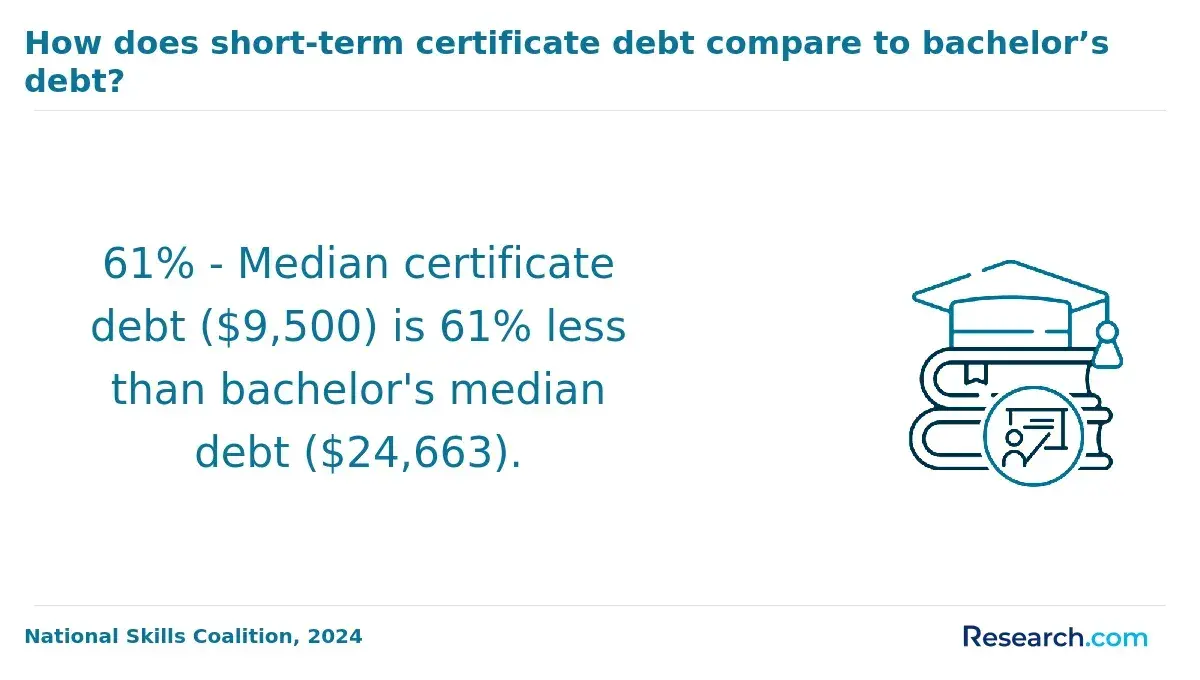
Adult-friendly bachelor's programs can cost very different amounts depending on residency, institution type, transfer credit, fees, books, technology, clinical costs, and time to completion. College Board's 2024 data lists average published tuition and fees of $11,610 for in-state public four-year students and $43,350 for private nonprofit four-year students, but many students pay less after grants and scholarships.
The table below shows cost factors adults should compare beyond the advertised per-credit tuition. These details often determine the real total cost.
| Cost factor | Why it matters | What to ask |
| Transfer credit acceptance | Accepted credits can reduce both tuition and time away from work | How many credits will apply to my major, not just electives? |
| Fees | Online, technology, lab, graduation, and clinical fees can add up | What is the full program cost after mandatory fees? |
| Books and materials | Some programs use costly access codes, software, or equipment | Are books included, open-source, or billed separately? |
| Employer tuition assistance | Employer aid can lower out-of-pocket cost but may require continued employment | Does the program meet my employer's reimbursement rules? |
| Financial aid pace | Dropping below required enrollment levels can affect aid | How many credits must I take to keep aid eligibility? |
Common cost mistakes include focusing only on tuition, ignoring transfer policies, borrowing without a completion plan, and choosing a faster program that is too intense to finish while working. A lower-priced program is not a bargain if poor advising or limited course availability delays graduation.
What classes are in these bachelor's degree programs?
Bachelor's programs usually combine general education, major courses, electives, and a capstone, internship, practicum, clinical, or portfolio requirement. Adults should read the degree map carefully because the course sequence affects both workload and graduation speed.
The table below summarizes typical class categories across adult-friendly bachelor's degrees. Exact requirements vary by school and major.
| Course category | What it usually includes | Why adults should care |
| General education | Writing, communication, math, science, social science, humanities | Prior credits often apply here, shortening the degree |
| Major core | Required courses in the discipline | These courses determine career relevance and prerequisite sequencing |
| Concentration or electives | Specialized options such as analytics, cybersecurity, HR, or public health | They help tailor the degree to your target job |
| Applied requirement | Capstone, internship, clinical, student teaching, lab, or portfolio | May affect work schedules and local placement needs |
Current programs increasingly include data literacy, AI-aware workflows, online collaboration, ethics, and digital communication. That matters because employers expect graduates in many fields to use technology responsibly, not simply complete traditional coursework.
Which jobs can these bachelor's degrees lead to?
These bachelor's degrees can lead to entry-level roles, promotions, career changes, or eligibility for graduate and licensure pathways. The right job outcome depends on the major and on what you already bring from work, military service, certifications, volunteer experience, or an associate degree.
The examples below show realistic role directions rather than guaranteed placements. Use them to connect degree choice with day-to-day work.
| Degree area | Possible roles | Typical responsibilities |
| Business | Operations coordinator, project analyst, HR specialist, sales manager trainee | Planning, reporting, budgeting, team coordination, process improvement |
| Healthcare | Health services coordinator, medical office manager, public health program assistant | Scheduling, compliance, patient services, program support, data reporting |
| IT | Systems administrator, network support specialist, cloud support associate | Troubleshooting, user support, system maintenance, documentation |
| Computer science | Software developer, QA analyst, junior data engineer | Coding, testing, debugging, database work, application support |
| Cybersecurity | Security analyst, compliance analyst, digital forensics assistant | Monitoring, risk assessment, incident documentation, security controls |
| Education | Teacher, instructional coordinator assistant, training specialist | Lesson planning, instruction, assessment, curriculum support |
If remote work is a major goal, technology, business analytics, accounting, digital marketing, and some healthcare administration paths may be more compatible than clinical or field-placement-heavy programs. Adults comparing work from home degrees that pay good money should still check whether entry-level roles in their region are remote, hybrid, or office-based.
What salaries and job outlooks do these degrees offer?
Salary and job outlook vary by role, region, industry, experience, and credential requirements. BLS May 2024 wage data is useful for benchmarking, but it should not be read as a promise for a new graduate. Adults often see the strongest value when the degree builds on experience they already have.
The table below pairs selected bachelor's-level career areas with BLS 2024 median pay and 2024-2034 outlook categories. Use it to compare directionally, then research your local market and target employers.
| Career area | Example BLS occupation | 2024 median pay | 2024-2034 outlook context |
| Business | Management analysts | $101,190 | Projected to grow much faster than average |
| Healthcare administration | Medical and health services managers | $117,960 | Projected to grow much faster than average |
| Information technology | Computer support specialists | $61,550 | Projected to grow about as fast as average |
| Computer science | Software developers | $133,080 | Projected to grow much faster than average |
| Cybersecurity | Information security analysts | $124,740 | Projected to grow much faster than average |
| Education | High school teachers | $64,580 | Projected to show little or no change |
Job outlook should influence, not control, your decision. A fast-growing field can still be competitive at entry level, while a slower-growth field may be worthwhile if it matches licensure goals, public service values, unionized employment, or local demand.
Other Things You Should Know About
The easiest degree is usually the one closest to your prior credits and work experience. For many adults, business administration, psychology, criminal justice, and general studies feel more manageable than lab-heavy or licensure-heavy majors, but career fit matters more than perceived ease.
Yes, many employers accept online bachelor's degrees when the school is properly accredited and the program matches the role. Employers usually care more about accreditation, skills, experience, licensure, and performance than whether every class was online.
Full time can shorten the timeline, but part time may be more sustainable if you work long hours, have caregiving responsibilities, or need to protect your grades. The best pace is one you can maintain without repeatedly withdrawing from classes.
It can be worth it when the degree supports a clear goal such as promotion, licensure, career change, or graduate admission. Adults should compare total cost, time to completion, employer support, expected role requirements, and how many working years they plan to use the credential.
References
- Online Degree vs. Traditional: Choosing the Right Path https://beal.edu/online-degree-vs-traditional/
- Employer Tuition Assistance Program / Employee Tuition Reimbursement - Finance | Learn & Work Ecosystem Library https://learnworkecosystemlibrary.com/topics/employer-tuition-assistance-program-employee-tuition-reimbursement-finance/
- Easy Degrees That Pay Well https://www.citizensbank.com/student/articles/easy-degrees-that-pay-well.aspx
- How does a college degree improve graduates’ employment and earnings potential? - APLU https://www.aplu.org/our-work/4-policy-and-advocacy/publicuvalues/employment-earnings/
- Top 19 Bachelor Degree Programs for Working Adults | NEIT https://www.neit.edu/blog/degrees-for-working-adults
- Best Online Degree Programs for Working Adults https://www.scholaro.com/db/News/best-online-degree-programs-256
- Most Useful Degrees https://www.collegeadvisor.com/resources/most-useful-degrees/
- Companies That Pay For College | Find 36 Top Options https://www.educationconnection.com/financial-aid/companies-that-pay-for-college/
- Flexible online colleges https://www.gatewayunj.org/student-stories/flexible-college-programs-making-it-possible-to-earn-your-degree-on-your-schedule
- Best Online Colleges for Working Adults [2026] https://www.straighterline.com/blog/degree-completion-best-online-colleges-for-working-adults