2027 Most Affordable Bachelor's Degrees for Career Advancement

Co-Founder and Chief Data Scientist
Choosing a bachelor's degree is now a career investment decision, not just an academic one. College Board reported average published tuition and fees of $11,610 for in-state public four-year colleges, while BLS data shows bachelor's degree holders had median weekly earnings of $1,543 in 2024.
That gap makes program choice, transfer credit, accreditation, and career fit especially important. This guide helps working adults, transfer students, and first-time college students compare affordable bachelor's degrees, understand trade-offs, and choose a path that supports advancement without unnecessary debt.
Key Things You Should Know
- Public in-state and online transfer-friendly bachelor's programs are often the lowest-cost routes, but the real price depends on fees, residency rules, transfer credit, books, technology costs, and time to completion.
- The strongest affordability-to-career combinations often appear in computer science, IT, cybersecurity, nursing, engineering, business, and healthcare administration, especially when the program matches employer or licensure requirements.
- BLS 2024 data shows bachelor's degree holders had lower unemployment and higher median weekly earnings than workers with only a high school diploma, but outcomes still vary by major, location, experience, and industry.
Top 10 Most Affordable Bachelor's Degrees for Career Advancement
Business Degrees
Affordable business degrees fit students who want flexible career mobility in management, finance, operations, sales, human resources, or entrepreneurship. A bachelor's in business administration is usually broader than accounting or finance, making it useful for advancement when you already have work experience. Look for regional institutional accreditation and, when possible, programmatic business accreditation such as AACSB, ACBSP, or IACBE. Choose accounting if you plan to pursue CPA eligibility, but verify state credit-hour rules before enrolling because a bachelor's alone may not satisfy every jurisdiction's CPA pathway.
Healthcare Degrees
Healthcare bachelor's degrees can be affordable career-advancement tools for people already working in clinics, hospitals, billing, public health, or allied health roles. Health administration and public health programs are often more flexible than clinical degrees because they usually do not require intensive labs or direct patient-care licensing. These degrees can support roles in care coordination, compliance, operations, and health data management. Before choosing a low-cost program, confirm whether internships, practicum hours, background checks, immunizations, or local site placements add costs or affect your ability to graduate on time.
Information Technology Degrees
An affordable information technology degree is practical for students who want applied technology roles without the heavier theory often found in computer science. Coursework usually covers networking, cloud systems, databases, scripting, cybersecurity fundamentals, and systems administration. It can be a strong fit for help desk technicians, support specialists, or career changers moving into IT operations. Employers may also value certifications such as CompTIA, Cisco, AWS, or Microsoft credentials, so compare whether a program embeds certification preparation or charges separately for exams and labs.
Computer Science Degrees
Computer science degrees are among the most career-flexible bachelor's options, but affordability depends heavily on math readiness, tutoring support, and whether transfer credits apply to major requirements. Students study programming, algorithms, software engineering, databases, operating systems, and sometimes AI or machine learning. This degree is best for learners who want software development, data, systems, or technical graduate school options. A cheaper program is not a bargain if it lacks substantial coding projects, career services, faculty support, or employer-recognized accreditation from a reputable institution.
Cybersecurity Degrees
Cybersecurity degrees are attractive because employers need workers who understand networks, risk, incident response, cloud security, and governance. Affordable programs may be especially valuable for military learners, IT workers, and students who can stack certifications into credit. Look for hands-on labs, secure virtual environments, and courses aligned with recognized frameworks. The NSA's Center of Academic Excellence designation can be a positive signal, but it does not replace institutional accreditation. Avoid programs that promise instant high salaries without requiring technical practice, projects, or realistic entry-level pathways.
Psychology Degrees
A low-cost psychology bachelor's degree is useful for students interested in human behavior, research, case management, human services, marketing, or graduate study. It is not, by itself, a license to practice as a psychologist or therapist. Students typically take statistics, research methods, developmental psychology, abnormal psychology, social psychology, and counseling-related electives. This major is best when paired with internships, data skills, or a clear graduate plan. If your goal is clinical practice, compare state licensing rules before assuming an affordable undergraduate program is enough.
Nursing Degrees
Nursing can offer strong advancement potential, but affordability is closely tied to accreditation, clinical placements, and licensure alignment. RN-to-BSN programs are often the most affordable bachelor's route for licensed registered nurses because they build on prior nursing education and work experience. Pre-licensure BSN programs may cost more due to labs, simulations, uniforms, testing fees, and clinical requirements. Always verify CCNE or ACEN accreditation, state board approval, NCLEX eligibility, and whether clinical sites are available near you before choosing the lowest advertised tuition.
Education Degrees
Affordable education degrees can help paraprofessionals, substitute teachers, and career changers move toward classroom roles, but licensure rules vary by state. A low-cost program should clearly explain student teaching, background checks, subject-area exams, and state approval. Elementary education, special education, and secondary education tracks have different coursework and fieldwork expectations. Online coursework can reduce commuting costs, but most teacher-preparation programs still require supervised classroom placements. Confirm reciprocity rules if you may move, because a degree approved in one state may not automatically meet another state's licensing requirements.
Criminal Justice Degrees
Criminal justice degrees are often affordable because many courses can be delivered online and may accept transfer or prior-learning credit from law enforcement, military, or corrections training. The degree can support roles in policing, corrections, probation, security management, emergency management, victim advocacy, or compliance. It is not required for every public safety role, so compare employer requirements before enrolling. Students seeking federal or investigative careers should build writing, data analysis, foreign language, cybercrime, or forensic accounting skills to stand out beyond the degree title.
Engineering Degrees
Engineering bachelor's degrees can lead to strong long-term career options, but they are not always the cheapest because labs, sequenced courses, and limited transfer acceptance can extend time in school. Mechanical, electrical, civil, industrial, and computer engineering are common choices. ABET accreditation is especially important for students who may pursue professional engineering licensure. If cost is the main concern, compare public universities, 2+2 transfer pathways, co-op earnings, and whether calculus, physics, and engineering prerequisites will transfer cleanly into the major.
Which affordable bachelor's degrees lead to the best jobs?
The most affordable bachelor's degrees that lead to the best jobs usually combine three traits: low net cost, clear employer demand, and a credential that matches the role's requirements. BLS reported that computer and information technology occupations had a median annual wage of $105,990 in May 2024, which helps explain why affordable technology degrees often rank high for career advancement. Still, salary data should be used as a benchmark, not a promise.
The table below summarizes degree areas that often provide a strong balance of affordability and career utility. Use it to compare direction, not to assume every program or graduate will have the same outcome.
| Degree area | Common advancement roles | Why it can be cost-effective | Watch-outs |
| Computer science | Software developer, systems analyst, data analyst | High demand for technical portfolios and problem-solving skills | Weak programs may lack rigorous projects or employer connections |
| Information technology | Network administrator, cloud support specialist, IT manager pathway | Often accepts certification or transfer credit | Certifications may add exam costs |
| Cybersecurity | Security analyst, incident response analyst, risk analyst | Useful for workers advancing from IT support roles | Entry-level cybersecurity roles may require prior IT experience |
| Nursing | BSN-prepared RN, charge nurse, care coordinator | RN-to-BSN routes can be efficient for licensed nurses | Clinical and licensure requirements must match your state |
| Engineering | Project engineer, design engineer, quality engineer | Strong technical credential when ABET-accredited | Sequenced labs can make delayed graduation expensive |
| Business | Operations manager, financial analyst, HR specialist | Broad transferability across industries | Generic programs need internships or focused skills to stand out |
For the best return, compare programs by net price after aid, graduation rate, transfer acceptance, career services, internship access, and whether the degree is required for your target job. A low-cost degree is most valuable when it shortens the path to a specific career move.
How do online and campus programs compare for affordability?
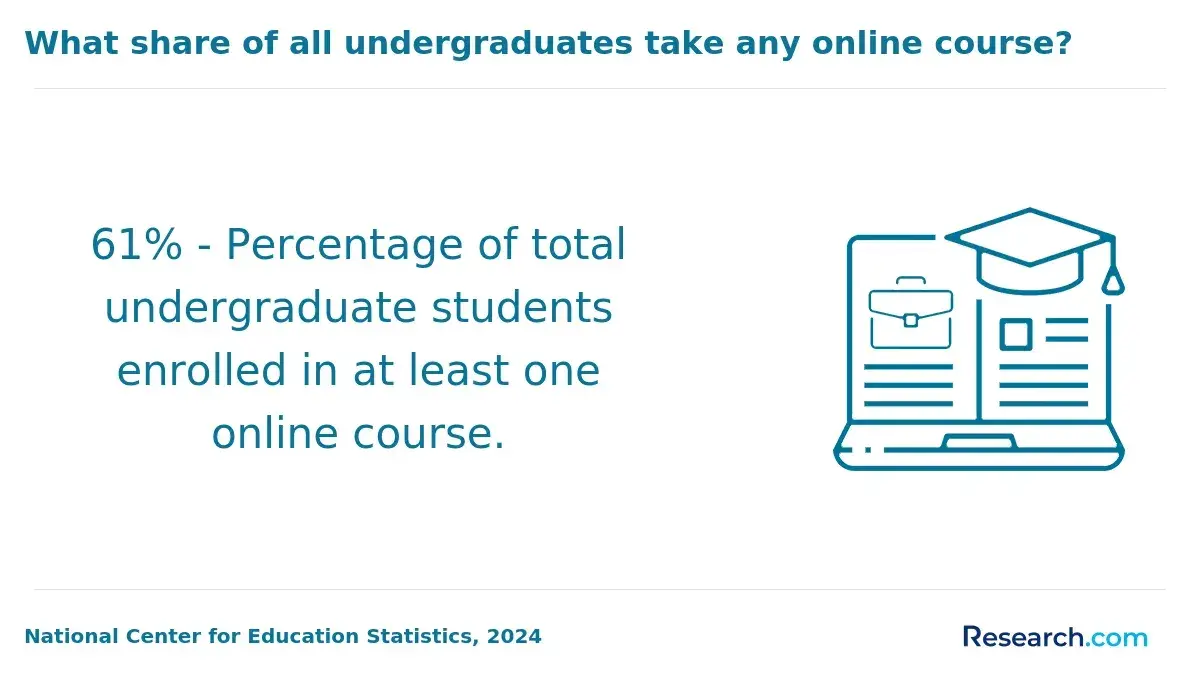
Online bachelor's programs can be more affordable for adults who want to keep working, avoid relocation, and transfer previous credits. Campus programs may be worth the added cost when the major requires labs, clinical placements, studio work, engineering facilities, or local employer recruiting. The better choice depends on total cost, not only tuition.
College Board's 2024 pricing data showed published tuition and fees of $11,610 for in-state public four-year institutions, compared with $30,780 for out-of-state public institutions and $43,350 for private nonprofit institutions. Those figures are sticker prices, so your net cost may be lower after grants, scholarships, employer tuition benefits, or military education benefits.
The comparison below shows where online and campus formats usually differ for affordability. Use it to identify hidden costs before committing.
| Cost or quality factor | Online programs | Campus programs | Decision tip |
| Tuition structure | May offer flat, per-credit, or in-state-style rates | Often tied to residency and campus fees | Compare total program cost, not per-credit tuition alone |
| Work flexibility | Often better for employed students | May require fixed class times | Keeping income can improve affordability |
| Hands-on requirements | May require local placements or virtual labs | Usually provides on-site labs and facilities | Ask how placements are arranged and paid for |
| Networking | Depends on virtual career services and projects | May offer stronger local recruiting | Check internship and employer-partner data |
| Student support | Varies widely by school | Often easier to access in person | Look for tutoring, advising, and technical help |
If you prefer distance learning, compare accredited options carefully rather than assuming all online programs are equal. A curated list of best online degrees can help you start with schools that meet recognized quality standards.
What accreditation should affordable bachelor's programs have?
Affordable bachelor's programs should have recognized institutional accreditation from an agency accepted by the U.S. Department of Education or the Council for Higher Education Accreditation. Accreditation affects federal financial aid, transfer credit, graduate school eligibility, employer recognition, and professional licensing. A program can be inexpensive and still be a poor investment if its credits are not portable or its credential is not respected.
Some majors also need programmatic accreditation or state approval. This is especially important when the degree leads to licensure, certification, or regulated professional practice.
- Business: AACSB, ACBSP, or IACBE can signal program-level review, though not every employer requires it.
- Engineering: ABET accreditation is important for many engineering careers and professional engineering licensure pathways.
- Nursing: CCNE or ACEN accreditation and state board approval are critical for licensure-related nursing education.
- Education: State approval and CAEP accreditation may matter for teacher licensure, depending on the state.
- Cybersecurity: NSA Center of Academic Excellence designation can be useful, but it is not a replacement for institutional accreditation.
Red flags include unclear accreditation language, pressure-based enrollment tactics, missing licensure disclosures, unusually vague tuition pages, low transfer acceptance, and programs that will not provide graduation or student outcome information. Always verify accreditation directly through official accreditor or federal databases before enrolling.
Which majors offer strong salary and job outlook?
Majors with strong salary and job outlook usually connect to specific skills employers already need: technology, healthcare, engineering, finance, operations, data, compliance, and education in shortage areas. However, a high-paying field can still be a bad fit if you dislike the work, cannot complete the required math or clinical training, or need a faster route into employment.
The table below uses broad U.S. labor-market context to help you compare direction. Role-level pay can be higher or lower depending on location, experience, employer, and specialization.
| Major or field | Salary context from BLS May 2024 data | Outlook signal | Best fit |
| Computer science and IT | Computer and IT occupations had a median annual wage of $105,990 | Demand is supported by software, cloud, data, and security needs | Students who enjoy technical problem-solving and continuous learning |
| Engineering | Architecture and engineering occupations had wages well above the all-occupation median | Infrastructure, manufacturing, energy, and technology needs support demand | Students prepared for calculus, physics, labs, and long project cycles |
| Nursing and healthcare | Healthcare roles vary widely by license and setting | Aging populations and care coordination needs support many roles | Students comfortable with patient care, regulation, and shift-based work |
| Business and finance | Business and financial roles often exceed the all-occupation median | Analytics, compliance, accounting, and operations remain broadly useful | Students who want flexible industry options |
| Education | Pay varies significantly by state, district, and contract | Shortages in special education, STEM, and some regions may improve prospects | Students committed to teaching and state licensure steps |
When comparing majors, use salary data as one input alongside graduation timelines, debt, licensing costs, internship access, and your ability to build job-ready experience before graduation.
What classes are in these bachelor's degree programs?
Most bachelor's degrees require about 120 credits, including general education, major courses, electives, and sometimes internships, labs, practicums, or capstone projects. Affordable programs are often structured to accept transfer credits, but major requirements may be less flexible than general education courses.
Common classes vary by major, but the following categories appear across many career-focused bachelor's programs. Understanding them helps you estimate difficulty, time commitment, and hidden costs.
- General education courses: writing, communication, math, natural science, social science, humanities, and quantitative reasoning.
- Major core courses: required classes that build the main professional knowledge of the degree, such as accounting, programming, anatomy, criminology, or pedagogy.
- Applied learning: internships, clinicals, student teaching, labs, simulations, capstones, portfolios, or senior projects.
- Career electives: specialized courses that align with a job target, such as cloud computing, healthcare compliance, forensic psychology, data analytics, or special education.
- Professional preparation: resume development, certification preparation, ethics, licensing review, or career seminars.
Before enrolling, ask whether required courses are offered every term. A cheap program can become expensive if a missed prerequisite delays graduation by a semester or more.
What admission requirements do affordable programs usually ask for?
Affordable bachelor's programs usually ask for a high school diploma or equivalent, transcripts, an application, and proof of English or math readiness. Transfer-friendly programs may also request college transcripts, military training records, professional licenses, or standardized prior-learning documentation.
Admissions requirements are usually manageable, but selective majors can add extra steps. Review these items early so you do not lose time or pay application fees for a program you cannot enter yet.
- Minimum GPA: some schools admit broadly, while nursing, engineering, education, and business honors tracks may require higher grades.
- Prerequisite courses: calculus, biology, chemistry, statistics, composition, or introductory major courses may be required before upper-division admission.
- Background checks: nursing, education, criminal justice, and healthcare programs may require screening for field placements.
- Testing or placement: some schools require math or writing placement, especially for students with limited transfer credit.
- Technology requirements: online programs may require a webcam, secure browser, reliable internet, or specialized software.
If you need a lower-cost starting point, an accelerated associate degree online may help you complete transferable general education credits before moving into a bachelor's program. Confirm transfer agreements first so you do not pay for credits that your target school will reject.
How long does a bachelor's degree usually take?
A bachelor's degree usually takes four years of full-time study, but the actual timeline depends on transfer credit, course availability, major sequencing, work schedule, and whether the program runs year-round. Students entering with an associate degree may finish faster if their credits apply cleanly to the major.
These common timelines can help you compare formats before enrolling. The fastest option is not always the cheapest if it creates overload, retakes, or lost income.
- Traditional full-time route: about four academic years for first-time students completing roughly 120 credits.
- Transfer route: often shorter for students with an associate degree or substantial prior college credit.
- Part-time route: useful for working adults, but total calendar time and fee exposure may increase.
- Accelerated route: can reduce calendar time through shorter terms, heavier course loads, or year-round enrollment.
- Competency-based route: may be efficient for experienced adults who can move quickly through material they already know.
If graduate school is part of your advancement plan, compare bachelor's-to-master's pathways early. Some students use affordable undergraduate credits first, then consider one year masters programs to specialize without spending several additional years in school.
Which careers need licensing or certification after graduation?
Some bachelor's degrees lead directly to jobs, while others are only one step toward licensing, certification, or graduate study. This distinction matters because post-graduation requirements can add exam fees, supervised hours, background checks, continuing education, and time before you qualify for the role you want.
Review licensing and certification requirements before choosing a low-cost program in any regulated field. The degree must align with your state, employer, and professional board expectations.
- Nursing: graduates must meet state board requirements and pass the NCLEX for RN licensure when completing a pre-licensure pathway.
- Education: teacher candidates usually need state-approved preparation, student teaching, exams, and background checks.
- Engineering: professional engineering licensure typically requires an ABET-accredited degree path, exams, and supervised experience.
- Accounting: CPA eligibility varies by state and may require more credits than a standard bachelor's degree.
- Psychology and counseling: independent clinical practice usually requires graduate education, supervised hours, and state licensure.
- Cybersecurity and IT: many roles do not require a license, but certifications can strengthen employability.
Students considering long-term clinical, leadership, or academic roles should also understand how graduate credentials fit into the pathway. For some advanced career goals, comparing online doctoral programs without dissertation can be useful, but only after verifying that the credential is accepted for the intended profession.
How do you choose a reputable low-cost degree program?
To choose a reputable low-cost bachelor's program, look beyond the advertised tuition. The best affordable program is the one that helps you graduate with a recognized credential, manageable debt, and a realistic path to the job or promotion you want.
Use the following steps to compare schools before applying. They are designed to help you avoid common mistakes such as choosing the cheapest option without checking accreditation, transfer rules, or career outcomes.
- Verify institutional accreditation through recognized accreditor or federal sources before discussing enrollment.
- Check whether your major needs programmatic accreditation, state approval, clinical placement, student teaching, or licensure alignment.
- Calculate total cost, including tuition, fees, books, software, travel, exams, background checks, labs, and lost work time.
- Ask for a written transfer-credit evaluation before committing, especially if you already have college, military, or professional training credit.
- Compare graduation rates, retention, student support, tutoring, career services, internships, and employer partnerships.
- Review course rotation and prerequisite sequencing so one unavailable class does not delay graduation.
- Ask what graduates do after completion, but treat salary examples as context rather than guaranteed outcomes.
- Confirm that online students receive the same advising, library access, disability services, and career support as campus students.
A strong program will answer cost, accreditation, and outcome questions clearly. Be cautious if admissions staff rush you, avoid written answers, minimize licensure concerns, or focus only on monthly payments instead of total debt.
Other Things You Should Know About
The most affordable option is usually a public in-state, online, or transfer-friendly bachelor's degree that accepts prior credits and aligns with a clear career path. Business, IT, computer science, nursing completion, criminal justice, and healthcare administration are commonly cost-effective, but the best choice depends on your credits, goals, and state requirements.
Yes, many employers respect online bachelor's degrees from accredited institutions, especially when the transcript and diploma come from a recognized school. Reputation, accreditation, skills, internships, projects, and work experience usually matter more than whether classes were online or on campus.
Start with transferable community college credits, choose an in-state public option when possible, apply for grants and scholarships, use employer tuition assistance, avoid unnecessary course repeats, and get a written transfer-credit evaluation before enrolling.
No. A very cheap program can be costly if it lacks accreditation, delays graduation, fails to meet licensure rules, or provides weak career support. The best value balances low net price with recognized quality, transfer efficiency, and realistic career outcomes.
References
- Trade School vs. College: Weighing cost, timelines & More https://www.midwesttech.edu/resources/careers/trade-school-vs-college-a-guide-to-weighing-your-options/
- Why College Is Too Expensive — And How Competition Can Fix It - FREOPP https://freopp.org/whitepapers/why-college-is-too-expensive-and-how-competition-can-fix-it/
- Major Differences https://www.educationnext.org/major-differencecs-why-some-degrees-cost-colleges-more-than-others/
- Scholarships for College Students https://accessscholarships.com/blog/50-scholarships-for-college-students/
- Is College Worth it? | Return on Investment Analysis of College Degree https://educationdata.org/college-degree-roi
- The cost vs. value paradox: what Americans really think about college https://www.luminafoundation.org/news-and-views/the-cost-vs-value-paradox-what-americans-really-think-about-college/
- The University Courses With The Highest Return On Investment - Here Student Living https://herestudents.com/the-university-courses-with-the-highest-return-on-investment/
- Scholarships for Students Pursuing Career Education https://career.org/web/web/Multimedia/CER/Articles/Scholarships-for-Students-Pursuing-Career-Education.aspx
- Career earnings by college major - The Hamilton Project https://www.hamiltonproject.org/data/career-earnings-by-college-major/
- Easy Degrees That Pay Well https://www.citizensbank.com/student/articles/easy-degrees-that-pay-well.aspx