2027 Best Online Bachelor's Completion Programs With Employer Tuition Assistance

Co-Founder and Chief Data Scientist
Finishing a bachelor's degree while working can change your promotion options, but the wrong program can waste both time and employer benefits. BLS 2024 data shows workers with a bachelor's degree had median weekly earnings of $1,543, compared with $930 for workers whose highest credential was a high school diploma. This guide is for adults with prior college credit who want to use tuition assistance wisely. You'll learn how completion programs work, which majors fit employer-funded study, how to compare costs, and how to choose an accredited option your employer is likely to approve.
Key Things You Should Know
- Employer tuition assistance can be worth up to $5,250 per year tax-free under current federal rules, but some employers pay less, require specific schools, or reimburse only after you pass each course.
- The strongest bachelor's completion choices usually combine generous transfer credit, regional or national institutional accreditation, flexible online delivery, and a major tied directly to an internal promotion path.
- Using BLS 2024 wage data, employer-funded bachelor's completion can be especially practical for fields such as business, nursing, IT, cybersecurity, engineering technology, education, and healthcare management.
Top 10 Best Online Bachelor's Completion Programs With Employer Tuition Assistance
Business Degrees
Business completion programs are often the safest fit for employer tuition assistance because they apply across industries. Common tracks include management, accounting, human resources, finance, supply chain, and marketing. Choose business if you want supervisory, operations, analyst, or administrative advancement. Look for programs that accept prior credits, offer asynchronous classes, and include applied projects tied to your workplace. If your employer reimburses only job-related education, business administration is usually easier to justify than a broad liberal arts major.
Healthcare Degrees
Healthcare bachelor's completion programs work well for medical assistants, billing specialists, technicians, and administrative staff who want to move into management or compliance. Popular majors include healthcare administration, health information management, public health, and health sciences. Check whether the curriculum includes healthcare finance, policy, data, quality improvement, and ethics. These degrees can be less clinical than nursing, so they are best for workers seeking administrative growth rather than licensure-based patient care roles.
Information Technology Degrees
Information technology completion programs focus on practical systems support, networking, cloud platforms, databases, project management, and enterprise tools. They can be a strong option for help desk employees, systems support staff, military veterans, and workers moving from operations into technical roles. Ask whether industry certifications can count for credit. A good IT completion program should let you demonstrate workplace-ready skills through labs, projects, or portfolios instead of relying only on exams.
Computer Science Degrees
Computer science completion programs are more theory-heavy than IT programs and usually include programming, algorithms, data structures, software engineering, operating systems, and discrete math. They fit students aiming for software development, automation, data, or technical product roles. This route can be demanding for working adults, especially if prior math credits are missing. Choose it when your employer values software capability and you are ready for a rigorous curriculum, not just a quick credential.
Cybersecurity Degrees
Cybersecurity completion programs can help IT support workers, network technicians, analysts, and military-affiliated students move toward security operations or risk roles. Strong programs cover threat detection, incident response, secure networking, cloud security, governance, and digital forensics. Employer approval is often easier if your organization handles regulated data or critical systems. Compare degree requirements with certifications such as Security+, CySA+, or CISSP preparation, but remember that a degree and certification serve different hiring signals.
Psychology Degrees
Psychology completion programs are useful for workers in human services, HR, customer experience, training, behavioral health support, and nonprofit administration. The bachelor's degree alone usually does not qualify someone to become a licensed psychologist or therapist, but it can support roles involving communication, research literacy, assessment, and people management. Choose this major if it aligns with your workplace role or if you plan to pursue graduate study later.
Nursing Degrees
Nursing bachelor's completion usually means an RN-to-BSN program for licensed registered nurses. These programs typically build on an associate degree or diploma in nursing and emphasize leadership, evidence-based practice, community health, informatics, and quality improvement. They are best for working RNs whose employers prefer or require a BSN for advancement. Confirm state authorization, clinical or practicum expectations, and whether the program holds CCNE or ACEN accreditation.
Education Degrees
Education completion programs may prepare students for teaching, instructional design, early childhood roles, or education administration support. Licensure requirements vary by state, so an online program that works for one student may not meet another student's certification path. If you plan to become a classroom teacher, confirm student-teaching placement rules before enrolling. If you already work in training or childcare, a non-licensure education degree may still support advancement.
Criminal Justice Degrees
Criminal justice completion programs can fit law enforcement officers, corrections staff, security professionals, military veterans, and public safety employees. Coursework often covers policing, courts, corrections, ethics, criminology, emergency management, and policy. A bachelor's degree may help with promotion eligibility in some agencies, but requirements vary widely. Ask your employer whether degree completion affects rank, pay grade, specialized assignment eligibility, or tuition reimbursement approval before committing.
Engineering Degrees
Engineering completion options are less common online, especially for ABET-accredited engineering programs, but engineering technology, industrial technology, and applied engineering degrees can be workable for technicians. These programs suit manufacturing, utilities, logistics, construction, and technical operations workers. If your goal is licensed professional engineering, verify ABET accreditation and state board expectations. If your goal is technical management, an engineering technology completion program may be more flexible and employer-friendly.
What is an online bachelor's completion program with employer tuition assistance?
An online bachelor's completion program is a degree pathway designed for students who already have college credits, an associate degree, military learning, professional training, or industry certifications. Instead of starting from zero, you transfer eligible credits into a four-year degree and complete the remaining upper-division requirements online.
Employer tuition assistance means your company pays part or all of the education cost, either upfront or through reimbursement. The benefit may cover tuition only, or it may also include fees, books, technology charges, and required learning materials. The key advantage is that you can reduce out-of-pocket cost while earning a credential tied to career mobility.
The best programs for working adults usually share four traits: generous transfer policies, flexible scheduling, transparent total cost, and a curriculum your employer recognizes as relevant to your role or future role.
How do tuition assistance bachelor's completion programs work for full-time employees?
Tuition assistance programs usually begin with employer approval, not school admission. Before enrolling, you typically submit the school name, degree program, course list, estimated cost, start date, and explanation of how the program relates to your job or career path.
Most full-time employees encounter one of these benefit structures. Understanding the structure matters because it affects cash flow, taxes, and risk if you withdraw or earn a low grade.
| Benefit structure | How it usually works | Best for | Main risk |
| Reimbursement | You pay first, then your employer repays eligible costs after grades are posted. | Workers who can temporarily cover tuition or use a payment plan. | You may owe the balance if the course is not approved or you do not meet grade rules. |
| Direct billing | The school bills the employer or education partner directly. | Employees who want the lowest upfront cost. | Your program choices may be limited to approved schools. |
| Voucher or portal model | You choose from a curated employer education platform. | Employees who want simple approval and predictable benefits. | Some majors or institutions may not be available. |
| Scholarship-match model | Employer funds combine with school discounts, grants, or scholarships. | Cost-sensitive students comparing several schools. | Total cost can be hard to compare unless all fees are included. |
For full-time employees, the smartest sequence is to confirm benefit rules before applying. Use this process to avoid paying for credits your employer will not support.
- Ask HR for the current tuition assistance policy, including annual caps, eligible schools, grade requirements, repayment clauses, and deadlines.
- Request an unofficial transfer credit review from each school before committing.
- Compare total program cost after transfer credits, not only per-credit tuition.
- Submit employer approval before the add-drop deadline so you can withdraw without major financial loss if approval is denied.
- Keep syllabi, receipts, transcripts, and grade reports because reimbursement programs often require documentation.
Which employers offer the strongest tuition assistance benefits for bachelor's completion?
The strongest employer tuition assistance benefits are not always the ones with the largest advertised dollar amount. For bachelor's completion, the best benefits reduce uncertainty: they pay upfront, cover a broad range of degree programs, recognize online study, and avoid restrictive clawback rules.
Several large U.S. employers are known for education benefits that may support bachelor's completion, though details can change by role, tenure, location, and partner school. Always verify the current policy with HR before enrolling.
| Employer or program type | Why it can be strong for bachelor's completion | What to verify |
| Walmart Live Better U | Often emphasizes low-cost or debt-free pathways through education partners. | Eligible programs, waiting period, and whether your major is included. |
| Amazon Career Choice | Known for prepaid education support for eligible employees in approved programs. | Annual limits, partner schools, and whether bachelor's completion is covered for your site. |
| Target Dream to Be | May offer curated debt-free or assisted education options through partner institutions. | Approved degrees, employment status rules, and out-of-pocket fees. |
| Starbucks College Achievement Plan | Can be valuable for eligible partners pursuing online bachelor's study through a specific university pathway. | School restriction, eligibility, taxes, and course-load expectations. |
| Hospitals and health systems | Often support RN-to-BSN, healthcare administration, and allied health advancement. | Licensure, accredited nursing programs, service commitments, and clinical requirements. |
| Government and public safety employers | May support criminal justice, public administration, cybersecurity, or emergency management degrees. | Union rules, rank eligibility, reimbursement caps, and approved institutions. |
A benefit is especially valuable when it is easy to use every term. A smaller upfront benefit with approved online programs may be better than a larger reimbursement benefit that forces you to carry a balance for months.
How can I compare online and campus bachelor's completion options with tuition benefits?
Online programs often make the most sense for full-time employees because they reduce commuting time and may offer asynchronous coursework. Campus or hybrid programs can still be better when your degree requires labs, clinical placements, teaching experience, or access to local employer networks.
Use the comparison below to decide which format fits your schedule, learning style, and employer benefit rules. If cost is your main constraint, you may also want to compare most affordable online colleges for working adults before applying.
| Factor | Online bachelor's completion | Campus or hybrid completion |
| Schedule fit | Best for rotating shifts, parents, frequent travelers, and employees who need asynchronous work. | Best for students who can attend at set times and benefit from in-person accountability. |
| Employer approval | Often approved if the institution is accredited and the major is job-related. | Often approved, especially for local public universities or employer partner schools. |
| Hands-on requirements | Works well for business, IT, psychology, criminal justice, and many healthcare administration programs. | May be better for engineering labs, teacher preparation, nursing clinicals, or cohort-based programs. |
| Networking | Depends on virtual career services, faculty access, and project-based courses. | Can be stronger for local internships, alumni connections, and employer partnerships. |
| Hidden costs | May include technology fees, proctoring fees, and course materials. | May include commuting, parking, childcare, and schedule disruption. |
Do not choose online only because it looks convenient. The better question is whether the program's delivery format helps you finish consistently while meeting any licensure, practicum, or employer approval rules.
What admission requirements and transfer credits do these completion programs typically expect?
Bachelor's completion programs usually expect applicants to bring prior college learning. Some are built for students with 60 or more transferable credits, while others accept students with fewer credits and help them complete general education requirements first.
Admissions requirements vary, but working adults most often need the following materials. Review them early because missing transcripts are a common cause of delayed admission and delayed employer approval.
- Official transcripts from every college previously attended, even if the coursework seems unrelated or was completed many years ago.
- A minimum cumulative GPA, often with conditional admission options for students whose earlier grades were weaker.
- Proof of an associate degree or a specific number of transferable credits for true degree-completion tracks.
- Professional license documentation for programs such as RN-to-BSN or certain allied health completion degrees.
- Employer approval forms if tuition assistance must be authorized before registration.
- Placement, prerequisite, or portfolio review when math, writing, technical, military, or workforce credits may apply.
Transfer credit policy can change the real cost more than the tuition rate. A school charging slightly more per credit may be cheaper overall if it accepts more of your prior learning and reduces the number of courses you must take.
Watch for red flags such as vague transfer promises, pressure to enroll before receiving a credit evaluation, or refusal to explain how credits apply to major requirements. Credits that transfer only as electives may not shorten your time to graduation.
How much do online bachelor's completion programs cost after employer tuition assistance?
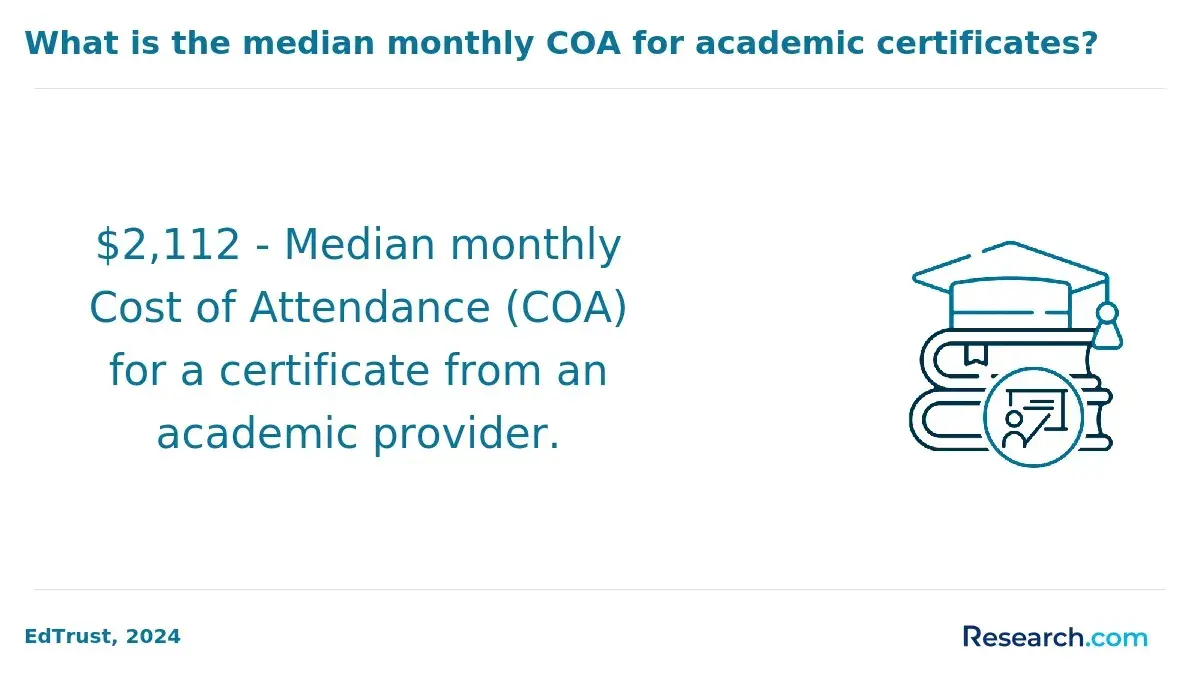
The cost after employer tuition assistance depends on four variables: the school's tuition, the number of credits you still need, the employer's annual benefit, and whether grants or scholarships can be stacked with that benefit. The federal tax exclusion for employer-provided educational assistance is generally capped at $5,250 per year, so benefits above that amount may have tax implications.
College Board's 2024 pricing data shows why completion students should compare total remaining cost instead of sticker price alone. Published annual tuition and fees vary widely by institution type.
| Institution type | Published tuition and fees benchmark | What it means for working adults |
| Public four-year, in-state | $11,610 for 2024-25 | Often a strong value if you qualify for in-state rates and your credits transfer cleanly. |
| Public two-year, in-district | $4,050 for 2024-25 | Useful for finishing lower-division prerequisites before transferring into a bachelor's completion program. |
| Private nonprofit four-year | $43,350 for 2024-25 | Can still be worthwhile if institutional aid, employer partnerships, or generous credit acceptance reduce net cost. |
To estimate your net cost, ask each school for a degree audit showing remaining credits and fees. Then compare annual out-of-pocket cost after employer assistance, Pell Grants if eligible, scholarships, military benefits, and payment-plan fees.
Cost-conscious students should also avoid assuming the fastest program is the cheapest. Accelerated courses can help you finish sooner, but they may be hard to manage with full-time work. If speed is important, compare workload expectations along with resources on the easiest bachelor degree to get so you can distinguish manageable from low-quality.
What majors and curricula are best for leveraging employer tuition assistance toward career growth?
The best major is the one your employer will support and your next role will reward. For tuition assistance, career alignment matters because many employers require the degree to relate to your current job, an internal talent pathway, or a documented business need.
The table below summarizes common completion majors and the workplace goals they tend to support. Use it as a starting point, then compare specific curricula, not just major names.
| Major | Best aligned workplace goal | Curriculum features to look for |
| Business administration | Promotion into supervision, operations, sales management, or administration. | Management, accounting, analytics, organizational behavior, and capstone projects. |
| Healthcare administration | Movement from clinical support or office roles into healthcare leadership. | Healthcare finance, compliance, quality improvement, policy, and data systems. |
| Information technology | Transition from support roles into systems, network, cloud, or IT project roles. | Labs, certification alignment, cybersecurity basics, databases, and applied projects. |
| Cybersecurity | Movement into security operations, risk, audit, or incident response. | Threat analysis, governance, secure systems, cloud security, and hands-on scenarios. |
| RN-to-BSN | Nursing leadership, care coordination, public health, or magnet hospital expectations. | Evidence-based practice, leadership, population health, informatics, and practicum fit. |
| Education | Teaching, training, childcare leadership, or instructional support. | State licensure alignment, supervised practice, learning assessment, and pedagogy. |
If you are still deciding among majors, compare labor market fit, curriculum difficulty, and promotion relevance rather than choosing only by interest. A broader review of the best degrees can help you shortlist options before asking your employer for approval.
AI and automation make curriculum quality more important. Programs that include data literacy, ethical technology use, communication, project management, and applied problem-solving are often more durable than programs built around narrow software tools that may change quickly.
What careers, salaries, and promotions can an employer-funded bachelor's completion support?
An employer-funded bachelor's completion program can support promotions, lateral moves, and eligibility for roles that list a bachelor's degree as preferred or required. It should not be treated as a salary guarantee, because outcomes depend on your experience, region, employer, industry, and the degree's relevance.
BLS May 2024 median wage data provides a useful benchmark for roles commonly connected to bachelor's completion pathways. These figures describe occupations, not guaranteed outcomes for graduates.
| Career path | Typical bachelor's completion fit | BLS May 2024 median annual wage | How the degree may help |
| Accountants and auditors | Accounting or business | $81,680 | Can support accounting, audit, compliance, or finance analyst pathways. |
| Human resources specialists | Business, HR management, psychology | $72,910 | Can help workers move into recruiting, benefits, training, or employee relations. |
| Medical and health services managers | Healthcare administration or nursing | $117,960 | Can support leadership pathways in clinics, hospitals, long-term care, or health systems. |
| Software developers | Computer science or software-focused IT | $133,080 | Can strengthen eligibility for programming, automation, and software engineering roles. |
| Information security analysts | Cybersecurity or IT | $124,910 | Can support movement into security operations, risk, or incident response roles. |
| Registered nurses | RN-to-BSN | $93,600 | Can support BSN-preferred roles, leadership tracks, or graduate nursing preparation. |
| Industrial engineers | Engineering, industrial technology, or applied engineering | $101,140 | Can support process improvement, manufacturing systems, and operations roles. |
The strongest ROI usually comes when the degree removes a specific barrier: a promotion requirement, a pay-grade rule, a leadership-track requirement, or a credential expectation in your field. If your employer does not value the major, consider whether a certificate, licensure pathway, or internal training program would produce a faster return.
How do I choose an accredited, reputable bachelor's completion program my employer will approve?
Start with accreditation. In the U.S., most employers and graduate schools expect institutional accreditation from an agency recognized by the U.S. Department of Education or the Council for Higher Education Accreditation. For certain fields, programmatic accreditation may also matter, such as CCNE or ACEN for nursing, ABET for engineering, CAEP for educator preparation, or business accreditors such as AACSB, ACBSP, or IACBE.
Once accreditation checks out, evaluate whether the program is reputable for your specific goal. Rankings can be useful, but they should not replace a detailed review of transfer policy, student support, graduation requirements, employer approval, and career relevance.
Use this checklist before you enroll. It focuses on decisions that can prevent wasted credits, denied reimbursement, and poor fit.
- Confirm institutional accreditation using official accreditor or federal recognition sources rather than relying only on marketing language.
- Ask for a written transfer credit evaluation showing which credits meet general education, major, elective, and upper-division requirements.
- Request the full cost of attendance for your remaining credits, including fees, books, technology charges, proctoring, and graduation fees.
- Send the program name and course plan to HR before registering, especially if your employer requires job relevance or approved-provider status.
- Check whether the program meets state licensure requirements if you are pursuing nursing, education, engineering, counseling-related graduate preparation, or another regulated field.
- Review academic support for working adults, including tutoring, advising hours, career services, disability accommodations, and leave-of-absence policies.
- Ask about course frequency so required classes are available often enough for your target graduation timeline.
Common mistakes include choosing the cheapest per-credit tuition without checking transfer loss, enrolling in a non-licensure program when licensure is the goal, assuming employer reimbursement is automatic, and ignoring repayment clauses that require you to stay with the company after receiving funds.
If you are not ready for a bachelor's program, compare shorter employer-approved credentials first. In some technical or healthcare support roles, short certificate programs that pay well may be a better first step before committing to a full degree.
Other Things You Should Know About
Often yes, but your employer may require approval before future courses begin. Past courses usually are not reimbursed retroactively unless the policy specifically allows it.
It can. Schools may count employer payments as part of your financial aid package, which can affect unmet need or loan eligibility. Ask the financial aid office how employer benefits are applied.
They can be, especially when the institution is accredited, the transcript does not separate online study negatively, and the major matches the role. Employer perception varies, so ask HR or hiring managers what schools and credentials they recognize.
Some employers require repayment if you leave within a set period after receiving funds. Read the clawback policy carefully before enrolling, especially if you are considering a job change.
References
- Online Bachelor's Degree Completion Financial Aid https://www.hamline.edu/admission-aid/financial-aid/online-bachelors
- How does a college degree improve graduates’ employment and earnings potential? - APLU https://www.aplu.org/our-work/4-policy-and-advocacy/publicuvalues/employment-earnings/
- Best Online Degrees for Working Adults in 2026 https://www.straighterline.com/blog/degreecompletion-best-online-degrees-for-working-adults-in-2026
- What To Know Before Offering A Tuition Reimbursement Program https://twinn.ca/tuition-reimbursement-program/
- Best Online Degree Programs for Working Professionals in 2026 https://www.college-scholarships.com/best-online-degree-programs-working-professionals/
- Tuition Reimbursement Programs [A Guide for HR and Employers] https://compt.io/blog/employee-tuition-reimbursement/
- Getting Your Employer to Pay for Your Online Masters https://www.onlinemastersdegrees.org/financial-aid/employer-tuition-assistance/
- Tuition.io and SNHU Partner to Accelerate Degree Completion for the Working Learner https://www.tuition.io/media/tuition.io-and-snhu-partner-to-accelerate-degree-completion-for-the-working-learner
- Tuition Assistance Programs for Employers | BenefitEd https://youbenefited.com/benefits/tuition-education-assistance/tuition-assistance-benefit/
- Companies That Pay For College | Find 36 Top Options https://www.educationconnection.com/financial-aid/companies-that-pay-for-college/