2027 Most Affordable Online Bachelor's Degrees for Public Service Careers

Co-Founder and Chief Data Scientist
Choosing an affordable online bachelor's degree for public service means balancing cost, accreditation, flexibility, and career fit. College Board's 2024 pricing data shows average published tuition and fees of $11,610 at in-state public four-year colleges versus $43,350 at private nonprofit four-year colleges, before aid.
That gap matters for students preparing for government, nonprofit, education, healthcare, safety, and civic technology roles. This guide helps working adults, transfer students, and first-time undergraduates compare practical degree paths, avoid costly mistakes, and choose programs that support real public service career goals.
Key Things You Should Know
- Affordability depends on total net price, transfer credit, fees, aid, and time to completion; the cheapest advertised tuition is not always the lowest-cost degree.
- Public service career paths vary widely: BLS May 2024 median pay ranges from community-facing roles below technical management salaries to $124,910 for information security analysts serving public and regulated organizations.
- Accreditation, state authorization, licensure alignment, and background-check requirements are essential for fields such as nursing, teaching, counseling-adjacent work, law enforcement, and public-sector cybersecurity.
Top 10 Most Affordable Online Bachelor's Degrees for Public Service Careers
Business Degrees
Online business degrees can support public service roles in budgeting, procurement, nonprofit operations, grants administration, and public agency management. They fit students who want broad employment options rather than a single licensed profession. Look for coursework in accounting, public budgeting, data analysis, human resources, ethics, and project management. For affordability, compare public universities, generous transfer policies, and programs that accept credit for military or professional training. A business degree may be less ideal if your target job requires teacher certification, nursing licensure, engineering accreditation, or a specialized public safety credential.
Healthcare Degrees
Healthcare bachelor's degrees can lead to public health, health administration, community health, and healthcare compliance roles in agencies, hospitals, nonprofits, and insurance programs. Students should distinguish administrative tracks from clinical tracks because clinical careers often require separate licensure, supervised hours, or prior credentials. Affordable programs usually offer online asynchronous courses, internship options near the student, and clear transfer pathways from community colleges. This degree type fits service-minded students who like policy, patient access, health equity, budgeting, or program coordination more than direct bedside care.
Information Technology Degrees
Online IT degrees prepare students for public-sector technology support, systems administration, cloud operations, help desk leadership, and agency modernization projects. Government and nonprofit employers increasingly need professionals who can secure records, maintain infrastructure, support remote services, and translate technical needs for nontechnical staff. Affordable IT programs should include hands-on labs, industry-aligned certifications, and flexible pacing. This path suits practical problem-solvers who want job-ready technical skills without the heavier theory load of some computer science programs.
Computer Science Degrees
Computer science degrees can support public service careers in civic technology, data systems, software development, research computing, and digital government services. These programs usually emphasize programming, algorithms, databases, software engineering, and systems design. They are best for students comfortable with math, logic, and sustained technical problem-solving. An affordable online computer science program should provide tutoring, coding projects, portfolio development, and transfer-friendly prerequisites. It may be more rigorous than IT but can open broader technical pathways in public agencies and contractors.
Cybersecurity Degrees
Cybersecurity degrees are especially relevant for public service because agencies, schools, hospitals, and utilities manage sensitive records and critical systems. Students learn risk management, network defense, incident response, digital forensics, governance, and security policy. BLS data published in 2024 projects much faster-than-average growth for information security analysts, making this one of the strongest technical public service options. Compare programs for lab access, certification preparation, faculty experience, and alignment with federal or state workforce needs.
Psychology Degrees
An online psychology bachelor's degree can support public service work in case management, victim advocacy, behavioral health administration, human services, corrections support, and nonprofit programming. It is not enough by itself to become a licensed psychologist or clinical counselor, which typically requires graduate education and supervised practice. Affordable programs should include research methods, statistics, lifespan development, abnormal psychology, cultural competence, and internship options. This path fits students interested in human behavior, trauma-informed service, and community support roles.
Nursing Degrees
Online nursing bachelor's degrees are often designed as RN-to-BSN programs for licensed registered nurses, although some hybrid prelicensure options exist. Public service opportunities include public health nursing, school nursing, veterans' care, correctional health, emergency preparedness, and community outreach. Students must confirm state board approval, clinical requirements, and whether the format is available in their state. BLS May 2024 data lists registered nurses at a median annual wage of $93,600, but pay varies by setting, region, shift, and experience.
Education Degrees
Online education degrees can prepare students for teaching, instructional support, training, early childhood administration, or education nonprofit roles. Licensure-track programs must meet the rules of the state where the student plans to teach, including student teaching and exams. Non-licensure tracks may fit students seeking education policy, tutoring, program coordination, or training roles but not classroom certification. Affordable options often come from public universities with established teacher-preparation partnerships and clear placement support for field experiences.
Criminal Justice Degrees
Criminal justice degrees support careers in law enforcement, corrections, probation support, emergency management, court administration, homeland security, and victim services. Some sworn roles require academy training, physical standards, age requirements, background checks, or civil service exams rather than only a degree. Affordable online programs should cover constitutional law, ethics, criminology, evidence, community policing, corrections, and research methods. This degree fits students who understand the emotional, legal, and public accountability demands of safety-related work.
Engineering Degrees
Engineering degrees can lead to public service roles in infrastructure, transportation, water systems, energy, environmental protection, and public works. Online bachelor's options are less common and may require labs, proctored exams, or hybrid components. Students should prioritize ABET-accredited programs when licensure as a professional engineer may matter later. Engineering can be a strong long-term path, but it is usually demanding in math and science and may not be the fastest or lowest-cost online option.
What makes an online public service bachelor's degree truly affordable for most students?
A truly affordable online public service bachelor's degree is the program that gets you to a credible credential with the lowest reasonable total cost, not simply the lowest tuition line. Students should calculate net price after grants and scholarships, transfer credit, mandatory fees, books, technology, travel for any residencies, and the income impact of studying full time versus part time.
Use the following comparison to separate real savings from marketing claims. The goal is to identify costs that change your out-of-pocket total or your time to graduation.
| Affordability factor | Why it matters | What to check before enrolling |
| Net price | Grants and scholarships can make a higher-tuition school less expensive than a lower-tuition school. | Ask for a financial aid estimate based on your credits, residency, and enrollment level. |
| Transfer credit | Accepted credits can reduce both tuition and time in school. | Request an official transfer evaluation before committing. |
| Program length | Extra semesters add tuition, fees, and opportunity cost. | Confirm how many credits you still need, not just the advertised program length. |
| Fees and materials | Online programs may charge technology, proctoring, clinical, lab, or placement fees. | Ask for a full cost-of-attendance breakdown. |
| Career alignment | A cheap degree can become expensive if it does not qualify you for your target role. | Compare curriculum, accreditation, licensure alignment, and employer expectations. |
For many students, the best value comes from a regionally accredited public university, a community-college transfer pathway, employer tuition assistance, or a competency-based format that lets experienced adults move faster. However, a lower-cost program is not worth it if it lacks the authorization, field placement access, or licensure alignment required for your public service goal.
How can students verify accreditation and program quality for online public service degrees?
Students can verify online program quality by checking institutional accreditation first, then program-level accreditation or approval when the career requires it. Accreditation matters because it affects federal financial aid eligibility, transfer credit, graduate school admission, employer recognition, and professional licensure in regulated fields.
Before applying, use this checklist to reduce the risk of choosing a program that looks affordable but creates problems later:
- Confirm that the institution is accredited by an agency recognized by the U.S. Department of Education or the Council for Higher Education Accreditation.
- Check programmatic accreditation when relevant, such as CCNE or ACEN for nursing, CAEP for educator preparation, ABET for engineering, and appropriate business or computing accreditors where employer recognition matters.
- Ask whether the online program is authorized to enroll students in your state and whether field placements are available where you live.
- For licensure-track programs, contact the state board or agency where you plan to work and confirm that the degree meets educational requirements.
- Review graduation rates, student support, faculty qualifications, internship access, and complaint history instead of relying only on rankings or advertising.
A common mistake is assuming that "online" and "accredited university" automatically mean the program meets every state's rules. Public service fields are often state-specific, so quality verification should happen before you submit a deposit.
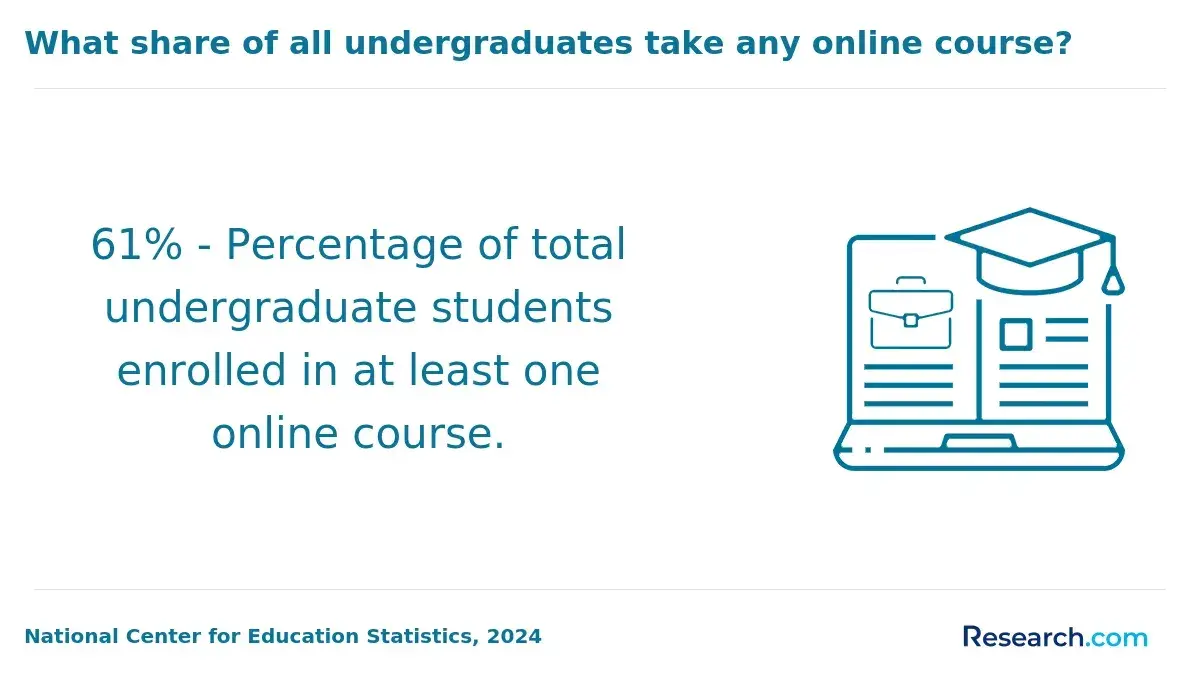
How do online public service bachelor's degrees compare to campus programs for flexibility and support?
Online public service bachelor's degrees often work best for adults who need to keep working, care for family, or study from a region without a nearby campus program. Campus programs may offer more face-to-face networking, labs, student teaching coordination, or clinical access, so the better format depends on your schedule and career requirements.
This table summarizes the trade-offs students should weigh. Use it to decide whether online flexibility is worth any added responsibility for self-management and local placement coordination.
| Feature | Online bachelor's degree | Campus bachelor's degree |
| Schedule | Often asynchronous or evening-friendly, which helps working students. | Usually follows fixed class times and campus calendars. |
| Cost control | May reduce commuting and housing costs, but online fees can apply. | May include campus fees, transportation, and housing costs. |
| Support | Quality varies; strong programs offer online advising, tutoring, library access, and career services. | Support is easier to access in person but may be less convenient for working adults. |
| Field experiences | Can be arranged locally, but availability depends on the program and state. | Often supported by established regional partners. |
| Best fit | Self-directed students who need flexibility and can communicate proactively. | Students who prefer structured routines, in-person labs, or campus networking. |
Online learning is not a shortcut; it shifts more responsibility to the student. The strongest online programs make expectations clear, provide fast access to advisors, and publish technology, internship, practicum, and exam requirements before enrollment.
What types of online bachelor's degrees lead to public service careers?
Online bachelor's degrees that lead to public service careers usually fall into two groups: mission-focused degrees that directly prepare students for civic roles, and occupation-focused degrees that public agencies and nonprofits need to operate effectively. The right choice depends on whether you want direct community service, licensed practice, administration, technology, or infrastructure work.
The table below connects common degree types with public service uses. It can help you avoid choosing a major that sounds relevant but does not match your target job requirements.
| Degree type | Public service career connection | Best for students who want |
| Public administration or business | Agency operations, budgeting, grants, procurement, nonprofit leadership. | Broad administrative and management pathways. |
| Healthcare or public health | Community health, health programs, compliance, healthcare administration. | Service work tied to access, prevention, and systems of care. |
| IT, computer science, or cybersecurity | Digital government, public-sector systems, data security, civic technology. | Technical roles with strong labor-market demand. |
| Psychology or human services | Case management, advocacy, behavioral health support, corrections programs. | People-centered roles that may lead to graduate study. |
| Nursing or education | Licensed public health, school, clinical, or classroom roles. | Regulated professions with state-specific requirements. |
| Criminal justice or emergency management | Courts, corrections, policing support, homeland security, disaster response. | Public safety, legal systems, and community protection work. |
| Engineering | Public works, transportation, utilities, environmental systems. | Infrastructure-focused careers requiring strong STEM preparation. |
If you are undecided, choose the degree that preserves the most credible options without delaying graduation. Students who need a shorter credential before committing to a bachelor's program can also compare 4 week certificate programs online, especially for entry-level technology, administrative, or healthcare support skills.
What courses and skills are typically included in online public service bachelor's programs?
Online public service bachelor's programs usually combine general education, major coursework, applied projects, and electives that build communication, ethics, data literacy, and problem-solving skills. The exact curriculum depends on the major, but the best programs connect academic work to real public needs such as safety, access, accountability, equity, and efficient service delivery.
Students should expect courses and assignments that build both technical competence and judgment. These skill areas are especially valuable across government, nonprofit, healthcare, education, and public-sector contractor roles:
- Policy, ethics, and law, including privacy, due process, public accountability, and professional responsibility.
- Budgeting, grants, and resource management for agencies or community organizations.
- Data analysis, research methods, and evidence-based decision-making.
- Communication skills for reports, public presentations, interagency collaboration, and community outreach.
- Technology fluency, including cybersecurity awareness, records systems, databases, and responsible use of AI tools.
- Cultural competence and service skills for working with diverse communities.
- Capstones, internships, practicums, simulations, or projects that demonstrate applied readiness.
AI and automation are changing public service work by speeding up reporting, triage, records management, fraud detection, and service delivery. Students should favor programs that teach responsible technology use, not just software tools, because public service workers often handle sensitive data and high-stakes decisions.
What are the typical admission requirements and application steps for these online programs?
Typical admission requirements include a high school diploma or equivalent, transcripts, an application form, and sometimes a minimum GPA, personal statement, resume, or transfer-credit review. Competitive or regulated programs, such as nursing and teacher preparation, may require prerequisites, entrance exams, immunization records, background checks, or proof of current professional licensure.
Follow these steps before applying so you can compare programs on cost and fit rather than only on admission speed:
- Define your target career and identify whether it requires licensure, certification, field experience, or state approval.
- Collect transcripts from high school, previous colleges, military training, or workforce programs.
- Request unofficial transfer estimates from several schools before paying deposits.
- Ask admissions advisors for total remaining credits, expected graduation term, online fees, and field placement requirements.
- Submit the FAFSA and scholarship applications early, even if you expect to study part time.
- Compare acceptance conditions carefully, especially if you are admitted to the university but not yet admitted to the professional major.
Transfer students who are not ready for a full bachelor's program may want to compare a fastest associates degree online pathway first, but they should verify that credits will transfer cleanly into the bachelor's program they ultimately want.
How long do online public service bachelor's degrees take and what do they cost overall?
Most bachelor's degrees require about 120 credits. First-time full-time students often plan for four academic years, while adult learners with transfer credit may finish faster and part-time students may take longer. In affordability terms, the most important number is not the calendar length advertised by the school; it is the number of credits you must still complete at that institution.
College Board's 2024 data shows average published tuition and fees of $11,610 for in-state students at public four-year colleges, but online students may pay different rates depending on residency, delivery format, and institutional pricing. The federal Pell Grant maximum for the 2024-25 award year is $7,395, which can materially reduce out-of-pocket costs for eligible low-income students but may not cover the full cost of attendance.
Students comparing timelines should understand the main completion models. Each option can be affordable in the right situation, but each has trade-offs.
| Completion model | Typical fit | Affordability trade-off |
| Traditional full time | Students who can take heavier course loads. | Faster completion may reduce years of fees but can limit work hours. |
| Part time | Working adults or caregivers. | Lower term-by-term cost but a longer timeline can increase total fees. |
| Transfer-completion | Students with associate degrees or prior college credit. | Can be very cost-effective if credits apply directly to degree requirements. |
| Competency-based | Experienced learners who can move quickly through mastered material. | May save money for self-directed students but can be difficult without steady study time. |
| Accelerated | Students who can handle shorter terms and continuous enrollment. | Can shorten the calendar but may increase workload intensity. |
If speed is important, compare an accelerated bachelor's degree with transfer-friendly and competency-based options. The fastest program is not always the best value if it causes course withdrawals, lost transfer credits, or missed licensure requirements.
What public service careers, salaries, and job outlooks can these online degrees support?
Online public service bachelor's degrees can support careers in public agencies, schools, hospitals, nonprofits, utilities, courts, community organizations, and government contractors. Salary and outlook depend on the occupation, state, experience, union rules, certifications, and whether the role is direct service, licensed practice, management, or technology-focused.
The table below uses U.S. Bureau of Labor Statistics data published in 2024 where available. Treat these figures as occupational benchmarks, not promises for any specific graduate or program.
| Career area | Relevant bachelor's pathway | BLS salary or outlook context |
| Information security analyst | Cybersecurity, IT, computer science. | May 2024 median annual wage was $124,910, with strong projected demand tied to data protection and cyber threats. |
| Medical and health services manager | Healthcare administration, business, public health. | May 2024 median annual wage was $117,960, and growth is projected to be much faster than average. |
| Registered nurse | BSN or RN-to-BSN nursing pathway. | May 2024 median annual wage was $93,600, though licensure and clinical eligibility are required. |
| Social and community service manager | Human services, psychology, public administration, nonprofit management. | May 2024 median annual wage was $78,240, with demand tied to community programs and social service needs. |
| Police and detective roles | Criminal justice, public safety, emergency management. | May 2024 median annual wage was $77,270, but hiring standards often include academy, exam, and background requirements. |
| Computer and mathematical public-sector roles | IT, computer science, data analytics, cybersecurity. | BLS reported a May 2024 median annual wage of $105,990 for the broader occupational group. |
Students planning long-term advancement should also consider whether graduate education may be needed for leadership, counseling, policy analysis, public administration, or specialized technical management. Experienced professionals who want flexible graduate options later may compare competency based masters degrees after confirming that the bachelor's credential supports admission.
How do licensing, certifications, and background checks affect public service career paths?
Licensing, certifications, and background checks can determine whether an online bachelor's degree actually leads to the job you want. This is especially important in nursing, education, counseling-adjacent services, law enforcement, corrections, cybersecurity, emergency management, and engineering-related work.
Before enrolling, identify which requirements apply to your target role. The list below shows common requirements that can affect eligibility after graduation:
- Nursing roles usually require state board approval, clinical requirements, and passing the NCLEX-RN for initial licensure.
- Teaching roles usually require state-approved educator preparation, student teaching, background checks, and certification exams.
- Law enforcement and corrections roles may require academy training, civil service exams, physical standards, psychological screening, and detailed background investigations.
- Cybersecurity roles may prefer or require certifications, security clearances, citizenship requirements, or documented hands-on experience.
- Engineering roles may require an ABET-accredited degree for the most straightforward path toward professional engineer licensure.
- Human services roles involving vulnerable populations may require fingerprinting, abuse registry checks, driving record checks, or agency-specific training.
Common red flags include vague licensure language, unwillingness to confirm state eligibility, no clear field placement process, unusually aggressive admissions pressure, and promises of guaranteed jobs or salaries. If a school cannot explain how its online program meets the requirements in your state, keep comparing options.
Other Things You Should Know About
The most affordable option is usually a regionally accredited public university program that accepts substantial transfer credit and aligns with your career goal. For many students, affordability depends more on net price, transfer policies, and time to completion than the listed tuition rate alone.
Yes, when the school is properly accredited and the program meets professional or state requirements. Employers generally care about accredited credentials, relevant skills, experience, licensure where required, and the applicant's ability to perform the role.
Many public service roles are accessible with a bachelor's degree, including agency administration, nonprofit work, criminal justice support, IT, cybersecurity, public health, and some management-track roles. Licensed careers such as teaching and nursing require additional state-specific steps.
Not automatically. Choose the lowest-cost credible program that is accredited, transfer-friendly, authorized in your state, transparent about fees, and aligned with your intended career or licensure path.
References
- Scholarships and Grants for MPA Students https://teach.com/online-ed/government-degrees/online-masters-public-administration/scholarships/
- Average Cost of Online College [2025]: Yearly Tuition + Fees https://educationdata.org/average-cost-of-online-college
- 2025 Best Online Public Administration Degrees https://www.onlineu.com/degrees/public-administration
- Financing Your Degree https://aspph.org/student-journey/financing-your-degree/
- Best Accredited Online Universities in 2025 https://www.study.eu/article/best-accredited-online-universities
- Major in Public Administration (Bachelor’s) https://online.cudenver.edu/programs/undergraduate/online-major-public-administration-bachelors
- Public Administration Degree | Bachelor of Public Administration | University of Phoenix https://www.phoenix.edu/online-criminal-justice-degrees/public-administration-bachelors-degree.html
- Best Online Degrees for Working Adults in 2026 https://www.straighterline.com/blog/degreecompletion-best-online-degrees-for-working-adults-in-2026
- Financial Aid For Online Colleges https://www.affordablecollegesonline.org/financial-aid/financial-aid-for-online-colleges/
- Federal occupations by college major https://help.usajobs.gov/working-in-government/unique-hiring-paths/students/federal-occupations-by-college-major