2027 Best Bachelor's Degree Programs With Asynchronous Classes

Co-Founder and Chief Data Scientist
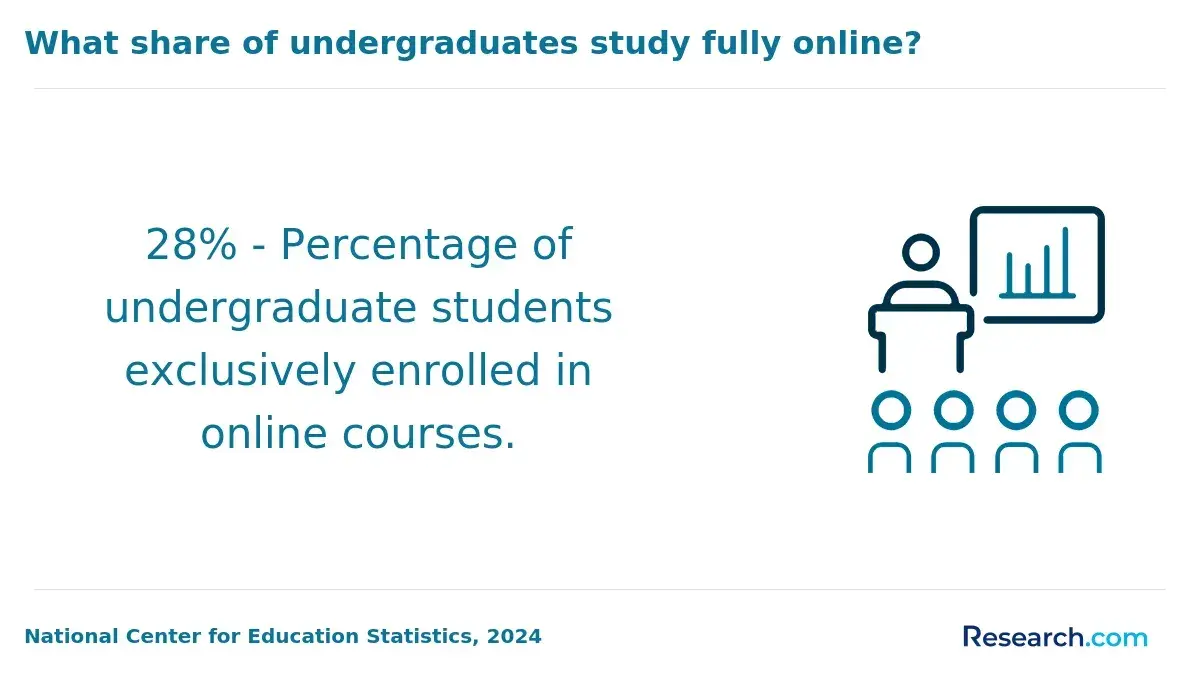
Choosing an online bachelor's program is no longer just about convenience; it is about finding a degree format that fits work, family, cost, and career goals. NCES reported in 2024 that more than half of U.S. undergraduates took at least one distance education course, showing how mainstream online learning has become.
This guide is for students comparing asynchronous bachelor's degrees across high-demand fields. You will learn which majors fit this format, how to evaluate quality, what costs to expect, and how to choose a program that supports your next career step.
Key Things You Should Know
- Asynchronous bachelor's programs work best for self-directed students because lectures, assignments, and discussions are usually completed on weekly deadlines rather than at fixed class times.
- Cost varies widely: College Board's 2024 pricing data lists average published tuition and fees at $11,610 for in-state public four-year colleges and $43,350 for private nonprofit four-year colleges.
- Career value depends on major, accreditation, experience, and licensure fit; BLS 2024 wage data shows especially strong median pay in computer, IT, engineering, nursing, and management-related occupations.
Top 10 Best Bachelor's Degree Programs With Asynchronous Classes
Business Degrees
An asynchronous bachelor's in business fits students who want broad career flexibility in management, marketing, accounting, analytics, entrepreneurship, or operations. Look for programs with projects using spreadsheets, data dashboards, case studies, and team communication tools.
AACSB, ACBSP, or IACBE programmatic accreditation can add confidence, especially for accounting or graduate business pathways. Business is a good choice for working adults because assignments often mirror workplace tasks, but students seeking CPA eligibility should confirm state accounting course requirements before enrolling.
Healthcare Degrees
Healthcare bachelor's programs with asynchronous classes often focus on health administration, public health, health information management, healthcare management, or allied health completion pathways. These degrees can suit students who want nonclinical leadership, compliance, data, or operations roles.
Programs may include asynchronous coursework plus internships, practicums, or local field experiences. Students should verify whether the program is designed for administrative careers or for licensure preparation, because online flexibility does not automatically mean the degree meets clinical credential requirements.
Information Technology Degrees
An asynchronous IT bachelor's degree is strong for students who want applied technology roles such as systems administration, cloud support, network operations, database support, or IT project coordination. Good programs include virtual labs, ticketing simulations, cloud platforms, security modules, and portfolio projects.
BLS reported a 2024 median annual wage of $105,990 for computer and information technology occupations, which makes program quality and skills alignment especially important. Students should compare whether certification preparation is built into the curriculum.
Computer Science Degrees
Computer science can work well asynchronously when the program includes structured coding assignments, algorithm practice, software engineering projects, version control, and faculty feedback. It is best for students who can tolerate abstract problem-solving and consistent independent practice.
Compare math requirements, programming languages, project depth, and whether the degree is ABET-accredited when that matters for your goals. Students seeking software development, data, AI, or graduate school pathways should prioritize rigorous curricula over the fastest completion timeline.
Cybersecurity Degrees
An asynchronous cybersecurity bachelor's degree suits students interested in risk management, incident response, network defense, digital forensics, governance, or security operations. Quality programs use virtual cyber ranges, labs, scripting, policy analysis, and capstone projects.
BLS listed a 2024 median annual wage of $124,910 for information security analysts, but entry-level roles still often require experience, certifications, or IT foundations. Strong programs help students prepare for credentials such as Security+, Network+, CySA+, or cloud security certifications.
Psychology Degrees
An asynchronous bachelor's in psychology is useful for students interested in human behavior, research methods, social services, HR, user research, case management, or graduate study. Most bachelor's programs do not qualify graduates to become licensed psychologists; that usually requires graduate education and supervised experience.
Good online programs include statistics, research design, developmental psychology, abnormal psychology, ethics, and writing-intensive projects. Students should choose this major when it supports a clear next step, not because it sounds broadly interesting.
Nursing Degrees
Asynchronous nursing bachelor's programs are most common as RN-to-BSN pathways for licensed registered nurses. They often let nurses complete leadership, evidence-based practice, community health, informatics, and policy courses online while meeting clinical or project requirements locally.
BLS reported a 2024 median annual wage of $93,600 for registered nurses, but pay varies by setting, state, shift, and experience. Pre-licensure online nursing programs are less flexible because labs, simulations, and clinical placements must meet state board requirements.
Education Degrees
An asynchronous bachelor's in education can support careers in teaching, instructional design, child development, training, or education administration support. Students seeking teacher licensure must confirm that the program is approved for their state and includes required fieldwork or student teaching.
CAEP accreditation can be a positive quality marker, but state approval is critical. This format works best for students who can complete online coursework independently while arranging observation hours, practicum placements, or student teaching on a predictable schedule.
Criminal Justice Degrees
An asynchronous criminal justice bachelor's degree is a practical fit for students interested in law enforcement, corrections, homeland security, emergency management, victim advocacy, compliance, or policy roles. Coursework often covers criminology, courts, policing, ethics, research, and constitutional issues.
BLS reported a 2024 median annual wage of $77,270 for police and detectives, but many roles have academy, physical, background, or civil service requirements beyond the degree. Students should compare internships, local agency partnerships, and career services.
Engineering Degrees
Engineering bachelor's degrees are harder to deliver fully asynchronously because labs, design studios, and ABET requirements can require structured activities. Still, some programs offer asynchronous coursework in engineering technology, industrial engineering, electrical engineering, or completion pathways.
BLS reported a 2024 median annual wage of $99,590 for civil engineers, showing the potential value of a rigorous program. Students should prioritize ABET accreditation, lab access, transfer rules, and whether the program supports professional licensure goals in their state.
What is an asynchronous bachelor's degree program and how does it work online?
An asynchronous bachelor's degree program is an online undergraduate program where students do not need to attend most classes at a fixed meeting time. Instead, instructors post readings, recorded lectures, assignments, quizzes, projects, and discussion prompts inside a learning management system.
Students complete work by deadlines, often weekly, while communicating with instructors through messages, feedback tools, office hours, or discussion boards.
This format is different from self-paced learning. In many asynchronous programs, you can choose when to study during the week, but you still follow a course calendar, due dates, participation rules, and term schedule. Some programs also include occasional synchronous events such as orientation, advising, proctored exams, group presentations, labs, or clinical briefings.
The strongest candidates are students who can manage time without a live class routine. Before enrolling, ask how often courses open, whether assignments are weekly or competency-based, how quickly faculty respond, and what happens if work, caregiving, or military duties interrupt a term.
How do online asynchronous bachelor's degrees compare to traditional campus programs?
Online asynchronous bachelor's degrees can be academically comparable to campus programs when they are offered by accredited institutions, taught by qualified faculty, and supported by strong student services.
The biggest difference is not necessarily rigor; it is how the learning experience is organized. Campus programs create structure through class meetings, while asynchronous programs require students to create their own weekly structure.
The comparison below shows the main trade-offs students should weigh before choosing a format. Use it to decide whether flexibility or built-in routine matters more for your situation:
| Factor | Asynchronous online bachelor's degree | Traditional campus bachelor's degree |
| Schedule | Work can usually be completed during evenings, weekends, or other available hours before deadlines. | Students attend classes at fixed times and often follow a more predictable weekly routine. |
| Best fit | Working adults, caregivers, military students, commuters, and students who need geographic flexibility. | Students who want in-person interaction, campus life, labs, studios, athletics, or highly structured support. |
| Student support | Support may include online tutoring, advising, career services, writing help, library access, and tech support. | Support is often available in person, with easier access to campus offices, faculty, and peer networks. |
| Learning style | Requires independent reading, writing, planning, and comfort with digital tools. | Offers more live discussion, immediate classroom feedback, and face-to-face accountability. |
| Common risk | Falling behind because there is no scheduled class meeting to reset momentum. | Higher commuting, housing, or schedule costs for students who cannot attend regularly. |
Neither format is automatically better. Choose asynchronous online study if schedule control is essential and you can build routines; choose campus study if you need live structure, hands-on facilities, or a stronger in-person peer environment.
How can students verify accreditation and quality for asynchronous bachelor's programs?
Accreditation is the first quality check for any asynchronous bachelor's degree. Institutional accreditation matters because it affects federal financial aid eligibility, transfer credit acceptance, graduate school admission, and employer recognition.
Programmatic accreditation may also matter in fields such as nursing, engineering, business, education, social work, and health information management.
Students should verify quality before applying, not after admission. The safest approach is to confirm accreditation and then evaluate outcomes, support, and curriculum fit:
- Confirm that the institution is accredited by an agency recognized by the U.S. Department of Education or the Council for Higher Education Accreditation.
- Check whether your major needs programmatic accreditation, such as ABET for many engineering programs, CCNE or ACEN for nursing, CAEP for teacher preparation, or AACSB, ACBSP, or IACBE for business.
- Ask whether the online degree transcript and diploma are the same as the campus version, if the institution offers both formats.
- Review graduation rates, retention indicators, student complaint history, licensure pass-rate disclosures where applicable, and career services access for online students.
- Confirm that the program meets state authorization and licensure requirements in the state where you plan to work.
Red flags include vague accreditation claims, pressure to enroll immediately, unclear faculty credentials, no published tuition and fee information, poor transfer transparency, or promises of guaranteed jobs and salaries.
What majors and disciplines are best suited to asynchronous bachelor's degrees?
The best majors for asynchronous bachelor's degrees are usually those where learning can be assessed through writing, problem-solving, projects, simulations, portfolios, exams, and supervised local experiences. They are less ideal when the program depends heavily on labs, studios, clinical placements, performance coaching, or specialized equipment that cannot be replaced online.
The table below summarizes which disciplines usually fit asynchronous study well and what students should verify before choosing a major. If you are still comparing long-term options, reviewing top degrees for the future can help you connect major choice with labor-market direction:
| Discipline | Asynchronous fit | What to verify |
| Business | Strong fit because many assignments use cases, projects, analytics, and written communication. | Accounting licensure requirements, internship access, and business accreditation. |
| IT, cybersecurity, and computer science | Strong fit when the program includes labs, coding practice, cloud tools, and portfolio projects. | Technical rigor, faculty feedback, certification alignment, and employer-recognized skills. |
| Psychology and social sciences | Strong fit for research, writing, statistics, and theory-based coursework. | Graduate school prerequisites and limits of bachelor's-level licensure options. |
| Healthcare administration and public health | Good fit for policy, operations, informatics, quality improvement, and population health topics. | Fieldwork requirements, health data tools, and whether the program is clinical or administrative. |
| Nursing and education | Good fit for completion or hybrid models, but not always fully online. | State approval, clinical or practicum placement rules, and licensure eligibility. |
| Engineering | Variable fit because lab and design requirements can limit full online delivery. | ABET accreditation, lab format, transfer prerequisites, and professional licensure alignment. |
A practical rule is to choose the degree that aligns with your target job requirements, not just the degree that is easiest to finish online.
What courses, learning technologies, and supports do asynchronous bachelor's programs typically include?
Asynchronous bachelor's programs typically combine recorded instruction, readings, quizzes, papers, projects, exams, and discussion boards.
Stronger programs go beyond posted lectures by using applied assignments, regular feedback, online tutoring, library access, career advising, accessibility support, and technical help outside standard business hours.
Because online quality varies, students should look closely at the learning environment before committing. The following features are especially important for keeping students engaged and employable:
- A learning management system that clearly organizes modules, deadlines, grades, instructor messages, and course materials.
- Recorded lectures or multimedia lessons that are updated regularly rather than reused without context.
- Instructor feedback on papers, projects, labs, or exams within a predictable time frame.
- Virtual labs, simulations, proctoring tools, portfolio platforms, or cloud environments when the major requires applied practice.
- Online tutoring, writing support, math support, library databases, accessibility services, and career coaching available to remote learners.
- Academic advising that helps students plan course sequences, transfer credits, internships, and graduation requirements.
AI is also changing online learning. Many programs now use AI-aware assignment design, plagiarism review, adaptive practice tools, and digital proctoring. Students should ask how the school permits or restricts AI tools, because unclear rules can create academic integrity problems.
What admission requirements and transfer credit policies apply to asynchronous bachelor's degrees?
Admission requirements for asynchronous bachelor's programs are usually similar to campus bachelor's programs. First-year applicants may need a high school diploma or GED, transcripts, an application, and sometimes test scores, essays, or recommendation letters. Transfer and degree-completion applicants usually submit transcripts from all previous colleges and may need a minimum GPA.
Transfer credit policy can have a major effect on cost and completion time. Students who already have credits should request an official evaluation before enrolling, especially if comparing a bachelor's pathway with an associate degree in 6 months online free search result or other short credential claims.
Ask admissions and advising offices these questions before you apply. Clear answers can prevent wasted credits, unexpected terms, and financial aid issues:
- How many transfer credits can apply toward the bachelor's degree, and how many must be completed at the institution?
- Will general education, elective, military, workplace, AP, CLEP, or prior learning credits be reviewed?
- Do major courses expire after a certain number of years, especially in technology, science, or healthcare fields?
- Can the school provide a written degree plan showing remaining courses, estimated terms, and total expected cost?
- Will transfer credits affect eligibility for scholarships, financial aid, honors, or accelerated pathways?
A common mistake is enrolling before receiving a formal transfer evaluation. Even a school with low tuition can become expensive if too few credits apply to your degree.
How long do asynchronous bachelor's programs take and what do they cost?
Most bachelor's degrees require about 120 semester credits. A first-time full-time student commonly needs about four academic years, while transfer students may finish faster depending on accepted credits, course load, and term structure. Part-time students often take longer, but asynchronous delivery can make steady progress more realistic for adults with work or family responsibilities.
Costs depend on tuition, fees, books, technology, residency rules, transfer credits, and whether the school charges online students differently.
College Board's 2024 data lists average published tuition and fees at $11,610 for in-state public four-year institutions and $43,350 for private nonprofit four-year institutions for the academic year, which shows why comparing total program cost matters more than comparing one course price.
The table below highlights cost and timeline factors that can change the real price of an asynchronous bachelor's degree. Use it to ask schools for a full estimate before enrolling:
| Factor | Why it matters | Decision tip |
| Transfer credits | Accepted credits can reduce both tuition and time to graduation. | Get a written transfer evaluation before committing. |
| Term length | Eight-week, six-week, and competency-based formats may speed progress but increase weekly workload. | Match pace to your work schedule and study time. |
| Residency requirement | Schools may require a minimum number of credits to be completed through them. | Check whether low-cost transfer credits will actually count. |
| Online fees | Technology, proctoring, lab, graduation, or program fees can increase total cost. | Ask for a term-by-term cost sheet, not just tuition per credit. |
| Financial aid | Enrollment intensity can affect federal aid, scholarships, and satisfactory academic progress. | Confirm how part-time or accelerated enrollment affects aid eligibility. |
Accelerated formats can be useful, but they are not automatically easier. Students considering 6 week courses should expect compressed reading, assignments, and exams, which can be difficult when taking multiple courses at once.
What careers, licenses, or certifications can an asynchronous bachelor's degree lead to?
An asynchronous bachelor's degree can lead to entry-level, advancement, or career-change opportunities, but outcomes depend on the major and the student's experience.
Employers generally care about whether the school is accredited, whether the degree matches the role, and whether the applicant can show relevant skills through internships, projects, certifications, work history, or portfolios.
The table below connects common asynchronous bachelor's majors with potential career directions. It is not a guarantee of employment or salary, but it can help students think about whether a major supports their intended outcome:
| Major area | Possible career directions | Additional requirements to check |
| Business | Operations coordinator, marketing analyst, sales manager pathway, HR specialist, accountant pathway, project coordinator. | CPA coursework, analytics tools, internships, and industry certifications. |
| Healthcare administration | Medical office management, quality improvement, health services coordination, health information, compliance support. | Professional credentials, healthcare data systems, and experience requirements. |
| IT and cybersecurity | IT support specialist, systems analyst pathway, network administrator, SOC analyst pathway, cloud support. | Certifications, hands-on labs, security clearance considerations, and portfolio evidence. |
| Computer science | Software developer pathway, QA analyst, data analyst pathway, web developer, technical product support. | Coding portfolio, technical interviews, math preparation, and internships. |
| Psychology | Case management support, HR, behavioral health technician, research assistant, user research pathway. | Graduate education for licensed counseling or psychology roles. |
| Nursing | RN advancement, charge nurse pathway, care coordination, public health nursing, nurse leadership pathway. | Active RN license, state board rules, clinical requirements, and employer expectations. |
| Education | Teacher pathway, instructional aide advancement, training specialist, curriculum support, childcare leadership. | State licensure approval, student teaching, exams, and background checks. |
| Criminal justice | Law enforcement pathway, corrections, probation support, emergency management, compliance, victim services. | Academy training, physical standards, background checks, and civil service rules. |
| Engineering | Engineering technologist, civil or electrical engineering pathway, manufacturing support, quality engineering support. | ABET accreditation, FE exam eligibility, labs, and state licensure rules. |
Licensure fields require extra caution. Nursing, teaching, engineering, counseling, and some healthcare roles are regulated by states, so students should verify requirements with the relevant state board before enrolling.
How should students choose the best asynchronous bachelor's program for their goals?
The best asynchronous bachelor's program is the one that matches your career goal, learning style, budget, schedule, and state requirements. Rankings can be useful starting points, but they should not replace a practical fit check.
A lower-cost program may be a better investment if it is accredited, accepts transfer credit, supports your major, and helps you graduate without unnecessary delays.
Use the following steps to compare programs in a structured way. This process helps you avoid choosing based only on brand name, speed, or tuition:
- Define the job, graduate program, license, or promotion you want the degree to support.
- Confirm institutional accreditation and any programmatic accreditation required for your field.
- Request a written transfer credit evaluation and a remaining-course degree plan.
- Calculate total cost, including tuition, fees, books, technology, proctoring, travel, and lost work time.
- Compare course format, term length, weekly workload, faculty availability, and online student support.
- Review career services, internship options, certification preparation, portfolios, capstones, and employer partnerships.
- Ask current students or alumni how responsive instructors and advisors are in the online format.
- Check state licensure rules if your goal involves nursing, teaching, engineering, counseling, or another regulated profession.
If affordability and pacing are top priorities, comparing the cheapest self-paced online college options can help you understand how flexible formats differ from standard asynchronous programs.
Common mistakes include choosing the fastest program without checking workload, assuming online means self-paced, ignoring fees, overlooking state authorization, and assuming a degree alone will replace experience. A stronger strategy is to choose a program that helps you build evidence of skill while completing an accredited credential.
Other Things You Should Know About
They can be, especially when the institution is accredited and the degree is relevant to the job. Employers typically focus on accreditation, skills, experience, projects, internships, certifications, and whether the applicant can perform the work.
Yes. Many are mostly asynchronous but may include live orientations, advising sessions, group presentations, office hours, proctored exams, labs, clinical meetings, or fieldwork. Always ask what synchronous requirements exist before enrolling.
Possibly. Transfer credits, accelerated terms, year-round enrollment, and competency-based formats can shorten the timeline. However, faster programs require more weekly study time and may not be realistic for every working student.
The biggest red flag is unclear or questionable accreditation. Other warning signs include high-pressure enrollment tactics, vague total costs, limited transfer information, weak student support, and promises of guaranteed employment or salary outcomes.
References
- Synchronous vs Asynchronous | University of Bridgeport https://www.bridgeport.edu/news/synchronous-vs-asynchronous/
- Best Online Colleges for Working Adults [2026] https://www.straighterline.com/blog/degree-completion-best-online-colleges-for-working-adults
- Online College Students by the Numbers - OnlineColleges.net https://www.onlinecolleges.net/for-students/online-college-students-by-the-numbers/
- Kritik - Kritik360 - Advantages and Disadvantages of Synchronous and Asynchronous Learning https://www.kritik.io/blog-post/benefits-and-challenges-of-asynchronous-learning
- Best Accredited Online Universities in 2025 https://www.study.eu/article/best-accredited-online-universities
- Comparing Outcomes Across Credentials | HESA https://higheredstrategy.com/comparing-outcomes-across-credentials/
- 2025 List of Accredited Online Degree Programs https://www.onlineu.com/degrees
- Research Summary: Education and Lifetime Earnings https://www.ssa.gov/policy/docs/research-summaries/education-earnings.html
- Online Degree vs. Traditional: Choosing the Right Path https://beal.edu/online-degree-vs-traditional/
- Society for the Teaching of Psychology https://teachpsych.org/E-xcellence-in-Teaching-Blog/12197763