2027 Best Online Bachelor's Completion Programs With Scholarship Options

Co-Founder and Chief Data Scientist
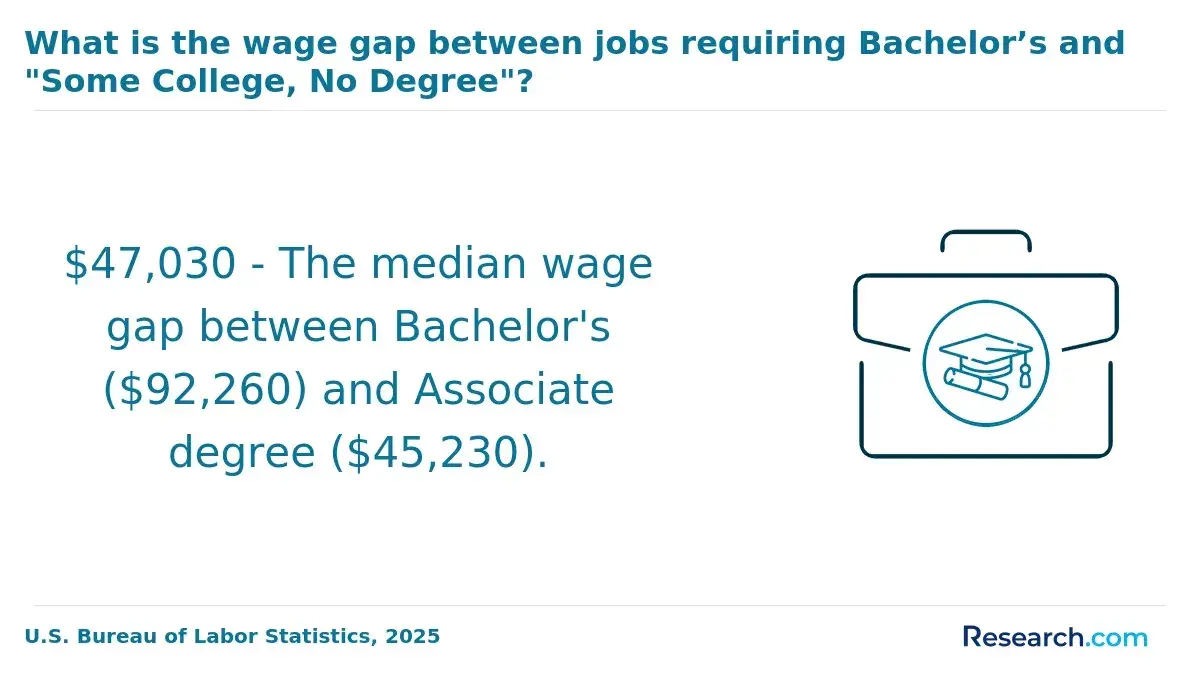
Finishing a bachelor's degree can change your pay, promotion options, and job security, but the right online completion program depends on transfer credits, cost, schedule, and career goal. The U.S. Bureau of Labor Statistics reported in 2024 that bachelor's degree holders had median weekly earnings of $1,543, higher than workers with some college but no degree.
This guide is for adults with prior college credit who want a practical way to compare accredited programs, scholarship options, timelines, majors, and return on investment before enrolling.
Key Things You Should Know
- The best online bachelor's completion programs are regionally accredited, transfer-friendly, and transparent about total cost, with many accepting 60 to 90 prior credits toward the 120 credits commonly required for graduation.
- Scholarship options can include adult learner awards, transfer scholarships, employer tuition assistance, military benefits, Phi Theta Kappa awards, and FAFSA-based aid; the 2024-25 maximum Federal Pell Grant is $7,395 for eligible students.
- Career fit matters as much as speed: BLS projections released in 2024 show especially strong 2023-2033 growth for roles such as information security analysts at 33% and medical and health services managers at 29%.
Top 10 Best Online Bachelor's Completion Programs With Scholarship Options
Business Degrees
Business completion programs are a strong fit for adults who want management, operations, accounting, marketing, finance, or entrepreneurship roles without starting over. The best options accept associate degree credits, offer concentrations, and include applied projects using real business cases. BLS data released in 2024 projects 6% growth for accountants and auditors from 2023 to 2033, so students considering accounting should check whether upper-division courses align with CPA prerequisites in their state. Choose business if you want broad mobility; consider a narrower major if your target role requires technical licensure or specialized clinical training.
Healthcare Degrees
Healthcare bachelor's completion programs often serve working adults in allied health, administration, public health, health informatics, or long-term care. They are best for students who already have clinical experience or an associate degree and want supervisory or administrative roles. BLS projections released in 2024 show medical and health services managers growing 29% from 2023 to 2033, much faster than average. Before enrolling, confirm whether the program is clinical, administrative, or public-health focused, because not every healthcare bachelor's degree leads to licensure or direct patient-care eligibility.
Information Technology Degrees
Information technology completion degrees usually emphasize networks, systems administration, cloud platforms, databases, project management, and user support. They fit students who want applied technology roles but may not need the heavy theory of computer science. The strongest programs map courses to employer-recognized skills and may help students prepare for certifications such as CompTIA, Cisco, AWS, or Microsoft credentials. If you already work in IT, ask whether professional certifications or documented training can earn credit. Choose IT for infrastructure and business technology careers; choose computer science for software engineering depth.
Computer Science Degrees
Computer science completion programs are best for students targeting software development, data engineering, AI-related work, or graduate study in computing. Expect programming, algorithms, databases, software engineering, operating systems, and discrete math. BLS data released in 2024 lists $132,270 as the May 2023 median pay for software developers, but salaries vary widely by region, portfolio, internship experience, and employer. Transfer students should confirm how prior math and programming credits apply, because missing prerequisites can extend the timeline even in an online completion format.
Cybersecurity Degrees
Cybersecurity completion degrees are built for students interested in risk management, digital forensics, cloud security, incident response, governance, and secure networks. BLS projections released in 2024 show 33% growth for information security analysts from 2023 to 2033, making this one of the strongest labor-market areas among bachelor's-level fields. The best programs include hands-on labs, security tools, policy work, and preparation for certifications such as Security+, CySA+, or CISSP after experience. Avoid programs that are only theoretical if your goal is an operations, analyst, or security engineering role.
Psychology Degrees
Psychology completion programs suit students interested in human behavior, research, counseling-adjacent work, social services, HR, case management, or graduate study. A bachelor's degree in psychology does not qualify someone to become a licensed psychologist or counselor by itself, so the best programs are honest about graduate school expectations. BLS projections released in 2024 show 7% growth for psychologists from 2023 to 2033, but those roles usually require advanced degrees and state licensure. Choose psychology if you value behavioral science and are open to graduate study or broad human-services roles.
Nursing Degrees
Online nursing completion programs are most commonly RN-to-BSN pathways for licensed registered nurses who already hold an ADN or nursing diploma. They usually focus on leadership, evidence-based practice, community health, quality improvement, and health assessment rather than initial RN licensure. BLS data released in 2024 lists $86,070 as the May 2023 median pay for registered nurses, but BSN value often depends on employer expectations, magnet hospital preferences, and regional hiring norms. Confirm clinical or practicum requirements, state authorization, and whether your RN license must be active before admission.
Education Degrees
Education completion programs can support careers in elementary education, special education, early childhood education, instructional design, or non-licensure educational studies. The most important distinction is whether the degree leads to teacher certification in your state. BLS data released in 2024 lists $63,680 as the May 2023 median pay for elementary school teachers, except special education. Online licensure programs may still require student teaching or field placements near you. If you already work in schools, ask whether paraprofessional experience, prior coursework, or an associate degree can shorten your path.
Criminal Justice Degrees
Criminal justice completion programs prepare students for law enforcement, corrections, probation, emergency management, homeland security, victim advocacy, and policy roles. Students with records should check admissions rules, internship eligibility, background checks, and employer requirements early; this is also where guides to online colleges that accept felons can help clarify options. BLS data released in 2024 lists $74,910 as the May 2023 median pay for police and detectives, but hiring standards vary by agency and jurisdiction. Choose this field only after matching the degree to a realistic role.
Engineering Degrees
Engineering completion programs are more limited online because labs, ABET accreditation, and sequencing requirements can be difficult to transfer. They are best for students with strong math, science, and prior engineering technology coursework. Common options include engineering technology, industrial technology, electrical engineering technology, or construction management rather than traditional engineering. BLS data released in 2024 lists $95,890 as the May 2023 median pay for civil engineers, but professional engineering licensure may require an ABET-accredited engineering degree. Verify accreditation and lab expectations before assuming an online completion path meets licensure goals.
What is an online bachelor's completion program and who is it best suited for?
An online bachelor's completion program is a degree pathway designed for students who already have college credits, an associate degree, military training, professional certifications, or other eligible prior learning. Instead of repeating general education courses, students transfer approved credits and complete the remaining upper-division coursework online.
The table below summarizes common completion-program formats so you can match the structure to your starting point and schedule:
| Program format | Best fit | Key trade-off |
| Degree-completion bachelor's | Students with substantial prior college credit | Fastest when transfer credits apply cleanly |
| RN-to-BSN | Licensed RNs with an ADN or diploma | Usually requires active RN licensure |
| Applied bachelor's | Students with technical or career-focused associate degrees | May be less ideal for some graduate programs |
| Competency-based bachelor's | Self-directed adults with strong work experience | Requires discipline and clear assessment rules |
| Part-time online bachelor's | Working adults needing predictable pacing | Often takes longer but lowers workload pressure |
How do you compare accredited online bachelor's completion programs and avoid diploma mills?
Accreditation is the first filter. A legitimate online bachelor's completion program should be offered by an institution accredited by an agency recognized by the U.S. Department of Education or the Council for Higher Education Accreditation. Regional institutional accreditation is widely accepted for transfer, graduate admission, employer tuition assistance, and federal financial aid.
Programmatic accreditation may also matter. Nursing, education, business, engineering, social work, and healthcare programs can have field-specific accreditation or state approval requirements. This is especially important when the degree leads to licensure, certification, or a regulated profession.
Use this sequence before submitting an application or deposit:
- Verify institutional accreditation through an official accreditor or federal database, not only the school's marketing page.
- Check whether your intended major needs programmatic accreditation or state approval for your career goal.
- Ask for a written transfer credit evaluation before committing, including which credits count toward the major, electives, and general education.
- Review graduation rates, student support services, faculty credentials, complaint history, and refund policies.
- Compare total program cost, not just per-credit tuition, because fees, technology charges, books, and repeated courses can change the real price.
Red flags include pressure to enroll immediately, promises of guaranteed jobs or salaries, unclear accreditation language, unusually large "life experience" credit with little documentation, and refusal to provide a degree audit. A school can be online, flexible, and affordable without using high-pressure tactics.
The table below separates legitimate flexibility from common diploma-mill warning signs:
| What to check | Strong program signal | Red flag |
| Accreditation | Recognized institutional accreditation is clearly named | Vague claims such as "internationally accredited" with no recognized agency |
| Transfer review | Written evaluation shows how credits apply | Verbal estimate only |
| Faculty | Faculty credentials and departments are visible | No named instructors or academic leadership |
| Cost | Total tuition and fees are disclosed | Pricing changes after admissions pressure |
| Career claims | Outcomes are described with limitations | Guaranteed employment or salary promises |
What types of scholarships and tuition discounts are available for online completion students?
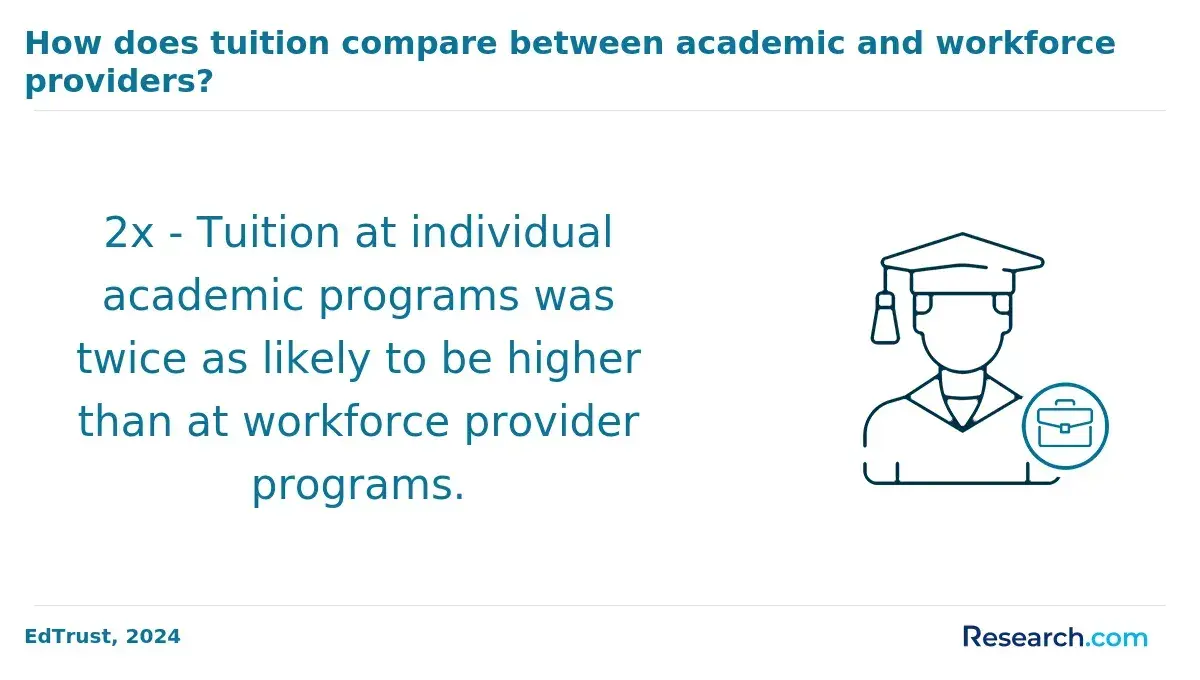
Scholarships and tuition discounts for online completion students are more common than many adults expect, but they are often different from first-year freshman merit awards. The strongest funding strategy combines institutional aid, transfer scholarships, federal aid, employer benefits, and lower-cost credit options.
Students seeking federal aid should confirm that the school participates in Title IV federal aid programs and that the program itself is aid-eligible. Researching FAFSA approved online colleges is a practical starting point if you need Pell Grants, federal loans, or work-study eligibility.
Common scholarship and discount options include the following:
- Adult learner scholarships for students returning after a gap in enrollment.
- Transfer scholarships for community college graduates or students with a strong prior GPA.
- Phi Theta Kappa scholarships for eligible associate degree graduates from honor society chapters.
- Employer tuition assistance or reimbursement, often tied to grades, job relevance, or continued employment.
- Military and veteran education benefits, including GI Bill benefits, Yellow Ribbon participation, and military tuition discounts.
- Need-based grants such as the Federal Pell Grant, which has a 2024-25 maximum award of $7,395 for eligible students.
- State grants or workforce scholarships, which may favor high-demand fields such as nursing, teaching, cybersecurity, or healthcare administration.
Ask financial aid offices whether scholarships are renewable, whether part-time students qualify, and whether online students are treated the same as campus students. A one-time award can help, but a renewable award may matter more for a program that takes several terms.
What admission requirements and transfer credit policies do online bachelor's completion programs use?
Admission requirements vary, but most bachelor's completion programs expect applicants to have prior college credit from accredited institutions. Many programs are built around transfer students who have completed an associate degree or a large block of general education coursework.
Typical admission materials are straightforward, but the transfer evaluation is where costs and timelines are determined. The table below shows the policies that most affect whether a program is truly efficient for you.
| Policy area | What it means | Why it matters |
| Minimum credits | Some programs require a set number of transferable credits before entry | Students below the threshold may need a different online bachelor's path |
| Residency requirement | Credits that must be completed at the degree-granting school | High residency requirements can limit transfer savings |
| Major credit limits | Schools may accept electives but require upper-division major courses in-house | Affects how many credits actually shorten the degree |
| Credit age limits | Some technical, science, or business credits may expire after several years | Older credits may need review or replacement |
| Prior learning assessment | Credit may be awarded for exams, portfolios, certifications, or military training | Can reduce cost when policies are clear and fees are reasonable |
Before enrolling, request an official or preliminary degree audit showing remaining courses, estimated credits, and expected graduation timeline. Do not rely only on a general statement such as "we accept up to 90 credits," because accepted credits may not all apply to the major.
Applicants may also need a minimum GPA, transcripts from every college attended, a resume, proof of licensure for programs such as RN-to-BSN, or prerequisite courses in math, science, business, or technology. Selective programs may require higher GPAs or professional experience.
How long do online bachelor's completion programs take and how are they structured?
Online completion programs usually use one of several structures. Asynchronous courses let students complete weekly work on their own schedule, while synchronous courses require scheduled live sessions. Some programs use accelerated 5-, 7-, or 8-week terms; others follow a traditional semester calendar.
Use these steps to estimate your realistic timeline:
- Start with the school's written list of remaining credits after transfer review.
- Divide remaining credits by the number of credits you can reasonably take each term.
- Add time for prerequisites, practicum hours, student teaching, clinical projects, or capstone sequences.
- Check whether required courses are offered every term or only once per year.
- Build in a buffer if you work full time, have caregiving responsibilities, or expect busy seasons at work.
Accelerated programs can be valuable when you have strong transfer credit, stable work hours, and enough study time. They can backfire if short terms require more weekly reading, writing, labs, or group work than your schedule allows.
What majors and core courses are common in online bachelor's completion programs?
Online bachelor's completion programs usually combine remaining general education, upper-division major courses, electives, and a capstone or applied project. The best curriculum is not always the longest or flashiest; it is the one that fills your skill gaps and supports your intended career or graduate-school path.
The table below shows common majors and the kinds of upper-division courses students often encounter. Use it to compare whether a program's curriculum matches the work you want to do after graduation.
| Major area | Common upper-division courses | Best aligned goals |
| Business administration | Strategic management, finance, marketing, operations, business analytics | Management, operations, entrepreneurship, general corporate roles |
| Healthcare administration | Healthcare finance, policy, quality improvement, informatics, ethics | Clinic management, health services administration, long-term care leadership |
| Information technology | Networking, cloud systems, databases, cybersecurity foundations, IT project management | Systems administration, IT support leadership, cloud operations |
| Computer science | Algorithms, software engineering, databases, operating systems, programming languages | Software development, data roles, graduate computing study |
| Psychology | Research methods, abnormal psychology, lifespan development, cognition, statistics | Human services, HR, case management, graduate study |
| Education | Instructional methods, assessment, classroom management, special education foundations | Teaching, educational support, training, instructional design |
Common mistakes include choosing a major only because it accepts the most transfer credits, ignoring licensure requirements, or selecting a broad degree when your target job requires a technical portfolio. If two programs cost the same, favor the one with stronger alignment to internships, certifications, capstones, or employer-recognized skills.
How much do online bachelor's completion programs cost and how can you budget?
Cost is one of the biggest reasons adults choose online completion programs, but the true price depends on transfer credits, tuition rate, fees, books, technology costs, and time away from work. Public universities, private nonprofit universities, and accredited online-focused institutions can all be reasonable options; institution type alone does not determine value.
If affordability is the main priority, comparing the cheapest bachelor degree online list can help you identify low-tuition starting points, but you should still verify accreditation, transfer fit, and total remaining credits.
The table below outlines the cost factors that most often change the final price for completion students:
| Cost factor | How it affects your budget | Question to ask |
| Per-credit tuition | Multiplied by remaining credits after transfer | Is tuition different for online, out-of-state, or part-time students? |
| Transfer credits | More applicable credits usually lower cost and time | Which accepted credits apply to graduation requirements? |
| Fees | Technology, graduation, lab, exam, and course fees can add up | What is the total program cost, including mandatory fees? |
| Books and materials | Some programs use open educational resources, while others require paid platforms | Are course materials included or billed separately? |
| Pacing | Part-time study can reduce term bills but extend time to completion | Will scholarships or aid continue if I enroll part-time? |
Build your budget in this order:
- Get a written degree audit showing remaining credits.
- Multiply remaining credits by the confirmed tuition rate.
- Add mandatory fees, estimated books, exam costs, and any travel or placement costs.
- Subtract confirmed grants, scholarships, employer assistance, military benefits, and tuition discounts.
- Compare the remaining out-of-pocket cost with your expected career benefit, promotion potential, or graduate school plan.
A low tuition rate is not automatically the cheapest option if the school accepts fewer credits. A higher per-credit program that accepts more credits may cost less overall.
What careers, salaries, and advancement opportunities can a bachelor's completion degree support?
A bachelor's completion degree can support career entry, promotion, licensure pathways, graduate admission, or a move from frontline work into supervision. It is especially useful when your industry uses a bachelor's degree as a screening requirement for management, analyst, professional, or public-sector roles.
BLS education-and-earnings data published in 2024 shows bachelor's degree holders have higher median weekly earnings than workers with some college but no degree. That does not mean the degree guarantees a raise, but it does show why finishing can matter in hiring systems that use education as a threshold.
Some students use a completion degree as a bridge to graduate school. If that is your plan, compare prerequisites, GPA requirements, and long-term value; guides to the masters degrees that make the most money can help you think beyond the bachelor's degree without assuming graduate school is necessary for every goal.
The table below summarizes common career directions and how a completion degree may support them.
| Degree area | Possible career direction | Important limitation |
| Business | Operations, management, finance support, sales leadership | Specialized roles may require certifications or experience |
| Healthcare administration | Clinic operations, quality improvement, health services management | Clinical roles may require separate licensure |
| IT or cybersecurity | Systems, cloud, help desk leadership, security analyst roles | Portfolio, labs, and certifications can matter alongside the degree |
| Education | Teaching, training, instructional support | Teacher licensure rules vary by state |
| Psychology | Human services, HR, case coordination, graduate preparation | Licensed counseling or psychologist roles require advanced education |
| Criminal justice | Law enforcement, corrections, probation, emergency management | Background checks and agency standards vary |
To evaluate return on investment, compare the cost of the remaining credits with the specific role you want, not a generic bachelor's-degree salary. Location, industry, experience, licensure, and employer policies can all affect outcomes.
How do online bachelor's completion programs support working adults and parents?
The best online bachelor's completion programs are designed around adult realities: full-time work, rotating schedules, parenting, caregiving, military service, and financial pressure. Flexibility is not just about recorded lectures; it also includes advising hours, predictable course rotations, responsive faculty, and clear policies.
Working adults should look for support services that reduce friction before problems become expensive. Strong programs often provide transfer advising, online tutoring, writing support, career coaching, library access, disability accommodations, military services, and proactive academic alerts.
Parents and caregivers should pay special attention to weekly workload. A three-credit accelerated course can feel manageable on paper but may require substantial reading, discussion posts, projects, and exams within a short window. Programs with multiple start dates can help, but too many overlapping short courses can create burnout.
Before choosing a program, ask these practical questions:
- Can I complete all required courses online, or are campus visits, proctored exams, clinical placements, labs, or student teaching required?
- Are courses asynchronous, synchronous, or mixed, and are live sessions recorded?
- How often are required upper-division courses offered?
- Will I have one advisor who understands transfer students, adult learners, and my major?
- What happens if I need to stop out for a term because of work, health, deployment, or family responsibilities?
- Do scholarships, tuition discounts, or employer benefits require continuous full-time enrollment?
The best choice is the program you can finish without sacrificing academic quality, financial stability, or your core responsibilities. For many adults, a slightly slower part-time plan is more realistic and ultimately more successful than an aggressive schedule that is hard to sustain.
Other Things You Should Know About
Yes, if the degree comes from an accredited institution and the program matches the role. Employers usually care more about accreditation, major relevance, skills, experience, and performance than whether courses were completed online.
Many programs are designed for students with about 60 prior credits or an associate degree, but requirements vary. Some accept fewer credits, while others require a completed associate degree or specific prerequisites.
It can be worth it if you have strong transfer credits, enough weekly study time, and a clear career goal. It may not be ideal if you need a lighter workload, have unpredictable work hours, or must complete labs, clinicals, or licensure placements.
References
- Financial Aid For Online College Students | LearnHowToBecome.org https://www.learnhowtobecome.org/career-resource-center/financial-aid-for-online-colleges/
- Are There Online Degree Scholarships for International Students? https://lakewood.edu/online-degree-scholarships-international/
- Difference Between Undergraduate, Graduate and Postgraduate (2026) | ScholarshipOwl https://scholarshipowl.com/blog/guides/difference-between-undergraduate-graduate-and-postgraduate/
- Online Bachelor's Degree Student Scholarships | Cornerstone University https://www.cornerstone.edu/tuition-financial-aid/apply-for-aid/scholarships-grants/undergraduate-online-scholarships/
- Scholarships and Grants for College | DeVry University https://www.devry.edu/tuition-financial-aid/financial-aid/scholarships-grants.html
- Online Bachelor Degree Programs: Your Complete 2026 Guide https://www.college-scholarships.com/online-bachelor-degree-programs/
- Free Online Bachelor Program Opportunities - Swiss School of Business and Management Geneva https://www.ssbm.ch/free-online-bachelor-program-opportunities/
- 2025 Most Affordable Online Bachelor's Degrees https://www.onlineu.com/most-affordable-colleges/bachelors-degrees
- Financial Aid Statistics [2025]: Average Aid per Student https://educationdata.org/financial-aid-statistics
- Online Bachelors Completion Programs That Fit https://thehorizonsunlimited.com/blog/online-bachelors-completion-programs-that-fit