2027 Best Bachelor's Degree Programs With Job Placement Support

Co-Founder and Chief Data Scientist
Choosing a bachelor's degree is now a career-placement decision as much as an academic one. Employers are raising expectations for internships, portfolios, clinical hours, technical certifications, and work-ready skills, while the U. S. Bureau of Labor Statistics projects information security analyst jobs to grow 29% from 2024 to 2034. This guide is for students comparing bachelor's programs that include job placement support. You'll learn which majors tend to connect most directly to employment, how online and campus programs compare, what accreditation matters, and how to judge whether a school's career support is real.
Key Things You Should Know
- Programs with the clearest placement pathways usually combine accreditation, required field experience, employer-aligned coursework, and career services that publish outcomes instead of vague promises.
- Healthcare, nursing, cybersecurity, computer science, engineering, and education often have stronger job-market signals because many roles have defined credentials, licensure, clinical requirements, or technical skill tests.
- Cost should be compared against total completion price, not tuition alone; College Board data for 2024-25 lists average published tuition and fees at $11,610 for in-state public four-year colleges and $43,350 for private nonprofit four-year colleges.
Top 10 Best Bachelor's Degree Programs With Job Placement Support
Business Degrees
Business degrees fit students who want flexible career options in management, accounting, marketing, finance, analytics, or operations. Strong placement support usually includes internships, employer case competitions, résumé coaching, and access to alumni hiring networks. BLS May 2024 data places the median annual wage for business and financial operations occupations at $81,190, which makes this a practical major when students choose a concentration tied to measurable skills. Look for programs with Excel, data analytics, project management, and communication training rather than a broad curriculum with limited applied work.
Healthcare Degrees
Healthcare bachelor's programs include health administration, public health, healthcare informatics, medical laboratory science, and allied health completion pathways. They work best for students who want stable demand but may not want direct bedside nursing. Strong programs connect students with hospitals, clinics, public health agencies, and health technology employers. Medical and health services managers had a May 2024 median wage of $117,960, according to BLS, but management roles usually require experience. For placement, prioritize internships, practicum sites, and coursework in compliance, billing, quality improvement, and healthcare data.
Information Technology Degrees
Information technology degrees focus on systems, networks, cloud platforms, databases, user support, and enterprise technology. They are a strong fit for students who like applied problem-solving more than theory-heavy programming. Good job placement support often includes help-desk pipelines, cloud labs, certification preparation, and employer-sponsored projects. IT roles can be accessible from online programs if students build hands-on labs and document projects. Before enrolling, ask whether the curriculum maps to certifications such as CompTIA, Cisco, Microsoft, AWS, or Google Cloud credentials without replacing the broader bachelor's degree foundation.
Computer Science Degrees
Computer science degrees prepare students for software development, data systems, artificial intelligence applications, quality assurance, and technical product roles. They are best for students comfortable with math, logic, coding, and continuous learning. BLS lists the May 2024 median wage for software developers at $133,080, but entry-level competition can be intense. Placement support should include coding interview practice, GitHub portfolio review, internship matching, and capstone projects with real clients. Students should avoid programs that teach only one programming language without algorithms, databases, systems, and software engineering fundamentals.
Cybersecurity Degrees
Cybersecurity degrees prepare students for security analysis, risk management, incident response, digital forensics, and compliance roles. This major is attractive because BLS projects information security analyst employment to grow 29% from 2024 to 2034. Strong placement support includes security operations center simulations, capture-the-flag practice, employer labs, internship pipelines, and preparation for certifications such as Security+ or CySA+. Students should check whether the program teaches networking and operating systems before advanced security tools. A cybersecurity degree without hands-on labs may be less competitive for entry-level roles.
Psychology Degrees
A psychology bachelor's degree can lead to roles in human services, research assistance, HR, behavioral health support, case management, and market research, but it usually does not qualify graduates to become licensed psychologists or counselors. Strong placement support should include practicum options, research labs, community agency partnerships, and advising about graduate school. This degree fits students interested in people, behavior, data, and social services. It is less ideal for students who want a licensed clinical role quickly unless they are prepared for graduate study and state-specific licensing requirements.
Nursing Degrees
A Bachelor of Science in Nursing is one of the most direct bachelor's-to-career options because graduates typically prepare for the NCLEX-RN and state licensure. BLS reports a May 2024 median wage of $93,600 for registered nurses, though pay varies by region, setting, shift, and experience. Placement quality depends heavily on clinical site access, NCLEX pass rates, simulation labs, and hospital partnerships. Students should confirm state board approval before enrolling, especially in online or hybrid programs. Nursing is demanding but offers a structured path into hospitals, clinics, public health, and leadership tracks.
Education Degrees
Education degrees prepare students for teaching, curriculum support, special education, early childhood roles, and school-based services. The strongest programs are state-approved educator preparation programs with supervised student teaching and licensure exam support. Placement support should include district partnerships, substitute teaching opportunities, portfolio preparation, and interview coaching for school hiring cycles. Students must verify that the program meets licensure requirements in the state where they plan to teach. Online coursework can work well, but field experiences and student teaching usually must be completed in approved local school settings.
Criminal Justice Degrees
Criminal justice degrees can support careers in law enforcement, corrections, probation, emergency management, homeland security, victim advocacy, compliance, and investigations. Placement support is strongest when programs offer agency internships, background-check guidance, physical readiness advice, and connections with local, state, and federal employers. Students should understand that many sworn roles have separate academy, age, fitness, citizenship, and background requirements. This degree is a better fit for students who can meet those standards or who are interested in policy, public safety administration, or compliance roles outside sworn law enforcement.
Engineering Degrees
Engineering degrees are strong placement candidates when they include ABET accreditation, lab work, design projects, internships, and cooperative education. Common fields include mechanical, electrical, civil, industrial, chemical, and computer engineering. BLS reports a May 2024 median wage of $99,590 for civil engineers, but salaries vary widely by discipline and location. Students should look for employer-sponsored capstones, career fairs specific to engineering, and preparation for the Fundamentals of Engineering exam where relevant. Engineering is best for students ready for rigorous math, physics, design, and problem-solving coursework.
Which degrees lead to the strongest job placement?
The bachelor's degrees that often lead to the strongest job placement are the ones with a defined bridge between coursework and hiring. That bridge may be licensure, clinical placement, co-op experience, certification alignment, portfolio review, or a required internship. The degree name matters, but the structure behind it matters more.
For most students, these categories deserve the closest look because they connect to identifiable employer demand and measurable preparation standards:
- Nursing and education: Strong fit when the program is state-approved and includes required clinical or student-teaching placements tied to licensure.
- Cybersecurity, IT, and computer science: Strong fit when students graduate with projects, labs, internships, and technical interview preparation, not only classroom theory.
- Engineering and healthcare administration: Strong fit when programs include accredited curricula, employer partnerships, co-ops, practicums, or applied capstone work.
Students should be careful with programs that advertise job placement support but provide only a résumé template or access to a job board. Strong placement support is active, documented, employer-connected, and specific to the major.
How do accredited online and campus programs compare?
Accredited online and campus bachelor's programs can both lead to good outcomes, but they serve different students. Employers generally care more about accreditation, skills, experience, and interview performance than whether every class was online, but some majors require in-person labs, clinical rotations, student teaching, or fieldwork.
The table below compares online and campus formats by the factors that affect placement, completion, and fit.
| Format factor | Online bachelor's programs | Campus bachelor's programs |
| Best fit | Working adults, transfer students, military students, caregivers, and students who need scheduling flexibility | Students who want residential life, frequent face-to-face support, labs, campus recruiting, or traditional internships |
| Placement advantage | Can work well when programs include virtual career coaching, local internship coordination, and portfolio-based assignments | Often stronger for students who benefit from in-person career fairs, faculty networking, labs, and co-op recruiting |
| Limitations | Some fields still require local site approval, proctored exams, clinical placements, or state authorization | Less flexible and may require relocation, commuting, housing, or fixed class schedules |
| What to verify | Accreditation, state authorization, local placement help, technology requirements, and employer-recognized projects | Accreditation, internship access, career services staffing, lab quality, and employer recruiting history |
Online can be the smarter choice when flexibility helps a student finish the degree. Campus can be the better choice when a field depends heavily on labs, in-person networking, studio work, or structured clinical placements.
What accreditation should these programs have?
Accreditation is the first filter for any bachelor's degree with job placement support. Institutional accreditation affects credit transfer, graduate school eligibility, and access to federal financial aid, while programmatic accreditation may be required or strongly preferred in fields such as nursing, education, engineering, business, and health sciences.
Students should check accreditation at two levels because a school can be institutionally accredited while a specific program still lacks the approval needed for licensure or professional recognition:
- Institutional accreditation: Confirms that the college or university meets broad academic and administrative standards recognized by the U.S. Department of Education or CHEA-listed accreditors.
- Programmatic accreditation: Applies to specific majors, such as ABET for many engineering programs, CCNE or ACEN for nursing, CAEP for some educator preparation programs, and AACSB, ACBSP, or IACBE for business programs.
- State approval: Matters for licensure-connected fields, especially nursing and teacher education, because each state can set separate requirements.
A common mistake is assuming that "accredited school" automatically means "approved for my career." Before enrolling, ask admissions and the department chair whether the program meets requirements in the state where you plan to work.
Which majors offer the best salary and job outlook?
The best salary and outlook usually come from degrees that lead to high-demand occupations with clear technical, clinical, analytical, or regulatory responsibilities. Salary should still be treated as a planning benchmark, not a promise, because pay varies by location, employer, experience, licensure, and economic conditions.
The table below uses recent BLS occupational data to show how selected bachelor's-aligned careers compare on median pay and projected employment growth.
| Major or pathway | Example occupation | May 2024 median wage | Projected growth, 2024-2034 |
| Cybersecurity | Information security analyst | $124,910 | 29% |
| Computer science | Software developer | $133,080 | 15% |
| Nursing | Registered nurse | $93,600 | 5% |
| Healthcare administration | Medical and health services manager | $117,960 | 23% |
| Business | Accountant or auditor | $81,680 | 5% |
| Engineering | Civil engineer | $99,590 | 6% |
Students should use salary data to compare direction, not to forecast exact personal income. A lower-cost accredited program with strong internships may produce a better return than a higher-priced program with weak completion rates or limited employer access.
What careers can each degree lead to?
Each bachelor's degree can lead to several career paths, but students should separate direct-entry roles from roles that require licensure, graduate school, certifications, or experience. Placement support is most valuable when it prepares students for the first realistic job after graduation, not only an ideal long-term title.
The table below summarizes common first destinations and the type of support that makes each pathway stronger.
| Degree area | Common career outcomes | Placement support that matters most |
| Business | Financial analyst, marketing coordinator, HR specialist, operations associate, staff accountant | Internships, employer projects, analytics tools, networking events, and interview coaching |
| Healthcare | Health services coordinator, public health assistant, clinical operations analyst, lab science roles where applicable | Practicums, hospital partnerships, compliance training, and health data experience |
| IT and computer science | Help desk analyst, systems administrator, software developer, QA analyst, data analyst | Technical labs, portfolio reviews, coding interviews, internships, and certification mapping |
| Cybersecurity | SOC analyst, security analyst, GRC analyst, digital forensics technician | Security labs, incident simulations, certification prep, and employer-aligned projects |
| Psychology | Case manager, research assistant, HR assistant, behavioral health technician | Research experience, community practicums, graduate school advising, and supervised fieldwork |
| Nursing and education | Registered nurse, classroom teacher, special education teacher where licensed | State-approved clinicals or student teaching, exam prep, and licensure advising |
| Criminal justice and engineering | Public safety roles, compliance roles, corrections, civil engineer, mechanical engineer, industrial engineer | Agency internships, background guidance, ABET-aligned projects, co-ops, and career fairs |
Students who are unsure whether they need a full bachelor's degree or a shorter credential can compare degree pathways with certificate jobs that pay well before committing to a four-year plan.
What courses are usually included in these programs?
Bachelor's programs usually combine general education, major courses, electives, and applied learning. The best job-placement programs make the applied portion visible through internships, practicums, clinicals, labs, portfolios, or capstones.
The table below shows common course areas by major so students can spot whether a curriculum matches the skills employers typically expect.
| Degree area | Common course topics | Applied learning component to look for |
| Business | Accounting, finance, marketing, management, business law, analytics, operations | Internship, business simulation, consulting project, or analytics capstone |
| Healthcare | Healthcare systems, ethics, quality improvement, public health, informatics, compliance | Practicum, field placement, or health organization project |
| IT | Networking, databases, cloud computing, scripting, systems administration, cybersecurity basics | Virtual labs, help-desk simulations, and certification-aligned projects |
| Computer science | Programming, algorithms, data structures, databases, operating systems, software engineering | Portfolio, team software project, internship, or senior capstone |
| Cybersecurity | Network security, risk management, digital forensics, incident response, security governance | Cyber range, capture-the-flag lab, SOC simulation, or employer project |
| Nursing and education | Clinical care, pharmacology, assessment, pedagogy, classroom management, assessment design | Clinical rotations, simulation labs, student teaching, and licensure exam support |
| Engineering | Calculus, physics, mechanics, circuits, design, thermodynamics, materials, systems | Labs, design studio, co-op, or industry-sponsored senior project |
Students who need to build specific software, analytics, project management, or technical skills alongside a degree can use online courses with certificates as a supplement, especially when a program allows electives or professional development credit.
What are the admission requirements for these programs?
Admission requirements vary by school and major, but most bachelor's programs ask for a high school diploma or GED, transcripts, an application, and sometimes test scores, essays, recommendation letters, or a minimum GPA. Transfer students may need college transcripts, course descriptions, and proof that credits came from accredited institutions.
Selective or career-linked majors may add extra requirements because they must manage clinical seats, labs, licensure standards, or capacity limits. Before applying, students should review these common requirements and ask how they affect admission to the major, not just admission to the university:
- Nursing: Science prerequisites, minimum GPA, background check, immunizations, drug screening, clinical eligibility, and competitive admission after pre-nursing coursework.
- Education: State-approved program admission, background checks, field experience eligibility, and licensure exam milestones.
- Engineering and computer science: Higher math readiness, placement tests, calculus prerequisites, or separate admission to the college of engineering or computing.
- Healthcare and criminal justice: Background checks, site eligibility, health records, or agency-specific restrictions depending on the internship or practicum.
Students planning for graduate study should also ask whether the bachelor's curriculum meets prerequisite expectations for master's or doctoral programs. Long-term options vary widely; even flexible formats such as a PhD without dissertation still require advanced research, applied projects, or professional scholarship, so the undergraduate foundation should be chosen carefully.
How long do these bachelor's programs take and cost?
Most bachelor's degrees require about 120 semester credits and take four years for full-time first-time students. Transfer-friendly online programs, year-round terms, credit for prior learning, and accelerated formats can shorten the timeline, while part-time enrollment, major changes, clinical sequencing, or limited course availability can extend it.
The table below summarizes common cost and time factors that affect the real price of completion.
| Cost or time factor | What students should compare | Why it matters |
| Published tuition and fees | College Board lists 2024-25 averages of $11,610 for in-state public four-year colleges, $30,780 for out-of-state public four-year colleges, and $43,350 for private nonprofit four-year colleges | Published price is only the starting point before grants, scholarships, housing, fees, and transfer credits |
| Total credits required | Standard 120-credit plans versus programs with extra prerequisites, labs, clinical sequences, or repeated courses | Extra credits can increase both cost and time to graduation |
| Transfer credit policy | Maximum transferable credits, residency requirements, course equivalencies, and credit expiration rules | Generous transfer policies can reduce cost, but only if credits apply to the major |
| Program format | Campus, online, hybrid, accelerated, evening, or part-time schedules | Format affects work flexibility, commuting, housing, and ability to complete required fieldwork |
| Placement-related expenses | Exam fees, uniforms, background checks, certification costs, equipment, software, travel, and clinical or internship requirements | Career-focused programs may have costs beyond tuition that should be budgeted early |
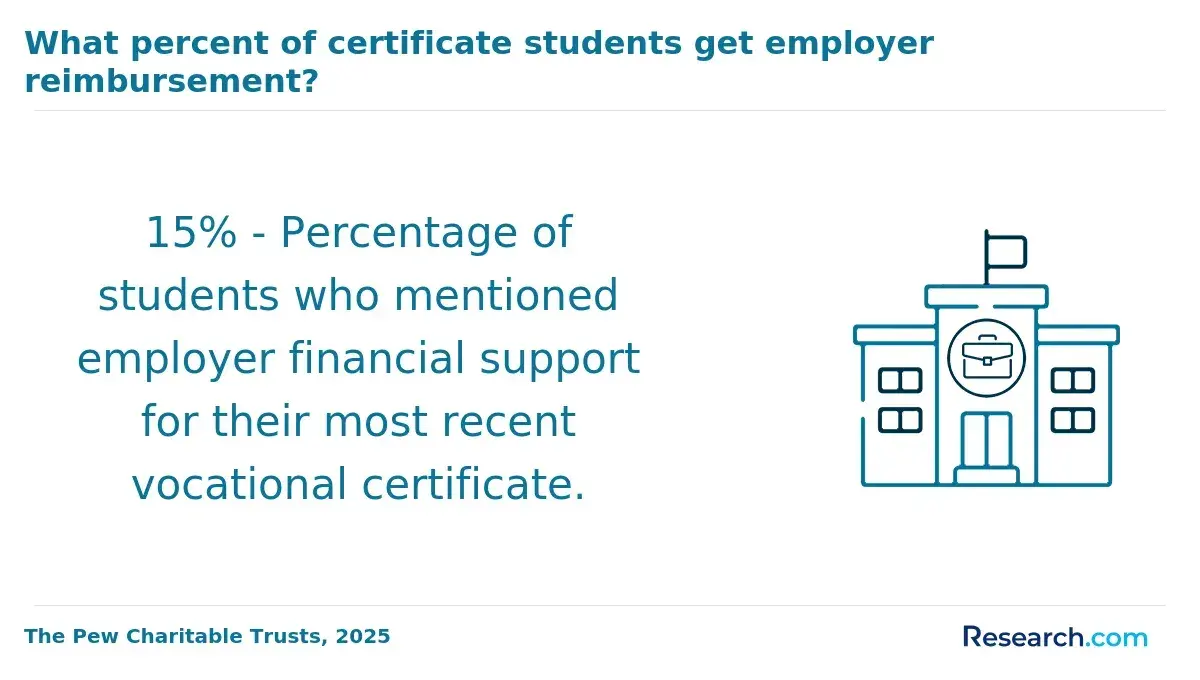
Students trying to reduce total cost should compare accredited public options, transfer pathways, employer tuition assistance, community college articulation agreements, and cheap online degrees before choosing a higher-priced program.
How can students verify job placement support quality?
Job placement support quality should be verified before enrollment, not after graduation. The strongest schools can explain who supports students, which employers recruit from the program, what outcomes are tracked, and how career services are built into the major.
Use the following steps when speaking with admissions counselors, department chairs, career services staff, and current students:
- Ask for recent program-level outcomes, including employment, graduate school enrollment, internship participation, licensure pass rates, or co-op participation where relevant.
- Request examples of employers that have hired students from the specific major, not only from the university as a whole.
- Confirm whether internships, practicums, clinicals, student teaching, co-ops, or capstones are required, optional, or student-arranged.
- Ask how online students receive career coaching, mock interviews, résumé reviews, employer access, and local placement support.
- Check whether career services continue after graduation and whether alumni can use job boards, coaching, or networking events.
- Speak with current students or recent graduates about how quickly the school responds when placements fall through or internship sites are limited.
Several red flags should slow down your decision. Be cautious if a school promises employment, refuses to share outcomes, uses only institution-wide placement numbers, cannot explain licensure eligibility, or says students are fully responsible for finding required clinical or field placements. A good program does not guarantee a job, but it should provide transparent support, realistic expectations, and documented pathways into the labor market.
Other Things You Should Know About
They can be worth it when the program is accredited, affordable for your situation, aligned with a realistic career path, and supported by internships, clinicals, co-ops, portfolios, or employer partnerships. Placement support is valuable, but it should never be treated as a job guarantee.
Nursing, education, cybersecurity, IT, computer science, engineering, and some healthcare programs often provide clearer routes into employment because they connect to licensure, technical skills, or structured field experience. The best choice depends on your strengths, state requirements, and willingness to complete required exams or placements.
Many accredited online programs do, but quality varies. Look for virtual career coaching, internship coordination, employer projects, portfolio reviews, alumni access, and clear support for local clinical or field placements when required.
The biggest mistake is choosing based on the degree title or advertised placement rate without checking accreditation, total cost, transfer credit rules, licensure eligibility, and program-level career outcomes. Always verify details in writing before enrolling.
References
- Federal occupations by college major https://help.usajobs.gov/working-in-government/unique-hiring-paths/students/federal-occupations-by-college-major
- RPubs https://rpubs.com/belencerrutti/1165961
- Employers Are Shifting from Degree-Based to Skills-Based Hiring, and It’s About Time https://www.discoursemagazine.com/p/employers-are-shifting-from-degree-based-to-skills-based-hiring-and-its-about-time
- Research Summary: Education and Lifetime Earnings https://www.ssa.gov/policy/docs/research-summaries/education-earnings.html
- Partnership Strategies for Workforce & Education https://www.planstreet.com/building-partnerships-connecting-workforce-agencies-with-educational-institutions
- Employment statistics for graduates: how country and major shape your career - GLOSS Education Agency https://gloss.education/en/blog/employment-statistics-for-graduates-how-country-and-major-shape-your-career
- Best Online Colleges with Job Placement Programs for Career Success https://lakewood.edu/best-online-colleges-with-job-placement-programs-for-career-success/
- Skills Based Hiring https://www.acct.org/center-for-policy-practice/skills-based-hiring
- How does a college degree improve graduates’ employment and earnings potential? - APLU https://www.aplu.org/our-work/4-policy-and-advocacy/publicuvalues/employment-earnings/
- Alma Career – A better world of work for everyone https://www.almacareer.com/blog/how-does-a-university-degree-influence-pay