2027 Best Bachelor's Completion Programs With the Best ROI

Co-Founder and Chief Data Scientist
Finishing a bachelor's degree can change your earning ceiling, but only if the program fits your credits, budget, and career goal. BLS data shows workers with a bachelor's degree had median weekly earnings of $1,543 in 2024, compared with $1,099 for associate degree holders. This guide is for adults with prior college credit who want the best return on investment from a completion program. You'll learn which majors tend to pay off, how to compare costs, what accreditation matters, and how to avoid programs that look convenient but deliver weak value.
Key Things You Should Know
- The strongest ROI usually comes from bachelor's completion programs that accept substantial transfer credit, align with in-demand occupations, and lead to roles where BLS median annual pay exceeds the national median.
- Cost matters as much as salary: College Board reported average published tuition and fees of $11,610 for in-state public four-year institutions and $43,350 for private nonprofit four-year institutions in 2024-25.
- High-value fields for completion students often include business, IT, computer science, cybersecurity, nursing, healthcare management, and engineering technology, but licensure and accreditation rules can change the value by state and employer.
Top 10 Best Bachelor's Completion Programs With the Best ROI
Business Degrees
Business completion programs can offer strong ROI because they match broad employer demand and accept many transfer credits from associate programs. Common tracks include management, accounting, finance, marketing, human resources, and supply chain management. BLS reported a $80,920 median annual wage for business and financial occupations in May 2024, which makes cost control especially important. Choose this path if you want advancement into analyst, supervisor, operations, or administrative roles. Avoid weak-value programs that lack transparent outcomes, relevant electives, or preparation for certifications such as CPA eligibility, SHRM credentials, or project management pathways.
Healthcare Degrees
Healthcare completion degrees often suit working adults already in clinical, administrative, or allied health roles. Options include healthcare administration, health sciences, public health, and health information management. ROI is strongest when the curriculum connects to management, compliance, informatics, or care coordination roles rather than general healthcare survey courses. BLS listed medical and health services managers among fast-growing occupations, with strong projected demand. Check whether the program requires clinical hours, accepts allied health credits, and prepares you for employer-recognized credentials. This path may not fit students seeking direct licensure without meeting state-specific clinical requirements.
Information Technology Degrees
Information technology completion programs are built for students who want applied computing careers without necessarily studying the full theory sequence of computer science. Coursework usually covers networking, databases, cloud systems, systems administration, project management, and enterprise technology. BLS reported a $105,990 median annual wage for computer and IT occupations in May 2024, but outcomes vary by experience and certifications. ROI improves when programs include hands-on labs and align with credentials such as CompTIA, Cisco, AWS, Microsoft, or ITIL. This degree fits career changers, help desk workers, and technicians aiming for analyst or administrator roles.
Computer Science Degrees
Computer science completion programs can produce excellent ROI for students prepared for math, programming, algorithms, software design, and data structures. BLS reported a $133,080 median annual wage for software developers in May 2024, but competitive roles usually require a portfolio, internships, projects, or prior technical experience. Choose this path if you want software engineering, data, AI, or systems careers and can invest time in coding practice. It may be less suitable if you need the fastest, least technical route to a bachelor's degree. Review whether transferred credits satisfy prerequisites, not just elective totals.
Cybersecurity Degrees
Cybersecurity completion programs are high-ROI candidates for students with IT experience because they connect directly to risk, compliance, defense, and incident response roles. BLS reported a $124,910 median annual wage for information security analysts in May 2024, and demand remains strong as organizations respond to cloud adoption, ransomware, and regulatory pressure. Look for labs, security operations practice, cloud security, digital forensics, and alignment with Security+, CySA+, CISSP, or GIAC pathways. This degree is not a shortcut into senior security roles; employers often expect networking, systems, scripting, and hands-on troubleshooting experience.
Psychology Degrees
Psychology completion degrees are valuable when they support a clear next step, such as human services, HR, user research, case management, or graduate study. The ROI is more variable than in technical fields because many licensed counseling, school psychology, and clinical psychology roles require graduate education. A bachelor's completion program can still be worthwhile if it is affordable, transfer-friendly, and includes research methods, statistics, abnormal psychology, lifespan development, and applied experience. Students should be cautious about high-cost programs if they do not plan to pursue graduate school or a defined bachelor's-level career path.
Nursing Degrees
Nursing completion programs, especially RN-to-BSN pathways, can be strong ROI options for licensed registered nurses seeking advancement, magnet hospital opportunities, public health roles, or graduate nursing eligibility. BLS reported a $93,600 median annual wage for registered nurses in May 2024, but pay varies by state, shift, specialty, and employer. The best programs recognize prior nursing coursework, offer flexible clinical or practice projects, and hold appropriate nursing accreditation. Students without an RN license should confirm whether the program leads to initial licensure, because many BSN completion programs are designed only for already-licensed nurses.
Education Degrees
Education completion programs can be worthwhile for paraprofessionals, substitute teachers, early childhood workers, and career changers who need a bachelor's degree for licensure. ROI depends heavily on state rules, student-teaching requirements, and local salary schedules. A good program clearly states whether it leads to certification in elementary, secondary, special education, or early childhood teaching. It should also explain field placements for online students. This path may not produce the highest immediate salary compared with IT or nursing, but it can be valuable when it unlocks stable public-sector employment, benefits, and long-term pay scale progression.
Criminal Justice Degrees
Criminal justice completion programs fit students pursuing law enforcement advancement, corrections leadership, probation, emergency management, homeland security, or policy-related roles. ROI is strongest for adults already working in public safety who need a bachelor's degree for promotion. Programs should cover constitutional law, ethics, criminology, research methods, community relations, and data-informed policing. Salaries vary widely by agency and location, so compare the degree against your department's promotion requirements before enrolling. This major is less ideal if you expect it alone to qualify you for federal investigative roles, forensic science jobs, or legal practice.
Engineering Degrees
Engineering completion programs can offer high ROI, but students must distinguish engineering, engineering technology, and applied technology degrees. BLS reported a $91,420 median annual wage for architecture and engineering occupations in May 2024, but licensure-oriented engineering careers may require an ABET-accredited engineering degree. Engineering technology can be a practical choice for technicians seeking manufacturing, quality, automation, or operations roles. Before enrolling, confirm lab requirements, transferability of math and science credits, employer recognition, and whether the curriculum supports the specific occupation you want. Convenience should not outweigh accreditation and technical depth.
What is a bachelor's completion program and who is it designed for?
A bachelor's completion program is a degree pathway designed for students who already have college credits, an associate degree, military training, professional certifications, or other evaluated learning. Instead of starting from zero, students apply eligible prior credits toward the remaining requirements for a bachelor's degree. The main value is time and cost efficiency: the fewer credits you must retake, the lower your total investment may be.
These programs are usually designed for working adults, returning students, community college graduates, military-affiliated learners, and professionals who need a bachelor's degree for promotion. They can be offered online, on campus, or in hybrid formats. Some are major-specific, such as RN-to-BSN or business administration completion programs, while others are broader degree-completion options in liberal studies, interdisciplinary studies, or professional studies.
The best fit depends on your starting point. A student with 60 transferable credits may evaluate value differently from a student with 90 credits, an associate degree, or many older credits that may not apply to the major. Completion programs are most worthwhile when they reduce repetition and lead to a real career outcome, not just a credential.
How do I evaluate return on investment for bachelor's completion programs?
Return on investment for a bachelor's completion program is the relationship between what you spend, how long it takes, and what the degree can reasonably help you achieve. For adults, ROI is not only about future salary. It also includes transfer credit, lost work time, employer tuition support, promotion eligibility, licensure access, and whether the degree helps you avoid paying for credits you already earned.
The table below summarizes the most important ROI variables. Use it to compare programs side by side before focusing on brand name or convenience.
| ROI factor | Why it matters | What stronger value looks like |
| Transfer credit acceptance | Determines how many credits you still need to pay for | Clear degree audit before enrollment and generous acceptance of applicable credits |
| Net price | Shows the cost after grants, scholarships, discounts, and employer aid | Transparent per-credit tuition, fees, and total estimated program cost |
| Time to completion | Affects tuition, work-life balance, and how soon the credential can support advancement | Flexible pacing without forcing unnecessary extra terms |
| Career alignment | Connects coursework to actual roles, licenses, or promotions | Curriculum maps to job requirements and employer-recognized skills |
| Accreditation | Influences credit transfer, graduate admission, licensure, and employer trust | Institutional accreditation plus programmatic accreditation when required |
To evaluate ROI in a practical way, compare programs using the same assumptions. This sequence keeps the decision grounded in your actual situation rather than promotional claims.
- Request a preliminary transfer evaluation from each school before you commit.
- Calculate the remaining credits you must complete, including major, general education, residency, and elective requirements.
- Multiply remaining credits by tuition and add required fees, books, technology charges, and clinical or lab costs.
- Subtract realistic aid, employer tuition benefits, military benefits, and scholarships that do not need to be repaid.
- Compare the net cost with the career outcome you are targeting, using BLS wage data, local job postings, and your employer's promotion rules.
A common mistake is comparing tuition rates without comparing required credits. A school charging more per credit can still cost less overall if it accepts more credits toward your major and graduation requirements.
Which accredited online bachelor's completion programs offer the strongest ROI?
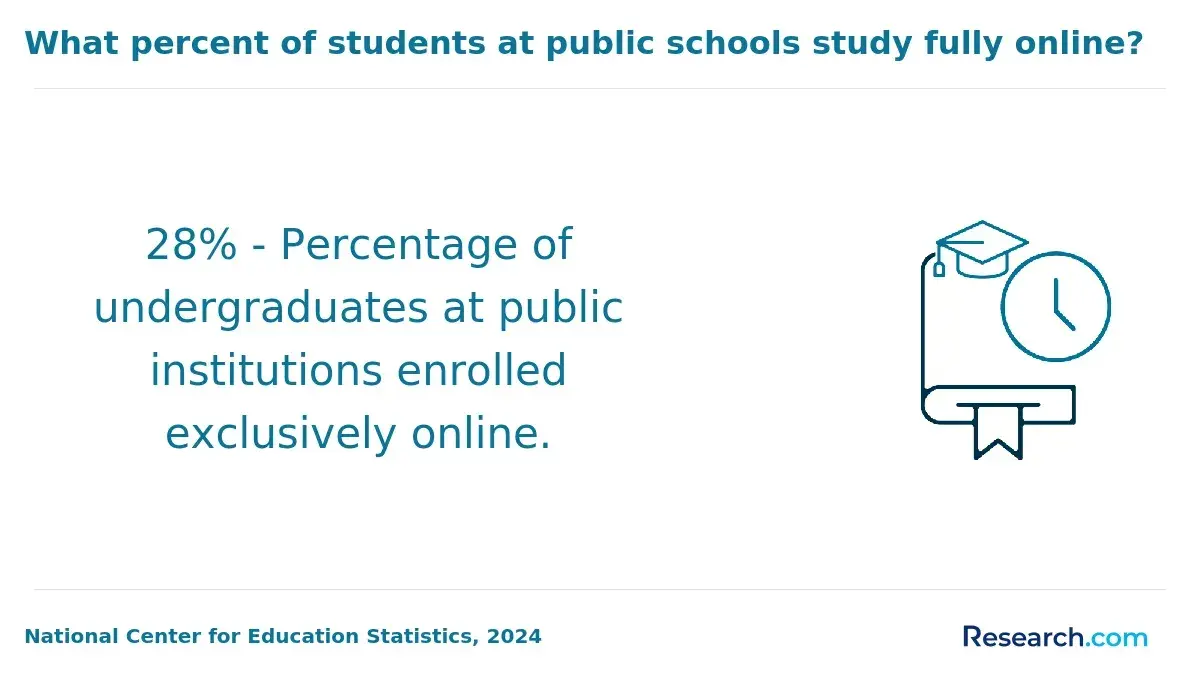
The accredited online bachelor's completion programs with the strongest ROI are usually not defined by one universal school ranking. They are programs that combine recognized accreditation, high transfer-credit applicability, transparent cost, flexible scheduling, and a major tied to a realistic labor-market payoff. Students comparing online colleges should look beyond format and ask whether the degree is respected for the specific field they want to enter.
The comparison below groups high-ROI completion options by degree area. It does not guarantee salary outcomes, but it shows where completion students often find the best balance of demand, transferability, and career utility.
| Program area | Best-fit student | Typical ROI advantage | Main caution |
| RN-to-BSN | Licensed RNs seeking advancement or graduate school eligibility | Often short, career-aligned, and built around prior nursing education | Requires active RN licensure and may include state-specific practice requirements |
| Information technology | Help desk, network, systems, or support professionals | Can combine degree completion with certification-aligned skills | Weak programs may lack labs or current cloud and security content |
| Cybersecurity | IT workers moving into security operations or risk roles | Strong labor demand and clear skill-based hiring signals | Entry-level security roles may still require prior IT experience |
| Business administration | Adults seeking promotion into management, operations, sales, or analysis | Broad transferability and wide employer recognition | Generic curricula may not differentiate graduates without a concentration |
| Healthcare administration | Clinical or administrative healthcare workers seeking leadership roles | Connects existing healthcare experience to management pathways | Not the same as clinical licensure preparation |
| Engineering technology | Technicians in manufacturing, quality, automation, or operations | Applied technical coursework can support advancement | May not meet professional engineering licensure expectations |
Accredited programs tend to offer stronger long-term value because they are more likely to be recognized by employers, licensing boards, graduate schools, and other institutions. Still, accreditation alone is not enough. A high-ROI program must also minimize repeated coursework and align with your next job, not just your past credits.
How do accreditation and credit transfer policies affect bachelor's completion program value?
Accreditation and credit transfer policies can make or break the value of a bachelor's completion program. Institutional accreditation signals that a college meets recognized quality standards, while programmatic accreditation applies to specific fields such as nursing, business, engineering, education, and healthcare management. If your target career involves licensure, certification, or graduate school, programmatic accreditation may be essential.
Credit transfer affects ROI because every nonaccepted credit can become an additional course you must pay for. Many schools advertise generous transfer limits, but the more important question is how credits apply. Credits may transfer as electives while still failing to satisfy major, prerequisite, residency, or upper-division requirements.
Before enrolling, use this checklist to reduce the risk of overpaying or choosing a program that will not serve your goal.
- Verify institutional accreditation through a recognized accreditor before applying.
- Ask whether programmatic accreditation is required or preferred for your target role, license, or graduate program.
- Request a written transfer-credit evaluation that shows exactly which requirements are satisfied.
- Confirm the school's residency requirement, which is the minimum number of credits you must complete through that institution.
- Ask how old credits, military training, certifications, prior learning assessments, and community college courses are evaluated.
- Check whether credits from nationally accredited, regionally accredited, or competency-based institutions are treated differently.
The biggest red flag is pressure to enroll before receiving a clear degree plan. A completion program should show how your prior learning shortens the path to graduation; if the school cannot explain that clearly, the ROI is uncertain.
What admission requirements and prior credits do bachelor's completion programs typically expect?
Admission requirements vary, but bachelor's completion programs typically expect prior college coursework and proof that you are ready for upper-division study. Some require a completed associate degree, while others accept students with a minimum number of transferable credits. Selective programs in nursing, education, engineering, and computer science may also require prerequisite courses, minimum grades, licensure, background checks, or placement exams.
If speed is your main priority, compare a bachelor degree online in 2 years with standard completion programs. Accelerated timelines can be worthwhile for motivated students with many accepted credits, but they may be difficult for adults balancing full-time work, caregiving, or clinical requirements.
Most schools will ask for several documents before issuing a final admission or transfer decision. Preparing them early helps you avoid delays and incomplete evaluations.
- Official transcripts from every college or university previously attended.
- High school transcript or GED documentation if required by the institution.
- Proof of associate degree completion when the pathway is built for transfer graduates.
- Professional license documentation for RN-to-BSN or other licensed-practitioner programs.
- Military transcripts, certification records, or prior learning assessment materials if you want nontraditional credit reviewed.
- Personal statement, resume, or employment verification for programs that evaluate professional experience.
Avoid assuming that "90 transferable credits" means you are only 30 credits from graduation. The school must determine whether those credits meet the specific degree requirements. Always ask for the remaining course list, not just the number of accepted credits.
How do online, hybrid, and on-campus bachelor's completion formats compare for working adults?
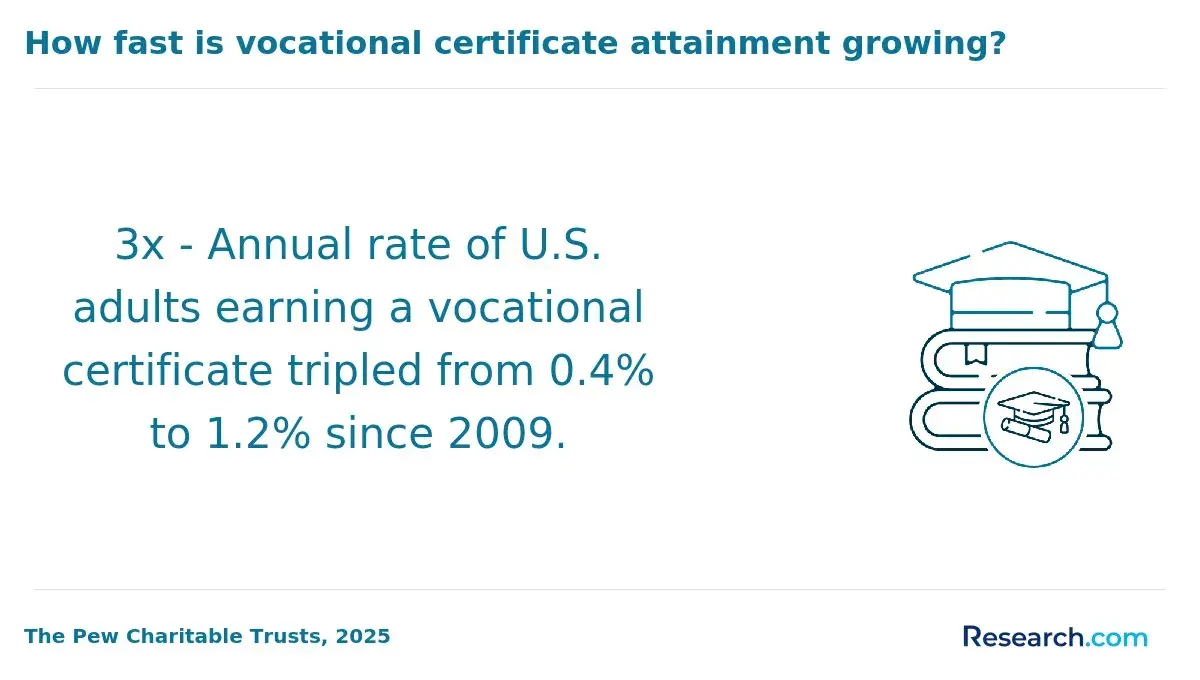
Online, hybrid, and on-campus completion formats can all deliver strong ROI, but the right format depends on your schedule, learning style, location, and career requirements. Working adults often prefer online programs because they reduce commuting and scheduling friction. Hybrid or campus-based options may be better when the major requires labs, clinical practice, field placements, studio work, or in-person networking.
The table below compares common formats from a working-adult perspective. Use it to identify the trade-offs that affect persistence, cost, and completion speed.
| Format | Best for | ROI advantage | Possible drawback |
| Fully online asynchronous | Adults needing maximum schedule flexibility | Lower commuting costs and easier work-school balance | Requires strong self-management and may offer less live interaction |
| Fully online synchronous | Students who want structure without relocating | Live class meetings can improve accountability | Scheduled sessions may conflict with work shifts |
| Hybrid | Students in fields with labs, clinicals, or local networking needs | Balances flexibility with hands-on learning | Campus visits can add travel time and cost |
| On campus | Students who learn best in person or need local facilities | Direct access to faculty, labs, and student services | Less flexible for full-time workers or parents |
To choose the best format, focus on completion risk as much as convenience. A program that looks flexible but lacks advising, tutoring, predictable course availability, or instructor access can become more expensive if it delays graduation. Conversely, a slightly less flexible hybrid program may be worth it if it improves performance in a technical or licensure-linked major.
What majors and curricula in bachelor's completion programs lead to the highest-paying careers?
The majors most likely to produce strong ROI are those that combine employer demand, transferable technical or managerial skills, and clear entry into higher-paying occupations. For completion students, the best major is not always the one with the highest median wage. It is the one that builds on your prior credits and work experience while moving you toward a realistic next role.
The table below connects common completion majors with career directions and salary context. The BLS wage figures are occupation-level medians, not promises for new graduates.
| Major or concentration | Career direction | Relevant BLS May 2024 salary context | Skills that improve value |
| Computer science | Software development, data, systems, application engineering | Software developers had a median annual wage of $133,080 | Programming, algorithms, databases, testing, cloud tools, portfolio projects |
| Cybersecurity | Security operations, risk, incident response, compliance | Information security analysts had a median annual wage of $124,910 | Networking, Linux, scripting, SIEM tools, cloud security, threat analysis |
| Nursing | Clinical advancement, care coordination, public health, graduate nursing preparation | Registered nurses had a median annual wage of $93,600 | Evidence-based practice, leadership, quality improvement, informatics |
| Business administration | Management, operations, finance, HR, sales leadership | Business and financial occupations had a median annual wage of $80,920 | Analytics, accounting literacy, project management, communication, Excel or BI tools |
| Healthcare administration | Clinic management, operations, compliance, revenue cycle | Medical and health services managers are associated with strong demand | Healthcare finance, regulation, process improvement, data reporting |
| Engineering technology | Manufacturing, quality, automation, technical operations | Architecture and engineering occupations had a median annual wage of $91,420 | CAD, quality systems, statistics, controls, safety, technical documentation |
AI and automation are changing how employers evaluate graduates. In business, IT, healthcare, and engineering fields, candidates who can use analytics, workflow tools, automation platforms, and AI-assisted systems responsibly may have an advantage. That does not mean every student needs a computer science degree, but it does mean curricula should include current tools rather than outdated theory alone.
Choose a lower-cost general major only if it fits your goal. A broad professional studies or liberal studies completion degree can be useful for checking a bachelor's requirement for promotion, but it may be weaker for career change unless paired with experience, certifications, internships, or graduate study plans.
What are typical tuition costs, financial aid options, and employer tuition benefits for completion students?
Tuition for bachelor's completion students depends on institution type, residency, transfer credits, fees, and pace. College Board's 2024-25 figures show why comparing sticker prices matters: average published tuition and fees were $11,610 for in-state public four-year institutions and $43,350 for private nonprofit four-year institutions. However, completion students should focus on total remaining cost, not annual sticker price.
When schools provide cost estimates, ask for the full remaining-degree price. Common cost items include tuition, required fees, books, software, background checks, assessment fees, clinical costs, exam fees, and graduation fees. If you want to reduce upfront costs, a free online college application can help you compare options without paying multiple application charges.
Typical price categories you may see include the following. These are not universal rates, so confirm the exact numbers with each institution.
- Public in-state tuition and fees may offer the lowest published four-year price for residents.
- Public out-of-state or online nonresident tuition may be higher unless the school offers a special online rate.
- Private nonprofit tuition may be higher before grants, scholarships, transfer discounts, or employer partnerships.
- Competency-based tuition may reduce cost for experienced students who can move quickly, but it can become expensive if progress slows.
Financial aid can also change ROI. Completion students may qualify for federal grants, federal student loans, state grants, institutional scholarships, military education benefits, transfer scholarships, and employer tuition assistance. Employer benefits are especially important for adults already working in healthcare, technology, business, manufacturing, public safety, or education.
Before borrowing, take these practical steps to avoid overpaying.
- Ask each school for a net-price estimate based on your actual transfer evaluation.
- Confirm whether scholarships are renewable and whether they apply to part-time enrollment.
- Check your employer's annual tuition reimbursement cap, grade requirements, and repayment obligations if you leave the company.
- Compare monthly loan repayment estimates with the salary range for your target role, not the highest salary advertised by the school.
- Avoid programs that require many extra credits without explaining why they are necessary for graduation or licensure.
What career outcomes, salaries, and job outlooks can graduates of bachelor's completion programs expect?
Graduates of bachelor's completion programs can pursue better job eligibility, internal promotion, graduate study, licensure pathways, or career changes, depending on the major. The degree is most valuable when it removes a barrier that is already limiting advancement or when it adds skills employers clearly request. It is less valuable when the student chooses a major with no connection to the roles they want.
The table below summarizes outcome expectations by broad field. Use it as a planning tool, not as a salary guarantee.
| Field | Possible roles after completion | Outcome considerations |
| Business | Operations manager, financial analyst, HR specialist, project coordinator, sales manager | Experience and concentration choice often matter as much as the degree title |
| Healthcare administration | Clinic supervisor, practice manager, compliance coordinator, health services administrator | Clinical background can strengthen management prospects |
| Information technology | Systems analyst, network administrator, cloud support specialist, IT project coordinator | Certifications and labs can help translate the degree into job-ready skills |
| Computer science | Software developer, QA engineer, data analyst, application developer | Portfolio quality and technical interviews heavily influence outcomes |
| Cybersecurity | SOC analyst, security analyst, risk analyst, compliance specialist | Prior IT experience can be important for first security roles |
| Education | Licensed teacher, instructional aide advancement, early childhood educator | State certification requirements determine eligibility |
Job outlook also varies. BLS projections for the 2024-34 period show particularly strong growth for several technology and healthcare management roles, while some education and public-sector roles depend more on local budgets and state staffing needs. This means students should pair national data with local job postings before deciding.
If you plan to continue after the bachelor's degree, consider how the completion program affects graduate admission. Some students use a completion degree as a bridge to an MBA, MSW, MSN, counseling degree, data science program, or the easiest masters degree to get that still supports their career goals. Graduate school can improve ROI only when the next credential is necessary or strongly rewarded in the target field.
The smartest next step is to narrow your choices to three programs, request written credit evaluations, compare net costs, and ask each admissions advisor how the curriculum maps to your target role. A completion program with moderate tuition, strong credit acceptance, and clear career alignment is often a better investment than a famous school that requires you to retake many courses.
Other Things You Should Know About
It can be worth it if the program accepts many of your prior credits, keeps total cost manageable, and supports a specific career goal such as promotion, licensure, graduate admission, or entry into a higher-paying field. It is less likely to be worth it if you must retake many courses or choose a major with no clear outcome.
Many programs are designed for students with around 60 prior credits or an associate degree, but requirements vary. Some accept fewer credits, while others expect specific prerequisites or professional licensure, especially in nursing, education, engineering, and technical fields.
Online programs can be respected when they are offered by accredited institutions and match employer expectations for the field. Employers usually care most about accreditation, relevant skills, experience, licensure, and whether the degree fits the role.
The fastest route is usually a transfer-friendly completion program that accepts your credits directly into degree requirements, offers year-round courses, and has flexible scheduling. Speed should not come at the expense of accreditation, licensure eligibility, or a manageable workload.
References
- How does a college degree improve graduates’ employment and earnings potential? - APLU https://www.aplu.org/our-work/4-policy-and-advocacy/publicuvalues/employment-earnings/
- Is College Worth it? | Return on Investment Analysis of College Degree https://educationdata.org/college-degree-roi
- Top Degrees in Demand for the Future: 2026 & Beyond https://skillifysolutions.com/blogs/career-growth/top-degrees-in-demand-for-the-future/
- College ROI: How to Compare Costs, Outcomes and Fit Counselor Guide: Which Students Thrive in Small Colleges https://oglethorpe.edu/post/college-roi-costs-outcomes-fit/
- Public vs. Private College: Which Has Better ROI? https://www.degreeverdict.com/guides/public-vs-private-college-roi
- Highest Paying Majors https://www.collegeadvisor.com/resources/highest-paying-majors/
- College ROI & True Cost Guide | College Solutions https://collegesolutions.com/flagship-blogs/college-roi-and-true-cost-guide-f1471
- Is College Worth It? A Comprehensive Return on Investment Analysis - FREOPP https://freopp.org/whitepapers/is-college-worth-it-a-comprehensive-return-on-investment-analysis/
- The Most Popular College Degrees Ranked by Return on Investment (ROI) After 5 Years in the Workforce - StudentChoice.org https://www.studentchoice.org/news/the-most-popular-college-degrees-ranked-by-return-on-investment-roi-after-5-years-in-the-workforce/
- Best Online Degrees for Working Adults in 2026 https://www.straighterline.com/blog/degreecompletion-best-online-degrees-for-working-adults-in-2026