2027 Best Bachelor's Completion Programs With 2.5 GPA Admission

Co-Founder and Chief Data Scientist
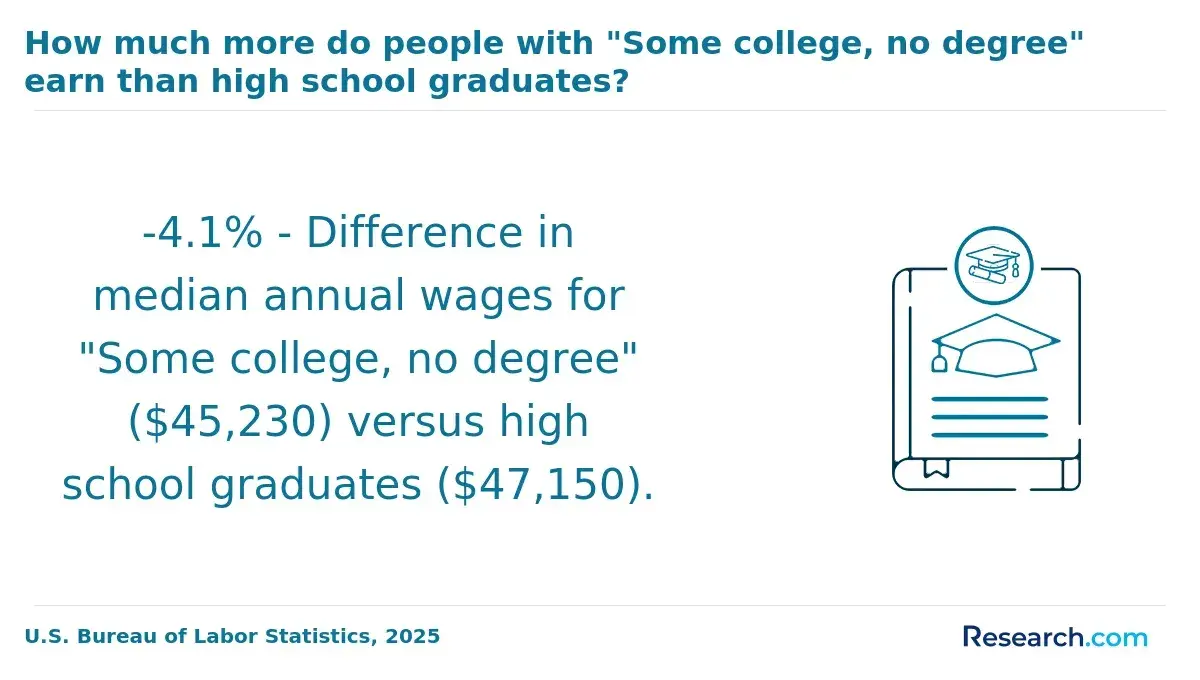
If your GPA is around 2.5, finishing a bachelor's degree is still realistic, especially through transfer-friendly and adult-focused completion programs. The stakes are meaningful: the U. S. Bureau of Labor Statistics reported 2024 median weekly earnings of $1,543 for workers with a bachelor's degree, compared with lower earnings for workers with some college but no degree.
This guide is for returning students, community college transfers, working adults, and military-connected learners who want to compare programs, avoid costly mistakes, and choose a degree that fits their career goals.
Key Things You Should Know
- Many bachelor's completion programs consider applicants with a 2.5 GPA, but selective majors such as nursing, engineering, education licensure, and cybersecurity may require higher grades, prerequisites, or separate departmental admission.
- Cost varies widely: College Board's 2024-2025 data lists average published tuition and fees at $11,610 for in-state public four-year colleges and $43,350 for private nonprofit four-year colleges, before aid and transfer savings.
- The strongest programs for 2.5 GPA applicants combine regional accreditation, generous transfer-credit review, clear major requirements, online or hybrid flexibility, and career outcomes tied to BLS occupations with current demand.
Top 10 Best Bachelor's Completion Programs With 2.5 GPA Admission
Business Degrees
Business is often one of the most flexible bachelor's completion choices because many programs accept broad transfer credits and offer concentrations in management, accounting, marketing, finance, or human resources. It fits students who want promotion potential in corporate, nonprofit, healthcare, retail, or public-sector settings.
A 2.5 GPA may be enough for general business admission, but accounting or finance tracks can require prerequisite grades. Look for ACBSP, AACSB, or IACBE accreditation if employer recognition matters.
Healthcare Degrees
Healthcare completion degrees usually fit students who already have clinical experience, allied health credits, or an associate degree. Common options include health sciences, healthcare administration, public health, and health information management.
These programs can lead to non-licensure roles in operations, compliance, patient services, or data management. A 2.5 GPA may work for health administration, but clinical or professional pathways often require background checks, immunizations, prerequisites, and higher minimum grades.
Information Technology Degrees
Information technology completion programs are practical for students who want applied tech roles without the heavier theory of computer science. Coursework often covers networks, cloud systems, databases, systems administration, project management, and IT support.
A 2.5 GPA is commonly workable for transfer admission, especially when applicants have prior technical coursework or certifications. Choose programs that map to industry credentials such as CompTIA, AWS, Cisco, Microsoft, or ITIL when career mobility is a priority.
Computer Science Degrees
Computer science completion programs can be harder to enter with a 2.5 GPA because many require calculus, programming sequences, discrete math, and minimum grades in technical prerequisites.
They are best for students who enjoy software design, algorithms, data structures, and problem-solving. If your prior math record is weak, an applied computing or software development degree may be more realistic. Ask whether transfer credits cover prerequisites or only general education requirements.
Cybersecurity Degrees
Cybersecurity completion programs prepare students for roles in risk analysis, network defense, incident response, governance, and security operations. Some accept a 2.5 GPA, but stronger programs may expect IT fundamentals, networking coursework, or professional experience.
Because employers often value both degrees and certifications, compare whether coursework prepares you for Security+, CySA+, CISSP-aligned topics, cloud security, or digital forensics. Avoid programs that promise immediate senior-level security jobs without hands-on labs.
Psychology Degrees
Psychology is a common completion major for students interested in human behavior, social services, research support, business, or graduate study. A 2.5 GPA may be acceptable for many online psychology programs, but graduate counseling, clinical psychology, or school psychology pathways are more competitive.
This degree works best when paired with internships, statistics skills, case-management experience, or a plan for graduate school. It is less ideal if you expect licensure from the bachelor's degree alone.
Nursing Degrees
Nursing completion usually means an RN-to-BSN program for licensed registered nurses. Many schools consider applicants with a 2.5 GPA, but they also require an active RN license, prior nursing coursework, clinical documentation, and sometimes employer verification.
Traditional pre-licensure BSN programs are more competitive and may not be GPA-flexible. RN-to-BSN programs are strongest when they are CCNE- or ACEN-accredited and clearly meet employer or graduate-school expectations.
Education Degrees
Education completion degrees can lead to teaching, training, childcare administration, or non-licensure education roles. A 2.5 GPA may satisfy university admission, but teacher licensure programs often require state-specific GPA minimums, field placements, background checks, exams, and approved educator-preparation accreditation.
If you plan to teach in public schools, confirm that the program is approved for your state before enrolling. Non-licensure education degrees offer more flexibility but may not qualify you for classroom certification.
Criminal Justice Degrees
Criminal justice completion programs are often accessible to transfer students with a 2.5 GPA and prior general education credits. Coursework may cover policing, courts, corrections, ethics, homeland security, criminology, and public policy. This degree can support careers in law enforcement, probation, security management, victim advocacy, or public administration.
Requirements for sworn law enforcement roles vary by agency and may include academy training, physical standards, background checks, and civil service exams.
Engineering Degrees
Engineering completion programs are less GPA-flexible than many majors because they depend on sequenced math, physics, labs, and ABET-aligned technical coursework. A 2.5 GPA may be considered for engineering technology or applied engineering programs, while traditional engineering majors often expect stronger prerequisite performance.
If you want professional engineer licensure, ABET accreditation matters. Students with weaker math preparation should ask about bridge courses before assuming their credits will transfer efficiently.
What Are Bachelor's Completion Programs?
A bachelor's completion program is designed for students who already have college credits and want to finish the upper-division portion of a bachelor's degree. These programs often accept associate degrees, community college transfer credits, military training, professional certifications, and prior learning portfolios, depending on the school's policies.
The "2.5 GPA admission" label usually means the school or program will consider applicants whose cumulative college GPA is at least 2.5. It does not always mean automatic admission. Some majors have separate standards, and schools may recalculate GPA using only transferable courses.
This comparison shows how completion programs differ from other undergraduate routes and why the distinction matters before you apply:
| Program type | Best fit | Key advantage | Main caution |
| Bachelor's completion | Students with prior college credits | Can reduce time and cost through transfer credit | Major prerequisites may still add semesters |
| Traditional bachelor's | First-time college students | Full campus experience and structured four-year plan | Less efficient for adults with many credits |
| Degree-completion partnership | Community college graduates | Clear 2+2 pathway from associate to bachelor's | Works best when the transfer agreement is current |
| Competency-based bachelor's | Self-directed adults with experience | May move faster through familiar material | Requires strong time management and independent learning |
Which Schools Accept a 2.5 GPA?
Schools that accept a 2.5 GPA are often public online divisions, adult-completion colleges, regional universities, competency-based institutions, and transfer-focused private nonprofit universities. The best choice is not simply the school with the lowest GPA minimum; it is the school that accepts the most useful transfer credits into your intended major.
Students comparing a non-profit university with public or for-profit options should focus on accreditation, transfer policy, net price, support services, and program-level outcomes rather than tax status alone.
Use the categories below to narrow your search before asking admissions offices for an official transfer evaluation:
| School or program category | Why it may work for a 2.5 GPA | Best for | What to verify |
| Public university online campuses | Often publish clear transfer GPA minimums near 2.0 to 2.5 for many majors | Students wanting recognized public-university credentials | Whether your major has a higher departmental GPA |
| Adult degree-completion colleges | Designed for returning students with mixed transcripts | Working adults with previous credits | How many credits apply to upper-division major requirements |
| Community college transfer partnerships | May guarantee junior standing after an approved associate degree | Students finishing an AA, AS, or AAS | Whether the agreement covers your catalog year and major |
| Competency-based universities | May weigh readiness, experience, and prerequisites more than GPA alone | Self-paced learners with work experience | Subscription tuition rules and satisfactory academic progress policies |
Common examples students often evaluate include Arizona State University Online, Southern New Hampshire University, University of Maryland Global Campus, Western Governors University, Purdue Global, Colorado State University Global, and UMass Global. Admission rules change, so treat these as starting points and confirm the exact GPA, transfer-credit, residency, and major requirements directly with each institution.
Are Online or Campus Programs Better?
Online programs are often better for working adults, parents, military-connected students, and learners who need to keep a job while finishing a degree. Campus programs may be better for students who need labs, clinical placements, studio work, in-person tutoring, or local employer pipelines.
Online learning is now a mainstream completion route, but quality varies. The best online programs include regular faculty access, tutoring, career services, library access, disability services, and transparent technology requirements.
Military-connected learners should also compare residency flexibility, deployment policies, tuition assistance processing, and transfer credit for military training; an online school for military spouses can be especially useful when relocation is likely.
This table summarizes the practical trade-offs between online and campus completion formats:
| Format | Strengths | Limitations | Choose it when |
| Fully online | Flexible scheduling, no commute, wider school choice | Requires self-discipline and reliable technology | You are working, caregiving, relocating, or far from campus |
| Hybrid | Combines online convenience with some in-person support | Campus visits can complicate scheduling | You want flexibility but still value face-to-face interaction |
| On campus | More direct access to labs, faculty, peers, and local recruiting | Less flexible for adults with work or family obligations | Your major requires in-person labs, clinicals, or licensure placements |
What Admission Requirements Do They Need?
Admission requirements vary by school and major, but most bachelor's completion programs want evidence that you can succeed in upper-division coursework. A 2.5 GPA can help you meet the academic threshold, yet it is only one part of the file.
Before applying, gather the documents and details admissions teams commonly request so you can get an accurate decision and transfer-credit estimate:
- Official transcripts from every college attended, even if you withdrew, failed courses, or earned only a few credits.
- Proof of high school graduation or GED completion if the college requires it for undergraduate admission.
- A minimum number of transferable credits, often around one to two years of prior college work for true completion programs.
- Major prerequisites such as statistics, anatomy, programming, composition, accounting, calculus, or education foundations, depending on the degree.
- Professional license, certification, employment verification, background check, or immunization records for nursing, healthcare, education, or public safety programs.
- Personal statement, resume, or appeal materials if your GPA is below the standard cutoff but recent performance or work experience is stronger.
One common mistake is applying before understanding how the school treats repeated courses, remedial credits, quarter credits, pass/fail courses, and older technical credits. Ask for an official transfer evaluation before committing, not just an informal admissions estimate.
How Long Do These Programs Take?
Most bachelor's completion programs take one to three years after transfer, depending on how many credits apply to the degree, whether you study full time, and whether your prior courses match the major. A student transferring 60 applicable credits into a 120-credit bachelor's program is usually closer to the finish line than a student with 90 credits that mostly count as electives.
The timeline depends less on total credits earned and more on credits that satisfy degree requirements. Use this table to estimate what your timeline might look like:
| Transfer position | Typical remaining work | Possible pace | Timeline risk |
| Associate degree aligned with major | Mostly upper-division major courses | Often fastest | Low if the transfer agreement is current |
| Many general credits but different major | Major prerequisites plus upper-division courses | Moderate | Medium because prerequisites can stack |
| Career or technical associate degree | Varies widely by school | Fast if credits are accepted in block | High if technical credits transfer only as electives |
| Interrupted college history | General education cleanup and major courses | Variable | Medium if old credits no longer match catalog requirements |
To shorten your time, choose a school that accepts block transfer, offers year-round courses, provides asynchronous online classes, and runs enough upper-division courses each term to prevent scheduling delays.
How Much Do They Cost?
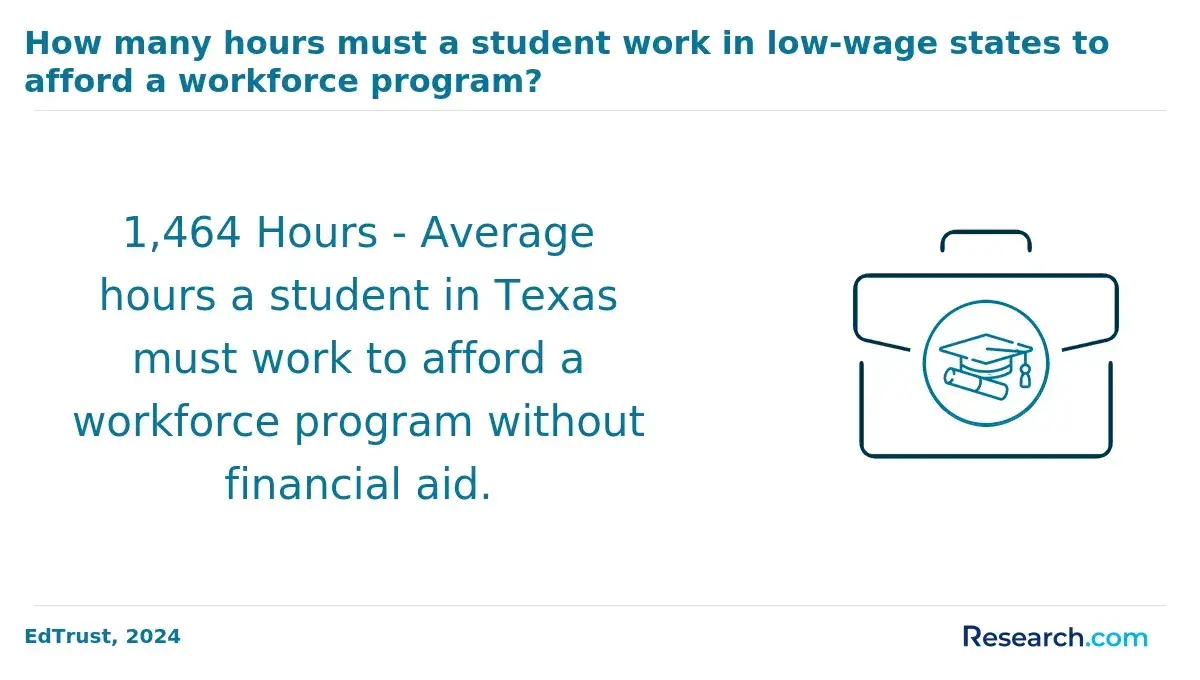
Cost is one of the biggest reasons to compare bachelor's completion programs carefully. College Board's 2024-2025 pricing data lists average published tuition and fees of $11,610 for in-state public four-year institutions, $30,780 for out-of-state public four-year institutions, and $43,350 for private nonprofit four-year institutions; your actual net cost may be lower after grants, employer aid, military benefits, or transfer credits.
When comparing programs, look beyond tuition per credit. The real cost of finishing includes fees, books, technology, lost work time, repeated courses, and credits that do not apply to your major:
- Ask for the total estimated cost to finish based on your official transfer evaluation, not the full four-year sticker price.
- Confirm whether tuition is per credit, per term, subscription-based, or different for online and out-of-state students.
- Check whether the school charges separate online, technology, graduation, proctoring, clinical, lab, or portfolio-assessment fees.
- Compare financial aid eligibility, employer tuition reimbursement, military tuition assistance, Pell Grants, scholarships, and payment plans.
- Avoid borrowing for credits that may not count by waiting for a written degree plan before enrolling in your first term.
The cheapest program is not always the best value if it delays graduation or lacks the accreditation needed for your career. The strongest financial choice is usually the accredited program that gets you to the required credential with the fewest repeated credits and the clearest career payoff.
What Can You Study in Them?
You can study many of the same majors offered in traditional bachelor's programs, but completion formats are especially common in fields with flexible upper-division coursework and strong adult-learner demand. Business, healthcare administration, IT, criminal justice, psychology, education studies, communication, liberal studies, and interdisciplinary studies are common options.
If your priority is finishing efficiently, compare major difficulty, transfer fit, and career relevance together. Some students exploring flexible paths also compare easiest online degrees, but "easy" should never mean low-quality or poorly matched to your goals.
The table below summarizes how different majors tend to fit different completion students:
| Major area | Best fit | Transfer-friendliness | Career alignment |
| Business | Students wanting broad advancement options | High | Management, operations, sales, finance support, HR |
| Healthcare administration or health sciences | Allied health workers and healthcare staff | Moderate to high | Healthcare operations, compliance, patient services |
| Information technology | Students with technical credits or certifications | Moderate | IT support, systems, cloud, network administration |
| Psychology or social science | Students interested in people-focused work | High | Human services, case support, HR, graduate school preparation |
| Education | Paraprofessionals and future teachers | Moderate | Teaching, training, education support, childcare administration |
| Engineering technology | Technical associate degree graduates | Variable | Manufacturing, quality, field engineering support |
What Jobs Can You Get After Graduation?
Jobs after graduation depend on your major, work history, location, internships, licenses, and how well your prior experience connects to the degree. Bachelor's completion programs are especially valuable when they help you qualify for promotions, meet employer degree requirements, or move from frontline work into analyst, coordinator, specialist, supervisor, or management roles.
Some graduates later pursue master's or doctoral study, and students planning far ahead may compare options such as best 1 year PhD programs online; however, most bachelor's completion students should first focus on choosing a major that supports near-term employability.
The table below connects common completion majors with realistic career directions. These are examples, not guaranteed outcomes:
| Degree area | Possible roles | What employers may also expect |
| Business | Operations coordinator, account manager, HR specialist, project coordinator | Excel, communication, industry experience, leadership potential |
| Healthcare administration | Practice manager, patient services supervisor, compliance coordinator | Healthcare experience, privacy knowledge, billing or EHR familiarity |
| Information technology | Systems administrator, network support specialist, cloud support associate | Certifications, labs, troubleshooting experience |
| Cybersecurity | Security analyst, governance analyst, SOC analyst trainee | Networking knowledge, security labs, certifications, clearance for some roles |
| Psychology | Case manager, behavioral health technician, research assistant, HR assistant | Graduate degree for licensed clinical roles |
| Criminal justice | Probation support, security manager, law enforcement candidate, victim advocate | Background checks, academy training, agency exams for sworn roles |
Avoid choosing a major only because it accepts a 2.5 GPA. A better test is whether the degree improves your eligibility for specific roles you can name and whether job postings in your area ask for that credential.
What Salary and Job Outlook Apply?
Salary and outlook vary sharply by field, so the best bachelor's completion program is the one tied to a labor market you actually want to enter.
BLS May 2024 wage data shows that computer and mathematical occupations had a median annual wage of $105,990, while business and financial operations occupations had a median annual wage of $80,920. Those figures show why major choice can matter as much as the decision to finish the degree itself.
Use salary data carefully. National medians do not reflect entry-level pay, regional cost of living, remote-work competition, licensure, security clearance, union rules, or your prior experience.
This comparison highlights broad career-market signals for common completion fields:
| Field | Salary context | Outlook considerations | Best ROI conditions |
| Business | Often moderate to strong depending on role and industry | Broad demand, but competition is common | You pair the degree with experience, analytics, or leadership skills |
| IT and cybersecurity | Often higher than many generalist fields | Demand is strong, but employers expect current technical skills | You build labs, certifications, and a portfolio while studying |
| Healthcare administration | Can improve with clinical or operational experience | Healthcare systems need managers, compliance staff, and data-aware workers | You already work in healthcare or can access internships |
| Education | Varies by state, district, and licensure status | Public-school roles depend on approved certification pathways | The program is state-approved for your teaching goal |
| Psychology and social services | Bachelor's-level roles may be modest compared with licensed careers | Graduate education is often needed for clinical practice | You plan for graduate school or pair the degree with applied experience |
Current trends make program selection more important. AI is changing business, IT, analytics, writing, and administrative work, so students should favor programs that teach data literacy, ethical technology use, communication, problem-solving, and job-ready projects rather than only theory.
Before enrolling, take these practical steps to reduce risk and improve return on investment:
- Choose three to five target jobs and read current postings to confirm required degrees, skills, licenses, and software tools.
- Request an official transfer evaluation from each school and compare remaining credits, not just acceptance decisions.
- Check regional accreditation and any programmatic accreditation needed for nursing, teacher licensure, engineering, business, or health information careers.
- Calculate total net cost after grants, employer aid, military benefits, scholarships, and transfer credits.
- Ask whether online students receive career coaching, internship help, tutoring, library access, and faculty support.
- Do not enroll if a school pressures you to start before giving a written degree plan, total-cost estimate, and clear withdrawal policy.
Other Things You Should Know About
Yes, many completion programs consider applicants with a 2.5 GPA, especially in online, adult-focused, and transfer-friendly formats. Selective majors may still require higher grades, prerequisites, or separate departmental review.
Not always. Credits may transfer as general electives but fail to satisfy major requirements. Ask for an official transfer evaluation and degree plan before enrolling.
They can be, especially when the school is regionally accredited and the degree matches the job. Employers usually care more about accreditation, skills, experience, and relevance than whether the program was labeled "completion."
The fastest option is usually the major that accepts the most of your existing credits. For many transfer students, business, liberal studies, interdisciplinary studies, psychology, or applied professional studies may be faster than highly sequenced majors like engineering, nursing, or computer science.
References
- Best Online Colleges for Working Adults [2026] https://www.straighterline.com/blog/degree-completion-best-online-colleges-for-working-adults
- Top 175 Scholarships for College Students https://www.mometrix.com/blog/scholarships-for-college/
- Colleges That Accept Low GPA Scores | Find Options https://www.educationconnection.com/resources/colleges-that-accept-low-gpa/
- Academic Outcomes of Associate Degree Transfer Students ... https://scholarsarchive.library.albany.edu/cgi/viewcontent.cgi
- Scholarships and Grants for College | DeVry University https://www.devry.edu/tuition-financial-aid/financial-aid/scholarships-grants.html
- Student Services | Bristol Community College https://bristolcc.edu/studentservices/resources/transferservices/bachelorsdegreecompletionprograms.html
- College Graduation Rates and How ACE Compares | ACE Blog https://ace.edu/blog/college-graduation-rates-and-how-ace-compares/
- Scholarships for College Students https://accessscholarships.com/blog/50-scholarships-for-college-students/