2027 Best Online Bachelor's Completion Programs With 5-Week Courses

Co-Founder and Chief Data Scientist
Finishing a bachelor's degree can feel hard when work, caregiving, and tuition all compete for attention. Online bachelor's completion programs with 5-week courses are built for adults who already have college credits and need a faster, more flexible path. NCES distance education data shows that more than half of undergraduates take at least one online course, underscoring how mainstream online study has become. This guide explains degree options, admissions, cost, accreditation, timelines, careers, and red flags so you can choose a program that fits your goals instead of simply picking the fastest one.
Key Things You Should Know
- Most bachelor's completion programs require prior college credit, often from an associate degree, military training, professional certification, or previously completed university coursework.
- Five-week courses can speed up progress, but they are intensive; students usually take one course at a time and should expect weekly deadlines, discussions, projects, and exams.
- BLS May 2024 wage data shows strong salary differences by field, with computer and information technology occupations reporting a median annual wage above many education, criminal justice, and social service roles.
Top 10 Best Online Bachelor's Completion Programs With 5-Week Courses
Business Degrees
Business completion programs are among the most flexible options because they apply to management, operations, sales, finance, human resources, and entrepreneurship. They fit students who want broad career mobility rather than a narrowly technical credential. Look for concentrations such as accounting, project management, supply chain, marketing, or business analytics.
A 5-week format works well if you can manage frequent case studies and writing assignments. Choose business if you want advancement in an existing workplace; consider a more specialized degree if your goal requires licensure, such as teaching or nursing.
Healthcare Degrees
Healthcare completion degrees often focus on administration, health services management, public health, or healthcare informatics rather than direct clinical licensure. They are a good fit for medical assistants, billing specialists, allied health workers, and military medical personnel who want supervisory roles.
Check whether the curriculum includes compliance, finance, quality improvement, and health data systems. If you want patient-care licensure, confirm state requirements before enrolling because a general healthcare administration degree usually does not qualify you for clinical roles by itself.
Information Technology Degrees
Information technology completion programs prepare students for practical roles in systems administration, cloud support, networking, database management, and IT project coordination. They fit learners who prefer applied technology over heavy theory.
Many programs accept transfer credit from associate degrees, vendor certifications, and military IT training. In a 5-week course, technical labs can move quickly, so students should confirm software access, tutoring, and help desk support. IT is especially useful for adults seeking remote or hybrid work options.
Computer Science Degrees
Computer science completion degrees are more math- and programming-intensive than general IT programs. They usually include algorithms, data structures, software engineering, operating systems, and sometimes artificial intelligence or machine learning. This path fits students who want software development, data, or technical engineering roles.
It may not be ideal if you dislike coding or need the quickest credential with minimal prerequisites. Before enrolling, ask whether prior programming, calculus, or discrete math is required and whether bridge courses are available.
Cybersecurity Degrees
Cybersecurity completion programs focus on protecting networks, systems, cloud infrastructure, and organizational data. They are a strong option for students with IT experience, military cyber training, or industry certifications. Courses may cover ethical hacking, incident response, digital forensics, governance, and risk management.
Look for alignment with certifications such as Security+, CISSP, or CySA+, but remember that a degree and certification serve different purposes. The 5-week pace can be demanding because labs and security tools require consistent hands-on practice.
Psychology Degrees
Psychology completion programs help students understand human behavior, research methods, mental health systems, and organizational behavior. They fit learners considering social services, human resources, case management, market research, or graduate study. A bachelor's in psychology alone typically does not qualify graduates to become licensed psychologists or counselors.
If licensure is your long-term goal, verify graduate school prerequisites before choosing electives. In accelerated courses, expect substantial reading, writing, and research interpretation rather than clinical practice training.
Nursing Degrees
Online nursing completion programs are usually RN-to-BSN tracks for licensed registered nurses. They focus on leadership, evidence-based practice, community health, health assessment, and quality improvement. Because clinical requirements vary by state and school, confirm whether local practicums, employer-based projects, or in-person components are required.
A 5-week format can work well for working nurses if courses are asynchronous and predictable. Students who are not already licensed RNs should look for pre-licensure nursing pathways instead of BSN completion programs.
Education Degrees
Education completion programs may prepare students for non-licensure roles, paraprofessional advancement, early childhood settings, instructional design, or teacher certification pathways. The most important step is checking state licensure rules before applying.
Some online education degrees do not lead to initial teacher certification, while others require supervised fieldwork or student teaching in an approved setting. Five-week courses can help working classroom aides finish faster, but licensure paperwork, testing, and placements often determine the real timeline.
Criminal Justice Degrees
Criminal justice completion programs cover courts, policing, corrections, criminology, ethics, homeland security, and public policy. They fit law enforcement officers, military personnel, security professionals, and students interested in public service or investigations.
A degree may support promotion, but many sworn roles also require academy training, background checks, physical standards, or civil service exams. Accelerated classes often emphasize writing, legal analysis, and applied case studies. Compare programs based on transfer credit for academy or military training.
Engineering Degrees
Engineering completion options are less common online than business or IT because many engineering programs require labs, design studios, and ABET accreditation. Some schools offer engineering technology, industrial technology, or applied engineering completion degrees designed for technicians and military-trained students.
These can lead to manufacturing, quality, operations, or technical management roles. If your goal is professional engineer licensure, check ABET status and state board rules before enrolling. A fast format should not come at the cost of required lab quality.
What Are Online Bachelor's Completion Programs?
Online bachelor's completion programs are degree pathways for students who have already earned college credit and want to finish the upper-division portion of a bachelor's degree. They are not the same as starting college from zero credits. The best programs evaluate prior coursework, professional learning, military education, standardized exams, and sometimes industry certifications to reduce duplicated coursework.
The table below summarizes how completion programs differ from traditional bachelor's programs. This matters because the right format depends on how many credits you already have and whether your target career has licensure or accreditation rules.
| Program type | Best fit | Typical credit situation | Main decision factor |
| Bachelor's completion program | Adults with prior college credit | Often 60 or more transferable credits | Transfer policy and major alignment |
| Traditional online bachelor's program | First-time or low-credit students | Few or no credits completed | Total tuition and time to degree |
| RN-to-BSN or similar bridge program | Licensed professionals | Associate degree plus active license | Licensure status and practicum rules |
| Degree-completion with credit for experience | Military, technical, or career-trained adults | College plus evaluated professional learning | Maximum accepted prior learning credit |
Students who are not yet ready for a bachelor's program may want to compare an online associates degree first, especially if affordability and transfer planning are the top priorities.
How Do 5-Week Online Courses Work?
Five-week online courses compress a full course into a short academic block. Instead of taking four or five classes across a long semester, students often take one focused course at a time, complete weekly assignments, and then move into the next course. This structure can reduce context switching, but it also leaves little room to fall behind.
Most accelerated online courses use a learning management system with recorded lectures, readings, discussion boards, quizzes, papers, group projects, and faculty feedback. Synchronous meetings may be optional or required depending on the program. The practical difference is pace: a missed week in a 5-week course can equal missing several weeks in a traditional semester.
Before choosing this format, evaluate whether your schedule can handle the workload. These steps can help you test your readiness before enrolling:
- Block 12 to 18 study hours per week for one accelerated course and compare that schedule against work and family obligations.
- Ask whether courses are truly asynchronous or whether live sessions, proctored exams, or timed labs are required.
- Review the withdrawal, retake, and incomplete policies because short terms can make recovery difficult after an illness or work emergency.
- Confirm whether financial aid is packaged by term, subscription period, semester, or academic year.
Which Schools Offer Accredited Online Completion Programs?
Accreditation should be the first filter when comparing schools. For U.S. students, the safest baseline is institutional accreditation from an agency recognized by the U.S. Department of Education or CHEA. Programmatic accreditation may also matter in fields such as nursing, engineering, business, teacher education, and cybersecurity.
The examples below show the kind of information to verify when looking for accredited online completion programs with accelerated calendars. Course lengths and availability can change by major, state, and start date, so use the table as a comparison framework rather than a final enrollment decision.
| School example | Accreditation to verify | Accelerated format to check | Good fit for |
| University of Phoenix | Higher Learning Commission | Many undergraduate courses use a 5-week format | Adults seeking structured, one-course-at-a-time study |
| University of Arizona Global Campus | WSCUC | Accelerated online undergraduate courses may be offered in short blocks | Transfer students comparing flexible start dates |
| National University | WSCUC | Four-week course model rather than a standard 5-week model | Students who want an even faster single-course pace |
| Competency-based universities | Institutional accreditation plus program-specific recognition | Self-paced terms instead of fixed 5-week classes | Experienced students who can move quickly through known material |
A common mistake is choosing a school because it advertises speed while ignoring accreditation, transfer loss, or state authorization. Always confirm the exact program page, accreditor database, and whether your state is approved for enrollment.
What Are the Admission Requirements?
Admission requirements vary by school and major, but bachelor's completion programs usually expect evidence that you are ready for upper-division coursework. The most important admissions document is the official transcript because it determines how many credits transfer and which major requirements remain.
Most applicants should be prepared to provide the following items. These requirements help schools determine academic fit, transfer standing, and eligibility for professional pathways:
- Official transcripts from every college previously attended, even if credits were earned many years ago.
- A minimum number of transferable credits, often aligned with lower-division general education or associate-level coursework.
- A minimum GPA, with some schools offering provisional admission or academic support for students below the standard threshold.
- Proof of professional licensure for bridge programs such as RN-to-BSN completion tracks.
- Program-specific prerequisites such as statistics, anatomy, programming, accounting, or education field experience.
If you still need lower-division credits, compare transfer-friendly online associate degrees before committing to a bachelor's program. The lower-cost route can make sense when credits will transfer cleanly into the bachelor's major.
How Long Does Completion Take?
Completion time depends less on the advertised course length and more on how many credits transfer. A 5-week calendar can move quickly, but a student with 30 remaining credits and a student with 75 remaining credits are making very different commitments.
The table below gives a practical way to estimate timeline. It does not replace an official degree audit, but it helps you understand why two students in the same program can finish at different speeds.
| Credits remaining | Likely pace in 5-week courses | Approximate completion pattern | Key risk |
| 30 credits | About 10 three-credit courses | Fast completion is possible if courses are offered continuously | Missing a required course rotation |
| 45 credits | About 15 three-credit courses | Often manageable in an accelerated full-time plan | Burnout from continuous enrollment |
| 60 credits | About 20 three-credit courses | Closer to a two-year commitment for many working adults | Assuming all prior credits apply to the major |
| More than 60 credits | More than 20 three-credit courses | May resemble a traditional transfer program | Paying for repeated general education or elective credits |
The smartest move is to request a written transfer evaluation before enrollment. Do not rely on verbal estimates from admissions alone, especially if you have credits from multiple schools, military training, or older coursework.
How Much Do These Programs Cost?
Costs vary widely because online bachelor's completion programs charge by credit, term, subscription period, or flat tuition block. Tuition is only part of the total price; students should also compare fees, books, technology requirements, transfer credit loss, graduation fees, and whether repeated courses affect aid eligibility.
College Board's 2024 Trends in College Pricing reports published tuition and fees of $11,610 for in-state students at public four-year institutions and $43,350 at private nonprofit four-year institutions.
Those figures are not online-program quotes, but they give a useful benchmark for judging whether an accelerated completion program is competitively priced.
- Public in-state online programs may offer the lowest tuition if you qualify for resident rates and transfer most prior credits.
- Private nonprofit programs may cost more per credit but can be worthwhile when transfer policies, employer partnerships, or program quality shorten the path.
- Private for-profit programs can be convenient and highly structured, but students should examine graduation rates, loan repayment outcomes, and total borrowing carefully.
- Competency-based programs may lower costs for experienced students who finish quickly, but they can become expensive if progress slows.
Ask each school for a total program cost estimate after transfer evaluation, not just the price per credit. A lower tuition rate can become less affordable if the school rejects many credits.
What Careers Can This Degree Lead To?
An online bachelor's completion degree can support advancement, career change, or eligibility for jobs that list a bachelor's degree as a preferred or required credential. The best career match depends on your major, prior experience, certifications, location, and whether the role requires licensure.
The table below connects common completion degree areas with career directions. Use it to compare fit, not as a guarantee of employment or salary.
| Degree area | Potential career directions | Best for students who | Important limitation |
| Business | Operations, management, sales, finance support, HR | Want broad advancement options | Specialized roles may require certifications |
| Healthcare administration | Clinic management, quality improvement, health services coordination | Have healthcare experience but want nonclinical leadership | Does not replace clinical licensure |
| Information technology | Systems support, cloud operations, network administration | Want applied technical roles | Hands-on labs and certifications may matter |
| Computer science | Software development, data, technical analysis | Enjoy programming and problem-solving | Math and coding prerequisites can be demanding |
| Cybersecurity | Security operations, risk analysis, incident response | Have IT foundations or military cyber training | Employers may expect certifications and experience |
| Education | Teaching, training, instructional support, early childhood roles | Want school or learning-related careers | State licensure rules are critical |
Students prioritizing flexible careers should also compare degrees for remote work, especially if they are deciding between business, IT, computer science, and cybersecurity.
What Salaries Can Graduates Expect?
Salary outcomes vary by occupation, region, industry, experience, and whether the role requires additional credentials. A bachelor's completion degree can improve eligibility for certain roles, but it does not produce a guaranteed income. The most useful way to evaluate salary is to compare the median pay of occupations commonly connected to each major.
The table below uses BLS May 2024 national median wage data for selected occupation groups and roles. These figures help you compare fields, but local wages and entry-level pay may be lower or higher.
| Career area | BLS occupation or group | May 2024 median annual wage | What it means for degree choice |
| Business | Business and financial operations occupations | $80,920 | Broad option for advancement across industries |
| Computer and IT | Computer and information technology occupations | $105,990 | Strong salary potential but skills verification matters |
| Cybersecurity | Information security analysts | $124,910 | High demand area, often requiring experience and certifications |
| Nursing | Registered nurses | $93,600 | BSN completion can support advancement for licensed RNs |
| Education | Elementary school teachers, except special education | $62,310 | Licensure and state pay schedules shape outcomes |
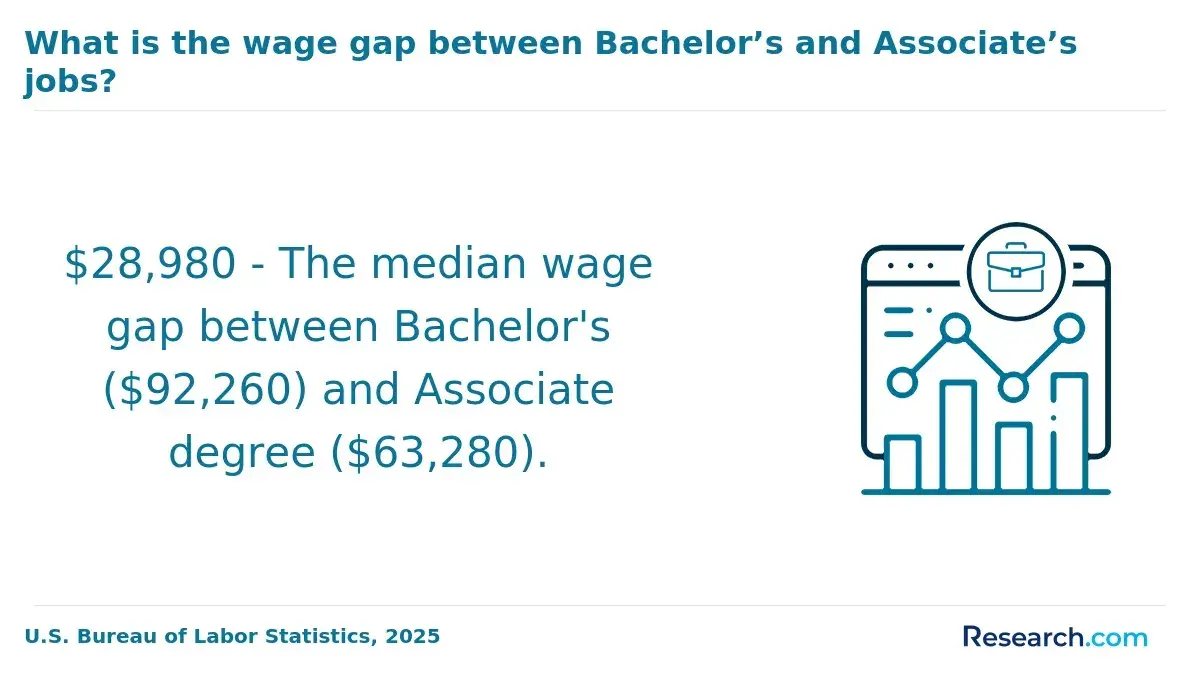
| Engineering | Architecture and engineering occupations | $91,420 | ABET status and technical specialization can affect options |
When evaluating return on investment, compare expected total borrowing with realistic local wages, not only national medians. The U.S. Department of Education's College Scorecard can also help you review debt and earnings patterns by institution and program when data is available.
How Do You Choose the Best Program?
The best online bachelor's completion program with 5-week courses is the one that minimizes wasted credits, fits your weekly schedule, meets accreditation requirements, and supports your career target. Speed matters, but it should not outweigh transfer efficiency, academic quality, and total cost.
Use the following process before enrolling. These steps are designed to prevent the most expensive mistakes accelerated students make:
- Request a written transfer credit evaluation and confirm exactly how many credits apply to the major, general education, and electives.
- Check institutional accreditation in a recognized accreditor database and verify programmatic accreditation when your field requires it.
- Ask for the total cost to graduation after transfer credits, including fees, books, technology, and repeated-course policies.
- Confirm whether the 5-week format is available in your major, not just at the university overall.
- Review student support, including tutoring, library access, career services, writing help, technical support, and faculty response times.
- Check whether the degree meets state licensure requirements if your goal is teaching, nursing, counseling, engineering, or another regulated profession.
- Compare career outcomes, employer recognition, internship options, and certification preparation instead of relying only on rankings or advertising.
If you plan to pursue graduate study later, consider whether the bachelor's program prepares you academically and financially for that next step. Some students eventually compare cheapest online doctoral programs, but doctoral affordability matters most after you have chosen a credible bachelor's foundation.
Other Things You Should Know About
They are not necessarily harder in content, but they are faster. You may cover similar learning outcomes in less time, so weekly deadlines are tighter and falling behind is more difficult.
Possibly, but only if you transfer a large number of applicable credits and your required courses are offered continuously. A written degree audit is the only reliable way to estimate your timeline.
Employers are generally more concerned with accreditation, relevant skills, experience, and whether the degree matches the role. Avoid unaccredited programs and be prepared to explain your projects, certifications, and practical experience.
It can be, especially if courses are asynchronous and taken one at a time. It may be a poor fit if your work schedule changes often, you travel frequently, or you cannot commit consistent weekly study hours.
References
- Affordable Accredited Online Colleges https://www.onlineu.com/online-schools/low-tuition
- Costs of Online and Campus Colleges | University of Phoenix https://www.phoenix.edu/blog/comparing-the-costs-of-online-and-campus-colleges.html
- Best Online Colleges for Working Adults [2026] https://www.straighterline.com/blog/degree-completion-best-online-colleges-for-working-adults
- Online Bachelors Completion Programs That Fit https://thehorizonsunlimited.com/blog/online-bachelors-completion-programs-that-fit
- Online Bachelor’s Degree Completion https://www.hamline.edu/academics/online-bachelors