2027 Most Affordable Bachelor's Degrees for Better Work-Life Balance

Co-Founder and Chief Data Scientist
Choosing a bachelor's degree is harder when the goal is not just income, but a sustainable schedule. Tuition is still a major factor: College Board reported average published tuition and fees of $11,610 for in-state public four-year students in 2024-25. That makes affordability and career fit inseparable. This guide is for students, working adults, military families, and career changers comparing degrees that may support better work-life balance. You will learn which majors tend to offer flexible roles, what they cost, how long they take, and how to avoid programs that do not match your goals.
Key Things You Should Know
- Affordable bachelor's degrees with strong flexibility potential often include business, information technology, computer science, cybersecurity, psychology, criminal justice, and education, but the best fit depends on licensure rules, work setting, and preferred schedule.
- For cost planning, 2024-25 published tuition and fees averaged $11,610 for in-state public four-year colleges, $30,780 for out-of-state public colleges, and $43,350 for private nonprofit four-year colleges, before aid and living costs.
- BLS 2024 wage data shows wide career variation: median pay was $105,990 for software developers, $124,910 for information security analysts, $64,580 for registered nurses, and $62,310 for kindergarten and elementary school teachers.
Top 10 Most Affordable Bachelor's Degrees for Better Work-Life Balance
Business Degrees
A bachelor's in business can be one of the most flexible affordable degrees because it applies across industries. Common concentrations include accounting, finance, marketing, management, human resources, and supply chain management. It fits students who want office-based, hybrid, or remote-friendly roles rather than highly specialized licensure paths. Work-life balance varies: accounting can be busy during tax or audit seasons, while HR, operations, and project coordination may offer steadier schedules. Choose programs with strong internship placement, spreadsheet and analytics training, and transfer-friendly general education requirements.
Healthcare Degrees
Healthcare bachelor's degrees can lead to stable work, but flexibility depends heavily on the role. Health administration, public health, health informatics, and healthcare management often offer more predictable schedules than direct patient care. These majors suit students who want to work in healthcare without necessarily becoming clinicians. They may lead to coordinator, analyst, administrator, or compliance roles. Before enrolling, check whether the program prepares you for the specific setting you want, such as hospitals, insurance, public health agencies, or long-term care organizations.
Information Technology Degrees
Information technology degrees focus on practical systems, networks, cloud tools, databases, and user support. They can be affordable and flexible because many IT jobs are available in hybrid or remote formats. This degree fits students who enjoy solving operational technology problems more than advanced theory. Entry-level roles may include help desk analyst, systems support specialist, junior network administrator, or cloud support associate. Work-life balance is strongest in organizations with mature IT teams; roles involving outages, rotating support, or 24/7 systems can be less predictable.
Computer Science Degrees
Computer science is usually more math- and programming-intensive than IT. It can lead to flexible software, data, automation, and product roles, but the curriculum can be demanding. Students should expect algorithms, data structures, software engineering, databases, operating systems, and discrete math. A computer science degree may be worth the effort for learners who want remote-friendly careers and are willing to build a portfolio. Work-life balance varies by employer; startups and product launches may require intense periods, while established companies may offer more predictable schedules.
Cybersecurity Degrees
Cybersecurity degrees prepare students for roles protecting networks, data, and systems. They can support flexible careers, especially in governance, risk, compliance, security awareness, and security analysis. However, incident response and operations center jobs may involve nights, weekends, or on-call rotations. The best affordable programs include hands-on labs, networking foundations, cloud security, digital forensics, and preparation for industry certifications. Students should choose cybersecurity if they like continuous learning, detailed investigation, and risk management rather than expecting every role to be low-stress.
Psychology Degrees
A bachelor's in psychology can support work-life balance when paired with realistic career planning. At the bachelor's level, graduates commonly pursue roles in human services, case management, market research support, HR, training, or behavioral health administration. It is not enough for independent clinical practice, which typically requires graduate education and licensure. This degree fits students interested in people, behavior, research, and communication. To improve job options, choose programs with statistics, research methods, applied internships, and electives in organizational psychology or health services.
Nursing Degrees
A bachelor's in nursing can lead to strong employment demand, but work-life balance depends on specialty, shift type, and employer. Hospital bedside roles may involve nights, weekends, holidays, and physical stress. More predictable options can include outpatient clinics, school nursing, care coordination, public health, utilization review, or telehealth, though many require experience. Students should confirm state board approval, clinical placement support, and NCLEX-RN preparation. Nursing can be worth it for service-oriented students, but it is not automatically the most flexible healthcare path.
Education Degrees
Education degrees can offer meaningful work and a more structured annual calendar, but they also involve grading, planning, parent communication, and licensure requirements. Work-life balance is often better when teachers have supportive administrators, manageable class sizes, and strong curriculum resources. Students should check state-approved teacher preparation status before enrolling, especially online. Education fits people who value community impact and predictable school-year rhythms. It may not fit students seeking fully remote work or high schedule control early in their careers.
Criminal Justice Degrees
Criminal justice degrees cover courts, corrections, policing, homeland security, juvenile justice, and public safety administration. Work-life balance varies widely. Administrative, compliance, victim advocacy, probation, and policy roles may be more predictable than patrol or corrections jobs with shift work. This degree fits students interested in law, public systems, investigation, and community safety. Before choosing it, compare job requirements in your state or county because some public safety roles require academy training, background checks, physical standards, or civil service exams beyond the degree.
Engineering Degrees
Engineering degrees can lead to strong pay and stable professional careers, but they are usually academically rigorous and may cost more if labs extend time to graduation. Civil, industrial, electrical, mechanical, and software-related engineering paths differ in flexibility. Industrial and software-adjacent roles may offer more office-based or hybrid work, while field-heavy roles can require site visits and travel. Students should prioritize ABET-accredited programs when professional engineering licensure may matter. Engineering is best for learners comfortable with calculus, physics, design, and problem-solving under constraints.
Which bachelor's degrees offer the best work-life balance?
The best bachelor's degrees for work-life balance are usually those that open doors to office-based, hybrid, remote, or predictable-schedule roles. Business, IT, computer science, cybersecurity, healthcare administration, psychology with applied workplace skills, and education can all fit, depending on the job target. Nursing, engineering, and criminal justice can also work, but the setting matters more. A degree does not create balance by itself; employer culture, shift expectations, licensure rules, location, and experience level often determine the real day-to-day schedule.
Which affordable bachelor's degrees lead to flexible careers?
Affordable bachelor's degrees most likely to lead to flexible careers usually combine broad employer demand with skills that can be used in multiple settings. The strongest choices often prepare students for roles involving analysis, coordination, digital systems, compliance, instruction, or administration rather than only location-bound work.
The table below compares flexibility factors across common bachelor's degrees. Use it to identify which programs match your preferred work style, not just which major sounds interesting.
| Degree area | Flexible career potential | Best fit | Watch out for |
| Business | High | Students who want broad office, hybrid, or management-track roles | Generic programs without internships or analytics training |
| Information technology | High | Learners who want practical tech roles and remote-friendly options | On-call support or weak hands-on labs |
| Computer science | High | Students ready for programming, math, and portfolio work | High academic difficulty and competitive entry-level hiring |
| Cybersecurity | Moderate to high | Students interested in risk, systems, and security operations | Incident response roles with nights or on-call rotations |
| Healthcare administration | Moderate to high | Students who want healthcare without direct patient-care shifts | Entry-level roles may require local healthcare experience |
| Education | Moderate | Students who value structured school calendars and community impact | State licensure rules and workload outside classroom hours |
For flexibility, prioritize degrees that build transferable skills: data literacy, written communication, project coordination, technology use, and problem-solving. A narrow major can still be valuable, but it should connect clearly to the type of schedule and work environment you want.
How much do these bachelor's degrees cost?
Bachelor's degree costs vary by residency, institution type, credits needed, transfer policy, fees, and whether you study online or on campus. College Board's 2024-25 published tuition and fee averages are useful starting points, but net price after grants and scholarships is usually more important than sticker price.
- Public four-year, in-state: $11,610 average published tuition and fees for 2024-25
- Public four-year, out-of-state: $30,780 average published tuition and fees for 2024-25
- Private nonprofit four-year: $43,350 average published tuition and fees for 2024-25
The table below shows cost factors that often determine whether a "cheap" bachelor's degree is actually affordable. Review these before comparing schools by tuition alone.
| Cost factor | Why it matters | What to ask |
| Transfer credits | Accepted credits can reduce both tuition and time in school | How many credits will apply to my major, not just electives? |
| Program fees | Technology, nursing, engineering, lab, and clinical fees can raise total cost | What is the full program cost by semester? |
| Online fees | Some online programs charge distance-learning or proctoring fees | Are online students charged different fees? |
| Books and materials | Digital access codes and lab materials can be expensive | Are open educational resources used? |
| Time to completion | Extra semesters can add tuition, fees, and lost work time | What is the typical completion time for transfer students? |
A common mistake is choosing the lowest advertised tuition without checking credit transfer, financial aid eligibility, and graduation requirements. Federal undergraduate direct loans issued for 2024-25 carried a 6.53% interest rate, so reducing unnecessary borrowing can directly improve long-term return on investment.
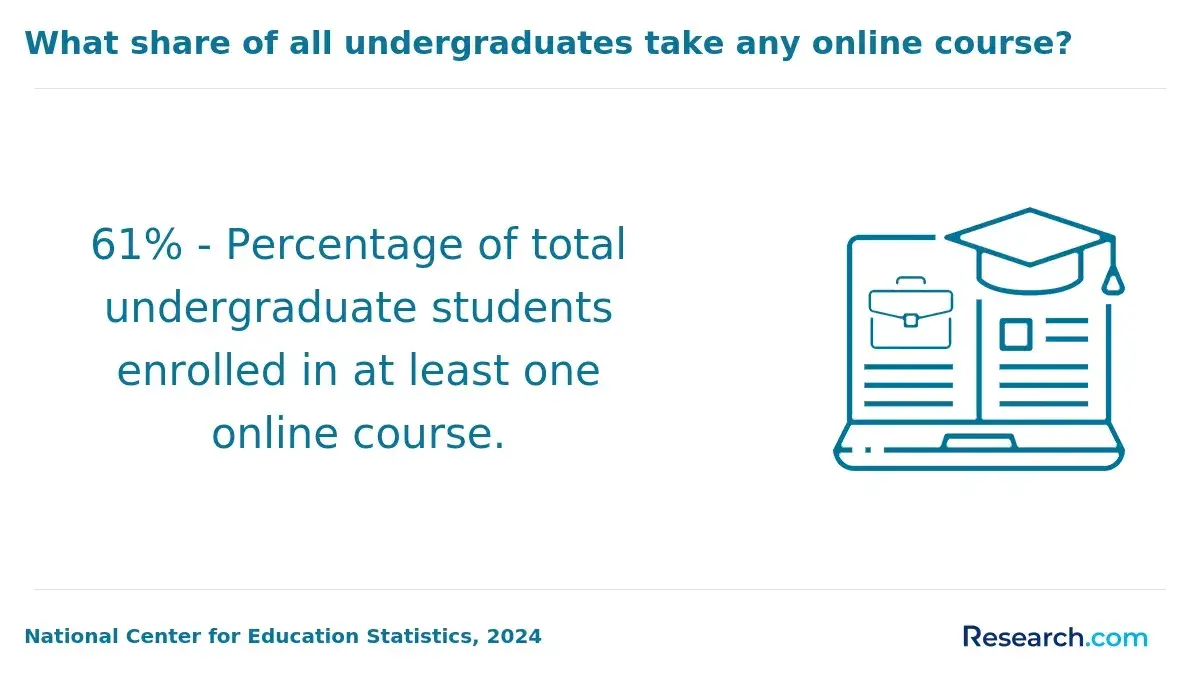
Are these degrees available online or on campus?
Most of these degree areas are available online, on campus, or in hybrid formats, but the best format depends on the major. Business, IT, computer science, cybersecurity, psychology, criminal justice, and healthcare administration are commonly offered online. Nursing, education, engineering, and some healthcare programs often require clinicals, student teaching, labs, or field placements.
The comparison below helps you decide whether online or campus study better supports affordability and work-life balance. The right choice is usually the format that helps you finish, not simply the format with the lowest tuition.
| Format | Strengths | Limitations | Best for |
| Online | Flexible scheduling, no commute, easier to combine with work | Requires self-discipline and may still have scheduled exams or projects | Working adults, caregivers, military-connected students |
| On campus | Face-to-face support, labs, networking, campus recruiting | Commute and fixed class times can increase time pressure | Traditional students and lab-heavy majors |
| Hybrid | Balances online convenience with in-person experiences | May require travel on specific days | Students in education, nursing, engineering, or local cohort programs |
Students with frequent relocations should ask how exams, practicums, and clinical placements work across states. Military-connected learners can also compare options through resources on the best online college for military spouses to avoid programs that are hard to continue after a move.
What accreditation should students look for?
Accreditation is one of the most important checks before enrolling because it affects financial aid, credit transfer, graduate school eligibility, licensure, and employer recognition. At minimum, students should look for institutional accreditation from an agency recognized by the U.S. Department of Education or the Council for Higher Education Accreditation.
Some fields also need programmatic accreditation or state approval. These checks are especially important in nursing, education, engineering, business, and certain healthcare programs.
- Nursing: confirm state board approval and appropriate nursing accreditation when required by employers or graduate programs.
- Education: confirm the program is approved for teacher licensure in the state where you plan to teach.
- Engineering: look for ABET accreditation when professional engineering licensure or traditional engineering employment is a goal.
- Business: programmatic accreditation can be useful, but internships, career services, and employer connections also matter.
- Cybersecurity and IT: check for hands-on labs, industry alignment, and recognized certifications rather than relying only on a school's marketing claims.
Avoid assuming that "private" means low quality or that "public" always means better ROI. Many non profit schools are private institutions, and the better question is whether the program is accredited, affordable after aid, transparent about outcomes, and aligned with your career target.
What courses are usually required in these programs?
Most bachelor's programs require about 120 credits, including general education, major courses, electives, and sometimes internships, labs, practicums, or capstone projects. The exact curriculum differs by school, but affordable programs should still include enough applied learning to help graduates compete for entry-level roles.
The table below summarizes common course themes by degree area. Use it to check whether a program teaches the skills employers or licensing bodies expect.
| Degree area | Common required courses | Applied requirement to look for |
| Business | Accounting, finance, marketing, management, business law, analytics | Internship, consulting project, or capstone |
| Healthcare administration | Healthcare systems, ethics, policy, finance, quality improvement | Healthcare practicum or administrative project |
| Information technology | Networking, systems administration, databases, cloud tools, security basics | Virtual labs and certification-aligned projects |
| Computer science | Programming, algorithms, data structures, software engineering, databases | Portfolio, team software project, or capstone |
| Cybersecurity | Network security, risk management, digital forensics, incident response | Cyber range, lab simulations, or security audit project |
| Education | Child development, pedagogy, assessment, classroom management, inclusion | Student teaching or supervised field experience |
| Nursing | Health assessment, pharmacology, pathophysiology, adult health, community health | Clinical rotations and NCLEX preparation |
When comparing schools, ask for a degree audit before enrolling if you have prior credits. This shows which courses count, which do not, and whether prerequisites could delay your graduation.
How long does each degree take to finish?
A traditional bachelor's degree usually takes four years of full-time study, but many students finish faster or slower depending on transfer credits, course load, work schedule, and program sequencing. Adult learners often choose part-time enrollment to protect work-life balance, even if it extends the timeline.
Use the table below to compare common completion paths. The best option is the one you can sustain academically and financially.
| Path | Typical timeline | Best for | Trade-off |
| First-time full-time student | About 4 years | Students able to take 12 to 15 credits per term | Less time for full-time work |
| Transfer student with associate degree | About 2 years after transfer | Students who completed lower-division requirements | Major prerequisites may still add time |
| Part-time working adult | Often 5 or more years | Students balancing work, caregiving, or military obligations | Longer time before career transition |
| Accelerated online student | Varies by credit load and transfer credits | Students with strong time management and prior credits | Compressed courses can be intense |
If you need a credential quickly, be careful not to confuse short certificates with bachelor's degrees. Students asking what degree can I get online in 6 months may find shorter associate or certificate options, but a bachelor's normally requires much more coursework unless substantial prior credit applies.
What jobs can graduates get with these degrees?
Graduates can pursue many roles, but job fit depends on concentration, internships, location, licensing, and experience. A bachelor's degree is usually a starting credential; employers often look for evidence that students can apply what they learned through projects, clinicals, portfolios, or supervised fieldwork.
The table below connects degree areas to common career paths and responsibilities. It is not a guarantee of placement, but it can help you choose a major that matches your preferred workday.
| Degree area | Possible roles | Typical responsibilities | Work-life balance notes |
| Business | Business analyst, HR specialist, marketing coordinator, operations coordinator | Analyze data, support teams, manage processes, coordinate projects | Often office-based; busy seasons vary by function |
| Healthcare administration | Patient services manager, healthcare coordinator, quality improvement assistant | Coordinate services, track compliance, improve workflows | More predictable than many direct patient-care roles |
| Information technology | IT support specialist, systems administrator, network technician | Maintain systems, troubleshoot issues, support users | Remote options exist, but support coverage may affect hours |
| Computer science | Software developer, QA analyst, data associate, web developer | Build, test, maintain, and improve software or data systems | Remote-friendly, but deadlines can create crunch periods |
| Cybersecurity | Security analyst, GRC analyst, digital forensics technician | Monitor risks, investigate alerts, document controls | GRC may be steadier than incident response |
| Psychology | Case manager, HR assistant, research assistant, training coordinator | Support clients, collect data, assist programs, communicate with stakeholders | Balance depends on caseload and setting |
| Nursing | Registered nurse, public health nurse, care coordinator | Assess patients, deliver care, educate families, coordinate treatment | Shift work is common early; outpatient roles may be steadier |
| Education | Teacher, instructional assistant, curriculum coordinator after experience | Teach, assess learning, plan lessons, support students | Structured calendar, but workload extends beyond class hours |
Some students eventually consider graduate study for advancement, especially in psychology, education leadership, nursing, analytics, or research roles. If long-term academic progression matters, resources on the easiest doctorate to get can help you understand how later doctoral timelines differ, but a doctorate is not needed for most entry-level bachelor's careers.
What salaries and job outlook do these careers have?
Salary and outlook vary by occupation, not simply by major. BLS wage data is useful because it reflects national labor markets, but students should also check local employer demand, state licensure rules, and entry-level postings before deciding.
The table below uses BLS 2024 median pay and 2023-33 outlook categories for selected occupations related to these degrees. Treat these as labor-market reference points, not guaranteed outcomes.
| Career | Related bachelor's degree | BLS 2024 median pay | 2023-33 outlook context |
| Software developer | Computer science | $105,990 | Much faster than average growth is projected for software developers, quality assurance analysts, and testers |
| Information security analyst | Cybersecurity or IT | $124,910 | Much faster than average growth is projected as organizations expand security needs |
| Registered nurse | Nursing | $64,580 | Employment is projected to grow faster than average, but schedules vary by setting |
| Human resources specialist | Business or psychology | $72,910 | Employment is projected to grow faster than average |
| Kindergarten and elementary school teacher | Education | $62,310 | Openings continue, but public school hiring depends on state and local budgets |
| Probation officer or correctional treatment specialist | Criminal justice, psychology, or social science | $64,520 | Demand depends on government budgets and local justice-system needs |
To evaluate ROI, compare expected debt, local wages, completion time, and the likelihood that you will stay in the field. The most affordable degree is not always the one with the lowest tuition; it is the one that helps you graduate, qualify for realistic roles, and maintain a schedule you can live with.
Other Things You Should Know About
There is no single best degree for everyone, but business, IT, computer science, cybersecurity, healthcare administration, and criminal justice often provide flexible options when chosen carefully. The most affordable choice is usually an accredited in-state public or transfer-friendly online program with strong career support.
Yes, if it comes from an accredited institution and teaches relevant skills. Employers usually care more about accreditation, experience, projects, internships, certifications, and job readiness than whether courses were online or on campus.
Avoid choosing solely by major name. Nursing, criminal justice, cybersecurity, and engineering can all have flexible paths, but some roles involve shifts, emergencies, travel, fieldwork, or on-call schedules. Research the actual jobs connected to the degree before enrolling.
Start with transfer credits, in-state tuition, community college pathways, employer tuition assistance, scholarships, and programs with transparent fees. Ask each school for a full cost estimate and a degree audit before committing.
References
- Major Differences https://www.educationnext.org/major-differencecs-why-some-degrees-cost-colleges-more-than-others/
- Average Cost of College [2025]: Yearly Tuition + Expenses https://educationdata.org/average-cost-of-college
- Need Based Grants for College Students | OEDb.org https://www.oedb.org/need-based-grant/
- Types of Financial Aid https://www.hhloans.com/types-of-financial-aid/
- 2025 Most Affordable Online Colleges & Degrees https://www.onlineu.com/most-affordable-colleges
- 8 Best Online Colleges: Top Accredited Schools for Flexible Learning https://www.nssi.com/blog/8-best-online-colleges-top-accredited-schools-for-flexible-learning
- Grants for college: a guide to how grants work + list of grants https://www.collegeessayguy.com/blog/grants-for-college
- How UniPathways Helps Students Complete Degrees Faster and More Affordably https://www.unipathways.org/post/how-unipathways-helps-students-complete-degrees-faster-and-more-affordably