2027 Best Bachelor's Degrees With Evening Classes

Co-Founder and Chief Data Scientist
Choosing a bachelor's degree with evening classes is often a work-life decision as much as an academic one. BLS 2024 data show bachelor's degree holders had median weekly earnings of $1,543, compared with $930 for workers whose highest credential was a high school diploma.
That gap explains why many working adults, parents, military learners, and career changers look for night-friendly programs. This guide compares common evening degree options, costs, timelines, accreditation issues, and career outcomes so you can choose a program that fits your schedule and goals.
Key Things You Should Know
- Evening bachelor's programs are strongest for fields with adult-learner demand, including business, healthcare administration, IT, cybersecurity, psychology, criminal justice, education, and nursing completion pathways.
- The federal Pell Grant maximum for the 2025-2026 award year is $7,395, but total cost depends heavily on transfer credits, fees, commuting, books, clinical requirements, and time away from work.
- BLS 2024 wage data show wide outcome differences by major: computer and IT occupations had a median annual wage above $100,000, while many education and social service roles require state licensure or graduate study for advancement.
Top 10 Best Bachelor's Degrees With Evening Classes
Business Degrees
Business is one of the most practical evening bachelor's options because many courses rely on case studies, projects, accounting exercises, and management simulations rather than daytime labs. Common majors include business administration, accounting, finance, marketing, human resources, and operations.
It fits students seeking promotion into supervisory, analyst, sales, or administrative roles. Choose AACSB, ACBSP, or IACBE business accreditation when available, but also compare internship access, employer partnerships, and transfer-credit rules. Accounting students should confirm whether courses count toward CPA education requirements in their state.
Healthcare Degrees
Healthcare evening degrees often focus on administration, public health, health informatics, or healthcare management rather than direct patient-care licensing. They fit medical assistants, billing specialists, military medics, and hospital staff who want office, compliance, quality improvement, or management roles.
Look for curricula covering healthcare law, finance, data systems, ethics, and population health. If the program includes internships, ask whether placements are available outside standard business hours. Students seeking clinical licensure should verify state-specific requirements before enrolling.
Information Technology Degrees
Information technology evening programs are built for learners who want applied skills in networking, systems administration, databases, cloud platforms, help desk leadership, and enterprise technology. They are often more operations-focused than computer science programs and may align well with certifications such as CompTIA, Cisco, Microsoft, AWS, or ITIL.
This degree can fit working adults already in tech support who need a bachelor's for advancement. Compare lab access, virtual machines, certification preparation, and whether evening students receive the same career support as daytime students.
Computer Science Degrees
Computer science evening degrees are best for students who want deeper preparation in programming, algorithms, software engineering, data structures, systems, and sometimes artificial intelligence. They can be rigorous because coding projects and math-heavy courses require steady weekly practice outside class.
This path fits aspiring software developers, data engineers, systems analysts, and technical product roles. Ask whether upper-division courses are consistently offered at night, because some schools offer evening general education courses but schedule advanced CS courses during the day.
Cybersecurity Degrees
Cybersecurity degrees with evening classes are strong options for students aiming at security operations, risk management, incident response, digital forensics, governance, or network defense. The best programs include hands-on labs, ethical hacking rules, secure systems design, and policy training.
BLS 2024 data place the median annual wage for information security analysts at $124,910, but entry-level roles may require IT experience first. Check whether the school is recognized by the NSA as a Center of Academic Excellence and whether coursework supports common certifications.
Psychology Degrees
Psychology evening degrees suit students interested in human behavior, research methods, mental health systems, human services, market research, or graduate study. A bachelor's alone usually does not qualify graduates to become licensed psychologists or counselors, so students should view it as a foundation for related entry-level roles or further education.
Strong programs include statistics, research design, developmental psychology, abnormal psychology, ethics, and applied experience. Ask whether research labs, fieldwork, or service-learning opportunities are accessible to evening students.
Nursing Degrees
Evening nursing bachelor's options vary sharply. RN-to-BSN programs are commonly flexible because students already hold RN licensure, while pre-licensure BSN programs often require daytime labs, simulations, and clinical rotations.
This degree fits registered nurses seeking leadership, public health, case management, or graduate nursing pathways. BLS 2024 data report a median annual wage of $93,600 for registered nurses, but pay varies by state, setting, and shift. Verify CCNE or ACEN accreditation and state board approval before applying.
Education Degrees
Education evening degrees can work well for paraprofessionals, childcare workers, substitute teachers, and career changers, but licensure programs usually require daytime classroom observations and student teaching. Common options include elementary education, special education, early childhood education, and non-licensure education studies.
Before enrolling, confirm that the program is approved for teacher preparation in your state. Also ask how the school schedules field placements, because evening coursework alone does not remove daytime practicum obligations.
Criminal Justice Degrees
Criminal justice evening degrees often attract working adults in law enforcement, corrections, security, military, legal support, and public service. Coursework typically covers courts, policing, corrections, criminology, ethics, homeland security, and research methods. This degree may support advancement into supervisory, investigative, probation, compliance, or public administration roles.
Students should avoid assuming the degree automatically qualifies them for sworn law enforcement roles, since hiring standards, academies, background checks, and physical requirements are set by agencies and jurisdictions.
Engineering Degrees
Engineering bachelor's degrees are less commonly offered fully in the evening because they require sequential math, science, design, and lab courses. However, some schools offer evening pathways in engineering technology, industrial technology, electrical engineering technology, or completion programs for students with associate degrees.
Students seeking professional engineering licensure should prioritize ABET-accredited engineering programs and confirm whether evening sections include required labs. This path fits disciplined students who can handle a heavy technical workload while working.
What types of bachelor's degrees most commonly offer flexible evening class schedules?
The most common bachelor's degrees with evening class schedules are those designed around adult learners, working professionals, and students completing upper-division coursework after transfer. Programs with fewer daytime labs, clinical placements, or field requirements are usually easier to schedule at night.
Use this comparison to narrow your list before researching individual schools. The strongest fit depends on whether you need career mobility, licensure, technical skills, or a pathway to graduate school:
| Degree area | Evening availability | Best fit | Main caution |
| Business | High | Working adults seeking management, accounting, finance, or operations roles | Accounting licensure rules vary by state |
| Healthcare administration | High | Healthcare workers moving into administrative or compliance roles | Clinical careers may require separate licensure |
| IT and cybersecurity | High | Tech support, networking, cloud, and security career paths | Hands-on labs and experience still matter |
| Psychology | Moderate to high | Human services, research support, HR, or graduate-school preparation | Licensed therapy roles usually require graduate study |
| Nursing | Moderate | Licensed RNs completing a BSN | Pre-licensure clinical schedules may be daytime |
| Engineering | Lower | Technicians or transfer students pursuing engineering technology or completion pathways | Lab and ABET requirements can limit flexibility |
For most students, the best evening bachelor's degree is not simply the one with the most night classes. It is the one that keeps required courses, labs, internships, advising, tutoring, and career services available when you can actually use them.
How do evening bachelor's programs compare to daytime and online formats?
Evening, daytime, and online bachelor's programs can lead to the same credential, but the student experience is different. Evening classes are especially useful when you want live instruction and campus access without giving up daytime employment.
The table below compares the formats on the factors that usually affect completion, cost, and convenience. Use it to decide whether an evening schedule is truly better than a fully online or traditional daytime option:
| Format | Typical strengths | Typical limitations | Best for |
| Evening on-campus or hybrid | Live faculty interaction, predictable schedule, campus resources | Commute time, fewer course sections, possible late-night workload | Working adults who learn best in scheduled classes |
| Daytime on-campus | More course availability, clubs, labs, internships, faculty access | Harder to combine with full-time work | Traditional students or those with flexible daytime availability |
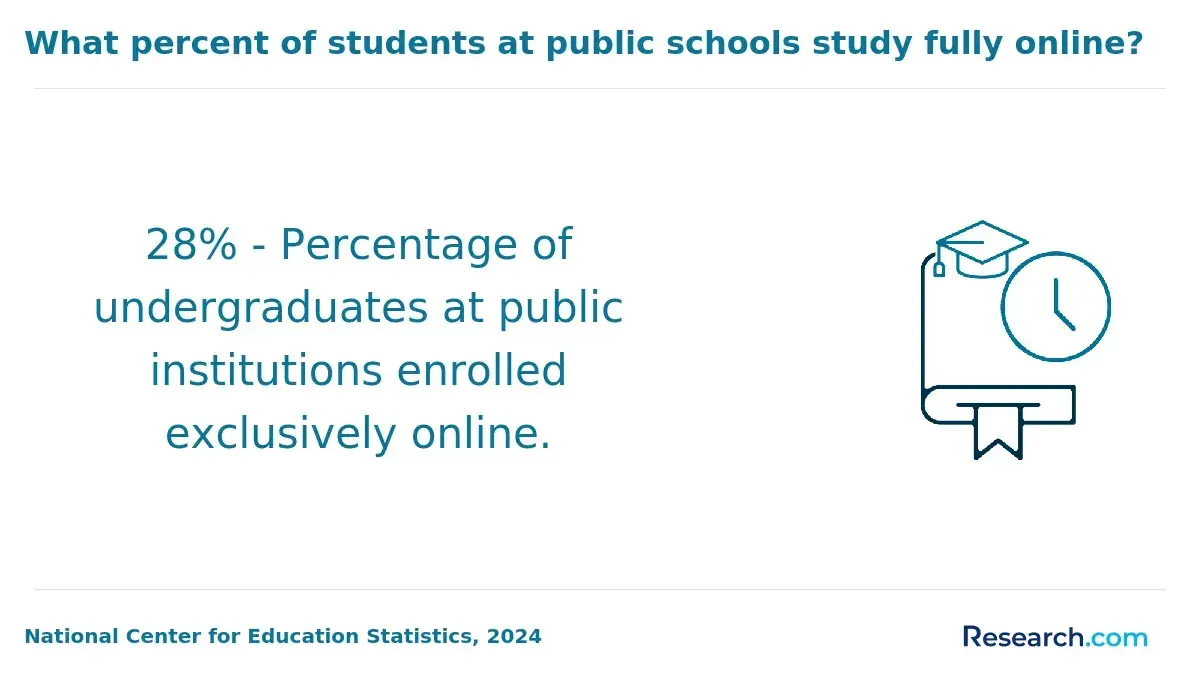
| Fully online | Maximum location flexibility and often asynchronous access | Requires self-direction and careful accreditation review | Students with rotating shifts, caregiving duties, or long commutes |
| Hybrid evening | Balances face-to-face support with online convenience | Still requires reliable attendance on set nights | Students who want structure but need fewer campus trips |
A common mistake is assuming evening means easier. The academic standards should be the same as daytime sections; the benefit is scheduling, not reduced rigor. If your work shifts change often, an asynchronous online program may be more realistic than a fixed Tuesday-and-Thursday evening schedule.
What accreditation and institutional quality standards should evening degree programs meet?
Accreditation is the first quality check for any evening bachelor's program. Institutional accreditation affects federal financial aid eligibility, transfer credit, employer recognition, and admission to many graduate programs.
Programmatic accreditation matters when a field has licensing, professional standards, or specialized employer expectations. The table below summarizes common quality signals to verify before applying:
| Quality factor | What to verify | Why it matters |
| Institutional accreditation | The college is accredited by an agency recognized by the U.S. Department of Education or CHEA | Supports aid eligibility, credit transfer, and employer acceptance |
| Programmatic accreditation | Field-specific approval such as CCNE, ACEN, ABET, AACSB, ACBSP, CAEP, or similar bodies when relevant | May affect licensure, graduate admission, or professional credibility |
| State authorization | The school can legally offer the program to students in your state | Important for online and hybrid programs crossing state lines |
| Licensure alignment | The curriculum meets your state's requirements for nursing, teaching, counseling-adjacent pathways, or engineering licensure when applicable | Prevents completing a degree that does not meet your career requirement |
| Student outcomes | Retention, graduation, job placement, certification pass rates, and transfer policies | Shows whether evening students are supported through completion |
Red flags include vague accreditation claims, pressure to enroll immediately, unclear tuition disclosures, missing faculty credentials, and programs that cannot explain whether evening students have access to the same required courses as daytime students.
What admission requirements and prior experience are needed for evening bachelor's programs?
Admission requirements for evening bachelor's programs are usually similar to daytime programs, but many schools design them for transfer students and adult learners. Applicants commonly need a high school diploma or GED, transcripts, placement information, and sometimes a minimum GPA for transfer admission.
Before applying, use this checklist to reduce wasted time and fees:
- Ask for an unofficial transfer-credit review showing which credits apply to the major, not only to electives.
- Confirm whether upper-division major courses are offered in the evening often enough to graduate on time.
- Check whether the program requires daytime labs, clinicals, practicums, student teaching, or internships.
- Compare application costs and consider accredited online schools no application fee if you are applying to several programs.
- Ask whether work experience, prior learning assessment, CLEP, DSST, AP, or industry certifications can reduce required credits.
Prior experience is helpful but not always required. It matters most in RN-to-BSN, IT, cybersecurity, business completion, and public safety programs where students can connect classroom projects to real workplace problems.
How long do evening bachelor's degrees typically take and what schedules are offered?
A bachelor's degree typically requires about 120 semester credits, but evening students often finish at different speeds depending on transfer credits and course load. A student entering with an associate degree may need about two years of part-time upper-division study, while a first-time student attending part time may need longer.
The table below shows common scheduling models. It is not a promise of completion time, but it helps you ask better questions when comparing schools:
| Schedule model | Common pattern | Who it fits | Trade-off |
| Two evenings per week | One or two courses in fixed weekly blocks | Full-time workers who need predictability | Slower progress if summer courses are unavailable |
| Accelerated evening terms | Five-to-eight-week sessions with one course at a time | Students who can handle intensive reading and assignments | Less recovery time if work or family demands spike |
| Weekend plus evening hybrid | Evening online work with occasional Saturday sessions | Students who need fewer weekday campus trips | Can conflict with caregiving or second jobs |
| Mostly online with evening live sessions | Synchronous video classes after work hours | Remote learners who still want live discussion | Requires reliable internet and scheduled attendance |
| Cohort completion program | Students move through a set sequence together | Learners who benefit from structure and peer support | Less flexibility if you need to pause or change pace |
The smartest question is not "How fast can I finish?" but "How many credits can I complete each term without risking burnout or failed courses?" For many working adults, a sustainable pace produces a better return than an overly aggressive schedule.
What is the typical curriculum structure and workload in evening bachelor's programs?
Evening bachelor's programs usually combine general education, major requirements, electives, and a capstone or applied project. The workload is comparable to daytime study, and a three-credit course often requires several hours per week outside class for reading, assignments, studying, and group work.
Program structure varies by field, but most students should expect the following components:
- General education courses in writing, communication, quantitative reasoning, science, humanities, and social science.
- Lower-division foundation courses that prepare students for major-specific upper-division work.
- Major core courses that build field knowledge, such as accounting, programming, health policy, criminology, research methods, or pedagogy.
- Electives or concentrations that let students specialize in areas such as analytics, cybersecurity, human resources, public health, or child development.
- A capstone, practicum, internship, clinical experience, student teaching placement, portfolio, or senior project when required by the major.
Common mistakes include taking too many accelerated courses at once, underestimating group project coordination, and ignoring support services. Before enrolling, ask whether tutoring, library help, disability services, labs, and academic advising are available after normal business hours.
Moreover, students with prior college credit should focus on transfer evaluation before submitting a deposit. Schools that serve military learners may also evaluate Joint Services Transcript credits, and students comparing an online military college option should ask how military training, deployment interruptions, and tuition assistance are handled.
What are the tuition costs, financial aid, and employer tuition benefits for evening students?
Tuition for evening bachelor's students depends on institution type, residency, transfer credits, fees, and whether courses are billed per credit or by term. The College Board's 2024 pricing data showed published in-state tuition and fees at public four-year colleges averaged $11,610 for the academic year, which gives students a useful benchmark before comparing local evening programs.
Do not compare programs by tuition alone. Total cost can change substantially after transfer credits, parking, technology fees, books, exam fees, background checks, uniforms, clinical compliance costs, and lost work hours are included.
Review these cost levers before committing:
- Transfer credits: The cheapest credit is often the one you do not have to retake.
- Employer tuition benefits: Ask whether your employer pays upfront, reimburses after grades post, or limits approved majors.
- Federal aid: Submit the FAFSA and compare grants, subsidized loans, unsubsidized loans, and work-study eligibility.
- Scholarships: Look for adult learner, transfer student, first-generation, military, union, healthcare, public safety, and local foundation awards.
- Future education plans: If you may pursue graduate study later, compare bachelor's debt carefully before considering options such as cheapest doctoral programs.
A practical ROI test is to estimate the remaining net cost after grants and employer benefits, then compare it with the credential needed for your target role. A lower-cost program is not automatically better if it delays graduation, lacks required accreditation, or does not support your career path.
What careers, job roles, and advancement opportunities follow common evening bachelor's degrees?
Career outcomes from evening bachelor's degrees depend more on major, experience, location, industry, and licensure than on whether classes met at night. Employers generally care that the institution is accredited, the degree is relevant, and the graduate can show skills through work experience, projects, certifications, internships, or portfolios.
The table below connects common evening degrees with career directions. It is meant to clarify fit, not to imply that every role requires only a bachelor's degree:
| Degree area | Common roles | Advancement path | Helpful skill signals |
| Business | Operations coordinator, analyst, HR specialist, account manager, accountant | Manager, controller, project lead, finance manager | Excel, accounting systems, analytics, communication, leadership |
| Healthcare administration | Clinic coordinator, quality analyst, patient services manager, compliance assistant | Department manager, practice administrator, health services manager | Healthcare law, billing systems, data reporting, process improvement |
| IT | Systems administrator, network technician, support analyst, cloud support associate | IT manager, cloud engineer, systems architect | Certifications, labs, scripting, troubleshooting, customer support |
| Cybersecurity | SOC analyst, security analyst, GRC analyst, vulnerability technician | Incident responder, security engineer, security manager | Home labs, SIEM tools, risk frameworks, certifications |
| Psychology | Case manager, research assistant, HR assistant, behavioral health technician | Graduate school, program coordination, people analytics | Research methods, statistics, interviewing, ethics |
| Education | Teacher, paraprofessional advancement, instructional assistant, training coordinator | Lead teacher, curriculum specialist, administrator with further credentials | State licensure, classroom experience, lesson planning |
| Criminal justice | Corrections officer, probation support, security manager, victim advocate, compliance specialist | Supervisor, investigator, emergency management, public administration | Report writing, ethics, law, conflict resolution |
Students comparing fields for long-term earnings should review major-level labor market patterns and highest paying jobs, but salary should not be the only factor. Licensure fit, schedule compatibility, aptitude, and local hiring demand are just as important.
What salaries, job outlook, and licensing or certification requirements can graduates expect?
Salary and job outlook vary widely by field. BLS 2024 data reported a median annual wage of $105,990 for computer and mathematical occupations, reflecting strong demand for technical skills; however, individual outcomes depend on role, region, experience, certifications, and the quality of a student's project portfolio or work history.
Use the table below as a broad planning tool for common evening-degree career areas. It summarizes typical direction, not guaranteed graduate pay:
| Field | Salary context | Outlook considerations | Licensure or certification notes |
| Business | Business roles range from entry-level administrative and analyst positions to higher-paying management roles | Demand depends on industry, analytics skills, and leadership experience | CPA, SHRM, PMP, or finance credentials may matter for specific paths |
| Healthcare administration | Management roles can be strong, but entry-level administrative roles vary by setting | Aging populations and healthcare complexity support long-term demand | Licensure is usually role-specific, not universal for administration |
| IT and cybersecurity | Technical roles often pay more when paired with experience and certifications | Cloud, security, automation, and AI governance are shaping hiring needs | CompTIA, Cisco, AWS, Microsoft, CISSP, or related credentials can help |
| Nursing | RN compensation varies by state, shift, union status, and care setting | Healthcare staffing needs remain significant, but local markets differ | RN licensure and accredited nursing education are essential |
| Education | Pay is often set by district salary schedules and state funding | Shortages vary by state, subject, and grade level | Teacher licensure, exams, and student teaching are state-controlled |
| Engineering technology | Technical and supervisory roles may be available in manufacturing, utilities, and industrial settings | Automation and infrastructure work influence demand | ABET accreditation and PE licensure rules matter for engineering paths |
Licensing is the area where evening students must be especially careful. Nursing, teaching, counseling-related graduate pathways, accounting, and engineering can have state-specific rules. Always verify requirements with the state board or licensing authority before choosing a program.
Other Things You Should Know About
Yes, if the college is properly accredited and the degree is relevant to the role. Employers usually do not distinguish between evening and daytime formats on a transcript; they focus on the institution, major, skills, experience, and credentials.
Many students do, but the pace matters. Taking one or two courses per term is often more sustainable for full-time workers than trying to study full time after work.
Not always. Some schools charge the same tuition, while others use adult-degree or continuing-education pricing. Compare total cost after fees, transfer credits, employer benefits, and financial aid.
The best choice depends on your current experience and target role. Business, IT, cybersecurity, healthcare administration, RN-to-BSN, and education completion programs are often practical because they connect directly to advancement paths.
References
- Balancing Full-Time Work and Part-Time Studies: My Journey https://www.lemon8-app.com/@zekeho.sg/7519198108383822354
- Evening Adult Degree Program (EADP) - La Sierra University https://lasierra.edu/evening-adult-degree-program/
- What Is a Credit Hour? How University Credit Systems Work https://openeducat.org/articles/what-is-credit-hour-university-system/
- Top Degrees in Demand for the Future: 2026 & Beyond https://skillifysolutions.com/blogs/career-growth/top-degrees-in-demand-for-the-future/
- Top 19 Bachelor Degree Programs for Working Adults | NEIT https://www.neit.edu/blog/degrees-for-working-adults
- How Many U.S. Credits Will I Get For My Degree? - IEE Blog https://iee.com/blog/how-many-u-s-credits-will-i-get-for-my-degree/
- Career earnings by college major - The Hamilton Project https://www.hamiltonproject.org/data/career-earnings-by-college-major/
- Bachelor's Degree Completion Programs - Cal Lutheran https://www.callutheran.edu/programs/undergraduate/