2027 Best Online Undergraduate Degrees With No Campus Visits Required

Co-Founder and Chief Data Scientist
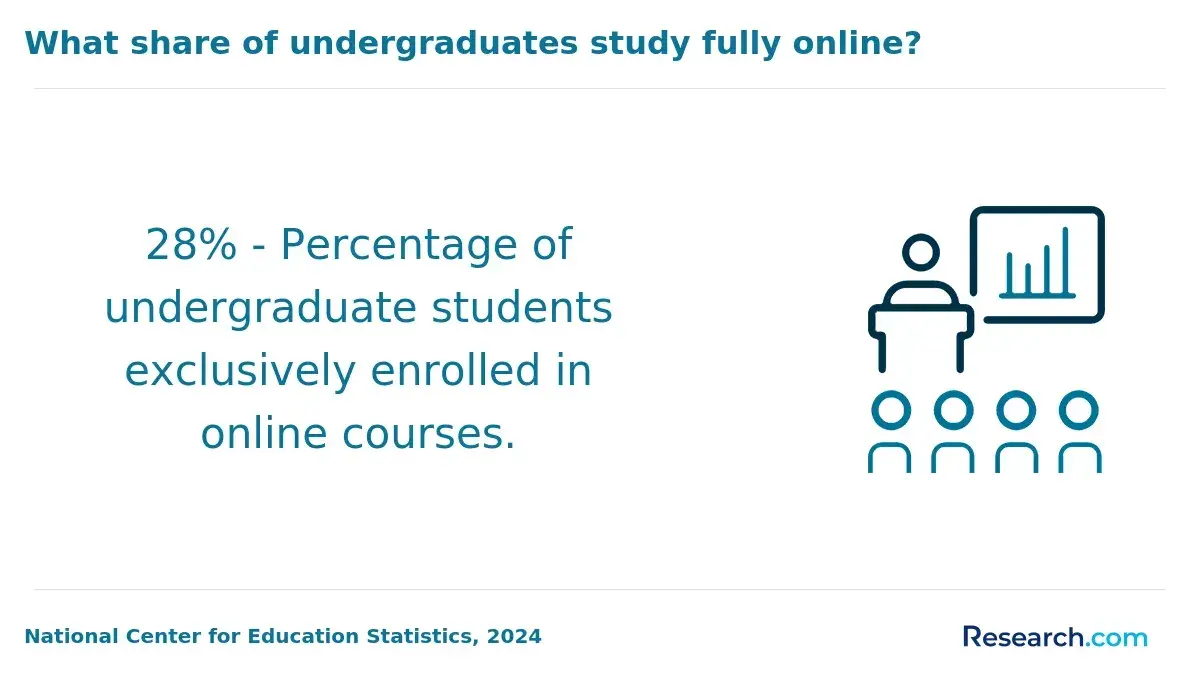
Choosing a fully online bachelor's degree is really a question of fit: Which program can you finish without relocating, pausing work, or sacrificing quality? The latest NCES distance education reporting shows that more than half of U.S. undergraduates took at least one online course, making remote study a mainstream path rather than a backup option.
This guide is for working adults, transfer students, parents, military learners, and first-time college students who need a no-campus-visit degree. You'll learn which majors work best online, what to verify before enrolling, and how to compare cost, flexibility, accreditation, and career value.
Key Things You Should Know
- Fully online undergraduate degrees can be legitimate and career-relevant when the school is institutionally accredited, authorized to serve your state, and transparent about in-person requirements such as clinicals, labs, student teaching, or proctored exams.
- Cost varies widely: College Board's 2024-25 figures show average published tuition and fees of $11,610 for in-state public four-year students and $43,350 for private nonprofit four-year students, so online learners should compare total cost rather than tuition alone.
- Career fit matters more than format: BLS May 2024 wage data shows bachelor's-level fields such as software development, cybersecurity, accounting, nursing, and management can lead to strong median wages, but outcomes depend on skills, location, licensure, experience, and employer demand.
Top 10 Best Online Undergraduate Degrees With No Campus Visits Required
Business Degrees
Online business bachelor's programs are among the most flexible no-campus options because most coursework relies on cases, projects, accounting tools, analytics software, and virtual teamwork rather than physical labs. Common majors include business administration, accounting, finance, marketing, human resources, supply chain management, and entrepreneurship. This path fits students who want broad career mobility, management preparation, or a practical transfer-friendly major. It may be less ideal for students who want a highly technical credential unless the curriculum includes data analytics, information systems, or industry certifications.
Healthcare Degrees
Fully online healthcare bachelor's degrees often focus on administration, health information management, public health, healthcare quality, or health sciences. They are strong options for students who want healthcare careers without becoming clinicians or who already work in medical offices, billing, coding, or allied health roles. Check whether the program requires local internships, background checks, immunizations, or professional practice hours. If your goal is licensure-based patient care, confirm requirements with your state board before enrolling.
Information Technology Degrees
Online IT degrees usually emphasize systems administration, networking, cloud computing, databases, scripting, project management, and user support. They work well for hands-on problem solvers who want practical technology roles without the heavier theory found in some computer science programs. Many strong programs align coursework with certifications from vendors such as CompTIA, Cisco, Microsoft, AWS, or Google, though certification exams may cost extra. Look for virtual labs, remote server environments, and career services that support portfolio building.
Computer Science Degrees
A fully online computer science degree is best for students who want deeper training in programming, algorithms, software engineering, data structures, databases, operating systems, and sometimes artificial intelligence. It can prepare students for software development, data, systems, and graduate study, but it is more math-intensive than many IT programs. Before choosing this route, review required calculus, discrete mathematics, and programming prerequisites. Strong programs provide code reviews, collaborative development projects, and access to remote computing tools.
Cybersecurity Degrees
Online cybersecurity bachelor's programs typically cover network defense, ethical hacking, incident response, digital forensics, governance, risk management, and security law. They are a good fit for students who enjoy investigative thinking, technical troubleshooting, and high-accountability work. Since employers often value demonstrable skills, prioritize programs with virtual labs, capture-the-flag exercises, security operations simulations, and certification alignment. Students seeking government or defense roles should also ask whether the curriculum maps to recognized cybersecurity workforce frameworks.
Psychology Degrees
An online psychology bachelor's degree covers human behavior, research methods, statistics, development, abnormal psychology, cognition, and social psychology. It can support careers in human services, case management, market research, human resources, and graduate school preparation. It is important to understand that becoming a licensed psychologist, counselor, or therapist usually requires graduate education and supervised experience. Choose this major if you want a versatile social science foundation, not if you expect immediate independent clinical practice after the bachelor's degree.
Nursing Degrees
No-campus nursing options are most common for licensed registered nurses completing RN-to-BSN programs. These degrees usually deliver theory, leadership, community health, evidence-based practice, and policy coursework online, while practice projects can often be completed locally. Pre-licensure nursing programs are less likely to be fully online because clinical training must occur in approved healthcare settings. Always confirm state board approval, clinical placement rules, and whether any orientations, skills checks, or exams require travel.
Education Degrees
Online education bachelor's degrees may focus on elementary education, special education, early childhood education, instructional design, or non-licensure education studies. Licensure-track programs usually require supervised student teaching in an approved local school, even when coursework is fully online. Non-licensure programs can fit students interested in tutoring, training, childcare leadership, or education nonprofits. Before enrolling, verify whether the degree leads to teacher certification in your state and whether the school helps arrange local field placements.
Criminal Justice Degrees
Online criminal justice degrees cover courts, policing, corrections, criminology, ethics, juvenile justice, homeland security, and investigations. They fit students interested in public safety, victim advocacy, compliance, probation, or law-related support roles. Applicants with records should check agency hiring standards, licensing rules, and career barriers before choosing a major; a guide to the best degree for felons can help compare more realistic options. Some roles require academy training, background checks, or civil service exams beyond the degree.
Engineering Degrees
Fully online engineering bachelor's degrees are less common than business or IT because many engineering fields require labs, design studios, and equipment-based learning. Available options may include engineering technology, electrical engineering, industrial engineering, or software-related engineering. If the program claims no campus visits, review how it handles labs, design projects, proctored exams, and accreditation. Students planning professional engineer licensure should pay special attention to ABET accreditation and state board requirements.
What types of fully online bachelor's degrees can you complete with no campus visits?
A fully online undergraduate degree with no campus visits means you can complete required coursework, advising, registration, exams, and student support remotely. Some programs still require local fieldwork, clinical practice, student teaching, internships, or background checks, so "no campus visits" does not always mean "no in-person experience anywhere."
The table below compares common online bachelor's categories by their typical online fit and the campus-visit issues students should check before applying.
| Degree category | Best online fit | What to verify |
| Business and management | High | Internship options, analytics tools, concentration quality |
| IT, computer science, and cybersecurity | High | Virtual labs, portfolio projects, certification alignment |
| Psychology and social sciences | High | Graduate school preparation and research methods depth |
| Healthcare administration and health sciences | Moderate to high | Local practicum expectations and health compliance requirements |
| Nursing and education licensure pathways | Moderate | State approval, supervised clinical or teaching placements |
| Engineering and lab sciences | Limited to moderate | ABET status, remote lab format, equipment requirements |
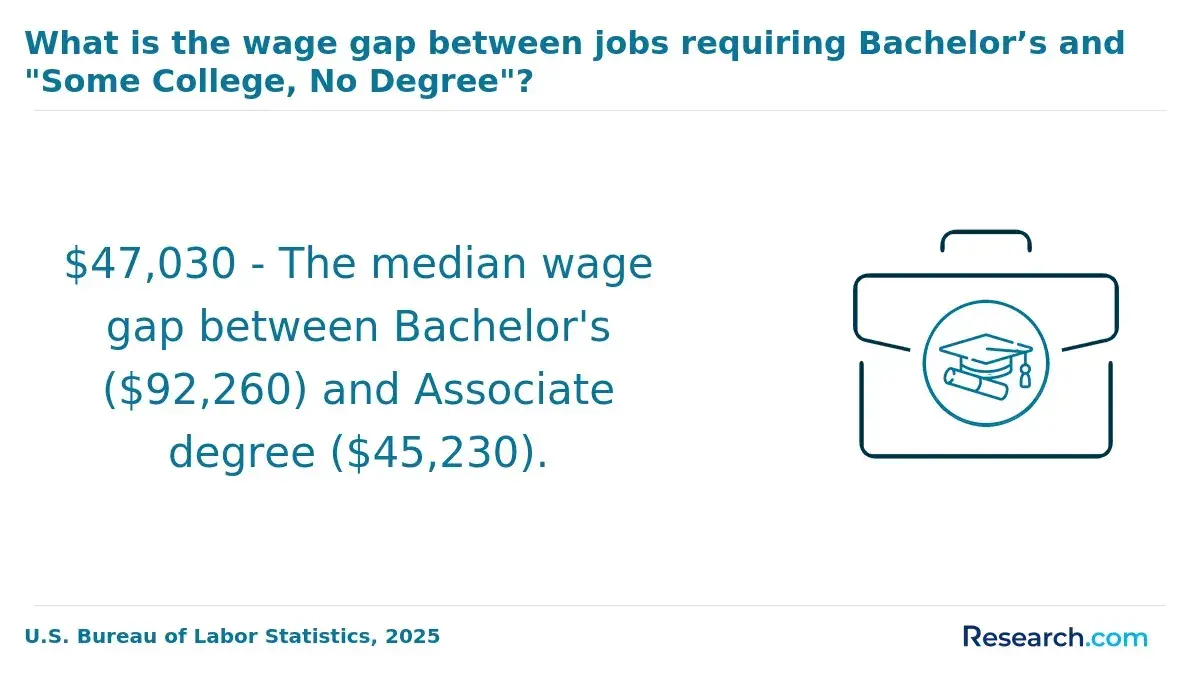
If you are not ready for a bachelor's program, starting with an associate's degree online can be a lower-cost way to earn credits, test your schedule, and transfer later if the receiving school accepts the coursework.
How do fully online undergraduate programs compare to campus-based degrees in quality and outcomes?
Fully online undergraduate programs can match campus-based degrees in academic quality when they use the same faculty standards, learning outcomes, accreditation, credit requirements, and assessment methods. The delivery format alone does not determine value; the stronger questions are whether students receive enough interaction, feedback, academic support, career guidance, and hands-on practice for the field.
The comparison below helps separate format differences from quality differences, which is useful when a school advertises an online degree as equivalent to its campus program.
| Factor | Fully online degree | Campus-based degree | Decision point |
| Credential | Often the same diploma and transcript wording as campus programs | Traditional format with in-person identity | Ask whether the transcript or diploma labels the degree as online |
| Flexibility | Better for working adults, caregivers, military students, and remote learners | Better for students who need fixed structure | Choose based on your time discipline and support needs |
| Interaction | Depends on live sessions, discussion design, group projects, and instructor responsiveness | More spontaneous in-person interaction | Review class size, office hours, and advising access |
| Hands-on learning | Strong in fields using virtual labs, simulations, and local placements | Stronger where equipment-heavy labs are central | Match the format to the major's practical requirements |
| Career outcomes | Can be strong when the program has employer connections and career services | May offer more local networking and recruiting events | Ask for outcomes by program, not institution-wide averages |
The biggest quality risk is not online learning itself; it is enrolling in a program that is poorly designed, weakly supported, or misaligned with your target career. A reputable online program should publish curriculum details, faculty qualifications, accreditation, transfer policies, technology requirements, and student support services clearly.
What accreditation and state authorization should fully online undergraduate programs have?
Accreditation is the baseline quality check for any fully online bachelor's degree. In the U.S., students should look for institutional accreditation from an accreditor recognized by the U.S. Department of Education or the Council for Higher Education Accreditation. This matters because federal financial aid, transfer credit, employer recognition, and graduate school admission often depend on recognized accreditation.
Programmatic accreditation can also matter in fields tied to licensure, public safety, clinical practice, teacher certification, or engineering. For example, nursing, education, engineering, business, and health information programs may have specialized accreditors or state approval requirements that affect eligibility for exams or credentials.
Use this checklist before applying because accreditation and authorization problems are among the most expensive mistakes online students make.
- Confirm institutional accreditation on the accreditor's official database or the U.S. Department of Education's recognized accreditation resources.
- Check whether your state allows the school to enroll online students, often through state authorization or participation in SARA.
- For licensure-track degrees, contact the relevant state licensing board and ask whether the program meets education requirements in your state.
- Ask the school to identify every in-person requirement, including clinicals, labs, student teaching, internships, orientations, intensives, and proctored exams.
- Verify transfer credit rules in writing, especially if you plan to bring in credits from community college, military training, exams, or prior institutions.
A school that avoids direct answers about accreditation, state eligibility, or licensure alignment should be treated as a red flag. Do not rely only on marketing pages or verbal admissions claims when a written policy is available.
What admission requirements and application materials do fully online bachelor's programs expect?
Admission requirements for fully online bachelor's programs vary by selectivity, major, transfer status, and whether the program is degree-completion or first-year entry. Open-access and adult-focused schools may emphasize transcripts and readiness, while selective universities may require stronger academic records, essays, prerequisites, or minimum college GPA for transfer students.
Most applicants should expect a combination of the following materials. Reviewing them early helps you avoid delays, especially if you attended multiple colleges or need international, military, or exam-based credits evaluated.
- Online application and application fee or fee waiver request
- Official high school transcript, GED documentation, or college transcripts from every institution attended
- Transfer credit evaluation, including prior college credits, CLEP, AP, IB, military training, or industry certifications when accepted
- Personal statement, resume, or goal statement for programs that assess fit or professional experience
- Major-specific prerequisites such as college algebra, statistics, anatomy, programming, accounting, or composition
- Additional checks for regulated fields, such as background screening, drug testing, immunization records, or state eligibility review
Test-optional policies are now common, but that does not mean admission is automatic. If your GPA is uneven, use the application to show recent academic readiness, work experience, completed prerequisites, and a realistic study plan.
How long do fully online undergraduate degrees take and what schedules do they offer?
Most bachelor's degrees require about 120 semester credits, though exact requirements vary by school and major. A full-time first-time student often needs about four years, while transfer students with an associate degree or substantial prior credits may finish faster. Part-time students may take longer, but the trade-off can be lower stress and steadier employment.
Online programs use several schedule models. Understanding the calendar is important because "accelerated" can mean shorter terms, heavier weekly workloads, or year-round enrollment rather than fewer academic requirements.
| Schedule model | How it works | Best for |
| Traditional semester | Courses run about 15 weeks with familiar fall, spring, and summer terms | Students who prefer a steady academic pace |
| Accelerated terms | Courses often run in shorter blocks, with fewer classes at once | Focused students who can handle compressed deadlines |
| Asynchronous format | Students complete weekly work without required live meeting times | Working adults with unpredictable schedules |
| Synchronous format | Students attend live online classes at scheduled times | Learners who want structure and real-time discussion |
| Competency-based format | Students progress by demonstrating mastery rather than only seat time | Experienced learners who can move quickly through familiar material |
Students planning graduate school should also think ahead. For example, a bachelor's timeline is different from a 6 month masters degree online, which may be designed for students who already hold a degree and meet advanced admission requirements.
Before choosing the fastest option, estimate your weekly study time honestly. A compressed eight-week course can be convenient, but it can also be difficult if you work overtime, care for family members, or are returning to school after a long break.
What tuition, fees, and financial aid options apply to fully online bachelor's students?
Tuition for online bachelor's degrees depends on residency rules, public versus private pricing, transfer credits, fees, books, technology, course materials, and whether the school charges a separate online rate. The sticker price is only the starting point; your real cost is the net price after grants, scholarships, employer benefits, military benefits, and accepted transfer credits.
Recent national tuition benchmarks show why comparison shopping matters. These College Board 2024-25 published tuition and fee averages are not online-specific, but they give students a useful baseline for evaluating whether an online program's price is unusually high or low.
- Public four-year in-state average published tuition and fees: $11,610
- Public four-year out-of-state average published tuition and fees: $30,780
- Private nonprofit four-year average published tuition and fees: $43,350
Online students should also ask about costs that are easy to miss. Common add-ons include distance learning fees, proctoring fees, lab kits, simulation software, background checks, clinical compliance tracking, graduation fees, textbooks, and required hardware or internet upgrades.
Use this sequence to compare affordability across programs in a practical way.
- Calculate total credits remaining after the official transfer evaluation, not before.
- Multiply remaining credits by tuition per credit and add mandatory fees.
- Subtract grants, scholarships, employer tuition assistance, military education benefits, and tuition discounts you are confirmed to receive.
- Estimate loan borrowing by term and compare it with realistic entry-level earnings in your target field.
- Ask whether tuition is locked, whether fees can increase, and whether dropping below full-time status changes aid eligibility.
Federal Student Aid rules can change, and aid eligibility depends on enrollment intensity, satisfactory academic progress, citizenship or eligible noncitizen status, and program participation. Before borrowing, request a financial aid award letter and separate gift aid from loans.
What coursework, majors, and learning formats define high-quality fully online undergraduate programs?
High-quality fully online undergraduate programs are intentionally designed for remote learners rather than simply recording campus lectures. They combine clear weekly modules, instructor feedback, accessible advising, online library services, tutoring, disability accommodations, career support, and reliable technology platforms.
Strong coursework should connect theory to measurable skills. In a business program, that might mean financial analysis and management cases; in cybersecurity, remote labs and incident response exercises; in psychology, research methods and statistics; and in education, lesson planning and supervised fieldwork.
The most useful programs usually include several learning features that help students prove what they can do after graduation.
- Applied projects that can become portfolio samples, such as business plans, software applications, policy briefs, data dashboards, or case analyses
- Frequent instructor feedback rather than only auto-graded quizzes
- Virtual labs, simulations, or remote tools when the field requires technical practice
- Embedded writing, research, quantitative reasoning, and communication assignments
- Career preparation, including resume help, interview practice, internship guidance, and employer-informed assignments
AI is also changing what employers expect from graduates. Programs should teach students how to use AI tools ethically, evaluate outputs critically, protect data privacy, and demonstrate original judgment. A degree that ignores AI, automation, and data literacy may feel outdated even if the major itself is in demand.
What careers, salaries, and job outlooks are available with fully online bachelor's degrees?
Career outcomes from a fully online bachelor's degree depend on the major, labor market, internships, location, licensure, work experience, portfolio quality, and how well the student uses career services. Employers generally care more about accreditation, skills, experience, and job fit than whether coursework was completed online, especially when the degree comes from a recognized institution.
If your main goal is return on investment, compare majors with realistic job postings in your region and review online programs that pay well alongside cost, completion time, and transfer credit policies.
The table below uses BLS May 2024 median annual wage data for selected U.S. occupations commonly connected to bachelor's-level study. These figures describe occupations, not guaranteed outcomes for any individual graduate.
| Degree area | Example occupation | May 2024 median annual wage | Important note |
| Business or accounting | Accountants and auditors | $81,680 | CPA pathways may require additional credits and state-specific requirements |
| Computer science | Software developers | $133,080 | Portfolios, internships, and technical interviews strongly influence entry |
| Cybersecurity | Information security analysts | $124,910 | Certifications and hands-on lab experience can be important differentiators |
| Nursing | Registered nurses | $93,600 | Licensure and approved clinical preparation are required for RN practice |
| Healthcare administration | Medical and health services managers | $117,960 | Many management roles prefer healthcare experience in addition to the degree |
| Education | Elementary school teachers, except special education | $63,680 | Teacher certification requirements vary by state |
| Engineering | Civil engineers | $99,590 | Licensure paths may require ABET-accredited education and supervised experience |
| Criminal justice | Probation officers and correctional treatment specialists | $64,520 | Background checks, government hiring rules, and training standards often apply |
Job outlook also varies sharply by field. Technology, cybersecurity, healthcare management, and data-related roles have generally shown stronger demand than some slower-growing public-sector or traditional administrative roles, but local hiring conditions can differ. Before enrolling, search current job postings and note the skills, software, certifications, and experience employers repeatedly request.
How can you evaluate and choose a reputable fully online undergraduate program with no campus visits?
Choosing a reputable fully online undergraduate program requires more than comparing rankings. The best choice is the program that matches your goal, accepts the right credits, fits your schedule, meets accreditation or licensure requirements, and can be completed at a manageable total cost.
Follow these steps before you commit. They are designed to prevent the most common online-degree mistakes: enrolling too quickly, underestimating workload, misunderstanding licensure, and focusing only on advertised tuition.
- Define the job or graduate program you want after graduation, then work backward to the required degree, accreditation, license, skills, and experience.
- Confirm institutional accreditation and, when relevant, programmatic accreditation or state approval.
- Request an official transfer credit evaluation before estimating completion time and cost.
- Ask admissions to list every required in-person activity, including local placements and proctored exams.
- Review course descriptions, sample syllabi, faculty qualifications, class size, and student support availability.
- Compare total net price, not only tuition per credit, and ask about fees, materials, and tuition increases.
- Check career services for online students, including internship help, employer events, resume support, and alumni networking.
- Speak with an academic advisor about course sequencing so you know whether required classes are offered often enough to graduate on time.
Watch for red flags as carefully as you look for strengths. A school that pressures you to enroll immediately, refuses to provide written cost estimates, lacks recognized accreditation, hides graduation requirements, promises specific salaries, or gives vague answers about licensure may not be a safe investment.
A practical final test is to compare three programs side by side: one lowest-cost option, one fastest realistic option, and one strongest career-aligned option. The best program is often not the cheapest or fastest; it is the one you can complete successfully and use toward your next step.
Other Things You Should Know About
They can be, especially when the school is properly accredited and the program builds relevant skills. Employers usually focus on the institution, major, experience, portfolio, licensure, and job fit rather than the delivery format alone.
Yes, many majors such as business, IT, computer science, cybersecurity, psychology, and criminal justice may be available with no campus visits. However, nursing, education, healthcare, engineering, and licensure-related programs may require local clinicals, fieldwork, labs, or student teaching.
The fastest route is usually a transfer-friendly degree-completion program that accepts prior college credits, military training, exams, or eligible certifications. Accelerated terms can help, but only if you can manage the workload without dropping or retaking courses.
Check recognized institutional accreditation, state authorization, transparent tuition, published curriculum, faculty information, transfer policies, and written details about any in-person requirements. For licensed careers, verify approval directly with the relevant state board.
References
- Bachelor of Arts, General | Fully Online Degree https://www.uoguelph.ca/programs/bachelor-of-arts-online/
- Advising and Mentoring - Admin-Academic-Advising https://academic-advising.dukekunshan.edu.cn/advising-and-mentoring/
- Student supports only work if students know they exist https://www.luminafoundation.org/news-and-views/student-supports-only-work-if-students-know-they-exist/
- Top Degrees in Demand for the Future: 2026 & Beyond https://skillifysolutions.com/blogs/career-growth/top-degrees-in-demand-for-the-future/
- Online College Tuition Comparison: Online vs. In-Person https://www.uagrantham.edu/blog/online-college-tuition-comparison-online-vs-in-person/
- Best Online Degrees for Working Adults in 2026 https://www.straighterline.com/blog/degreecompletion-best-online-degrees-for-working-adults-in-2026
- 2025 Best Accredited Online Colleges and Universities https://www.onlineu.com/online-schools
- Top 10 Accredited Online Colleges And Universities 2025 https://www.accreditedschoolsonline.org/online-colleges/
- Student Advisory Support & Success Coaching https://oes.com/solutions/student-support-coaching/
- 15 Online College Resources to Inform Your Decision https://www.baypath.edu/news/bay-path-university-blogs/post/15-online-college-resources-to-inform-your-decision/