2027 Best Bachelor's Degree Programs for Students With Some College Credit

Co-Founder and Chief Data Scientist
Finishing a bachelor's degree can change both career options and earning power, especially for adults who already invested time and money in college. BLS data published in 2024 shows workers with a bachelor's degree had median weekly earnings of $1,543, compared with $1,057 for those with some college but no degree. This guide is for returning students who want to use existing credits wisely. You will learn which bachelor's completion paths fit different goals, how transfer credit works, what costs to expect, and how to avoid programs that waste credits or limit career options.
Key Things You Should Know
- Bachelor's completion programs are usually best for students with 30 to 90 transferable credits; the strongest options maximize accepted credits, offer regional or national institutional accreditation, and align with a clear career goal.
- Cost varies widely: College Board's 2024 pricing report lists average published tuition and fees at $11,610 for in-state public four-year colleges and $43,350 for private nonprofit four-year colleges, before aid.
- The bachelor's earnings premium is meaningful but not automatic; BLS 2024 data shows bachelor's-level workers had lower unemployment and higher median earnings than workers with some college but no degree, but outcomes depend on major, location, experience, and licensure.
Top 10 Best Bachelor's Degree Programs for Students With Some College Credit
Business Degrees
Business is one of the most flexible completion choices because prior general education and elective credits often transfer well. Students can pursue management, accounting, finance, marketing, human resources, or supply chain tracks. It fits adults seeking promotion into supervisory or operations roles rather than a highly technical license. BLS May 2024 data lists a median annual wage of $122,090 for management occupations, but entry-level outcomes vary by industry and experience. Choose programs with strong transfer policies, applied projects, and concentrations tied to your target role.
Healthcare Degrees
Healthcare bachelor's completion programs work well for adults already employed in medical offices, allied health, public health, health information, or administration. These programs usually do not replace clinical licenses, so students should verify whether a degree meets state, employer, or certification requirements. BLS May 2024 data places the median annual wage for medical and health services managers at $117,960, reflecting the value of combining healthcare experience with management training. Look for programs that accept allied health credits and include compliance, quality improvement, and healthcare finance.
Information Technology Degrees
Information technology completion degrees suit students who want practical roles in systems administration, cloud support, networking, databases, or IT project coordination. They can be more applied than computer science and may accept credits from technical colleges, military training, or industry certifications. BLS May 2024 data reports a median annual wage of $105,990 for computer occupations, but many IT jobs also value certifications and hands-on labs. Prioritize programs with current cloud, networking, security, and help desk-to-administration pathways.
Computer Science Degrees
Computer science is best for students who want deeper preparation in programming, algorithms, software engineering, data structures, artificial intelligence, or systems design. It may be less forgiving with transfer credits because major sequences often build step by step. BLS May 2024 data lists a median annual wage of $133,080 for software developers, quality assurance analysts, and testers, but portfolios and technical interviews matter. Choose this path if you are ready for math, coding intensity, and continuous skill updates.
Cybersecurity Degrees
Cybersecurity degrees fit adults interested in risk management, network defense, incident response, governance, or security operations. They are especially useful when paired with IT experience, labs, and certifications such as Security+ or CISSP preparation. BLS May 2024 data lists a median annual wage of $124,910 for information security analysts, but many employers expect proof of technical ability. Look for programs mapped to recognized security frameworks and offering hands-on cyber ranges, not only policy courses.
Psychology Degrees
Nursing Degrees
Nursing completion programs usually refer to RN-to-BSN pathways for licensed registered nurses with associate degrees or diplomas. They are not the same as pre-licensure nursing programs for students without RN status. BLS May 2024 data lists a median annual wage of $93,600 for registered nurses, and some hospitals prefer or require BSN preparation for advancement. Confirm state authorization, clinical or practicum expectations, CCNE or ACEN accreditation, and whether your existing nursing credits transfer as a block.
Education Degrees
Education bachelor's completion programs can lead to teacher licensure, paraeducator advancement, early childhood roles, or non-licensure education careers. Requirements vary sharply by state, so online students must confirm the program matches the state where they plan to teach. BLS May 2024 data lists a median annual wage of $64,580 for kindergarten and elementary school teachers, except special education. Review student teaching placements, licensure exam preparation, and whether prior classroom experience can satisfy any fieldwork requirements.
Criminal Justice Degrees
Criminal justice completion degrees fit students pursuing law enforcement advancement, corrections administration, probation, homeland security, victim advocacy, or graduate study in public policy or law. Many agencies base hiring on exams, background checks, academy training, and experience, so the degree is usually one part of the profile. BLS May 2024 data lists a median annual wage of $77,270 for police and detectives. Strong programs include ethics, constitutional law, data-informed policing, and leadership rather than only broad survey courses.
Engineering Degrees
Engineering completion options are valuable but can be hard to finish quickly because math, science, and lab sequences are tightly structured. Students with prior calculus, physics, chemistry, or ABET-aligned engineering technology credits may benefit most. BLS May 2024 data lists a median annual wage of $102,660 for architecture and engineering occupations. If professional engineering licensure is a goal, verify ABET accreditation and state board requirements before enrolling, because a non-ABET program may limit options.
What are the best bachelor's completion programs for adults with prior college credits?
The best bachelor's completion program for an adult with prior credits is the one that accepts the most applicable credit, offers the right accreditation, fits the student's schedule, and connects directly to a realistic career goal. A highly ranked school may still be a poor choice if it accepts only a small portion of your credits or requires courses you cannot schedule.
Use this comparison to narrow the field before speaking with admissions advisors. It summarizes which program model typically fits different returning-student situations.
| Program type | Best fit | Main advantage | Main caution |
| Traditional transfer bachelor's | Students with credits that match a specific major | Clear degree structure and broad recognition | Major prerequisites may extend the timeline |
| Adult degree completion | Working adults with mixed credits | Flexible scheduling and generous elective use | May offer fewer specialized majors |
| Competency-based bachelor's | Self-directed adults with work experience | Progress may depend on demonstrated mastery rather than seat time | Requires strong time management and independent learning |
| RN-to-BSN or licensed-professional completion | Students who already hold a qualifying license | Prior professional coursework may transfer efficiently | Licensure and accreditation rules must be verified carefully |
Competency-based options can be especially attractive for experienced adults who already know much of the material. Students comparing this route can review the best competency-based colleges to understand how pacing, assessments, and credit policies differ from standard semester programs.
How do online bachelor's completion programs compare to campus-based options for flexibility and support?
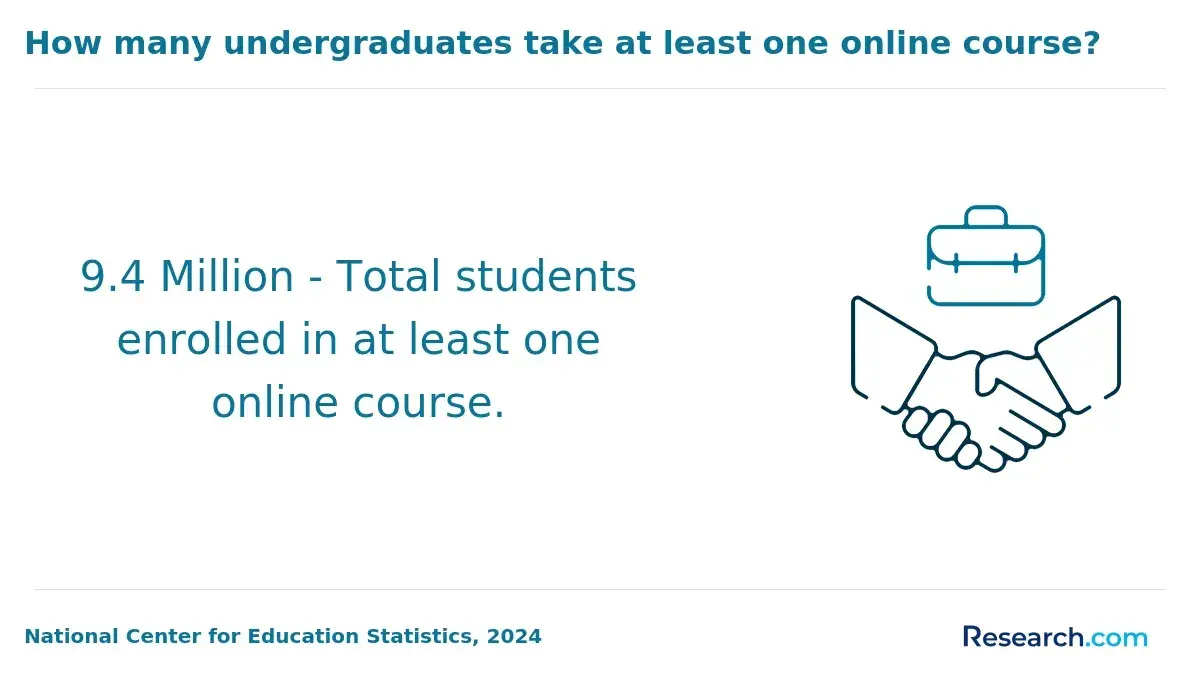
Online bachelor's completion programs usually provide better flexibility for working adults, caregivers, military-affiliated students, and people who no longer live near their former campus. Campus-based programs may offer stronger in-person advising, labs, networking, or clinical placement support. NCES reported in 2024 that 54% of undergraduates took at least one distance education course in fall 2022, showing that online learning is no longer a niche format.
The right format depends on your schedule, learning style, major, and need for local services. This table compares the practical differences that matter most to returning students.
| Factor | Online completion program | Campus-based program |
| Schedule | Often asynchronous or evening-friendly | May require daytime attendance |
| Transfer advising | Can be strong if the school specializes in adult learners | Often easier to resolve complex issues in person |
| Labs and clinical work | May require local placements or short residencies | Usually easier for lab-heavy majors |
| Networking | Depends on virtual events, cohorts, and employer partnerships | Stronger for local internships and campus recruiting |
| Best for | Students needing flexibility and geographic freedom | Students needing hands-on facilities or local professional networks |
Military-connected learners should also check whether schools understand tuition assistance, Joint Services Transcript evaluations, deployment interruptions, and veteran support. A useful starting point is this list of military friendly universities online.
What accreditation should bachelor's completion programs have to qualify for financial aid and careers?
A bachelor's completion program should hold institutional accreditation from an agency recognized by the U.S. Department of Education or the Council for Higher Education Accreditation. This matters because federal financial aid, graduate school admission, employer tuition reimbursement, and professional licensure often depend on recognized accreditation.
Some fields also require programmatic accreditation. The table below shows when institutional accreditation may be enough and when field-specific approval becomes important.
| Accreditation type | Why it matters | Common examples of relevance |
| Institutional accreditation | Signals that the college or university meets broad academic and administrative standards | Federal aid eligibility, credit transfer, employer recognition, graduate admission |
| Programmatic accreditation | Applies to a specific degree or professional field | Nursing, education, engineering, social work, business, health informatics |
| State authorization or approval | Determines whether an online program can serve students in a state or meet licensure rules | Teacher preparation, nursing, counseling-related pathways, clinical placements |
A common mistake is assuming that "accredited" always means "right for my career." Before enrolling, ask the school to identify the accreditor, explain whether the program meets requirements in your state, and put transfer and licensure guidance in writing whenever possible.
How do you transfer existing college credits into a bachelor's completion program?
Transfer credit is the central issue for students with some college. Schools typically evaluate regionally or nationally accredited coursework, military training, standardized exams, professional certifications, and prior learning portfolios, but each institution decides how credits apply to a specific degree.
Follow these steps before you commit to a program. They help you avoid losing credits or discovering late that transferred courses count only as electives.
- Request official transcripts from every college you attended, even if you completed only one course.
- Ask for a preliminary transfer evaluation before applying or immediately after admission, depending on the school's policy.
- Compare how credits apply to general education, major requirements, prerequisites, and free electives.
- Ask whether there is a transfer credit cap, residency requirement, minimum grade rule, or expiration rule for older technical courses.
- Get a written degree plan showing the exact remaining courses, estimated timeline, and total credits still required.
Do not assume that 60 previous credits means you are halfway done. If many credits do not fit the new major, the remaining timeline can be longer than expected. A practical solution is to compare at least three schools using the same transcripts.
What admission requirements do bachelor's completion programs have for students with some college?
Admission requirements for bachelor's completion programs are usually more flexible than first-year admissions, but they still vary by school and major. Many programs ask for a minimum number of prior college credits, a minimum college GPA, official transcripts, and proof of high school completion or equivalent if prior college credits are limited.
The table below explains common requirements and why they matter. Use it to prepare documents before speaking with admissions.
| Requirement | What schools may ask for | Why it matters |
| Prior credits | Often 24 to 60 college credits for completion-focused programs | Determines whether you enter as a transfer, adult learner, or near-completion student |
| College GPA | Common minimums range by school and selective major | May affect admission, scholarships, and major eligibility |
| Official transcripts | All colleges previously attended | Required for credit evaluation and federal aid review |
| Major prerequisites | Courses such as statistics, anatomy, accounting, calculus, or programming | Can delay progress if missing |
| Professional license | Required for RN-to-BSN and some allied health pathways | Confirms eligibility for degree-completion tracks tied to licensure |
Students with a low prior GPA should ask about academic renewal, probationary admission, or starting with nondegree coursework. The best schools will explain the recovery path clearly rather than pressure you to enroll immediately.
How long does it take to finish a bachelor's degree when you already have credits?
Completion time depends on how many credits transfer into the degree, how many are accepted toward the major, and whether you study full time or part time. A bachelor's degree usually requires about 120 semester credits, so a student with 60 applicable credits may need roughly 60 more credits, while a student with 90 applicable credits may be much closer to finishing.
Use this timeline as a planning estimate, not a guarantee. Course availability, prerequisites, clinical placements, and work obligations can change the actual pace.
| Applicable transfer credits | Credits likely remaining | Typical completion pattern |
| 30 credits | About 90 credits | Often 3 years full time or longer part time |
| 60 credits | About 60 credits | Often 2 years full time or 3 to 4 years part time |
| 90 credits | About 30 credits | Often 1 year full time or 18 to 24 months part time |
If you have fewer transferable credits than expected, it may be worth comparing whether an associate credential first would create a cleaner transfer pathway. Some students in that position research 1 year associate degree programs online before choosing a bachelor's route.
What are typical tuition costs and financial aid options for bachelor's completion students?
Tuition for bachelor's completion students depends on institution type, residency, transfer credits, fees, books, technology costs, and how long the remaining coursework takes. Published tuition is only the sticker price; grants, scholarships, employer reimbursement, military benefits, and tax credits can reduce the net price.
College Board's 2024 pricing report gives useful national benchmarks for published tuition and fees. These figures help you compare whether a quoted program price is unusually low, typical, or high.
- Public two-year in-district colleges: $4,050 per year
- Public four-year in-state colleges: $11,610 per year
- Private nonprofit four-year colleges: $43,350 per year
Returning students should file the FAFSA, ask about transfer scholarships, confirm lifetime federal aid limits, and request a full cost estimate based on remaining credits. The maximum Federal Pell Grant for the 2025-26 award year is $7,395, but eligibility depends on financial need, enrollment intensity, and federal rules.
Before enrolling, calculate the cost per remaining required credit, not the cost per advertised year. A school with higher tuition can sometimes be cheaper if it accepts significantly more of your prior credits.
What careers and salary outcomes can a completed bachelor's degree unlock for returning students?
A completed bachelor's degree can open doors to roles that screen applicants by education level, improve eligibility for promotion, and prepare students for graduate or professional study. It is most valuable when paired with experience, internships, certifications, licensure, or a portfolio that proves job-ready skills.
The table below connects common completion majors with possible career directions. It does not promise outcomes; it shows how different degrees tend to align with U.S. labor market roles.
| Degree area | Career directions | What strengthens outcomes |
| Business | Operations, management, finance, marketing, human resources | Internships, analytics skills, supervisory experience |
| Healthcare | Health administration, care coordination, compliance, health information | Healthcare experience, certification, knowledge of regulations |
| IT, computer science, cybersecurity | Systems support, software, data, cloud, security operations | Projects, certifications, labs, GitHub or portfolio work |
| Psychology and criminal justice | Case management, human services, public safety, advocacy, research support | Field experience, graduate planning, communication skills |
| Nursing and education | Licensed practice advancement, teaching, curriculum or clinical leadership | State licensure alignment and accredited preparation |
Some returning students finish a bachelor's degree mainly to qualify for graduate school, leadership tracks, or career changes. If graduate study is part of the plan, compare total debt and pacing early; online learners may later evaluate easy masters degrees online only after confirming that the bachelor's program is properly accredited and aligned with their long-term goal.
How can students with some college choose a reputable bachelor's completion program?
To choose a reputable bachelor's completion program, start with fit, not marketing. The best choice should accept a strong portion of your prior credits, offer recognized accreditation, support adult learners, and show a realistic path from your current situation to your target career.
Ask these questions before applying. They focus on the issues most likely to affect cost, time, and career value.
- How many of my credits will apply to the degree, and how many will count only as electives?
- What institutional and programmatic accreditation applies to this specific program?
- Will this program meet licensure or certification requirements in the state where I plan to work?
- What is the total estimated cost based on my remaining credits, fees, books, and required materials?
- How often are required courses offered, and can I finish if I study part time?
- What advising, tutoring, career services, and technical support are available to online or adult students?
Watch for red flags such as vague transfer promises, pressure to enroll before receiving a degree plan, unclear accreditation language, unusually aggressive recruiting, or refusal to discuss total cost. A reputable school should make the remaining path understandable before you commit.
Other Things You Should Know About
Yes. Many colleges accept older credits, especially in general education subjects. Technical, science, or major-specific credits may expire or require review, so request a transcript evaluation before assuming how much will transfer.
The fastest option is usually the accredited program that accepts the most credits toward your actual degree requirements. Adult completion, liberal studies, business, and competency-based programs can be efficient, but speed should not come at the expense of career fit or accreditation.
Employers generally focus on whether the institution is accredited, whether the degree matches the role, and whether the applicant has relevant skills and experience. The transcript or diploma may not always identify the format, but program reputation and outcomes still matter.
Finish the original major if it still fits your career goal and uses many existing credits. Change majors if your old path no longer matches your plans, but ask for a degree audit first because switching can add time and cost.
References
- Comparing Outcomes Across Credentials | HESA https://higheredstrategy.com/comparing-outcomes-across-credentials/
- How does a college degree improve graduates’ employment and earnings potential? - APLU https://www.aplu.org/our-work/4-policy-and-advocacy/publicuvalues/employment-earnings/
- Top Online Schools That Accept Transfer Credits https://www.edvisorly.com/student-guides/online-schools-that-accept-transfer-credits
- The Potential Implications of Shorter Bachelor’s Degree Programs https://robertkelchen.com/2023/09/04/the-potential-implications-of-shorter-bachelors-degree-programs/
- New Pathways to a College Degree: How Transfer Credits Save Time https://www.uagrantham.edu/blog/transfer-college-credits-online-pathways-degree/
- The Three-Year Bachelor’s Degree Experiment Heats Up https://encoura.org/resources/wake-up-call/the-three-year-bachelors-degree-experiment-heats-up/
- Transferology https://www.transferology.com/
- How the U.S. Education System Works (And How to Plan Your Degree) | Roam Blog https://roam.college/blog/how-the-us-education-system-works-plan-your-degree
- Best Online Colleges for Working Adults [2026] https://www.straighterline.com/blog/degree-completion-best-online-colleges-for-working-adults
- Putting college on the fast track https://hechingerreport.org/putting-college-in-the-fast-track/