2027 Most Affordable Online Bachelor's Degrees for Students Who Need Flexible Classes

Co-Founder and Chief Data Scientist
Choosing an affordable online bachelor's degree is really a cost, schedule, and career-risk decision. The College Board reported that published in-state tuition and fees at public four-year colleges averaged $11,610 for 2024-25, before books, technology, and living costs. For working adults, parents, military learners, and transfer students, flexible online programs can reduce commuting and scheduling barriers. This guide explains which majors tend to fit flexible online study, how to compare total costs, what accreditation means, and how to judge whether a low-cost degree supports your career goals.
Key Things You Should Know
- Affordable online bachelor's programs are usually strongest when they combine regional or institutional accreditation, transparent per-credit tuition, generous transfer-credit policies, and asynchronous or multiple-start-date course formats.
- The 2024-25 maximum federal Pell Grant is $7,395, which can meaningfully reduce annual out-of-pocket costs for eligible undergraduate students but rarely covers the full cost of attendance alone.
- ROI varies sharply by major: BLS May 2024 median pay was $133,080 for software developers, $124,910 for information security analysts, $93,600 for registered nurses, and $81,680 for accountants and auditors, but wages depend on location, experience, licensure, and employer demand.
Top 10 Most Affordable Online Bachelor's Degrees for Students Who Need Flexible Classes
Business Degrees
Online business degrees are often among the most flexible because courses in accounting, management, marketing, finance, and operations translate well to asynchronous formats. They fit students who want broad career options rather than one licensed occupation. Look for ACBSP, AACSB, or IACBE accreditation if business-school recognition matters to your goals. A low-cost business degree is strongest when it includes analytics, spreadsheets, communication, and internship or capstone projects. Students seeking CPA eligibility should verify state accounting-credit rules before enrolling.
Healthcare Degrees
Online healthcare bachelor's programs can prepare students for administrative, public health, health informatics, or care-coordination roles. They are usually more flexible than clinical degrees because many courses are writing-, policy-, or data-focused. These programs fit students already working in healthcare who want advancement without pausing employment. Check whether internships, practicums, or field experiences are required locally. For affordability, compare tuition with certification alignment, such as RHIA preparation in health information management programs.
Information Technology Degrees
Information technology degrees focus on applied systems: networking, cloud platforms, databases, user support, systems administration, and IT project management. They are a strong fit for students who want practical technology roles without the heavier theory of computer science. Flexible programs may include competency-based pacing or certification preparation for CompTIA, Cisco, Microsoft, AWS, or similar credentials. Prior IT work, military training, and industry certifications may qualify for transfer or prior-learning credit, lowering both cost and time to completion.
Computer Science Degrees
Computer science degrees are more math- and programming-intensive than IT degrees. Students typically study algorithms, software engineering, data structures, operating systems, databases, and sometimes artificial intelligence. This major can offer strong ROI, but it is not the easiest flexible option if you dislike abstract problem-solving or sustained coding practice. Look for programs with project portfolios, version-control training, career services for technical interviews, and clear prerequisite pathways for students entering with limited programming experience.
Cybersecurity Degrees
Cybersecurity degrees prepare students for roles protecting networks, systems, cloud environments, and data. Coursework often covers risk management, incident response, digital forensics, secure scripting, governance, and ethical hacking. Because employers value proof of applied skill, affordable programs are more compelling when they include labs, capture-the-flag exercises, security operations projects, or certification preparation. Students should also check whether the curriculum maps to recognized security frameworks and whether faculty have current industry experience.
Psychology Degrees
An online psychology bachelor's degree is flexible and widely available, but students should understand its limits. It can support roles in human services, case management, HR, market research, behavioral health support, or graduate-school preparation. It does not qualify graduates to become licensed psychologists or independent counselors. For affordability, prioritize programs with research methods, statistics, supervised fieldwork options, and clear advising for graduate pathways. Students who need immediate licensure-based employment may want a different major.
Nursing Degrees
Online nursing bachelor's options are usually RN-to-BSN programs, not entry-level prelicensure nursing programs. They fit licensed registered nurses who need flexible coursework while continuing shifts. The best low-cost RN-to-BSN programs have CCNE or ACEN accreditation, no unnecessary campus visits, clinical projects that can be completed near the student's workplace, and generous transfer credit for prior nursing education. Applicants without an RN license should confirm whether a program actually leads to initial licensure.
Education Degrees
Online education bachelor's degrees vary widely because teacher licensure is state-specific. Some programs prepare students for classroom certification, while others focus on early childhood, educational studies, training, or non-licensure roles. Flexible students should ask where student teaching occurs, whether placements are arranged locally, and whether the program meets their state's licensure requirements. A low tuition rate is not enough if the degree does not qualify you for the credential required in your target school system.
Criminal Justice Degrees
Criminal justice degrees are usually flexible online because coursework centers on law enforcement, courts, corrections, criminology, ethics, and policy. They may fit students pursuing public safety, probation, loss prevention, victim advocacy, or federal agency pathways. However, many sworn law enforcement roles rely more on academy training, fitness standards, background checks, and local hiring rules than on the degree alone. Compare programs by internship access, writing-intensive coursework, and alignment with public administration or cybersecurity electives.
Engineering Degrees
Fully online engineering bachelor's degrees are less common because ABET-accredited programs often require labs, design work, and proctored assessments. Engineering technology programs may offer more online flexibility and applied career preparation. Students should distinguish engineering from engineering technology because licensing pathways can differ. For affordability, ABET accreditation, lab access, transfer policies, and employer tuition support matter more than the lowest advertised tuition. This path fits disciplined students comfortable with calculus, physics, and structured weekly problem sets.
What makes an online bachelor's degree both affordable and truly flexible for working adults?
An online bachelor's degree is both affordable and flexible when the program lowers total cost without forcing students into a schedule they cannot maintain. Affordability is not just tuition; it includes fees, books, software, proctoring charges, transfer-credit acceptance, time to completion, and whether the student must reduce work hours.
Flexibility matters because many online bachelor's students are not traditional full-time residential learners. They may be balancing shifts, caregiving, military service, disability accommodations, or unpredictable transportation. The best programs make progress possible without lowering academic standards.
The table below summarizes the features that most directly affect cost and flexibility. Use it to compare programs beyond the advertised per-credit rate.
| Feature | Why it matters | Best sign | Red flag |
| Accreditation | Protects transfer, aid eligibility, and employer recognition | Institution is accredited by an agency recognized by the U.S. Department of Education | Vague claims such as "internationally accredited" without recognized U.S. accreditation |
| Transfer credit | Can reduce both tuition and time | Clear transfer database and credit evaluation before enrollment | Admissions pressure before a written credit review |
| Course schedule | Determines whether working students can keep up | Asynchronous classes, evening options, or multiple start dates | Required live sessions during work hours |
| Total cost | Prevents surprise expenses | Published tuition, fees, technology costs, and estimated books | Only tuition is disclosed |
| Student support | Improves persistence for adult learners | Online tutoring, advising, library access, career services, and tech support | Support limited to campus office hours |
Affordable does not always mean cheapest. A slightly higher tuition program may be the better deal if it accepts more transfer credits, offers stronger advising, or helps you finish one or two terms sooner.
How much do online bachelor's degrees cost compared to on-campus programs?
Online bachelor's degrees can cost less than on-campus programs, but the savings depend on the school's tuition model and the student's living situation. The biggest savings usually come from avoiding relocation, commuting, campus housing, parking, and reduced work hours.
Published tuition is only one piece of the comparison. According to the College Board, average published in-state tuition and fees at public four-year institutions were $11,610 for 2024-25. Online programs may charge per-credit tuition, flat-rate subscription tuition, or the same rate as campus students, so students should calculate the total program cost using their actual transfer credits.
This table shows the main cost categories to compare before deciding whether online is truly cheaper for your situation.
| Cost category | Online bachelor's program | On-campus bachelor's program | Decision point |
| Tuition | May be per credit, flat term, in-state, out-of-state, or online-specific | Often varies by residency and enrollment status | Compare total degree cost after transfer credits |
| Fees | May include technology, online course, proctoring, graduation, and assessment fees | May include campus, activity, facility, and lab fees | Ask for a fee list in writing |
| Housing and commuting | Usually lower if studying from home | Can be substantial for residential students | Include parking, fuel, transit, or relocation costs |
| Books and software | Can vary by major; some programs use open educational resources | Can vary by major and course delivery | Check whether course materials are included |
| Lost wages | Often lower if classes are asynchronous | May be higher if daytime attendance limits work | Estimate schedule impact, not just tuition |
The lowest-cost choice is often a public university, state college, or community-college partnership that accepts prior credits and charges online students predictable tuition. Private nonprofit and private for-profit programs can also be affordable in specific cases, but institution type alone does not determine value.
How can students find accredited, low-cost online bachelor's programs they can trust?
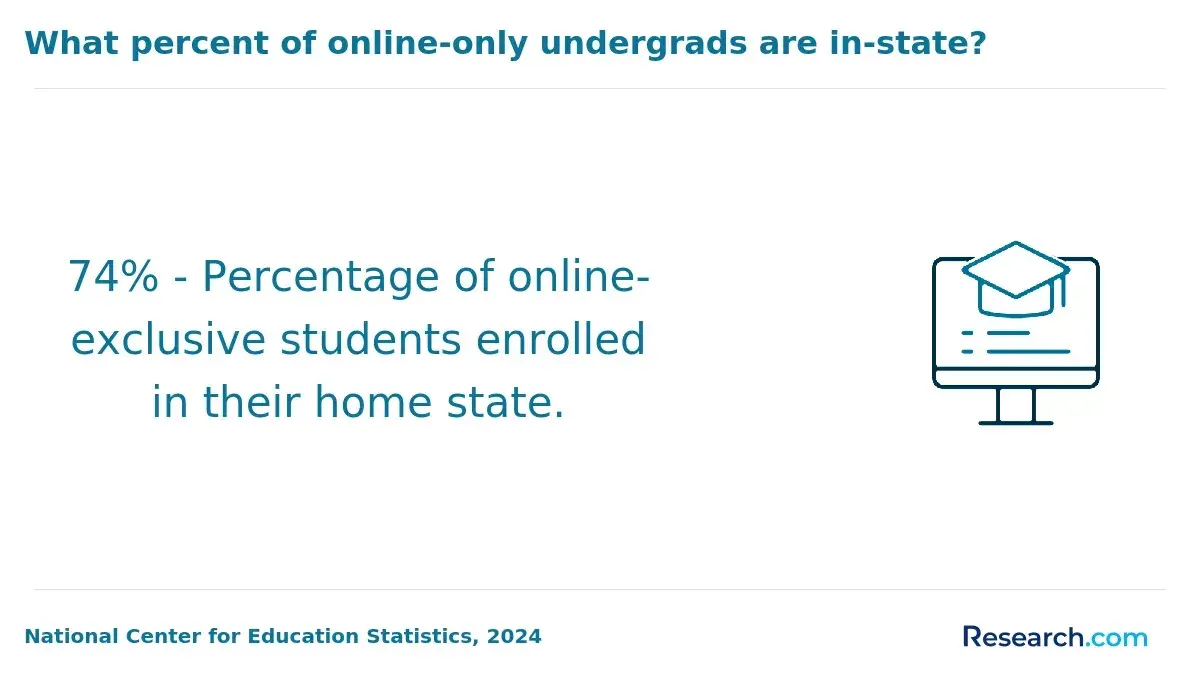
Students can find trustworthy low-cost online bachelor's programs by verifying accreditation first, then comparing cost, flexibility, credit transfer, and career alignment. Accreditation is the baseline because it affects federal financial aid, transferability, graduate-school eligibility, and employer confidence.
A practical search process should move from legitimacy to fit. The following steps help reduce the risk of choosing a cheap program that later creates transfer, licensure, or employment problems.
- Confirm the institution's accreditation through the U.S. Department of Education or the Council for Higher Education Accreditation database.
- Check programmatic accreditation when the field requires it, such as CCNE or ACEN for nursing, ABET for engineering, or CAEP for some educator-preparation programs.
- Request a written transfer-credit evaluation before committing, especially if you have community college, military, industry certification, or prior university credits.
- Calculate the total cost to graduation, not the cost of one course or one term.
- Ask whether online students receive the same advising, tutoring, library, disability services, and career support as campus students.
- Review licensure disclosures if your career goal involves teaching, nursing, counseling, engineering, or another regulated profession.
Students who need flexible enrollment should also compare online schools with multiple start dates, because frequent starts can reduce waiting time after admission or after transferring credits.
Common red flags include unclear accreditation language, pressure to enroll immediately, missing fee details, unrealistic salary promises, and refusal to provide transfer information before enrollment. A trustworthy school should be willing to answer cost and credential questions directly.
What admission requirements do affordable online bachelor's programs typically have?
Affordable online bachelor's programs usually have accessible admissions requirements, especially when they are designed for adult or transfer students. Most require a high school diploma or GED, official transcripts, and an application. Some may request a minimum GPA, placement information, essays, proof of English proficiency, or prerequisite coursework.
Admission standards vary by major. Nursing, education, engineering, computer science, and cybersecurity may have additional requirements because of clinical expectations, licensure rules, math readiness, lab work, or technical prerequisites.
Before applying, gather the documents schools commonly need. Having them ready can speed up admission and help you receive a more accurate cost estimate.
- Official high school, GED, community college, military, and previous college transcripts
- Government-issued identification and residency documentation if in-state tuition is available
- FAFSA submission confirmation if you plan to use federal aid
- Documentation for industry certifications, professional licenses, military training, or prior-learning assessment
- Program-specific materials such as nursing licenses, background-check consent, prerequisite grades, or teaching-field documentation
Open admission does not automatically mean easy completion. Students should still evaluate academic support, course workload, and placement tests. A program that admits you quickly but does not support you well can become more expensive if you withdraw, repeat courses, or transfer later.
How long does it take to finish an online bachelor's degree if you work full-time?
Most bachelor's degrees require about 120 semester credits, but the time to finish online depends on transfer credits, course load, term length, and whether the student studies year-round. A first-time student attending part time may need five to six years, while a transfer student with an associate degree may finish in about two years if credits apply cleanly.
Working full-time usually makes part-time enrollment more realistic. The trade-off is slower completion, but it can protect income, reduce burnout, and make it easier to pay as you go. Accelerated courses can shorten the calendar, but they compress reading, writing, exams, and projects into fewer weeks.
The table below shows typical timeline scenarios. These are planning estimates, not guarantees, because transfer decisions and course availability vary by school.
| Student profile | Typical course load | Likely timeline | Best fit |
| First-time student working full-time | 1 to 2 courses per term | About 5 to 6 years | Students who need maximum schedule protection |
| First-time student studying full-time | 4 to 5 courses per term | About 4 years | Students with stable time and financial support |
| Transfer student with many accepted credits | 2 to 4 courses per term | About 1.5 to 3 years | Associate degree holders and returning students |
| Competency-based student | Self-paced within a subscription term | Varies widely | Experienced learners who can move quickly through familiar material |
If graduate school is part of your long-term plan, compare bachelor's timelines with later options such as a master degree in 6 months, but be cautious: very short graduate timelines usually require strong preparation, accepted prior learning, or an intensive course load.
Which majors offer the best return on investment among low-cost online bachelor's degrees?
The best ROI among affordable online bachelor's degrees usually comes from majors that connect to clear labor-market demand, measurable technical or professional skills, and advancement pathways. Cost matters, but ROI also depends on whether the degree leads to roles that actually require or reward a bachelor's credential.
BLS May 2024 wage data shows why major choice matters: the median annual wage for software developers was $133,080, while accountants and auditors had a median of $81,680. Those figures do not promise individual earnings, but they show that technical and quantitatively focused degrees often have stronger wage ceilings than broad majors with less direct occupational alignment.
This comparison can help students think through value rather than relying only on tuition or rankings.
| Major area | ROI strengths | ROI cautions | Best for |
| Computer science | Strong alignment with software, data, and AI-related roles | Requires substantial coding and math persistence | Students who can build a portfolio and pass technical interviews |
| Cybersecurity | Growing demand for risk, cloud, and security operations skills | Entry-level roles may still require hands-on labs or certifications | Students with IT interest or prior technical experience |
| Nursing | RN-to-BSN can support advancement in hospitals and leadership roles | Usually requires an existing RN license for online BSN completion programs | Licensed nurses seeking flexibility |
| Business or accounting | Broad employer recognition and many industry applications | CPA, analyst, or management pathways may need targeted experience | Students who want versatile career options |
| Education | Clear path when aligned with state licensure | Licensure mismatch can reduce value | Students committed to teaching in a specific state |
Students comparing best 4 year degrees should balance salary potential with completion probability. A high-paying major is not a good investment if the workload, prerequisites, or career path do not fit your strengths.
What types of online course formats and schedules support maximum flexibility?
The most flexible online course formats reduce the need to be in one place at one time. That does not mean they are easier; it means students have more control over when they watch lectures, complete assignments, and participate in discussions.
Before enrolling, match the course format to your work rhythm. The wrong format can turn an affordable program into a stressful one if it conflicts with shifts, caregiving, or peak work seasons.
| Format | How it works | Flexibility level | Best fit |
| Asynchronous | Students complete weekly work without required live meetings | High | Working adults with unpredictable schedules |
| Synchronous | Students attend live online class at scheduled times | Moderate | Students who want real-time interaction and can protect class time |
| Hybrid | Online coursework plus campus, lab, or field requirements | Varies | Programs with clinical, lab, or licensure components |
| Accelerated | Courses run in shorter terms, often 5 to 8 weeks | Moderate to high | Students who can handle concentrated workloads |
| Competency-based | Students progress by demonstrating mastery | High for self-directed learners | Experienced students with strong time management |
Ask admissions advisors specific scheduling questions before enrolling. Useful questions include how often courses start, whether exams require live proctoring, whether group projects require fixed meeting times, and whether required courses are available every term.
What financial aid, scholarships, and employer tuition benefits can lower online degree costs?
Financial aid can make an affordable online bachelor's degree much cheaper, but students need to understand the difference between gift aid, loans, work benefits, and payment plans. The 2024-25 maximum Pell Grant is $7,395 for eligible students, and because it usually does not need to be repaid, it should be considered before loans.
Most students should start with the FAFSA, then ask the school and employer about additional funding. The following options are worth checking because they can reduce out-of-pocket costs without requiring a more expensive school choice.
- Federal Pell Grants and state grants for eligible undergraduate students
- Institutional scholarships for transfer students, adult learners, military-affiliated students, first-generation students, or specific majors
- Employer tuition assistance or reimbursement, especially in healthcare, public safety, education, business, and technology roles
- Credit for prior learning, military training, professional licenses, or industry certifications
- Community college transfer pathways that reduce the number of credits taken at a four-year tuition rate
- Payment plans that spread tuition across a term without requiring private loans
Students considering long academic pathways should compare costs at every stage. If a bachelor's degree is only the first credential in your plan, later research into cheapest online PhD programs in USA can help you avoid stacking unnecessary debt across multiple degrees.
A common mistake is borrowing for living expenses without calculating the monthly repayment effect. Loans can be appropriate, but students should borrow only what they need and compare expected payments with realistic entry-level earnings in their field.
What careers, salaries, and job outlooks can affordable online bachelor's degrees lead to?
Affordable online bachelor's degrees can lead to careers in business, technology, healthcare, education, public service, and social services. The strongest outcomes usually occur when the degree matches a specific job market, includes relevant projects or field experience, and helps students build skills employers can verify.
BLS May 2024 median wage data offers useful career context, but it should not be treated as a personal salary forecast. Pay varies by region, experience, industry, licensure, and whether the role is entry-level or advanced.
| Degree area | Example roles | BLS May 2024 median wage example | What to verify before enrolling |
| Business or accounting | Accountant, auditor, operations coordinator, financial analyst assistant | Accountants and auditors: $81,680 | CPA credit rules, analytics coursework, internship access |
| Computer science | Software developer, QA analyst, junior developer, data-focused roles | Software developers: $133,080 | Portfolio projects, programming depth, career placement support |
| Cybersecurity | Security analyst, SOC analyst, risk analyst, systems security support | Information security analysts: $124,910 | Hands-on labs, certification preparation, technical prerequisites |
| Nursing | BSN-prepared RN, charge nurse, care coordinator, public health nurse | Registered nurses: $93,600 | RN license requirement, CCNE or ACEN accreditation, clinical expectations |
| Education | Teacher, instructional aide, training specialist, education coordinator | Kindergarten and elementary school teachers: $64,090 | State licensure alignment and student-teaching placement |
Current trends make skills evidence more important. Employers in technology and business increasingly look for portfolios, certifications, data skills, and AI literacy alongside degrees. In healthcare and education, licensure alignment and supervised experience remain critical.
To improve career value while keeping costs low, students should choose electives that build marketable skills, complete internships or applied projects when possible, use career services early, and track job postings in their target region before selecting a major.
Other Things You Should Know About
Yes, when the school is properly accredited and the program matches the career field. Employers usually care more about accreditation, skills, experience, and job fit than whether classes were online.
The cheapest route is often to complete transferable lower-division credits at a community college, transfer to an accredited public university, use grants or employer tuition benefits, and avoid repeating credits.
Yes, many students do, but part-time enrollment is often more realistic. Asynchronous courses, multiple start dates, and predictable weekly deadlines usually work best for full-time workers.
Choose the program with the best total value. A fast program may cost more or feel overwhelming, while the cheapest program may take longer if it accepts fewer transfer credits or offers limited course availability.
References
- Financial Aid For Online Colleges https://www.affordablecollegesonline.org/financial-aid/financial-aid-for-online-colleges/
- Best Accredited Online Universities in 2025 https://www.study.eu/article/best-accredited-online-universities
- Course Delivery Formats 101: Synchronous, Asynchronous, and Blended/Hybrid Learning Explained https://www.iacet.org/events/iacet-blog/blog-articles/course-delivery-formats-101-synchronous-asynchronous-and-blended-hybrid-learning-explained/
- Best Online Colleges for Working Adults [2026] https://www.straighterline.com/blog/degree-completion-best-online-colleges-for-working-adults
- Online Bachelor's Degree Completion Financial Aid https://www.hamline.edu/admission-aid/financial-aid/online-bachelors
- 2025 Most Affordable Online Bachelor's Degrees https://www.onlineu.com/most-affordable-colleges/bachelors-degrees
- Financial Aid Guide for Students at Online Colleges - OnlineColleges.net https://www.onlinecolleges.net/for-students/financial-aid-online-students/
- Beyond Financial Aid - Finaid https://finaid.org/beyond/
- How to Find the Best Online Degree Programs That Fit Your Schedule? - Grace Christian University https://gracechristian.edu/blog/how-to-find-the-best-online-degree-programs-that-fit-your-schedule/
- Average Cost of Online College [2025]: Yearly Tuition + Fees https://educationdata.org/average-cost-of-online-college