2027 Most Affordable Bachelor's Degrees for Promotion Opportunities

Co-Founder and Chief Data Scientist
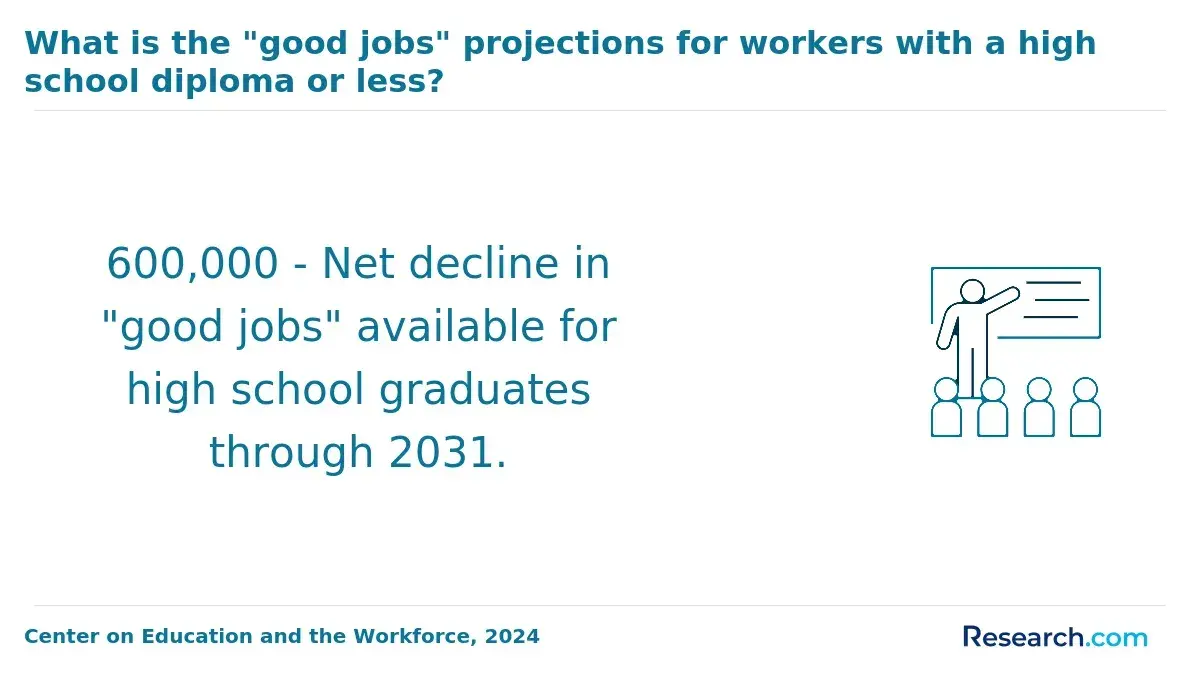
Choosing a bachelor's degree for promotion is really a return-on-investment decision: which credential can help you qualify for better roles without creating unnecessary debt? BLS 2024 data shows workers with a bachelor's degree had median weekly earnings of about $1,543, compared with about $930 for workers with only a high school diploma. This guide is for working adults, transfer students, and cost-conscious learners. It compares affordable degree fields, online and campus formats, accreditation, admissions, timelines, courses, salaries, and certifications so you can choose a practical path toward advancement.
Key Things You Should Know
- Public in-state bachelor's programs are usually the lowest-cost route; College Board's 2024 data lists average published tuition and fees at about $11,610 for public four-year in-state students.
- Promotion-focused degrees with broad employer demand include business, IT, computer science, cybersecurity, nursing, education, engineering, healthcare administration, psychology, and criminal justice.
- The best affordable option is not always the cheapest; accreditation, transfer-credit acceptance, licensure alignment, employer tuition assistance, and job outcomes matter more than tuition alone.
Top 10 Most Affordable Bachelor's Degrees for Promotion Opportunities
Business Degrees
A bachelor's in business administration, management, accounting, finance, or marketing is one of the most flexible promotion-oriented choices. It fits employees aiming for supervisor, analyst, operations, sales management, HR, or project coordinator roles. The degree is often affordable because many public universities and online programs offer high transfer-credit acceptance. Choose accounting or finance for quantitative roles, management for leadership tracks, and marketing for growth, sales, or communications work.
Healthcare Degrees
Healthcare administration, health sciences, public health, and health information management degrees can help workers move from clinical support, billing, patient services, or office roles into coordinator and manager positions. These programs are usually less expensive than clinical degrees that require extensive lab or placement hours. They fit students who want healthcare career mobility without becoming licensed clinicians. Check whether the curriculum includes compliance, healthcare finance, data systems, and quality improvement.
Information Technology Degrees
Information technology degrees are strong choices for help desk, systems support, network, cloud, and IT operations employees seeking promotion. Compared with computer science, IT programs often emphasize applied systems, troubleshooting, infrastructure, databases, and project work. Affordable online IT programs can be especially useful for working adults because labs are commonly delivered virtually. Look for programs that embed industry certification preparation, since employers often value both the degree and practical credentials.
Computer Science Degrees
A computer science degree can support promotions into software development, data engineering, systems design, AI-related technical roles, and technical leadership. It is more math- and theory-heavy than IT, so it fits students comfortable with programming, algorithms, discrete math, and architecture. Affordable options are often available through public universities, but students should compare tutoring, project portfolios, internship support, and course sequencing. The lowest-cost program may not be best if it lacks strong coding support.
Cybersecurity Degrees
Cybersecurity bachelor's degrees are valuable for workers in IT support, networking, military technology roles, or compliance who want to move into security analysis or risk management. Programs usually cover network defense, ethical hacking, incident response, digital forensics, governance, and secure systems. Choose a program with hands-on labs and certification alignment rather than one that is mostly theoretical. Because security roles often require trust, internships, background checks, and practical experience can matter as much as coursework.
Psychology Degrees
Psychology can be affordable and promotion-friendly for people in human services, HR, training, sales, corrections, case management, or customer experience roles. It builds skills in behavior, research, communication, motivation, and assessment. However, students should understand its limits: becoming a licensed psychologist or counselor usually requires graduate study. For immediate promotion value, pair psychology with business, HR, data analysis, social services experience, or a certificate in training, workforce development, or case management.
Nursing Degrees
Registered nurses often pursue a BSN to qualify for charge nurse, specialty unit, case management, public health, or leadership opportunities. RN-to-BSN programs can be relatively affordable because they build on prior nursing coursework and clinical experience. Students should confirm state board approval, clinical requirements, employer tuition reimbursement, and whether the program fits work schedules. For non-nurses, a traditional BSN may cost more and take longer because of labs, clinical placements, and competitive admission requirements.
Education Degrees
Education bachelor's degrees can support promotion into licensed teaching, instructional support, training, curriculum assistance, or school operations roles. The affordable route depends heavily on state licensure rules, student-teaching requirements, and whether prior credits transfer. Students already working as paraprofessionals or substitute teachers may benefit from flexible online coursework with local field placements. Always verify that the degree leads to certification in the state where you plan to work, because non-aligned programs can delay employment.
Criminal Justice Degrees
Criminal justice degrees can help professionals in law enforcement, corrections, probation, security, emergency management, or public administration move toward supervisory roles. Affordable programs often accept academy, military, or prior college credits. Coursework usually covers law, ethics, investigations, corrections, policing, criminology, and administration. This degree is strongest when paired with field experience, leadership training, report-writing ability, and agency-specific promotion requirements. It is less ideal for students seeking law school preparation without strong writing and analytical coursework.
Engineering Degrees
Engineering degrees can offer strong promotion potential in manufacturing, energy, construction, aerospace, logistics, and technology companies, but they are often less flexible and more course-sequenced than other majors. Affordable options are usually public, ABET-accredited programs. Working adults should compare part-time availability, lab requirements, transfer rules, and math placement carefully. Engineering technology may be more accessible for applied technical advancement, while traditional engineering better fits design, licensure, and professional engineer pathways.
Which bachelor's degrees boost promotion prospects most?
The bachelor's degrees that tend to boost promotion prospects most are those that match a worker's existing experience and the promotion ladder in their organization. A business degree may help an administrative employee become an operations manager, while an IT degree may help a support technician move into systems administration. The best choice depends on job family, employer requirements, and whether the degree closes a specific qualification gap.
The table below compares degree fields by typical promotion fit rather than ranking them by prestige. Use it to narrow your choices before reviewing individual schools.
| Degree field | Best promotion fit | When it may not be the best choice |
| Business | Supervisory, operations, HR, finance, sales, and general management roles | If your target role requires a technical, clinical, or licensed credential |
| Information technology | Help desk to systems, cloud, network, or IT operations roles | If you want software engineering roles that require deeper computer science preparation |
| Computer science | Software, data, AI, and technical product pathways | If you need a less math-intensive or more operations-focused degree |
| Nursing | RN advancement, charge nurse, case management, and clinical leadership | If you are not already prepared for competitive clinical admission requirements |
| Engineering | Technical leadership, design, quality, manufacturing, and project engineering roles | If you need maximum schedule flexibility or cannot complete lab-heavy coursework |
For many working adults, the strongest ROI comes from combining a low-cost program with transfer credits, employer reimbursement, and a degree that directly supports an internal promotion requirement.
How do affordable online and campus programs compare?
Affordable online and campus bachelor's programs can lead to similar credentials when they are properly accredited, but the experience and hidden costs can differ. Online programs often reduce commuting and housing costs, while campus programs may offer easier access to labs, networking, faculty, and internships.
Students comparing online colleges should look beyond advertised tuition and confirm FAFSA eligibility, accreditation, student support, transfer rules, and whether exams, labs, or fieldwork require in-person attendance.
This comparison shows where online and campus formats usually differ for promotion-focused students.
| Factor | Online programs | Campus programs |
| Best for | Working adults, caregivers, military students, and learners with predictable self-study time | Students who want in-person labs, campus recruiting, structured schedules, and local networking |
| Cost profile | Often lower total cost because commuting and relocation may be avoided | May include transportation, parking, housing, and campus fees |
| Learning style | Requires self-direction, written communication, and time management | Offers face-to-face accountability and immediate classroom interaction |
| Promotion value | Strong when accredited and aligned with employer requirements | Strong when the local network, labs, or internships support advancement |
A common mistake is assuming "online" means easier or lower quality. A better test is whether the program has recognized accreditation, qualified faculty, measurable student support, and a curriculum that matches the job you want next.
What accreditation should these degree programs have?
Accreditation is one of the most important checks before enrolling because it affects transfer credits, graduate school eligibility, employer recognition, licensure, and federal financial aid. At minimum, choose an institution accredited by an agency recognized by the U.S. Department of Education or the Council for Higher Education Accreditation.
Some fields also need programmatic accreditation or state approval. This matters most when the degree connects to licensure, certification, or regulated professional practice.
| Degree area | Accreditation or approval to check | Why it matters |
| Business | AACSB, ACBSP, or IACBE can add value, though not always required | May strengthen employer confidence and graduate school options |
| Nursing | CCNE or ACEN, plus state board approval where applicable | Can affect licensure, RN-to-BSN recognition, and employer acceptance |
| Engineering | ABET for many engineering and engineering technology programs | Often important for technical credibility and professional engineer pathways |
| Education | State educator preparation approval and, in some cases, CAEP | Determines whether the program supports teacher certification |
| Cybersecurity | Regional or institutional accreditation; NSA CAE designation can be a useful signal | Shows stronger alignment with security education standards, though it is not a substitute for accreditation |
Before applying, ask admissions whether the program meets requirements in your state and whether credits will transfer to graduate programs or licensure pathways. Do not rely only on marketing language such as "career-ready" or "industry-aligned."
What admission requirements do affordable bachelor's programs have?
Affordable bachelor's programs usually require a high school diploma or GED, official transcripts, an application, and placement information. Transfer-friendly programs may also ask for college transcripts, military training records, professional licenses, or prior learning documentation.
If you want a lower-stress academic path, comparing the easiest degree to get can help you understand workload differences, but the better question is whether the degree supports your promotion goal.
Admissions requirements vary by major. Competitive or regulated programs may add prerequisites, minimum GPAs, background checks, drug screening, immunization records, portfolios, or entrance exams.
Use this checklist before you apply so cost savings do not come at the expense of fit.
- Confirm the school accepts your prior credits before you commit.
- Ask whether major courses are offered every term or only once per year.
- Check whether your intended major has separate admission after general enrollment.
- Verify technology, lab, clinical, fieldwork, or student-teaching requirements.
- Ask whether employer reimbursement, grants, or scholarships apply to part-time students.
How long do these bachelor's degrees usually take?
Most bachelor's degrees require about 120 semester credits. A full-time first-time student often needs about four years, while transfer students and working adults may finish faster or slower depending on credits accepted, course load, and program structure.
Students who are not ready for a four-year commitment sometimes start with an associate pathway first; researching the best associate degree in 6 months online can help clarify whether a shorter credential is a better first step.
The table below summarizes common timelines and the trade-offs that affect affordability.
| Student situation | Typical timeline | Affordability consideration |
| First-time full-time student | About four years | Lower annual work capacity may increase reliance on aid or loans |
| Associate degree transfer student | About two years after transfer if credits apply cleanly | Can reduce cost significantly when community college credits transfer |
| Working adult part-time student | Often four to six years, depending on course load | May lower semester bills but extend fees and time to promotion |
| Accelerated online student | Potentially faster with year-round courses | Can save time but may be difficult with full-time work or family duties |
Do not choose acceleration only because it sounds efficient. A manageable pace that preserves grades, work performance, and financial aid eligibility can be the better long-term option.
What courses do these promotion-focused degrees include?
Promotion-focused bachelor's degrees usually combine general education, major courses, electives, and applied projects. The strongest programs help students build job-ready evidence, such as portfolios, case studies, capstones, clinical documentation, lesson plans, lab reports, or business analyses.
Common course areas vary by major, but students should expect a mix of communication, analytical, technical, and leadership content.
- Business programs often include accounting, economics, management, marketing, business law, operations, analytics, and strategy.
- IT and cybersecurity programs often include networking, systems administration, databases, cloud platforms, scripting, security operations, and risk management.
- Computer science programs often include programming, algorithms, data structures, software engineering, databases, operating systems, and discrete mathematics.
- Healthcare and nursing programs often include ethics, health systems, quality improvement, informatics, population health, and evidence-based practice.
- Education, psychology, and criminal justice programs often include human development, research methods, policy, ethics, assessment, and field-based learning.
A red flag is a curriculum that sounds current but lacks assignments tied to real workplace tasks. Ask for sample syllabi, capstone examples, and information about employer partnerships before enrolling.
Which jobs can these degrees lead to?
These degrees can lead to many roles, but the promotion path is usually strongest when the degree builds on related experience. For example, a warehouse supervisor studying business may move toward operations management, while an IT technician studying cybersecurity may move toward security analysis.
The table below connects degree fields with common roles and responsibilities. It should be used as a planning tool, not a guarantee of employment.
| Degree field | Possible roles | Typical responsibilities |
| Business | Operations manager, business analyst, HR specialist, project coordinator | Planning, budgeting, process improvement, reporting, team coordination |
| Healthcare administration | Clinic manager, patient services coordinator, health information supervisor | Compliance, scheduling, billing oversight, quality improvement, staff coordination |
| Information technology | Systems administrator, network specialist, IT project coordinator | User support, infrastructure maintenance, cloud tools, vendor coordination |
| Computer science | Software developer, data analyst, systems analyst | Coding, testing, application design, data workflows, documentation |
| Cybersecurity | Security analyst, risk analyst, incident response associate | Monitoring, vulnerability review, policy support, investigation, reporting |
| Nursing | Charge nurse, case manager, public health nurse, nurse supervisor | Care coordination, documentation, patient education, staff guidance |
| Education | Teacher, instructional coordinator assistant, training specialist | Lesson planning, assessment, classroom management, curriculum support |
Before choosing a major, review job postings from employers you would realistically apply to. If postings consistently ask for a different degree, license, or certification, adjust your plan before spending tuition.
What salaries do graduates typically earn?
Salary outcomes vary by region, employer, experience, and job title, so use wage data as a benchmark rather than a promise. BLS May 2024 wage data shows several bachelor's-level career paths with median annual pay above the national median, especially in technology, engineering, healthcare management, and business operations.
The table below summarizes national median pay for selected roles commonly connected to these degrees. Actual offers can be higher or lower depending on location, industry, and prior experience.
| Role | Related degree path | Median annual pay, BLS May 2024 |
| Computer and information systems manager | IT, computer science, cybersecurity, business with technical experience | $171,200 |
| Software developer | Computer science | $133,080 |
| Medical and health services manager | Healthcare administration, health sciences, nursing | $117,960 |
| Information security analyst | Cybersecurity, IT, computer science | $124,740 |
| Management analyst | Business, analytics, operations | $101,190 |
| Registered nurse | Nursing | $93,600 |
| Human resources specialist | Business, psychology, HR | $72,910 |
For affordability decisions, compare likely salary improvement with net cost, not sticker price. A lower-cost degree that qualifies you for an internal promotion may outperform a more expensive program with a stronger brand but weaker alignment.
Which certifications improve promotion opportunities after graduation?
Certifications can improve promotion opportunities when they validate specific skills that a bachelor's degree covers more broadly. They are especially useful in IT, cybersecurity, project management, HR, accounting, healthcare quality, and data analytics.
If you need a faster credential before or during a degree, comparing short certificate programs that pay well can help you identify options that may support near-term advancement while you continue toward a bachelor's.
Consider certifications that match your degree and target role rather than collecting credentials at random.
- Business and project roles: CAPM, PMP for experienced professionals, SHRM-CP, PHR, Lean Six Sigma, or Google Project Management Certificate.
- IT roles: CompTIA A+, Network+, Linux+, Microsoft, Cisco CCNA, AWS, Azure, or Google Cloud credentials.
- Cybersecurity roles: CompTIA Security+, CySA+, SSCP, GIAC credentials, or CISSP after meeting experience requirements.
- Accounting and finance roles: CPA for eligible accounting professionals, CMA, QuickBooks certification, or financial analysis credentials.
- Healthcare roles: RHIA, RHIT, CPHQ, medical coding credentials, or healthcare compliance certifications.
- Education roles: State teacher certification, reading endorsements, ESL endorsements, or instructional technology credentials.
A practical approach is to choose one certification that appears repeatedly in job postings for your next role. Too many unrelated credentials can distract from building experience, references, and measurable results at work.
Other Things You Should Know About
The most affordable option is often a public in-state or transfer-friendly online bachelor's degree in business, IT, healthcare administration, or criminal justice. The best choice depends on your current job and the degree your employer recognizes for advancement.
Yes, many employers accept online bachelor's degrees when the school is properly accredited and the program matches the role. Accreditation, skills, experience, and work performance usually matter more than whether classes were online or on campus.
Not automatically. A very cheap program can become costly if credits do not transfer, accreditation is weak, licensure requirements are not met, or required courses are hard to schedule. Compare total cost, completion time, support, and career alignment.
Yes, especially if promotion postings say a bachelor's degree is preferred or required. For experienced workers, the degree often works best as a credential that validates existing skills and removes a barrier to management or specialized roles.
References
- 2025 Most Affordable Online Bachelor's Degrees https://www.onlineu.com/most-affordable-colleges/bachelors-degrees
- How does a college degree improve graduates’ employment and earnings potential? - APLU https://www.aplu.org/our-work/4-policy-and-advocacy/publicuvalues/employment-earnings/
- 31 Affordable Universities in the USA for International Students https://www.wemakescholars.com/blog/cheapest-universities-in-usa-for-international-students
- How Unnecessary College Degree Requirements Hurt The Working Class - FREOPP https://freopp.org/whitepapers/how-unnecessary-college-degree-requirements-hurt-the-working-class/
- Easy Degrees That Pay Well https://www.citizensbank.com/student/articles/easy-degrees-that-pay-well.aspx
- Is College Worth It? - Public Policy Institute of California https://www.ppic.org/publication/is-college-worth-it/
- Is College Worth it? | Return on Investment Analysis of College Degree https://educationdata.org/college-degree-roi
- 10 Best Degrees for the Future: Top Majors in Demand for 2025+ https://pioneeracademics.com/news/future-proof-college-majors/
- Top Degrees in Demand for the Future: 2026 & Beyond https://skillifysolutions.com/blogs/career-growth/top-degrees-in-demand-for-the-future/