2027 Best Online Undergraduate Degrees for Adults Returning to College

Co-Founder and Chief Data Scientist
Returning to college as an adult usually means balancing tuition, work, family, transfer credits, and a career goal that needs to pay off. The stakes are real, the Bureau of Labor Statistics projects about 1.9 million healthcare occupational openings each year from 2023 to 2033, showing how degree choice can connect directly to labor demand.
This guide is for adults comparing online bachelor's options. You will learn which degrees fit different goals, how to judge quality, what costs to expect, and how to avoid programs that do not match your career path.
Key Things You Should Know
- The strongest online degrees for returning adults combine accredited delivery, flexible pacing, transfer-credit acceptance, and labor-market demand, BLS projections for 2023 to 2033 show especially strong openings in healthcare and computer-related fields.
- Cost varies widely. College Board's 2024-25 figures show average published tuition and fees of $11,610 for in-state public four-year colleges and $43,350 for private nonprofit four-year colleges, before aid, fees, books, and credit transfers.
- Before enrolling, adults should verify institutional accreditation, state licensure alignment, transfer policies, and whether the program supports part-time, asynchronous, evening, or competency-based study.
Top 10 Best Online Undergraduate Degrees for Adults Returning to College
Business Degrees
An online bachelor's in business fits adults who want broad mobility across management, operations, sales, finance, human resources, entrepreneurship, or supply chain roles. It is often practical for learners with prior college credits because many general education and elective credits transfer well. Choose a business degree if you want flexibility rather than a single licensed profession. Look for accreditation, analytics coursework, internship or project options, and concentrations such as accounting, finance, project management, or marketing. It may be less ideal if you need a highly technical credential for engineering, nursing, or software development.
Healthcare Degrees
Healthcare bachelor's degrees suit adults who want stable demand but do not necessarily want direct clinical practice. Common online options include healthcare administration, health information management, public health, and healthcare management. These programs often lead toward roles in compliance, revenue cycle, operations, patient services, or quality improvement. They are strong for adults already working in clinics, hospitals, insurance, or medical offices. Check whether the curriculum includes healthcare finance, privacy law, data systems, and leadership. If your goal is licensure as a nurse, therapist, or technician, confirm clinical requirements before enrolling.
Information Technology Degrees
An online information technology degree is a practical choice for adults who want applied technology roles without the heavier theory of computer science. Coursework usually covers networking, databases, cloud systems, systems administration, project management, and cybersecurity basics. It fits career changers who like troubleshooting, business systems, and hands-on implementation. Adults with help desk, military technology, or technical certificate experience may be able to transfer credits or demonstrate prior learning. Compare programs by lab access, certification alignment, cloud platforms, and career services. Avoid programs that teach outdated tools or lack practical projects.
Computer Science Degrees
An online computer science degree is best for adults targeting software development, data, AI, systems design, or graduate study in computing. It is more math- and theory-intensive than IT, with courses in programming, algorithms, data structures, operating systems, and software engineering. It can offer strong long-term upside, but it requires consistent practice outside class. Choose this path if you enjoy problem-solving and can build a portfolio. Adults seeking the fastest entry into tech support may prefer IT or certificates first, while aspiring software engineers usually benefit from the deeper CS foundation.
Cybersecurity Degrees
A cybersecurity bachelor's degree fits adults interested in protecting systems, investigating threats, managing risk, or supporting compliance. Programs commonly include networking, secure systems, digital forensics, incident response, governance, and ethical hacking labs. This degree is especially useful for people with IT, military, law enforcement, or systems administration backgrounds. Look for hands-on labs, recognized certification preparation, and coursework tied to risk frameworks. Cybersecurity is not usually an entry-level shortcut; many employers prefer candidates who understand networks and operating systems. Adults new to technology may need foundational IT coursework first.
Psychology Degrees
An online psychology bachelor's degree helps adults understand behavior, research methods, human development, and mental health systems. It can support roles in human services, case management, market research, human resources, community programs, and behavioral health support. However, becoming a licensed psychologist, counselor, or therapist usually requires graduate education and supervised practice. Choose psychology if you are interested in people-centered work and are comfortable with reading, writing, and research. If your goal is immediate high earnings after a bachelor's, compare psychology carefully against business, nursing, IT, or healthcare administration.
Nursing Degrees
Online nursing degrees are best for adults who already hold an RN license or are entering a hybrid program with local clinical placements. RN-to-BSN programs are common online because licensed nurses already completed clinical entry training. A nursing bachelor's can support advancement into leadership, public health, case management, school nursing, or graduate nursing pathways. Accreditation and state board approval are critical. Do not assume a fully online nursing program qualifies you for initial licensure; pre-licensure programs usually require in-person labs and supervised clinical hours arranged in approved healthcare settings.
Education Degrees
An online education bachelor's degree can prepare adults for teaching, training, childcare leadership, instructional support, or education administration pathways. For K-12 public school teaching, state licensure requirements matter more than convenience, so confirm student-teaching placement, exams, and state approval before enrolling. Adults who already work as paraprofessionals or childcare providers may find this path especially relevant. Non-licensure education degrees can be useful for corporate training or community education, but they may not qualify graduates for classroom teaching. Match the program type to the exact role and state where you plan to work.
Criminal Justice Degrees
An online criminal justice degree fits adults interested in law enforcement, corrections, probation, homeland security, emergency management, victim advocacy, or compliance. It is also common among working public safety professionals seeking promotion. Courses usually cover policing, courts, corrections, criminology, ethics, constitutional law, and research. The degree can help with advancement, but many sworn roles also require academy training, physical standards, background checks, and local hiring processes. Adults should ask whether the program offers internships, prior learning credit for academy training, and concentrations in cybercrime, homeland security, or forensic studies.
Engineering Degrees
Online engineering bachelor's degrees can be valuable but require careful screening because labs, accreditation, and proctored exams are central to quality. Adults interested in engineering should prioritize ABET-accredited options when the career path may involve professional engineering licensure. Common online or hybrid areas include electrical, industrial, mechanical, systems, and engineering technology. Engineering technology may be more applied, while engineering is more math- and design-intensive. This path suits learners with strong math preparation and patience for rigorous coursework. If licensure is a goal, confirm state board requirements before enrolling.
What factors make an online bachelor's degree best suited for working adults?
The best online bachelor's degree for a working adult is not simply the highest-ranked program. It is the program that lets you finish with the fewest wasted credits, the right credential for your target career, and a schedule you can realistically sustain.
The table below summarizes adult-friendly program factors and why each one matters when comparing schools. Use it to separate genuine flexibility from marketing language.
| Program factor | Why it matters for adults | What to verify |
| Regional or institutional accreditation | Protects transferability, financial aid access, and employer recognition | Accreditor listed by the U.S. Department of Education or CHEA |
| Transfer-credit policy | Can shorten time and lower total cost | Maximum credits accepted, age limits, military credit, and prior learning rules |
| Asynchronous coursework | Helps students study around shifts, caregiving, and travel | Whether live attendance is required |
| Part-time pacing | Reduces burnout risk for full-time workers | Minimum enrollment, term length, and financial aid impact |
| Career alignment | Prevents paying for a degree that does not match hiring or licensure requirements | Required credentials for the exact role and state |
Competency-based programs can also help adults who already know part of the material move faster, especially in business, IT, healthcare administration, and general studies. If that model sounds appealing, compare the best competency-based colleges against traditional online programs to see which structure fits your pace and budget.
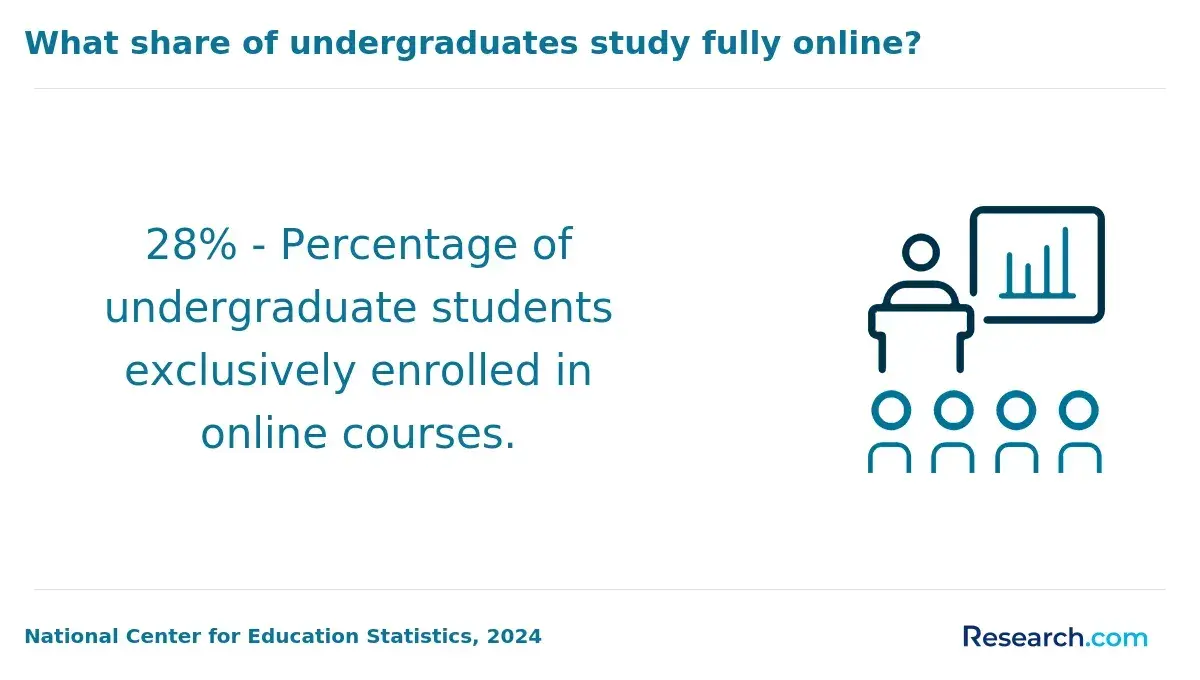
How do online undergraduate degrees compare with on-campus programs for quality and outcomes?
Online undergraduate degrees can match on-campus quality when they share the same accreditation, learning outcomes, faculty standards, assessment expectations, and student services. The format itself is not the main quality signal; program design, academic oversight, and career alignment are.
This comparison shows where online and on-campus programs commonly differ. The goal is to help you decide whether the flexibility of online study outweighs the benefits of face-to-face campus access.
| Comparison area | Online bachelor's programs | On-campus bachelor's programs | Decision guidance |
| Academic quality | Can be equivalent when accredited and faculty-led | Can offer more immediate classroom interaction | Check outcomes, accreditation, and course design instead of assuming one format is better |
| Scheduling | Often asynchronous or evening-friendly | Usually tied to fixed class times | Online is often better for full-time workers |
| Hands-on learning | May use simulations, local placements, or short residencies | Often easier for labs, studios, and clinical work | For nursing, teaching, and engineering, verify in-person requirements early |
| Networking | Depends on discussion boards, virtual events, and career services | Often easier through campus clubs and local recruiting | Ask how the online program connects adult students with employers |
| Total cost | May reduce commuting, housing, and relocation costs | May provide more campus-funded services and local opportunities | Compare total net price, not tuition alone |
For adults, online study is often the better logistical choice, but not always the better academic fit. If you need lab-heavy instruction, structured accountability, or campus recruiting, a hybrid or local campus option may be worth considering.
How can adults verify that an online bachelor's program is properly accredited?
Accreditation is the baseline quality check for any online bachelor's degree. It affects federal financial aid eligibility, transfer credit, graduate school options, employer recognition, and licensure pathways.
Use these steps before submitting an application or paying a deposit. They can help you avoid programs that sound convenient but do not meet professional or academic requirements.
- Confirm the school's institutional accreditation through a recognized accreditor listed by the U.S. Department of Education or the Council for Higher Education Accreditation.
- Check whether your field needs programmatic accreditation, such as ABET for many engineering programs, CCNE or ACEN for many nursing programs, or CAEP for some teacher preparation programs.
- For licensed careers, contact the relevant state board and ask whether the online program meets education requirements in the state where you plan to work.
- Review transfer-credit policies in writing, including limits on old credits, military credits, exam credits, and prior learning assessment.
- Ask admissions for graduation rates, retention data, career services access, and whether online students receive the same transcript as campus students.
A common mistake is assuming that "accredited" means every career door is open. Institutional accreditation is important, but licensure and programmatic accreditation can be separate requirements.
Which online undergraduate degrees offer the strongest career change and advancement potential?
The strongest career-change and advancement potential usually comes from degrees tied to clear employer demand, measurable skills, or licensed pathways. For adults, the best choice depends on whether you want to switch fields quickly, move up in your current field, or qualify for graduate study.
This table compares common online bachelor's degrees by career-change value and advancement fit. Use it as a starting point, then check job postings in your target location.
| Degree area | Best for career change | Best for advancement | Important caution |
| Information technology | Strong for help desk, systems, cloud, and networking pathways | Strong for IT workers seeking analyst or administrator roles | Hands-on labs and certifications often matter alongside the degree |
| Computer science | Strong for software and data roles if paired with a portfolio | Strong for technical employees moving into engineering teams | Math and programming intensity can surprise beginners |
| Nursing | Strong only when the program matches licensure status | Very strong for licensed RNs pursuing BSN-level roles | Pre-licensure programs require approved clinical training |
| Business | Moderate to strong because it applies across industries | Strong for supervisors, managers, and entrepreneurs | Choose a concentration rather than a vague general plan |
| Healthcare administration | Strong for adults moving from clinical or office roles into operations | Strong for healthcare workers targeting management | Experience often matters for manager-level roles |
Adults who need a faster employment bridge before finishing a degree can also compare high paying certificate jobs, especially in technology, healthcare support, skilled trades, and project-based fields.
What are typical admission requirements for adults returning to earn an online bachelor's?
Admission requirements for adult online bachelor's programs are usually more flexible than first-year residential admissions, but they still vary by school and major. Selective nursing, education, engineering, and computer science programs may have prerequisites or minimum GPA rules.
Most returning adults should be ready to provide the following materials. Having them prepared can speed up admission and transfer evaluation.
- Official high school transcript, GED documentation, or equivalent record if you have limited college credit.
- Official transcripts from every college previously attended, even if credits are old or grades were low.
- Application form and fee, though some online programs waive the fee.
- Personal statement or resume, especially for adult-degree-completion programs.
- Proof of prerequisites for majors such as nursing, engineering, education, or computer science.
- FAFSA information if you plan to use federal financial aid.
If your top priority is speed and simplicity, compare admissions policies, transfer generosity, and workload rather than relying only on program names. A guide to the easiest bachelor degree to get online can help you understand which majors are typically more flexible, but the best option should still match your career goal.
How long does it take to finish an online bachelor's as a working adult, and what affects timing?
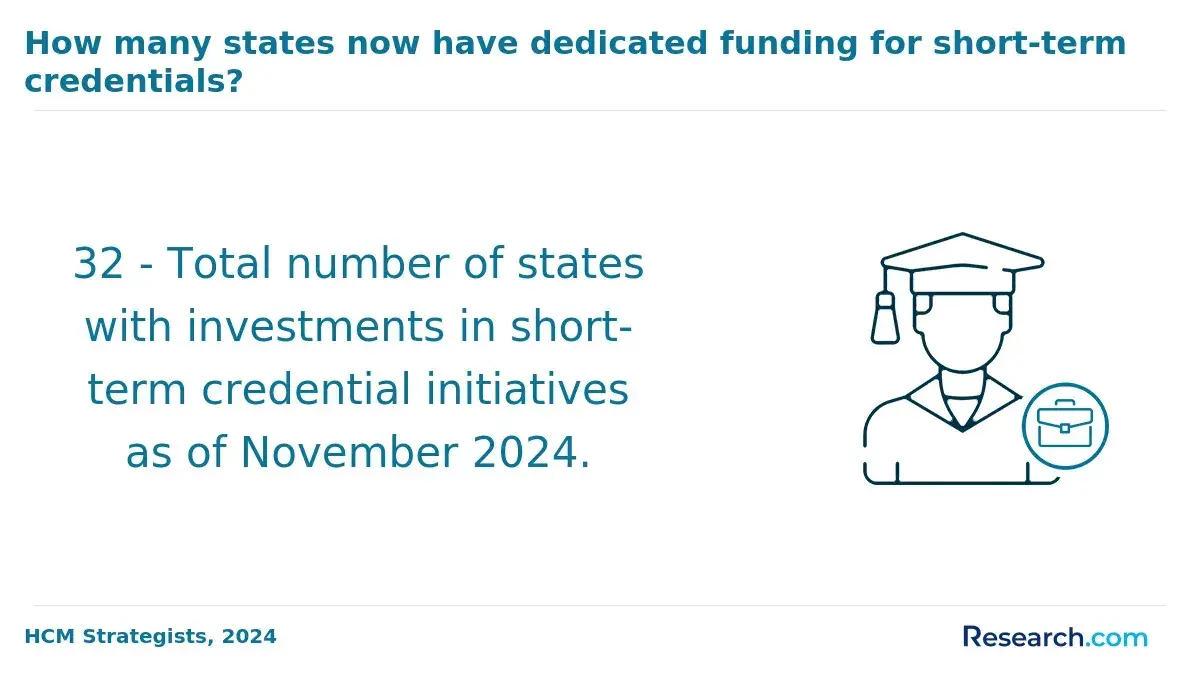
A traditional bachelor's degree requires about 120 semester credits, but adults rarely start from zero. Prior college credit, military training, professional certifications, AP or CLEP exams, and employer training can all affect timing if the school accepts them.
The table below shows common completion scenarios. These are planning ranges, not promises, because course availability, financial aid rules, work schedules, and transfer evaluations can change the timeline.
| Starting point | Typical remaining credits | Common adult timeline | Best fit |
| No prior college credit | About 120 credits | Four or more years part time; about four years full time | Adults starting fresh or changing direction completely |
| Associate degree completed | About 45 to 70 credits | About two to three years part time | Adults entering bachelor's completion programs |
| Some college, no degree | Varies widely | Often two to four years depending on accepted credits | Adults returning after stopping out |
| Strong prior learning or competency credit | Varies by school policy | Potentially faster if assessments are accepted | Experienced workers in business, IT, or applied fields |
To control timing, take these practical steps before enrolling. They help you avoid discovering too late that credits did not transfer or required courses are unavailable.
- Request an official transfer-credit evaluation before committing.
- Ask for a degree map showing every remaining course.
- Confirm whether required courses are offered every term or only once per year.
- Decide how many hours per week you can study without risking burnout.
- Ask whether summer, accelerated, or competency-based terms are available.
What do adults pay for online undergraduate degrees, and how can they reduce total costs?
Adults pay very different amounts for online undergraduate degrees because tuition, residency rules, fees, transfer credits, books, technology costs, and time to completion all matter. Published tuition is only the starting point.
College Board's 2024-25 national averages provide a useful benchmark for comparing sticker prices before grants, scholarships, employer aid, and transfer savings:
- Public four-year in-state tuition and fees averaged $11,610.
- Public four-year out-of-state tuition and fees averaged $30,780.
- Private nonprofit four-year tuition and fees averaged $43,350.
Online programs may lower relocation and commuting costs, but some add technology, proctoring, distance-learning, or course-material fees. Adults should calculate total program cost by multiplying remaining credits by per-credit tuition, then adding fees, books, lost work time, and any required travel or clinical expenses.
To reduce total cost, prioritize transfer-friendly public universities, employer tuition assistance, military or veteran benefits, grants, scholarships for adult learners, and credit for prior learning. If you expect to continue into graduate study later, researching options such as a cheap doctorate degree online can help you plan the full education budget, but the immediate priority should be finishing the bachelor's with manageable debt.
What courses and specializations do the top online bachelor's degrees for adults usually include?
Top online bachelor's programs for adults usually combine general education, major courses, electives, applied projects, and career-focused concentrations. The best curriculum is not always the broadest one; it is the one that builds the skills your target role actually requires.
This table shows common course themes and specializations across popular online undergraduate degrees. Use it to compare whether a program's curriculum matches your career direction.
| Degree area | Common core courses | Useful specializations | Career-skill focus |
| Business | Accounting, management, marketing, economics, business law | Finance, project management, supply chain, HR, analytics | Decision-making, communication, operations, leadership |
| Healthcare administration | Healthcare systems, finance, ethics, policy, quality improvement | Health informatics, long-term care, public health, compliance | Healthcare operations, regulation, data use, patient services |
| Information technology | Networking, databases, systems, security, cloud fundamentals | Cloud computing, network administration, cybersecurity, data systems | Troubleshooting, implementation, systems support |
| Computer science | Programming, algorithms, data structures, software engineering | AI, data science, software development, systems, cybersecurity | Coding, computational thinking, technical design |
| Education | Learning theory, classroom assessment, curriculum, child development | Special education, elementary education, early childhood, instructional design | Teaching, assessment, lesson planning, learner support |
Before choosing a specialization, ask schools direct questions that connect curriculum to outcomes. These questions are especially important for adults who cannot afford to spend extra terms correcting a mismatch.
- Which courses are required for my intended concentration, and how often are they offered online?
- Does the program include projects, labs, fieldwork, clinicals, student teaching, or internships?
- Will the specialization appear on my transcript, diploma, or only in advising records?
- Do graduates use this concentration for entry-level roles, advancement, graduate school, or licensure?
- Which software, platforms, exams, or professional standards are built into the coursework?
How do different online bachelor's degrees affect salary potential and long-term job outlook?
Salary potential and job outlook vary by occupation, location, experience, licensure, employer, and economic conditions. A bachelor's degree can improve access to many roles, but it does not guarantee a specific salary or promotion.
The table below uses U.S. Bureau of Labor Statistics wage estimates and occupational outlook information published in 2024 for selected roles connected to common online bachelor's degrees. Treat these as labor-market reference points, not individual outcome promises.
| Degree direction | Example role | BLS median annual pay | Outlook signal | How adults should interpret it |
| Business | Management analyst | $99,410 | Faster than average growth projected | Strong fit for adults with industry experience who can solve operational problems |
| Accounting or business | Accountant or auditor | $79,880 | Steady demand tied to reporting, tax, and compliance | Best when paired with accounting coursework and, for some goals, CPA planning |
| Healthcare administration | Medical and health services manager | $110,680 | Much faster than average growth projected | Often requires healthcare experience in addition to the degree |
| Computer science | Software developer | $132,270 | Much faster than average growth projected | Portfolio quality and technical interviews matter heavily |
| Cybersecurity | Information security analyst | $120,360 | Much faster than average growth projected | Prior IT knowledge, labs, and certifications can strengthen employability |
| Nursing | Registered nurse | $86,070 | Faster than average growth projected | Licensure and clinical eligibility determine access to RN roles |
| Education | Elementary school teacher | $63,680 | Hiring varies by state, district, and subject area | State licensure approval is more important than online convenience |
| Engineering | Mechanical engineer | $99,510 | Demand varies by industry and specialization | ABET accreditation may matter for licensure and some employers |
AI and automation are also changing how employers evaluate candidates. Business graduates may need analytics skills, education graduates may need comfort with learning technology, and technology graduates increasingly need proof of applied problem-solving rather than coursework alone.
The safest ROI approach is to work backward from target jobs. Review job postings, note required degrees and skills, compare them with the curriculum, and ask whether the program provides projects, licensure preparation, internships, or employer-connected experiences.
Other Things You Should Know About
The best choice depends on your goal. Business is flexible, IT and computer science are strong for technology careers, nursing is powerful for licensed RNs, healthcare administration fits medical office and operations workers, and education is best when the program meets state teaching requirements.
It can be, especially when the school is properly accredited and the program has the same academic standards as campus programs. Employers usually care more about accreditation, skills, experience, portfolio quality, licensure, and job fit than whether courses were online.
Many adults do, but pacing matters. Part-time enrollment, asynchronous classes, transfer credits, and predictable weekly study blocks make completion more realistic. Full-time work plus full-time school can be difficult unless you have strong support and a flexible schedule.
The biggest mistake is enrolling before verifying accreditation, transfer credits, total cost, and career alignment. A program may be convenient but still fail to meet licensure rules, employer expectations, or your timeline.
References
- How to Go Back to College as an Adult [Practical Tips] https://beal.edu/how-to-go-back-to-college-as-an-adult/
- Best Online Degree Programs for Working Adults https://www.scholaro.com/db/News/best-online-degree-programs-256
- When Life Gets in the Way: Understanding and Addressing Dropout Risks for Adult Learners https://www.wgulabs.org/posts/understanding-and-addressing-dropout-risks-for-adult-learners
- 2025 Most Affordable Online Bachelor's Degrees https://www.onlineu.com/most-affordable-colleges/bachelors-degrees
- Overcoming Common Challenges in Adult Education — Affinity Learning https://www.affinitylearning.org/articles/overcoming-common-challenges-in-adult-educationnbsp
- How does a college degree improve graduates’ employment and earnings potential? - APLU https://www.aplu.org/our-work/4-policy-and-advocacy/publicuvalues/employment-earnings/
- Financial Aid For Online College Students | LearnHowToBecome.org https://www.learnhowtobecome.org/career-resource-center/financial-aid-for-online-colleges/
- Alma Career – A better world of work for everyone https://www.almacareer.com/blog/how-does-a-university-degree-influence-pay
- Best Online Colleges for Working Adults [2026] https://www.straighterline.com/blog/degree-completion-best-online-colleges-for-working-adults
- Navigating Common Challenges as an Adult Learner: Strategies for Success https://canadianallcare.com/2024/04/02/navigating-common-challenges-as-an-adult-learner-strategies-for-success/