2027 Most Affordable Bachelor's Degrees for Adults Returning to College

Co-Founder and Chief Data Scientist
Returning to college is often a cost-and-time decision, not just an academic one. Federal labor data shows bachelor's degree holders had median weekly earnings of $1,543 in 2024, compared with $930 for workers with only a high school diploma, but the payoff depends heavily on program price, credits transferred, and career fit. This guide is for working adults comparing affordable bachelor's degrees, especially online and transfer-friendly options. You'll learn which fields tend to offer practical value, how to evaluate total cost, and how to avoid programs that look cheap but create expensive problems later.
Key Things You Should Know
- Affordability is not just tuition: adults should compare net price, transfer-credit limits, fees, books, technology costs, lost work hours, and whether the program leads to licensure or employer-recognized skills.
- NCES data published in 2024 shows average tuition and fees were far lower at public four-year institutions for in-state students than at private nonprofit four-year colleges, making residency and transfer pathways major cost levers.
- Degrees tied to licensed or high-demand fields, such as nursing, cybersecurity, accounting, information technology, and education, often provide clearer career signals than broad majors without a defined job target.
Top 10 Most Affordable Bachelor's Degrees for Adults Returning to College
Business Degrees
Business is one of the most flexible affordable bachelor's options for adults because it connects to management, accounting, operations, sales, human resources, and entrepreneurship. It fits students with prior workplace experience who want promotion eligibility. Look for ACBSP, AACSB, or IACBE accreditation if available, but also compare course relevance. BLS 2024 wage data places accountants and auditors at a median annual wage of $81,680, making accounting-focused programs more career-specific than general business. Avoid choosing a broad business degree without electives, internships, or certificates that match your target role.
Healthcare Degrees
Healthcare bachelor's degrees can be affordable when they build on prior clinical, administrative, or associate-level credits. Common adult-friendly options include healthcare administration, health information management, public health, and allied health completion degrees. These programs suit students who want healthcare careers without direct patient-care licensure. BLS projections released in 2024 show medical and health services managers among the faster-growing management roles, but entry requirements vary by employer. Choose programs with CAHIIM, CEPH, or discipline-relevant accreditation when applicable, and confirm that internships can be completed locally.
Information Technology Degrees
Information technology degrees are practical for adults who want applied computing roles in systems support, cloud administration, networking, database work, and IT project coordination. They are often more career-switcher-friendly than theory-heavy computing programs. Affordable IT programs may accept industry certifications for credit, which can shorten time to completion. AI is changing routine support work, so prioritize programs with cloud, automation, cybersecurity, and scripting coursework. Ask whether labs are virtual and available asynchronously, since working adults need hands-on practice without fixed campus schedules.
Computer Science Degrees
Computer science can offer strong long-term value, but it is not always the easiest low-cost route for adults. It usually requires programming, discrete math, data structures, algorithms, and substantial project work. BLS 2024 wage data lists software developers at a median annual wage of $133,080, but employers often evaluate portfolios and technical interviews alongside degrees. This major fits adults who can dedicate consistent practice time. If you need a faster applied path, compare CS with information technology, software development, or data analytics programs.
Cybersecurity Degrees
Cybersecurity bachelor's programs can be affordable when they combine transfer credits, certification preparation, and virtual labs. They fit adults with IT, military, compliance, or operations backgrounds. BLS projections released in 2024 place information security analysts among the fastest-growing occupations, reflecting employer concern about cloud risk, ransomware, and data protection. Look for programs aligned with CompTIA Security+, Network+, CySA+, or CISSP concepts, but remember that certifications may still require separate exams and fees. Avoid programs that teach policy only and lack technical lab work.
Psychology Degrees
Psychology is affordable and widely available online, but adults should understand its limits. A bachelor's degree can support roles in human services, case coordination, HR, market research support, and behavioral health administration, but it does not qualify someone to become a licensed psychologist. Graduate study is usually required for clinical practice. This degree fits students interested in people, behavior, research, and helping professions. To improve ROI, choose programs with statistics, research methods, internship options, and electives in organizational psychology, addiction studies, or child development.
Nursing Degrees
Nursing can be one of the strongest affordability plays for adults who already hold an RN license through an associate degree or diploma. RN-to-BSN programs are often online, transfer-heavy, and designed around working nurses. BLS 2024 wage data reports a median annual wage of $93,600 for registered nurses, but pay varies by state, setting, shifts, and specialization. Confirm CCNE or ACEN accreditation, clinical or practicum requirements, and state authorization before enrolling. Non-nurses should compare traditional BSN, accelerated BSN, and community-college pathways carefully.
Education Degrees
Education degrees can be affordable, especially through public universities and transfer pathways, but licensure rules make program selection critical. Adults pursuing teaching should verify that the degree meets their state's certification requirements before enrolling. Elementary, special education, and secondary education programs often require supervised student teaching, which can affect work schedules. This path fits adults who want structured public-service careers and can complete field placements. Avoid out-of-state online programs unless the school clearly explains reciprocity, testing, background checks, and local placement support.
Criminal Justice Degrees
Criminal justice degrees are common, affordable, and transfer-friendly, especially for adults with military, law enforcement, corrections, or public safety experience. They can support careers in policing, probation, emergency management, homeland security, and compliance. However, some roles prioritize academy training, civil service exams, background checks, or experience over the degree alone. Choose programs with courses in ethics, constitutional law, data analysis, cybercrime, and community relations. Adults should confirm whether prior academy or military training can count as credit before paying for repeated coursework.
Engineering Degrees
Engineering bachelor's degrees can lead to strong outcomes but are often less flexible and more expensive than other adult-completion options because of lab, math, and sequencing requirements. BLS 2024 wage data lists industrial engineers at a median annual wage of $99,380, showing the value of applied engineering skills. Adults should prioritize ABET-accredited programs when licensure or traditional engineering roles matter. Engineering technology may be more accessible online, but it is not identical to engineering. Confirm employer expectations before choosing between them.
What makes a bachelor's degree truly affordable for returning adult students?
A bachelor's degree is truly affordable for returning adults when it lowers the total cost of finishing, not just the advertised tuition per credit. The best-value programs combine reasonable tuition, generous transfer policies, predictable fees, strong academic support, and a curriculum that connects to a realistic career goal.
Use this comparison to separate low-cost programs from programs that only appear inexpensive at first glance.
| Affordability factor | Why it matters for adults | What to check before enrolling |
| Net price | Grants, employer aid, and transfer credits can make the actual cost very different from sticker price. | Ask for a written cost estimate after transfer evaluation and financial aid review. |
| Transfer-credit acceptance | Adults often bring community-college, military, professional, or unfinished college credits. | Confirm the maximum transferable credits and whether major courses must be retaken. |
| Fees | Online, technology, graduation, lab, clinical, and proctoring fees can raise the final bill. | Request a full fee schedule, not just tuition per credit. |
| Time to completion | Extra semesters add tuition and may delay career benefits. | Ask for a degree plan showing required courses by term. |
| Career alignment | A cheap degree is less valuable if it does not support the job or license you want. | Review outcomes, licensure alignment, internship access, and employer-recognized skills. |
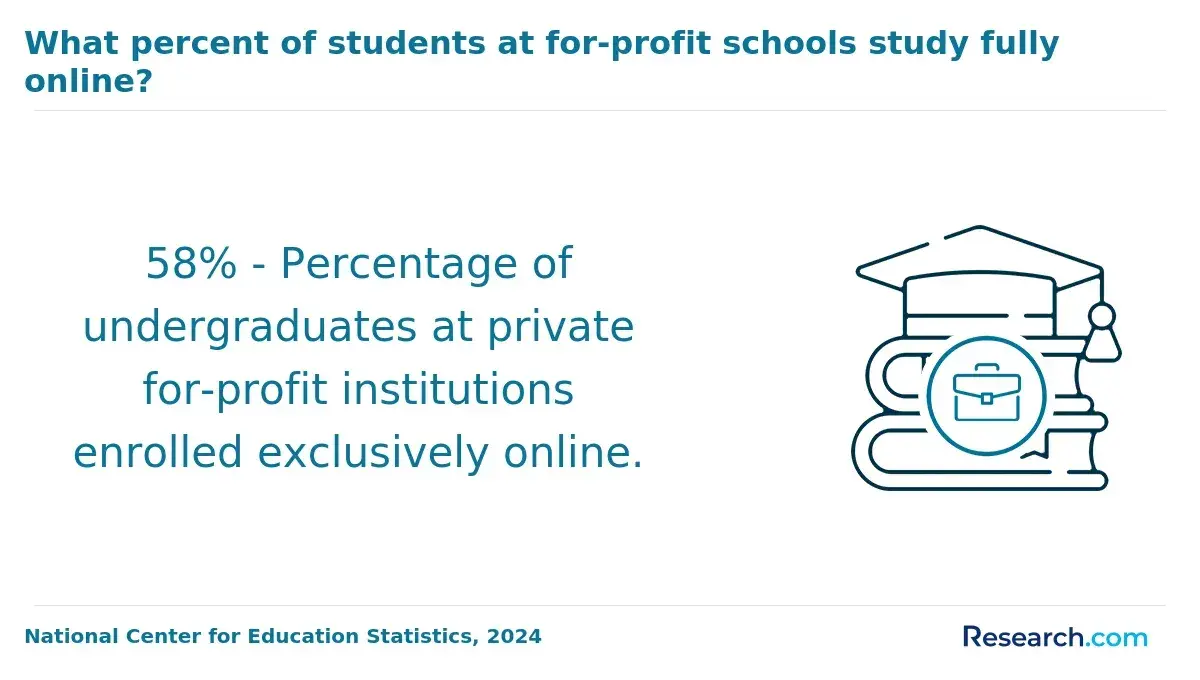
For many adults, the most affordable route is a public university, an online completion program, or a bachelor's program that accepts a large block of prior credits. Private nonprofit and private for-profit programs can still be reasonable in specific cases, but institution type alone does not determine value.
How do online bachelor's programs compare to campus options for adult learners?
Online bachelor's programs often work better for adults who need to keep a job, manage caregiving, or avoid commuting costs. Campus programs may be stronger for students who need in-person labs, clinical placements, networking, or a structured weekly routine. The best choice depends on your schedule, learning style, major, and whether the degree has fieldwork requirements.
The table below summarizes the main trade-offs adults should compare before choosing a format.
| Format | Best fit | Main advantage | Main risk |
| Fully online | Working adults with strong self-management skills | Maximum flexibility and fewer commuting costs | Less structure can lead to slower progress if support is weak |
| Hybrid | Adults who need flexibility but benefit from some in-person contact | Balances convenience with labs, advising, or networking | Campus visits may conflict with work schedules |
| Campus-based | Students in lab-heavy, clinical, or highly structured programs | Direct access to faculty, facilities, and peer networks | Higher transportation, parking, and schedule costs |
| Competency-based | Adults with strong prior knowledge and self-paced discipline | May reduce time and cost if you move quickly | Not ideal for students who need frequent instructor-led pacing |
Adults comparing accelerated online bachelor degree programs accredited should look beyond speed and confirm accreditation, course intensity, transfer rules, and whether accelerated terms fit their work and family obligations.
How can adults find accredited, low-cost bachelor's programs they can trust?
Accreditation is the first trust check for any affordable bachelor's degree. In the U.S., institutional accreditation affects federal financial aid eligibility, credit transfer, graduate school recognition, and employer confidence. Programmatic accreditation also matters in fields such as nursing, education, business, engineering, health information management, counseling-related pathways, and public health.
Use this sequence before applying, especially if a program advertises very low tuition or unusually fast completion.
- Confirm the college has recognized institutional accreditation through official accreditation records or the school's accreditation page.
- Check whether your major needs programmatic accreditation for licensure, certification, or employer recognition.
- Ask whether the online program is authorized to enroll students in your state.
- Request a transfer-credit estimate before committing to a start date.
- Review graduation rates, retention indicators, student support, and complaint patterns when available.
A common mistake is assuming that "accredited" always means the program meets your specific career requirement. Accreditation can apply to the institution, the program, or both, and those distinctions matter most in licensed fields.
What admission requirements do adults face when returning to earn a bachelor's degree?
Adults returning for a bachelor's degree usually face standard admission requirements, but many schools offer flexible pathways for students with previous college credit, military training, work experience, or long gaps in enrollment. Requirements often include an application, transcripts from every prior college, proof of high school completion or GED, and sometimes a minimum GPA.
Before applying, adults should gather the documents and decisions that affect admission and cost.
- Official transcripts from every college attended, even if the credits are old or the grades were low.
- Military, professional, or certification records that may qualify for credit evaluation.
- A target major, because transfer credits may apply differently depending on the degree plan.
- Financial aid documents, including the FAFSA, employer tuition assistance forms, or veteran education benefit paperwork.
- Questions about academic forgiveness, readmission, placement tests, and whether prior failed courses must be repeated.
If you need a lower-cost stepping stone before a bachelor's program, comparing the easiest associate degree to get can help you identify transfer-friendly options, but the associate degree should still match your intended bachelor's pathway.
How long do affordable bachelor's degrees typically take for working adults to finish?
Most bachelor's degrees require about 120 semester credits, but returning adults rarely start from zero. A student transferring 60 approved credits may need roughly two years of full-time study, while part-time students often take longer because they balance coursework with employment and family responsibilities.
Completion time usually depends on three variables: how many credits transfer, how often required courses are offered, and how many credits you can handle each term without burning out. Accelerated programs can shorten the calendar, but they compress reading, assignments, exams, and projects into tighter blocks.
Adults planning far beyond the bachelor's level should also think about the full academic timeline. For example, students considering research, university teaching, or advanced professional leadership may eventually compare shortest PhD programs, but that decision should come after confirming whether a bachelor's or master's degree is the immediate requirement for the career goal.
What are the total costs of returning for a bachelor's degree, including hidden expenses?
The total cost of returning for a bachelor's degree includes tuition, fees, materials, technology, travel, childcare, and the opportunity cost of time. Adults should build a full budget before enrolling because small recurring expenses can change whether a program is manageable.
This table highlights common costs that may not be obvious when schools advertise tuition per credit.
| Cost category | Examples | Why adults should check it |
| Tuition | Per-credit charges, flat-rate terms, nonresident rates | This is the largest visible cost, but not always the final cost. |
| Mandatory fees | Online learning, technology, student services, graduation fees | Fees can apply every term and may not be included in tuition estimates. |
| Course materials | Books, access codes, software, lab kits | Digital access codes can be expensive and difficult to buy used. |
| Assessment costs | Proctoring, certification exams, background checks, drug screens | These are common in healthcare, education, IT, and criminal justice programs. |
| Life logistics | Childcare, transportation, parking, reduced work hours | These costs determine whether the schedule is realistic. |
NCES data published in 2024 shows why public in-state options often anchor affordability comparisons: average tuition and fees at public four-year colleges were much lower than at private nonprofit four-year institutions. Still, a private program with large grants or major transfer-credit acceptance may beat a public option for a specific student.
Which affordable bachelor's degrees offer the strongest career outcomes for adult learners?
The strongest affordable bachelor's degrees for adult learners usually have three features: they recognize prior learning, connect to identifiable occupations, and build skills employers can evaluate. Career outcomes are never guaranteed, but degrees tied to regulated fields, technical skills, business functions, or public-sector roles often give adults a clearer return-on-investment framework.
The table below compares degree areas by career clarity and adult-learner fit.
| Degree area | Typical career direction | Why it may be a strong adult option |
| Nursing | RN advancement, leadership, public health, case management | RN-to-BSN pathways often accept prior nursing education and support promotion requirements. |
| Cybersecurity | Security analyst, risk analyst, SOC support, compliance | Certifications, labs, and prior IT experience can strengthen employability. |
| Information technology | Systems administration, support, cloud operations, IT coordination | Applied skills and certifications can make the degree more job-aligned. |
| Business or accounting | Accounting, management, operations, HR, finance support | Adults can connect coursework to existing workplace experience. |
| Education | Licensed teaching, instructional support, training | Clear public-sector pathways exist when the program meets state licensure rules. |
| Healthcare administration | Clinic operations, health information, medical office leadership | Healthcare workers can move toward administrative roles without leaving the sector. |
Adults who expect to continue after the bachelor's should compare the next credential before choosing a major. Some career paths require graduate study, and a later 6-month master's degree online may be appealing only if it is accredited, realistic, and accepted in the field.
What salary ranges and job growth can adults expect from these affordable degrees?
Salary and job growth should be used as planning signals, not promises. Wages vary by state, employer, experience, industry, certifications, union status, and whether the role requires licensure. BLS 2024 wage data is still useful because it gives adults a neutral benchmark for comparing fields.
The table below pairs selected bachelor's-aligned roles with national wage and outlook context to help adults compare economic direction.
| Field | Example role | Median annual wage from BLS 2024 data | Career interpretation |
| Business | Accountant or auditor | $81,680 | Accounting pathways tend to be more specific than general business programs. |
| Healthcare | Medical and health services manager | $117,960 | Management roles often require experience in addition to the degree. |
| Information technology | Computer support specialist | $61,550 | Entry points are accessible, but advancement often depends on technical depth. |
| Computer science | Software developer | $133,080 | Strong portfolios and interview skills matter alongside the degree. |
| Cybersecurity | Information security analyst | $124,910 | Employers often value labs, certifications, and prior IT experience. |
| Nursing | Registered nurse | $93,600 | State licensure and clinical background drive eligibility. |
| Education | Elementary school teacher | $63,680 | Pay and demand vary heavily by district, state, and licensure area. |
| Engineering | Industrial engineer | $99,380 | ABET accreditation may matter for traditional engineering pathways. |
Current hiring trends favor adults who combine a degree with verifiable skills. AI tools are changing workflows in business, IT, healthcare administration, and education, so programs that teach data literacy, ethical technology use, communication, and problem-solving may age better than programs focused only on static software tools.
How can adults maximize transfer credits and prior learning to lower degree costs?
Transfer credit is one of the biggest ways adults can reduce bachelor's degree costs. The goal is not just to transfer many credits, but to transfer the right credits into requirements that actually shorten the degree.
Follow these steps before you choose a school or accept an admission offer.
- Collect every transcript, including community college, four-year college, military, dual-enrollment, and previously unfinished coursework.
- Ask for an official or written unofficial transfer evaluation before enrolling, not after the first term begins.
- Compare how each school applies credits to general education, electives, prerequisites, and major requirements.
- Ask whether the program awards credit for military training, professional licenses, certifications, exams, portfolios, or workplace learning.
- Check residency requirements, because some schools require a minimum number of credits to be completed through them.
- Avoid retaking courses unless the school explains why the credits are expired, below grade minimums, or not equivalent.
The biggest red flag is a school that gives vague transfer promises but will not show how credits apply to your degree plan. A clear evaluation can prevent extra semesters, repeated coursework, and unnecessary borrowing.
Other Things You Should Know About
The cheapest option is usually the one that accepts the most applicable transfer credits and charges low in-state or online tuition. For many adults, that means a public university, an online degree-completion program, or a transfer pathway from a community college.
Yes, if the school is properly accredited and the program matches the field. Employers typically care more about accreditation, skills, experience, licensure eligibility, and reputation than whether coursework was completed online.
Many adults can file the FAFSA for federal grants, loans, and work-study eligibility. They may also qualify for employer tuition assistance, scholarships, military or veteran benefits, state grants, or institutional aid.
It can be worth it when the degree supports a specific career move, promotion, licensure requirement, or salary increase that outweighs the cost and time. Adults should compare total price, time to completion, and realistic job outcomes before enrolling.
References
- Best Online Degrees for Working Adults in 2026 https://www.straighterline.com/blog/degreecompletion-best-online-degrees-for-working-adults-in-2026
- Best Online Degree Programs for Working Adults https://www.scholaro.com/db/News/best-online-degree-programs-256
- College Graduation Rates and How ACE Compares | ACE Blog https://ace.edu/blog/college-graduation-rates-and-how-ace-compares/
- 7 Best Alternatives to 4-Year College https://www.savingforcollege.com/article/best-alternatives-to-a-4-year-college
- 50+ Scholarships & Grants for Study Abroad in 2025 | Go Overseas https://www.gooverseas.com/blog/study-abroad-scholarships-grants
- [2026 ] Guide to College for Working Adults | New England Tech https://www.neit.edu/blog/college-for-working-adults
- Average Cost of College [2025]: Yearly Tuition + Expenses https://educationdata.org/average-cost-of-college
- Top 50 Scholarships for Non-Traditional Students to Apply for in July 2026 https://bold.org/scholarships/by-type/non-traditional-scholarships/
- 2025 Most Affordable Online Bachelor's Degrees https://www.onlineu.com/most-affordable-colleges/bachelors-degrees