2027 Best Online Bachelor's Degrees for Veterans

Co-Founder and Chief Data Scientist
Choosing an online bachelor's degree as a veteran is a benefits, career, and time-management decision all at once. BLS 2024 data shows workers with a bachelor's degree had median weekly earnings of $1,543, compared with $930 for high school graduates, making degree choice an important ROI question.
This guide is for veterans, active-duty learners planning transition, and military families comparing flexible programs. You'll learn which majors fit common veteran career goals, how GI Bill funding works online, and how to avoid programs that waste credits, benefits, or time.
Key Things You Should Know
- For many veterans, the best online bachelor's degree is one that combines regional accreditation, generous military transfer credit, GI Bill compatibility, and a direct path to civilian roles in business, IT, cybersecurity, healthcare, education, or public service.
- Cost varies widely: College Board's 2024 pricing data reported average published tuition and fees of $11,610 for in-state public four-year colleges and $43,350 for private nonprofit four-year colleges, so benefit coverage and transfer credit can materially change out-of-pocket cost.
- Labor-market alignment matters: BLS May 2024 data reported median pay of $105,990 for computer and IT occupations and $80,920 for business and financial occupations, but salaries depend on location, experience, clearance, certifications, and employer demand.
Top 10 Best Online Bachelor's Degrees for Veterans
Business Degrees
Business is a strong fit for veterans who led teams, managed logistics, handled budgets, or supervised operations. Online bachelor's options often include management, accounting, finance, supply chain, marketing, or project management. BLS May 2024 data lists the median annual wage for business and financial occupations at $80,920, which makes this major practical for veterans seeking broad civilian mobility. Look for ACBSP, AACSB, or IACBE accreditation when available, plus coursework in analytics, leadership, accounting, and business communication.
Healthcare Degrees
Healthcare bachelor's programs can suit veterans with medic, corpsman, administration, logistics, or patient-support experience. Common online options include healthcare administration, health sciences, public health, and health informatics. These programs are usually better for management, coordination, compliance, or data roles than direct clinical practice unless they include licensure preparation. Medical and health services managers had a BLS May 2024 median wage of $117,960, but most management roles also value healthcare experience, internships, or supervisory background.
Information Technology Degrees
Information technology degrees focus on applied systems: networks, cloud platforms, databases, help desk operations, systems administration, and IT project support. They are often a good match for veterans with communications, signals, electronics, or operations experience. BLS May 2024 data reports a $105,990 median annual wage for computer and IT occupations, but entry-level IT pay depends heavily on certifications and hands-on skills. Prioritize programs with labs, cloud tools, security fundamentals, and credit for relevant military training.
Computer Science Degrees
Computer science is more programming- and theory-heavy than general IT. Veterans should consider it if they want software engineering, data, AI, systems design, or graduate study. Expect algorithms, discrete math, programming languages, databases, operating systems, and software engineering projects. It may not be the fastest path if your goal is help desk or network administration, but it can offer stronger long-term technical mobility. Choose programs with substantial coding practice, portfolio projects, and faculty support for remote learners.
Cybersecurity Degrees
Cybersecurity is attractive for veterans because military experience, security clearances, operational discipline, and mission-focused work can translate well. Programs cover risk management, network defense, incident response, digital forensics, cloud security, and governance. BLS May 2024 data lists information security analysts at a median annual wage of $124,910, with strong projected demand. Veterans should still verify that the curriculum includes hands-on labs and aligns with certifications such as Security+, CySA+, CISSP preparation, or cloud security credentials.
Psychology Degrees
A bachelor's in psychology can help veterans move into human services, case management support, HR, research assistance, coaching-adjacent roles, or graduate study. It does not qualify graduates to work independently as psychologists or licensed counselors. Choose this path if you are interested in behavior, trauma-informed support, organizational behavior, or social services, and confirm whether internships are available online. Veterans aiming for clinical practice should plan for a master's or doctoral program and state licensure requirements.
Nursing Degrees
Online nursing bachelor's options are often RN-to-BSN programs, meaning applicants usually need an active RN license and prior nursing education. Pre-licensure nursing is harder to complete fully online because clinical hours are required. BLS May 2024 data reports a $93,600 median annual wage for registered nurses, but pay varies by state, shift, specialty, and employer. Veterans with medic or corpsman experience should ask how military healthcare training transfers and whether the program meets their state board's rules.
Education Degrees
Education degrees can fit veterans drawn to teaching, training, instructional design, or school administration pathways. Online bachelor's programs may prepare students for elementary, special education, secondary education, or non-licensure educational studies. Licensure rules vary by state, and student teaching is usually required for classroom teaching credentials. Veterans should confirm whether the program is approved in the state where they plan to teach. Those who prefer adult learning may also compare education with training and development or instructional design programs.
Criminal Justice Degrees
Criminal justice appeals to veterans interested in law enforcement, corrections, homeland security, emergency management, investigations, or public safety administration. The degree can support advancement, but many sworn roles also require academy training, background checks, physical standards, and agency-specific hiring. BLS May 2024 data lists police and detectives at a median annual wage of $77,270. Veterans should compare criminal justice with cybersecurity, public administration, or emergency management if they want broader federal, analytical, or leadership options.
Engineering Degrees
Engineering is best for veterans who are comfortable with math, physics, design, and technical problem-solving. Online options are more limited than in business or IT because labs and ABET accreditation matter. Some programs are hybrid, completion-focused, or designed for engineering technology rather than traditional engineering. ABET accreditation is especially important for veterans pursuing professional engineer licensure later. Compare mechanical, electrical, industrial, systems, and engineering technology paths based on career target, transfer credits, and required in-person components.
How do online bachelor's degree programs support veterans using the GI Bill and VA benefits?
Online bachelor's degree programs can support veterans by helping them apply GI Bill benefits, certify enrollment to the VA, evaluate transfer credit, and coordinate tuition payments. The Post-9/11 GI Bill can cover up to the in-state tuition and fee rate at public institutions, while private and foreign schools are subject to an annual cap; for the 2025-2026 academic year, that cap is $29,920.95. Fully online students may also receive a different housing allowance than students taking at least one qualifying in-person course.
Before enrolling, veterans should ask the school's veterans office or certifying official how benefits apply to the exact program, not just to the institution. Important benefit questions include:
- Whether the program is approved for VA education benefits and whether every required course can be certified.
- How the school handles Yellow Ribbon funding if tuition exceeds Post-9/11 GI Bill coverage.
- Whether military tuition assistance, Pell Grants, scholarships, employer benefits, or state veteran grants can be combined with VA benefits.
- How withdrawals, repeated courses, remedial classes, or changes in enrollment intensity may affect benefit payments.
The best veteran-friendly online programs make this process predictable. They publish clear tuition, assign military-connected advisors, explain monthly enrollment verification, and help students avoid taking courses that do not count toward the degree plan.
What should veterans look for when comparing accredited online bachelor's programs?
Veterans should begin with accreditation because it affects transfer credit, federal financial aid, graduate school eligibility, employer recognition, and licensure pathways. Regional accreditation remains the most widely accepted institutional standard in the U.S., while programmatic accreditation may be critical in nursing, engineering, education, business, and health fields.
A strong comparison process looks beyond marketing language. If you are building an initial shortlist, use verified directories and school disclosures rather than relying only on rankings or ads; looking up online colleges can be a helpful starting point for understanding accreditation-focused options.
The table below summarizes the program features that matter most for veterans comparing online bachelor's programs. Use it to separate real student support from vague claims.
| Factor | Why it matters for veterans | Strong sign | Red flag |
| Institutional accreditation | Determines aid eligibility and credit recognition | Accreditation is easy to verify through recognized agencies | School avoids naming its accreditor clearly |
| Military credit policy | Can shorten time to graduation | Published JST or CCAF review process | Credit estimate is vague until after enrollment |
| VA benefit support | Reduces payment and certification problems | Dedicated School Certifying Official and veterans office | Admissions staff cannot explain VA certification timelines |
| Programmatic fit | Matters for licensure and employer expectations | Program meets state or industry requirements | Online format excludes required labs, clinicals, or fieldwork without alternatives |
| Outcomes transparency | Helps evaluate ROI | Graduation, retention, debt, and career services data are available | School emphasizes speed but not completion or career outcomes |
Veterans should be especially cautious with programs that pressure immediate enrollment, promise guaranteed jobs, refuse to evaluate transfer credit early, or advertise "military friendly" status without showing actual services.
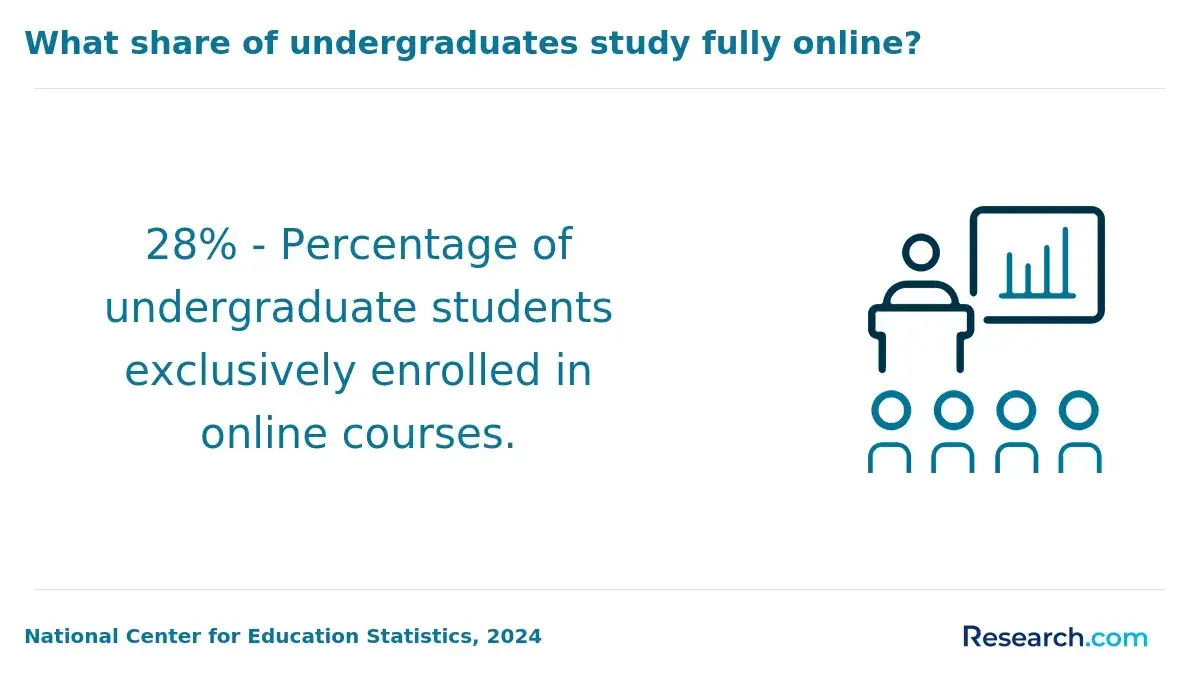
How do online and on-campus bachelor's degrees differ for military and veteran students?
Online and on-campus bachelor's degrees can carry the same academic value when they come from an accredited institution and follow the same curriculum standards. The main differences are schedule, interaction, housing benefits, access to campus resources, and the amount of self-direction required.
For veterans, online learning often works best when relocation, family responsibilities, disability accommodations, employment, or reserve obligations make campus attendance difficult. Campus learning may be better when the program requires labs, clinical placements, student teaching, networking-heavy experiences, or access to specialized equipment.
This comparison highlights the practical trade-offs that matter most for military-connected students.
| Format | Best for | Possible drawback | Veteran-specific consideration |
| Fully online | Students who need maximum flexibility | Requires strong self-management | Housing allowance rules may differ from in-person study |
| Hybrid | Students who want flexibility plus some face-to-face access | Campus visits may be required | May help satisfy lab, clinical, or residency requirements |
| On campus | Students who want structure, networking, and facilities | Less flexible for work or family | Can provide stronger peer community and campus veteran services |
| Competency-based | Students with strong prior knowledge and discipline | Not ideal for learners needing weekly structure | May help experienced veterans move faster if benefits and credit rules align |
The better choice is not simply "online" or "campus." It is the format that lets you complete required coursework consistently without sacrificing benefit eligibility, licensure requirements, or academic support.
What admission requirements and credit transfers apply to veterans in online bachelor's programs?
Admission requirements for online bachelor's programs usually include a high school diploma or equivalent, official transcripts, an application, and sometimes a minimum GPA. Veterans may also submit Joint Services Transcript records, Community College of the Air Force credits, CLEP or DSST exam scores, prior college transcripts, professional certifications, and training documentation.
Transfer credit is one of the biggest ROI levers for veterans. A generous policy can reduce tuition, shorten time to graduation, and preserve GI Bill entitlement for graduate school. However, not all military credits apply to every major; a leadership course may count as an elective in one program but not satisfy business, nursing, or engineering requirements in another.
Veterans can avoid transfer-credit surprises by following a clear sequence before committing to a school:
- Request an unofficial transfer evaluation before enrollment whenever possible.
- Ask which credits apply to general education, major requirements, electives, or no category at all.
- Confirm the maximum number of transfer credits allowed toward the bachelor's degree.
- Check whether credits expire for technical fields such as IT, cybersecurity, nursing, or engineering.
- Get the remaining course plan in writing, including estimated graduation timeline and benefit usage.
A common mistake is choosing the school that accepts the most credits overall. The better choice is the school that applies the most credits toward the actual degree you want.
How much do online bachelor's degrees cost for veterans, and what financial aid is available?
Online bachelor's degree costs for veterans depend on tuition, fees, books, technology requirements, transfer credit, enrollment pace, residency rules, and how VA benefits are applied. College Board's 2024 data reported average published tuition and fees of $11,610 at public four-year in-state institutions and $43,350 at private nonprofit four-year institutions. Those figures are sticker prices, so the real cost can be lower after GI Bill payments, grants, scholarships, military credit, and institutional aid.
The table below explains the main cost categories veterans should compare. It is useful because tuition alone rarely shows the true cost of finishing a degree.
| Cost factor | How it affects total cost | Veteran-specific impact |
| Tuition rate | Sets the base price per credit or term | Public in-state rates may be fully covered under Post-9/11 GI Bill rules |
| Fees | Can add technology, distance learning, graduation, or course charges | Some fees may be covered only if certified as required |
| Transfer credits | Reduce the number of credits needed | Military training credit can preserve benefit months |
| Books and materials | Vary by program and course format | Programs using open educational resources may lower out-of-pocket expenses |
| Enrollment intensity | Changes time to completion and benefit payments | Part-time status may affect housing allowance and completion speed |
| Residency or campus requirements | Add travel, lodging, or commuting costs | Hybrid programs may be worthwhile but should be budgeted early |
Veterans should also complete the FAFSA when eligible, even if they expect the GI Bill to cover tuition. Pell Grants, state aid, institutional scholarships, employer tuition support, and military-affiliated scholarships may help cover living expenses, uncovered fees, or future graduate study.
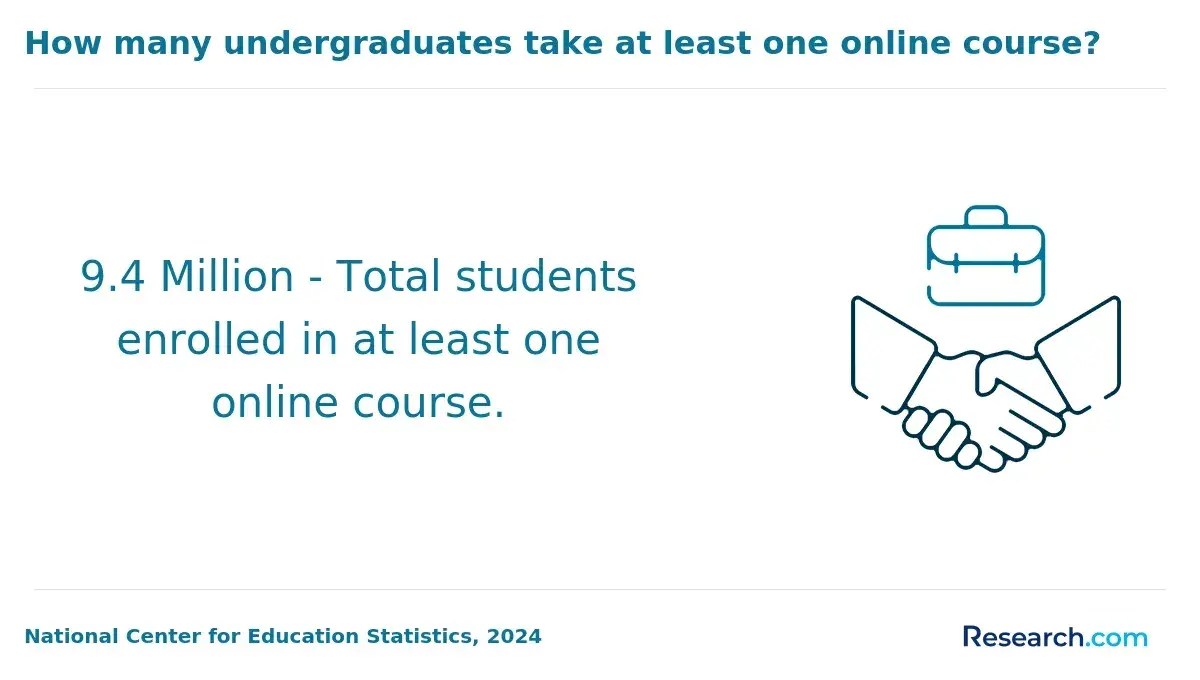
Which online bachelor's majors are most popular and beneficial for veterans' career goals?
The most popular and beneficial online bachelor's majors for veterans tend to translate military experience into civilian language. Leadership, logistics, technical troubleshooting, intelligence analysis, training, emergency response, healthcare support, and mission planning can all connect to specific academic programs.
Veterans comparing majors should start with the job they want, then work backward to the degree, certifications, and experience required. Research.com's overview of the best bachelor degrees can help readers compare degree options through an earnings-focused lens, but salary should be only one part of the decision.
Use this major-to-career fit summary as a practical filter before requesting admissions information.
| Major | Good fit for veterans with experience in | Common career direction | When to reconsider |
| Business administration | Leadership, logistics, budgeting, operations | Management, project coordination, operations, sales leadership | You want a technical role and dislike broad coursework |
| Information technology | Communications, systems, troubleshooting | Systems administration, cloud support, network operations | You want deep software engineering theory |
| Cybersecurity | Security, intelligence, networks, compliance | Security analysis, incident response, risk management | You are not willing to keep earning technical certifications |
| Healthcare administration | Medical units, administration, logistics | Clinic operations, compliance, health services management support | You want direct patient care without clinical training |
| Criminal justice | Security, law enforcement, investigations | Public safety, corrections, investigations, emergency management | You want private-sector flexibility and higher technical pay |
| Education | Training, mentoring, instruction | Teaching, training, instructional support | You cannot complete student teaching or state licensure requirements |
A major is beneficial when it connects to a realistic hiring path. Veterans should avoid choosing a degree only because it sounds familiar from military service; the civilian credential requirements may be different.
What coursework and learning formats can veterans expect in online bachelor's programs?
Online bachelor's coursework typically combines general education, major courses, electives, and a capstone, internship, practicum, lab, or field experience depending on the discipline. Many programs use asynchronous courses, where students complete weekly assignments on their own schedule, while others use live evening sessions, cohort models, accelerated terms, or competency-based formats.
Veterans balancing work, family, medical appointments, or transition responsibilities should compare pacing carefully. Research.com's guide to accelerated online degree programs is useful for understanding faster formats, but acceleration is only helpful when the workload is realistic.
Common online learning expectations include:
- Weekly discussion posts, readings, quizzes, projects, exams, and instructor feedback.
- Proctored exams or identity verification for some courses.
- Group projects that require coordination across time zones.
- Hands-on labs using simulations, cloud platforms, local equipment, or remote lab environments.
- Capstone projects that demonstrate applied skills to employers.
AI tools are also changing online coursework. Some programs now teach AI-assisted analysis, cybersecurity automation, business analytics, or prompt-aware research practices, while also enforcing academic integrity policies. Veterans should ask how the program teaches current tools rather than banning or ignoring them entirely.
What careers, salaries, and job outlook can veterans expect with an online bachelor's degree?
An online bachelor's degree can support civilian career growth, but outcomes depend on major, location, experience, networking, certifications, clearance status, internships, and the strength of the school's employer connections. Veterans should view salary data as a labor-market benchmark, not a promise.
Readers focused primarily on earnings may also want to compare highest paying online degrees, especially if they are deciding between technical, business, and healthcare management paths.
The table below uses BLS May 2024 median pay where the occupation is a realistic match for common bachelor's pathways. It shows how degree choice can influence career direction, while still leaving room for experience and credentials to matter.
| Career area | Example roles | BLS May 2024 median annual pay | Veteran advantage |
| Business and finance | Operations specialist, accountant, analyst, project coordinator | $80,920 for business and financial occupations | Leadership, logistics, budgeting, team supervision |
| Computer and IT | Systems administrator, network specialist, software developer, database specialist | $105,990 for computer and IT occupations | Technical troubleshooting, mission systems, disciplined documentation |
| Cybersecurity | Security analyst, incident responder, risk analyst | $124,910 for information security analysts | Security mindset, clearance potential, operational awareness |
| Nursing | Registered nurse, charge nurse, care coordinator | $93,600 for registered nurses | Clinical military experience, crisis response, patient discipline |
| Healthcare management | Clinic manager, health services manager, compliance coordinator | $117,960 for medical and health services managers | Unit coordination, administration, healthcare logistics |
| Public safety | Police officer, detective, emergency management specialist | $77,270 for police and detectives | Chain-of-command experience, public service orientation, physical discipline |
Current hiring trends favor veterans who can combine a bachelor's degree with applied evidence of skill: portfolios, certifications, internships, capstones, security clearance, or measurable leadership results. In technical fields, the degree may open doors, but employers still test tools, projects, and problem-solving ability.
How can veterans verify program quality, support services, and outcomes before enrolling online?
Veterans can verify program quality by checking accreditation, benefit approval, outcomes, support services, and curriculum fit before signing an enrollment agreement. The goal is to confirm that the program can take you from prior military experience to a specific civilian outcome without unnecessary credits, unclear costs, or unsupported promises.
Use these steps before enrolling:
- Verify institutional accreditation through a recognized accreditor and confirm any required programmatic accreditation for your field.
- Ask the School Certifying Official whether the exact online program is approved for VA education benefits.
- Request a written transfer-credit evaluation based on JST, CCAF, CLEP, DSST, and prior college transcripts.
- Compare total program cost after transfer credit, not just tuition per credit.
- Review graduation, retention, student debt, licensure, and employment disclosures when available.
- Ask how online students access tutoring, disability services, mental health support, career coaching, library resources, and veteran advising.
- Confirm whether internships, clinicals, labs, student teaching, or residencies can be completed near your location.
- Speak with current students, alumni, or veteran services staff before making a final decision.
Common red flags include guaranteed job claims, unclear accreditation, high-pressure admissions calls, refusal to provide cost estimates, limited faculty access, poor transfer transparency, and programs that do not meet licensure rules in your state. A trustworthy school will answer detailed questions directly and put key information in writing.
Other Things You Should Know About
Yes, when the degree comes from an accredited institution and the program matches the role. Most employers care more about accreditation, skills, experience, and job fit than whether coursework was completed online.
Yes, if the school and program are approved for VA education benefits. Fully online enrollment can affect housing allowance rules, so veterans should confirm benefit details with the school's certifying official before registering.
The fastest path is usually a transfer-friendly degree completion program that accepts military training, prior college credits, CLEP or DSST exams, and professional certifications. Speed should not come at the expense of accreditation or career fit.
Business administration, project management, supply chain management, healthcare administration, and public administration often translate leadership experience well. The best choice depends on whether the veteran wants private-sector management, healthcare operations, government work, or technical leadership.
References
- Education Options for VeteransU.S. Veterans Magazine https://usveteransmagazine.com/usvm/education-options-for-veterans-beyond-the-bachelors-degree/
- The Best Military Friendly Online Colleges & Universities https://www.learnhowtobecome.org/online-universities-and-colleges/military/
- Enrolling More Veterans at High-Graduation-Rate Colleges and Universities - Ithaka S+R https://sr.ithaka.org/publications/enrolling-more-veterans-at-high-graduation-rate-colleges-and-universities/
- Affordable College Options for Veterans: The Best Ways to Maximize Education Benefits and Save Money on Your Degree https://www.straighterline.com/blog/affordable-college-options-for-veterans-how-to-maximize-your-education-benefits-and-save-money-on-your-degree
- Military & Veterans Program https://carolinau.edu/military
- Online IT Degrees for Veterans – Complete 2026 Guide https://www.collegetransitions.com/blog/online-it-degrees-for-veterans/
- 2025 Best Military-Friendly Online Colleges https://www.onlineu.com/online-schools/military-friendly
- Online Degrees for Veterans: Why Flexible Learning is a Great Fit https://www.ucumberlands.edu/blog/benefits-of-online-degrees-for-veterans
- Military-friendly Online Master’s Programs for Service Members https://www.onlinemastersdegrees.org/features/military-friendly-programs/
- A&M System Best for Veterans Degree Programs https://www.tamus.edu/veterans/tamu-system-best-for-veterans-degree-programs/