2027 Best Online Bachelor's Degree Programs With 2.0 GPA Admission

Co-Founder and Chief Data Scientist
A 2.0 GPA does not automatically close the door to a bachelor's degree, but it does make program choice more important. Many online colleges use transfer credit, conditional admission, or adult-learner pathways to evaluate students beyond grades. NCES reported that undergraduate enrollment rose in fall 2024, showing renewed demand for flexible degree options.
This guide is for students with lower GPAs who want realistic online bachelor's choices, fewer application surprises, and a clearer view of cost, accreditation, majors, and career payoff before enrolling.
Key Things You Should Know
- Many accredited online bachelor's programs consider applicants with a 2.0 GPA, especially transfer students, but nursing, education licensure, engineering, and some computer science pathways may require higher major-specific GPAs.
- Cost matters as much as admission: College Board's 2024 pricing data lists average published tuition and fees at $11,610 for in-state public four-year colleges and $43,350 for private nonprofit four-year colleges.
- Career outcomes vary by major: BLS 2024 data shows median pay ranging from about $53,710 for social and human service assistants to $124,910 for computer and information systems managers, so choosing the right field affects ROI.
Top 10 Best Online Bachelor's Degree Programs With 2.0 GPA Admission
Business Degrees
Online business bachelor's programs are often among the most accessible options for students with a 2.0 GPA because many schools offer general admission, transfer-friendly policies, and broad major choices. Common concentrations include management, accounting, marketing, finance, entrepreneurship, and human resources.
This path fits students who want flexible career options rather than one licensed occupation. Applicants should compare transfer acceptance, math requirements, internship access, and whether the program is accredited by a recognized institutional accreditor. Business is less ideal for students who want a highly technical role without adding analytics, accounting, or industry certifications.
Healthcare Degrees
Healthcare bachelor's degrees for 2.0 GPA applicants usually focus on administration, health sciences, public health, medical billing leadership, or healthcare management rather than clinical licensure. These programs suit students who want to work in hospitals, insurers, clinics, or public agencies without becoming nurses or physicians.
Check whether the curriculum includes healthcare law, informatics, finance, quality improvement, and ethics. A 2.0 GPA may be acceptable for general admission, but internships, practicums, or graduate healthcare programs may require stronger grades later.
Information Technology Degrees
Information technology programs can be a practical choice for applicants with a 2.0 GPA because many emphasize applied skills, certifications, and portfolio-ready projects. Coursework often covers networking, databases, cloud systems, systems administration, scripting, and IT project management.
This degree fits students who enjoy troubleshooting and business technology more than advanced theory. Look for programs that align with certifications such as CompTIA, Cisco, Microsoft, AWS, or ITIL. Students should ask whether labs are remote, virtualized, or cloud-based before enrolling.
Computer Science Degrees
Computer science can be harder to enter with a 2.0 GPA because some programs expect college algebra, pre-calculus, calculus, or prior programming readiness. Still, transfer-friendly and competency-based online options may admit lower-GPA students conditionally.
The curriculum usually includes programming, algorithms, software engineering, data structures, operating systems, databases, and discrete math. Choose this path if you want software development, data, AI, or technical problem-solving roles. If math has been a barrier, an IT, software development, or applied computing program may be a better first step.
Cybersecurity Degrees
Cybersecurity bachelor's programs often accept students with varied academic backgrounds, but they require discipline because the field blends networking, law, risk, systems, and threat analysis. A 2.0 GPA applicant should prioritize programs with hands-on labs, cyber ranges, incident response exercises, and certification mapping.
Common courses include ethical hacking, security operations, digital forensics, governance, cloud security, and cryptography basics. This degree fits students who like structured problem-solving and continuous learning. Avoid programs that are mostly theory and provide little technical practice.
Psychology Degrees
An online bachelor's in psychology may be accessible with a 2.0 GPA and can lead to roles in social services, human resources, case support, research assistance, and behavioral health administration. It is not enough to become a licensed psychologist, counselor, or therapist; those careers require graduate education and supervised clinical training.
Students should look for statistics, research methods, abnormal psychology, developmental psychology, and ethics courses. This major is strongest for students who plan carefully for either entry-level human services work or graduate school.
Nursing Degrees
Nursing is the most GPA-sensitive category in this guide. While some online RN-to-BSN programs may consider applicants with a 2.0 GPA, pre-licensure nursing programs often require higher GPAs, science prerequisites, entrance exams, background checks, immunizations, and clinical placement eligibility.
Students who already hold an RN license usually have more online options than first-time nursing students. Always confirm state board approval, clinical requirements, and whether the program meets licensure rules where you live. Do not assume online means easier admission.
Education Degrees
Online education bachelor's programs may accept a 2.0 GPA for general admission, but teacher licensure tracks often require higher GPAs before student teaching or certification. Non-licensure options, such as educational studies, child development, or instructional support, may be more accessible.
Students should check state approval, field experience rules, background checks, testing requirements, and whether the degree leads to initial teacher certification. This path works best for students who are ready to improve grades early because licensure gates may come after admission.
Criminal Justice Degrees
Criminal justice is commonly available online and may be a realistic option for students with a 2.0 GPA. Coursework usually covers policing, courts, corrections, criminology, ethics, homeland security, juvenile justice, and research methods.
This degree can support careers in law enforcement, corrections, probation support, emergency management, and private security, but many sworn roles depend on academy training, background checks, physical standards, and local hiring rules. Applicants should ask whether the program offers internships or credit for academy, military, or law enforcement training.
Engineering Degrees
Engineering is less likely than business or criminal justice to admit students with only a 2.0 GPA because calculus, physics, labs, and accreditation requirements make preparation important. Some online options are engineering technology rather than traditional engineering, and that distinction affects career paths and licensure eligibility.
Students should check ABET accreditation when professional engineering licensure may matter. If your GPA reflects weak math preparation, consider starting with college algebra, physics, or an engineering technology pathway before attempting a traditional engineering bachelor's program.
What admission requirements do online bachelor's programs have for students with a 2.0 GPA?
Online bachelor's programs that consider applicants with a 2.0 GPA usually review more than one factor. A 2.0 GPA means a C average, but schools may calculate it differently depending on whether they use high school GPA, college GPA, major GPA, or the GPA from your most recent institution. Transfer students often have different rules than first-time freshmen.
The table below summarizes common requirements so you can predict where admission may be straightforward and where extra steps are likely:
| Requirement | What it usually means | Why it matters for a 2.0 GPA applicant |
| High school diploma or GED | Proof of secondary completion | Often required even when test scores are optional |
| Minimum GPA | Common thresholds may be 2.0, 2.25, 2.5, or higher | A 2.0 may qualify for general admission but not selective majors |
| Official transcripts | Records from all prior schools | Schools may recalculate GPA and review academic standing |
| Transfer credit review | Evaluation of completed college courses | Accepted credits can shorten time to graduation and reduce cost |
| Conditional admission | Admission with grade or course-completion conditions | Can allow enrollment while proving readiness |
| Program-specific requirements | Prerequisites, background checks, portfolios, or licensure rules | May block entry into nursing, education, engineering, or technical majors |
Applicants should read both the university-wide admissions page and the major-specific page. A school may admit you to the university with a 2.0 GPA but require a higher GPA before you can enter nursing clinicals, student teaching, upper-division engineering, or a competitive business concentration.
How can applicants with a 2.0 GPA strengthen their online degree applications?
A 2.0 GPA application is strongest when it explains readiness, not excuses. Admissions teams want evidence that you can succeed in an online format, manage deadlines, and handle college-level reading, writing, math, or technical work.
Use the steps below to make your application more competitive and reduce the risk of being admitted to a program that is not a good fit:
- Request unofficial transcript reviews from several schools before applying so you can compare transfer credit, remaining requirements, and estimated time to degree.
- Write a short academic explanation if allowed, focusing on what changed, such as work schedule, health, family responsibilities, tutoring, or improved study systems.
- Complete one or two affordable general education courses with strong grades before applying if your transcript is old or shows a downward trend.
- Choose majors with realistic prerequisite demands; for example, do not select engineering or computer science without checking math placement expectations.
- Ask whether conditional admission affects financial aid, course load, or progression into the major before accepting an offer.
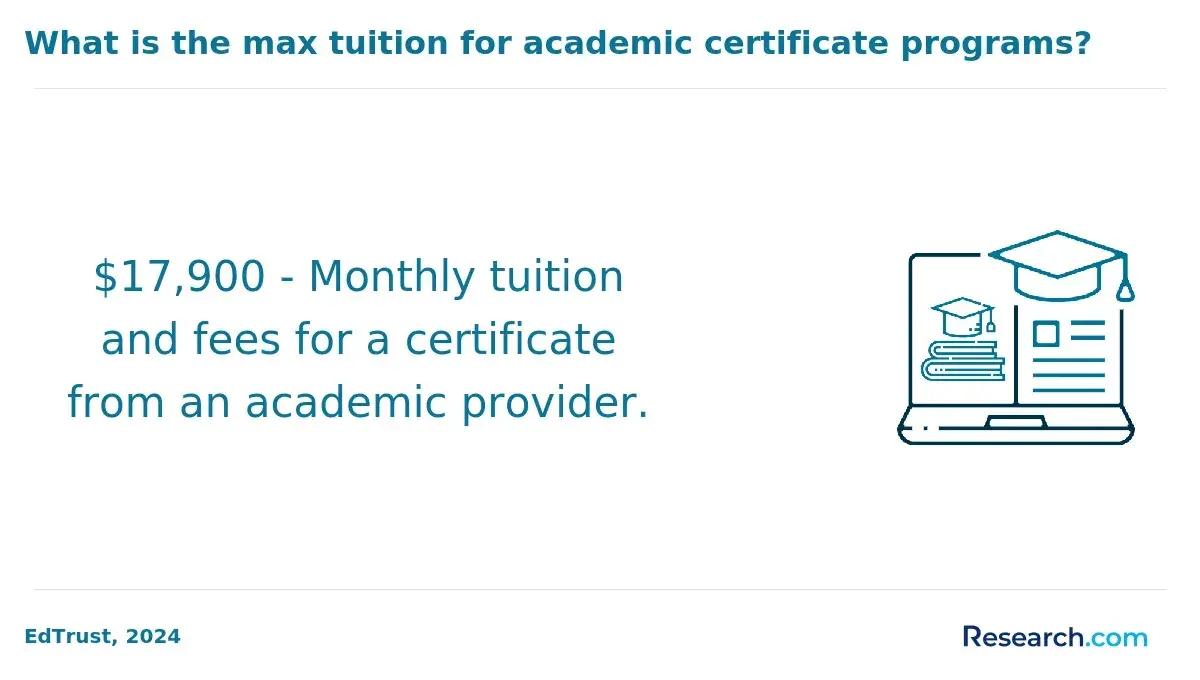
If you need a faster credential before committing to a full bachelor's degree, online certificate programs can help you test a field, build confidence, or qualify for entry-level work while improving your academic record.
Common mistakes include applying only to one school, ignoring transfer policies, assuming all online programs are self-paced, and choosing the easiest admission path without checking graduation requirements. The better approach is to compare admission, completion, cost, and career fit together.
Which accredited online schools accept a 2.0 GPA for bachelor's programs?
Several accredited online schools may be realistic for applicants with a 2.0 GPA, but the exact answer depends on applicant type, major, transfer credits, and current policy. Some schools explicitly use 2.0 thresholds for transfer admission, while others use open or holistic admission that may not focus heavily on GPA. Always verify the current catalog before applying.
The table below lists examples of school types and institutions commonly considered by lower-GPA online applicants. It is not a ranking, and it should be used as a starting point for verification:
| School or provider type | Examples to investigate | Best fit | Important caution |
| Adult-focused public online universities | University of Maryland Global Campus, Thomas Edison State University, Charter Oak State College | Transfer students, working adults, military-affiliated learners | Some programs have separate prerequisites or residency-credit rules |
| Competency-based universities | Western Governors University, University of Maine at Presque Isle YourPace, Purdue Global ExcelTrack options | Self-directed students with work experience or prior credits | Not every learner thrives without frequent live instruction |
| Regional public universities with online divisions | Fort Hays State University, Eastern Kentucky University, Lamar University, Arkansas State University | Students seeking lower-cost public options and structured online terms | Transfer GPA rules can differ from freshman rules |
| Large nonprofit online universities | Southern New Hampshire University, Liberty University, Bellevue University | Students who want many online majors and frequent start dates | Compare total cost, transfer acceptance, and major outcomes carefully |
The safest shortlist includes at least one public university, one adult-focused institution, and one program with strong transfer-credit acceptance. Ask admissions advisors to confirm whether your 2.0 GPA qualifies for full admission, conditional admission, or only non-degree enrollment.
How does choosing an online bachelor's program with a 2.0 GPA affect career options?
Choosing an online bachelor's program with a 2.0 GPA can still support strong career options, but the major and skill stack matter more than the admission threshold. Employers generally care about the completed accredited degree, relevant experience, technical skills, communication ability, internships, and certifications. A low incoming GPA is less important after graduation than whether the program helped you build marketable competencies.
For students targeting flexible careers, business, IT, cybersecurity, accounting support, healthcare administration, and project coordination can be especially practical. Some of these pathways also align with degrees for work from home jobs, but remote hiring is competitive and usually depends on experience, tools, and communication skills.
The table below connects common degree choices to career directions without implying guaranteed outcomes:
| Degree area | Possible entry-level direction | Skills employers often look for | When it may not be the best fit |
| Business | Operations assistant, sales analyst, HR coordinator, management trainee | Excel, communication, budgeting, reporting, customer insight | If you want a licensed technical profession without further credentials |
| IT | Help desk analyst, systems support, junior network technician | Troubleshooting, networking, cloud tools, ticketing systems | If you dislike constant technology changes |
| Healthcare administration | Clinic coordinator, patient services supervisor, insurance operations | Compliance, scheduling, billing, data privacy, healthcare workflow | If you want direct clinical practice without clinical training |
| Psychology | Case aide, HR support, behavioral health technician | Writing, empathy, research literacy, documentation | If you expect to become a licensed therapist with only a bachelor's degree |
| Criminal justice | Corrections officer, security manager trainee, court services support | Ethics, report writing, policy knowledge, conflict management | If your target role has strict background or physical requirements |
The best career strategy is to treat the bachelor's degree as one part of a larger plan. Add internships, projects, certifications, writing samples, or supervised experience before graduation so your resume shows current ability, not just completed coursework.
What are the typical curriculum and major options in online bachelor's degrees for lower GPAs?
Online bachelor's degrees for lower-GPA applicants typically fall into two broad categories: transfer-friendly completion programs and full four-year online programs. Completion programs are best for students who already have college credits, while full programs serve first-time or returning students who need general education and major coursework.
Most programs include a mix of the curriculum areas below. Understanding these categories helps you estimate workload and identify subjects that may require tutoring or extra time:
- General education courses: writing, communication, math, science, social science, humanities, and information literacy.
- Major core courses: required classes that define the degree, such as accounting for business, programming for computing, or criminology for criminal justice.
- Concentration or elective courses: focused choices that let you specialize in areas such as cybersecurity, public health, data analytics, or human resources.
- Capstone, internship, practicum, or project: final applied work that may involve research, workplace problems, field hours, or portfolio development.
Students who are unsure about a major should compare course maps, not just program titles. For example, a computer science degree may require more math than an applied IT degree, while an education licensure degree may require field placements that a non-licensure education studies degree does not.
If your long-term plan includes graduate school, keep GPA recovery in mind. Some students complete a bachelor's degree first and later compare a shortest masters program option, but graduate admission usually looks closely at bachelor's-level performance.
How do tuition, fees, and financial aid work for online bachelor's programs admitting 2.0 GPAs?
Tuition for online bachelor's programs varies widely by institution type, residency rules, transfer credits, fees, and course load. A program that looks affordable per credit can become expensive if it accepts few transfer credits or charges separate technology, assessment, or graduation fees.
College Board's 2024 data gives a useful benchmark: average published tuition and fees were $11,610 at in-state public four-year colleges and $43,350 at private nonprofit four-year colleges. Online students should use those numbers as context, not as a personalized estimate, because many online programs use separate per-credit pricing.
The table below shows cost factors that often affect the final amount a student pays:
| Cost factor | How it affects online students | Question to ask |
| Per-credit tuition | Multiplies by remaining credits after transfer evaluation | What is my total tuition after accepted credits? |
| Residency pricing | Some public universities charge different rates by state | Do online students pay in-state, out-of-state, or flat-rate tuition? |
| Transfer credit | Can reduce both cost and time to completion | How many of my credits apply to the degree, not just as electives? |
| Fees | Technology, course materials, proctoring, clinical, or graduation fees may add up | What mandatory fees are not included in tuition? |
| Pace | Part-time study lowers term cost but may extend total time | What is the cost difference between part-time and full-time enrollment? |
| Financial aid eligibility | Federal aid depends on accreditation, enrollment status, and FAFSA eligibility | Is this program eligible for federal student aid? |
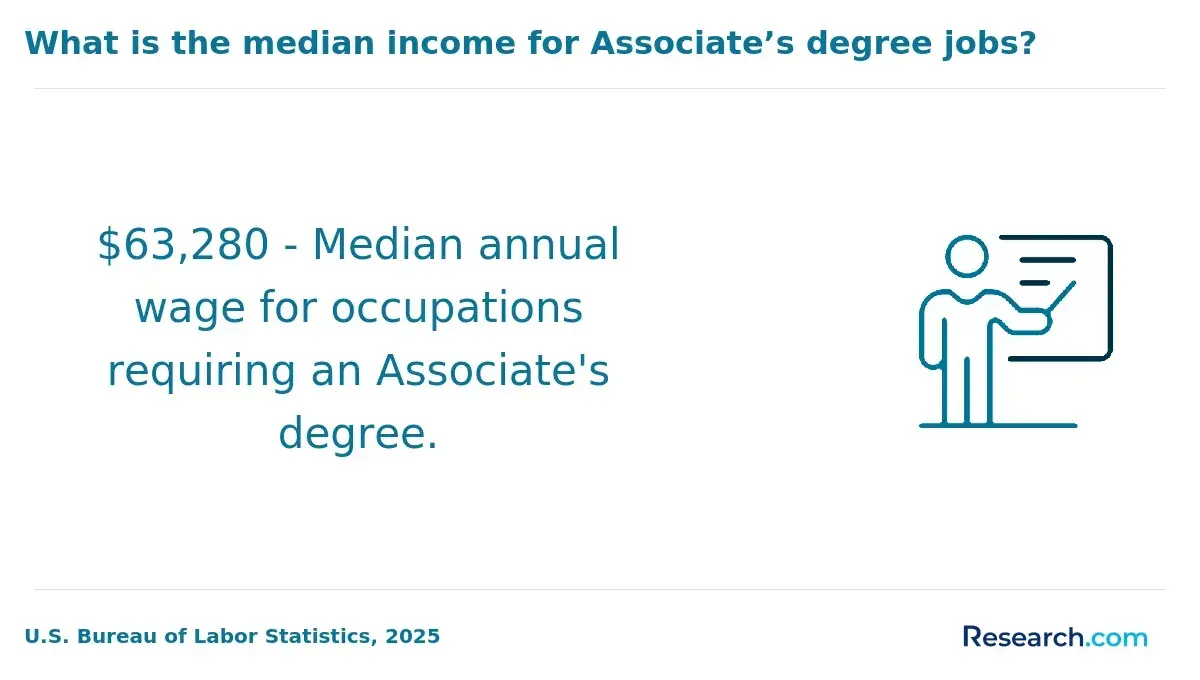
Federal Pell Grant maximums for the 2024-25 award year reached $7,395 for eligible students, which can significantly reduce out-of-pocket cost at lower-tuition institutions. Students should still avoid borrowing the maximum automatically; borrow only after comparing total program cost, expected completion time, and realistic career outcomes.
If graduate school is part of your long-term plan, cost discipline matters now. Students who later compare a cheapest masters degree online option will be in a stronger position if they keep undergraduate debt manageable.
How does regional and programmatic accreditation impact graduates from these online programs?
Accreditation is one of the most important checks for any online bachelor's program, especially for students with a 2.0 GPA who may be targeted by aggressive admissions marketing. Institutional accreditation means a recognized accreditor has reviewed the school's overall quality, student support, finances, and academic processes.
For most students, this is the minimum standard for federal financial aid, transfer credit, employer acceptance, and graduate school consideration.
Programmatic accreditation applies to specific fields. It is not required for every major, but it can be critical in regulated or technical fields. Nursing students should look for appropriate nursing accreditation and state board approval. Engineering students may need ABET accreditation for certain licensure or employer expectations. Education students should confirm state approval for teacher certification.
Use this checklist before enrolling in any online program:
- Confirm the school is institutionally accredited by an accreditor recognized by the U.S. Department of Education.
- Check whether your major needs programmatic accreditation for licensure, certification, or graduate admission.
- Ask whether credits from the program have transferred to other accredited colleges.
- Verify state authorization if you live outside the school's home state.
- For licensure fields, confirm requirements with your state board instead of relying only on admissions staff.
A major red flag is a school that promises quick admission, unusually fast graduation, and career outcomes without explaining accreditation, transfer policies, or licensure limits. Accreditation does not guarantee employment, but lack of proper accreditation can close doors later.
What are the salary expectations and job outlook for careers available with these degrees?
Salary expectations depend on the degree, occupation, location, experience, certifications, and industry. A bachelor's degree can improve access to professional roles, but it does not erase the need for skills, networking, and relevant experience.
For students admitted with a 2.0 GPA, the smartest ROI approach is to choose a major with clear job targets and build evidence of ability before graduation.
The table below uses BLS 2024 wage and outlook data to show broad U.S. labor-market context for careers connected to common online bachelor's majors:
| Career area | Related degree path | Median annual pay in 2024 | Projected job growth, 2023-2033 |
| Management occupations | Business, healthcare administration, IT management track | $122,090 | Faster than average overall for management occupations |
| Computer and information systems managers | IT, computer science, cybersecurity plus experience | $171,200 | Faster than average |
| Information security analysts | Cybersecurity, IT | $124,910 | Much faster than average |
| Registered nurses | Nursing | $93,600 | Faster than average |
| Probation officers and correctional treatment specialists | Criminal justice, psychology | $64,520 | Little or no change |
| Social and human service assistants | Psychology, human services, social services | $43,820 | Faster than average |
These figures should guide comparison, not guarantee individual results. For example, high-paying technology management roles usually require experience beyond the bachelor's degree, while entry-level support roles may pay less but create a path toward advancement.
Current trends also affect outcomes. AI and automation are increasing demand for workers who can analyze data, use software tools, document processes, and adapt quickly. That makes applied projects, internships, certifications, and writing ability valuable across majors, not just in technology fields.
How should students compare online versus campus-based bachelor's programs when they have a 2.0 GPA?
For a student with a 2.0 GPA, the online-versus-campus decision should be based on support, structure, cost, and program requirements rather than convenience alone.
Online learning can be excellent for working adults, parents, military students, and learners who need flexible scheduling. Campus learning may be better for students who need face-to-face accountability, labs, clinical placements, or frequent tutoring.
The table below summarizes the practical trade-offs to consider before choosing a format:
| Factor | Online bachelor's program | Campus-based bachelor's program |
| Schedule | More flexible; often asynchronous or evening-friendly | More fixed class times and commuting requirements |
| Academic support | Depends heavily on virtual advising, tutoring, and instructor response time | May offer easier access to in-person tutoring and faculty office hours |
| Cost | May reduce commuting and housing costs, but fees vary | May offer local scholarships, campus jobs, or lower in-district options |
| Accountability | Requires self-management and strong time planning | Provides more built-in structure and peer presence |
| Hands-on requirements | Can be limited or arranged locally, depending on the major | Often stronger for labs, studios, clinicals, and field placements |
| Networking | Requires intentional participation in virtual events and projects | More informal networking through campus activities and local employers |
Online is usually better if you are employed, have transfer credits, need flexible pacing, or live far from campus. Campus may be better if your previous GPA reflects weak study habits, poor attendance, or difficulty learning independently.
Before enrolling, ask each school the same decision-focused questions: How many credits will transfer? What GPA must I maintain? What happens if I fail a course? Are tutoring and advising available outside business hours? What career services are offered to online students? These answers matter more than marketing claims.
Other Things You Should Know About
Yes, many accredited online bachelor's programs consider applicants with a 2.0 GPA, especially transfer-friendly, adult-focused, or conditional-admission programs. Selective majors may require higher GPAs.
Admission GPA alone does not automatically disqualify you from federal aid, but you must attend an eligible accredited school and maintain satisfactory academic progress after enrolling.
Sometimes, but not always. Online programs may be more flexible for adult learners, yet nursing, education, engineering, and technical programs can still have strict GPA, prerequisite, or licensure requirements.
The best major is one that matches your strengths and career goals. Business, IT, healthcare administration, psychology, and criminal justice are often accessible, while nursing and engineering require more careful GPA and prerequisite planning.
References
- The top five undergraduate programs to launch online | EAB https://eab.com/resources/blog/adult-education-blog/online-undergraduate-programs-to-launch/
- Top 20 Online Universities in the USA https://www.euroamerican.eu/top-20-online-universities-in-the-usa
- Lower Bars, Higher College GPAs https://www.educationnext.org/lower-bars-higher-college-gpas-how-grade-inflation-boosting-college-graduation-rates/
- 50+ Scholarships & Grants for Study Abroad in 2025 | Go Overseas https://www.gooverseas.com/blog/study-abroad-scholarships-grants
- Best Accredited Online Universities in 2025 https://www.study.eu/article/best-accredited-online-universities
- Financial Aid Guide for Online College Students | Onlinedegrees.com https://www.onlinedegrees.com/degree360/student-loans-scholarships/
- New Pathways to a College Degree: How Transfer Credits Save Time https://www.uagrantham.edu/blog/transfer-college-credits-online-pathways-degree/
- List of Accredited Online Bachelor's Degrees https://www.onlineu.com/degrees/bachelors
- Top 2.0 GPA Scholarships to Apply for in December 2025 https://bold.org/scholarships/by-type/merit-based/2.0-gpa-scholarships
- Can You Get Financial Aid for Online College? Finding Out https://beal.edu/can-you-get-financial-aid-for-online-college/