2027 Best Bachelor's Degree Programs With Generous Transfer Credit Policies

Co-Founder and Chief Data Scientist
If you have college credits, military training, professional certifications, or unfinished coursework, the smartest bachelor's program may be the one that helps you avoid retaking what you already know. Most bachelor's degrees require about 120 credits, so policies that accept up to 90 transfer or prior-learning credits can materially change cost and graduation time. College Board's 2024-25 pricing shows public four-year in-state tuition and fees average $11,610, making every accepted credit financially meaningful.
This guide helps transfer students, working adults, and degree completers compare fields, formats, credit rules, costs, and career outcomes.
Key Things You Should Know
- Transfer-friendly bachelor's completion programs often allow up to 90 credits toward a 120-credit degree, but most still require a school-specific residency minimum, commonly the final 30 credits.
- Cost savings depend on the school's tuition rate: College Board reports 2024-25 average tuition and fees of $11,610 at public four-year in-state institutions and $43,350 at private nonprofit four-year institutions.
- ROI varies by major: BLS 2024 wage data shows computer and IT occupations have a median annual wage above $100,000, while licensed fields such as nursing and education require extra state-specific checks.
Top 10 Best Bachelor's Degree Programs With Generous Transfer Credit Policies
Business Degrees
Business administration, management, accounting, finance, and marketing are among the most transfer-friendly bachelor's options because many lower-division general education and elective credits apply broadly. These programs fit students with associate degrees, military leadership training, or workplace management experience. Look for AACSB, ACBSP, or IACBE business accreditation if employer recognition matters. BLS 2024 data places the median annual wage for business and financial occupations at $80,920, but outcomes vary by specialization, experience, and location. Accounting and finance tracks are more structured than general management, so verify prerequisite sequencing before transferring.
Healthcare Degrees
Healthcare administration, health sciences, public health, and allied health leadership degrees can be excellent bachelor's completion choices for students with clinical coursework or healthcare certificates. They usually accept more transfer credit than pre-licensure clinical programs because they focus on management, systems, compliance, and population health. Students considering credential add-ons can compare online certification programs alongside degree plans. Choose this path if you want supervisory, administrative, or nonclinical healthcare roles; choose a licensure-specific program if your goal is direct clinical practice.
Information Technology Degrees
Information technology bachelor's programs are often generous with transfer credits because they combine general education, applied computing, project management, networking, cloud systems, and security fundamentals. They fit students with associate degrees, vendor certifications, help desk experience, or military technical training. BLS 2024 data reports a $105,990 median annual wage for computer and information technology occupations, reflecting strong demand but not guaranteed individual earnings. Ask whether CompTIA, Cisco, AWS, Microsoft, or other ACE-reviewed credentials can convert to credit, and confirm how recently technical coursework must have been completed.
Computer Science Degrees
Computer science degrees can accept substantial general education transfer credit, but major credits are usually more tightly reviewed because math, algorithms, data structures, and programming sequences build on each other. They are best for students targeting software engineering, data, AI, systems, or graduate study. Students with older programming credits should ask about currency rules, placement exams, and portfolio review. Compared with IT, computer science is usually more theoretical and math-intensive, so it may take longer if calculus, discrete math, or core CS prerequisites do not transfer cleanly.
Cybersecurity Degrees
Cybersecurity bachelor's programs can be transfer-friendly when they recognize IT coursework, military cyber training, security certifications, and prior learning assessments. The strongest programs map courses to practical domains such as networks, risk management, cloud security, digital forensics, and incident response. Check for NSA Center of Academic Excellence designation when available, but do not treat it as a substitute for institutional accreditation. This degree fits students seeking security analyst, governance, or cyber operations roles; students new to computing may need foundational networking and operating systems courses before upper-division cyber work.
Psychology Degrees
Psychology bachelor's degrees usually accept many general education and elective credits, making them flexible for transfer students. The major works well for students interested in human behavior, research, social services, HR, user experience, or graduate study. However, a bachelor's degree alone does not qualify someone to practice as a licensed psychologist, counselor, or therapist. Students should verify statistics, research methods, and lab requirements because these can affect graduation timing. Psychology is most valuable when paired with internships, data skills, human services experience, or a clear graduate-school plan.
Nursing Degrees
Nursing transfer policies vary sharply by program type. RN-to-BSN programs are usually highly transfer-friendly for licensed registered nurses because associate nursing coursework and clinical experience may apply directly. Pre-licensure BSN programs are less flexible because clinical hours, state board rules, and cohort sequencing limit transferability. BLS 2024 data reports a $93,600 median annual wage for registered nurses, but licensure, region, shift type, and specialty affect pay. Before enrolling, confirm state board approval, clinical placement responsibility, NCLEX eligibility, and whether previously completed science courses are still valid.
Education Degrees
Education bachelor's degrees can accept general education transfer credits, but teacher licensure tracks are less flexible than non-licensure education studies programs. Student teaching, background checks, field placements, and state-approved coursework often must follow a specific sequence. This degree fits students who want classroom teaching, instructional support, early childhood roles, or education administration pathways. If you plan to teach, verify that the program leads to licensure in your state, not just a bachelor's degree. Transfer students should also ask whether prior classroom aide or substitute teaching experience can support admission or field requirements.
Criminal Justice Degrees
Criminal justice bachelor's programs often accept police academy training, military experience, corrections training, associate degrees, and general education credits. The major fits students pursuing law enforcement, corrections, probation, emergency management, homeland security, or policy roles. It is generally more transfer-flexible than forensic science, which may require more lab-based coursework. Students should compare curriculum focus carefully: leadership, criminology, cybercrime, and public administration tracks lead to different outcomes. Background requirements for public safety careers vary, so a degree alone does not override agency hiring standards or state certification rules.
Engineering Degrees
Engineering bachelor's degrees are usually the least flexible transfer option because calculus, physics, labs, and ABET-aligned engineering sequences must match closely. Students with associate engineering coursework should prioritize schools with formal articulation agreements. An engineering technology degree may accept more applied technical credit than a traditional engineering degree, but it can lead to different licensing and career options. If professional engineer licensure is a long-term goal, confirm ABET accreditation and state board rules before enrolling. Expect a longer timeline if prerequisite math or lab science credits do not transfer exactly.
How do generous transfer credit policies work for bachelor's degree completion students?
Generous transfer credit policies let students apply previously completed learning toward a new bachelor's degree, reducing repeated coursework. The three most important terms are transfer credit, which usually means credits earned at another accredited college; prior learning assessment, which evaluates college-level learning from work, military, exams, portfolios, or certifications; and residency requirement, which is the minimum number of credits you must complete at the school awarding the degree.
Most bachelor's degrees require about 120 credits. A generous program may accept up to 75, 90, or sometimes more credits, but acceptance is not automatic. Schools decide whether credits count as general education, electives, major requirements, or unused excess credits.
The practical difference matters. A student transferring 60 credits may be halfway done on paper, but a student transferring 60 credits that do not match degree requirements may still need several additional terms. The best programs provide an official degree audit before enrollment so you can see exactly what remains.
What should you look for in accredited bachelor's programs that accept many transfer credits?
Accreditation is the first filter. Choose an institution accredited by an agency recognized by the U.S. Department of Education or CHEA, then check whether your major requires programmatic accreditation, such as ABET for engineering, CCNE or ACEN for nursing, CAEP for some educator preparation programs, or business-specific accreditation for certain employer or graduate-school goals.
The table below summarizes the program features that matter most for transfer students. Use it to compare schools beyond advertising claims about accepting "up to" a certain number of credits.
| Feature to compare | Why it matters | Best sign | Red flag |
| Maximum transfer credit | Shows how much previous coursework may count toward the degree | Clear cap by program, such as up to 90 credits toward a 120-credit degree | Large advertised cap but no explanation of how credits apply |
| Official transcript evaluation | Prevents surprises after enrollment | Written degree audit before committing | Only verbal estimates from admissions |
| Major-credit transfer rules | Determines whether prior courses shorten the major, not just electives | Course equivalency guide or department review | Most credits transfer only as free electives |
| Prior learning assessment | Can convert documented experience into academic credit | Published fees, rubrics, and credit limits | No written PLA policy |
| Residency requirement | Determines the minimum credits still owed at the institution | Transparent final-credit requirement | Residency rule disclosed late |
After accreditation, the best transfer-friendly programs are the ones that show you the remaining path in writing. Ask for a degree map that separates completed credits, pending credits, major requirements, electives, and credits that were denied.
How do online bachelor's programs compare to on-campus options for transfer students?
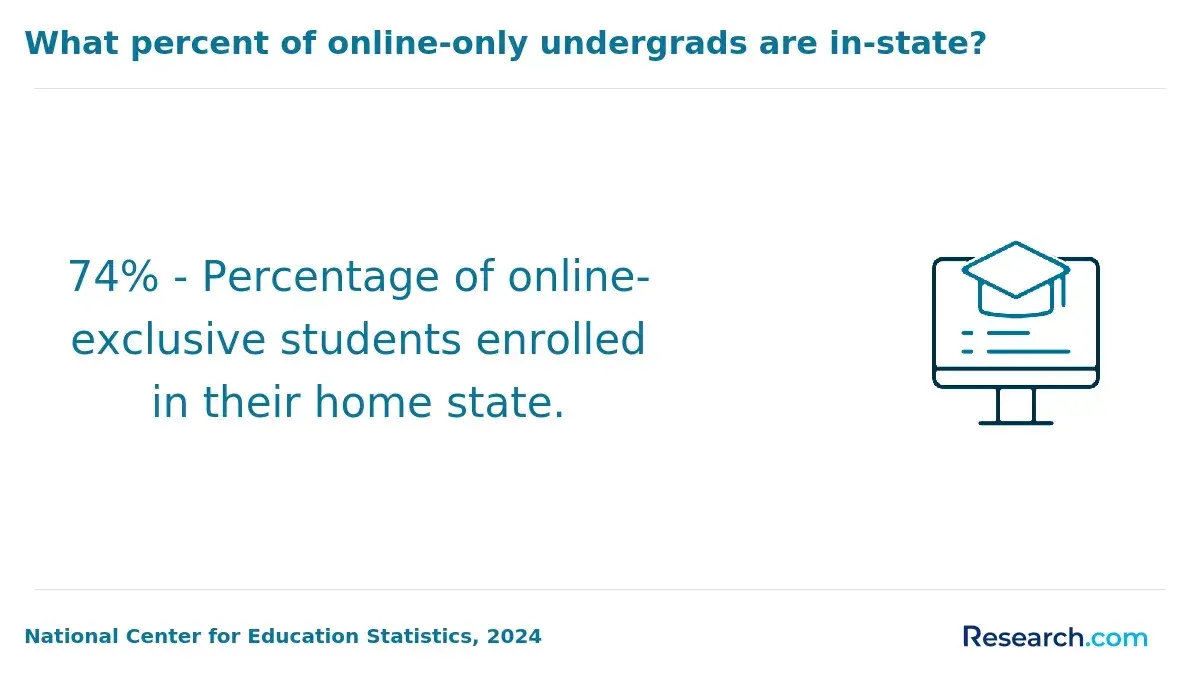
Online bachelor's completion programs are often more practical for transfer students because they are built around adult learners, asynchronous courses, shorter terms, and rolling start dates. On-campus programs may offer stronger local networking, labs, campus advising, and in-person support, which can matter for licensure, engineering, science, nursing, and education placements.
The table below compares online and campus formats from a transfer student's point of view. The best choice depends less on prestige and more on schedule, remaining requirements, support quality, and whether your program has clinical, lab, or field-placement needs.
| Comparison point | Online bachelor's completion | On-campus bachelor's completion |
| Best fit | Working adults, parents, military students, and students with many completed credits | Students needing labs, local internships, structured schedules, or campus resources |
| Transfer flexibility | Often designed for large credit transfers and adult learners | Varies widely by department and course availability |
| Scheduling | More likely to offer asynchronous or accelerated terms | Often follows semester schedules and set meeting times |
| Support needs | Requires self-direction and proactive advising | Provides more face-to-face access but less schedule flexibility |
| Licensure considerations | Must verify state authorization and placement rules | May align more closely with local state requirements |
If flexibility is your top priority, a self-paced bachelor's degree online can be useful, but only if the school still provides strong advising, clear deadlines, and an official credit evaluation. Self-paced does not mean easier; it means the program shifts more time-management responsibility to you.
What types of prior learning and experience can count toward bachelor's degree transfer credits?
Prior learning can lower the number of courses you need, but it must be documented and evaluated against college-level outcomes. Schools vary widely in what they accept, how many credits they award, and whether those credits apply to the major or only to electives.
These are the most common forms of prior learning that may count toward a bachelor's degree. Review each category with the registrar or transfer office before assuming it will reduce your remaining credits.
- Previously completed college courses from regionally or nationally accredited institutions, subject to grade minimums and course equivalency rules.
- Associate degrees covered by articulation agreements, especially AA, AS, AAS, and transfer-pathway degrees aligned with the bachelor's major.
- Military training evaluated through ACE recommendations, Joint Services Transcripts, Community College of the Air Force credits, or service-specific education records.
- Standardized exams such as CLEP, DSST, AP, or IB, depending on school policy, minimum scores, and whether exam credits meet degree requirements.
- Professional certifications, apprenticeships, corporate training, public safety academies, or technical credentials reviewed through ACE, NCCRS, or a school's internal faculty process.
- Portfolio-based prior learning assessment, where you document college-level knowledge through work samples, reflective essays, supervisor verification, and mapped learning outcomes.
The biggest mistake is assuming "accepted credit" and "useful credit" are the same thing. A school may accept a course onto your transcript but apply it only as an elective, which may not shorten the time to graduation if your elective space is already full.
How do admission requirements differ for transfer students in generous credit-accepting programs?
Transfer admissions usually focus less on high school records and more on college performance, completed credits, prerequisites, and good academic standing. Requirements are often more flexible for adult degree-completion programs, but selective majors can still require specific grades, course sequences, background checks, or licensure-related prerequisites.
Before applying, follow this sequence to avoid paying application fees for programs that will not honor your credits effectively:
- Collect official transcripts from every college attended, even if the credits are old or the grades were poor.
- Request military, certification, exam, or training records if you want prior learning reviewed.
- Ask whether the school provides an unofficial pre-evaluation before admission and an official evaluation after acceptance.
- Confirm the minimum transferable grade, because some schools accept only courses completed with a C or higher for major requirements.
- Check whether your intended major has separate admission standards beyond general university admission.
- Ask how academic probation, repeated courses, withdrawals, or prior financial holds may affect admission and credit posting.
Do not rely only on an admissions representative's estimate. The registrar, department chair, transfer credit office, or official degree audit system usually determines how credits actually apply.
How long does it take to finish a bachelor's degree when maximizing transfer and PLA credits?
Completion time depends on how many credits apply to the degree, how many courses you can take per term, whether the program offers year-round terms, and whether prerequisites are available when you need them. A generous transfer cap helps, but course sequencing can still slow progress in nursing, education, engineering, computer science, and laboratory-based programs.
The table below shows realistic timeline ranges based on common credit-transfer scenarios. These are planning estimates, not promises, because every school applies credits differently.
| Credits that apply toward the degree | Approximate credits remaining | Typical full-time timeline | Typical part-time timeline | Important caveat |
| 90 credits | 30 credits | About 1 year | About 18 to 24 months | Only realistic if remaining courses are offered frequently and prerequisites are complete |
| 75 credits | 45 credits | About 15 to 18 months | About 2 to 3 years | Common for students with many electives but some missing major courses |
| 60 credits | 60 credits | About 2 years | About 3 to 4 years | Typical for associate degree holders whose credits align well |
| 30 credits | 90 credits | About 3 years | About 4 or more years | May be better to complete lower-cost community college credits first if allowed |
To shorten your timeline safely, prioritize courses that unlock later requirements, ask whether summer terms are available, and avoid overloading your schedule if you work full time. Finishing faster only helps if you can maintain the grades required for financial aid, licensure, or graduate admission.
How much do bachelor's completion programs cost and how can transfer credits lower tuition?
Transfer credits lower cost by reducing the number of credits you must buy from the degree-granting school. The savings can be substantial because tuition is usually charged per credit or per term, and bachelor's completion students may also avoid repeated fees, textbooks, commuting costs, and opportunity costs from additional semesters.
Recent national pricing data gives useful context for comparing programs, although your actual cost depends on residency, aid, tuition discounts, and credit acceptance. College Board reports these 2024-25 published tuition and fee averages for U.S. four-year institutions:
- $11,610 for public four-year in-state tuition and fees
- $30,780 for public four-year out-of-state tuition and fees
- $43,350 for private nonprofit four-year tuition and fees
Those figures show why an official credit evaluation matters before enrollment. At a school charging by the credit, 30 accepted credits can represent a full year of coursework you may not need to repeat, but savings shrink if credits transfer only as unused electives or if the program has high mandatory fees.
The table below lists cost factors transfer students should compare. It is designed to help you identify the real net price, not just the advertised tuition rate.
| Cost factor | How it affects transfer students | Question to ask |
| Per-credit tuition | Determines the value of each accepted transfer credit | What is the tuition rate for my program and residency status? |
| Residency minimum | Sets the minimum number of credits you must still pay for | How many credits must I complete at your institution? |
| PLA fees | Can be cheaper than tuition but still adds cost | What does portfolio, exam, or certification review cost? |
| Technology and course fees | May increase online or major-specific costs | Are fees charged per course, per term, or per credit? |
| Financial aid eligibility | Depends on enrollment intensity and satisfactory academic progress | How will transfer credits affect aid limits and completion pace? |
If you mainly need a fast credential for a promotion, compare the degree with quick certifications that pay well. A certification can be cheaper and faster, but it usually does not replace a bachelor's degree when employers, graduate schools, or licensure boards require one.
What careers and salaries can you expect after completing a transfer-friendly bachelor's degree?
Career outcomes depend on major, prior experience, internships, location, industry, and whether the role requires licensure or certification. A transfer-friendly bachelor's degree is often most valuable for adults who already have work experience but need the degree to qualify for promotion, management tracks, graduate school, or jobs with bachelor's screening requirements.
The table below compares common bachelor's completion fields with related career directions and current U.S. wage context from BLS 2024 occupational data. Use it as a labor-market snapshot, not as a salary promise.
| Degree field | Common roles | Useful skills | 2024 wage context |
| Business | Operations manager, financial analyst, HR specialist, project coordinator | Budgeting, analytics, communication, leadership | Business and financial occupations reported a median annual wage of $80,920 |
| Information technology and computer science | Software developer, systems analyst, network administrator, data analyst | Programming, cloud tools, troubleshooting, systems thinking | Computer and IT occupations reported a median annual wage of $105,990 |
| Nursing and healthcare | Registered nurse, healthcare manager, care coordinator, public health specialist | Clinical judgment, compliance, patient communication, data literacy | Registered nurses reported a median annual wage of $93,600 |
| Education | Teacher, instructional coordinator, education program specialist | Instruction, assessment, classroom management, curriculum planning | Pay varies heavily by state, district, licensure, and collective bargaining rules |
| Criminal justice | Police officer, corrections supervisor, probation officer, emergency management specialist | Report writing, ethics, public safety procedure, conflict resolution | Protective service wages vary widely by agency, overtime, and rank |
Students comparing majors by earning potential can use Research.com's guide to highest paying jobs as a broader benchmark. Still, the best degree is not always the highest-paying major; it is the one that matches your existing credits, career target, licensing needs, and tolerance for additional coursework.
How can you verify credit transfer policies, articulation agreements, and state licensing impacts?
Verification protects you from the most expensive transfer-student mistakes: enrolling before credits are officially evaluated, choosing a program that does not meet licensure rules, or assuming an articulation agreement applies to your exact catalog year and major. Policies can change, and state licensing boards may treat online, out-of-state, or alternative clinical-placement programs differently.
Use these steps before you commit to a school. They help turn marketing claims into written evidence you can compare.
- Check institutional accreditation through recognized accreditation databases and confirm the school is eligible for federal financial aid if you plan to use aid.
- Ask for the transfer credit policy in writing, including maximum credits, minimum grades, age limits for coursework, residency requirements, and appeal procedures.
- Request an official or near-final degree audit showing exactly which credits meet general education, major, elective, and graduation requirements.
- Review articulation agreements only if they match your sending school, completed degree, major, catalog year, and intended bachelor's program.
- For licensed fields, contact the relevant state board or agency to confirm whether the program meets education requirements in the state where you plan to work.
- Save emails, degree audits, catalog pages, and advisor notes so you have documentation if policies are applied inconsistently later.
Be cautious if a school promises maximum transfer credit before seeing your transcripts, pressures you to enroll before an evaluation, will not identify who makes credit decisions, or cannot explain whether credits apply to your major. A transfer-friendly program should make your remaining path clearer, not more confusing.
Other Things You Should Know About
A generous policy typically accepts a large share of a 120-credit bachelor's degree, often up to 75 or 90 credits. The key is not just the maximum number accepted, but whether those credits apply to required courses in your degree plan.
Yes, many online bachelor's completion programs are designed for community college transfer students. The smoothest transfers usually happen when the schools have an articulation agreement or when your associate degree matches the bachelor's major.
General education credits often remain usable for many years, but technical, science, nursing, computer science, and major-specific courses may have time limits. Always ask whether older credits satisfy current degree requirements.
It can be worth it if the program accepts enough credits to reduce cost and time, aligns with your career goal, has proper accreditation, and meets any licensure requirements. It may not be worth it if most credits transfer only as electives or the degree does not support your intended career path.
References
- Best Online Colleges for Working Adults [2026] https://www.straighterline.com/blog/degree-completion-best-online-colleges-for-working-adults
- Common Questions https://utahtransferguide.org/Common-Questions
- Glossary of Terminology in Prior Learning Recognition https://academyone.com/glossary
- 5 Common Challenges in Credit Transfer Evaluation (And How to Solve Them) https://www.stellic.com/resources/transfer-credit-evaluation
- Top Online Schools That Accept Transfer Credits https://www.edvisorly.com/student-guides/online-schools-that-accept-transfer-credits
- Best Online Universities With Generous Transfer Credit Policies https://www.collegetransitions.com/blog/best-online-universities-with-generous-transfer-credit-policies/
- What Are University Credits and How Do They Transfer? - Cyprus West University https://www.cwu.edu.tr/what-are-university-credits-and-how-do-they-transfer/
- Findings (Beyond Transfer) - Public Agenda https://publicagenda.org/resource/beyond-transfer/findings/
- The Importance of Understanding Transfer Credit Policies https://www.sophia.org/blog/higher-education/understanding-transfer-credit-policies/