2027 Best Online Undergraduate Degrees With Credit for Work Experience

Co-Founder and Chief Data Scientist
Many adults have college-level skills but no degree to show for them. Online undergraduate programs with credit for work experience can turn documented training, licenses, military learning, and professional accomplishments into academic credit. BLS 2024 annual data shows workers with a bachelor's degree had median weekly earnings of $1,543, compared with $1,057 for those with some college but no degree.
This guide helps working adults, military learners, transfer students, and career changers compare degree options, understand prior learning assessment, avoid weak programs, and choose a path that saves time without sacrificing credibility.
Key Things You Should Know
- Work experience credit usually applies to documented college-level learning, not job tenure alone; schools may evaluate portfolios, military transcripts, licenses, employer training, ACE recommendations, CLEP, DSST, or challenge exams.
- A typical bachelor's degree requires about 120 credits, so accepted prior learning can reduce tuition and completion time, but schools often set residency rules that require students to complete a minimum number of credits through that institution.
- College Board's 2024 pricing data reported average published tuition and fees of $11,610 for in-state public four-year colleges and $43,350 for private nonprofit four-year colleges, making accepted transfer and prior learning credit a major cost-control tool.
Top 10 2026 Best Online Undergraduate Degrees With Credit for Work Experience
Business Degrees
Business is one of the strongest fits for work experience credit because management, sales, accounting support, operations, HR, entrepreneurship, and project coordination often produce assessable learning. Online business administration, management, marketing, finance, and accounting programs may accept corporate training, professional certifications, military leadership courses, or portfolio evidence.
This path fits adults seeking promotion, supervisory roles, or a broad credential. Students aiming for CPA licensure should verify accounting credit rules carefully because state boards may require specific coursework, not just elective credit.
Healthcare Degrees
Healthcare administration, health sciences, and public health programs may award credit for clinical certifications, allied health training, military medical training, compliance work, or healthcare management experience. These degrees fit medical assistants, billing specialists, EMTs, pharmacy technicians, and department coordinators who want nonclinical leadership or administrative roles.
BLS projections released in 2024 show strong long-term demand across healthcare-related occupations, but licensure-based roles vary by state. Students should confirm whether prior credit applies to major requirements, electives, or only general education.
Information Technology Degrees
Online IT degrees often work well for adults with help desk, systems support, networking, cloud, database, or technical operations experience. Schools may evaluate vendor certifications, employer training, bootcamp transcripts, military cyber training, or portfolio projects.
This option is practical for learners who want a bachelor's credential for analyst, administrator, or manager roles. Because technology changes quickly, programs that accept old experience should still require current coursework in cloud platforms, security, scripting, data, and systems architecture.
Computer Science Degrees
Computer science programs can be less flexible than IT programs because they often require sequenced math, programming, algorithms, systems, and theory courses. However, experienced software developers may receive elective or portfolio credit for documented programming, databases, web development, or software engineering work.
This degree fits learners targeting developer, data, AI, or graduate study pathways. Students should not assume bootcamp completion replaces core computer science requirements; reputable programs usually map experience to specific learning outcomes.
Cybersecurity Degrees
Cybersecurity degrees may award credit for military cyber operations, security operations center work, incident response, network defense, digital forensics, or recognized certifications. This degree fits adults pursuing roles such as security analyst, GRC analyst, cyber operations specialist, or vulnerability management analyst.
BLS occupational data published in 2024 continues to show information security analysts as a high-demand occupation. Students should prioritize programs aligned with hands-on labs, current threat environments, secure systems, risk management, and recognized security frameworks.
Psychology Degrees
Psychology programs may be more limited in awarding direct work experience credit because core courses involve research methods, statistics, ethics, developmental theory, and behavioral science foundations. Still, students with human services, crisis support, case management, coaching, or nonprofit experience may receive elective credit through portfolio review.
This degree fits learners interested in counseling-related graduate study, HR, social services, research support, or behavioral health administration. It does not qualify graduates to become licensed psychologists without advanced graduate education.
Nursing Degrees
Work experience credit in nursing depends heavily on licensure and program type. RN-to-BSN programs commonly recognize prior associate-degree nursing coursework and active RN licensure, while pre-licensure BSN programs usually have stricter clinical and state board requirements.
This path fits licensed nurses seeking advancement, leadership, public health, or graduate preparation. Applicants should confirm clinical placement policies, state authorization, accreditation, and whether the program meets requirements in the state where they plan to practice.
Education Degrees
Education degrees may award limited credit for paraprofessional work, childcare credentials, military training, or documented classroom support experience, but teacher licensure requirements are state-specific. Online education studies, early childhood education, and non-licensure programs are often more flexible than initial teacher certification pathways.
This degree fits teaching assistants, childcare workers, trainers, and career changers. Students seeking licensure should verify student teaching, field placement, testing, background check, and state approval requirements before enrolling.
Criminal Justice Degrees
Criminal justice is a strong prior learning credit field for police officers, corrections officers, military police, dispatchers, security professionals, probation support staff, and emergency management workers. Programs may evaluate academy training, FEMA coursework, military transcripts, professional certifications, and documented supervisory experience.
This degree fits learners pursuing advancement in law enforcement, public safety, investigations, corrections administration, or homeland security. Applicants should ask whether academy credit counts toward major requirements or only lower-division electives.
Engineering Degrees
Engineering degrees are usually the least flexible option for work experience credit because ABET-aligned curricula require rigorous sequences in calculus, physics, design, labs, and discipline-specific engineering courses.
Engineering technology programs may be more receptive to military technical training, manufacturing experience, CAD work, electronics, quality assurance, or industrial maintenance backgrounds. Students seeking professional engineer licensure should be especially careful because degree accreditation and state board rules can matter more than speed.
What are online undergraduate degrees that award credit for prior work experience?
Online undergraduate degrees that award credit for prior work experience are associate or bachelor's programs that evaluate learning gained outside a traditional college classroom. The key word is learning: schools do not normally award credit simply because someone worked for five or ten years. They award credit when the student can prove that the experience matches college-level course outcomes.
These programs are most useful for adult learners who have accumulated training, certifications, military education, leadership experience, technical skills, or industry knowledge. Credit may apply as general education, electives, lower-division major courses, or occasionally upper-division requirements, depending on the school and major.
The most common sources of work-related credit include several types of documented learning. Understanding these categories helps students estimate what may be accepted before they apply.
- Portfolio assessment: A faculty evaluator reviews essays, work samples, projects, supervisor documentation, and evidence that maps experience to course objectives.
- Professional certifications and licenses: Schools may award credit for credentials in IT, healthcare, public safety, business, trades, or other fields if they align with academic content.
- Military training: Colleges may review Joint Services Transcript or Community College of the Air Force records for recommended credit.
- Standardized exams: CLEP, DSST, and similar exams can help students prove subject mastery without retaking material they already know.
- Employer or industry training: Some workplace programs carry ACE or NCCRS credit recommendations, while others require institutional review.
How does earning credit for work experience in an online program actually work?
Earning credit for work experience in an online program usually begins after admission or transcript evaluation. The school determines whether prior learning is college-level, whether it duplicates existing transfer credit, and where it fits in the degree plan. The process can be faster for pre-evaluated certifications and slower for portfolios because faculty reviewers must assess evidence course by course.
Most schools follow a sequence like the one below. Students should ask admissions whether the evaluation happens before enrollment, after enrollment, or only after completing a prior learning assessment course.
- Request an unofficial transfer and prior learning review before committing to the program.
- Submit all college transcripts, military records, certification documentation, licenses, employer training records, and exam scores.
- Ask the school to identify which credits apply to general education, the major, electives, or free electives.
- If portfolio credit is available, gather work samples, project descriptions, supervisor verification, training materials, and reflective essays that prove college-level learning.
- Review the final degree audit to confirm remaining courses, residency requirements, fees, financial aid eligibility, and estimated completion time.
The biggest misunderstanding is assuming that a school's maximum credit policy equals the credit a student will personally receive. A college may accept a large number of transfer or prior learning credits in theory, but the final award depends on program requirements, course overlap, grades, accreditation rules, and recency policies.
Which accredited online colleges offer generous work experience credit policies?
Several accredited online colleges are known for serving adult learners and offering broad prior learning assessment options. "Generous" does not always mean "best," however. A program is only useful if accepted credit applies to the student's actual degree requirements and the credential is respected for the intended career path.
The table below compares common types of institutions and policy strengths to help students shortlist programs before speaking with admissions advisors.
| Institution or model | Typical prior learning strengths | Best fit | What to verify |
| Thomas Edison State University | Adult-focused transfer, exam, military, certification, and portfolio options | Working adults with many prior credits or documented professional learning | How credits apply to the major and upper-level requirements |
| Excelsior University | Flexible transfer and credit-by-exam pathways for adult learners | Military learners, healthcare workers, public service professionals, and transfer students | Program-specific limits and capstone or residency expectations |
| Charter Oak State College | Prior learning assessment, transfer-friendly degree completion, and adult learner advising | Students seeking broad degree completion options | Portfolio fees, documentation rules, and concentration requirements |
| University of Maryland Global Campus | Military-friendly policies, workplace learning review, and online adult programs | Military-affiliated students and experienced professionals | Whether training is pre-approved or requires individual review |
| Southern New Hampshire University | Transfer-friendly online bachelor's pathways and adult learner support | Students seeking structured online programs with broad major options | Limits on experiential credit and major-specific requirements |
| Purdue Global | Credit for eligible certifications, military training, exams, and experiential learning assessment | Career-focused adults in business, IT, criminal justice, health, and public service | Assessment costs and how prior learning affects financial aid pacing |
Students should confirm regional or institutional accreditation through recognized accrediting bodies and ask whether programmatic accreditation matters for their field. This is especially important in nursing, education, engineering, social work, and any field connected to licensure.
How do online programs verify and assess professional experience for academic credit?
Online programs verify work experience through documentation, not informal claims. A strong evaluation connects the student's experience to measurable learning outcomes, such as analyzing financial statements, configuring secure networks, applying healthcare compliance rules, supervising teams, or writing technical documentation.
Schools may use multiple assessment methods because different types of learning require different proof. Students can improve their chances by submitting organized, specific, and verifiable evidence.
- Official records: Transcripts, Joint Services Transcript records, licenses, certification score reports, and employer-issued training documentation carry more weight than self-written descriptions alone.
- Portfolio narratives: Students explain what they learned, how they applied it, and how it matches a specific college course.
- Work products: Approved examples may include reports, code samples, training manuals, budgets, project plans, policy documents, or presentations, with confidential information removed.
- Supervisor or professional verification: Letters can confirm responsibilities, dates, scope of work, and level of independence.
- Faculty review: Subject-matter experts determine whether the evidence meets college-level standards and whether it duplicates other credit.
A good prior learning process protects both the student and the institution. If a school awards large amounts of vague "life experience" credit without documentation, clear course equivalencies, or accreditation transparency, that is a red flag.
What admission requirements apply to students seeking work experience credit online?
Admission requirements for online undergraduate programs with work experience credit are usually similar to other degree programs. Applicants commonly need a high school diploma or GED, official transcripts from every prior college, an application, identification or residency information, and sometimes a minimum GPA for transfer admission.
Students seeking prior learning credit may need extra materials beyond standard admission documents. Before paying fees, ask the school whether the prior learning review is free, binding, preliminary, or completed only after enrollment. Applicants trying to reduce upfront costs can also compare schools that offer a free online college application.
For the strongest application and credit review, prepare the following documents before contacting schools.
- Official transcripts from all colleges attended, even if credits are old or grades were poor.
- Military transcripts, professional licenses, certification records, and exam score reports.
- A current resume that explains job titles, responsibilities, promotions, leadership duties, and technical skills.
- Training syllabi, completion records, apprenticeship documents, academy records, or employer learning materials.
- Questions about maximum transfer credit, residency requirements, portfolio fees, and whether credits apply to the major.
Licensure-track programs may have additional rules. Nursing, teacher preparation, engineering, counseling-related pathways, and some healthcare programs can require background checks, clinical hours, field placements, state authorization, or programmatic accreditation.
How do costs, financial aid, and time to completion change with work experience credit?
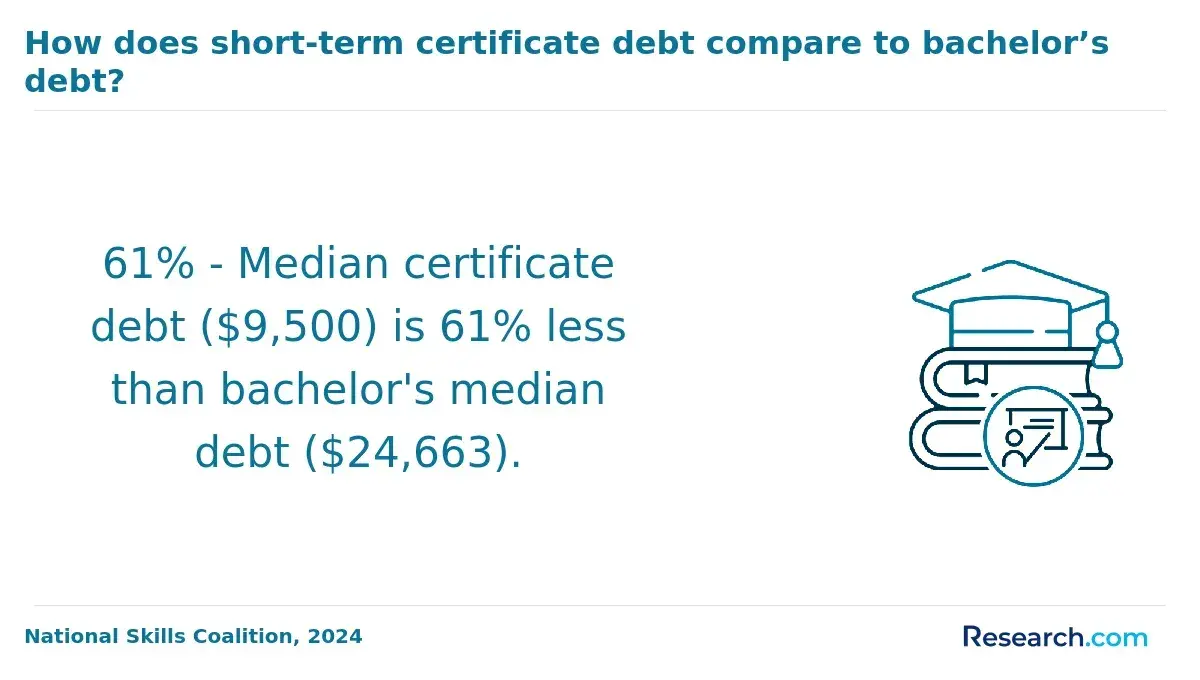
Work experience credit can reduce total cost when it replaces courses the student would otherwise pay to take. The savings depend on tuition per credit, assessment fees, the number of credits accepted, and whether the credits fit required categories. It can also shorten time to completion, but only if remaining courses are offered frequently enough and prerequisites do not block progress.
College Board's 2024 Trends in College Pricing reported average published tuition and fees of $11,610 for in-state public four-year colleges and $43,350 for private nonprofit four-year colleges. That gap shows why students should compare total program cost, not just brand name or speed. Adults prioritizing cost should also compare the cheapest online degrees alongside prior learning policies.
The table below summarizes the cost factors that matter most when comparing programs that award credit for work experience.
| Cost factor | How prior learning credit can change it | What to ask before enrolling |
| Tuition per credit | Accepted credit may reduce the number of paid courses | What is the total tuition for remaining credits after evaluation? |
| Portfolio or assessment fees | Assessment may cost less than tuition, but fees vary by school | Are fees charged per course, per portfolio, or per credit awarded? |
| Residency requirement | Students may still need to complete a minimum number of credits at the school | What is the minimum number of institutional credits required for graduation? |
| Financial aid eligibility | Federal aid usually applies to enrolled courses, not credits already awarded | Will prior credit affect full-time status, aid packaging, or satisfactory academic progress? |
| Time to completion | Accepted credits can shorten the degree plan if remaining courses are available | How often are required courses offered online? |
Federal Pell Grants can also affect affordability; the maximum Pell Grant for the 2024-25 award year is $7,395 for eligible students. Because aid depends on enrollment status, income, dependency status, and school participation, students should complete the FAFSA and request a program-specific aid estimate instead of relying on advertised tuition alone.
What majors and career paths benefit most from work experience credit in online degrees?
The majors that benefit most from work experience credit are usually applied fields where adults can document training, measurable responsibilities, and industry-recognized skills. Business, IT, cybersecurity, criminal justice, healthcare administration, RN-to-BSN nursing, public safety, and education support pathways are often better fits than highly sequenced lab, licensure, or theory-heavy majors.
Career goals should drive the choice of major. A fast degree is not helpful if it does not meet employer expectations, graduate admission requirements, certification prerequisites, or licensure rules. Students comparing a degree with shorter credentials can also review the best certifications for jobs to decide whether a certification, degree, or both best match their target role.
The strongest matches usually fall into a few practical categories. Use this list to connect experience with realistic degree and career outcomes.
- Supervisors and managers: Business administration, management, organizational leadership, human resources, or operations degrees can support advancement into coordinator, manager, analyst, or director-track roles.
- Technical workers: IT, cybersecurity, information systems, or computer science degrees may support systems, cloud, security, data, software, or technical management pathways.
- Healthcare workers: Health sciences, healthcare administration, public health, or RN-to-BSN programs can support care coordination, compliance, administration, quality improvement, or nursing leadership goals.
- Public service professionals: Criminal justice, homeland security, emergency management, or public administration-related programs can support advancement in law enforcement, corrections, emergency services, and public agencies.
- Education support workers: Education studies, early childhood education, or teacher preparation programs can help paraprofessionals and childcare workers move toward instructional, administrative, or licensure goals, depending on state rules.
How do online and campus programs differ in offering credit for prior learning?
Online and campus programs can both award prior learning credit, but online degree-completion programs are often designed more intentionally for adult learners. They may offer asynchronous courses, accelerated terms, year-round starts, and advisors who regularly evaluate transfer, military, certification, and portfolio credit.
The table below compares the practical differences that matter when deciding whether an online or campus format is the better fit.
| Comparison point | Online programs | Campus programs |
| Scheduling | Often asynchronous or evening-friendly, which helps full-time workers | May require fixed class times, commuting, or daytime attendance |
| Prior learning infrastructure | Adult-focused schools may have established PLA, military, and certification review teams | Policies may exist but be less central to the student experience |
| Hands-on requirements | May require local clinicals, fieldwork, labs, or proctored assessments for certain majors | Labs, studios, and field placements may be easier to coordinate in person |
| Networking | Can be strong through online cohorts, employer-based projects, and virtual career services | May offer more local employer events and face-to-face faculty access |
| Best fit | Working adults, military learners, caregivers, and students with previous credits | Students who need campus labs, structured schedules, or local licensure placements |
Online is not automatically easier, and campus is not automatically more respected. The better choice is the accredited program that fits the student's schedule, budget, learning style, career goal, and required hands-on experiences.
How can students evaluate reputable, accredited programs that grant work experience credit?
Students should evaluate programs in two stages: first, confirm that the school is legitimate and accredited; second, confirm that its prior learning policy actually helps with the chosen degree. A program that accepts many credits but places them only into unused electives may not save much time or money.
Use the following steps before enrolling. They are designed to prevent the most common mistakes adult learners make when trying to finish a degree quickly.
- Verify institutional accreditation through a recognized accreditor and check whether programmatic accreditation is needed for the field.
- Request a written degree audit showing accepted credits, remaining requirements, residency rules, and estimated completion time.
- Ask how portfolio, certification, military, exam, and employer training credits are evaluated and what fees apply.
- Confirm whether prior credits apply to general education, major requirements, upper-division coursework, or only electives.
- Review state authorization and licensure alignment if the degree leads to nursing, teaching, engineering, counseling-related work, or another regulated profession.
- Compare total cost after accepted credit, including technology fees, books, assessment fees, graduation fees, and repeated-course policies.
- Ask about career services, employer partnerships, internship support, and graduate school preparation if those matter for the next step.
If long-term plans include graduate study, ask whether the undergraduate program's accreditation and coursework will support admission later. Students eventually considering doctoral study can compare affordable online PhD programs after confirming that their bachelor's degree meets graduate prerequisites.
Red flags include promises of instant degrees, large credit awards for undocumented "life experience," unclear accreditation claims, pressure to enroll before seeing a degree audit, and refusal to explain transfer limits in writing. A reputable school will be transparent about what it can and cannot award.
Other Things You Should Know About
No. Accredited colleges generally do not award an entire bachelor's degree for work experience alone. You may receive credit for documented college-level learning, but you will still need to complete the school's required courses, residency credits, and graduation requirements.
Employers usually focus on whether the degree comes from an accredited institution and matches the role. Prior learning credit appears as part of the college record, but acceptance can vary for graduate schools, licensure boards, and highly regulated fields.
The fastest option is usually a transfer-friendly degree-completion program in a field related to your experience, such as business, IT, healthcare administration, criminal justice, or RN-to-BSN nursing. Speed depends on accepted credits, remaining requirements, course availability, and your weekly study time.
Not necessarily. Choose the school that applies the most useful credits toward your actual degree plan, has proper accreditation, fits your budget, and supports your career goal. A smaller credit award in the right major can be more valuable than many elective credits that do not shorten completion time.
References
- How Work Experience Can Help You Return to College - Athens State https://www.athens.edu/online-degree-completion-programs-working-adults/how-work-experience-can-help-you-return-to-college/
- College Credit for Your Work and Life Experience | University of Phoenix https://www.phoenix.edu/tuition-financial-aid/prior-learning-assessment.html
- Five Ways Online Distance Learning Saves You Money | News & Updates https://www.brightonsbm.com/news/five-ways-online-distance-learning-saves-you-money-0/
- Glossary of Terminology in Prior Learning Recognition https://academyone.com/glossary
- Recognition of Prior Learning and Credit Transfer https://www.brand-university.de/en/recognition-of-prior-learning-credit-transfer
- Turn Your Experience Into a Degree | Woolf RPL Credit Exemption https://landing.woolf.university/recognition-of-prior-learning
- Best Online Degree Programs for Working Adults https://www.scholaro.com/db/News/best-online-degree-programs-256