2027 Best Bachelor's Degree Programs for Remote Jobs

Co-Founder and Chief Data Scientist
Choosing a bachelor's degree for remote work now means balancing career flexibility, salary potential, accreditation, and the risk of automation. The U. S. Bureau of Labor Statistics American Time Use Survey shows that roughly one-third of employed people did some or all work at home on days they worked, making remote readiness a practical education goal rather than a perk. This guide is for students, transfer learners, career changers, and working adults comparing majors. You'll learn which bachelor's degrees fit remote and hybrid roles, what they cost, what skills matter, and how to avoid choosing a program that does not match your career goal.
Key Things You Should Know
- Computer, IT, cybersecurity, business, and data-heavy majors are the strongest bachelor's pathways for fully remote work because many roles use cloud tools, digital workflows, and measurable project outputs.
- BLS May 2024 data shows several remote-compatible occupations have strong salary potential, including software developers at a median of $133,080 and information security analysts at $124,910, though pay varies by experience, location, employer, and portfolio strength.
- Program quality matters more than delivery format: prioritize institutional accreditation, career-aligned coursework, transfer credit policies, internship or project options, and total cost, not just whether the degree is online.
Top 10 Best Bachelor's Degree Programs for Remote Jobs
Business Degrees
A bachelor's in business fits students who want remote-friendly roles in operations, marketing, finance, HR, analytics, sales enablement, or project coordination. Strong programs include accounting, data analysis, business communication, spreadsheet modeling, and project management. The degree is flexible, but it can be too broad unless you choose a concentration or build job-specific experience. BLS May 2024 data places the median wage for business and financial occupations at $80,920, making this a practical choice for students who want broad career mobility with remote or hybrid options.
Healthcare Degrees
Healthcare bachelor's degrees can support remote roles in health informatics, healthcare administration, medical coding management, quality improvement, insurance operations, patient access, and telehealth coordination. These programs suit students who want mission-driven work without always providing direct bedside care. Look for coursework in healthcare law, data systems, reimbursement, population health, and privacy rules. Fully remote clinical roles are less common at entry level, so students should verify whether a program prepares them for administrative, informatics, or licensed clinical pathways before enrolling.
Information Technology Degrees
An IT bachelor's degree is one of the clearest routes to remote work because employers often hire for cloud support, systems administration, technical support, network operations, and IT project roles. Good programs cover databases, networking, cybersecurity fundamentals, Linux or Windows administration, cloud platforms, scripting, and troubleshooting. This degree fits practical problem-solvers who like keeping systems reliable. It may be a better fit than computer science for students who prefer infrastructure, support, and implementation over advanced theory or heavy software engineering.
Computer Science Degrees
A bachelor's in computer science prepares students for software development, data engineering, quality assurance, machine learning support, and technical product roles. It is strong preparation for remote jobs because work is often code-based, project-based, and compatible with distributed teams. BLS May 2024 data lists software developers at a median wage of $133,080, but employers usually expect proof of skill through projects, internships, GitHub portfolios, or technical interviews. Students should choose programs with algorithms, software engineering, databases, cloud development, and team-based capstones.
Cybersecurity Degrees
Cybersecurity bachelor's programs prepare students for security analyst, risk management, incident response, governance, cloud security, and compliance roles. Remote opportunities are common in security monitoring, audit support, documentation, vulnerability management, and consulting, though some defense or government roles may require on-site work or clearance. BLS May 2024 data reports a $124,910 median wage for information security analysts. Choose programs that include labs, threat analysis, networking, scripting, digital forensics, and preparation for certifications such as Security+ or CISSP later in your career.
Psychology Degrees
A psychology bachelor's degree can support remote roles in user research, HR, case coordination, market research, behavioral health administration, training, and customer experience. It is not enough by itself for independent clinical practice, which usually requires graduate education and licensure. This major is best for students interested in human behavior, research methods, communication, and data interpretation. To improve remote employability, pair psychology with statistics, UX research, HR analytics, technical writing, or business coursework instead of relying on the major alone.
Nursing Degrees
A bachelor's in nursing can lead to hybrid or remote roles after clinical experience, including case management, utilization review, telehealth triage, nursing informatics, quality assurance, and insurance review. Entry-level nursing education usually includes in-person clinical requirements, even when lectures are online. BLS May 2024 data lists registered nurses at a median wage of $93,600. Students should check state board approval, NCLEX preparation, clinical placement support, and whether the program is designed for pre-licensure students or already licensed RNs completing a BSN.
Education Degrees
Education bachelor's degrees can support remote careers in online tutoring, instructional design support, curriculum development, education technology, student advising, corporate training, and virtual teaching. Public school teaching usually requires state licensure and supervised fieldwork, so online students must confirm that the program meets their state's requirements. For fully remote work, programs with learning technology, assessment design, digital content creation, and special education support may offer more flexibility than traditional classroom-only preparation.
Criminal Justice Degrees
A criminal justice bachelor's degree can support remote or hybrid work in compliance, investigations support, fraud analysis, emergency management planning, policy research, victim services coordination, and cybersecurity-adjacent risk roles. It is less consistently remote than IT or business, so students should choose concentrations carefully. Courses in data analysis, digital evidence, ethics, legal writing, and public administration improve flexibility. This degree fits students interested in systems, public safety, investigations, and policy, but direct law enforcement roles often require in-person academy training.
Engineering Degrees
Engineering bachelor's degrees can lead to hybrid roles in design, simulation, technical sales, quality assurance, project engineering, systems engineering, and software-adjacent product work. Fully remote options are most common in software, electrical, industrial, and systems-focused roles, while civil, mechanical, and lab-heavy work may require site visits. Students should prioritize ABET-accredited programs when licensure or traditional engineering practice matters. Remote-focused learners should look for CAD, modeling, data analysis, documentation, and collaborative engineering project experience.
What makes a bachelor's degree strong preparation for remote and hybrid careers?
A strong bachelor's degree for remote and hybrid careers does more than deliver lectures online. It teaches students how to produce measurable work, communicate asynchronously, use digital collaboration tools, solve problems independently, and document decisions clearly. Employers hiring remote workers often care about whether a graduate can manage deadlines without constant supervision, contribute to distributed teams, and show evidence of applied skill.
The strongest programs usually combine three kinds of preparation: a recognized academic credential, technical or analytical coursework, and portfolio-ready projects. The table below compares the features that matter most when judging whether a bachelor's program is actually remote-career aligned.
| Program feature | Why it matters for remote work | Best evidence to look for |
| Applied projects | Remote hiring often depends on proof of work, not just completed courses. | Capstones, case studies, coding projects, research reports, simulations, or client-based assignments |
| Digital collaboration | Remote teams rely on written updates, shared files, project boards, and video meetings. | Courses using collaborative platforms, peer review, team deliverables, and documented workflows |
| Career-specific concentration | A broad major may not signal a clear job target. | Tracks such as data analytics, cloud computing, accounting, cybersecurity, informatics, or instructional design |
| Accreditation and licensure alignment | Some fields require recognized approval before graduates can qualify for exams or licenses. | Institutional accreditation plus programmatic accreditation where applicable |
| Career services for online students | Remote learners still need internships, résumé help, interview practice, and employer connections. | Virtual career coaching, job boards, alumni access, and internship support |
Students should be cautious about programs that advertise "work from anywhere" outcomes without explaining the roles, required skills, employer expectations, or state licensing limits. Remote work is a job arrangement, not a separate occupation, so the degree still needs to prepare you for a real labor market.
Which online versus campus formats work best for students planning remote careers?
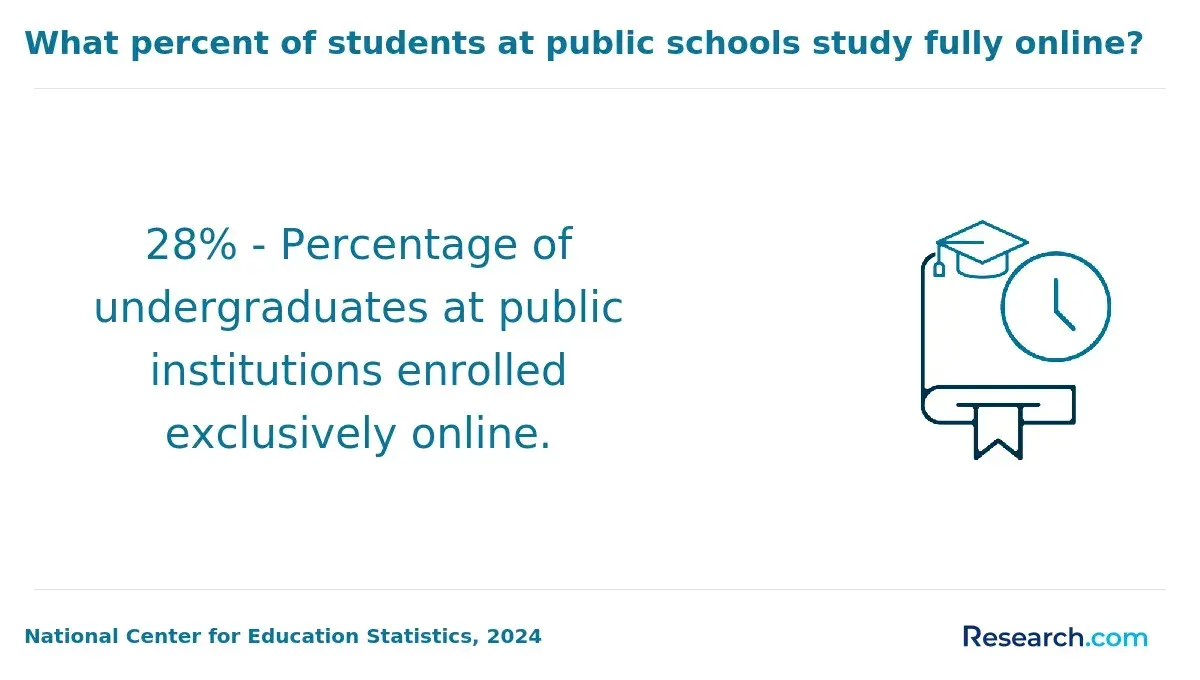
The best format depends on your schedule, discipline, major, and need for hands-on experience. Online bachelor's programs can be excellent for remote-career preparation because they mirror the communication habits of distributed teams: written instructions, digital submissions, virtual meetings, and independent time management. Campus programs may be better for students who need labs, in-person networking, structured routines, or local internship pipelines.
This comparison shows how common formats differ for students who want remote or hybrid careers after graduation.
| Format | Best fit | Main trade-off |
| Fully online asynchronous | Working adults, parents, military students, and learners who need schedule control | Requires strong self-management and may offer less real-time interaction |
| Fully online synchronous | Students who want remote access but prefer live classes and fixed meeting times | Less flexible across work shifts and time zones |
| Hybrid | Students in majors with labs, clinicals, studios, or local networking needs | Can limit geographic flexibility |
| Campus-based | Traditional-age students, lab-heavy majors, athletes, and learners who benefit from in-person support | Usually less convenient for full-time workers or students far from campus |
| Competency-based online | Experienced adults who can move quickly through material they already know | Not ideal for students who need frequent instructor guidance or cohort structure |
If your goal is fully remote employment, do not assume online is automatically better. A campus computer science program with strong internships may outperform a weak online program, while a well-designed online IT or business program may be ideal for a working adult building job-ready skills.
How do you choose an accredited bachelor's program that qualifies for remote-friendly jobs?
Accreditation is the first filter because it affects credit transfer, graduate school eligibility, employer recognition, licensure, and access to federal financial aid. In the U.S., students should look for institutional accreditation from an agency recognized by the U.S. Department of Education or the Council for Higher Education Accreditation. Some majors also need programmatic accreditation, such as ABET for many engineering programs, CCNE or ACEN for nursing, CAEP for educator preparation, or AACSB, ACBSP, or IACBE for some business schools.
Use a practical checklist before applying. These steps help you separate credible programs from programs that are merely convenient or aggressively marketed.
- Verify institutional accreditation through official accreditation databases, not only the school's marketing pages.
- Check whether the major needs programmatic accreditation or state approval for your target license or certification.
- Ask whether online students receive the same diploma wording, faculty access, library resources, and career services as campus students.
- Review transfer credit limits, residency requirements, and whether prior learning credit can reduce time to completion.
- Request outcome information tied to your major, such as internship access, certification pass rates, job placement definitions, and graduate school pathways.
- Confirm that required labs, practicums, student teaching, or clinical placements can be completed where you live.
Common red flags include vague accreditation claims, pressure to enroll immediately, unclear tuition pages, no faculty directory, no state authorization information for online students, and promises of guaranteed remote jobs. A legitimate program can explain its accreditation, costs, requirements, and career fit in plain language.
What majors and specializations most commonly lead to fully remote job opportunities?
The majors most commonly associated with fully remote job opportunities are those where work products can be created, reviewed, secured, analyzed, or delivered digitally. That usually favors technology, business operations, analytics, communication, education technology, and administrative healthcare fields. Students who want fast entry into remote-compatible careers may also compare bachelor's pathways with quick degrees that pay well, especially if transfer credits or accelerated terms can shorten completion time.
The table below summarizes degree options by remote-job fit and the kind of student each option tends to serve best.
| Major or specialization | Remote fit | Common remote-compatible roles | Best for students who |
| Computer science | Very strong | Software developer, QA analyst, data engineer, technical product associate | Enjoy coding, logic, systems, and complex problem-solving |
| Information technology | Very strong | Cloud support associate, systems analyst, help desk analyst, network operations specialist | Prefer practical technical support and infrastructure work |
| Cybersecurity | Very strong | SOC analyst, security compliance associate, vulnerability analyst, risk analyst | Like investigation, documentation, systems, and risk management |
| Business administration | Strong | Operations coordinator, project coordinator, analyst, HR specialist, sales operations associate | Want broad career flexibility and management foundations |
| Accounting or finance | Strong | Staff accountant, payroll analyst, financial analyst, audit associate | Are detail-oriented and comfortable with rules, numbers, and reporting |
| Healthcare administration or informatics | Moderate to strong | Healthcare operations coordinator, medical records analyst, quality analyst, telehealth coordinator | Want healthcare work without relying solely on bedside roles |
| Education technology or instructional design | Moderate to strong | Instructional design assistant, online learning coordinator, curriculum specialist | Like teaching, training, digital content, and learning systems |
| Psychology with analytics or UX coursework | Moderate | UX research assistant, HR coordinator, case coordinator, research assistant | Want human-centered work and are willing to add marketable technical skills |
The least remote-friendly bachelor's pathways are usually those requiring constant physical presence, specialized equipment, direct fieldwork, or supervised clinical practice. That does not make them poor choices, but students should expect hybrid work or a longer path to remote roles.
What courses and skills should remote-focused bachelor's programs include in their curriculum?
Remote-focused bachelor's programs should build both occupation-specific skills and remote-work skills. Technical ability gets you considered, but communication, documentation, reliability, and independent problem-solving help you succeed after hiring. AI is also changing entry-level work: graduates increasingly need to use automation tools responsibly, verify outputs, protect data, and explain decisions rather than only complete routine tasks.
Look for curriculum that includes the following skill categories. The strongest programs assess these through projects, not only exams.
- Digital communication: professional writing, presentation, meeting facilitation, documentation, and stakeholder updates.
- Data literacy: spreadsheets, databases, dashboards, statistics, visualization, and evidence-based decision-making.
- Project management: scope, timelines, agile or waterfall methods, risk tracking, team coordination, and deliverable review.
- Technology fluency: cloud tools, collaboration platforms, cybersecurity awareness, file management, and basic troubleshooting.
- AI and automation judgment: prompt evaluation, source checking, privacy awareness, bias recognition, and responsible workflow automation.
- Career artifacts: portfolio projects, case studies, writing samples, code repositories, mock audits, lesson designs, or business analyses.
Students should also compare how programs teach soft skills. A remote employee who cannot write clear updates, ask precise questions, or document decisions may struggle even with strong technical knowledge.
What are typical admission requirements and timelines for online bachelor's programs for remote work?
Admission requirements vary by school, but online bachelor's programs usually ask for a high school diploma or GED, transcripts, an application, and sometimes a minimum GPA. Transfer students may need college transcripts from every prior institution. Test scores are less common than they once were, especially for adult-friendly and online programs, but selective universities may still consider them.
The typical application timeline is manageable if you start early. This sequence helps avoid delays that can affect financial aid, transfer credit, and course registration.
- Three to six months before the term starts, shortlist accredited programs that match your major, state requirements, schedule, and budget.
- Two to four months before enrollment, request transcripts, complete the FAFSA, ask about transfer credit, and confirm online student support.
- One to three months before classes, review your degree plan, register for courses, check technology requirements, and schedule advising.
- During the first term, meet with career services, identify portfolio projects, and map internships or certifications to your target job titles.
Students with prior college credit should pay special attention to transfer evaluations. A lower tuition rate may not save money if the school accepts fewer credits and adds extra semesters.
How much do bachelor's programs for remote careers cost, and what aid options exist?
Costs vary widely by institution type, residency status, transfer credits, fees, and time to completion. College Board's 2024 pricing data lists average published tuition and fees for public four-year in-state students at $11,610 for the academic year, compared with $30,780 for public out-of-state students and $43,350 for private nonprofit colleges. Published tuition is not the same as net price, so students should compare aid packages, employer tuition benefits, and completion speed.
The table below shows major cost factors and how they affect the real price of a bachelor's degree for remote careers.
| Cost factor | Why it changes total cost | What to ask the school |
| Tuition model | Per-credit, flat-rate, and subscription models reward different pacing strategies. | Is tuition charged by credit, term, or competency period? |
| Transfer credit | Accepted credits can shorten the degree and reduce tuition. | How many credits can transfer into my major, not just as electives? |
| Fees and materials | Technology fees, proctoring, books, labs, and subscriptions can add cost. | What is the full estimated cost per term? |
| Residency status | Public universities may charge different rates for in-state and out-of-state students. | Do online students pay a separate online rate? |
| Time to completion | Part-time study may be more manageable but can extend fees and delay earnings. | What is the realistic completion timeline for students like me? |
| Financial aid eligibility | Federal aid generally requires enrollment at an eligible accredited institution. | Does this program qualify for federal grants and loans? |
Common aid options include federal Pell Grants, federal student loans, state grants, institutional scholarships, military education benefits, employer tuition assistance, and community college transfer pathways. If you are comparing cost against future earnings, resources on highest paid degrees can help you understand which majors tend to align with higher-wage occupations, but ROI still depends on debt, completion, experience, and job market conditions.
What entry-level job titles, salaries, and career paths can remote-focused graduates expect?
Remote-focused graduates can pursue entry-level roles in technology, operations, analytics, business support, healthcare administration, education technology, and customer success. Salaries depend on occupation, location, experience, employer, and whether the role is truly entry level. BLS salary figures describe occupational medians across workers in those roles; they should not be treated as starting salary promises.
The table below connects common remote-compatible roles with typical responsibilities and BLS May 2024 median wage context where a close occupational category is available.
| Role | Common degree fit | Typical remote responsibilities | BLS May 2024 median wage context |
| Software developer | Computer science, software engineering | Build, test, document, and maintain applications or systems | $133,080 for software developers |
| Information security analyst | Cybersecurity, IT, computer science | Monitor threats, analyze vulnerabilities, document controls, support incident response | $124,910 for information security analysts |
| Management analyst | Business, analytics, operations | Evaluate workflows, prepare recommendations, support process improvement | $101,190 for management analysts |
| Accountant or auditor | Accounting, finance, business | Prepare reports, reconcile accounts, support audits, review financial records | $81,680 for accountants and auditors |
| Market research analyst | Marketing, business analytics, psychology | Analyze customer data, survey results, campaign performance, and market trends | $76,950 for market research analysts |
| Human resources specialist | Business, HR, psychology | Support hiring, onboarding, benefits, employee records, and HR systems | $72,910 for human resources specialists |
| Computer support specialist | IT, information systems | Troubleshoot user issues, document tickets, support software and devices | $61,550 for computer support specialists |
A smart career path usually starts with a focused entry-level target, then builds specialization through projects, certifications, and experience. For example, an IT graduate may start in support, move into cloud administration, and later specialize in cybersecurity or systems engineering. Students considering graduate school for advancement can compare flexible options such as the shortest master's degree programs online after they have identified a clear career reason for continuing.
How do professional certifications and licensing affect remote job options after graduation?
Certifications and licenses can expand remote job options, but they work differently by field. A certification usually shows knowledge of a tool, method, or professional standard, while a license is a legal authorization to practice in a regulated occupation. Remote status does not remove licensing rules; nurses, teachers, counselors, engineers, and some accounting professionals may still need state-specific approval.
These credential categories are especially relevant for bachelor's graduates seeking remote or hybrid roles.
- IT and cybersecurity certifications: CompTIA A+, Network+, Security+, AWS, Azure, Cisco, and ISC2 credentials can support roles in support, cloud, networking, and security.
- Business and project credentials: CAPM, PMP after sufficient experience, Google or Microsoft analytics credentials, and HR certifications can strengthen targeted applications.
- Accounting credentials: CPA requirements vary by state and often require more than a bachelor's degree, so students should check credit-hour and exam rules early.
- Healthcare credentials: RN licensure, informatics credentials, coding certifications, and case management credentials may affect eligibility for remote healthcare roles.
- Education licenses: Teaching certification is state-regulated, and virtual teaching jobs often still require the correct state license.
- Engineering licensure: FE and PE pathways can matter for traditional engineering responsibility, especially in regulated design work.
The biggest mistake is collecting credentials without a job target. Start with three to five postings for roles you want, list the repeated requirements, then choose certifications that directly fill gaps. If you eventually consider doctoral-level leadership, research, or academic roles, compare formats carefully; even options described as PhD no dissertation may still require major research, capstone, residency, or applied project commitments.
Other Things You Should Know About
Computer science, information technology, cybersecurity, business analytics, accounting, and healthcare informatics are among the strongest options because many related jobs can be performed through digital systems. The best choice depends on your strengths, target role, and willingness to build projects or certifications.
Yes, but it is more realistic in fields such as software, IT support, cybersecurity operations, business operations, accounting, marketing analytics, and customer success. New graduates often compete with experienced workers, so internships, portfolios, certifications, and strong writing skills matter.
Online bachelor's degrees from properly accredited institutions are generally accepted, especially when the school is credible and the program matches the job. Employers usually care more about accreditation, skills, experience, projects, and interview performance than whether courses were online.
Majors requiring labs, fieldwork, clinical practice, site visits, or in-person supervision are usually less suited to fully remote work at entry level. Examples can include some clinical healthcare, lab science, construction, and traditional field-based roles, although hybrid options may still exist.
References
- Best College Majors for Remote Work https://www.chmura.com/blog/best-college-majors-for-remote-work
- Best Online Degrees for Remote Global Jobs https://www.onlinecu.in/blog/cu/best-online-degrees-international-remote-jobs
- How does a college degree improve graduates’ employment and earnings potential? - APLU https://www.aplu.org/our-work/4-policy-and-advocacy/publicuvalues/employment-earnings/
- 20 Skills You Can Learn to Work Remotely and Build a Remote Career - Kelly Hill https://kellyyhill.com/20-in-demand-skills-you-can-learn-so-you-can-work-remotely-and-build-a-remote-career/
- The Best Online Degrees for Working Adults [Complete Guide] https://beal.edu/best-online-degrees-for-working-adults/
- 50 Eye-Opening Remote Work Statistics for 2024 https://www.uscareerinstitute.edu/blog/50-eye-opening-remote-work-statistics-for-2024
- Research Summary: Education and Lifetime Earnings https://www.ssa.gov/policy/docs/research-summaries/education-earnings.html
- Top Degrees in Demand for the Future: 2026 & Beyond https://skillifysolutions.com/blogs/career-growth/top-degrees-in-demand-for-the-future/