2027 Best Bachelor's Completion Programs With Weekend Classes

Co-Founder and Chief Data Scientist
Finishing a bachelor's degree can be difficult when work, family, and commuting already fill the week. Weekend bachelor's completion programs solve that problem by grouping classes on Saturdays, Sundays, or hybrid weekend blocks for students who already have college credit.
The payoff can matter, the U. S. Bureau of Labor Statistics reported that workers with a bachelor's degree had median weekly earnings of $1,543 in 2024, higher than workers with some college but no degree. This guide helps adults compare formats, majors, costs, accreditation, and career outcomes before enrolling.
Key Things You Should Know
- Weekend bachelor's completion programs are best for adults with prior college credit, an associate degree, or military or professional training who need predictable class times without pausing full-time work.
- Cost varies widely, but College Board's 2024-25 pricing data lists average published tuition and fees at $11,610 for in-state public four-year colleges and $43,350 for private nonprofit four-year colleges, before grants and transfer savings.
- Career value depends on the major. BLS 2023-2033 projections show strong demand in fields such as information security analysis, medical and health services management, and software development, while licensure-focused fields require extra state-specific checks.
Top 10 Best Bachelor's Completion Programs With Weekend Classes
Business Degrees
Business completion programs are common weekend options because coursework fits well into cohort, hybrid, and accelerated formats. Students usually study management, accounting, marketing, finance, operations, business law, and strategic decision-making. This path fits working adults moving into supervision, administration, entrepreneurship, or analyst roles. It may not be ideal for students who need a highly specialized technical credential unless the program offers concentrations. Look for ACBSP, AACSB, or IACBE accreditation when available, strong transfer policies, and projects tied to real workplace problems.
Healthcare Degrees
Healthcare completion degrees often focus on healthcare administration, public health, health information management, or allied health leadership. They fit medical assistants, technicians, billing specialists, and associate-degree clinicians who want management or nonclinical advancement. Weekend formats are useful because many healthcare workers have rotating schedules. Check whether clinical, practicum, or internship requirements can be completed near your location. For health information programs, CAHIIM accreditation may matter; for administrative programs, employer reputation, internship access, and data analytics coursework are especially important.
Information Technology Degrees
Information technology completion programs emphasize systems administration, networking, cloud computing, databases, project management, and user support. They are practical for adults already working in help desk, technical support, or operations roles who want a bachelor's credential for promotion. Weekend classes may include labs or team troubleshooting exercises. Strong programs align coursework with certifications such as CompTIA, Cisco, Microsoft, AWS, or ITIL, though certification exams are usually separate. Prior IT experience can make the program faster and more immediately useful.
Computer Science Degrees
Computer science completion programs usually require more math and programming depth than IT degrees. Students may study algorithms, data structures, software engineering, operating systems, databases, artificial intelligence, and discrete mathematics. Weekend formats can work well for experienced programmers, but beginners should confirm tutoring, lab access, and pacing. This degree fits students pursuing software development, data engineering, or technical graduate study. Review prerequisite requirements carefully because missing calculus, programming, or science credits can extend the timeline.
Cybersecurity Degrees
Cybersecurity completion programs prepare students for security analyst, risk, compliance, incident response, and network defense roles. Weekend classes often combine theory with labs in ethical hacking, digital forensics, security architecture, cloud security, and governance. This major fits adults with IT, military, law enforcement, or compliance backgrounds. Look for programs mapped to NICE Cybersecurity Workforce Framework competencies and, when relevant, NSA Center of Academic Excellence recognition. Because employers value hands-on proof, prioritize programs with labs, capstones, and certification preparation.
Psychology Degrees
Psychology completion programs cover human development, abnormal psychology, research methods, statistics, cognition, social psychology, and counseling foundations. They fit students interested in human services, HR, case management, behavioral health support, or graduate study. A bachelor's alone usually does not qualify someone to become a licensed psychologist or counselor, so students should verify state graduate and licensure requirements early. Weekend programs are strongest when they include research literacy, applied projects, and advising for graduate school or human services careers.
Nursing Degrees
Weekend nursing completion options are most often RN-to-BSN programs for licensed registered nurses who already hold an associate degree or diploma in nursing. Coursework usually covers evidence-based practice, community health, leadership, health assessment, informatics, and population health. Students should confirm CCNE or ACEN accreditation, clinical or practice-hour expectations, and state board alignment. This path is not for students seeking initial RN licensure unless the school specifically offers a prelicensure weekend BSN, which is less common and more clinical-intensive.
Education Degrees
Education completion programs may lead to elementary education, special education, early childhood education, or nonlicensure educational studies degrees. Weekend classes can help paraprofessionals, childcare workers, and substitute teachers advance while working. Licensure programs require careful review because student teaching, field placements, testing, and background checks vary by state. Students who cannot complete weekday classroom placements may need a nonlicensure track or employer-supported schedule. Strong programs provide clear certification maps and partnerships with local districts.
Criminal Justice Degrees
Criminal justice completion programs commonly serve police officers, corrections professionals, military members, court employees, and adults pursuing public safety careers. Courses may include criminology, constitutional law, policing, corrections, ethics, homeland security, juvenile justice, and research methods. Weekend formats can fit shift workers if attendance policies are flexible. Students should distinguish between degrees for career advancement and academy or certification requirements, which are set separately by agencies or states. Prior academy training may count as transfer credit at some schools.
Engineering Degrees
Weekend engineering completion programs are less common because ABET-accredited engineering degrees require significant labs, math, and design work. More available options include engineering technology, industrial technology, construction management, or applied engineering. These can fit technicians, drafters, manufacturing workers, and military-trained specialists seeking supervisory or technical management roles. Students pursuing professional engineer licensure should verify ABET status and state board rules before enrolling. Hybrid weekend programs may still require occasional weekday labs, proctored exams, or on-campus residencies.
What are bachelor's completion programs with weekend classes and who are they for?
A bachelor's completion program is a degree pathway built for students who have already completed part of college, often 45 to 90 transferable credits. Instead of starting from the first year, students enter with previous coursework and focus on upper-division major, general education, and elective requirements needed to graduate.
Weekend completion programs deliver those remaining courses on weekends or in weekend-heavy hybrid blocks. They are usually designed for adults who cannot attend traditional weekday classes because of employment, caregiving, military service, or commute constraints.
This format tends to work best for students who can protect weekend study time consistently. It may be harder for students with unpredictable weekend shifts, frequent travel, or majors requiring extensive weekday fieldwork.
How do weekend bachelor's completion programs compare to fully online and evening options?
Weekend, fully online, and evening bachelor's completion programs all serve adult learners, but they solve different scheduling problems. The right choice depends on how much structure, face-to-face interaction, and location-based access you need.
| Format | Best fit | Main advantage | Main trade-off |
| Weekend classes | Adults who want predictable in-person or hybrid meetings | Clear schedule and stronger cohort interaction | Less flexibility if work includes weekend shifts |
| Fully online | Students who travel, work variable hours, or live far from campus | Maximum location flexibility | Requires strong self-management and technology comfort |
| Evening classes | Students with standard daytime work schedules | Frequent weekly contact with instructors | Can be tiring after work and commuting |
| Hybrid intensive | Students who can attend occasional residencies | Balances online work with in-person labs or networking | Travel and time-off needs can add cost |
If you are comparing campus-based weekend programs with online alternatives, reviewing the most popular online colleges can help you see how flexible delivery, student support, and accreditation differ across institutions.
What accreditation and transfer credit requirements should weekend completion programs meet?
Accreditation is the first quality checkpoint. At minimum, a weekend completion program should be offered by an institution accredited by a recognized institutional accreditor. For fields tied to licensing, certification, or employer standards, programmatic accreditation may also be important.
Transfer credit is the second major checkpoint because it determines how much time and money your previous education will save. Schools may evaluate community college credits, prior bachelor's coursework, military training, standardized exams, professional certifications, and prior learning portfolios.
Before applying, ask admissions and the registrar for a written transfer evaluation. The most important items to verify are:
- Whether your credits apply to the major, general education, electives, or only total-credit requirements.
- The maximum number of transfer credits accepted toward the bachelor's degree.
- Whether old credits expire, especially in technology, nursing, science, and business analytics courses.
- Whether the school accepts ACE-recommended military, workplace, or certification-based credit.
- Whether programmatic accreditation is required for your intended license, graduate program, or employer reimbursement policy.
What majors and typical coursework are offered in weekend bachelor's completion programs?
Weekend completion programs usually concentrate on majors that serve working adults and do not require daily campus attendance. Coursework often combines upper-division theory, applied projects, writing-intensive classes, and a capstone connected to the student's career goals.
| Major area | Typical coursework | Common capstone focus |
| Business | Management, accounting, marketing, finance, business law | Business plan, strategic analysis, operations improvement |
| Healthcare administration | Healthcare systems, ethics, informatics, finance, quality improvement | Process improvement or policy analysis |
| Information technology | Networking, databases, cloud systems, cybersecurity foundations | Systems implementation or IT service project |
| Psychology | Research methods, statistics, development, abnormal psychology | Literature review or applied human services project |
| Criminal justice | Criminology, policing, courts, corrections, constitutional law | Agency analysis or public safety research project |
Students choosing a major should compare curriculum against actual job postings, not just degree titles. A business administration program with analytics electives, for example, may serve a different career goal than a general management track.
What are the admission requirements and application steps for weekend completion programs?
Admission requirements vary by school, but weekend completion programs usually assume that applicants are not first-time college students. Many programs require a minimum number of transferable credits, a minimum GPA, and proof that lower-division prerequisites are complete or in progress.
A typical application process includes these steps:
- Request unofficial transcript reviews from several schools before paying multiple application fees.
- Confirm how many credits transfer into the exact major, not just into the institution.
- Submit official transcripts from every college previously attended.
- Prepare a resume, personal statement, or employer verification if the program considers professional experience.
- Complete the FAFSA and any institutional aid forms before priority deadlines.
- Ask for a written degree plan showing remaining courses, weekend meeting dates, estimated graduation term, and total cost.
Common red flags include vague transfer promises, pressure to enroll before receiving a degree audit, unclear attendance policies, and programs that advertise licensure outcomes without identifying state-specific requirements.
How long do weekend bachelor's completion programs take and what do they cost?
Completion time depends mainly on how many credits transfer and whether the student enrolls full time, part time, or in accelerated sessions. Many students with an associate degree can finish in about two years, while students with fewer credits may need longer.
Costs include more than tuition. Weekend students should also budget for fees, books, technology, commuting, parking, childcare, unpaid fieldwork, and possible lost weekend income. College Board's 2024-25 data shows how sharply sticker prices can differ by institution type, so net price after aid matters more than published tuition.
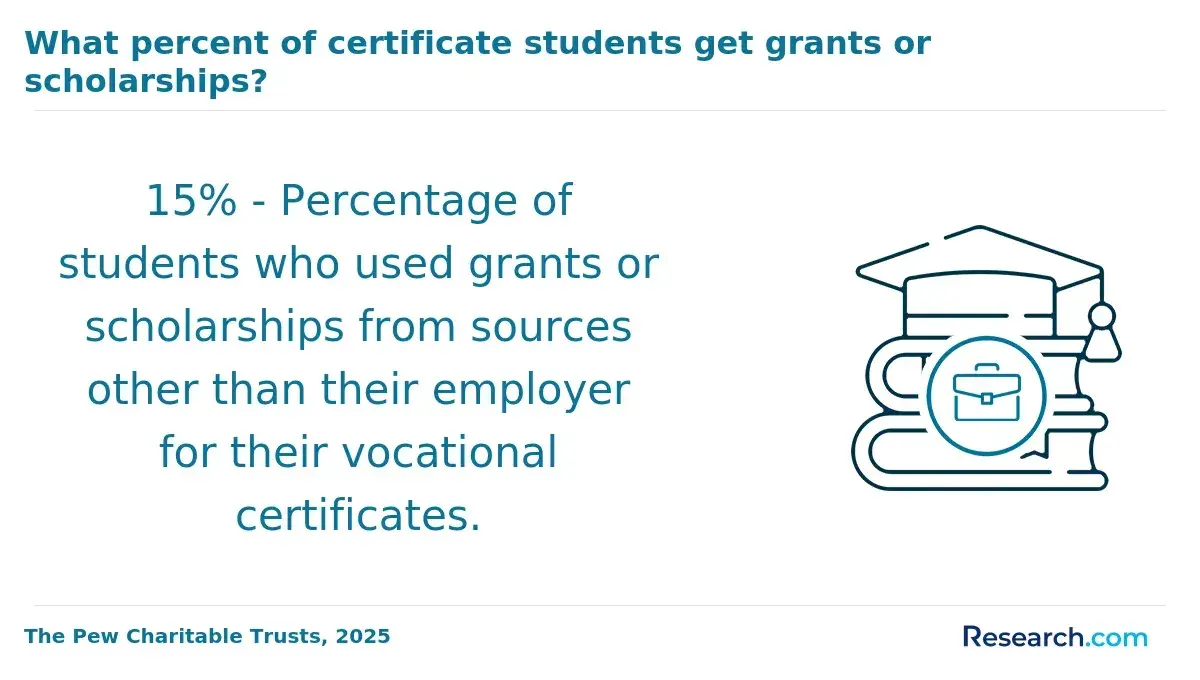
Students trying to reduce borrowing should compare employer tuition assistance, Pell Grant eligibility, state grants, transfer scholarships, and schools listed among online colleges with financial aid, especially if an online or hybrid format would lower commuting and childcare costs.
What careers can you pursue after earning a bachelor's through weekend classes?
A weekend bachelor's completion degree can support career changes, promotions, graduate school preparation, or eligibility for jobs that list a bachelor's as the minimum education. The strongest outcomes usually occur when the major, internships or projects, prior work history, and local labor market align.
The table below summarizes common career directions. It is not a guarantee of eligibility because employers, agencies, and licensing boards may set additional requirements.
| Degree area | Possible career paths | What employers often look for |
| Business | Operations coordinator, account manager, HR specialist, project coordinator | Leadership, Excel or analytics skills, communication, industry knowledge |
| Healthcare administration | Clinic supervisor, quality coordinator, health services manager track | Healthcare workflow knowledge, compliance awareness, data reporting |
| IT or cybersecurity | Systems analyst, network administrator, security analyst, cloud support | Hands-on labs, certifications, scripting, troubleshooting experience |
| Psychology | Case manager, behavioral health technician, HR assistant, research assistant | Research literacy, documentation skills, ethics, human services experience |
| Education | Teacher pathway, instructional aide advancement, training specialist | Field experience, state testing, classroom management, licensure alignment |
If salary potential is a major factor, compare your intended major with broader research on bachelor degrees that pay well, then weigh those earnings against tuition, time to completion, and your existing experience.
What salary ranges and job growth can graduates of weekend completion programs expect?
Salary and job growth vary widely by occupation, region, experience, and industry. Use national data as a screening tool, then check local job postings and state wage data before choosing a major.
The following BLS figures use May 2024 wage data and 2023-2033 employment projections, which can help adult learners compare broad career directions without assuming a specific personal outcome.
| Occupation | Relevant completion major | Median annual wage | Projected employment growth |
| Medical and health services managers | Healthcare administration | $117,960 | 29% |
| Information security analysts | Cybersecurity or IT | $124,910 | 33% |
| Software developers | Computer science | $133,080 | 17% |
| Accountants and auditors | Business or accounting | $81,680 | 6% |
| Registered nurses | RN-to-BSN nursing | $93,600 | 6% |
High-growth fields can still be competitive, especially for remote roles or entry-level openings. Adult learners can improve ROI by choosing programs with applied projects, internship flexibility, employer partnerships, and coursework that reflects current tools such as analytics platforms, cloud systems, electronic health records, or AI-assisted workflows.
How can adult learners choose a reputable, flexible weekend bachelor's completion program?
A reputable weekend bachelor's completion program should make graduation requirements, transfer credit, cost, schedule, and outcomes easy to verify. If a school cannot explain exactly what remains between you and graduation, keep comparing.
Use the following checklist before committing to a program:
- Verify institutional accreditation through official accreditation databases, not only the school's marketing page.
- Confirm programmatic accreditation or state approval when the major relates to nursing, education, engineering, counseling, or another regulated field.
- Request a written transfer-credit evaluation and degree plan before enrollment.
- Compare total net cost, not just per-credit tuition.
- Ask whether weekend courses are guaranteed each term or rotate on a limited schedule.
- Review student support hours for advising, tutoring, library access, financial aid, and tech support.
- Check whether capstones, practicums, labs, or student teaching can fit your work schedule.
- Speak with current students or alumni if possible, especially adults balancing work and family.
Students who want even more scheduling flexibility may also compare weekend cohorts with competency based universities, where progress may depend more on demonstrated mastery than weekly seat time.
The biggest mistake is choosing convenience alone. A weekend schedule is valuable only if the program also has credible accreditation, a realistic graduation path, transparent cost, and a curriculum connected to your career goal.
Other Things You Should Know About
Yes, if the degree comes from an appropriately accredited institution. Employers generally care more about the school's credibility, the major, your skills, and your experience than whether classes met on weekends, evenings, or online.
Sometimes, but only if you already have a large number of transferable credits and the program offers accelerated course sequencing. Many adult learners need closer to two years, especially when studying part time.
They can, as long as the school participates in federal student aid and the student meets eligibility rules. Enrollment intensity, satisfactory academic progress, and program type can affect aid amounts.
It depends on your learning style and schedule. Weekend programs are better for students who want structure and in-person interaction, while online programs are better for students who need location flexibility or cannot protect weekend class time.
References
- List of College Majors https://www.mymajors.com/college-majors/
- Required application documents https://www.vu.lt/en/required-attachments
- How long does it take to get a bachelor's degree? | edX https://www.edx.org/resources/how-long-does-it-take-to-get-a-bachelors-degree
- Student Life & Financing: Costs, Aid, and Balance https://www.topscholar.org/student-life-financing/
- Top Degrees in Demand for the Future: 2026 & Beyond https://skillifysolutions.com/blogs/career-growth/top-degrees-in-demand-for-the-future/
- Degree Completion Bachelor’s Programs https://www.encoura.org/resources/wake-up-call/degree-completion-bachelors-programs/