2027 Best Undergraduate Degrees for Job Security

Co-Founder and Chief Data Scientist
Choosing a major now means balancing tuition, automation risk, and long-term demand. The U.S. Bureau of Labor Statistics' latest 2024 outlook projects information security analyst jobs to grow 33% from 2023 to 2033, showing how strongly some bachelor's-level fields are expanding.
This guide is for students, career changers, and parents comparing undergraduate degrees with durable employment prospects. You will learn which majors tend to offer stronger job security, what trade-offs to expect, and how to evaluate programs before enrolling.
Key Things You Should Know
- Degrees tied to regulated, essential, or fast-growing work tend to be more secure. BLS projects 33% growth for information security analysts and 29% growth for medical and health services managers from 2023 to 2033.
- The strongest options usually combine employer demand, transferable skills, accreditation, internships or clinical experience, and a clear path to licensure or certification.
- Cost matters as much as demand. College Board's 2024 Trends in College Pricing reported average published tuition and fees above $11,000 for in-state public four-year students, making transfer credit and completion speed important ROI factors.
Top 10 Best Undergraduate Degrees for Job Security
Business Degrees
Business degrees are secure when students specialize in accounting, finance, supply chain, analytics, or operations rather than choosing only broad management coursework. Employers need people who can manage budgets, compliance, payroll, vendor risk, and performance data.
Accounting is especially durable because tax, audit, and reporting needs persist across industries. Students comparing flexible completion paths can review quick online degrees, but should still confirm accreditation, internship access, and CPA-aligned coursework if accounting is the goal.
Healthcare Degrees
Healthcare degrees offer strong job security because demand is tied to aging populations, insurance systems, public health needs, and chronic disease management. Good bachelor's options include health administration, public health, health information management, medical laboratory science, and radiologic science.
These programs fit students who want stable work but may not want direct bedside nursing. Job outcomes depend heavily on clinical placements, certification eligibility, and whether the curriculum matches local employer needs such as electronic health records, compliance, or care coordination.
Information Technology Degrees
Information technology degrees prepare students to support networks, cloud systems, databases, help desks, and enterprise software. IT can be more accessible than computer science because it often emphasizes applied systems, troubleshooting, and administration instead of advanced theory.
Students seeking a lower-barrier online pathway can compare the easiest online degree, but "easy" should not mean weak: look for labs, certifications, security coursework, and employer partnerships. IT is best for practical problem-solvers who enjoy keeping systems reliable.
Computer Science Degrees
Computer science remains one of the strongest undergraduate choices for job security when students build real technical depth. The degree supports roles in software development, data engineering, AI systems, cloud platforms, and automation. It fits students who are comfortable with programming, algorithms, discrete math, and continuous learning.
The main risk is assuming the degree alone is enough. Employers increasingly expect portfolios, internships, GitHub projects, teamwork, and applied experience with modern development tools.
Cybersecurity Degrees
Cybersecurity degrees are highly job-secure because organizations face constant threats involving ransomware, identity theft, cloud misconfiguration, and compliance failures. A strong program covers networking, operating systems, digital forensics, risk management, secure coding, incident response, and governance.
This major fits detail-oriented students who can document evidence, follow procedures, and stay calm under pressure. Entry-level roles may still require IT experience, so students should prioritize labs, internships, security operations center simulations, and certifications such as Security+.
Psychology Degrees
Psychology can support stable employment when paired with data, human services, HR, case management, research, or graduate-school planning. A bachelor's in psychology alone usually does not qualify someone to become a licensed psychologist or therapist, so students should be realistic.
The degree is useful for people interested in behavior, communication, assessment, and social systems. For stronger job security, choose programs with statistics, research methods, practicum options, and clear advising for counseling, social work, organizational psychology, or applied behavioral roles.
Nursing Degrees
Nursing is one of the clearest job-secure undergraduate paths because registered nurses are needed in hospitals, clinics, long-term care, schools, home health, and public health agencies. A BSN typically includes clinical rotations, pharmacology, health assessment, pathophysiology, and preparation for the NCLEX-RN exam.
It fits students who can handle science coursework, shift work, emotional pressure, and patient communication. Always confirm state board approval, clinical placement quality, NCLEX pass rates, and whether online coursework still includes approved in-person clinical experiences.
Education Degrees
Education degrees can provide stable employment, especially in special education, STEM teaching, bilingual education, and high-need districts. Job security varies by state funding, subject area, and licensure rules. A strong teacher-preparation program includes classroom observation, student teaching, curriculum design, assessment, classroom management, and state exam preparation.
This path fits students who value mission-driven work and predictable advancement structures. Before enrolling, confirm the program leads to licensure in the state where you plan to teach.
Criminal Justice Degrees
Criminal justice degrees can lead to steady public-sector and compliance-oriented careers, including policing, probation, corrections, investigations, emergency management, homeland security, and corporate loss prevention. The degree is strongest when paired with writing, ethics, data analysis, public administration, or cybercrime coursework.
Students should understand that many sworn roles require academy training, background checks, physical standards, and civil service processes. This major fits people who are comfortable with policy, public service, documentation, and high-accountability work.
Engineering Degrees
Engineering degrees offer strong long-term security because infrastructure, manufacturing, energy, transportation, defense, and technology employers need licensed technical talent. Civil, electrical, mechanical, industrial, and computer engineering are among the most versatile options. These programs are math-heavy and usually require calculus, physics, design labs, and capstone projects.
Students should prioritize ABET-accredited programs because accreditation often matters for licensure, graduate school, and employer screening. Engineering fits students who enjoy solving practical problems under technical and safety constraints.
Which bachelor's degrees offer the strongest long-term job security in the U.S.?
The strongest bachelor's degrees for long-term job security usually have three qualities: employers need the work even during economic slowdowns, the degree teaches skills that are hard to automate fully, and graduates can add licenses or certifications over time. No major can remove employment risk, but some fields offer more durable demand than others.
The table below summarizes which degree areas tend to be strongest for different job-security profiles. Use it to compare stability, not to assume one major is automatically best for every student.
| Degree area | Why it can be secure | Best fit | Main caution |
| Nursing | Direct link to licensed healthcare roles and broad care settings | Students who want patient-facing work and clear licensure | Clinical demands, shift work, and state approval rules matter |
| Cybersecurity | Persistent employer need to defend systems, data, and infrastructure | Students who enjoy risk analysis, networks, and investigation | Entry-level roles may require hands-on IT experience |
| Computer science | Software and automation skills apply across many industries | Students who can build projects and keep learning new tools | Competition is stronger without internships or a portfolio |
| Engineering | Infrastructure, product design, energy, and manufacturing needs remain durable | Students strong in math, physics, and design thinking | ABET accreditation may be important for licensure paths |
| Healthcare administration | Healthcare systems need managers for compliance, staffing, finance, and operations | Students who want healthcare without clinical licensure | Leadership roles often require experience after graduation |
| Accounting or analytics-focused business | Organizations need reporting, budgeting, compliance, and decision support | Students who like numbers, systems, and business rules | Broad business degrees are weaker without specialization |
For most students, the safest choice is not simply the highest-paying major. It is the major that matches your abilities, has verified employer demand in your region, and gives you a credential employers understand.
How do salary potential and job outlook compare across secure undergraduate majors?
Salary potential and job outlook vary widely across secure majors. The best way to compare them is to look at target occupations, because a bachelor's degree can lead to different roles depending on internships, licensure, location, and experience.
The following BLS figures use the latest Occupational Outlook Handbook data published in 2024, including 2023 median pay and projected employment growth from 2023 to 2033. They describe occupations, not guaranteed outcomes for every graduate.
| Common target occupation | Related undergraduate path | 2023 median pay | Projected growth, 2023-2033 | What it means for students |
| Information security analyst | Cybersecurity, IT, computer science | $120,360 | 33% | Very strong demand, but hands-on technical experience is important |
| Software developer | Computer science, software engineering | $132,270 | 17% | High upside for students with portfolios and internship experience |
| Medical and health services manager | Healthcare administration, business, public health | $110,680 | 29% | Strong outlook, though many management roles require experience |
| Registered nurse | Nursing | $86,070 | 6% | Stable licensed path with demand across care settings |
| Accountant or auditor | Accounting, business | $79,880 | 6% | Reliable demand, especially with CPA-aligned education |
| Civil engineer | Civil engineering | $95,890 | 6% | Steady infrastructure-related demand, often strengthened by licensure |
| Elementary school teacher | Education | $63,680 | 0% | Stability depends heavily on state, district, and subject shortage areas |
High salary and high security do not always move together. Nursing may offer a clearer licensed entry path than some higher-paying technology roles, while computer science may offer greater salary upside but more competition for strong entry-level jobs.
What factors should students use to choose a job-secure undergraduate degree?
Students should choose a job-secure undergraduate degree by comparing career fit, total cost, accreditation, local employer demand, and the steps required after graduation. A strong major is only a good investment if you can complete it, afford it, and use it in the labor market you plan to enter.
Use the following steps to compare programs before committing. These steps help you avoid choosing a major based only on rankings, prestige, or a single salary statistic:
- Identify the specific job titles you want, then confirm whether they require licensure, certification, graduate school, or supervised experience.
- Compare total cost, not just tuition, including fees, books, equipment, commuting, clinical travel, lost work hours, and exam costs.
- Check whether credits transfer in and whether the school has limits on how many prior credits it accepts.
- Review outcomes that matter for the field, such as NCLEX pass rates, certification pass rates, internship placement, student teaching support, or capstone projects.
- Ask employers, alumni, or local workforce boards whether the degree is recognized in your region.
Cost is a major decision point because College Board's 2024 pricing report placed average published tuition and fees for in-state public four-year students above $11,000. That means scholarships, transfer credits, community college pathways, and part-time work options can meaningfully change ROI.
Common red flags include vague career promises, missing accreditation details, no required hands-on experience, weak transfer policies, and programs that do not disclose licensure limitations. If a school cannot clearly explain where graduates go and what credentials the program supports, keep comparing.
What accreditation should programs have to support stable, long-term employment?
Accreditation protects students by showing that a school or program has been reviewed against recognized academic and professional standards. For job-secure degrees, accreditation can affect credit transfer, graduate school eligibility, licensure, certification, financial aid access, and employer confidence.
The table below shows common accreditation checks by field. Requirements vary, so students should verify details with the school, state licensing board, and relevant professional organization before enrolling.
| Field | Accreditation or approval to check | Why it matters |
| All bachelor's degrees | Institutional accreditation from an agency recognized by the U.S. Department of Education | Supports federal aid eligibility, transfer credit review, and baseline institutional quality |
| Nursing | State board approval plus CCNE or ACEN accreditation | Important for NCLEX eligibility, graduate study, and employer screening |
| Engineering | ABET accreditation | Often important for professional engineering licensure and technical employer recognition |
| Education | State-approved teacher preparation; CAEP may also appear | Determines whether the program can lead to teacher licensure in a specific state |
| Business and accounting | AACSB, ACBSP, or IACBE; CPA coursework alignment | Can strengthen employer confidence and help students plan for accounting credentials |
| Health information management | CAHIIM accreditation | May be needed for certain health information certification pathways |
| Cybersecurity and IT | Institutional accreditation plus recognized certification alignment | Employers often value labs, certifications, and practical security experience |
The biggest mistake is assuming that institutional accreditation and programmatic accreditation are the same. Institutional accreditation reviews the college; programmatic accreditation reviews a specific program, which may matter more in licensed or technical fields.
How do online undergraduate programs compare to campus options for job security?
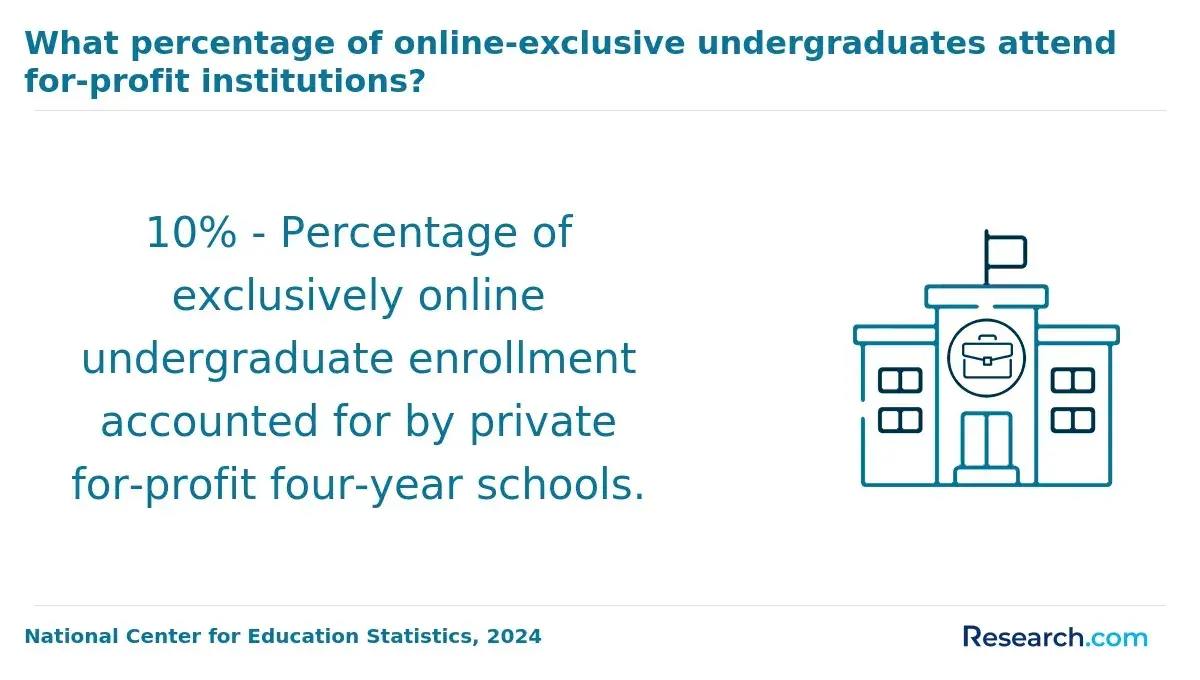
Online undergraduate programs can support job security when they offer the same accredited curriculum, faculty standards, labs, clinical placements, internships, and career services as campus programs. The format matters less than whether the program builds the experience employers or licensing boards require.
Students who need flexible timing may want to compare online colleges with frequent start dates, especially if they are working adults or transfer students. Flexibility is useful, but it should not replace careful checks for accreditation, placement support, and total cost.
The table below compares online and campus formats for job-secure majors. Use it to identify where convenience may create trade-offs.
| Factor | Online programs | Campus programs | Decision point |
| Flexibility | Often better for working adults and caregivers | More fixed schedules and commuting | Choose online if you need schedule control |
| Hands-on training | May require local labs, simulations, practicums, or clinicals | Often easier access to campus labs and nearby placements | Check how required experience is arranged |
| Networking | Depends on virtual events, cohort design, and career services | Often stronger informal networking | Ask how students connect with employers |
| Licensure fit | Must be checked by state, especially nursing and teaching | Usually clearer for the school's home state | Verify eligibility where you plan to work |
| Cost | May reduce commuting or housing costs | May include more campus-based fees | Compare total cost, not sticker tuition |
Online programs are a strong choice for self-directed students, adults with prior credits, and learners who already work in the field. Campus programs may be better for students who need structure, lab access, in-person mentoring, or local recruiting pipelines.
What courses and skills do job-secure degrees typically include in their curriculum?
Job-secure degrees usually teach a mix of technical knowledge, applied problem-solving, communication, ethics, and data literacy. The most resilient curricula help students adapt as software, regulations, patient needs, and employer expectations change.
The table below connects common secure majors with courses and skills employers tend to value. It is especially useful when comparing two programs with similar names but different academic depth.
| Degree area | Common courses | Skills that support job stability |
| Business | Accounting, finance, business analytics, operations, business law | Budgeting, reporting, forecasting, compliance, decision support |
| Healthcare | Healthcare systems, public health, medical terminology, health informatics | Care coordination, privacy awareness, workflow improvement, documentation |
| IT and cybersecurity | Networking, databases, cloud systems, security fundamentals, incident response | Troubleshooting, risk analysis, system administration, technical communication |
| Computer science | Programming, algorithms, data structures, software engineering, databases | Building applications, debugging, version control, computational thinking |
| Nursing | Anatomy, pharmacology, pathophysiology, health assessment, clinical practice | Patient care, prioritization, safety, teamwork, evidence-based practice |
| Education | Instructional design, assessment, child development, classroom management | Lesson planning, communication, differentiation, student support |
| Engineering | Calculus, physics, design, materials, circuits, mechanics | Technical design, testing, modeling, safety analysis, project documentation |
AI and automation make transferable skills more important, not less. Students should look for programs that require projects, writing, presentations, data tools, ethical reasoning, and real-world problem solving rather than only exams.
What admission requirements and program lengths are common for in-demand degrees?
Most in-demand bachelor's degrees take about four years of full-time study, though transfer credits, summer terms, accelerated calendars, and prior learning assessment can shorten the timeline. Part-time students often take longer, but they may reduce borrowing by continuing to work.
The table below summarizes common admissions and length expectations. Individual schools may add placement tests, prerequisite grades, background checks, portfolio reviews, or selective admission into upper-division professional programs.
| Program type | Common admissions requirements | Typical length | Important planning issue |
| Business | High school diploma or equivalent; some programs require college algebra or statistics readiness | About 4 years full time | Choose a concentration early to avoid excess electives |
| Nursing | Prerequisite sciences, minimum GPA, background check, immunizations, and competitive clinical admission | About 4 years; accelerated BSN options vary | Clinical seat availability can affect timing |
| Engineering | Strong math and science preparation; calculus readiness is often expected | About 4 to 5 years | Course sequencing can delay graduation if prerequisites are missed |
| Computer science and IT | High school diploma or equivalent; math placement may affect first-year course options | About 4 years full time | Internships and project portfolios should start early |
| Education | General admission plus teacher-preparation milestones, exams, and background checks | About 4 years full time | Student teaching is usually required and may limit work hours |
| Criminal justice | General admission; some career paths later require academy or agency screening | About 4 years full time | Background standards for target jobs should be checked early |
Before enrolling, ask admissions advisors specific questions. The answers can reveal whether the program is truly built for completion and employment:
- How many credits can I transfer, and will they apply to major requirements or only electives?
- Does the program prepare students for licensure or certification in my state?
- Are internships, clinicals, labs, or student teaching guaranteed or competitive?
- What fees, equipment, travel, or exam costs should I budget beyond tuition?
- What career services are available to online, transfer, and adult students?
Which careers and industries most commonly hire graduates from secure majors?
Secure majors are hired across industries because they solve recurring problems: patient care, digital security, software maintenance, financial control, infrastructure design, teaching, public safety, and compliance. Students should evaluate both the occupation and the industry because job stability can differ between government, healthcare, technology, education, and private business.
The table below links common degrees with hiring industries and entry-level responsibilities. It can help students picture the first job after graduation, not just the long-term title.
| Degree | Common hiring industries | Entry-level roles or responsibilities |
| Business | Finance, insurance, healthcare, logistics, government, retail | Analyst, staff accountant, operations coordinator, HR assistant, procurement support |
| Healthcare administration | Hospitals, clinics, insurers, public health agencies, long-term care | Department coordinator, patient access supervisor, compliance assistant, health data support |
| IT | Managed services, schools, hospitals, government, corporate IT | Help desk analyst, systems technician, network support, cloud support associate |
| Computer science | Software, finance, defense, healthcare technology, e-commerce | Junior developer, QA analyst, data support, application support, automation associate |
| Cybersecurity | Financial services, government, defense, healthcare, cloud providers | SOC analyst, security technician, vulnerability analyst, compliance support |
| Nursing | Hospitals, clinics, home health, schools, public health, long-term care | Registered nurse roles after passing NCLEX-RN and meeting state requirements |
| Education | Public schools, private schools, charter schools, education nonprofits | Licensed teacher, instructional aide, curriculum support, education coordinator |
| Engineering | Construction, manufacturing, utilities, transportation, defense, energy | Design engineer, field engineer, quality engineer, project engineer, test engineer |
A practical strategy is to search job postings in your target city before choosing a major. Look for repeated requirements, preferred certifications, software tools, and experience expectations, then choose electives and internships that match those patterns.
What licenses or certifications strengthen job stability after earning a bachelor's degree?
Licenses and certifications can strengthen job stability by making your skills easier for employers to verify. They are especially important in fields where public safety, regulated practice, financial reporting, or technical risk is involved.
The table below lists credentials commonly associated with secure bachelor's-level career paths. Requirements can change by state, employer, and professional board, so verify eligibility before assuming a degree qualifies you.
| Field | Credential examples | How it can help |
| Nursing | NCLEX-RN and state RN license | Required for registered nursing practice |
| Education | State teacher certification or licensure | Required for most public school teaching roles |
| Accounting | CPA pathway, CMA, enrolled agent | Supports advancement in accounting, audit, tax, and finance |
| Cybersecurity | CompTIA Security+, CySA+, CISSP after experience, GIAC credentials | Validates applied security knowledge and can improve screening for technical roles |
| IT | Network+, CCNA, AWS, Azure, Google Cloud certifications | Signals practical platform or infrastructure skills |
| Engineering | FE exam, Engineer-in-Training status, PE license after experience | Supports regulated engineering practice and senior technical responsibility |
| Health information | RHIA or related health information credentials | Can support roles involving coding, records, privacy, and health data governance |
Some careers eventually benefit from graduate study, but students should not rush into another degree without a clear goal. If you are comparing faster graduate options later, resources on a masters in 6 months can help you understand accelerated formats, though professional licensure and employer recognition still need careful review.
Avoid collecting credentials randomly. Choose certifications that appear repeatedly in job postings for your target role, match your current experience level, and are recognized by employers in your region.
Other Things You Should Know About the Best Undergraduate Degrees
There is no single best degree for everyone, but nursing, cybersecurity, computer science, engineering, healthcare administration, accounting, and specialized education fields often provide strong stability. The best choice depends on your skills, location, cost, and whether the program leads to required credentials.
Yes, if the online program is properly accredited and includes the same career preparation expected in the field. For nursing, teaching, engineering, and healthcare programs, confirm clinicals, labs, licensure eligibility, and state requirements before enrolling.
Not always. A high-paying field may be competitive, difficult to complete, or poorly matched to your strengths. A better approach is to compare salary, job outlook, program cost, completion likelihood, and the credentials needed for entry-level employment.
Nursing, accounting, IT, cybersecurity, engineering, and some business analytics paths can lead to bachelor's-level employment. Psychology, counseling, advanced healthcare practice, and some education leadership roles are more likely to require graduate study or additional supervised experience.
References
- Best Degrees for the Future: 12 AI-Proof Degrees (2026 Guide) https://www.uniadmissions.co.uk/application-guides/best-degrees-for-the-future/
- Top Degrees in Demand for the Future: 2026 & Beyond https://skillifysolutions.com/blogs/career-growth/top-degrees-in-demand-for-the-future/
- How does a college degree improve graduates’ employment and earnings potential? - APLU https://www.aplu.org/our-work/4-policy-and-advocacy/publicuvalues/employment-earnings/
- How Changing College Majors Are Reshaping the Future Workforce — The Burning Glass Institute https://www.burningglassinstitute.org/bginsights/how-changing-college-majors-are-reshaping-the-future-workforce
- Career earnings by college major - The Hamilton Project https://www.hamiltonproject.org/data/career-earnings-by-college-major/
- Most Useful Degrees https://www.collegeadvisor.com/resources/most-useful-degrees/