2027 Most Affordable Online Bachelor's Degrees for Busy Adults

Co-Founder and Chief Data Scientist
Choosing an affordable online bachelor's degree is really a cost, time, and career decision. Published tuition for public four-year in-state colleges averaged $11,610 in 2024-25, according to College Board, while private nonprofit four-year tuition averaged $43,350. That gap makes program selection especially important for working adults, parents, military learners, and transfer students. This guide explains which online bachelor's majors tend to balance affordability with career value, how to compare total costs, and what to verify before enrolling so you can choose a program that fits your schedule and goals.
Key Things You Should Know
- For many adults, the most affordable online bachelor's path is a regionally accredited public university, a degree-completion program, or a school with strong transfer-credit and prior-learning-credit policies.
- College Board reported average 2024-25 published tuition of $11,610 for public four-year in-state colleges versus $43,350 for private nonprofit four-year colleges, so residency rules and institution type can materially affect cost.
- Majors with strong practical value often include business, IT, cybersecurity, nursing, healthcare administration, computer science, education, and engineering technology, but licensure and accreditation requirements must be checked before enrollment.
Top 10 Most Affordable Online Bachelor's Degrees for Busy Adults
Business Degrees
An online bachelor's in business is often affordable because many colleges offer broad transfer acceptance, standardized lower-division courses, and flexible concentrations. It fits adults seeking management, operations, accounting, marketing, HR, or entrepreneurship roles. BLS reported a $80,920 median annual wage for business and financial occupations in May 2024, making business a practical option when paired with internships, employer projects, analytics skills, or accounting coursework. Avoid overly generic programs that lack career services, concentration options, or measurable outcomes.
Healthcare Degrees
Healthcare bachelor's degrees can be cost-effective for adults already working in clinical, administrative, billing, or allied health roles. Common online options include healthcare administration, health sciences, public health, and health information management. The best value usually comes from programs that accept prior college credit or professional credentials. BLS listed $117,960 as the May 2024 median annual wage for medical and health services managers, but leadership roles usually require experience. Check whether the curriculum includes compliance, finance, informatics, and healthcare operations.
Information Technology Degrees
An online IT bachelor's degree is a strong fit for adults who want applied technology roles without the heavier theory of computer science. Coursework often covers networking, databases, cloud systems, scripting, systems administration, and project management. BLS reported a $105,990 median annual wage for computer and IT occupations in May 2024, though entry-level pay varies widely by role and region. Affordable programs are strongest when they align with industry certifications, include labs, and help students build a portfolio of practical technical work.
Computer Science Degrees
Computer science degrees can offer high long-term value, but they are not always the easiest option for busy adults. They typically require programming, algorithms, discrete math, databases, software engineering, and sometimes calculus. The degree fits learners who want software development, systems, AI, data, or technical graduate-study pathways. BLS reported a May 2024 median annual wage of $133,080 for software developers, quality assurance analysts, and testers. Choose this major if you can commit to sustained coding practice, not just flexible class attendance.
Cybersecurity Degrees
Cybersecurity bachelor's programs are popular because they connect directly to risk management, networks, incident response, cloud security, and compliance. BLS reported a $124,910 median annual wage for information security analysts in May 2024, but many analyst roles prefer hands-on IT experience. Adults should look for programs with virtual labs, security projects, and preparation for respected certifications. Be cautious of programs that market cybersecurity as a quick career switch without explaining entry-level pathways such as help desk, network support, or junior security operations.
Psychology Degrees
An online psychology bachelor's degree is usually affordable and transfer-friendly, but it rarely leads directly to licensed counseling roles. It fits adults interested in human services, case management, HR, behavioral health support, research assistance, or graduate study. The best programs include statistics, research methods, abnormal psychology, developmental psychology, and applied electives. Choose psychology if you understand the next step: many higher-paying clinical, school, or counseling roles require a master's or doctorate plus supervised experience and state licensure.
Nursing Degrees
Online nursing bachelor's degrees are most affordable for licensed registered nurses completing an RN-to-BSN program. These programs usually build on prior nursing education and clinical experience, which can reduce time and cost. BLS reported a $93,600 median annual wage for registered nurses in May 2024, but wages vary by state, setting, shift, and specialty. Prospective students must confirm state authorization, clinical or practicum requirements, program accreditation, and whether the school supports their home-state nursing board requirements.
Education Degrees
Online education bachelor's degrees can be affordable, but licensure rules make them more complex than many majors. Adults seeking classroom teaching should confirm whether the program leads to initial teacher certification in their state and includes student teaching placements. Non-licensure education degrees may fit training, childcare administration, educational technology, or paraprofessional advancement. The cheapest program is not a good value if it does not meet state requirements for the grade level, subject area, or endorsement the student wants.
Criminal Justice Degrees
An online criminal justice bachelor's degree can support careers in law enforcement, corrections, probation, homeland security, victim advocacy, and public administration. It is often affordable because many programs accept transfer credits and academy training. BLS reported a May 2024 median annual wage of $77,270 for police and detectives, though requirements and pay vary significantly by agency. Adults should compare internship options, public-sector partnerships, writing-intensive coursework, and whether the program supports advancement rather than only entry-level employment.
Engineering Degrees
Fully online engineering bachelor's degrees are less common because many require labs, design studios, and strict accreditation standards. Adults may find more affordable and flexible options in engineering technology, industrial technology, construction management, or applied engineering. BLS reported a $97,310 median annual wage for architecture and engineering occupations in May 2024, but licensed professional engineering paths usually require an ABET-accredited engineering degree. Before enrolling, verify lab requirements, campus visits, transfer rules, and whether the degree supports your intended licensing or employer requirements.
How can working adults find truly affordable online bachelor's programs that fit their schedule?
Working adults can find truly affordable online bachelor's programs by looking beyond the advertised tuition rate. The best fit is usually a program that combines low net cost, generous transfer credit, asynchronous coursework, predictable course rotations, and credible student support. If you are starting your search broadly, comparing best online universities can help you identify schools that offer recognized online options, but you should still verify costs and policies directly with each institution.
Use the following process to compare programs in a way that reflects your actual life, not an ideal full-time student schedule:
- Ask each school for a degree audit before enrolling so you know exactly how many credits remain after transfer evaluation.
- Compare net price after grants, employer benefits, scholarships, and transfer credits rather than relying on tuition per credit alone.
- Confirm whether courses are asynchronous, synchronous, hybrid, self-paced, or cohort-based, because format can affect your ability to stay enrolled while working.
- Check whether the school charges separate online, technology, graduation, proctoring, lab, clinical, or portfolio-assessment fees.
- Ask how often required courses are offered so you do not get delayed by a class that runs only once per year.
- Review withdrawal, leave-of-absence, and reentry policies in case work, caregiving, deployment, or health issues interrupt your plan.
The most affordable option is not always the fastest. A lower-cost program that accepts fewer transfer credits may cost more in the end than a slightly higher-tuition program that lets you finish sooner.
What total costs should adult learners expect for an online bachelor's, including hidden fees?
Adult learners should expect online bachelor's costs to include tuition, mandatory fees, books, technology, assessments, transfer-credit evaluation, and sometimes travel or in-person requirements. The headline price can be misleading because two programs with the same per-credit tuition may have very different total costs after fees and transfer policies.
The table below summarizes common cost categories and why each one matters when comparing affordable online bachelor's programs. Use it to request a written cost estimate from each school before you apply.
| Cost category | What it may include | Why it matters for adults |
| Tuition | Per-credit or flat-rate charges for required coursework | This is the largest visible cost, but it does not show how many credits you still need. |
| Mandatory fees | Online learning, technology, student services, graduation, transcript, or course fees | Fees can make a low-tuition program less affordable than it first appears. |
| Books and materials | Textbooks, digital access codes, software, lab kits, or exam tools | Open educational resources can reduce costs, but not every course uses them. |
| Prior learning assessment | Portfolio review, credit-by-exam, military-credit evaluation, or certification review | An upfront fee may save money if it reduces the number of courses required. |
| Residency or campus requirements | Short campus visits, clinical placements, labs, fieldwork, or student teaching | Travel, time off work, and childcare can change the real cost of an online degree. |
| Time-related costs | Delayed graduation, repeated courses, lost employer aid, or reduced work hours | A cheaper program can become expensive if poor scheduling slows completion. |
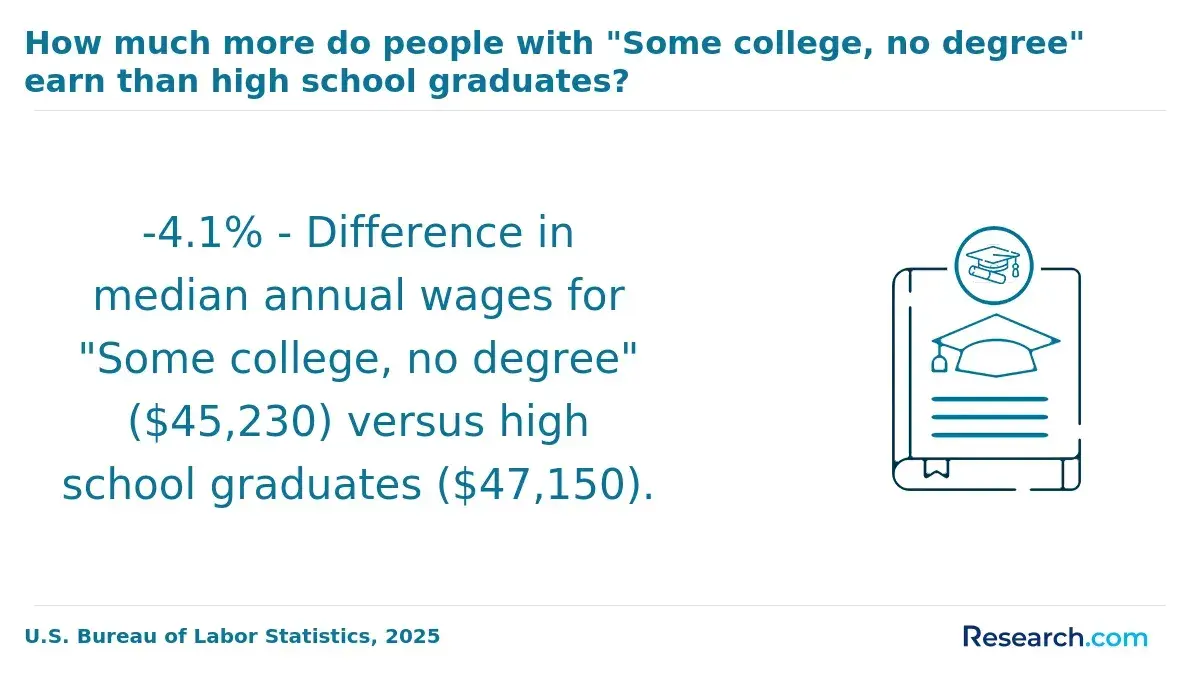
College Board reported average 2024-25 published tuition and fees of $11,610 for in-state students at public four-year colleges and $30,780 for out-of-state students at public four-year colleges. For adult learners, that means residency classification, online tuition rules, and state university options should be reviewed early because they can create large cost differences.
How do you compare accreditation and quality when choosing an online bachelor's program?
Accreditation is the quality-control signal that matters most when choosing an online bachelor's program. Institutional accreditation affects federal financial aid eligibility, transferability, graduate school admission, and employer recognition, while programmatic accreditation may be required for fields such as nursing, education, engineering, business, social work, and health information management.
Before comparing rankings or marketing claims, verify the basics. A reputable online bachelor's program should make accreditation, curriculum, faculty qualifications, student outcomes, complaint processes, and state authorization easy to find.
- Confirm institutional accreditation through a recognized accrediting agency listed by the U.S. Department of Education or the Council for Higher Education Accreditation.
- Check programmatic accreditation when the major connects to licensure, certification, graduate admission, or regulated professional practice.
- Ask whether credits are commonly accepted by other regionally accredited institutions, especially if you may transfer again later.
- Review faculty experience and whether online students can access advising, tutoring, library services, career services, and technical support.
- Look for transparent outcome data, but treat salary claims cautiously because results depend on location, experience, prior credits, and labor market conditions.
A common mistake is assuming "online" means lower quality or, conversely, assuming a well-designed website means the program is credible. The safer approach is to verify accreditation first, then compare curriculum, support, cost, and outcomes.
What admission requirements do online bachelor's programs typically have for adult and transfer students?
Online bachelor's admission requirements vary by school, but adult and transfer students are usually evaluated on prior college credits, high school completion, GPA history, military training, professional certifications, and readiness for college-level writing and quantitative work. Selective programs may also require prerequisites, essays, recommendations, background checks, or licensure documentation.
The table below shows typical requirements by applicant type. It can help you identify which schools are likely to admit you efficiently and which may require extra preparation.
| Applicant type | Common requirements | Decision point |
| First-time adult student | High school diploma or GED, transcripts, placement review, application form | Ask whether the school offers adult-student advising and first-term support. |
| Transfer student | Official college transcripts, minimum transferable credits, GPA review | Request a written transfer evaluation before committing. |
| Military or veteran student | Joint Services Transcript, military training records, prior college transcripts | Confirm credit for military learning and compatibility with military tuition assistance or GI Bill benefits. |
| RN-to-BSN applicant | Active RN license, nursing diploma or associate degree, clinical documentation | Verify state authorization and nursing accreditation before applying. |
| Licensure-track education applicant | Prerequisite courses, background check, test requirements, field-placement eligibility | Confirm that the program leads to certification in your state. |
Adults with uneven academic histories should not assume they are excluded. Many colleges use transfer-friendly, test-optional, or holistic admissions policies, but you should ask whether older credits expire and whether repeated courses affect your GPA calculation.
How long does it take to finish an online bachelor's as a part-time or full-time adult student?
The time to finish an online bachelor's depends mainly on how many credits you already have, how many credits the school accepts, and how many courses you can take each term. A traditional bachelor's degree is commonly about 120 credits, but adult learners often enter with community college, military, workplace, certification, or prior university credits.
The table below compares common completion timelines. Use it to estimate whether a program's schedule fits your work and family responsibilities.
| Enrollment pattern | Typical pace | Best fit | Main trade-off |
| Full-time | About 12 to 15 credits per term | Adults with predictable schedules, strong support, or reduced work hours | Faster progress but heavier weekly workload |
| Part-time | About 6 to 9 credits per term | Working adults, parents, caregivers, and military learners | More manageable but longer time to completion |
| Accelerated terms | Shorter sessions with concentrated coursework | Motivated students who can handle compressed deadlines | Less room for work disruptions or falling behind |
| Degree-completion program | Upper-division courses after transfer credit | Adults with an associate degree or substantial prior credit | Requires careful transfer evaluation |
| Competency-based format | Progress based on demonstrated mastery | Experienced adults who already know parts of the field | Requires strong self-direction and consistent study time |
Some adults search for a 1 year bachelor degree online, but that timeline is usually realistic only for students who already have significant transferable credit or who enroll in an approved degree-completion structure. If you are starting with few credits, focus on affordability, transfer planning, and sustainable pacing rather than speed alone.
Which online bachelor's majors offer the best balance of affordability, salary, and job stability?
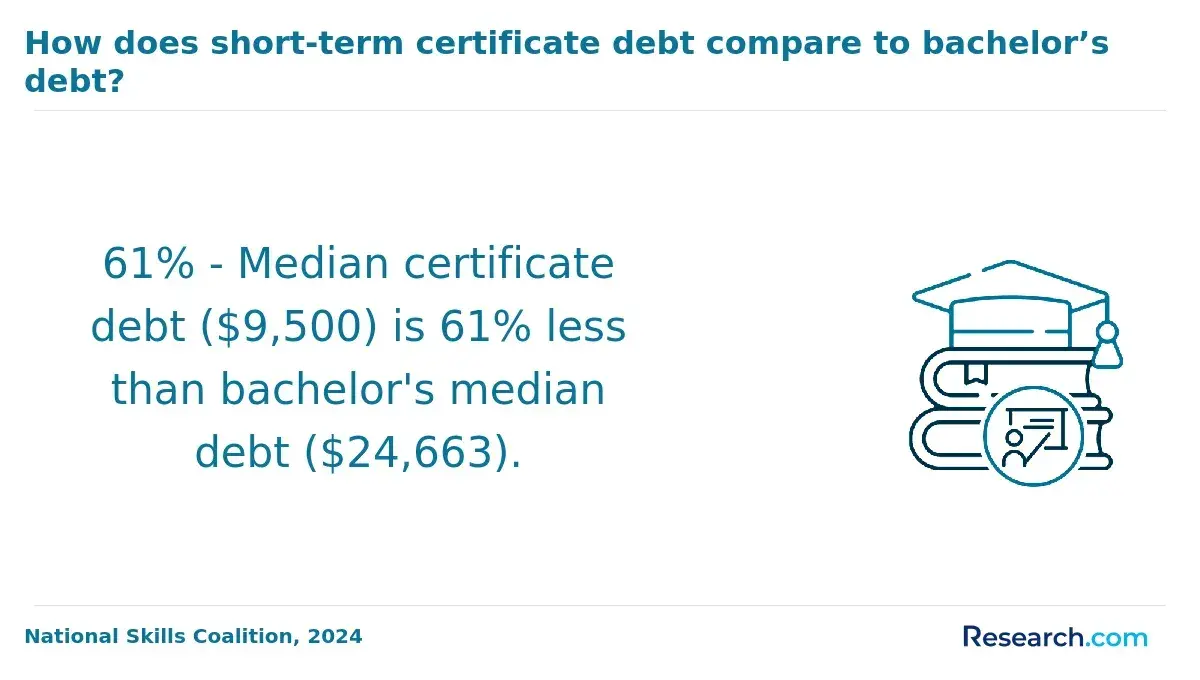
The best balance of affordability, salary potential, and job stability usually comes from majors with broad employer demand, clear skill development, and multiple career paths. For busy adults, the strongest choices are often practical degrees that can build on current work experience rather than requiring a complete career reset.
The table below compares common online bachelor's majors by value factors. It does not guarantee outcomes, but it can help you choose a major that fits your risk tolerance, schedule, and career goal.
| Major | Why it can be affordable | Career value signal | Best for |
| Business administration | High transferability and many online options | Applies across operations, management, finance, marketing, and HR | Adults seeking advancement in their current industry |
| Information technology | Applied curriculum and certification alignment | Strong demand for systems, cloud, support, and infrastructure skills | Learners who want hands-on technical roles |
| Cybersecurity | Often offered online with virtual labs | Security needs remain high across public and private sectors | Adults with or pursuing IT experience |
| Computer science | May offer high ROI when completed at a low-cost public university | Supports software, data, AI, and technical product roles | Students ready for intensive programming and math |
| Nursing RN-to-BSN | Builds on existing RN credentials and credits | Can support leadership, specialty, and graduate nursing pathways | Licensed RNs seeking advancement |
| Healthcare administration | Often accepts allied health or administrative transfer credit | Connects to growing healthcare operations and compliance needs | Healthcare workers moving into management |
| Education | Public universities may offer lower-cost licensure pathways | Stable need varies by state, district, subject, and grade level | Adults committed to meeting state certification rules |
Adults who want flexible, location-independent careers should compare majors that build digital, analytical, communication, and project-based skills. A guide to degrees for remote work can be especially useful if your goal is to qualify for roles that do not require daily on-site attendance.
A common mistake is choosing a major based only on average salary. Better decisions consider your prior experience, local job market, willingness to pursue certifications, tolerance for math or clinical requirements, and whether the degree opens several career options rather than one narrow path.
How do online bachelor's classes, formats, and support services work for busy adults?
Online bachelor's classes for busy adults typically use a learning management system where students read materials, watch lectures, submit assignments, take quizzes, join discussions, and communicate with instructors. The biggest difference is format: some programs are asynchronous and flexible, while others require scheduled live meetings.
The table below explains common online formats and what they mean for adult learners. This distinction is important because a program can be online but still difficult to manage with shift work or caregiving.
| Format | How it works | Good fit | Potential challenge |
| Asynchronous | Coursework is completed within weekly deadlines without required live meetings | Adults with unpredictable work hours | Requires self-discipline and regular planning |
| Synchronous | Students attend live online class sessions at scheduled times | Learners who want real-time interaction | Harder for shift workers or parents with evening responsibilities |
| Hybrid | Online coursework plus some campus, lab, clinical, or field requirements | Programs that require hands-on practice | Travel and scheduling may add cost |
| Self-paced | Students move through material with flexible pacing within term limits | Experienced, highly independent learners | Easy to procrastinate without structure |
| Cohort-based | Students progress through courses with the same group | Adults who value peer connection and predictable sequencing | Less flexibility if you need to pause |
Support services can make or break completion. Before enrolling, ask about online tutoring, writing support, math help, library access, career coaching, disability accommodations, mental health resources, technical support hours, and whether advisors proactively contact adult students who fall behind.
What financial aid, employer tuition benefits, and scholarships can help lower online degree costs?
Financial aid can substantially reduce online bachelor's costs, but adults should combine multiple funding sources rather than assuming loans are the only option. The federal maximum Pell Grant for the 2025-26 award year is $7,395, and eligibility depends on financial need, enrollment status, and remaining lifetime eligibility.
Start with funding sources that do not need to be repaid, then use borrowing cautiously if the degree supports a realistic career plan. The following order can help reduce out-of-pocket cost:
- Complete the FAFSA as early as possible to determine eligibility for federal grants, work-study, and loans.
- Ask the school about adult learner scholarships, transfer scholarships, completion grants, emergency aid, and major-specific awards.
- Check employer tuition assistance or reimbursement rules, including grade requirements, annual caps, approved majors, and repayment obligations if you leave the company.
- Use military, veteran, spouse, or dependent education benefits if applicable, and confirm how they interact with school charges.
- Look for state grants, workforce-development funding, union education benefits, and community foundation scholarships.
- Borrow only after calculating monthly repayment, expected career path, and whether part-time enrollment affects aid eligibility.
If your employer supports continued education, ask whether tuition benefits can apply beyond the bachelor's degree. Some adults later use employer funding for an online master, but it is usually smarter to finish the bachelor's with the lowest reasonable debt before planning graduate study.
How can adult learners verify licensure, certification, and transferability for online bachelor's degrees?
Licensure, certification, and transferability are where many online-degree mistakes happen. A program can be accredited and legitimate but still fail to meet a specific state licensing board's requirements, especially in nursing, education, counseling-related fields, social work, engineering, and some healthcare disciplines.
Before enrolling in any online bachelor's tied to regulated work, complete these verification steps and save written documentation:
- Identify the exact job title, license, certification, or graduate program you are targeting.
- Check your state licensing board's education requirements directly, not only the school's marketing page.
- Ask the program director whether the degree meets requirements in your state of residence and any state where you may move.
- Confirm field placement, student teaching, clinical, lab, or practicum rules before assuming they can be completed near you.
- Ask whether the degree is accepted for relevant certification exams and whether graduates have recently been eligible to sit for them.
- Request a transfer-credit evaluation and ask whether credits will appear as equivalent courses, electives, or nonapplicable credits.
- If you plan graduate school, contact likely graduate programs to ask whether the bachelor's degree and prerequisites will satisfy admission expectations.
Red flags include vague accreditation language, pressure to enroll before transfer evaluation, unclear state authorization, missing faculty credentials, no published complaint process, and claims that a degree automatically qualifies you for licensure or a specific salary. When in doubt, choose the program that provides clearer documentation, even if another option appears cheaper at first.
Other Things You Should Know About
The cheapest path is often completing general education credits at a community college, transferring to an accredited public university, using employer tuition benefits, and choosing a program that accepts prior credits or professional learning.
Yes, when the degree comes from an appropriately accredited institution and the program matches the job. Employers usually care more about accreditation, skills, experience, portfolio work, certifications, and interview performance than whether courses were online.
Many adults do, especially in asynchronous or part-time programs. The key is choosing a realistic course load, confirming weekly workload expectations, and avoiding accelerated formats unless you have enough study time.
It can be worth it if you already have substantial transfer credit and can handle compressed deadlines. If you are starting with few credits or have an unpredictable schedule, a slower low-cost program may be more sustainable.
References
- Companies That Pay For College | Find 36 Top Options https://www.educationconnection.com/financial-aid/companies-that-pay-for-college/
- 2025 Most Affordable Online Colleges & Degrees https://www.onlineu.com/most-affordable-colleges
- Finish the degree you started (without starting over) https://news.newmanu.edu/finish-the-degree-you-started-without-starting-over/
- How to Navigate Degree Completion as an Adult: A Step-by-Step Guide https://www.straighterline.com/blog/degreecompletion-how-to-navigate-degree-completion-as-an-adult-a-step-by-step-guide
- Best Online Degree Programs for Working Adults https://www.scholaro.com/db/News/best-online-degree-programs-256
- Financial Aid for Adult Learners - CFWV.com https://www.cfwv.com/adult-learners/financial-aid-for-adults/
- Online College Students by the Numbers - OnlineColleges.net https://www.onlinecolleges.net/for-students/online-college-students-by-the-numbers/
- Top Online Schools That Accept Transfer Credits https://www.edvisorly.com/student-guides/online-schools-that-accept-transfer-credits
- Best Accredited Online Universities in 2025 https://www.study.eu/article/best-accredited-online-universities
- Financial Aid for Adult Education https://www.vsac.org/plan/adult-learners/financial-aid