2027 Most Affordable Online Bachelor's Degrees for Career Changers

Co-Founder and Chief Data Scientist
Changing careers often means balancing tuition, time, and risk while trying not to pause your income. Online bachelor's degrees can help adults pivot into business, healthcare, tech, education, and public service roles, but affordability depends on transfer credits, residency rules, fees, and accreditation.
The Bureau of Labor Statistics reported that bachelor's degree holders age 25 and older had median weekly earnings of $1,543 in 2024, which shows why many adults consider returning to school. This guide helps you compare low-cost online degree paths and choose one that fits your goals.
Key Things You Should Know
- The lowest-cost online bachelor's route is usually a public, regionally accredited program that accepts generous transfer credit; College Board's 2024 pricing shows published in-state public four-year tuition and fees at $11,610 for 2024-25, before aid.
- Career changers should compare degree ROI by occupation, not major name alone; BLS May 2024 wage data shows tech, healthcare management, nursing, and engineering roles often have stronger median pay than many generalist fields.
- Accreditation, licensure alignment, and total cost matter more than speed; an accelerated online program can save time, but only if credits transfer, clinical or student-teaching requirements are realistic, and the credential is recognized by employers.
Top 10 Most Affordable Online Bachelor's Degrees for Career Changers
Business Degrees
An online bachelor's in business is a flexible choice for career changers who want broad mobility rather than a single licensed occupation. Common tracks include accounting, finance, marketing, supply chain, human resources, and management. BLS May 2024 data places the median annual wage for accountants and auditors at $81,680, making accounting a practical option for adults who like rules, analysis, and reporting.
Choose a program with applied projects, internship options, and strong transfer-credit policies. Avoid overly generic business programs if your target role requires technical tools such as Excel modeling, ERP systems, analytics, or accounting software.
Healthcare Degrees
Healthcare bachelor's degrees can fit adults who want stable demand without necessarily becoming clinicians. Options include healthcare administration, health information management, public health, and health sciences. BLS May 2024 data lists medical and health services managers at a median annual wage of $117,960, but management roles usually require experience plus the degree.
Look for CAHIIM accreditation for health information programs when relevant. This path is less ideal if you want direct patient care quickly; in that case, nursing, radiologic technology, respiratory therapy, or another license-focused program may be more appropriate.
Information Technology Degrees
An online bachelor's in information technology is often more applied than computer science, focusing on systems, networks, cloud platforms, databases, help desk operations, and IT project support. It suits career changers who want a practical path from entry-level support into administration, cloud, or security roles.
Employers may value certifications such as CompTIA, Cisco, AWS, Microsoft, or Google credentials alongside the degree. The trade-off is that IT programs may include less advanced math and software theory than computer science, so they may be less ideal for students targeting software engineering or AI development roles.
Computer Science Degrees
Computer science is a strong option for career changers who want software, data, AI, or systems careers and are comfortable with programming, algorithms, and math. BLS May 2024 data reports a median annual wage of $133,080 for software developers, but entry-level hiring can be competitive and portfolio quality matters.
Choose programs with substantial coding projects, data structures, databases, software engineering, and career support. Adults seeking a faster, less theoretical route into tech support or cloud operations may prefer information technology, while those targeting developer roles should prioritize rigorous CS coursework.
Cybersecurity Degrees
Cybersecurity degrees prepare students for roles in risk analysis, security operations, incident response, governance, and network defense. They can work well for adults with military, IT, compliance, or operations experience. BLS May 2024 data lists information security analysts at a median annual wage of $124,910, reflecting strong demand for security skills.
However, many cybersecurity jobs are not truly entry-level; employers often want networking, systems, or help desk experience. Look for hands-on labs, certification preparation, and NSA-designated Centers of Academic Excellence when available, but do not assume the degree alone replaces experience.
Psychology Degrees
An online bachelor's in psychology can help career changers move toward human services, case management, HR, market research, behavioral health support, or graduate study. It is not a direct path to becoming a licensed psychologist, counselor, or therapist, because those careers typically require graduate education and supervised clinical hours.
This degree fits adults who want to understand behavior, communication, research, and mental health systems. To improve employability, choose programs with statistics, research methods, applied projects, and field experience. Consider social work, counseling, or human services if your goal is direct client support.
Nursing Degrees
Online nursing bachelor's options are usually RN-to-BSN programs for licensed registered nurses, not pre-licensure nursing degrees completed fully online. BLS May 2024 data places registered nurses at a median annual wage of $93,600, but requirements vary by state, employer, and setting.
If you are not already an RN, you may need an associate degree in nursing, an accelerated BSN, or another pre-licensure route with in-person clinicals. Career changers should verify state board approval, clinical placement support, NCLEX eligibility, and whether the program fits local hospital hiring expectations before enrolling.
Education Degrees
Education degrees can lead to teaching, instructional design, training, childcare administration, or education support roles. Licensure-focused teacher preparation programs must align with state requirements and usually include supervised student teaching. BLS May 2024 data shows elementary school teachers, except special education, at a median annual wage of $64,910, but pay varies widely by district and state.
Career changers should confirm whether an online program leads to initial teacher certification in their state. If you want corporate training or instructional design, a non-licensure education or learning technology program may be a better fit.
Criminal Justice Degrees
A criminal justice degree can support careers in law enforcement, corrections, probation, homeland security, emergency management, and compliance. It is most useful when paired with physical qualifications, background eligibility, public-sector hiring requirements, or specialized experience.
BLS May 2024 data lists police and sheriff's patrol officers at a median annual wage of $77,270, though academy requirements and local pay scales vary. This degree may not be the best investment if your target agency does not require a bachelor's degree. Compare public administration, cybersecurity, social work, or forensic accounting if your interests are more specialized.
Engineering Degrees
Online engineering bachelor's degrees can be valuable but are less common and often require labs, proctored exams, or hybrid components. BLS May 2024 data reports civil engineers at a median annual wage of $99,590, but engineering roles may require ABET-accredited coursework and, for some paths, eventual professional licensure.
Career changers should verify ABET accreditation for the exact program, not just the institution. Engineering technology may be more accessible and applied, while traditional engineering is better for roles involving design, analysis, and licensure. Expect a heavier math and science load than most online majors.
What are the cheapest online bachelor's degrees for adults?
The cheapest online bachelor's degrees for adults are usually degree-completion programs at public universities, community college partnerships, and competency-based programs that charge flat-rate tuition by term. The best value is not always the lowest advertised tuition; it is the program that gives you the most usable credit for prior college work, military training, professional certifications, exams, and work-based learning.
Adults comparing affordability should separate sticker price from net price. College Board's 2024 data shows a large gap between public in-state and private nonprofit published tuition, but grants, employer tuition assistance, and transfer credits can change the final cost. If your priority is simplicity and manageable coursework, a guide to easy bachelor degrees online can help you compare majors that may be more realistic for working adults.
Cost-conscious career changers should look closely at these savings levers before applying:
- Transfer-credit maximums, including whether the school accepts 90 or more credits toward a 120-credit bachelor's degree.
- Credit for prior learning, military transcripts, professional licenses, industry certifications, CLEP exams, DSST exams, or portfolio assessment.
- Flat-rate subscription tuition, which can be cheaper for highly motivated students but more expensive if life or work slows progress.
- Residency requirements, because some colleges require the final 30 to 45 credits to be completed through that institution.
- Technology, online course, graduation, transcript, proctoring, and lab fees that may not appear in the headline tuition rate.
How do I choose an accredited online college?
Choose an accredited online college by verifying both institutional accreditation and, when relevant, programmatic accreditation. Institutional accreditation affects federal financial aid eligibility, transfer-credit acceptance, and employer recognition. Programmatic accreditation matters in fields such as nursing, education, engineering, social work, business, health information management, and counseling-related pathways.
For adults who want a public-service mission, transparent governance, or reinvestment of tuition into academics, a not for profit online university may be worth comparing with public and private options. However, nonprofit status alone does not prove quality or affordability, so still check outcomes, total cost, student support, and transfer policies.
Use this checklist before submitting an application:
- Confirm the school appears in the U.S. Department of Education's recognized accreditation database or the accreditor's official directory.
- Ask whether the exact online program has any separate programmatic accreditation needed for your career goal.
- Request a written transfer-credit evaluation before committing to a start date whenever possible.
- Review graduation, retention, student loan, and post-completion outcome data instead of relying only on rankings.
- Check whether exams, labs, practicums, clinicals, internships, or student teaching require travel or daytime availability.
Which online degrees lead to high-paying careers?
Online bachelor's degrees that can lead to high-paying careers are typically tied to technical, licensed, analytical, or management-oriented work. Strong options for career changers include computer science, information technology, cybersecurity, nursing, engineering, accounting, finance, data analytics, and healthcare administration. The degree is only one part of the equation; experience, location, certifications, portfolios, licenses, and employer demand strongly influence pay.
Adults should also think beyond the first job. Some online bachelor's degrees create a foundation for graduate or professional study, including MBAs, master's degrees in analytics, nursing graduate programs, or doctoral pathways. If long-term advancement is your plan, comparing the cheapest doctorate degree online options can help you understand how bachelor's choices may affect later education costs.
The following table summarizes degree areas often associated with stronger salary potential and the trade-offs career changers should understand before choosing one.
| Degree area | Common career direction | Why it can pay well | Main caution |
| Computer science | Software development, data, systems | High demand for technical production skills | Requires a strong portfolio and coding ability |
| Cybersecurity | Security operations, risk, compliance | Organizations need protection from cyber threats | Many roles expect prior IT experience |
| Nursing | RN, BSN-preferred hospital roles, care coordination | Healthcare staffing needs remain substantial | Licensure and clinical requirements are strict |
| Engineering | Civil, electrical, mechanical, industrial roles | Technical design and analysis skills are specialized | ABET accreditation may be essential |
| Accounting or finance | Accounting, audit, financial analysis | Business decisions rely on accurate financial data | CPA or other credentials may be needed for advancement |
AI and automation are changing the job market, but they do not remove the need for judgment, communication, compliance, security, and domain expertise. A smart program choice should help you build skills that work with technology rather than compete against it.
What jobs can I get with an online bachelor's degree?
An online bachelor's degree can qualify career changers for entry-level or mid-level roles depending on the field, previous experience, and local hiring standards. Adults often get the best results when they connect a new degree to skills they already have, such as supervision, customer service, logistics, writing, military training, healthcare experience, bookkeeping, or technical troubleshooting.
Common job paths include business analyst, accountant, HR specialist, marketing coordinator, IT support specialist, software developer, cybersecurity analyst, healthcare administrator, case manager, teacher, probation officer, compliance specialist, and project coordinator. Applicants with records or justice-system involvement should research employer background policies early; resources on college degrees for felons can help identify fields where licensing and hiring barriers may need extra planning.
Career changers should map the degree to a realistic first role, not just the final dream job. A useful approach is to target a bridge position that lets you earn field experience while continuing to build credentials.
- Business experience can transition into operations, HR, accounting support, procurement, or project coordination.
- Customer service or call center experience can transition into IT help desk, healthcare administration, insurance, or client success roles.
- Military or public safety experience can transition into cybersecurity, emergency management, logistics, criminal justice, or compliance.
- Healthcare support experience can transition into nursing, health information management, care coordination, or healthcare administration.
- Teaching, training, or coaching experience can transition into education, instructional design, HR learning roles, or academic advising.
How much do online bachelor's degrees cost?
Online bachelor's degree costs vary widely because schools price tuition by credit, term, residency, program, and student status. For 2024-25, College Board reported average published tuition and fees of $11,610 for in-state students at public four-year institutions, $30,780 for out-of-state students at public four-year institutions, and $43,350 at private nonprofit four-year institutions. Online students may pay less, the same, or more depending on the school's online pricing model.
When comparing programs, estimate the full cost using the number of credits you still need after transfer. Most bachelor's degrees require about 120 credits, but adult degree-completion students may enter with 30, 60, or 90 transferable credits.
- Public in-state benchmark for 2024-25: $11,610 in published tuition and fees.
- Public out-of-state benchmark for 2024-25: $30,780 in published tuition and fees.
- Private nonprofit benchmark for 2024-25: $43,350 in published tuition and fees.
- Typical bachelor's degree requirement: about 120 semester credits, before transfer adjustments.
This table shows cost factors that can make two "affordable" online programs differ significantly in the final bill.
| Cost factor | What it means | Why it matters for adults |
| Transfer credits | Previously earned credits applied to the degree | More accepted credits can reduce both tuition and time |
| Residency requirement | Credits that must be completed at the school | A high requirement can limit savings from transfer work |
| Flat-rate term tuition | One price for a term instead of per-credit billing | Can reward fast progress but punish slow progress |
| Online fees | Technology, proctoring, platform, or distance-learning charges | Fees can raise the true cost beyond advertised tuition |
| Clinical or fieldwork costs | Travel, background checks, uniforms, testing, or placement expenses | Licensure programs may require extra non-tuition spending |
How long does an online bachelor's degree take?
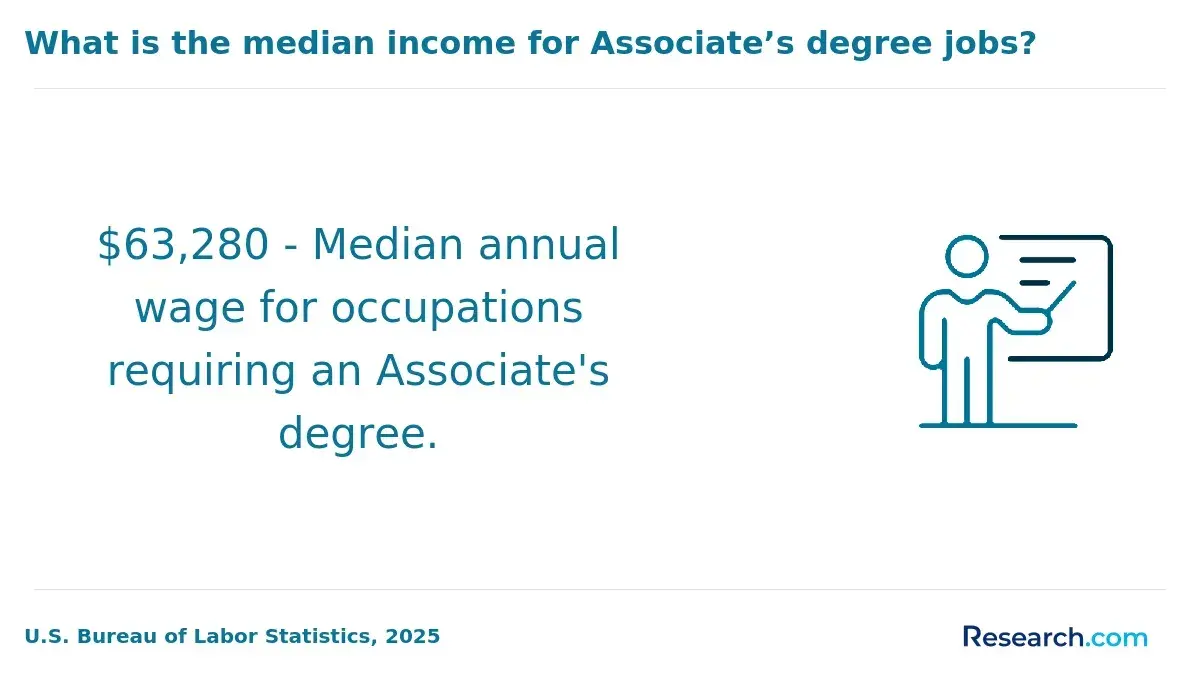
An online bachelor's degree usually takes four years for first-time full-time students, but career changers often finish faster if they transfer credits. A student entering with an associate degree or about 60 accepted credits may complete the remaining coursework in roughly two years of full-time study. Part-time students may need longer, especially if they take one or two courses per term while working.
Speed should not be the only goal. Accelerated courses can be efficient, but they compress reading, assignments, exams, and projects into shorter terms. That format works best for organized students with predictable schedules and may be stressful for adults managing caregiving, overtime, or rotating shifts.
Consider these timeline options before choosing a format:
- Traditional full-time pacing works well for students who can handle 12 to 15 credits per semester.
- Part-time pacing is safer for working adults who need flexibility, but it extends the completion date.
- Accelerated eight-week courses can shorten the calendar timeline, but weekly workload may be intense.
- Competency-based programs can be fast for adults with strong prior knowledge, but they require self-direction.
- Cohort-based programs offer structure and peer support, but they may provide less scheduling freedom.
What are the admission requirements for online bachelor's programs?
Admission requirements for online bachelor's programs vary by school and by whether you are applying as a first-year, transfer, degree-completion, or second-degree student. Most programs ask for official transcripts, an application, and proof of high school completion or prior college work. Selective majors may require prerequisite courses, minimum GPA thresholds, entrance exams, portfolios, background checks, or professional licenses.
Adults should request clarity before applying because admissions approval does not always mean all prior credits will count toward the major. A school may accept you but still place many credits into electives, which can increase cost and time.
- Official high school, GED, college, military, or professional training transcripts.
- Minimum GPA, which may differ for general admission and major admission.
- Prerequisite courses, especially for nursing, engineering, business, education, and computer science.
- Proof of RN licensure for RN-to-BSN programs or other license-based degree-completion tracks.
- Background check, fingerprinting, immunizations, or field-placement clearance for programs involving schools, healthcare sites, or public agencies.
- English proficiency documentation for applicants whose prior education was not in English.
Do online degrees meet licensing requirements?
Some online bachelor's degrees meet licensing requirements, but many do not automatically do so in every state. Licensure is most important in nursing, teaching, engineering, social work, counseling-related pathways, accounting, and some public safety or healthcare fields. Requirements can vary by state board, supervised hours, exam eligibility, clinical placement rules, and program approval status.
The safest approach is to verify licensure alignment before enrolling, not after graduating. Ask the program to state in writing whether it meets educational requirements in your state, and then confirm with the state licensing board. This is especially important if you live outside the school's home state or plan to move.
Common mistakes include assuming that regional accreditation is enough for licensure, assuming an online program is approved in all states, and assuming the school will find local clinical or student-teaching placements. For license-based fields, the right program is the one that fits the exact credential you need where you plan to work.
How do I compare online programs and find the best fit?
To compare online programs and find the best fit, start with your target job and work backward to the degree, accreditation, skills, timeline, and cost. Career changers should avoid choosing a major only because it sounds interesting or appears affordable. A low-cost program that does not support your career goal can become expensive if you need another credential later.
The table below summarizes the main comparison points that separate a practical online bachelor's program from one that may look attractive but create problems later.
| Comparison point | Strong sign | Red flag |
| Accreditation | Recognized institutional accreditation and relevant programmatic accreditation | Unclear accreditation or approval that does not apply to the exact program |
| Total cost | Written tuition, fee, transfer, and aid estimate | Only headline tuition is provided |
| Career alignment | Courses, projects, certifications, or placements match target roles | Major is broad with little evidence of job preparation |
| Transfer policy | Written evaluation before enrollment | Credits are reviewed only after commitment |
| Student support | Online advising, tutoring, library access, career services, and tech support | Support is limited to email or business hours only |
Use these steps to make a confident decision before you enroll:
- Pick one or two target job titles and review current postings in your region.
- Identify the required degree, licenses, certifications, software tools, and experience patterns in those postings.
- Request written cost and transfer evaluations from at least three accredited programs.
- Ask how online students access advising, tutoring, career coaching, internships, labs, clinicals, or field placements.
- Compare net cost, completion time, licensure fit, and career relevance rather than relying on one ranking.
- Choose the program that minimizes wasted credits while giving you the strongest path to your first realistic role.
Other Things You Should Know About
Yes, many employers accept online bachelor's degrees when they come from accredited colleges. The diploma often does not specify online study, but employer response can vary by field, school reputation, licensure status, and the applicant's experience.
It can be worth it if the degree connects directly to a realistic career path, accepts transfer credits, fits your schedule, and improves access to roles you could not reach otherwise. It is less likely to pay off if you choose a major without checking job requirements first.
Many adults do, but the right pace matters. One or two courses per term may be more sustainable for full-time workers, while accelerated or full-time schedules require more predictable study time.
The biggest mistake is enrolling before confirming accreditation, transfer credits, total cost, and career alignment. Always get key details in writing and verify licensure requirements with the appropriate state board when applicable.
References
- 10 Best Online Degrees for Career Changers in 2026 | AscendurePro https://ascendurepro.com/best-online-degrees-for-career-changers/
- Online Bachelor's Degree Completion Financial Aid https://www.hamline.edu/admission-aid/financial-aid/online-bachelors
- [2026 ] Guide to College for Working Adults | New England Tech https://www.neit.edu/blog/college-for-working-adults
- Online Degree Programs for Working Adults https://thehorizonsunlimited.com/blog/online-degree-programs-for-working-adults
- Top Careers for Psychology Master’s Graduates https://www.onlinemastersdegrees.org/best-programs/for-career-changers/
- Career earnings by college major - The Hamilton Project https://www.hamiltonproject.org/data/career-earnings-by-college-major/
- Top Online Schools That Accept Transfer Credits https://www.edvisorly.com/student-guides/online-schools-that-accept-transfer-credits
- How does a college degree improve graduates’ employment and earnings potential? - APLU https://www.aplu.org/our-work/4-policy-and-advocacy/publicuvalues/employment-earnings/
- Scholarships for Working Adults | Top Eleven Online Colleges https://www.college-scholarships.com/11-scholarships-for-working-adults-top-eleven-online-colleges/
- Online Bachelor's Degree Student Scholarships | Cornerstone University https://www.cornerstone.edu/tuition-financial-aid/apply-for-aid/scholarships-grants/undergraduate-online-scholarships/