2027 Most Affordable Bachelor's Degrees for Hybrid Jobs

Co-Founder and Chief Data Scientist
Choosing a bachelor's degree is harder when you want flexibility, strong job prospects, and manageable debt. College Board reports that average published in-state tuition and fees at public four-year colleges were $11,610 for 2024-25, making affordability a major factor before career outcomes are even considered. This guide is for students, working adults, transfer students, and career changers comparing bachelor's degrees that can lead to hybrid roles. You will learn which majors fit flexible work, how to evaluate program quality and total cost, and how to connect a degree choice to realistic entry-level jobs.
Key Things You Should Know
- Public in-state bachelor's programs are often the affordability benchmark: College Board listed average published tuition and fees at $11,610 for 2024-25, compared with $30,780 for public out-of-state students and $43,350 at private nonprofit four-year institutions.
- Degrees with the strongest hybrid-job alignment usually combine digital workflow, communication, compliance, analytics, or project coordination; business, IT, computer science, cybersecurity, healthcare administration, and education technology pathways often fit this pattern.
- BLS May 2024 wage data shows why major choice matters: the median annual wage was $105,990 for computer and mathematical occupations, $93,600 for registered nurses, and $81,680 for accountants and auditors, but actual outcomes vary by location, experience, licensure, and employer policy.
Top 10 2026 Most Affordable Bachelor's Degrees for Hybrid Jobs
Business Degrees
A bachelor's in business is often one of the most affordable hybrid-friendly options because it is widely available at public universities, online divisions, and transfer-friendly programs. Students can focus on accounting, finance, marketing, human resources, operations, or project management. Hybrid roles may include business analyst, account coordinator, HR specialist, operations associate, or marketing analyst. The best fit is for students who want broad career mobility rather than a narrowly licensed occupation. Check whether the curriculum includes analytics, spreadsheets, business communication, and internships, not just general management theory.
Healthcare Degrees
Healthcare bachelor's degrees can support hybrid work when they focus on administration, health informatics, public health, quality improvement, or healthcare management rather than direct patient care. Graduates may coordinate records, compliance, scheduling, insurance operations, population health projects, or clinical data workflows. BLS reported a May 2024 median annual wage of $117,960 for medical and health services managers, though management roles usually require experience. This path fits organized students who want healthcare stability without necessarily becoming licensed clinicians.
Information Technology Degrees
Information technology degrees are strong for hybrid jobs because support, systems administration, cloud operations, networking, and database tasks often combine remote troubleshooting with scheduled on-site work. Affordable IT programs usually emphasize applied labs, certifications, and employer-aligned projects. Look for coursework in networking, Linux or Windows administration, cloud platforms, cybersecurity basics, scripting, and IT service management. This major fits students who prefer practical technology implementation over heavy theory and want roles such as IT support analyst, systems specialist, cloud support associate, or network technician.
Computer Science Degrees
Computer science can be more math-intensive than IT, but it often leads to flexible hybrid roles in software development, data engineering, automation, quality assurance, and product technology. BLS listed the May 2024 median annual wage for software developers at $133,080, but entry-level competition can be strong and portfolios matter. Affordable programs should include programming depth, data structures, databases, software engineering, algorithms, and collaborative projects. This path fits students who enjoy problem-solving, coding, and continuous learning more than general office technology support.
Cybersecurity Degrees
Cybersecurity degrees prepare students for roles that may be hybrid because monitoring, documentation, risk assessment, and incident response often happen through secure digital systems, while audits or hardware-related work may require on-site presence. BLS reported a May 2024 median annual wage of $124,910 for information security analysts. Entry-level students should avoid programs that skip networking fundamentals, operating systems, or hands-on labs. Strong affordable programs align coursework with security operations, governance, cloud security, scripting, digital forensics, and recognized certification objectives.
Psychology Degrees
A bachelor's in psychology can support hybrid work in human services, research coordination, HR, user experience research, case management support, and behavioral health administration. It is less direct for licensed counseling because most clinical roles require graduate education and state licensure. This major is affordable when students choose a public or transfer-friendly program and pair it with data, writing, or workplace training skills. It fits students interested in behavior, communication, research, and people-centered roles rather than those expecting immediate independent clinical practice.
Nursing Degrees
Nursing is not fully remote for most early-career roles, but BSN-prepared nurses may later move into hybrid case management, utilization review, care coordination, informatics, quality improvement, or telehealth. BLS reported a May 2024 median annual wage of $93,600 for registered nurses. Affordability depends heavily on clinical placement logistics, fees, uniforms, background checks, and whether prior credits transfer. Students must confirm state board approval and clinical requirements before enrolling, especially in online or hybrid RN-to-BSN and prelicensure pathways.
Education Degrees
Education degrees can lead to classroom teaching, instructional design support, tutoring coordination, education technology, curriculum development, and school operations roles. Hybrid flexibility is often greater outside traditional K-12 classroom teaching, where in-person requirements remain common. Affordable programs should clearly state student-teaching expectations, state licensure alignment, and field placement support. This path fits students who want to teach, train, coach, or design learning experiences. If your goal is public school licensure, confirm that the program meets requirements in the state where you plan to work.
Criminal Justice Degrees
Criminal justice degrees may lead to hybrid-adjacent roles in compliance, investigations support, probation documentation, emergency management administration, court services, intelligence analysis, or corporate security operations. Many law enforcement jobs are primarily in person, so students seeking hybrid work should target analytical, administrative, legal support, or risk-related tracks. Affordable programs are strongest when they include research methods, report writing, ethics, data analysis, cybercrime, and policy. This major fits students interested in public systems, safety, evidence, and procedure.
Engineering Degrees
Engineering degrees can be costly because of labs and sequenced prerequisites, but public universities and transfer pathways can reduce the price. Hybrid roles may appear in design, CAD, systems engineering, quality assurance, project engineering, technical sales, and documentation-heavy positions. Many engineering jobs still require site visits, manufacturing coordination, or lab work. Students should look for ABET accreditation when relevant, strong math preparation, co-ops, and industry software access. This path fits students who want technical problem-solving and can commit to a rigorous curriculum.
What is a hybrid job and why do certain bachelor's degrees fit it best?
A hybrid job combines remote work with scheduled in-person work. The balance varies: one employer may expect two office days each week, while another may require occasional site visits, client meetings, labs, school placements, clinical rotations, or team planning days. A bachelor's degree fits hybrid work best when it prepares students for responsibilities that can be documented, analyzed, coordinated, secured, taught, coded, or managed through digital systems.
The strongest hybrid-focused degrees usually have three traits: they teach a portable technical or professional skill, they require clear communication across teams, and they produce work that can be tracked through software. That is why business analytics, IT, computer science, cybersecurity, healthcare administration, education technology, and some engineering roles commonly appear in hybrid settings. By contrast, degrees tied to hands-on licensure, direct care, field operations, or lab-intensive work may still be valuable but less flexible at entry level.
Students should treat "hybrid" as an employer policy, not a guaranteed outcome attached to a major. The same degree can lead to remote-friendly office work, fully on-site operations, or travel-heavy roles depending on the industry, employer, region, and seniority level.
How can you identify truly affordable bachelor's programs for hybrid career paths?
Truly affordable bachelor's programs are not always the ones with the lowest advertised tuition. The better measure is total net cost after grants, transfer credits, required fees, commuting, technology, books, clinical or lab expenses, and time away from paid work. For many students, the best value is a regionally accredited public university, a transfer pathway from a community college, or an online program with transparent tuition and strong credit acceptance.
Use this step-by-step process to compare programs before applying:
- Calculate total program cost, not just per-credit tuition, including fees, residency charges, textbooks, software, placement costs, and graduation fees.
- Ask for a written transfer credit estimate before enrolling if you have prior college credits, military training, certifications, or an associate degree.
- Compare net price after grants and scholarships using the school's financial aid estimate rather than relying on sticker price.
- Check whether the program's schedule lets you keep working, because lost income can be a major hidden cost.
- Review career services, internship access, employer partnerships, and job outcome disclosures when available.
Students who need a faster path should compare whether an accelerated online bachelor's degree reduces total cost or simply compresses the same workload into a more demanding schedule. Acceleration can help working adults with transfer credits, but it can be risky for students who need more academic support, clinical placements, or part-time pacing.
The table below summarizes cost factors that commonly separate a low-tuition program from a genuinely affordable degree. Use it to identify expenses that may not appear in promotional pricing.
| Cost factor | Why it matters | What to ask the school |
| Tuition model | Per-credit, flat-rate, and competency-based pricing can produce very different totals. | What is the estimated total tuition for the credits I still need? |
| Transfer policy | Accepted credits can shorten time to graduation and reduce borrowing. | How many of my prior credits apply to major, general education, and elective requirements? |
| Required fees | Online, technology, lab, clinical, graduation, and proctoring fees can add up. | Which fees are mandatory each term? |
| Placement requirements | Nursing, education, healthcare, and engineering may require local sites or travel. | Will the school help arrange placements in my area? |
| Work compatibility | A cheaper program can become expensive if it forces students to reduce work hours. | Are courses asynchronous, evening-based, cohort-based, or scheduled live? |
What accreditation and institutional quality checks matter for hybrid-focused bachelor's degrees?
Accreditation is the first quality check because it affects federal financial aid eligibility, credit transfer, graduate school options, licensure pathways, and employer recognition. At minimum, students should look for institutional accreditation from an agency recognized by the U.S. Department of Education or the Council for Higher Education Accreditation. Programmatic accreditation may also matter in fields such as nursing, education, engineering, business, counseling-related pathways, and cybersecurity.
Before enrolling, verify the following quality signals directly rather than assuming that a program's marketing language is enough:
- Institutional accreditation is current and applies to the school awarding the degree.
- Programmatic accreditation or state approval is present when required for licensure or professional recognition.
- The curriculum includes major-specific projects, labs, practicums, internships, or supervised fieldwork where appropriate.
- Faculty qualifications match the field, especially in technical, clinical, licensure, or engineering programs.
- The school publishes clear policies for transfer credits, academic progress, withdrawals, and financial aid refunds.
Red flags include vague accreditation claims, pressure to enroll immediately, unclear total cost, unusually broad promises about remote jobs, or refusal to provide written answers about licensure alignment. For nursing and education, state requirements are especially important because an online or hybrid program may be approved in one state but not automatically meet requirements in another.
Which bachelor's majors most commonly lead to flexible hybrid roles across industries?
The most affordable bachelor's majors for hybrid work are typically those that are widely offered, transfer-friendly, and connected to roles with digital workflows. Affordability also improves when students can start at a community college, use employer tuition assistance, or complete upper-division requirements online while working.
The table below compares common bachelor's majors by hybrid fit, affordability factors, and typical early career direction. It is not a ranking of individual schools; it is a decision tool for matching a major to a realistic work style.
| Major | Hybrid-job fit | Affordability strengths | Common entry-level direction |
| Business | High in corporate, nonprofit, finance, HR, operations, and marketing settings. | Widely available online and at public universities; often transfer-friendly. | Business analyst assistant, HR coordinator, marketing associate, operations associate. |
| Information Technology | High for support, systems, cloud, and network roles with digital ticketing workflows. | Applied programs may accept certifications and prior technical credit. | IT support analyst, systems technician, cloud support associate. |
| Computer Science | High for software, data, automation, and QA roles, though competition can be strong. | Public programs can offer strong ROI if students build portfolios and internships. | Junior developer, QA analyst, data technician, automation assistant. |
| Cybersecurity | High for monitoring, governance, risk, and security operations roles. | Some programs align with certification preparation and hands-on labs. | SOC analyst trainee, security analyst, compliance support specialist. |
| Healthcare Administration | Moderate to high in billing, quality, compliance, informatics, and operations. | Often available fully online for nonclinical students. | Health services coordinator, patient access analyst, quality assistant. |
| Education | Moderate; higher in instructional design and edtech than classroom teaching. | Public licensure programs and transfer pathways can lower cost. | Teacher candidate, learning coordinator, curriculum assistant. |
| Psychology | Moderate in HR, research, human services administration, and UX support. | Common at many low-cost public institutions. | Research assistant, case support specialist, HR assistant. |
If you are undecided, choose a major that keeps more than one path open. Business, IT, and healthcare administration often provide broad mobility, while nursing, engineering, and education can be excellent investments for students committed to specific professional requirements.
How do online, hybrid, and on-campus formats compare for these bachelor's degrees?
Online, hybrid, and on-campus formats can all lead to hybrid careers, but they serve different learners. The best format depends on your schedule, learning style, major requirements, and need for campus resources. For affordability, online programs may reduce commuting and relocation costs, while campus programs may provide stronger labs, networking, and internship access in some fields.
The table below compares formats from a student decision perspective. Focus on fit rather than assuming one format is automatically better.
| Format | Best for | Trade-offs | Hybrid-career relevance |
| Online | Working adults, parents, military students, and learners far from campus. | Requires self-management; hands-on placements may still be in person. | Builds comfort with digital collaboration, remote communication, and asynchronous work. |
| Hybrid degree format | Students who want flexibility but still need labs, clinics, studios, or campus interaction. | Travel days can complicate work schedules and commuting budgets. | Mirrors many workplace models that combine remote tasks with in-person meetings. |
| On campus | Traditional students, lab-heavy majors, residential learners, and students needing frequent support. | Can involve higher housing, transportation, or opportunity costs. | May offer stronger local employer pipelines, clubs, labs, and face-to-face networking. |
Online formats are not automatically easier. Strong online programs require regular writing, discussion, projects, exams, and group work. Hybrid formats can be excellent for students who want a more gradual transition into flexible work because they practice both remote accountability and in-person collaboration.
What courses and skills should these programs include to prepare you for hybrid work?
Hybrid work rewards students who can produce independently, communicate clearly, use software confidently, and coordinate with teams they do not see every day. A strong bachelor's program should therefore teach both technical depth and professional habits. Students should review course catalogs and sample syllabi before enrolling because degree titles can hide major differences in skill coverage.
Look for courses and experiences that build the following career-ready abilities:
- Data literacy, including spreadsheets, dashboards, databases, statistics, or analytics tools appropriate to the field.
- Written communication for reports, documentation, proposals, case notes, technical tickets, or policy memos.
- Project management basics, including timelines, scope, deliverables, team coordination, and stakeholder updates.
- Digital collaboration using learning platforms, cloud documents, videoconferencing, shared repositories, or ticketing systems.
- Field-specific technical skills such as coding, network administration, clinical documentation, lesson planning, CAD, compliance review, or research methods.
- Ethics, privacy, security, and professional judgment, especially in healthcare, education, cybersecurity, psychology, and criminal justice.
Students should also build evidence of skill outside class. A portfolio, internship, capstone, practicum, GitHub repository, case study, certification, or supervisor recommendation can help employers evaluate readiness for flexible work. For students planning graduate study after gaining experience, a 1 year masters may later provide a focused credential, but it should not be used to compensate for a poorly chosen bachelor's program.
How long do these degrees take, and what total costs should students expect?
Most bachelor's degrees require about 120 credits and take four years of full-time study for first-time students. Transfer students, adult learners, and students with prior credits may finish faster, while part-time students may need longer. The most important affordability question is not only "How many years?" but "How many credits do I still need, and what will each term cost?"
College Board's 2024-25 published tuition and fee averages provide a useful cost benchmark: $11,610 for in-state students at public four-year institutions, $30,780 for out-of-state students at public four-year institutions, and $43,350 for private nonprofit four-year institutions. These are sticker prices, not net prices, so grants, scholarships, tuition discounts, and living arrangements can change the final cost substantially.
The table below shows common student timelines and the cost issues that usually matter most for each group.
| Student situation | Typical timeline | Main cost consideration | Best affordability move |
| First-time full-time student | About four years | Tuition, housing, meals, fees, books, and transportation. | Compare public in-state options and apply early for need-based aid. |
| Community college transfer student | Often about two additional years after transfer | Whether credits apply to the major or only count as electives. | Use an articulation agreement and get a written degree audit. |
| Working adult with prior credits | Varies widely | Credit acceptance, schedule flexibility, and ability to keep earning income. | Prioritize transfer-friendly online or hybrid programs with clear pacing. |
| Part-time student | Often more than four years | Longer enrollment can increase fees and delay earnings growth. | Take enough credits each year to maintain aid eligibility and momentum. |
| Licensure-track student | Varies by field placement and exam requirements | Clinical, student teaching, lab, testing, and background check costs. | Confirm placement support and state approval before enrolling. |
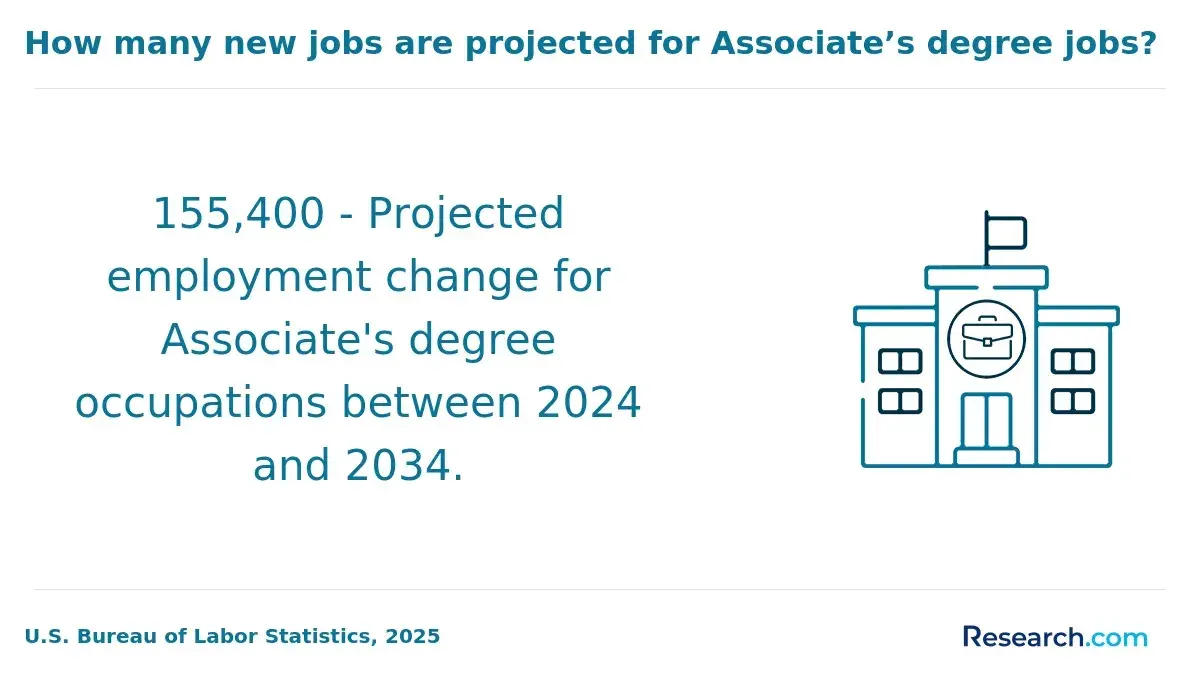
Students who are not ready for a four-year commitment can begin with online associate degrees and transfer later, but they should choose courses that fit a bachelor's plan from the start. Random credits may be inexpensive individually yet costly if they do not apply to the final degree.
What entry-level hybrid job titles, salaries, and advancement paths can graduates pursue?
Graduates can pursue many entry-level hybrid roles, but flexibility usually increases with experience. Early roles may require office training, scheduled in-person meetings, fieldwork, or supervised practice before remote days become available. Students should read job postings carefully and distinguish "remote eligible," "hybrid," "field-based," and "on-site with occasional remote work."
The table below connects common degree areas with entry-level roles and advancement directions. Salaries are best evaluated by specific occupation, region, and employer; broad medians should be used as context rather than promises.
| Degree area | Possible entry-level hybrid titles | Advancement path | Salary context |
| Business | Operations associate, HR coordinator, marketing analyst assistant, accounting associate. | Business analyst, HR manager, project manager, finance manager. | BLS reported a May 2024 median annual wage of $81,680 for accountants and auditors. |
| Information Technology | IT support analyst, help desk specialist, systems support technician. | Systems administrator, cloud engineer, IT manager. | Computer and mathematical occupations had a May 2024 median annual wage of $105,990. |
| Computer Science | Junior developer, QA analyst, data technician, automation assistant. | Software engineer, data engineer, product engineer, technical lead. | Software developers had a May 2024 median annual wage of $133,080. |
| Cybersecurity | SOC analyst trainee, security compliance assistant, risk analyst. | Information security analyst, security engineer, governance lead. | Information security analysts had a May 2024 median annual wage of $124,910. |
| Healthcare Administration | Patient access coordinator, quality assistant, health data coordinator. | Practice manager, compliance manager, health services manager. | Medical and health services managers had a May 2024 median annual wage of $117,960. |
| Education | Teacher candidate, instructional support specialist, learning coordinator. | Lead teacher, instructional designer, curriculum specialist, administrator. | Pay depends heavily on state, district, licensure, and contract structure. |
Advancement may require certifications, graduate study, licensure, or supervised experience. Older adults and career changers should be especially careful about time-to-completion and workload; in some cases, a shorter retraining route such as a one year degree for seniors may be worth comparing against a full bachelor's pathway if the goal is targeted skill development rather than a new licensed profession.
How can students evaluate job outlook, remote flexibility, and long-term stability in hybrid careers?
Job outlook and hybrid flexibility are related but not the same. A field can be growing while still requiring on-site work, and a remote-friendly field can be competitive if many applicants want the same flexibility. Students should evaluate demand, job duties, credential requirements, employer policies, and automation risk together.
Use these practical checks before committing to a major:
- Search current job postings in your target region and save examples that list hybrid schedules, required degrees, software skills, and experience expectations.
- Compare entry-level postings with mid-level postings to see what skills are needed for advancement.
- Check whether the field depends on state licensure, background checks, clinical hours, security clearances, or supervised practice.
- Look for roles where AI is more likely to change tasks than eliminate the need for judgment, communication, compliance, or technical oversight.
- Ask admissions and career services teams which employers recruit from the program and whether internships can be completed locally or remotely.
Common mistakes include choosing a major because it sounds flexible, assuming every online degree leads to remote work, ignoring state licensure rules, and comparing schools only by tuition. A better approach is to choose a degree that matches the work you want to do, verify that the program is recognized, keep total cost low, and graduate with evidence of practical skills.
Hybrid stability is strongest when your role solves a business, technical, care coordination, compliance, instructional, or operational problem that employers must keep managing even as tools change. For that reason, students should prioritize adaptable skills: data interpretation, writing, documentation, collaboration, cybersecurity awareness, ethical decision-making, and comfort learning new platforms.
Other Things You Should Know About
The cheapest option is usually an in-state public university program or a transfer pathway from a community college into a public four-year school. Business, IT, psychology, healthcare administration, and criminal justice are often widely available in affordable formats, but the best choice depends on your credits, state, and career goal.
Yes, many employers consider online bachelor's degrees valid when they come from properly accredited institutions. What matters most is accreditation, relevant coursework, practical projects, internships or experience, and whether the degree fits the role.
IT, computer science, cybersecurity, business analytics, healthcare administration, and some education technology pathways often have strong hybrid potential because their work can be managed through digital systems. However, employer policy and experience level strongly affect flexibility.
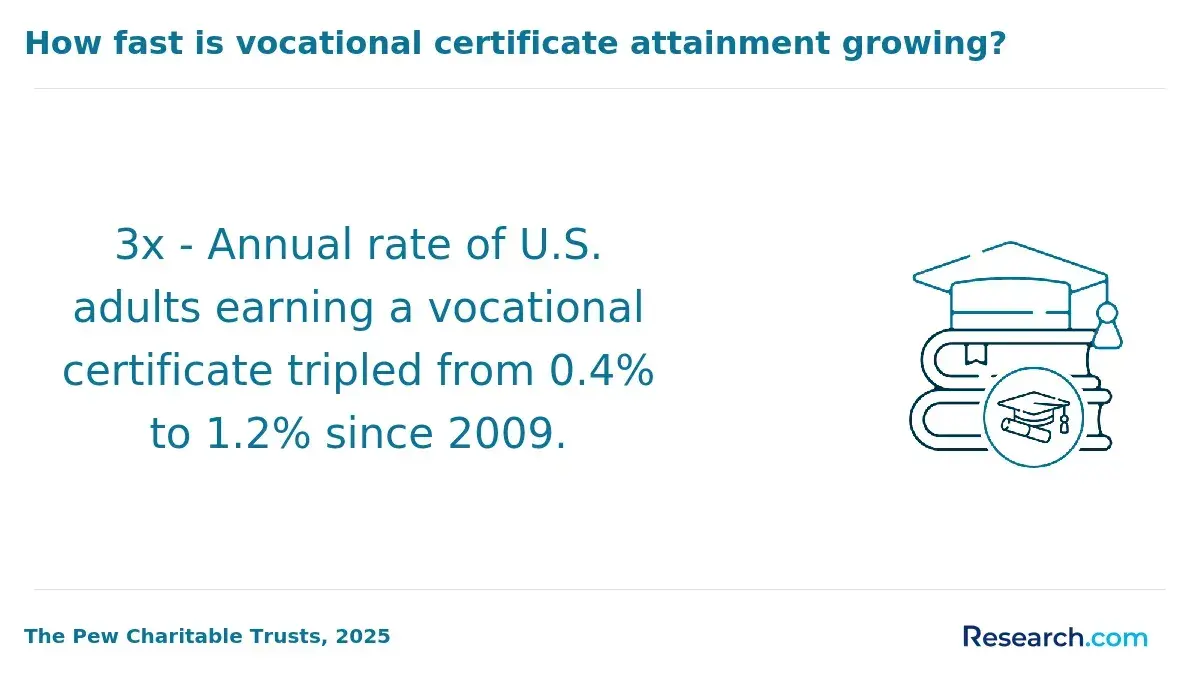
Choose a bachelor's degree if your target roles commonly require one or if you want long-term advancement. Choose a certificate if you already have a degree, need a specific technical skill, or want to test a field before committing to a four-year program.
References
- Mastering the Job Search in 2024: Tips for Thriving in the New Hybrid Work Era | EuroBrussels https://www.eurobrussels.com/article/855/mastering-the-job-search-in-2024-tips-for-thriving-in-the-new-hybrid-work-era
- Hybrid and remote: The future of in-demand IT jobs - Spiceworks https://www.spiceworks.com/it-careers/hybrid-and-remote-the-future-of-in-demand-it-jobs/
- Does College Pay Off? A Comprehensive Return On Investment Analysis - FREOPP https://freopp.org/whitepapers/does-college-pay-off-a-comprehensive-return-on-investment-analysis/
- Boost Income with Flexible Online Degrees https://www.marian.edu/blog/2026/02/how-flexible-online-degrees-help-you-boost-income-on-a-budget.php
- 2025 Most Affordable Online Colleges & Degrees https://www.onlineu.com/most-affordable-colleges
- Trade School vs. College: Weighing cost, timelines & More https://www.midwesttech.edu/resources/careers/trade-school-vs-college-a-guide-to-weighing-your-options/
- Career earnings by college major - The Hamilton Project https://www.hamiltonproject.org/data/career-earnings-by-college-major/
- Best Accredited Online Universities in 2025 https://www.study.eu/article/best-accredited-online-universities
- Top Degrees in Demand for the Future: 2026 & Beyond https://skillifysolutions.com/blogs/career-growth/top-degrees-in-demand-for-the-future/
- Affordable Universities for International Students & Online Degrees 2026 https://northcypruseducation.com/blog/affordable-universities-for-international-students-a-guide-to-online-degrees/