2027 Best Online Bachelor's Degrees With 2.5 GPA Admission

Co-Founder and Chief Data Scientist
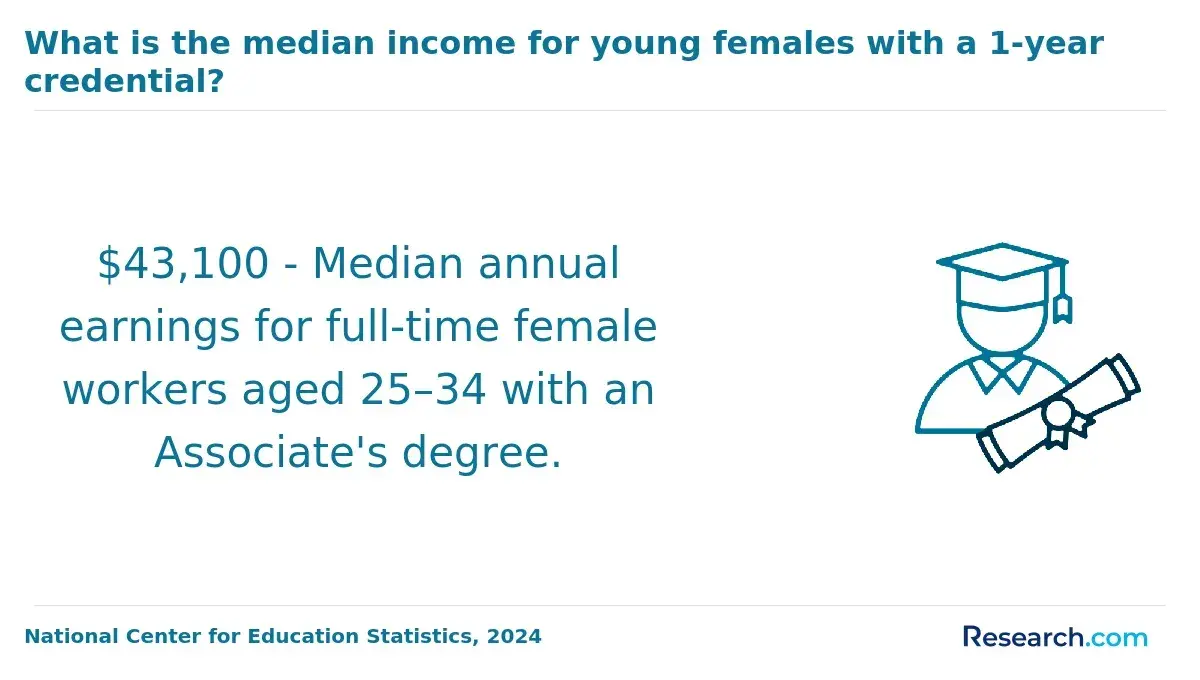
A 2.5 GPA can feel like a barrier, but many online bachelor's programs use flexible or holistic admissions, especially for adult and transfer students. The decision matters because the U.S. Bureau of Labor Statistics reported 2024 median weekly earnings of $1,543 for workers with a bachelor's degree, compared with $930 for high school graduates.
This guide is for students who want realistic degree options, not perfect transcripts. You will learn which majors are most accessible, how requirements differ, and how to choose an accredited program that fits your goals.
Key Things You Should Know
- Many online bachelor's programs consider applicants with a 2.5 GPA, but nursing, engineering, education licensure, and some computer science tracks may require higher major-specific standards.
- Cost varies widely: College Board data for 2024-25 shows average published tuition and fees of $11,610 for in-state public four-year colleges and $43,350 for private nonprofit four-year colleges.
- Career growth is strongest in technology and healthcare management; BLS projections for 2024-34 show 29% growth for information security analysts and 23% growth for medical and health services managers.
Top 10 Best Online Bachelor's Degrees With 2.5 GPA Admission
Business Degrees
Business is one of the most practical online bachelor's choices for applicants with a 2.5 GPA because many programs offer broad admission pathways and multiple concentrations. Common tracks include management, accounting, marketing, finance, human resources, and supply chain management.
It fits students who want flexible career options rather than a single licensed occupation. Expect courses in economics, business law, analytics, leadership, and accounting. Choose accounting or finance if you like detail-heavy work; choose management or marketing if you prefer communication, projects, and strategy.
Healthcare Degrees
Online healthcare bachelor's degrees can lead to administrative, management, public health, or health information roles. They are often more GPA-accessible than clinical programs because they do not always require direct patient-care training. Good options include healthcare administration, public health, health sciences, and health information management.
These programs fit students interested in hospitals, insurance, clinics, community health, or compliance. Check whether internships, background checks, or professional certification preparation are included, because those details can affect both cost and career readiness.
Information Technology Degrees
Information technology degrees are usually applied and career-focused, making them strong options for students who want technical work without the heavier theory of computer science. Many online IT programs accept transfer students with around a 2.5 GPA, though prerequisites may apply.
Coursework commonly covers networking, databases, cloud systems, project management, cybersecurity basics, and technical support. This degree fits students who enjoy solving system problems, helping users, and managing technology infrastructure. Look for programs that include labs, certifications, or portfolio projects.
Computer Science Degrees
Computer science is more math- and programming-intensive than IT, so admission may be more selective at some schools. A 2.5 GPA can still be acceptable, especially for general admission, but calculus, discrete math, or programming prerequisites may determine placement.
Students study algorithms, software development, data structures, operating systems, databases, and sometimes artificial intelligence. This degree is best for students who want software, data, or systems roles and are willing to build a strong project portfolio alongside coursework.
Cybersecurity Degrees
Cybersecurity bachelor's programs are popular because they combine technical skills with risk management. A 2.5 GPA may meet general admission at many online schools, but stronger math, networking, or IT foundations can help. Courses often include ethical hacking, digital forensics, network defense, security governance, Linux, scripting, and incident response.
This degree fits students who like investigation, pattern recognition, and high-accountability work. Prior IT experience, certifications, and hands-on labs can matter as much as the degree title when applying for entry-level roles.
Psychology Degrees
An online psychology bachelor's degree is usually accessible to students with a 2.5 GPA and works well for those interested in human behavior, research, counseling support, human services, or graduate study. Coursework includes developmental psychology, abnormal psychology, statistics, research methods, social psychology, and cognition.
It is not enough to become a licensed psychologist or therapist, but it can support roles in case management, human resources, behavioral health support, and social services. Choose this major with a clear plan for work experience or graduate school.
Nursing Degrees
Nursing is the most complicated option for applicants with a 2.5 GPA because admission depends on program type. RN-to-BSN programs may accept licensed registered nurses with a 2.5 GPA, while pre-licensure BSN programs are often more competitive and may require science prerequisites, entrance exams, clinical placement, and state approval.
Online coursework may be available, but clinical requirements are in person. Confirm accreditation, state board approval, clinical locations, and licensure eligibility before enrolling. Do not assume every online nursing degree leads to RN licensure.
Education Degrees
Online education bachelor's degrees may accept a 2.5 GPA, but teacher licensure tracks usually have additional checkpoints. Students may need background checks, field experience, student teaching, content exams, and minimum grades in professional education courses.
Non-licensure education degrees can fit students interested in training, childcare administration, instructional support, or nonprofit work. If you want to teach in a public school, verify that the program is approved for licensure in your state. This is especially important if the school is located elsewhere.
Criminal Justice Degrees
Criminal justice is often one of the more accessible online bachelor's degrees for students with a 2.5 GPA. Programs cover policing, courts, corrections, criminology, ethics, juvenile justice, homeland security, and research methods. It fits students interested in law enforcement, probation, investigations, compliance, victim advocacy, or public safety administration.
Some careers require academy training, background checks, citizenship requirements, physical standards, or prior experience, so the degree alone may not be enough. Ask schools whether internships or agency partnerships are available.
Engineering Degrees
Engineering bachelor's degrees are less likely to be fully flexible for a 2.5 GPA because math and science readiness matter heavily. Some online programs in engineering technology, industrial technology, or applied engineering may be more accessible than traditional engineering.
Coursework can include calculus, physics, materials, circuits, design, quality control, and project management. Students should check ABET accreditation when it matters for licensure or employer expectations. If your GPA is lower, completing math and science prerequisites with strong grades can improve your application.
What online bachelor's programs accept a 2.5 GPA?
Online bachelor's programs that may accept a 2.5 GPA are most commonly found in business, liberal arts, psychology, criminal justice, healthcare administration, information technology, public administration, communication, and interdisciplinary studies. "Accept" does not always mean automatic admission. Schools may use the 2.5 GPA as a minimum for transfer admission, conditional admission, or major entry, while competitive programs may review prerequisites, essays, work history, test scores, military experience, or previous college credits.
The safest approach is to separate university admission from major admission. A school may admit you to the institution with a 2.5 GPA but require a higher GPA before you can enter nursing, teacher education, engineering, or upper-division computer science coursework.
Students with a 2.5 GPA should prioritize programs that clearly publish admissions thresholds and offer support after enrollment. Before applying, ask admissions advisors these questions:
- Is 2.5 the minimum GPA for the university, the major, or both?
- Can I enter conditionally if I am slightly below the stated GPA?
- Which credits will transfer, and will transfer grades affect my new GPA?
- Are there higher GPA requirements for internships, clinicals, student teaching, or capstone courses?
- Can I start in a related major and later apply to a selective track?
How do admission requirements compare across these programs?
Admission requirements vary most by field, not just by school. A 2.5 GPA may be enough for general admission in many online bachelor's programs, but selective majors often add prerequisites, minimum course grades, background checks, portfolios, or licensure-related requirements.
When comparing accredited online universities, focus on the exact admission pathway that applies to you: first-year, transfer, readmission, adult learner, military, or second-degree student. The table below summarizes how requirements commonly differ so you can avoid applying to programs that look accessible but have hidden major barriers.
| Program area | How a 2.5 GPA is usually treated | Additional requirements to check | Best fit for applicants |
| Business | Often acceptable for general or transfer admission | Accounting or finance prerequisites, minimum grades in core courses | Students seeking broad career flexibility |
| Healthcare administration | Often acceptable outside clinical tracks | Internship, health information certification alignment, background checks | Students interested in healthcare operations |
| Information technology | Often acceptable, especially for applied IT tracks | Math placement, prior technical coursework, lab access | Students who want hands-on systems work |
| Computer science | May be acceptable for admission but selective for upper division | Calculus, programming prerequisites, minimum major GPA | Students prepared for math and coding intensity |
| Nursing | Varies widely; RN-to-BSN may be more flexible than pre-licensure BSN | RN license, science GPA, clinical placement, state board approval | Licensed nurses or strong science students |
| Education | May be acceptable for entry, but licensure gates apply | Field hours, student teaching, exams, state approval | Students committed to state teaching requirements |
| Engineering | Often more selective, especially traditional engineering | Calculus, physics, lab requirements, ABET relevance | Students with strong math recovery plans |
A common mistake is applying only because a school advertises "2.5 minimum GPA." Always ask whether that minimum applies after transfer-credit evaluation and whether your intended concentration has separate standards.
Which accredited schools offer these degrees online?
Accredited online bachelor's degrees are offered by public universities, private nonprofit universities, private for-profit institutions, and competency-based schools. The key is not the ownership type alone; it is whether the institution is recognized by an accreditor accepted by the U.S. Department of Education and whether the program meets any field-specific standards you need.
Examples of accredited institutions with large online bachelor's catalogs include Arizona State University Online, University of Maryland Global Campus, Western Governors University, Southern New Hampshire University, Purdue Global, Colorado State University Global, Liberty University, Franklin University, and Oregon State University Ecampus. Admission rules, GPA cutoffs, and program availability can change, so verify requirements directly before applying.
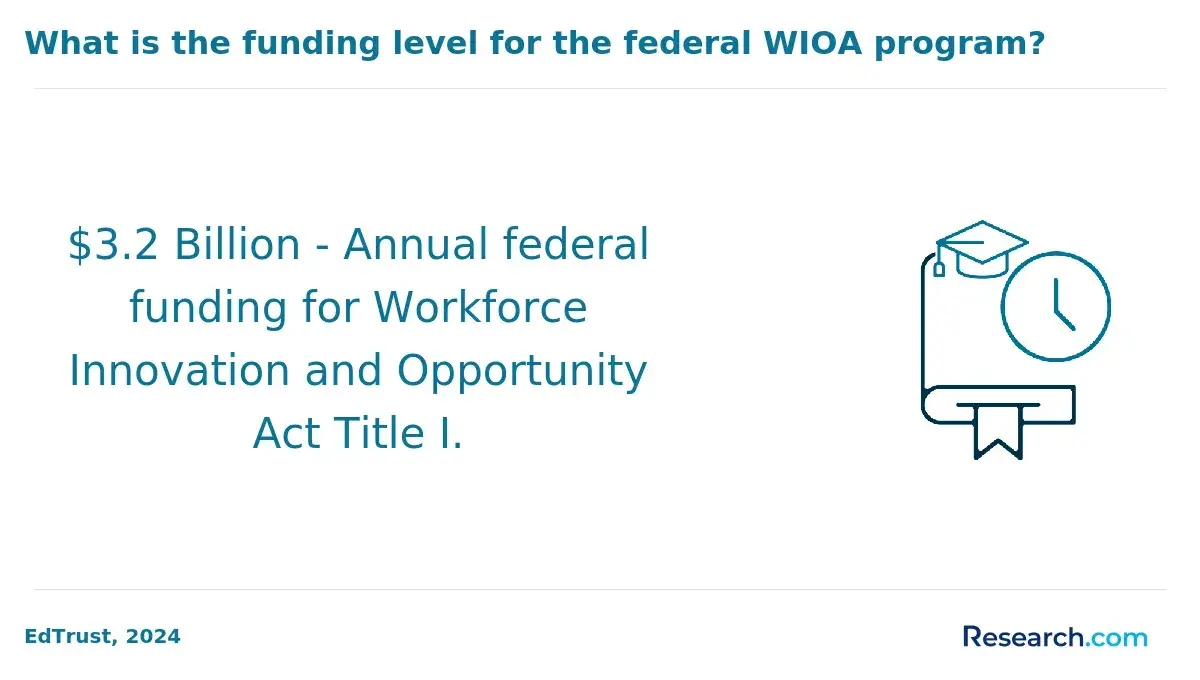
If affordability is a major factor, prioritize schools that participate in federal aid and compare online colleges that accept FAFSA. For the 2024-25 award year, the maximum Federal Pell Grant was $7,395, which can substantially reduce out-of-pocket cost for eligible students but may not cover the full cost of attendance.
Use this quick screening process before you submit an application:
- Confirm institutional accreditation through the school's official accreditation page.
- Check whether your specific major has programmatic accreditation or state approval requirements.
- Ask for a written transfer-credit evaluation before committing.
- Compare tuition, fees, books, technology costs, and required in-person expenses.
- Review graduation support, tutoring, career services, and online student advising.
What majors are best for career growth?
The best major for career growth depends on your skills, tolerance for technical coursework, and whether you need licensure. For many students with a 2.5 GPA, the strongest balance of accessibility and labor-market demand is found in cybersecurity, IT, healthcare administration, business analytics, accounting, and nursing pathways for licensed RNs.
The table below uses recent BLS occupational data to show how selected majors connect to growth-oriented roles. Use it as a career-direction tool, not as a salary promise.
| Major | Career direction | BLS 2024-34 outlook signal | Decision note |
| Cybersecurity | Information security analyst | 29% projected growth | Strong demand, but hands-on labs and certifications are important |
| Healthcare administration | Medical and health services manager | 23% projected growth | Good fit for operations-minded students who understand healthcare systems |
| Computer science | Software developer | 15% projected growth | High upside, but requires sustained coding and math effort |
| Business analytics or management | Management analyst | 9% projected growth | Useful for students who like problem-solving, data, and communication |
| Nursing, RN-to-BSN | Registered nurse or leadership pathway | 5% projected growth | Best for licensed RNs seeking advancement or employer-preferred credentials |
| Accounting | Accountant or auditor | 5% projected growth | Stable path for detail-oriented students; CPA rules require extra planning |
A high-growth major is not automatically the right major. Choose a technical field only if you are willing to practice outside class, and choose a licensed field only after confirming your state's requirements.
How do online and campus formats differ?
Online and campus bachelor's programs can lead to the same degree when offered by the same accredited institution, but the learning experience differs. Online formats are best for students who need schedule flexibility, while campus formats may be better for students who need in-person labs, daily structure, or local networking.
Students comparing online colleges should look beyond convenience and ask how the school delivers support, exams, group work, tutoring, and career services.
The table below highlights the practical differences that matter most when choosing a format.
| Factor | Online bachelor's format | Campus bachelor's format | Best choice when |
| Schedule | Often asynchronous or evening-friendly | Usually set class times | Online works better for work or caregiving responsibilities |
| Cost structure | May reduce commuting and housing costs | May include campus fees and relocation costs | Online helps if total cost, not just tuition, is the main issue |
| Support | Virtual advising, tutoring, library, and tech help | Face-to-face support and easier peer interaction | Campus helps if you need structured accountability |
| Hands-on learning | Virtual labs, simulations, local placements, or short residencies | On-site labs, clinics, studios, and equipment | Campus may be stronger for lab-heavy majors |
| Networking | Online communities, employer projects, digital portfolios | Campus events, local employers, faculty access | Either can work if the program intentionally builds connections |
The biggest red flag is assuming "online" means easier. Strong online programs require consistent reading, writing, discussion, projects, and self-management.
What courses are included in these degree plans?
Most online bachelor's degrees require about 120 credits, usually split among general education, major courses, electives, and a capstone or internship. Transfer students may bring in credits from community colleges, military training, prior universities, or standardized exams, but each school decides what counts toward the degree.
The table below shows common course patterns across majors so you can estimate whether the curriculum matches your strengths.
| Degree area | Common core courses | Skill emphasis | Watch for |
| Business | Accounting, economics, marketing, finance, management, business law | Decision-making, communication, analysis | Quantitative courses in accounting and finance |
| Healthcare administration | Health systems, healthcare finance, policy, ethics, quality improvement | Operations, compliance, leadership | Internship or field experience requirements |
| Information technology | Networking, databases, systems administration, cloud computing | Technical troubleshooting and infrastructure | Lab software, certification alignment, hardware needs |
| Computer science | Programming, algorithms, data structures, software engineering | Coding, logic, mathematical thinking | Calculus or discrete math prerequisites |
| Cybersecurity | Network security, ethical hacking, digital forensics, risk management | Threat analysis and defense | Hands-on labs and current tools |
| Psychology | Research methods, statistics, developmental psychology, abnormal psychology | Human behavior and research literacy | Graduate school expectations for clinical careers |
| Education | Learning theory, assessment, classroom management, special education | Instruction and student support | State licensure and student teaching rules |
Before enrolling, request a degree plan that shows exactly which courses you still need. This prevents the common mistake of assuming transferred credits will shorten the program when they may count only as electives.
How long do these bachelor's degrees take?
A bachelor's degree typically takes four years for first-time full-time students, but online learners often finish on different timelines. Transfer credit, course load, term length, prior learning assessment, and program pacing can shorten or extend completion. Students who attend part time while working should expect a longer timeline, even when the program advertises accelerated terms.
Adults with substantial transfer credit may want to compare accelerated pathways, including one-year degrees for seniors, but a one-year finish usually requires many previously earned credits and a compatible major.
Use these steps to estimate your realistic completion time:
- Ask for an official or preliminary transfer-credit evaluation.
- Identify how many credits apply directly to general education, major, and elective requirements.
- Check whether required courses are offered every term or only once per year.
- Decide how many credits you can handle while working or managing family responsibilities.
- Ask whether internships, clinicals, labs, or student teaching can delay graduation.
Do not choose a program only because it sounds fast. A slower but accredited, well-supported program may produce a better return than an accelerated option that strains your schedule or does not align with your career goal.
What jobs can graduates pursue after earning them?
Graduates can pursue entry-level or advancement roles depending on the major, prior experience, location, and whether the field requires licensure. A bachelor's degree can help qualify you for professional roles, but employers often also look for internships, projects, certifications, portfolios, references, and communication skills.
The table below connects common online bachelor's majors with realistic job directions. Some roles may require experience beyond the degree.
| Degree | Possible job paths | Typical responsibilities | Extra preparation that may help |
| Business | Operations coordinator, marketing specialist, HR specialist, financial analyst trainee | Analyze data, coordinate teams, manage processes, support strategy | Internships, Excel, analytics tools, industry certificates |
| Healthcare administration | Clinic coordinator, health services supervisor, medical office manager | Manage scheduling, compliance, billing, quality, staff workflows | Healthcare internships and knowledge of privacy rules |
| Information technology | Systems administrator, network support specialist, IT analyst | Maintain systems, troubleshoot users, secure networks, document fixes | CompTIA, cloud, or networking certifications |
| Computer science | Software developer, QA analyst, data analyst, web developer | Build software, test applications, analyze data, maintain code | Portfolio projects, GitHub, internships, coding practice |
| Cybersecurity | Security analyst, SOC analyst, digital forensics technician | Monitor threats, investigate incidents, improve defenses | Home labs, Security+, networking experience |
| Psychology | Case manager, behavioral health technician, HR assistant, research assistant | Support clients, document cases, assist programs, interpret behavior data | Volunteer work, supervised experience, graduate school planning |
| Education | Teacher, instructional assistant, training coordinator, curriculum support specialist | Teach, assess learning, design materials, support students | State licensure, student teaching, classroom experience |
| Criminal justice | Probation support, corrections casework, compliance assistant, law enforcement pathway | Prepare reports, support investigations, manage records, apply policy | Background readiness, academy requirements, internships |
For the best outcome, build employability while enrolled. Save major projects, seek internships, ask faculty for references, and choose electives that match job postings in your target area.
What salaries and job outlook can graduates expect?
Salaries and job outlook vary by role, region, employer, experience, and credentials. The figures below are national BLS medians from 2024 with 2024-34 projected growth, so they should be used for comparison rather than as guaranteed personal outcomes.
| Career path | Related bachelor's major | 2024 median annual wage | 2024-34 projected growth | What it means for students |
| Software developer | Computer science | $133,080 | 15% | Strong earnings potential, but portfolio quality and coding skill are critical |
| Information security analyst | Cybersecurity or IT | $124,910 | 29% | High demand, though many employers prefer IT experience plus the degree |
| Medical and health services manager | Healthcare administration | $117,960 | 23% | Good long-term path for students who combine healthcare knowledge with leadership |
| Management analyst | Business or analytics | $101,190 | 9% | Works best for students who can analyze problems and present recommendations |
| Registered nurse | Nursing | $93,600 | 5% | Licensure is essential; RN-to-BSN can support advancement for current nurses |
| Accountant or auditor | Accounting | $81,680 | 5% | Stable option, but CPA goals may require additional credits beyond the bachelor's |
| Police and detective roles | Criminal justice | $77,270 | 3% | Hiring often depends on local agency rules, background checks, and academy completion |
| Elementary school teacher | Education | $64,580 | 0% | Licensure and location strongly affect opportunities and pay |
Return on investment is strongest when the degree matches a specific job family, keeps debt manageable, and includes practical experience. The weakest ROI often comes from choosing a major only because it accepts a 2.5 GPA, without checking job postings, licensure rules, or total program cost.
Other Things You Should Know About
Yes, many online bachelor's programs consider applicants with a 2.5 GPA, especially transfer and adult learners. However, selective majors such as nursing, engineering, education licensure, and some computer science tracks may require higher grades or prerequisites.
A 2.5 GPA does not automatically prevent federal financial aid, but you must meet FAFSA eligibility rules and the school's satisfactory academic progress standards after enrolling. Scholarships may be more GPA-sensitive than federal aid.
Employers generally focus on accreditation, skills, experience, and whether the degree fits the job. An online degree from an accredited institution is typically more credible than a degree from an unaccredited school, regardless of format.
Ask schools about conditional admission, community college transfer pathways, academic renewal, or starting with non-degree courses. Earning strong grades in recent college coursework can help demonstrate readiness.
References
- The Best Online Colleges And Universities | Learn How To Become https://www.learnhowtobecome.org/online-universities-and-colleges/best/
- Undergraduate Retention and Graduation Rates https://simpson.edu/undergraduate-retention-and-graduation-rates/
- Can You Get Financial Aid for Online College? Finding Out https://beal.edu/can-you-get-financial-aid-for-online-college/
- Losing Financial Aid for Unsatisfactory Academic Progress https://www.fastweb.com/financial-aid/articles/students-lose-financial-aid-for-failure-to-make-satisfactory-academic-progress
- College Graduation Rates and How ACE Compares | ACE Blog https://ace.edu/blog/college-graduation-rates-and-how-ace-compares/
- Colleges That Accept Low GPA Scores | Find Options https://www.educationconnection.com/resources/colleges-that-accept-low-gpa/
- Best Accredited Online Universities in 2025 https://www.study.eu/article/best-accredited-online-universities